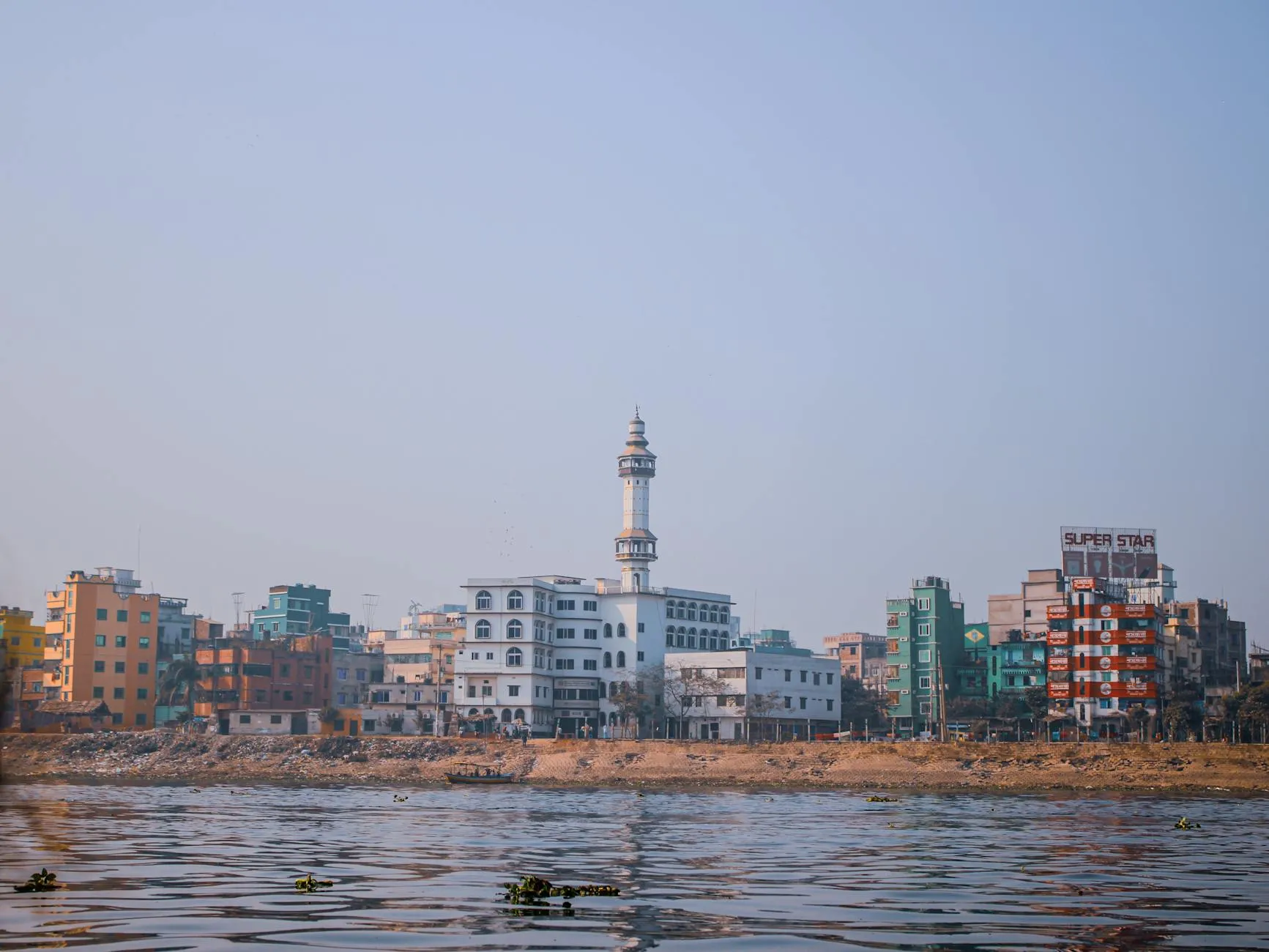
Dhaka Hazrat Shahjalal Airport (DAC) — The Complete Master Guide 2026
Hazrat Shahjalal International Airport sits 17 km north of central Dhaka in Kurmitola. Bangladesh offers visa-on-arrival at Dhaka airport for $50 plus tax payable in foreign currency, with proof of return ticket and funds. Yellow fever certificate is required only from arrivals from risk countries. Currency: Bangladeshi taka (BDT); $1 ≈ BDT 123 (May 2026). US currently lists Bangladesh at Level 3 — Reconsider Travel (refreshed January 2026), though the operating environment has stabilised under the interim government installed in August 2024. Dhaka traffic is famously among the worst in the world — the 17 km airport-to-city distance can take 1-3 hours.
📍 17 km N of Dhaka (Kurmitola)
🚖 Taxi 1-3h · BDT 800-2,500
🛂 $50 VoA · Level 3 advisory
⚡ 2026 Quick Reference — Key Facts at a Glance
17 km · 1-3 hours by road — Dhaka traffic notoriously congested
BDT 800-2,500 (~$6-20) · 1-3 hours; install Uber + Pathao before arrival
BDT 50-100 (~$0.50-0.85)cheapest mode but no luggage-friendly schedule
Bangladeshi taka (BDT) — $1 ≈ BDT 123 (May 2026); cash dominant; bKash mobile money domestic-only; declare ≥$5,000 on arrival
— pre-issued visa OR VoA at Dhaka airport ($50 + tax, foreign currency)
99% complete but NOT operational as of May 2026; targeted 16 Dec 2026 or early 2027
US Level 3 — Reconsider Travel (Jan 2026); Chittagong Hill Tracts off-limits
Skylounge T1 + MTB Air + UCB Imperial + EBL — multiple options
🏢 1. T1, T2, the Domestic Terminal & the T3 Wait
Hazrat Shahjalal International — named for the 14th-century Sufi saint Hazrat Shah Jalal — is Bangladesh’s principal international airport, handling roughly 80% of the country’s international air traffic. The current operational airport consists of Terminal 1 (the older international terminal), Terminal 2 (the newer international terminal), and the Domestic Terminal. The whole complex has been operating beyond design capacity for years — congestion, queues, and luggage delays are routine; quality of the passenger experience is the single most frequent traveller complaint about Dhaka. Terminal 3 — under construction since 2019 with a Japanese consortium (Japan Airport Terminal, Sumitomo, Sojitz, Narita) selected for operation — is 99% complete but has been the subject of repeated launch delays; the most recent target is opening by 16 December 2026 or early 2027.
🛫 Current Terminal Layout
T1: the older international terminal, used for Asian/Gulf carriers’ selected operations.
T2: the newer international terminal, the dominant international concourse.
Domestic Terminal: all Biman, US-Bangla, Air Astra, NovoAir domestic operations.
⭐ The T3 Status (May 2026)
T3 specs: 230,000 m² floor space, 115 check-in counters, 66 departure immigration desks, 59 arrival immigration desks, 3 VIP immigration. Designed to handle 12-16 million additional passengers annually plus ~900,000 tonnes of cargo.
Operating airlines (2026)
- Biman Bangladesh Airlines (BG) — national carrier; principal international + domestic operations.
- US-Bangla Airlines (BS) — major Bangladesh private carrier; domestic + regional Asia.
- Air Astra (2A), NovoAir (VQ) — additional domestic operators.
- Emirates — Dubai (multiple daily widebody).
- Qatar Airways — Doha (multiple daily).
- Etihad Airways — Abu Dhabi.
- Saudia, flydubai, Air Arabia, Oman Air — Gulf network.
- Turkish Airlines — Istanbul.
- Singapore Airlines, Malaysia Airlines, Thai Airways, AirAsia, Cathay Pacific — Southeast Asia + East Asia.
- IndiGo, Air India — Indian connections (Delhi, Mumbai, Kolkata, Chennai).
- China Eastern, China Southern — Chinese mainland.
No direct service to North America. Connect via Doha (QR), Dubai (EK), Istanbul (TK), or Singapore (SQ) for trans-Pacific or transatlantic.
🛂 2. VoA at Dhaka, Yellow Fever & the Post-2024 Reality
Bangladesh operates its own visa regime. Visa-on-arrival is available at Hazrat Shahjalal for many nationalities at a fee of $50 plus tax, payable in foreign currency — but obtaining a visa in advance via embassy or e-visa is recommended to avoid the airport queue and the rare on-arrival refusal. Yellow fever certificate is required only from arrivals coming from or transiting through a yellow-fever-risk country. Passport validity 6 months beyond stay, 1 blank page minimum, proof of onward or return ticket required.
Visa-on-Arrival — $50 + Tax
Available at DAC for many nationalities including US, UK, EU, Canada, Australia, NZ. $50 plus tax payable in foreign currency; bring crisp USD or convert at an authorised counter on arrival. Proof of return/onward ticket + proof of funds + accommodation evidence required.
Yellow Fever — Risk-Country Only
WHO yellow card required only for arrivals from a yellow-fever-risk country (mostly sub-Saharan Africa and parts of South America), and only for travellers over 1 year old. Get the vaccine at least 10 days before travel; the certificate is valid for life since the WHO change of 11 July 2016.
BDT — Cash Dominant
Currency is the Bangladeshi taka (BDT / ৳). $1 ≈ BDT 123 (May 2026). Cash dominates; Visa/Mastercard work at upmarket hotels and chain restaurants; bKash mobile money is the local rail but is restricted to Bangladesh-resident users. Declare foreign currency ≥$5,000 on arrival. ATMs at the airport accept foreign Visa/Mastercard with a transaction fee.
Who needs what for short visits
| Passport | VoA at DAC? | Pre-issued visa option | Notes |
|---|---|---|---|
| USA / UK / Canada / Australia / NZ / EU member states | Yes — $50 + tax, foreign currency | Embassy or e-Visa (recommended) | Return ticket + funds + accommodation required at desk |
| Japan / South Korea / Singapore / Saudi Arabia | Yes — VoA available | Embassy / e-Visa | Verify per nationality at embassy ahead |
| Brazil / Mexico / Argentina | VoA available | Embassy | Confirm before flying |
| India / Pakistan / Sri Lanka / Nepal / Bhutan | Special SAARC arrangements | Embassy | Verify current rules |
| Most African nations | Pre-issued only — no VoA | Embassy or e-Visa | Yellow fever certificate required if from risk country |
In August 2024, student-led protests led to the resignation of Prime Minister Sheikh Hasina and the installation of an interim government led by Nobel-laureate Muhammad Yunus. The next parliamentary election + national referendum were held on 12 February 2026. US: Level 3 Reconsider Travel (refreshed January 2026) citing risks of kidnapping, crime, terrorism and civil unrest, though the advisory acknowledges street violence has decreased since the interim government took power. Petty crime is common in Dhaka and Chittagong, particularly near hotels and business districts. The Chittagong Hill Tracts (Khagrachari, Rangamati, Bandarban) are off-limits due to unrest, terrorism and kidnapping risk. Dhaka air quality is consistently poor and especially dangerous November-March; prolonged outdoor exposure during winter is not recommended (AQI regularly exceeds 200-400 in peak season).
🚖 3. Dhaka Traffic, Uber, Pathao & the Airport Express Buses
Dhaka’s road traffic is famously among the worst in the world — the 17 km from DAC to central Dhaka can take 1 hour at 03:00 and 3 hours at peak. There is no airport rail link. The four options are airport taxi, ride-hailing (Uber, Pathao), the airport express bus, and pre-arranged hotel transfer. Plan generously: a 60-minute Google-Maps estimate often turns into 90-120 minutes in practice.
🚖 Airport Taxi
- Pickup at the rank outside arrivals.
- Fare to central Dhaka: BDT 1,500-2,500 (~$12-20) for the 17 km / 1-3 hour journey.
- Pre-paid taxi counter inside arrivals is the safer option for first-time visitors — fixed fares, receipt, driver number.
- Bengali is the primary language; English is common in business and tourism contexts.
📱 Uber + Pathao — Ride-Hail
- Uber operates at DAC; Pathao is the Bangladeshi local ride-hail equivalent (also offers motorbike taxis, useful in heavy traffic).
- Fare to central Dhaka: BDT 800-1,800 (~$6-15) — typically cheaper than the rank taxi.
- Surge pricing applies in peak hours; check both apps. Payment via app (international cards work in Uber; Pathao requires local bank linkage).
- Pathao bikes are faster than cars in worst traffic — for luggage-free travellers, the motorbike option can halve the journey time.
🚌 Airport Bus Service
- BRT (Bus Rapid Transit) route 3 connects the airport area to central Dhaka on the dedicated bus corridor; fare BDT 50-100 (~$0.50-0.85).
- Various other Dhaka City Corporation airport-route buses also operate.
- Cheapest option but with luggage and language barriers, not the most foreigner-friendly mode.
- Useful primarily for budget-conscious travellers without large luggage.
🏨 Hotel Transfer — The Sensible Default
- The major Dhaka hotels (Le Méridien Dhaka near the airport, InterContinental Dhaka, Westin Dhaka, Pan Pacific Sonargaon, Radisson Blu Dhaka Water Garden) offer paid airport transfers in the BDT 2,000-5,000 (~$16-40) range.
- Driver meets in arrivals; pre-arranged vehicle; useful first arrival particularly for non-Bengali speakers and given the unpredictability of Dhaka traffic.
- The recommended choice for business and diplomatic travellers.
🛋️ 4. Skylounge, MTB Air, UCB Imperial & EBL — Priority Pass at DAC
DAC has a substantial Priority Pass lounge footprint — unusually so for a single-international-terminal airport — with multiple bank-operated lounges accepting the major programmes. The principal Priority-Pass listings are Skylounge (T1 airside International Departures), MTB Air Lounge (T1 and Domestic), UCB Imperial Lounge (T1 and Domestic), and the EBL Skylounge. Walk-in pricing is published.
🛋️ Skylounge — T1 Airside International
Location: 2nd floor, T1 airside International Departures.
Programmes: Priority Pass, DragonPass, LoungeKey.
EBL Skylounge walk-in (effective 1 Jan 2026): BDT 1,200 / USD 12 (VAT inclusive) for 3 hours.
🛋️ MTB Air + UCB Imperial Lounges
MTB Air Lounge — T1 and Domestic. Priority Pass listed.
UCB Imperial Lounge — T1 and Domestic. Priority Pass listed.
What’s inside: hot Bangladeshi + Western buffet (typically biryani, dal, curries, naan + sandwiches and pasta), Bengali tea, espresso, soft drinks. Alcohol availability is limited (Bangladesh is a Muslim-majority country); the international lounges have some duty-free-area access to beer/wine for departing passengers. Wi-Fi, work zones, shower facilities in selected lounges.
🐟 5. Bangladeshi Food: Hilsa, Beef Bhuna, Kacchi Biryani & Bhortha
Bengali cuisine — the cooking of Bangladesh and the Indian state of West Bengal — is defined by fish (above all the iconic hilsa, Bangladesh’s national fish), rice, mustard oil, fenugreek and panch phoron (five-spice) seasoning, and the complex world of bhortha (mashed vegetable / fish chutney preparations). Bangladesh’s cuisine has been less internationally publicised than its Indian neighbour’s, but the Old Dhaka biryani tradition and the riverine fish cooking are genuinely distinct. The airside food at DAC has chain options; the real Dhaka eating is at the Old Dhaka heritage restaurants (Hajir Biryani, Nirob Hotel, Beauty Boarding) and the Gulshan / Banani upmarket restaurants.
Ilish (hilsa, Tenualosa ilisha) is Bangladesh’s national fish — a silver-scaled clupeid that runs from the Bay of Bengal into the Padma, Meghna and Jamuna rivers during monsoon. Iconic preparations: shorshe ilish (in mustard sauce), ilish bhapa (steamed in banana leaf with mustard paste), ilish polao (with fragrant rice). The Padma-river ilish in monsoon (June-September) is the seasonal peak. ₹400-1,200 per portion at a Dhaka restaurant.
Kacchi biryani — the Old Dhaka biryani tradition — uses raw marinated mutton (not pre-cooked, unlike Hyderabadi dum biryani) sealed under fragrant rice and slow-cooked from raw together with potatoes, prunes and saffron. Haji Biryani (Nazira Bazaar) is the city’s defining address, operating since 1939 — small, hot, queue out the door, BDT 200-300 per portion. The kacchi tradition is distinctly Dhakaiya, separate from the Mughlai or Hyderabadi schools.
Beef bhuna — slow-cooked beef in a dark concentrated onion-and-spice gravy — is the country’s everyday meat dish, served with rice or paratha. Bhortha is the Bengali mashed-side-dish category: shutki (dried fish) bhortha, aloo (potato) bhortha, begun (eggplant) bhortha, dal bhortha — punchy and aromatic, eaten with rice. The bhortha selection at a serious Dhaka restaurant is the textbook check on the kitchen’s authenticity.
Mishti (Bengali sweets) is a deeply institutional tradition. Rasgulla, sandesh, roshmalai, chamcham at the famous sweet shops — Premium Sweets, Banoful, Muslim Sweets, Mithai — are the defining Dhaka indulgence. BDT 50-200 per piece. The rice-and-jaggery-based pithas (steamed cakes) are the winter-season Bangladeshi snack.
Duty-Free & Souvenirs — What’s Worth Buying
🧣 Jamdani Muslin Saris
Jamdani — the hand-woven cotton muslin from the Sonargaon region (UNESCO ICH since 2013) — is Bangladesh’s defining textile tradition, distinguished by intricate floral and geometric motifs. Saris and shawls from BDT 5,000-50,000+ depending on quality. The most distinctive Bangladesh souvenir.
🧵 Nakshi Kantha Embroidery
Nakshi kantha — embroidered quilts made from layered old saris — is the Bangladeshi traditional textile-art form, GI-tagged. Small wall hangings BDT 1,500-5,000; larger quilts BDT 5,000-30,000.
🍵 Bangladesh Tea
The Sylhet tea estates (Bangladesh’s tea-growing region) produce mostly black tea. The famous “seven-layer tea” (saat-rang) from Srimangal is the curiosity speciality. Packs from BDT 200-1,500 for premium blends.
🧶 Rickshaw Art Posters
The vibrant Dhaka rickshaw painting tradition — UNESCO ICH 2023 — produces hand-painted posters and panels in bright primary colours. The Aarong shops and Old Dhaka galleries stock them at BDT 500-3,000. Unique Bangladesh visual culture.
💡 6. Insider: Lalbagh Fort, Ahsan Manzil & the Old Dhaka Rickshaw
The Lalbagh Fort, in Old Dhaka, is a 17th-century unfinished Mughal complex begun in 1678 by Prince Muhammad Azam (later Emperor Aurangzeb’s son). Construction was halted after the death of Pari Bibi — the daughter of Subahdar (governor) Shaista Khan — and the complex was considered ill-omened and never completed. The surviving structures include the Tomb of Pari Bibi (with marble interior), a grand mosque (Quilla Mosque), the Hammam (bath complex), and the Diwan-i-Aam (governor’s hall). Red sandstone construction. Entry BDT 20 Bangladeshis / BDT 200 foreigners. The single best Mughal-era visit in Bangladesh.
The Ahsan Manzil, on the bank of the Buriganga River in Old Dhaka, was the official residence of the Nawabs of Dhaka — a 19th-century palace in Indo-Saracenic style, painted in its signature pink. The palace played a central role in the Pakistan-movement and Bengali-independence-movement history; it is now a museum holding the Nawab’s personal effects, period furniture, and a comprehensive collection on 19th-century Dhaka. Entry BDT 20 Bangladeshis / BDT 200 foreigners. Closed on Thursdays.
Dhaka has an estimated 500,000+ cycle rickshaws — among the world’s largest cycle-rickshaw populations — and the Old Dhaka rickshaw ride is genuinely the defining urban transport experience of the city. The artistic-painted rickshaws (“rickshaw art” — UNESCO ICH 2023), the narrow lanes of Old Dhaka, the Buriganga River views from Ahsan Manzil to Sadarghat. A guided rickshaw tour with local English-speaking driver runs BDT 800-1,500 for a 2-3 hour Old Dhaka loop. Sadarghat — the Buriganga River boat terminal — is the parallel must-see, with the ferry traffic to inland Bangladesh.
The Bangladesh National Museum (Shahbag) holds the country’s principal historical, archaeological, and natural-history collection — 90,000+ exhibits across Bengali culture, the 1971 Liberation War, ancient Bengal civilisations. The Liberation War Museum (separate institution) documents the Bangladesh war of independence from Pakistan in 1971 with photographs, weapons, and oral histories — among Asia’s most-respected modern war museums. Both BDT 20-100. Closed Sundays (National Museum) / verify schedules.
Near the airport: Le Méridien Dhaka (Banani — 10 min from airport), Radisson Blu Water Garden (Diabari) — BDT 12,000-25,000 (~$100-200) per night. Gulshan / Banani (diplomatic + business quarter): Westin Dhaka, InterContinental Dhaka, Pan Pacific Sonargaon — BDT 15,000-35,000. For business travellers, Gulshan is the standard area. For early flights, Le Méridien Dhaka is the practical choice given the airport’s proximity and Dhaka traffic unpredictability.
Grameenphone, Robi, Banglalink are the three Bangladeshi operators. SIMs at landside arrivals or in town for BDT 300-1,000 (~$2.50-8) with passport + visa registration; data bundles BDT 200-1,500. 4G is widespread in Dhaka and major towns; 5G has limited deployment. Most Western apps work normally in Bangladesh — Google, Facebook, Instagram, WhatsApp all function. bKash (Bangladesh’s leading mobile money) is universal domestically but restricted to Bangladesh-resident users.
The dominant constraint is Dhaka traffic.
4-hour layover: stay airside; round-trip transit alone is 2-4 hours.
6-8 hour layover: Uber/Pathao to Le Méridien Dhaka or Gulshan for a Bangladeshi-cuisine lunch + a short visit. Old Dhaka not feasible.
10-12+ hour layover: Uber to Old Dhaka for Lalbagh Fort + Ahsan Manzil + rickshaw ride + kacchi biryani at Haji Biryani. Round trip 5-7 hours with traffic. Allow 2 hour return-buffer for traffic + check-in + immigration. Daylight only.
❓ Frequently Asked Questions
📊 2026 Summary Data Table
| Feature | Current Data (2026) |
|---|---|
| IATA / ICAO | DAC / VGHS |
| Official name | Hazrat Shahjalal International Airport (Kurmitola, north Dhaka) |
| Distance to Dhaka | 17 km — taxi 1-3 hours depending on Dhaka traffic |
| Terminals (May 2026) | T1 + T2 international + Domestic Terminal operational; T3 (99% complete) targeted to open 16 Dec 2026 or early 2027 |
| Currency / Border | Bangladeshi taka (BDT), $1 ≈ BDT 123 |
| Visa system | VoA at DAC $50 + tax (foreign currency) for many Western + Asian nationalities; e-Visa / embassy alternative; yellow fever from risk country only |
| Uber / Pathao | BDT 800-1,800 to central; Pathao motorbike faster in traffic for luggage-free travel |
| Airport taxi | BDT 1,500-2,500 (pre-paid counter inside arrivals) |
| Hotel transfer | BDT 2,000-5,000 — Le Méridien Dhaka, Westin, InterContinental, Pan Pacific Sonargaon |
| Lounges (Priority Pass) | Skylounge (EBL Skylounge T1, walk-in BDT 1,200 / USD 12 for 3h); MTB Air Lounge (T1+Dom); UCB Imperial Lounge (T1+Dom) |
| National carrier | Biman Bangladesh Airlines (BG); US-Bangla (BS) major private operator |
| Long-haul direct | None to North America; London (Biman); Gulf hubs daily (EK, QR, EY); connect via Doha, Dubai, Istanbul, Singapore |
| Time zone | BST (UTC+6) year-round — no DST |
| Travel advisory | US Level 3 — Reconsider Travel (Jan 2026); interim govt installed Aug 2024 has stabilised situation; Chittagong Hill Tracts off-limits; Dhaka winter air quality severe |
| Layover hooks | Lalbagh Fort (1678 Mughal); Ahsan Manzil Pink Palace; Old Dhaka rickshaw ride (UNESCO ICH 2023 rickshaw art); Haji Biryani kacchi tradition |
| Mobile | Grameenphone, Robi, Banglalink; BDT 300-1,000 SIM; 4G universal in Dhaka, limited 5G; bKash mobile money domestic-only |