Indianapolis International Airport (IND) — Airport Guide 2026
Indianapolis International runs the second-largest FedEx Express hub in the world — only Memphis moves more cargo — while the passenger side presents one of the calmer, better-rated terminals in the US. The two halves of the airport coexist without interfering: you board from a single, legible terminal and the freight operation works the other side of the airfield overnight.
Quick Reference
IND / KIND
~14 miles southwest of downtown Indianapolis
Col. H. Weir Cook Terminal (opened 2008), Concourses A and B
Southwest (~25%+ of passengers); American, Republic Airways and Delta follow; also United, Allegiant, Frontier
US dollar (USD)
US CBP; Global Entry kiosks on-site
Aer Lingus Dublin (US-precleared in Ireland — arrives domestic); Cancún, Los Cabos, Punta Cana (clear CBP on arrival)
ESTA (~$40, valid up to two years) for visa-waiver nationals; US visa otherwise
IndyGo Route 8 (Washington St) to downtown — ~45–60 min, $2.75 ($1.35 half-fare; $6 all-day pass)
~20–25 min, ~$30–40
Delta Sky Club (Concourse A); Priority Pass dining credit ~$28 at The Fan Zone (Concourse B, near Gate B17); USO (Concourse B, military, ~7am–11pm)
2nd-largest FedEx Express hub in the world (after Memphis)
13 miles from airport (~26 min); home of the Indy 500 (running since 1911)
Yes, with 4+ hours
Free airport-wide
30 May 2026
🏢 One Terminal, Two Concourses — and the World’s Second-Biggest FedEx Hub
The Col. H. Weir Cook Terminal opened in 2008 and was built on the premise that airports can function without punishing passengers. One security checkpoint serves both concourses. The atrium has natural light. The walks are short. A civic art program fills the central hall. The result is an airport that appears regularly near the top of US satisfaction surveys — unusual enough in American aviation that it’s worth flagging.
Behind this is the freight infrastructure: IND hosts the second-largest FedEx Express hub on earth, surpassed only by the Memphis SuperHub. As a passenger you don’t encounter it — the cargo operation runs on the other side of the field through the night — but it’s why the airport generates numbers in the top tier of US freight throughput despite being a mid-sized passenger market.
Southwest leads passenger traffic with just over a quarter of volume. American, Republic Airways and Delta follow, with United, Allegiant and Frontier rounding out the schedule. IND is an origin-and-destination airport rather than a hub, which is a significant reason lines stay short.
📦 The FedEx Operation Is Enormous and Invisible
IND is the world’s second-largest FedEx Express hub, behind only Memphis. It operates on the cargo side of the airfield overnight. You board through a calm mid-sized terminal; the industrial scale of IND is entirely out of view from the gate.
🛂 Border, Visa & the Dublin Preclearance Quirk
Domestic arrivals clear nothing at IND. The border process only matters for international arrivals — and there’s one wrinkle worth knowing before you land.
IND is a Global Entry airport. Members use the expedited kiosks; the free Mobile Passport Control app is the no-cost alternative for eligible travelers. Everyone else queues for a CBP officer in the standard way.
The unusual route: the Aer Lingus Dublin–Indianapolis service launched on 3 May 2025 — the first transatlantic service from Indianapolis since 2020 — running four times a week and expanding to five in 2026. Dublin Airport is one of only two airports in Europe with a US CBP preclearance facility; Shannon is the other. Passengers clear all US immigration and customs before boarding in Ireland, which means the flight lands at IND as a domestic arrival — straight off the jet bridge, no CBP queue on this end.
IND’s other international flying — Cancún and Los Cabos (Mexico) and Punta Cana (Dominican Republic) — clears CBP on arrival in the normal way.
To board any US-bound flight from abroad: visa-waiver nationals need an ESTA (~$40, valid up to two years); everyone else needs a US visa.
🇮🇪 The Dublin Flight Arrives as Domestic
Aer Lingus’s Dublin–Indianapolis route is pre-cleared at Dublin Airport before departure. All US immigration and customs happen in Ireland, so the flight lands at IND as a domestic arrival — no CBP hall, straight off the jet bridge.
✅ Global Entry Kiosks Are Available
IND has Global Entry. Members use dedicated kiosks on international arrival. The free Mobile Passport Control app works for eligible travelers who don’t have Global Entry enrolled.
🚌 Getting Downtown: Route 8 vs. Rideshare
The airport sits 14 miles southwest of downtown — 20–25 minutes on I-70 in light traffic.
IndyGo Route 8 (Washington Street) is the public option. It’s a standard fixed-route bus, not an express — relevant because the 45–60 minutes to downtown is a real commitment. It runs seven days a week from early morning to late night, approximately every 30 minutes. Fare is $2.75 one-way ($1.35 half-fare; $6 for an all-day pass covering all IndyGo routes). IndyGo updated fares for 2026, so verify the current fare and schedule before relying on them. Pay via the app or onboard.
Rideshare and taxi run from the ground-transport area and cover the trip in about 20–25 minutes for roughly $30–40. The faster option by a significant margin; the price difference mostly reflects the time. Rental cars require a free shuttle to the consolidated rental center.
🚌 IndyGo Route 8 — $2.75, ~45–60 Min
Washington Street runs straight to downtown, every 30 minutes, seven days a week. A $6 day pass covers all IndyGo routes if you’re moving around the city. Verify the current fare before you go — IndyGo updated pricing for 2026.
⚠️ Avoid Flat-Rate Curbside Offers
Unofficial shuttle operators quote flat downtown rates from the curbside. With rideshare and Route 8 both readily available, there’s no reason to take an unmarked flat-rate offer — the pricing is typically worse and the accountability is lower.
🛋️ Lounges
The most useful thing to know about IND’s lounge situation is what it is not: there is no traditional Priority Pass lounge here.
What Priority Pass gives you instead is a dining credit of around $28 at The Fan Zone, a sports bar in Concourse B near Gate B17. It’s a restaurant tab, not a quiet room with soft seating and a shower. Useful for a meal before a long flight; not a substitute for lounge access if that’s what you need.
The actual lounges:
- Delta Sky Club — Concourse A. Open to Delta and SkyTeam elite and premium-cabin passengers, and eligible Amex Platinum cardholders. Not available as a paid walk-in.
- USO Lounge — Concourse B. Free for active military and their families, open approximately 7am–11pm.
If you’re not on Delta and don’t carry a card unlocking the Priority Pass dining credit, you’ll be using the general terminal. Given IND’s design, that’s a more comfortable fallback than at most comparable airports.
🍺 Priority Pass Here Means a Dining Credit, Not a Lounge
The ~$28 Priority Pass credit applies at The Fan Zone (Concourse B, near Gate B17) — a sports bar. Worth using for a meal; don’t expect a quiet room.
🛋️ Delta Sky Club — Concourse A
Available to Delta/SkyTeam elite and premium-cabin passengers, plus eligible Amex Platinum holders. No walk-in rate.
🍽️ Food Before You Fly
Indiana has two things on the table worth knowing before you arrive: the breaded pork tenderloin sandwich — a pork cutlet pounded thin, fried until it overhangs the bun by a conspicuous margin, served with pickles and mustard — and sugar cream pie (also called Hoosier pie), a custard set without eggs. Both are county-fair and diner food rather than airport fare, but they’re the local reference points.
IND’s concession program is better-regarded than most airports its size and leans toward local operators. Hours track the flight banks, which means an early Southwest departure can pre-date the kitchens.
Downtown’s serious landmark is St. Elmo Steak House on South Illinois Street, open since 1902 and a James Beard “America’s Classics” honoree. The shrimp cocktail is the thing to order — the horseradish sauce is calibrated to make your eyes water, intentionally, and the house is proud of this. Order it knowing what you’re getting; it is not a mild starter.
🥩 St. Elmo Steak House — South Illinois St, Open Since 1902
James Beard “America’s Classics” recipient. Order the shrimp cocktail. The horseradish is engineered to be aggressive — that’s the point, not an accident. Downtown, not in the airport.
🍖 The Tenderloin Sandwich
Indiana’s signature: a fried pork cutlet pounded so thin it overhangs the bun by several inches, served with pickles and mustard. The canonical version is county-fair and diner food; you won’t find it in the terminal, but it’s what the locals eat.
💡 Layover Math: The Speedway, the Canal Walk & When to Stay Airside
Indianapolis has two genuine layover targets — and one of them requires checking a calendar before you commit.
🏎️ The Indianapolis Motor Speedway
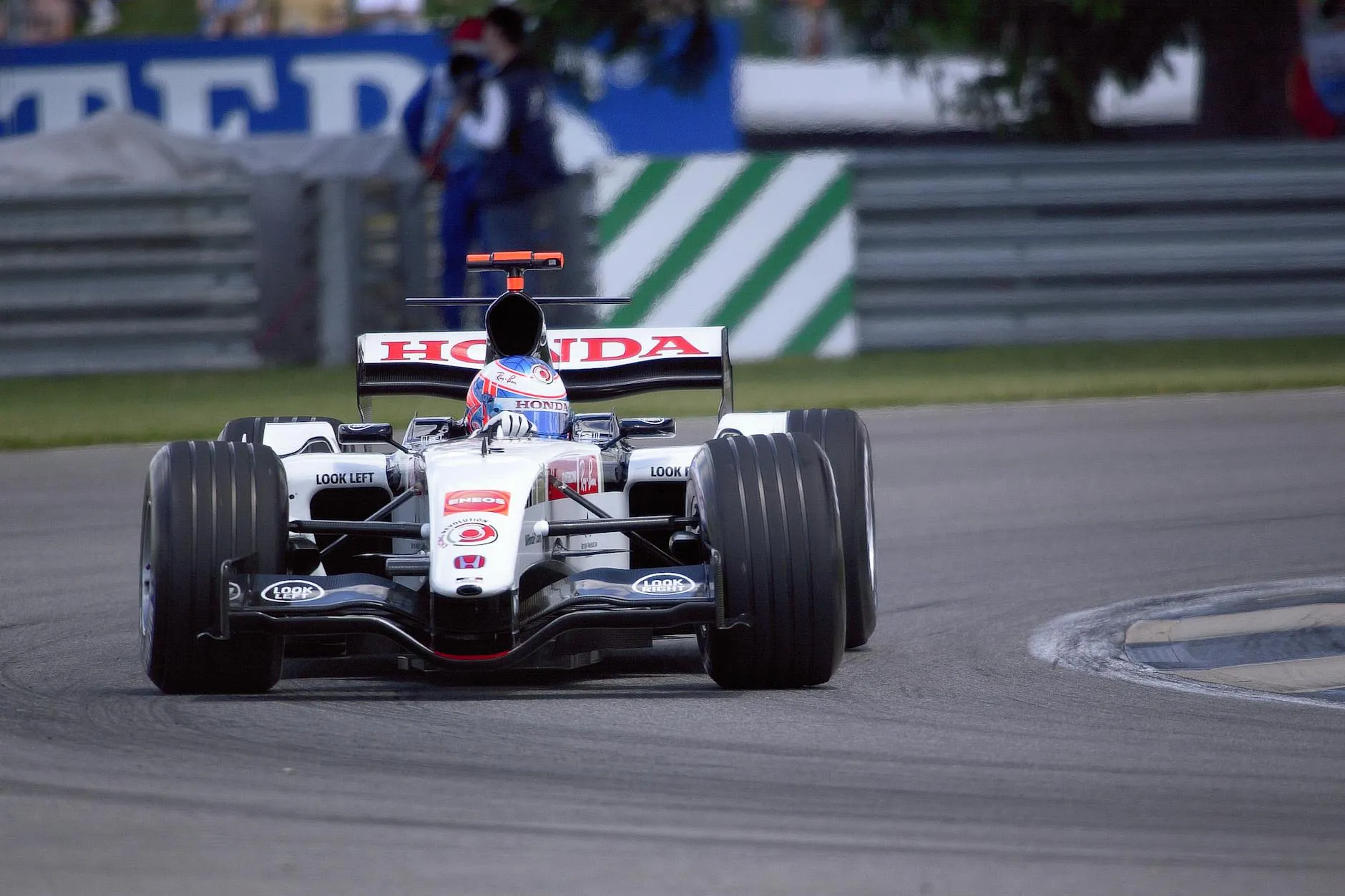
The IMS sits in the town of Speedway, 13 miles from the airport and about 26 minutes by rideshare. Home of the Indy 500, which has run since 1911. On non-event days, the draw is the IMS Museum on the infield grounds — the Auto Racing Hall of Fame plus a deep collection of race and passenger cars. The track is an active venue, so access and museum hours vary; check both before you build a layover around it.
🏛️ Downtown: Monument Circle, the Canal Walk & the Museum Cluster
The easier target. Monument Circle — anchored by the Soldiers’ and Sailors’ Monument — is the city’s literal center. West of it, White River State Park clusters the Indiana State Museum, the Eiteljorg Museum (Native American and Western art), and the NCAA Hall of Champions around green space and the 3-mile Canal Walk. The Indianapolis Cultural Trail, an eight-mile landscaped path, stitches the cultural districts together and makes the core navigable on foot.
⏱️ The Layover Numbers
- Door to downtown: ~20–25 min each way by rideshare; ~45–60 min each way on Route 8
- Return-security buffer: IND’s lines are reliably short, but allow 90 minutes before your flight
- Under 3 hours: Stay airside. IND is a comfortable place to do it and the transit math doesn’t work.
- 4 hours: About 90 minutes in the city after round-trip rideshare and the security buffer — enough for the Canal Walk, one museum, or a shrimp cocktail at St. Elmo.
- 5+ hours: Downtown and the Speedway museum are both reachable without rushing.
⏱️ The 4-Hour Rule
A 4-hour connection leaves roughly 90 minutes in the city — after ~40–50 minutes of round-trip rideshare and a 90-minute return-security buffer. Enough for Monument Circle and the Canal Walk, or one museum stop. Under 3 hours, the transit cost isn’t worth it; IND’s terminal handles the wait comfortably.
❓ Frequently Asked Questions
📊 At a Glance — IND 2026
| Feature | Detail |
|---|---|
| IATA / ICAO | IND / KIND |
| Official name | Indianapolis International Airport (Col. H. Weir Cook Terminal) |
| Location | ~14 miles southwest of downtown Indianapolis |
| Terminal | One integrated terminal (opened 2008), Concourses A and B |
| Dominant carrier | Southwest (~25%+); American, Republic Airways, Delta, United, Allegiant, Frontier |
| Currency | US dollar (USD) |
| Border system | US CBP; Global Entry kiosks on-site |
| Notable international | Aer Lingus Dublin (US-precleared; arrives domestic); Cancún, Los Cabos, Punta Cana (CBP on arrival) |
| Pre-travel auth | ESTA (~$40) or US visa |
| Public transit | IndyGo Route 8 to downtown — ~45–60 min, $2.75 ($1.35 half-fare; $6 day pass) |
| Rideshare to downtown | 14 miles, ~20–25 min, ~$30–40 |
| Lounges | Delta Sky Club (Concourse A); Priority Pass dining credit ~$28 at The Fan Zone (Concourse B); USO (Concourse B, military, ~7am–11pm) |
| Cargo role | 2nd-largest FedEx Express hub in the world (after Memphis) |
| Layover targets | Motor Speedway / IMS Museum (13 mi, ~26 min); downtown museums + Canal Walk (14 mi, ~20–25 min) |
| Layover-viable? | Yes, with 4+ hours |
| Wi-Fi | Free airport-wide |
| Content verified | 30 May 2026 |