Shanghai Hongqiao International Airport (SHA) — Airport Guide 2026
The Airport Link Line, which opened 27 December 2024, slashed the Hongqiao-to-Pudong run from a 90-minute metro crawl to under 40 minutes — the first meaningful change to Shanghai’s awkward two-airport geometry in years, and the fact that most changes to this guide.
Quick Reference
SHA / ZSSS
Western Shanghai, ~13–18 km from People’s Square
T1 (Spring Airlines + international East Asia carriers) · T2 (domestic-heavy + East Asia) · not airside-connected
CNY (¥) · ≈ ¥6.8 / US$1 · ≈ ¥7.9 / €1 (May 2026)
Line 2: T2 → People’s Square, ¥4, ~35 min · Line 10: both terminals
240-hour visa-free transit · unilateral visa-free · standard L visa
Permitted areas across all 24 covered regions · Yangtze River Delta (Shanghai, Jiangsu, Zhejiang, Anhui) is the practical core
China Eastern (HQ) · Shanghai Airlines · Juneyao Air · Spring Airlines
Six: V1 · Juneyao Air V6 · China Southern V26 (T2) · V03 · China Eastern V01 · AVINEX VIP (T1)
Hongqiao T2 ↔ Pudong T1/2 · under 40 min · ¥4–26 · opened 27 Dec 2024
Alipay / WeChat Pay dominant · link overseas card before arrival
Intercontinental flights use Shanghai Pudong (PVG), ~50 km east
🏢 Terminals & What They Actually Handle
Hongqiao runs two terminals that are not connected airside. The split matters.
Terminal 1 is the older, smaller building. Its Building B belongs to Spring Airlines. The international apron covers the short-haul East Asia carriers — Japan Airlines, All Nippon Airways, Korean Air, Asiana — along with China Eastern and Shanghai Airlines flights to Japan and Korea; Xiamen Air also works from T1. Terminal 2 carries the bulk of domestic departures: China Eastern, Shanghai Airlines, Air China, China Southern, China United, Juneyao, Shandong, Hainan, Chengdu Airlines, Shenzhen, Tianjin, Tibet, and Lucky Air.
The thing to fix in your mind before arrival: Hongqiao is not Shanghai’s long-haul gateway. Europe, North America, Australia, the Middle East, Southeast Asia long-haul — those use Pudong (PVG), on the far eastern edge of the city, roughly 50 km from where you’re standing now. Hongqiao’s international reach is short-haul East Asia and Taiwan. If your ticket says Shanghai and the routing is intercontinental, check which airport is actually on your boarding pass before you plan anything else. Confusing SHA and PVG is the standard Shanghai mistake, and the two airports are far enough apart that it costs you a full morning.
The terminals each have their own metro stations and ground transport. Confirm your terminal before your trip; T1 and T2 are far enough apart that arriving at the wrong one means a shuttle or a metro hop to recover. A free inter-terminal shuttle runs between them — the current pickup point is at the information desk on arrival, and it’s worth checking rather than assuming a stand.
⚠️ Terminal split — not airside-connected
If your first flight lands at T1 and your connection departs from T2 (or vice versa), you must exit, take the shuttle or metro between buildings, and re-clear security. Build that transfer time into your connection.
🛂 Border & Visa Rules
Three separate systems can get a foreign traveller through the border at Hongqiao. Which one applies depends on your nationality and your itinerary — this is China’s national entry regime, and the details matter.
🕐 240-Hour Visa-Free Transit
China extended its visa-free transit allowance to 240 hours (ten days) on 18 December 2024, and expanded the eligible country and port lists again on 5 November 2025. Kyrgyzstan and Vietnam were added on 20 August 2026, so the scheme now covers citizens of 57 countries transiting through any of 65 designated ports in 24 provinces. Shanghai Hongqiao is one of them. The other two Shanghai ports are Shanghai Pudong and Shanghai Port (passenger sea terminal) — the Hongqiao Railway Station is not a designated port, so a rail entry on transit status would be refused. The only rail port in the scheme is West Kowloon Station in Guangdong.
The rule that catches people is the third-country condition. You must arrive from one country and depart to a different country or region. The textbook case: Country A → China → Country B, where B is not A. A round trip returning you to your origin (A → China → A) does not qualify. You need a confirmed onward ticket to that third country, with departure within 240 hours of entry, and you must be able to show it at check-in and at immigration.
One detail worth noting: the 240-hour clock starts at 00:00 on the day after you enter, not at the moment you land.
On 240-hour transit you may make cross-province visits within the scheme’s permitted areas across all 24 covered regions — the Yangtze River Delta (Shanghai municipality plus Jiangsu, Zhejiang, and Anhui) is the practical core, not the legal boundary. Suzhou and the canal towns in Jiangsu, Hangzhou and the West Lake in Zhejiang, and Huangshan in Anhui are all reachable by high-speed rail and all sit inside permitted areas. Several regions further afield are permitted only in named cities — Shanxi covers only Taiyuan and Datong, Heilongjiang only Harbin — so check the NIA’s own ports-and-permitted-areas table before planning anything beyond the Delta. Travelling outside a permitted area on transit status risks removal and a future entry ban.
⚠️ Return trips don’t qualify
The most common 240-hour transit mistake: assuming a return flight to your home country qualifies. It doesn’t. You need a confirmed onward ticket to a third country. Verify your itinerary matches the rule before you fly, not at the immigration desk.
📋 Unilateral Visa-Free Entry
Separately from transit, China has extended unilateral visa-free entry to ordinary-passport holders of a growing list of countries — commonly up to 30 days, no third-country condition required. The list has expanded repeatedly through 2024 and 2025 and includes many European nationals. Because it changes often, confirm your own passport’s current eligibility against an official source before booking. Where it applies, this is the simpler option: no onward-ticket requirement, no regional cap.
🖥️ The Digital Arrival Card
China moved its arrival card online. Foreign arrivals can complete the China Arrival Card electronically before landing and present the resulting QR code at immigration instead of filling in a paper slip at the desk. Doing it in advance — via the official platform or the QR code in the airport’s pre-arrival signage — saves time at a busy international arrival. Paper cards remain available if you arrive without one.
🛂 Standard Visa
If your itinerary doesn’t fit either free-entry scheme — most obviously a return trip, or a stay longer than ten days — you need a Chinese tourist visa (L) arranged through a Chinese embassy or visa centre before you travel. There is no general tourist visa-on-arrival.
🚆 Getting Into the City
Hongqiao’s main practical advantage over Pudong is proximity. People’s Square is 13 to 18 km away depending on which terminal, and the metro reaches it directly. The airport-to-city journey is a genuine 35 minutes rather than the hour-plus haul that Pudong demands.
⭐ Metro Line 2 — From Terminal 2
Line 2 from Terminal 2 runs straight through the core of the city — East Nanjing Road (for the Bund), People’s Square, Jing’an Temple, Lujiazui (for the Pudong skyline) — and continues all the way out to Pudong Airport. T2 to People’s Square takes about 35 minutes for roughly ¥4. First trains run from around 05:30; last departure around 22:30, though the exact times shift slightly by day of week — check the platform board. This is the default option from T2.
🚇 Metro Line 2 — ¥4, ~35 min to People’s Square
Runs from Terminal 2 only. First trains around 05:30, last around 22:30. The same line continues east to Pudong Airport if you need the cross-city option, though the Airport Link Line is now faster for that journey.
🔟 Metro Line 10 — From Both Terminals
Line 10 serves both Terminal 1 and Terminal 2, which makes it the metro to use if you land at T1 — Line 2 only touches T2. It runs east through the former French Concession and Yuyuan (Yu Garden) before reaching East Nanjing Road, so for the Yu Garden and Old City area it can be the more direct of the two. Fares and hours are comparable to Line 2.
✈️ Airport Link Line — Hongqiao to Pudong in Under 40 Minutes
The Airport Link Line, which opened its Hongqiao-to-Pudong section on 27 December 2024, is the actual 2026 news at this airport. It runs from Hongqiao Terminal 2 directly to Pudong Terminal 1/2 in under 40 minutes, against the roughly 90 minutes Metro Line 2 takes for the same trip. Fare runs from ¥4 up to ¥26 for the full length; trains run approximately every 15 minutes with first and last services around 06:00 and 22:00.
If you have a domestic flight into Hongqiao connecting to a long-haul at Pudong — or the reverse — this line makes a same-day self-transfer realistic where it used to be a serious gamble. The caveat is real: you still need to collect and re-check bags, reach the second airport, and clear security there. Factor that generously.
🔗 Airport Link Line — under 40 min to Pudong
Opened 27 December 2024. Hongqiao T2 ↔ Pudong T1/2. ¥4–26 depending on distance; trains every ~15 min, roughly 06:00–22:00. Replaces Metro Line 2 as the sensible cross-airport connection — though bag reclaim and re-check time at both ends still makes tight connections risky.
🚄 Hongqiao Railway Station
Hongqiao Railway Station, one of China’s largest high-speed rail hubs, sits directly beside Terminal 2, linked by an underground concourse you can walk in about 20 minutes, or reach in one stop on Line 2 or Line 10. High-speed trains reach Suzhou in roughly 25–30 minutes and Hangzhou in about an hour — which is what makes Yangtze River Delta day trips practical on a layover or a 240-hour transit stay.
📱 DiDi & Taxis
DiDi, the Chinese rideshare, is the practical door-to-door option: the app works in English with a foreign card or Alipay/WeChat linked, and fares into the centre are reasonable given the short distance. Metered taxis queue at the official airport rank. Use that rank. Anyone approaching you inside the terminal offering a ride is the standard overcharge setup — it happens at every large Chinese airport, and Hongqiao is no exception. The meter at the official rank is the honest price.
🛋️ Lounges
Hongqiao has a spread of lounges, but the Priority Pass / DragonPass distinction matters more here than at most airports. Many Chinese airport lounges sit on the local DragonPass network and decline Priority Pass, so check your specific card against the specific lounge before counting on entry.
Priority Pass is accepted at six lounges:
– V1 VIP Lounge — Terminal 2
– Juneyao Air V6 Lounge — Terminal 2 (05:30–22:00)
– China Southern Sky Pearl Club Lounge V26 — Terminal 2
– VIP Lounge V03 — Terminal 1
– China Eastern V01 International Lounge — Terminal 1, the highest-rated lounge at the airport
– AVINEX VIP — Terminal 1
Beyond those six, several Hongqiao lounges operate on DragonPass (and on local pay-per-use access) and will turn away a Priority Pass card. There is a DragonPass-accessible lounge in Terminal 2 that includes hot food and shower facilities; confirm the specific name and current access terms in your card’s app on the day — lounge operators and network deals at Chinese airports change without much notice.
If you’re flying business or first on a hub carrier, your boarding pass gets you into the matching carrier lounge regardless of which card you carry. Pay-per-use entry is sold at the door and online at several lounges; the walk-in price is best confirmed at the desk, as it varies and any figure quoted here will stale.
💳 Priority Pass vs DragonPass — check before you walk up
Priority Pass works at six lounges: V1, Juneyao V6 and China Southern Sky Pearl Club V26 in T2, and V03, China Eastern V01 International and AVINEX VIP in T1. At other Hongqiao lounges, assume DragonPass unless your card’s app says otherwise. Being turned away at the door is common enough that it’s worth the 30-second confirmation before you queue.
🍜 Food Before You Fly
Hongqiao’s terminals have the standard airport food court and chain outlets. The Shanghai staples are worth knowing by name.
Xiaolongbao (小笼包) are the soup dumplings the city is known for — thin-skinned parcels of pork and hot broth. Eat them carefully; the broth is scalding, and burning your mouth in a departure lounge is a poor start to a flight. Shengjianbao (生煎包) are their pan-fried cousins: heavier, crisp-bottomed, more filling. Hongshao rou (红烧肉) — red-braised pork belly in soy and sugar — is the home-style Shanghai dish to look for on any hot-food counter.
Prices airside run high in the usual airport way. The food in the landside concourse, before security, is cheaper and generally better — worth a stop if you have the time.
A practical Hongqiao-specific point: because the Hongqiao Railway Station is physically attached to Terminal 2, its retail and dining concourse functions as an extension of the airport’s options. If you have time before a connection or a flight, the station side tends to have a wider and cheaper range of restaurants than the airside gates.
Terminal 1’s international zone has duty-free liquor, tobacco, and perfume. As a mainly domestic airport, Hongqiao’s duty-free selection is thin compared to Pudong — if you’re after a serious duty-free shop, the long-haul terminals at PVG are better stocked. Shanghai tea and local snacks are cheaper in the city than at any gate.
💡 Layover Reality: Honest Maths
Unlike the outlying airports that require a committed effort to reach the city, Hongqiao’s closeness makes a layover usable — the verdict here is more generous than at most Chinese airports, with one clear condition.
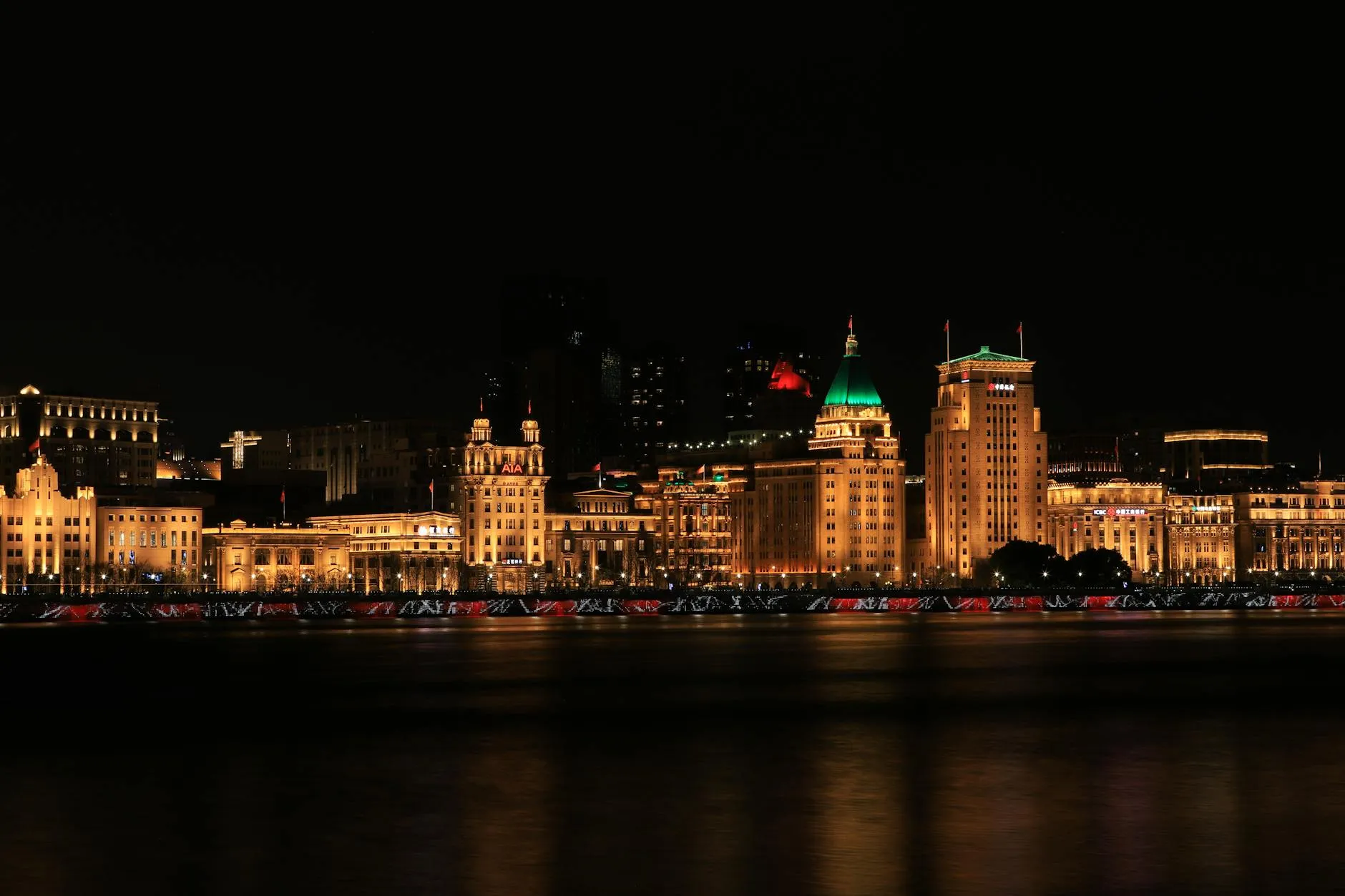
On a 5–6 hour layover, cleared of immigration, a city visit is realistic. Line 2 puts you at East Nanjing Road in about 35 minutes, a short walk from the Bund and the colonial-era waterfront facing the Pudong skyline. Yu Garden (豫园) and the Old City — a Ming-dynasty garden with bazaar streets around it — sit a little to the south, reachable via Line 10. Either is a reasonable target. Budget the round trip honestly: 35–45 minutes each way on the metro, plus time in the city, plus the international check-in and security buffer before your onward flight. Under about four hours, the maths doesn’t work and staying in the terminal is the right call.
⏱️ Layover cut-offs
Under ~4 hrs: stay airside — the metro round trip eats your margin. 5–6 hrs: Bund or Yu Garden is viable. 8 hrs+: a Suzhou day trip becomes reasonable. These are real numbers including return-security buffer; treat them as minimums, not targets.
A Suzhou or Hangzhou day trip is the more ambitious option. The high-speed rail next door is genuinely quick — Suzhou in 25–30 minutes, Hangzhou in about an hour — but the train is a separate ticket you should book in advance, the stations at both ends add transfer time, and you need to be back through airport security with margin. A Suzhou day trip realistically wants a layover of eight hours or more before it stops being a chase against boarding. On anything shorter, stay in Shanghai itself.
The saving grace for 240-hour transit travellers is that all of this — Shanghai, Suzhou, Hangzhou — sits inside the scheme’s permitted areas. It’s legally available on transit status, provided your confirmed third-country onward ticket is in order.
🚄 Suzhou day trip — 25–30 min by high-speed rail
Book the train in advance from Hongqiao Railway Station (adjacent to T2). Suzhou is a reasonable half-day from the station. Factor in the walk or metro hop between the terminal and the station, plus the Suzhou station-to-city transfer, and return airport security buffer. Eight hours minimum before this is worth the logistics.
🔧 Practical Notes
Payment. Shanghai runs on Alipay and WeChat Pay. Both now let foreign visitors link an overseas card. Setting one up before you land is the single most useful piece of preparation — many taxis, small eateries, and ticket machines are effectively cashless in ways that catch you flat-footed if you arrive without it sorted. Carry some yuan (¥) as a backup; foreign credit cards are accepted at hotels and larger stores but not reliably at smaller places.
Connectivity. China’s firewall blocks most Western apps and sites — including maps, messaging, and news you probably depend on. Sort a working roaming plan or a travel eSIM that routes around it before arrival, because you cannot download a fix once you are inside without access. This is a recurring problem for first-time visitors who assume they can sort it on the ground.
Currency. The yuan trades at roughly ¥6.8 to the US dollar and ¥7.9 to the euro as of May 2026. Airport exchange counters give a poor rate relative to the in-city options — change only what you need at the airport and rely on Alipay/WeChat or a city ATM for the rest.
📱 Set up Alipay or WeChat Pay before you fly
Both apps now support foreign card linking. Without one of them, you will find significant parts of the city — taxis, smaller restaurants, transit vending machines — difficult to pay at. The setup takes 15 minutes at home and saves repeated friction in Shanghai.
⚠️ VPN / firewall — sort before you land
Google Maps, WhatsApp, Instagram, most Western news sites: all blocked. A travel eSIM or pre-configured VPN is the fix. You cannot reliably install or configure one once you’re past the Chinese border.
❓ Frequently Asked Questions
📊 At a Glance — SHA 2026
| Item | Detail |
|---|---|
| IATA / ICAO | SHA / ZSSS |
| Distance to centre | ~13–18 km west of People’s Square |
| Terminals | T1 (Spring + intl East Asia) · T2 (domestic-heavy + East Asia) · not airside-connected |
| Metro from T2 | Line 2 → People’s Square · ¥4 · ~35 min · ~05:30–22:30 |
| Metro from T1 & T2 | Line 10 serves both terminals |
| Airport Link Line | Hongqiao T2 ↔ Pudong T1/2 · under 40 min · ¥4–26 · opened 27 Dec 2024 |
| High-speed rail | Hongqiao Railway Station adjacent to T2 · Suzhou ~25–30 min · Hangzhou ~1 hr |
| Taxi / DiDi | Official metered rank or DiDi app · short trip into centre |
| Currency | CNY (¥) · ≈ ¥6.8 / US$1 · ≈ ¥7.9 / €1 (May 2026) |
| Payment | Alipay / WeChat Pay dominant · link overseas card before arrival |
| Border options | 240-hour transit (designated port) · unilateral visa-free · standard L visa |
| Transit zone | Permitted areas across all 24 covered regions — Yangtze River Delta (Shanghai, Jiangsu, Zhejiang, Anhui) is the practical core, not the legal boundary |
| Priority Pass lounges | Six PP lounges · V1 · Juneyao Air V6 · China Southern V26 (T2) · V03 · China Eastern V01 · AVINEX VIP (T1) |
| Hub carriers | China Eastern (HQ) · Shanghai Airlines · Juneyao Air · Spring Airlines |
| Long-haul note | Intercontinental flights use Pudong (PVG), ~50 km east |
| Layover verdict | Under ~4 hrs: stay airside · 5–6 hrs: Bund or Yu Garden viable · 8 hrs+: Suzhou feasible |