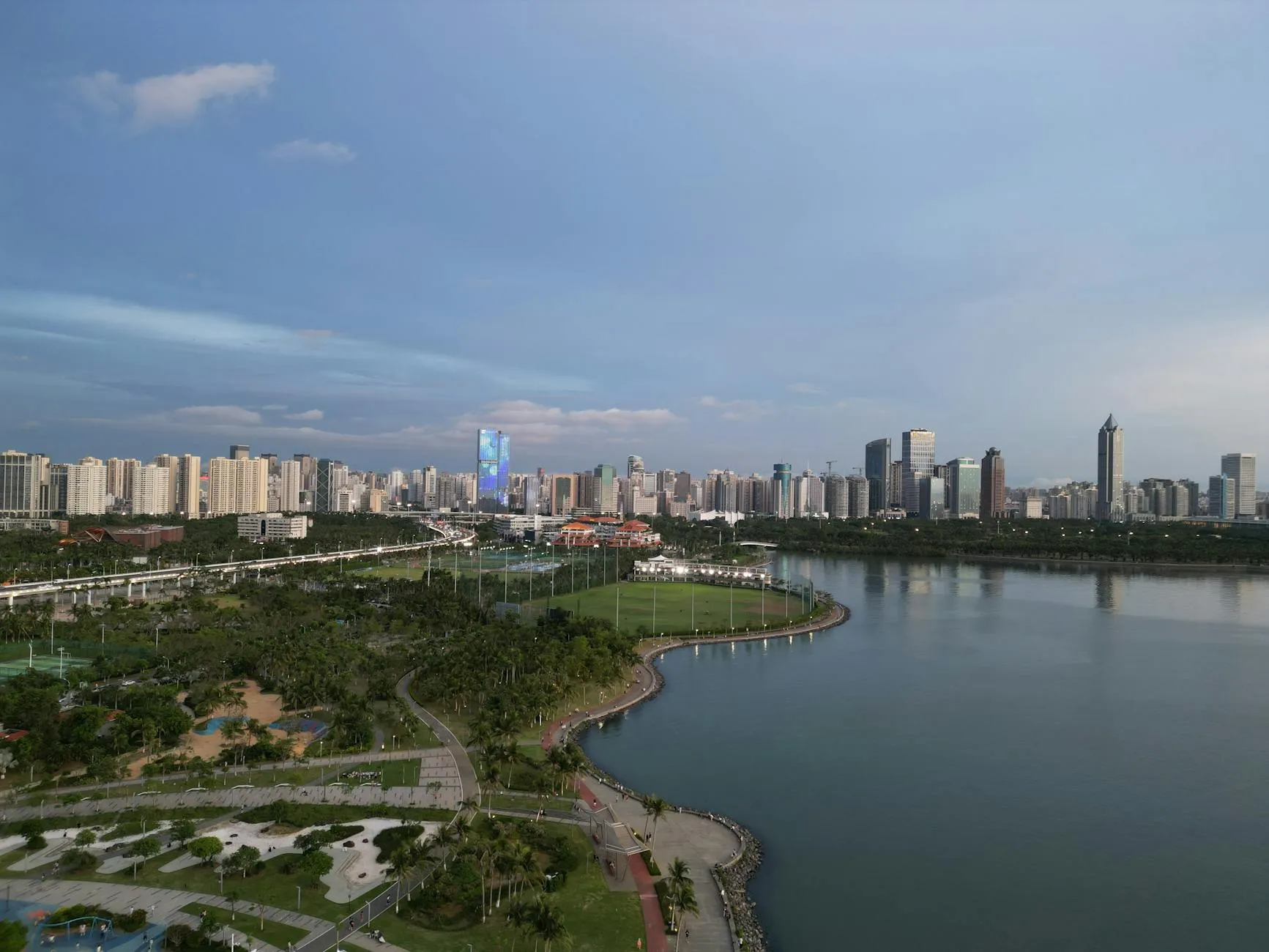
Haikou Meilan International Airport (HAK) — Airport Guide 2026
Meilan moved 26.9 million passengers in 2025 — around 20th among China’s civil airports — which makes it the busiest airport on Hainan Island and the first Chinese soil most foreign visitors touch when they fly in for a beach trip that needs no visa.
Quick Reference
HAK / ZJHK
~25 km southeast of Haikou city centre, Hainan Province
T1 (older, mostly domestic) · T2 (opened Dec 2021, ~300,000 m², most international) — free inter-terminal shuttle
High-speed train, Meilan Airport Station (B1) → Haikou East, ~10 min, ¥7 second class · 20+ services/day
Same station → Sanya via eastern ring line, ~¥108, ~1.5–2 hr
Shuttle ¥15 (~35 min); city buses 21 & 41, ¥5
Metered rank ¥60–100 to centre; DiDi works in English with a foreign card
CNY (¥) · ≈¥6.8/US$1, ≈¥7.8/€1 (September 2026)
Alipay and WeChat Pay everywhere; foreign cards accepted at hotels and large stores only
Hainan 30-day visa-free (island only) · 240-hour transit (cross-province travel allowed in the 24 listed provinces) · standard visa
China Digital Arrival Card (CDAC) — file online before you fly; no stated deadline, on-site kiosks and paper card still available
Hainan Airlines (home base), Tianjin Airlines; China Southern + international at T2
T2: First Class, Business Lounge 1, Business Lounge 4, China Southern First/Business, Fortune Wings · T1: First Class, Easyflying, Easyflying 2
~26.9 million (~China’s 20th busiest)
Hainan FTP island-wide independent customs live 18 Dec 2025
🏢 Terminals & Hub Carriers
Two terminals sit about a kilometre apart. T1 is the older building and handles mostly domestic flights, including some budget carriers. T2 opened in December 2021 across roughly 300,000 square metres and took over the bulk of international traffic and a large share of domestic flights. A free shuttle bus connects them. The high-speed rail station sits on level B1 between the two — which matters more than the shuttle if Sanya is your actual destination.
Check your terminal on the booking; it is easy to miss when an inbound and an outward flight split across T1 and T2.
The airport’s home airline is Hainan Airlines, which is named for the island and based here. Tianjin Airlines, also part of the HNA group, shares the hub. China Southern and all international traffic sit in T2. Beyond those, Air China, China Eastern and Xiamen Airlines fly domestic routes here. The international schedule is thinner than the domestic one and skews towards East and Southeast Asia, with seasonal variation.
Meilan is, at its core, a domestic airport. International arrivals arriving for Hainan trips are the usual foreign use case, not onward connections into China.
🛂 Border & Visa
Three separate systems can get a foreign passport through the border at Meilan. Two of them are visa-free but carry different constraints. Confusing them at the check-in desk is the single most common foreign-visitor mistake here.
⚠️ Island scheme ≠ mainland access
The Hainan 30-day scheme confines you to Hainan Province, so it does not get you to Guangzhou or Shanghai. The 240-hour transit rule is the different one: the National Immigration Administration allows visa-free transit travellers to make cross-province visits within the permitted areas of the 24 listed provinces, and Guangdong and Shanghai are among them. If you want the mainland on the island scheme, or a longer stay than either window allows, you need a standard visa.
🏝️ Hainan 30-day visa-free — the island scheme
Ordinary-passport holders from 61 countries — the US, UK, Canada, all EU states, Australia, Russia, Kyrgyzstan, Vietnam and many others — can fly directly into Hainan and stay up to 30 days without a visa. The 30 days count from 00:00 the day after arrival. There is no shorter sub-tier: Brunei, Japan and Singapore passports get the same 30 days as everyone else on the list. Verify your own nationality against a current official Hainan source before booking, not a travel forum.
The constraint is in the name. This scheme admits you to Hainan Province only. Leaving the island on this status is not permitted. For a Sanya trip that is no obstacle; for a trip that continues to the mainland, it is the wrong route.
🔄 240-hour visa-free transit — HAK is a designated port
Meilan is one of 65 designated ports for China’s 240-hour (10-day) transit exemption, which expanded to 240 hours in December 2024 and had its country list widened again on 5 November 2025. The list now covers citizens of 57 countries. Check your nationality against a current official list before travel, as the list moves.
The third-country condition applies: you must arrive from one country and depart to a different third country within 240 hours on a confirmed onward ticket. A round trip home does not qualify.
Entering at Meilan, Hainan Province is the permitted area listed against that port — but the NIA’s own ports table allows visa-free transit travellers to make cross-province visits within the permitted areas of the 24 listed provinces during the 240 hours, and Guangdong’s permitted area is the whole province, with Shanghai also on the list. So this route, unlike the island scheme, does reach the mainland, and you can exit from any of the 65 designated ports. The practical difference between the two routes is the stay length and the onward-ticket requirement.
📋 When you need a visa
A round trip to your home country, mainland travel beyond Hainan, a stay beyond the relevant window, or a nationality not on the lists — any of these means a Chinese visa arranged in advance at an embassy or visa centre. There is no general tourist visa-on-arrival at Meilan.
📱 The China Digital Arrival Card (CDAC)
China introduced the China Digital Arrival Card, launched by the National Immigration Administration on 20 November 2025. File it online before you travel via the NIA platform or its mini-programs inside WeChat or Alipay; the NIA states no filing deadline. The system issues a QR code; screenshot it and show it at immigration — it works offline once saved.
⚠️ Do the CDAC before you fly
Visa-free entry does not exempt you from the arrival card. It takes a few minutes online; don’t leave it to the boarding queue. If you cannot file online, the NIA keeps on-site smart terminals and a paper card at the port — a standing option, not a temporary one.
Hainan’s customs status changed on 18 December 2025 when the Hainan Free Trade Port launched island-wide independent customs operation, sealing Hainan as a distinct customs zone. A “first line” now sits between Hainan and the outside world; a “second line” between Hainan and the Chinese mainland, with goods leaving the island for the mainland subject to standard customs checks. For an ordinary traveller carrying personal belongings within normal limits this changes little in practice, but it is why the island visa scheme stops at the water’s edge — Hainan is now formally a customs island separate from the mainland.
🚆 Getting Into Haikou — or Straight to Sanya
The airport sits ~25 km southeast of the centre. The first thing to clear up: Haikou has no metro. The rail option is a high-speed line, not a subway.
🚆 High-speed rail from the terminal basement — ¥7, ~10 min to Haikou
Meilan Airport Station is on level B1, a roughly 400-metre walk (~6 min) from either terminal. Second class to Haikou East runs about ¥7 (≈US$1) with 20+ services a day. From Haikou East, continue into the city by bus, taxi or DiDi. This beats sitting in airport-exit traffic every time.
🚄 High-speed rail
The station sits on the Hainan eastern ring high-speed railway, the line that loops the island’s east coast. The city run — Meilan Airport Station to Haikou East — is about 10 minutes in second class for ¥7.
The same station is the efficient route to Sanya: down the east coast through Qionghai, Boao and Wanning to the south of the island. The full Haikou–Sanya trip runs roughly ¥108 in second class and takes about 1.5 to 2 hours depending on the service. If Sanya is your real destination, the station under the arrivals hall means you can board without entering Haikou city at all.
🚌 Buses
A scheduled airport shuttle bus runs to fixed city points — including the East Bus Station and the area around the provincial government — for ¥15 and takes about 35 minutes. City buses (routes 21 and 41) connect the airport with the city for ¥5. Both sit in normal traffic, so journey time is variable; confirm current stops and times at the ground-transport desk on arrival since routes change.
📱 DiDi & Taxi
DiDi is the realistic door-to-door option, and the app works in English with a foreign card or a linked Alipay/WeChat account. For a late arrival or an early departure, it is the straightforward choice.
Metered taxis queue at the official airport rank. The fare to the city centre runs ¥60–100 depending on traffic and destination. Use the marked line; anyone approaching you inside the terminal with an unsolicited ride offer is not offering a better deal.
🛋️ Lounges
Meilan has a reasonable spread across both terminals, but note the Priority Pass versus DragonPass gap — it applies here as it does at most Chinese airports.
Priority Pass covers five lounges in T2 and three in T1. In Terminal 2: the First Class Lounge, Business Lounge 1, Business Lounge 4, the China Southern First/Business Class Lounge, and the Fortune Wings Lounge. In Terminal 1: the First Class Lounge and the two Easyflying lounges.
🛋️ DragonPass opens more doors here than Priority Pass
Many Chinese airport lounges sit on the DragonPass network and do not take Priority Pass at all. Meilan is broader than average — eight named lounges accept Priority Pass — but if you hold DragonPass, options are wider still. Check your specific card against the specific lounge, not the airport in general. Pay-per-use entry is sold at the door for several lounges; ask the desk for the walk-in rate rather than relying on stale figures.
Business or first-class boarding passes on a hub carrier get you into the matching carrier lounge regardless of card. Hours and exact gate locations shift by season, so confirm on arrival.
🍜 Food Before You Fly
Hainan has a recognisable regional cuisine, and the airport’s landside food court carries workmanlike versions of its standards.
The island’s best-known dish is Wenchang chicken (文昌鸡) — free-range birds from Wenchang, north of Haikou, poached and served cold with a ginger-and-garlic dip. It is the centrepiece of Hainan’s “four famous dishes.” Jiaji duck (加积鸭), braised and from Qionghai, is the second of those four. Hainanese chicken rice — the dish that spread to Singapore and Malaysia and became famous under that name abroad — descends directly from the Wenchang preparation, making Hainan the point of origin rather than an imitation. Coconut runs through the menu in quantity, from rice to desserts, because the island grows it at scale.
🍗 Eat landside, before security
Airside prices at Meilan carry the standard airport premium. The landside food court — before you clear security — is cheaper and runs the same dishes. If you have time before check-in, eat there.
🛍️ Duty-Free Shopping
Hainan is the centre of China’s offshore duty-free trade, and this is the one area where Meilan offers something genuinely distinctive.
As of 1 November 2025, anyone aged 18 or over leaving Hainan — residents, mainland Chinese travellers and international visitors alike — gets an annual offshore duty-free quota of ¥100,000 with no cap on the number of transactions, across 47 product categories. The minimum eligible age rose from 16 to 18 with that update. You purchase on the island and collect on departure; the Meilan airport duty-free shop completed a 3,722-square-metre expansion and serves as one collection point. Deeper stock sits in the downtown duty-free complexes.
For the less brand-name end of the shop: Hainan coffee, grown on the island, and coconut products are cheaper in the city than airside and worth picking up before the airport if you have time.
💡 Layover Maths: What You Can Actually See
⏱️ The 25 km problem
Meilan is 25 km southeast of the city centre. That is not a short hop. On a layover, every city excursion is a round trip of roughly 50 km plus re-entry through international security. Do the arithmetic before you leave the terminal.
Under about four hours: Stay airside. The transit-time maths don’t work.
Around six hours or more: Qilou Old Street (骑楼老街), the early-20th-century arcaded shophouse district in the Wuhua area, sits about 25 km from the airport. It is reachable by the ¥7 high-speed train to Haikou East plus a short onward hop by bus or DiDi, or DiDi door-to-door. A six-hour window — clear of immigration, with a confident buffer for return check-in and security — gives you a genuine half-day: the architecture, a meal in the district, and back. Wugong Temple (五公祠), the Temple of the Five Lords honouring officials exiled here, is roughly 28 km out and reachable by the same route.
The Volcanic Geopark needs longer. The Haikou Volcanic Cluster Geopark (Leiqiong Geopark), northwest of the city, is the best part of an hour from the airport by road. Treat it as a day-trip from a Haikou base, not a connection-window option.
The island scheme keeps you within Hainan, so movement around the province is fine on it. Transit status reaches further — cross-province travel is permitted — but the clock is shorter: ten days.
Sanya is not a layover destination. It is 300-plus kilometres down the island and about 1.5–2 hours on the high-speed line. It is where you go after you check in somewhere, not between flights.
🔧 Practical Notes
📵 Sort your connectivity before you land, not after
China’s firewall blocks the usual Western apps and sites from inside the country. Once you are through the border, your options to fix this narrow considerably. Arrange a working international roaming plan or a travel eSIM that handles the firewall before arrival.
Payment. Haikou runs on Alipay and WeChat Pay. Both now let foreign visitors link an overseas card through their respective apps. Setting this up before you arrive is the most useful single piece of trip preparation — taxis, small eateries and ticket machines are effectively cashless. Carry some yuan as a backup. Foreign credit cards work at hotels and larger stores but not reliably elsewhere.
Currency. The yuan traded at approximately ¥6.8 to the US dollar and ¥7.8 to the euro as of September 2026. Airport exchange desks give a poor rate — change only what you immediately need at the terminal and use Alipay/WeChat or a city ATM for the rest.
Border. Re-read the border section before you fly. The Hainan 30-day island scheme does not permit travel to the Chinese mainland. The 240-hour transit rule does: it allows cross-province travel within the permitted areas of the 24 listed provinces, on a confirmed onward ticket to a third country. Match your nationality and your itinerary to the right scheme before check-in.
❓ Frequently Asked Questions
📊 At a glance — HAK 2026
| Item | Detail |
|---|---|
| IATA / ICAO | HAK / ZJHK |
| Distance to centre | ~25 km southeast |
| Terminals | T1 (older, mostly domestic) + T2 (opened Dec 2021, ~300,000 m², most international) — free inter-terminal shuttle |
| Rail | High-speed, Meilan Airport Station (B1) → Haikou East, ~10 min, ¥7, 20+ services/day |
| To Sanya | Same station → eastern ring line, ~¥108 second class, ~1.5–2 hr |
| Buses | Shuttle ¥15 (~35 min) to fixed city points; city buses 21 & 41, ¥5 |
| Taxi / DiDi | Metered rank ¥60–100 to centre; DiDi in English with foreign card |
| Currency | CNY (¥) · ≈¥6.8/US$1, ≈¥7.8/€1 (September 2026) |
| Payment | Alipay / WeChat Pay dominant — link an overseas card before arrival |
| Border options | Hainan 30-day visa-free (island only, 61 countries) · 240-hour transit (57 nationalities), cross-province travel allowed in the 24 listed provinces · standard visa |
| Arrival card | China Digital Arrival Card (CDAC) — file online before you fly, no stated deadline; introduced 20 Nov 2025, on-site kiosks and paper card still available |
| Priority Pass lounges | T2: First Class, Business Lounge 1, Business Lounge 4, China Southern First/Business, Fortune Wings · T1: First Class, Easyflying, Easyflying 2 |
| Hub carriers | Hainan Airlines (home base), Tianjin Airlines; China Southern + international at T2 |
| 2025 passengers | ~26.9 million (≈China’s 20th busiest) |
| Key 2025–26 change | Hainan FTP island-wide independent customs launched 18 Dec 2025 — goods regime, first/second-line system |
| Short-layover verdict | Airside under ~4 hrs; Qilou Old Street (Wuhua) viable at 6 hrs+; volcanic geopark needs an overnight |