Agostinho-Neto International Airport (PNR) — Airport Guide 2026
Pointe-Noire is the Republic of Congo’s oil capital, and PNR’s traffic reflects that: the boarding gate crowd skews toward oil-company rotations, regional business, and the Air France link to Paris rather than anyone who came for the beach.
Quick Reference
PNR / FCPP
Agostinho-Neto International Airport (also written Antonio-Agostinho-Neto)
Pointe-Noire, Republic of the Congo (Congo-Brazzaville)
Single passenger terminal; current building opened 2006; first laid out 1934
2,600 m asphalt; ~3 km inland from the Atlantic, ringed by the city
~5–8 km, 15–30 min by taxi
Taxi only — no rail, no scheduled airport bus
XAF (FCFA); fixed at €1 = FCFA 655.957; ≈ FCFA 560–570/US$1 (September 2026)
Required in advance for most nationalities; no general airport visa; CEMAC biometric-passport holders exempt
Yellow-fever certificate mandatory; vaccinate ≥10 days before arrival
Salon Ebène — Priority Pass, Amex Platinum; ~FCFA 16,000 walk-in; 07:00–22:00 daily per Priority Pass, closed Mondays per the operator
Level 2 — Exercise Increased Caution; staff restricted to hotel-adjacent beaches in Pointe-Noire
Advises against travel within 50 km of CAR border only; crime noted in Pointe-Noire
✈️ What PNR Is For
Agostinho-Neto runs from a single passenger terminal — current building from 2006, though the airport itself dates to 1934, and the city has since grown around it in every direction. The result is a compact operation: one runway at 2,600 metres, one terminal shared by domestic and international flights, short walks between gates, and no room to expand. For a connection, the scale is an asset — you can read the full layout in under a minute.
The carrier list is a precise map of what this airport exists to do. Air France holds the only year-round non-stop to Europe (Paris CDG) and, since Turkish Airlines flew its last Istanbul–Libreville–Pointe-Noire rotation on 6 June 2026, the only non-stop from outside Africa at all. Ethiopian Airlines, connecting through Addis Ababa, is the busiest international operator by frequency at roughly seven departures a week. ASKY links Lomé. Royal Air Maroc returns to Casablanca on 25 October 2026, twice weekly for the northern-winter season, after an absence since March 2019. Air Côte d’Ivoire, Camair-Co and Afrijet cover the regional West and Central African network. Trans Air Congo and Equaflight handle the domestic legs to Brazzaville and regional points.
If you are routing across Africa, Ethiopian is the dense option. If you are coming from Europe, the only non-stop is Air France from Paris; every other routing connects through a hub.
🛂 Border & Visa
⚠️ No airport visa — arrange yours before you fly
The US State Department confirms that airport visas are not available at Pointe-Noire. A Congolese embassy or consulate processes the application. Allow several weeks for processing, and carry the visa in the same passport you travel on.
The Republic of the Congo runs its own entry system. The pre-authorisation and entry-exit schemes associated with Europe have no application to a flight to PNR.
Visa: in advance for most nationalities
For most passport holders, a visa must be obtained in advance from the nearest Congolese mission. The standard tourist visa covers stays of up to 90 days. A limited visa-on-arrival exists for certain African nationalities under national policy, but it is not a general scheme and the designated entry points are not confirmed to include Pointe-Noire — verify with the Congolese mission and your airline before flying if you think your passport qualifies, rather than relying on the desk.
The CEMAC exemption
Citizens of CEMAC member states — Cameroon, the Central African Republic, Chad, Equatorial Guinea and Gabon, alongside Congo itself — holding a biometric passport are exempt from a visa for short stays. That is the one genuine regional free-movement arrangement at this border, and it stops at the six members.
Yellow fever: mandatory, not optional
🟡 Yellow-fever certificate — 10-day rule
The international certificate (the WHO “carte jaune”) must show vaccination given at least 10 days before arrival. Border officials check it routinely. A missing or invalid certificate is a standard reason for refusal. Get vaccinated at a travel clinic well ahead of travel, not the week before.
French consular guidance recommends carrying a photocopy of your passport in the city, with the original — plus visa and yellow-fever card — accessible for any travel between towns. Treat those three documents as a set and keep them together.
🚕 Getting Into Pointe-Noire
The airport is one of the physically closer ones: city centre is roughly 5–8 km, 15 to 30 minutes by car depending on traffic. The short distance is real. The complications are the fare and who is driving.
⚠️ The arrivals-hall approach — how the overcharge works
The standard setup: a driver finds you inside the terminal or just outside the doors and offers a ride with no fixed price. You agree, travel 5 km, and then have an argument at your hotel about what the journey cost. The answer is the marked taxis at the official rank outside, not anyone who comes looking for you in the building.
Taxis in Pointe-Noire do not run reliable meters. The price is whatever you agree before the car moves. Quotes from arriving passengers vary enough that there is no single honest figure to quote here — what matters is that you settle on a number in CFA francs before you get in, and that you have small notes ready. Arriving with cash already in hand for the fare is the better position than negotiating one you cannot immediately pay.
💡 Pre-arranged transport for a business trip
Given the security picture below, the better arrangement for anyone staying more than a few hours is a hotel or company car that meets you by name outside arrivals, not a taxi from the rank. Confirm the name and vehicle before you walk out with anyone.
🛋️ Lounges
🛋️ Salon Ebène — the only lounge, first floor, boarding area
Priority Pass is accepted. So is Amex Platinum. Walk-in entry runs about FCFA 16,000 per adult and FCFA 8,000 per child aged 2–12 — roughly €24 and €12 at the euro peg. Priority Pass lists it open 07:00–22:00 every day; the airport’s own lounge page says it closes on Mondays. The two disagree, and a Priority Pass holder is judged against the network’s listing. Facilities: Wi-Fi, satellite television, light refreshments.
There is one lounge at PNR. The question of which card opens it is therefore simple: Priority Pass works, Amex Platinum works, and a premium boarding pass on one of the international carriers generally gets you in without either. Check the hours against your departure: Priority Pass gives 07:00–22:00, so a late-night or pre-dawn flight can fall outside them regardless of what card you carry. The airport’s own page lists a Monday closure that Priority Pass does not, so a Monday connection is worth confirming at the desk.
The lounge is functional rather than remarkable — a comfortable seat, decent Wi-Fi (by airport standards in the region), and snacks. On a long evening connection, it is the only reasonably comfortable place in the building, which is reason enough.
🍽️ Food Before You Fly
The terminal is a small one, and the catering reflects that. Landside runs to a café-and-snack offering rather than anything more structured. The honest plan on an early-morning Air France departure or a late-night Ethiopian connection is to eat before you arrive or carry something for the flight. Prices airside carry the usual airport premium on a limited selection.
💡 Congolese food is in the city, not the terminal
Pointe-Noire’s cooking draws on the coast and the Central African staples: grilled fish, saka-saka (cassava leaves stewed with palm oil), fumbwa (wild-spinach stew), cassava in various forms. The versions worth eating are in the city. The airport is a place to wait, not a place to discover the cuisine.
Duty-free is minimal. This is not an airport designed around retail.
📶 Connectivity & Currency
Wi-Fi is available in the terminal and in the lounge. Treat it as a backup, not a reliable work connection — as with most regional airports in Central Africa, speed and consistency vary. A roaming plan or a local eSIM sorted before landing is the pragmatic choice if being online matters.
Currency. The Central African CFA franc (XAF, written FCFA) is pegged to the euro at a fixed €1 = FCFA 655.957 — the rate does not move. Against the dollar it floats with the euro, sitting around FCFA 560–570 to US$1 in September 2026. The fixed euro peg makes the arithmetic simple: FCFA 10,000 is roughly €15.
💰 Cash for taxis and small purchases — cards for larger hotels only
The XAF is not the same currency as the West African franc (XOF) used in Senegal or Côte d’Ivoire. Same fixed euro value, different currency, not interchangeable across the two zones. Carry cash in CFA for taxis and routine spend; cards are accepted at larger hotels but that is broadly where card acceptance stops. Drivers will not take a foreign card.
🌆 Layover Reality
The layover arithmetic is straightforward and the conclusion is equally so: on a normal transit, stay airside.
The US State Department’s May 2026 Level 2 advisory is specific about Pointe-Noire — US government employees are restricted to beaches immediately adjacent to their hotels because of crime. French government guidance reports walks strongly discouraged in certain areas of the city by day and night, and notes recent assaults on the beach beyond the old wharf to the south. The UK FCDO’s only “advise against all travel” zone is within 50 km of the Central African Republic border in the far north — the city itself is not red-flagged — but it too cites crime as the general concern.
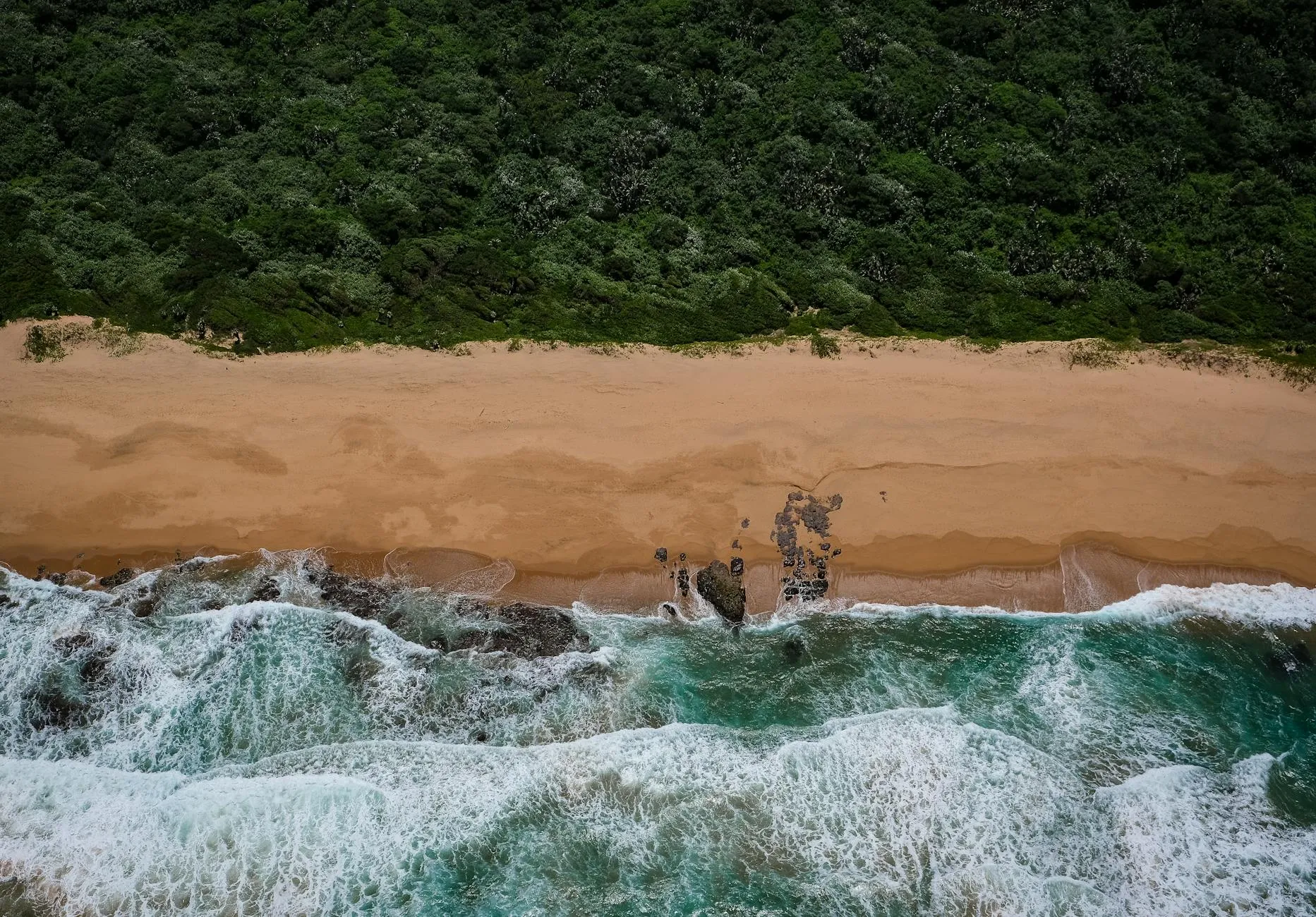
Pointe-Noire has a working waterfront and the Atlantic coast that the French call the côte sauvage, but the beach is exactly where the crime guidance concentrates, swimming in places has no lifeguard cover, and nothing in the city constitutes a marquee sight that makes a short excursion worth threading. The airport is 5–8 km from the centre, which makes leaving and returning physically easy — and the security picture is the actual constraint, not the distance.
If you have a long wait and a genuine reason to leave — a business meeting, a booked hotel night — use pre-arranged transport that meets you by name, travel in daylight, and keep to the main hotel districts. A taxi flagged from the rank is the wrong mode for that trip.
❓ FAQ
📊 At a Glance — PNR 2026
| Item | Detail |
|---|---|
| IATA / ICAO | PNR / FCPP |
| Terminal | Single passenger terminal; opened 2006 |
| Runway | 2,600 m; ~3 km inland from the Atlantic |
| Distance to centre | ~5–8 km, 15–30 min by taxi |
| Ground transport | Taxi only — no rail, no scheduled shuttle |
| Taxi caution | No reliable meters — agree fare in CFA francs first; avoid drivers who approach you in the hall |
| Currency | XAF (FCFA); fixed €1 = FCFA 655.957; ≈ FCFA 560–570/US$1 (September 2026) |
| Payment | Cash (CFA) for taxis and small spend; cards at larger hotels only |
| Visa | Required in advance for most nationalities; no general airport visa; CEMAC biometric-passport holders exempt |
| Health | Yellow-fever certificate mandatory; vaccinate ≥10 days before arrival |
| Lounge | Salon Ebène (1st floor, boarding area); Priority Pass + Amex Platinum; ~FCFA 16,000 walk-in; 07:00–22:00 daily per Priority Pass, closed Mondays per the operator |
| Carriers | Air France, Ethiopian, ASKY (Lomé), Royal Air Maroc (Casablanca from 25 Oct 2026, 2× weekly), Air Côte d’Ivoire, Camair-Co, Afrijet; Trans Air Congo & Equaflight domestic. Turkish Airlines withdrew 6 Jun 2026 |
| US advisory (May 2026) | Level 2 — Exercise Increased Caution; staff restricted to hotel-adjacent beaches in Pointe-Noire |
| UK FCDO (May 2026) | Advises against travel within 50 km of CAR border only; crime noted generally |
| Layover verdict | Stay airside on a normal connection; leave only for a booked reason with pre-arranged named transport |