Hat Yai International Airport (HDY) — Airport Guide 2026
Hat Yai International is southern Thailand’s main airport — a compact single-terminal operation 9 km east of a city that exists primarily for cross-border commerce, and from 15 September 2026 Thailand’s standard visa-exemption period for tourism is 30 days per entry, cut from 60 days by Interior Ministry notifications published in the Royal Gazette on 31 August 2026.
Quick Reference
HDY / VTSS
~9 km east of central Hat Yai, Songkhla Province
Single complex; domestic and international departures split by signage
Thai baht (THB, ฿) — ≈ ฿32.6 to US$1, ≈ ฿37.9 to €1 (May 2026)
฿60, hourly 07:00–21:00, to Hat Yai Bus Terminal 1 via city
Taxi ฿250–300 (official desk, arrivals); “Arrival Van” ฿100
Exempt, 30 days per entry from 15 September 2026 (60 days for entries up to 14 September)
TDAC — mandatory, free, file ≤72 hrs before arrival at tdac.immigration.go.th
The Coral Executive Lounge — Priority Pass; domestic airside, Gate 5 area, 09:00–18:00
Thai AirAsia, Thai Lion Air, Nok Air, Thai Airways, Bangkok Airways
Scoot (Singapore), AirAsia (Kuala Lumpur), Saudia (Jeddah)
✈️ The Terminal and What Flies
The single terminal handles both domestic and international flights, split by signage rather than separate buildings. Inter-terminal transfers are not a concept here. Check whether your gate is on the domestic or international side before you clear security — that split matters because the only lounge is on the domestic side (more on that below).
Thai AirAsia runs the most departures, roughly 80 a week, serving Bangkok, Kuala Lumpur and Chiang Mai most frequently. Thai Lion Air, Nok Air, Thai Airways and Bangkok Airways fill out a domestic schedule that is mostly a feed to and from Bangkok’s two airports.
The international layer is thin but specific: Scoot to Singapore, AirAsia to Kuala Lumpur, and Saudia operating the longest route out of HDY — a non-stop to Jeddah of about 6,750 km. The Jeddah service is not for tourists. It reflects Hajj and Umrah demand from southern Thailand’s Malay-Muslim population, and it is the one thing that makes HDY’s route map look unusual for an airport this size.
ℹ️ No realistic long-haul transit here
The international schedule at HDY is three routes: Singapore, Kuala Lumpur, Jeddah. If you are connecting onward from anywhere else, the realistic path is a domestic hop to Bangkok — not a long international layover at HDY.
🛂 Border & Visa
The border at Hat Yai is Thailand’s national system. Two things govern your arrival: whether you qualify for visa-free entry, and the digital arrival card you are required to file before you land.
Visa exemption — and the 2026 change
Ordinary-passport holders from 60 eligible countries and territories can enter Thailand visa-free for tourism for up to 30 days per entry from 15 September 2026. That list covers the US, UK, EU member states, Australia and Canada, among others.
The substantive 2026 development: on 19 May 2026, Thailand’s Cabinet approved reverting this to a 30-day visa exemption. The stated reason was that 60 days was long enough to be used for non-tourism stays. Four Interior Ministry notifications were published in the Royal Gazette on 31 August 2026, and the 30-day exemption applies from 15 September 2026. Entries up to 14 September 2026 were stamped for 60 days, and travellers already in Thailand keep the stay printed in their passport. The measures cover the tourism-purpose exemption and visa on arrival only.
⚠️ Visa duration: verify before you book
The 30-day cut was gazetted on 31 August 2026 and applies from 15 September 2026. Not every nationality that held the old 60-day exemption is on the new 30-day list. Confirm your passport’s current status against an official Thai government source — not this guide — before booking.
A separate group of countries — China, Russia, Vietnam and Laos among them — hold 30-day exemptions under bilateral arrangements rather than the unilateral scheme. Some other nationalities use a Visa on Arrival or apply for a tourist visa or e-visa in advance. If your passport is not on the exemption list, check which route applies before travelling.
The Thailand Digital Arrival Card (TDAC)
Thailand replaced its paper TM6 arrival slip with the TDAC, and it is now required of every foreign arrival regardless of visa status. File it online within 72 hours before arrival; it is free.
⚠️ TDAC scam sites — avoid
The only official portal is tdac.immigration.go.th. A run of lookalike sites charge a “service fee” for what is a free government form. File it at the official portal only. The TDAC is an arrival declaration, not a visa; it does not grant or extend your stay.
🚐 Getting Into the City
At 9 km from the centre, the airport-to-city run is short by any standard — 20 to 30 minutes depending on traffic, not the 45-minute slog a larger-city airport often imposes.
⭐ Airport minibus — ฿60
🚐 Airport minibus — ฿60, ~30 min
Runs from HDY to Hat Yai Bus Terminal 1 via the city, hourly on the hour from 07:00 to 21:00 (return direction 08:00–20:00). Counter is just right of the terminal exit. Stops include CentralFestival Hat Yai, the Clock Tower and Kim Yong Market. At roughly US$1.85 / €1.60, it is the best value if your timing lines up with the hourly departure.
🚐 Shared van
The “Arrival Van” runs into the downtown area for ฿100 per person and is more direct to the centre than the minibus — useful if the minibus has just gone or the stop isn’t near your hotel.
🛺 Songthaew within town
Songthaews — the shared pickup trucks that handle local transport across southern Thailand — run at around ฿20–30 per person for hops within Hat Yai once you have cleared the airport. Fares are by convention, not meter; settle the price before you get in.
🚕 Taxi
A metered or fixed-fare taxi into the city runs roughly ฿250–300 and is the practical option after the minibus stops for the night or if you are carrying a lot of luggage.
⚠️ Use the official taxi desk
Use the desk inside arrivals rather than accepting a ride from anyone who approaches you in the hall. The unmarked-car overcharge is the standard trap at Thai airports, and Hat Yai is no exception. Ride-hailing apps operate in Hat Yai and are worth checking against the taxi price, though airport coverage can be patchy.
🛋️ Lounge
Hat Yai has one lounge worth naming: The Coral Executive Lounge.
🛋️ The Coral Executive Lounge — Priority Pass, but check your gate first
Airside in domestic departures, second floor near Gate 5. Open daily 09:00–18:00 with a three-hour stay limit. Accepts Priority Pass; a paid Red Carpet VIP service also grants entry. Walk-in access is sold at the door at around ฿1,400 (roughly US$40 — confirm the current price on the day).
The catch for anyone flying internationally: the lounge sits on the domestic side. If you have cleared international security for a Saudia or other international departure, you may not be able to reach it. The Priority Pass that works for a domestic passenger does not help if the lounge is physically inaccessible from the international gate. HDY is small enough that the answer can simply be “no lounge on this side.” Check at the airport on the day rather than assuming your card covers you airport-wide.
🍜 Food Before You Fly
Hat Yai’s cooking is southern Thai and Sino-Malay — harder on the chilli, heavier on fresh turmeric and coconut than central Thai food, and the city is where you eat it properly rather than the airport.
🍗 Kai tod Hat Yai — the city’s signature
Fried chicken marinated and topped with crisp fried shallots, usually eaten with sticky rice. This is the dish Hat Yai is known for, and it is cheap and everywhere in the city. The airport food court does not do it justice.
The other staples are southern curries built on fresh turmeric with a harder chilli edge, and the dim-sum breakfast culture the town inherited from its Chinese trading families — small steamer baskets from early morning. Inside the terminal, the food is the usual Thai-airport mix of food courts and chain outlets, fairly priced by airport standards. If you have time before a flight, eat in town near Kim Yong Market rather than airside.
Duty-Free & Market Buys
International departures carry the standard duty-free run of liquor, tobacco and perfume. The buys that are actually Hat Yai are in town at Kim Yong Market — dried mango, cashews, salted plums, fish crackers and the cross-border snack trade the market exists for. They are cheaper there than at the gate, so do that shopping before you head to the airport.
🌆 Layover: The Honest Maths
Because the airport is 9 km out, the layover arithmetic is friendlier here than at most airports. The round trip into town and back is roughly an hour to ninety minutes of transit, leaving whatever time you have in between for the city.
With around four hours or more after clearing immigration, a city visit is realistic. That is enough for Kim Yong Market — the cross-border market sprawl in the centre — and a meal, then back. Build in the return buffer: aim to be heading back to the airport at least two hours before an international departure, or ninety minutes before a domestic one. The minibus runs hourly, so factor that into your timing.
⏱️ Four-hour threshold
Under about four hours between clearing immigration and your departure, stay in the terminal. The transit time each way plus security leaves no useful margin.
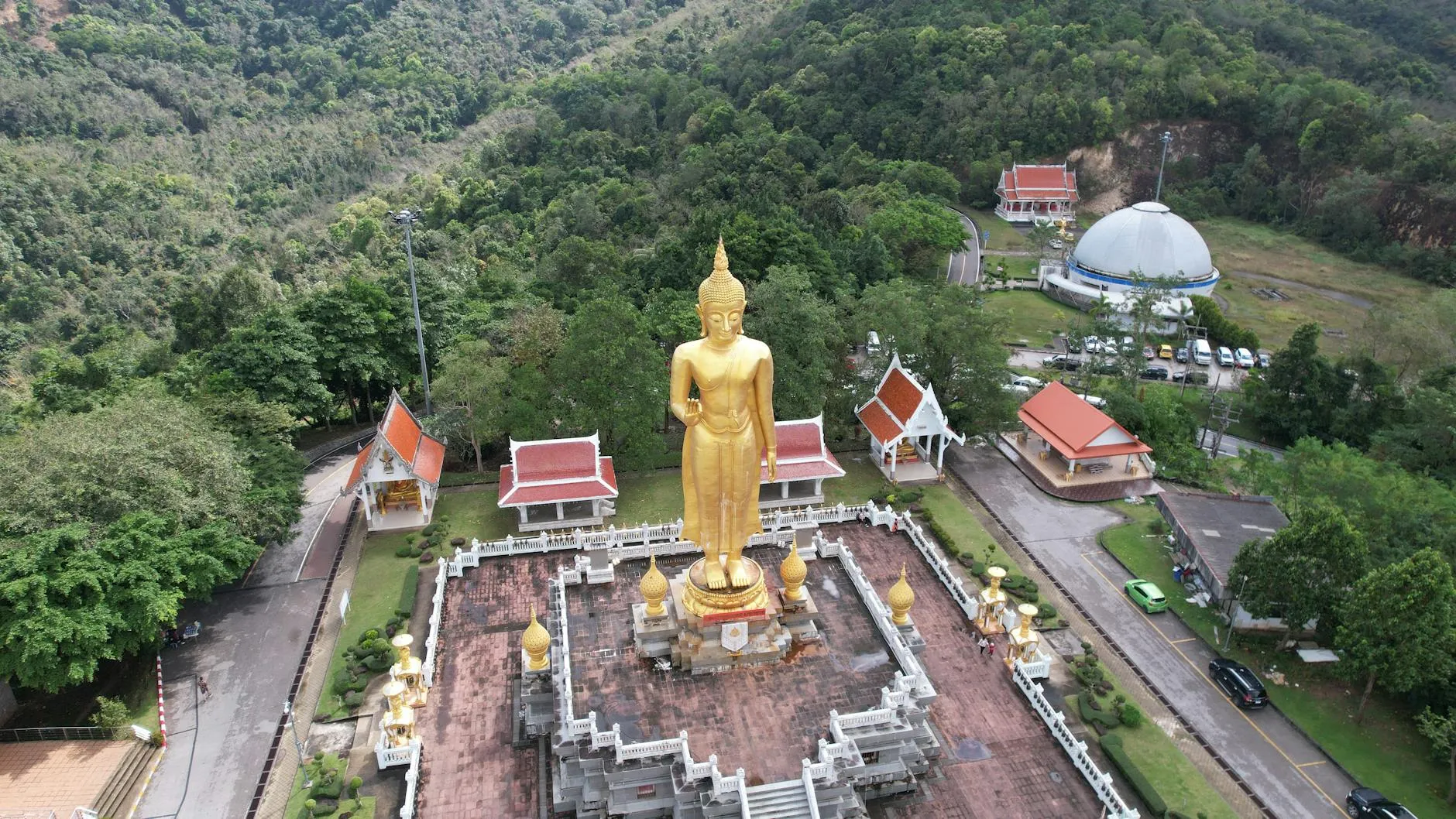
The bigger sights need a full day, not a connection. Wat Hat Yai Nai, with its 35-metre reclining Buddha, is a short ride from the centre and could be paired with the market on a half-day. Samila Beach and Songkhla Old Town are about 30 km away in the neighbouring town — a 45-minute drive each way — which on top of the airport-to-city leg runs past what a connection allows. The waterfalls at Ton Nga Chang sanctuary are a day trip.
If Hat Yai is your actual destination rather than a stopover, the maths inverts: the market, Songkhla and Ton Nga Chang are all straightforward day trips.
🔧 Practical Notes
Currency. The Thai baht trades at roughly ฿32.6 to the US dollar and ฿37.9 to the euro as of May 2026. Airport exchange counters give a weaker rate than banks or the in-town money changers around Lee Garden and the market district — change only what you need at the airport. Cash is genuinely necessary in Hat Yai: markets, songthaews and small eateries run on it. Cards work at hotels, malls and CentralFestival. PromptPay and mobile QR payment are widespread but tied to a Thai bank account, so a visitor relies on cash and cards.
Connectivity. Thai SIM and tourist eSIM packages are cheap and widely available; pick one up on arrival or load an eSIM before you fly. Coverage in Hat Yai and across Songkhla Province is solid.
❓ Frequently Asked Questions
📊 At a glance — HDY 2026
| Item | Detail |
|---|---|
| IATA / ICAO | HDY / VTSS |
| Distance to centre | ~9 km east of Hat Yai |
| Terminal | Single complex; domestic / international split by signage |
| Airport minibus | ฿60 → Hat Yai Bus Terminal 1 via city, ~30 min, hourly 07:00–21:00 |
| Shared van | “Arrival Van” ฿100 per person to downtown |
| Taxi | ฿250–300 from the official desk in arrivals |
| Songthaew | ฿20–30 per person for hops within town |
| Currency | THB (฿); ≈ ฿32.6/US$1, ≈ ฿37.9/€1 (May 2026) |
| Payment | Cash widely needed; cards at hotels/malls; PromptPay requires Thai bank account |
| Visa (most readers) | Visa-exempt, 30 days per entry from 15 September 2026 (60 days for entries up to 14 September) |
| Arrival card | TDAC — mandatory, free, file ≤72 hrs before arrival at tdac.immigration.go.th |
| Lounge | The Coral Executive Lounge — Priority Pass; domestic airside, Gate 5 area, 09:00–18:00, 3-hr limit; walk-in ~฿1,400 |
| Main carriers | Thai AirAsia (largest), Thai Lion Air, Nok Air, Thai Airways, Bangkok Airways |
| International routes | Scoot (Singapore), AirAsia (Kuala Lumpur), Saudia (Jeddah) |
| Layover verdict | Kim Yong Market + meal viable at ~4 hrs+; Samila Beach / Songkhla Old Town (30 km) — day trip, not layover; stay airside under ~4 hrs |