El Alto International Airport (LPB) — Airport Guide 2026
Since 1 December 2025, US citizens no longer pay Bolivia’s USD 160 reciprocity visa; the fee is abolished, making LPB visa-free for Americans, EU, UK, Australian and Canadian travellers alike. The bigger paperwork obstacle in 2026 is SIGEMIG, Bolivia’s mandatory online migratory pre-registration, which holds up more queues at El Alto than any visa issue ever did.
Quick Reference
LPB / SLLP
4,061.5 m (13,325 ft) — highest international airport on earth
El Alto city, ~13 km west of and ~500 m above central La Paz
International + adjacent Domestic, one building complex
25–50 min, traffic-dependent, on the autopista down the canyon wall
Boliviano (BOB) — official ~6.96/USD, parallel “blue” ~9/USD
Visa-free 90 days since 1 Dec 2025 (USD 160 fee abolished)
Visa-free 90 days, extendable to 180
SIGEMIG online pre-registration (free, ~10 min, QR code)
Required if arriving from endemic country / before Amazon travel
Boliviana de Aviación (BoA), LATAM Chile, LATAM Perú, Avianca
The Lounge VIP (Priority Pass + pay-in ~USD 27), International near gate 2
~80–120 BOB
~5 BOB to La Paz centre
25 BOB unlimited; single line 3 BOB
Airport 4,061 m, city centre 3,640 m — soroche affects 40–50% of arrivals
🏔️ The Airport at 4,061 Metres
El Alto International Airport sits at 4,061.5 m (13,325 ft) — the highest international airport on the planet. The engineering consequences are visible everywhere: the runway is longer than most because thin air gives jet engines and wings less to push against; aircraft take off slowly and climb slowly; and the pressurised cabin, when you step out of it, opens onto air with roughly 40% less oxygen than your body expects.
The terminal is one building with two adjoining halves — International handling everything crossing a border, Domestic a short indoor walk away for flights within Bolivia. Both share the same kerb. The International side holds immigration, customs and a compact duty-free zone. At peak departure banks — late morning, when the Lima and Santiago waves leave — the check-in hall and the single security line back up. Three hours before an international flight is the right margin; two for domestic; add more if you haven’t yet acclimatised, because walking a loaded bag across a terminal at 4,000 m is genuinely harder than it reads.
Landside: ATMs, currency exchange desks. Airside: the duty-free, most of the seating, and the lounge. There’s no airside hotel and no transit hotel. A long overnight connection means either the lounge until it closes or a hotel down in the city. Trolleys are free. Wi-Fi is present and workable at off-peak hours.
⚠️ Altitude hits at the gate, not after acclimatisation
You step from a pressurised cabin directly to 4,000 m with no gradual climb. The walk from gate to immigration to baggage to taxi is flat and short — do it slowly regardless. The people sitting down dizzy in the arrivals hall are the ones who sprinted or heaved a bag off the belt without pausing.
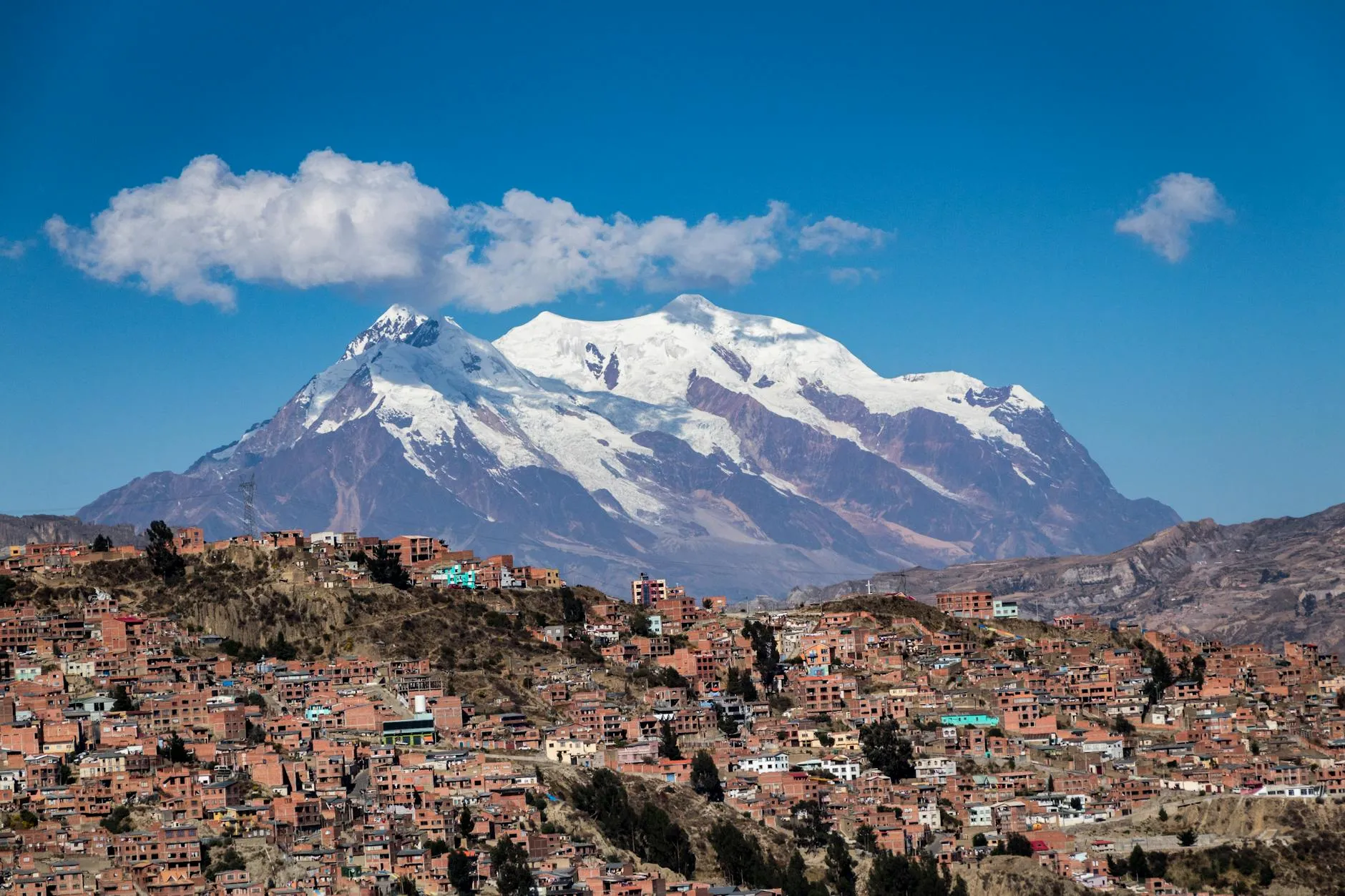
Unlike Quito, which relocated to a distant new field, LPB has stayed in El Alto’s sprawl. The drive to central La Paz is short because the runway never moved — a structural advantage over the new-build trend. The city itself is not visible from the terminal: La Paz sits down in a canyon ~500 m below, and El Alto occupies the flat altiplano rim above it. This geography shapes every transport decision.
The terminal has had piecemeal upgrades over the years and Bolivia has discussed a larger replacement, but treat any “new airport opening” claim with scepticism and verify against current status before building a trip around it — as of 2026, the existing terminal is what you fly through.
🛂 Border, Visa & SIGEMIG
Visas
The change that matters for 2026: US citizens, who for years paid a USD 160 reciprocity visa on arrival, now enter Bolivia visa-free as of 1 December 2025 — up to 90 days for tourism and business within a calendar year, extendable to 180 through migration offices. Any guide quoting the USD 160 fee, asking you to carry passport photos, or mentioning a visa desk is out of date.
UK, EU, Australian and Canadian citizens were already visa-free and remain so: 90 days on arrival, extendable to 180. Everyone needs a passport valid at least six months beyond entry, a blank page, and proof of onward travel.
SIGEMIG — The Real Queue at El Alto
Bolivia requires every foreign visitor to complete a SIGEMIG — Sistema de Gestión Migratoria — online pre-registration before arrival. It is free, takes about ten minutes at migracion.gob.bo, and produces a QR code you show at the immigration booth. Failing to do this is the single most common reason travellers get held up at El Alto’s immigration hall in 2026, well ahead of any visa issue.
🚨 Complete SIGEMIG before you fly
Do the free pre-registration at migracion.gob.bo, screenshot the QR code, and store it where you can access it offline. This is not optional and is not a check-in substitute. Skipping it means waiting in a separate queue at the immigration booth while your flight was already on time.
Yellow Fever
Not required for the highland route — La Paz sits too high for the relevant mosquito. An International Certificate of Yellow Fever Vaccination may be requested at the booth if you arrive from an endemic country, and it is genuinely required before travelling into Bolivia’s Amazon lowlands (Rurrenabaque, the Madidi). Carry the card if the jungle is on the itinerary.
Coca — Legal Here, Illegal to Export
Coca leaf and coca tea are legal, normal and everywhere in Bolivia, sold openly and offered as hospitality in most hotels. Using it is a routine altitude remedy. It cannot leave Bolivia in your luggage — coca leaf is illegal to import into the United States, the EU, the UK and most other countries. Drink it here; do not pack it.
💰 Currency & the Two-Rate Problem
The boliviano (BOB) is officially pinned at roughly 6.96 to the US dollar, a rate that has barely moved since 2011. The rate the country actually runs on — the parallel “blue” rate — sat around 9 BOB/USD in early 2026, because dollars are scarce and the fixed rate has not reflected reality for years.
The gap is real money. USD 100 gets you 696 BOB at the official rate or roughly 900 BOB at the parallel rate — about a third more purchasing power. Banks and the airport bureaux give the official rate. Cards bill at the official rate. Bringing clean, undamaged US dollars and exchanging them at the parallel rate is how careful travellers stretch their budget here.
💵 Bring crisp, undamaged dollar bills
A torn or marked note will be refused at a parallel exchange. Keep small boliviano notes for daily spending — breaking a 200 BOB note at a market or on a minibus is a constant irritation. Verify the current parallel rate the day you travel; it moves. Denominations: notes in 10, 20, 50, 100 and 200 bolivianos; coins in 1, 2 and 5 bolivianos plus centavos.
ATMs landside dispense bolivianos and sometimes dollars. Withdraw bolivianos for daily spending; use US dollars for parallel-rate exchanges in the city.
🚆 Getting to La Paz
The airport sits on the flat altiplano at El Alto; central La Paz is ~500 m below in a canyon. Arrival is downhill, departure is uphill, and traffic on the El Alto–Centro autopista is the variable that stretches the 25-minute trip toward 50 minutes.
Official Airport Taxi
Blue-and-white “Aeropuerto” cars from the taxi rank outside the terminal. Fares to central La Paz (Centro, Sopocachi): roughly 80–120 BOB. Agree the price before you get in — meters are rare. The simplest option with bags and altitude fatigue, and the fare is predictable enough to be safe.
Uber and InDrive
Both apps work in La Paz. InDrive, where you name your own price, is widely used and often undercuts the taxi rank. Airport pickups add friction: drivers may ask you to walk to a meeting point off the immediate kerb, and terminal Wi-Fi can be patchy before you have a local SIM. Load the app and sort a data connection before landing. Confirm the plate against the app.
Minibus Line 212
🚌 Line 212 — ~5 BOB, with conditions
The public minibus from the stop in front of the terminal toward La Paz centre via El Alto is the cheapest route by far. The catches are honest: the buses fill fast, luggage space is minimal, and stops are frequent. Fine if you travel light and have time; a poor choice with multiple bags and a new-arrival headache.
Shared Tourist Van
Per-seat transfers at roughly 30–50 BOB, dropping at a central point such as Plaza San Francisco. A middle option between the minibus and a private taxi.
Mi Teleférico — With an Asterisk
🚡 Mi Teleférico: not from the terminal door
The Red Line (Línea Roja) drops from El Alto’s 16 de Julio station to Estación Central near Plaza del Estudiante in about 10 minutes over 2.4 km with a 450 m descent — one of the better urban views on the continent. Single line: 3 BOB; transfer within 120 minutes: add 2.50 BOB; unlimited day pass: 25 BOB. The problem: 16 de Julio station is in El Alto’s Ceja district, a taxi ride or substantial walk from the terminal. From the airport you still need a vehicle to reach the cable-car network. With luggage, most arrivals take a taxi the full way and save the cable car for exploring the city later.
Car Rental
Agencies operate at the airport. Driving in La Paz is for the confident: steep grades, dense informal traffic, altitude affecting both you and naturally-aspirated engines, and parking that is its own negotiation. For reaching Tiwanaku or the altiplano, a rental car has genuine merit; for the city itself it is a liability worth skipping.
⚕️ Altitude — The One Thing That Will Slow You Down
⚠️ Go down first — El Alto is higher than La Paz
The airport at 4,061 m sits about 420 m above central La Paz, and the Zona Sur neighbourhood drops to around 3,200 m. Booking a hotel down in the canyon rather than up in El Alto is partly an acclimatisation decision — the lower you sleep, the better your body adjusts. If you feel rough after arrival, descending is the single most effective immediate fix.
Soroche (altitude sickness) affects an estimated 40–50% of arrivals, worst for those flying directly from sea level. Symptoms — headache, breathlessness, dizziness, fatigue, flat appetite — typically peak in the first 24 hours. The standard defences: move slowly on arrival day, skip alcohol the first night, drink water well past the point of thirst, eat light, and accept coca tea (mate de coca). Most La Paz hotels offer it free; it is on tap in the arrivals area. Acetazolamide (Diamox), started before arrival, reduces severity if your doctor approves.
People who fly sea level to 4,000 m in a single hop suffer most. If the itinerary allows flexibility, a night at Cochabamba (2,558 m) or Sucre (2,810 m) first makes a real difference. Do not plan anything physically demanding for the first day.
🛋️ Lounges
LPB has one lounge option. LATAM and Avianca passengers, including premium-cabin and elite cardholders, are directed to the same door as walk-in pay-in guests — there are no dedicated airline spaces here.
The Lounge VIP — International (near gate 2)
🛋️ The Lounge VIP — the only option, and a decent one
Airside in the International terminal near gate 2. Accepts Priority Pass members and walk-up guests regardless of airline or cabin class. Amenities: Wi-Fi, snacks and light meals, alcoholic and soft drinks, charging points, TVs, a smoking room, and showers. The showers are the standout for overnight connections. Walk-up access runs around USD 27 per visit — verify the current fee at the desk.
The Lounge VIP — Domestic (across from gate 9)
Same operator, smaller footprint, useful for connecting onto BoA or EcoJet domestic flights. Same Priority Pass and pay-in access.
If you’re not a Priority Pass member and your card doesn’t bundle it, the pay-in desk is your only door. There is no Amex Centurion Lounge at LPB and no premium alternative above The Lounge VIP to trade up to.
🍽️ Food Before You Fly
The markup past security is steep and competition is thin. Eat in the city before heading up to the terminal and treat the airport as somewhere to buy water and a coffee.
What to Eat and Where
Salteña — Bolivia’s mid-morning institution: a baked pastry with a soupy filling of meat, potato, peas and hard-boiled egg, eaten standing before noon. In a city salteñería, one costs roughly 10–18 BOB. At the terminal, expect 25–30 BOB for a worse version. Buy one in the city, carry it to the gate.
Api con pasteles — a thick hot drink made from purple corn, served with fried cheese pastries; a classic cold-morning altiplano breakfast for a few bolivianos at any market. A street thing, not an airport thing.
Pique macho — chopped beef, sausage, fries, egg and chillies on a sharing plate; a sit-down city dish that doesn’t translate to departure-gate food.
Almuerzo set lunch — soup, main and a drink for roughly 20–35 BOB at restaurants around Sopocachi or Mercado Lanza. The best-value meal in Bolivia. Nothing comparable exists in the terminal.
☕ Eat a proper meal in the city, not the terminal
An almuerzo set lunch in central La Paz runs 20–35 BOB for three courses — soup, main, drink. The airport has nothing near that range. If your departure schedule allows, eat before you head up the hill; a salteña bought at a city salteñería for 10–18 BOB travels fine and beats anything airside.
Duty-Free
Compact: spirits, some chocolate, tobacco, perfume. One purchase genuinely worth making:
Singani — Bolivia’s national grape spirit, the base of the chuflay (singani and ginger ale). Hard to find abroad. A bottle of a decent label is the one duty-free buy here that makes sense. Bolivia also produces Yungas-grown coffee and single-origin Amazonian cacao bars; both are worth picking up in the city or checking in the duty-free.
Coca tea and bagged coca leaf are sold landside. Legal within Bolivia — illegal to import into the US, EU, UK and most other countries. Do not pack it in checked luggage for an international onward flight.
💡 Day Trips, the City & Layover Honesty
Two things govern every excursion from LPB: altitude (charging up steep streets on arrival day is a poor idea) and canyon geometry (everything starts with a drive down or up the autopista).
Layover Math
A round-trip taxi to central La Paz is roughly 50–100 minutes of driving plus whatever traffic adds, before you have stood up at a single sight. Add a 2–3 hour international security buffer, and add more if you just landed from sea level and are moving slowly. Under about 6 hours, stay in the terminal. With 6–8 hours and prior acclimatisation, a quick trip for the Witches’ Market and a salteña is doable but tight. If traffic on the canyon autopista goes wrong, you miss a long-haul flight. That is the honest calculation.
In and Near La Paz (half-day, if acclimatised)
Mercado de las Brujas (Witches’ Market) — the herbalist and amulet market in the streets above Plaza San Francisco, selling dried llama foetuses, coca, and folk remedies. Central, ~25–50 min from the airport by taxi, walkable from the city centre.
Valle de la Luna — eroded clay spires ~10 km south of the centre in Mallasa; a short loop trail. Roughly 30–40 min from the centre by taxi. A genuine half-day combined with the Green Line of the cable car.
Mi Teleférico network — riding the lines for the canyon views is a legitimate half-day activity and the clearest way to understand the city’s vertical geography. The Red, Yellow and Green lines trace the climb from Zona Sur up the canyon wall to El Alto; the view from the top is what most people photograph. Day pass: 25 BOB.
Plaza Murillo and the historic centre — the main square holding the Palacio Quemado (government palace 1853–2018, named for an 1875 revolution that burned it; interior closed to the public, but there’s an hourly changing of the guard), the cathedral and the legislature. Flat, low-effort, suited to a first acclimatising day; ~25–50 min from the airport by taxi.
Calle Jaén — the best-preserved colonial street in La Paz: a short cobbled run of 18th-century houses just up the hill from Plaza Murillo, with four small museums (Casa de Murillo, Museo de Metales Preciosos, Museo Costumbrista Juan de Vargas, Museo del Litoral) bundled into one walkable visit.
Day Trips (full day, not layover options)
Tiwanaku — pre-Inca UNESCO ruins on the altiplano, 72 km / ~90 minutes each way by road. Public minibuses from Cementerio General (~15–20 BOB each way); organised tours run USD 55–100 with guide and lunch. Site entry for foreigners is about 100 BOB, covering the ruins and both on-site museums. Allow 6–8 hours door to door.
⚠️ Tiwanaku needs a clear 8+ hours against a fixed flight
The round trip is 3 hours of driving at minimum before you’ve walked any of the site. Traffic on the canyon autopista is not predictable. Do not attempt this against a connection under 8 hours.
Lake Titicaca / Copacabana — Copacabana is ~3.5–4 hours each way, including the vehicle-ferry crossing at the Tiquina strait. Isla del Sol day trips from La Paz run dawn to late night (typical tours: 7:30 am to ~10:30 pm). This is a 12–15 hour day — an overnight trip, not a layover option under any circumstances.
🔧 Practical Notes
Wi-Fi and SIM. Free terminal Wi-Fi is workable for messaging and ride-hailing at off-peak hours. For reliable data, buy a local SIM from Entel, Tigo or Viva — cheap prepaid tourist data bundles, a few tens of bolivianos for a usable package. Buy in the city or at a carrier kiosk; bring your passport for registration. eSIM travel packages work if your phone supports them and are the lower-friction option.
Safety. Violent crime against tourists is not the daily risk in La Paz; petty theft is. The pinch points are crowded transit and market zones — the minibus crush, Plaza San Francisco, the Witches’ Market streets, bus terminals — where bag-slashing and distraction theft happen. Use only the official blue-and-white airport taxis or a verified app car; do not accept an unmarked car offered inside the terminal. El Alto’s centre (the airport area) warrants more caution after dark than the tourist parts of central La Paz.
Tipping. Not deeply ingrained. Rounding up or roughly 10% in a sit-down restaurant is appreciated; taxi fares are not tipped beyond rounding.
Tap water. Do not drink it — for the usual reasons and because you need to hydrate hard against the altitude with water you trust. Bottled water is cheap and everywhere; buy it the moment you land and keep drinking.
❓ Frequently Asked Questions
📊 At a Glance — LPB 2026
| Category | Detail |
|---|---|
| Airport name | El Alto International Airport |
| IATA / ICAO | LPB / SLLP |
| Elevation | 4,061.5 m (13,325 ft) — highest international airport on earth |
| City served | La Paz (and El Alto), Bolivia |
| Distance to La Paz centre | ~13 km, 25–50 min by road, ~500 m descent |
| Terminals | International + adjacent Domestic |
| Currency | Boliviano (BOB); official ~6.96/USD, parallel ~9/USD |
| US visa | Visa-free 90 days since 1 Dec 2025 (USD 160 fee abolished) |
| EU / UK / AU / CA visa | Visa-free 90 days, extendable to 180 |
| Mandatory pre-arrival | SIGEMIG online registration (free, ~10 min, QR code) |
| Yellow fever | If arriving from endemic country / before Amazon travel |
| Official taxi to centre | ~80–120 BOB |
| Minibus line 212 | ~5 BOB |
| Shared tourist van | ~30–50 BOB |
| Mi Teleférico | 3 BOB/line, 2.50 BOB transfer within 120 min, 25 BOB day pass |
| Lounge | The Lounge VIP (Priority Pass + pay-in ~USD 27), International near gate 2 |
| International carriers | BoA, LATAM Chile, LATAM Perú, Avianca |
| Tiwanaku | 72 km, ~90 min each way; entry ~100 BOB; full day required |
| Copacabana / Titicaca | ~3.5–4 h each way; overnight, not a layover |
| Altitude sickness | Affects 40–50% of arrivals; coca tea, slow first day |
| Tap water | Not drinkable — buy bottled, hydrate hard |