Florianópolis–Hercílio Luz International Airport (FLN) — Airport Guide 2026
The operative change since April 2025: US, Canadian and Australian passport holders now need a Brazilian e-Visa, there is no processing it on arrival, and the terminal has exactly one lounge — a competent regional room, not a flagship.
Quick Reference
FLN / SBFL
Florianópolis–Hercílio Luz International (branded “Floripa Airport”)
Zurich Airport Brasil (Flughafen Zürich AG, concession since 2017)
Single, opened 28 Sep 2019 (ops from 1 Oct 2019)
41,000 m²; ~8 million passengers/year
~12–14 km north; Centro on Santa Catarina Island
Brazilian real (BRL, R$)
~R$5.04 = US$1; ~R$5.45 = €1 — verify before budgeting
e-Visa required since 10 Apr 2025; brazil.vfsevisa.com; US$80.90
Visa-free, 90 days
Not required for entry; recommended for Santa Catarina — verify with your doctor
The Lounge Florianópolis (Priority Pass / LoungeKey / Diners / Mastercard), near gate 6
GOL, LATAM, Azul (domestic); TAP (Lisbon, daily, ~10h35); Aerolíneas Argentinas, Flybondi (Argentina)
INSULAR conventional, ~R$2.90, ~27–30 min (verify)
Uber / 99, ~R$60–80, 20–30 min
~R$67–90
Treated; most travellers drink bottled
10% serviço usually on the bill
🏢 Terminal — What Zurich Built
Flughafen Zürich AG won the 30-year concession for Hercílio Luz in 2017 and replaced the 1970s structure with a new building on the opposite side of the runway. The current terminal opened 28 September 2019 and went live for operations on 1 October 2019. At 41,000 m² it is roughly four times the floor area of the building it replaced, rated for about 8 million passengers a year. Signage runs bilingual Portuguese/English throughout; the check-in halls are wide, security rarely backs up outside the December–February peak, and arrivals is navigable.
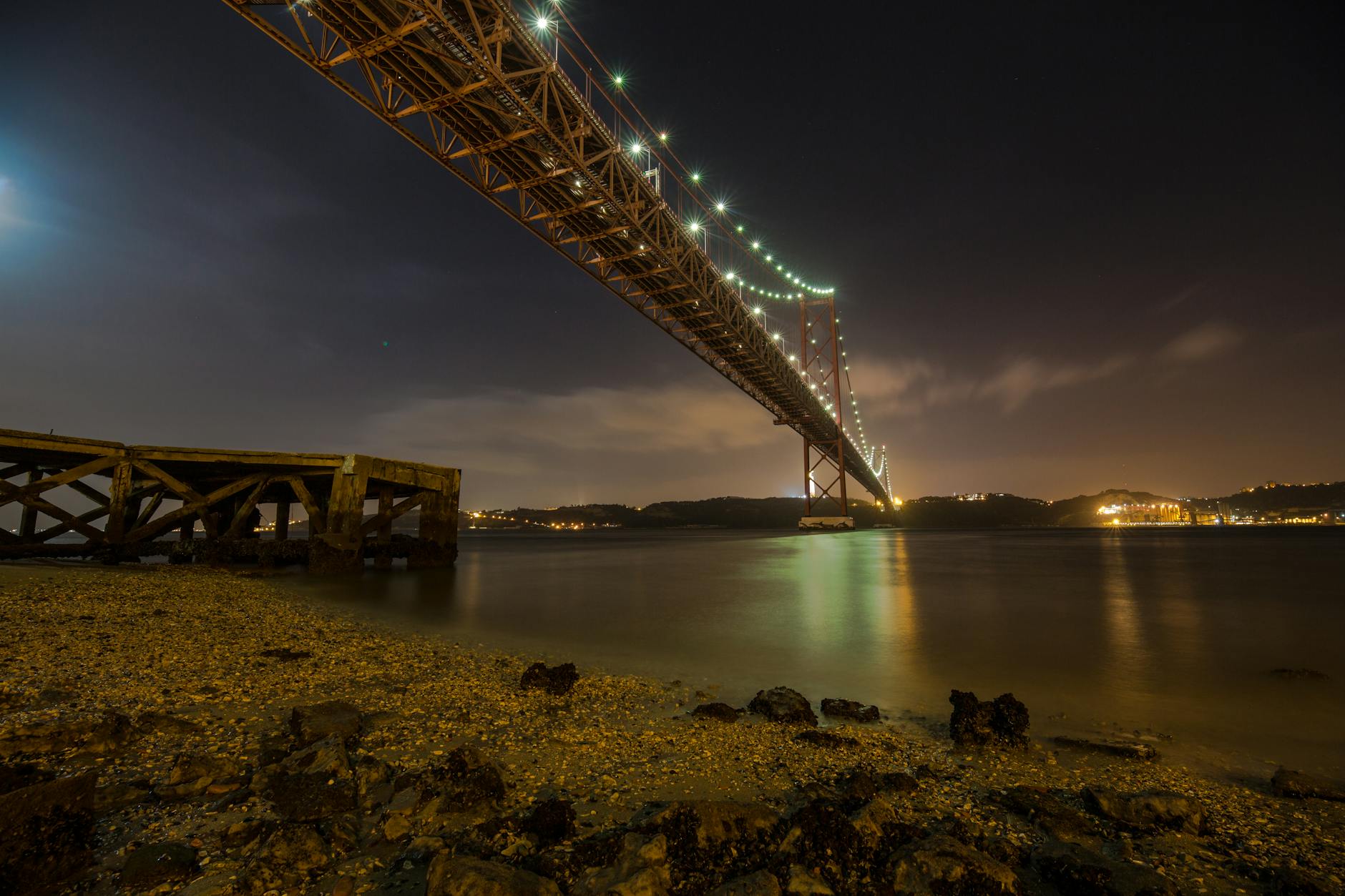
The old terminal is still standing across the runway — it handles cargo and general aviation now, not scheduled passengers, and you won’t see it from the new building. The airport takes its name from Hercílio Luz, the Santa Catarina governor who commissioned the suspension bridge that still carries his name. The Ponte Hercílio Luz opened 13 May 1926 — at 819 m it was the longest suspension bridge in Brazil and the longest eyebar-suspension span in the world when it opened. It closed entirely in 1991 over structural concerns, then reopened after a full restoration on 30 December 2019, the same year the new terminal came online. It sits ~12 km north of the airport at the island end, floodlit at night.
Layout is simple. Check-in and departures are on the upper level; arrivals and baggage reclaim sit below. Domestic and international share the same building, separated airside by immigration rather than by separate structures. The international apron handles TAP’s daily Lisbon widebody and the Argentine narrowbodies. The single lounge is upstairs in domestic departures.
Practical notes for arrival: ATMs from Banco do Brasil, Bradesco and Itaú sit in the arrivals area — use those rather than the standalone machines that push dynamic-currency conversion. Car-rental desks line the arrivals hall. The rideshare pickup point is signed out of arrivals and is separate from the taxi rank; drivers will sometimes wave you toward the wrong one, follow the signage. Outside the morning and evening flight banks, concessions close — a pre-dawn or late-night departure will find most units shuttered, so carry food and water if your flight sits in one of those windows.
🛂 Border & Visa
The e-Visa Reinstatement
🚨 e-Visa required — US, Canadian and Australian passports
Brazil reinstated visa requirements for these three nationalities on 10 April 2025. There is no visa-on-arrival and no airport e-Visa counter. Apply at brazil.vfsevisa.com before you fly. The fee is US$80.90.
The change is reciprocal: Brazil’s position is that these countries require visas of Brazilians, so Brazil requires visas of them. The application goes through brazil.vfsevisa.com, operated by VFS Global on behalf of Brazil’s Ministry of Foreign Affairs. Approval typically arrives within a few business days; the official window allows up to 10. The e-Visa permits stays of up to 90 days, extendable once within a 12-month period, with the maximum total at 180 days in any 12 months. Multiple-entry validity is 10 years for US citizens and 5 years for Canadian and Australian citizens.
A swarm of look-alike sites charge a markup for forwarding the same form. Apply only through brazil.vfsevisa.com.
Most Western European nationals — UK, Ireland, Germany, Spain, Portugal, Italy, the Netherlands and the rest of the EU — remain visa-free for tourism, 90 days, extendable once for a further 90 up to 180 days a year.
🇫🇷 French passport holders — check current status
France has been named in Brazil’s 2026 reciprocal-visa moves. Confirm your current entry requirements before booking rather than assuming the old visa-free rule still applies.
Whatever your nationality, carry proof of onward or return travel — immigration can ask for it on arrival, and the TAP Lisbon inbound is where they are most likely to.
The Real
Brazil’s currency is the real (plural: reais, symbol R$, code BRL), introduced on 1 July 1994 under the Plano Real that ended hyperinflation. In late May 2026 the rate sits around R$5.04 to US$1 and roughly R$5.45 to €1 — the real had firmed about 12% over the prior year, so verify the live rate before you budget. Notes run R$2, R$5, R$10, R$20, R$50, R$100 and R$200; coins are 5, 10, 25 and 50 centavos plus R$1. The R$200 note, introduced in 2020 with a maned wolf on the back, is genuinely hard to spend on small purchases — taxi drivers and beach kiosks will groan at it.
There is no parallel-exchange reality in Brazil the way there is across the border in Argentina — one official rate, and no advantage to carrying US dollars to swap on the street. Card acceptance is near-universal and contactless is standard. Pix, Brazil’s instant bank-transfer system run by the central bank, handles a large share of everyday payments, but as a foreigner without a Brazilian CPF tax number and a local bank account you will rely on cards rather than Pix.
💱 ATMs — Decline “Charge in Home Currency”
Use the Banco do Brasil, Bradesco or Itaú ATMs in the arrivals hall, not the standalone machines. When prompted, always pay in reais rather than your home currency — dynamic conversion always favours the machine. At the late-May-2026 rate, dividing a real price by five gives a rough US-dollar figure (R$100 ≈ US$20); divide by about 5.5 for euros.
Health
No vaccination is legally required to enter Brazil from most countries. Santa Catarina is within the area where yellow-fever vaccination is recommended by health authorities; if you continue to or arrive from certain other countries a yellow-fever certificate can be required onward — check your specific routing and your doctor’s advice well before travel, since the vaccine needs around 10 days to take effect. Florianópolis is at sea level, so there is no altitude adjustment. The practical concerns are sun — the South Atlantic sun in December–March is severe — and the usual caution around untested beach-kiosk food in the summer heat.
🚆 Getting Into the City
The airport is ~12–14 km south of Centro, and the road crosses toward the bridges linking the island to the mainland. Every option below takes roughly 20–50 minutes depending on mode and traffic; December–February and Saturday changeover days are the slow ones.
🚆 Uber / 99 — R$60–80 to Centro, 20–30 min
Both apps operate at FLN. Install before you land and have one loaded with an international card. Pickup is at the designated rideshare point — follow the signs out of arrivals, not toward any driver who waves you inside the hall. Fares to Lagoa da Conceição run roughly R$55–75; out to Jurerê, R$90–130 depending on surge and time of day.
🚌 Municipal Bus — R$2.90 to TICEN
INSULAR’s conventional lines connect the airport to TICEN (the central bus terminal in Centro) for around R$2.90, taking roughly 27–30 minutes. From TICEN, the integrated network reaches beach neighbourhoods. Verify the current fare and line numbers before travel — municipal tariffs and route numbers change. Executive services also serve the airport at fares in the R$4.50–14 range depending on line; faster and more comfortable but less frequent. Check the current schedule at the airport’s ground-transport desk. The bus is fine for light luggage; with a board bag or large case going to the far side of the island, the rideshare earns the difference.
Official Taxi
The airport-authorised taxi rank sits outside arrivals. A metered or fixed-fare cab to Centro runs roughly R$67–90, broadly comparable to a non-surge rideshare. The advantage is zero app friction on arrival. Confirm before you get in whether you are paying by taxímetro or a fixed airport tariff.
Rental Car
For circling the island’s 42 beaches or pushing inland to the Serra Catarinense, rent a car — the major agencies have desks in arrivals. The island’s main roads are good, but the SC-401 north toward Jurerê and the lanes around Lagoa da Conceição’s centrinho get slow in the December–February high summer, and parking at the popular beaches — Mole, Joaquina, Campeche — fills early on summer weekends. For a Centro-and-Lagoa long weekend, rideshare is cheaper and removes the parking problem entirely. Brazil drives on the right; foreign licences are accepted for short tourist stays alongside an International Driving Permit and the rental paperwork. Fuel is sold by the litre and most stations take cards.
🛋️ Lounge
🛋️ The Lounge Florianópolis — the only one in the building
Global Lounge Network, upper level domestic departures, near gate 6, open roughly 04:00–21:00. Access via Priority Pass, LoungeKey, Diners Club, Mastercard’s lounge programme, or walk-up paid entry. There is no Centurion lounge, no Plaza Premium, and no dedicated TAP or Star Alliance facility at FLN — TAP Lisbon business-class passengers and Star Alliance Gold cardholders use this lounge along with everyone else.
The offer is competent rather than aspirational: a snack-and-light-meal buffet, hot and cold drinks, showers, a rest area with daybeds, a small kids’ room, a business corner, and Wi-Fi. The timing problem is the single daily TAP widebody. The whole aircraft’s worth of international passengers funnels through the one lounge in the hours before pushback, so the buffet and showers are at their busiest exactly when you want them. On a quiet domestic morning it is close to empty. For a sub-two-hour wait, the walk-up door rate rarely pays off; for a delayed evening international departure it can.
🍽️ Food Before You Fly
Eat in town. Airport food at FLN carries the standard concession premium — a pão de queijo and coffee that cost a handful of reais at a Centro padaria run noticeably more airside — and the terminal is not where you want your one shot at a proper Santa Catarina meal. Use the airport for coffee and something light. Outside the flight banks, the food court thins out; if your flight sits at a pre-dawn or late-night departure, buy water and food before you clear security, or pick it up in town on the way.
The Santa Catarina Food Canon
The island’s cooking is Azorean-descended seafood, and the dish to know is the sequência de camarão — a shrimp sequence, several preparations of prawns served in succession: breaded, in garlic, in a bobó coconut-cassava cream, with rice and pirão. You find it at the waterfront restaurants of Santo Antônio de Lisboa and Ribeirão da Ilha, the two 18th-century Azorean colonial villages on the island’s calmer western shore. Ostras (oysters) are the other anchor: Santa Catarina farms the overwhelming majority of Brazil’s cultivated oysters, and Ribeirão da Ilha — a row of pastel Azorean houses, cobbled lanes and a small colonial church on the southwest coast — markets itself as the country’s oyster capital, with the oyster rafts visible offshore from the tables where you eat them. Santo Antônio de Lisboa has a livelier evening scene; Ribeirão is the dedicated oyster pilgrimage.
Tainha (mullet) is the winter catch in season roughly May–July and a local fixation when it runs. The German-Brazilian cuca — a streusel-topped coffee cake — reflects Santa Catarina’s heavy German immigration inland around Blumenau and the Vale Europeu. The island’s drink is the caipirinha — cachaça, lime, sugar — and you will be offered one at every oyster lunch.
Take-Home
The international duty-free is modest, sized for the once-daily TAP-Lisbon and the Argentine narrowbody traffic — not a Guarulhos-scale shopping floor, so don’t plan gift-buying around it. Better to buy in town: a decent aged cachaça from a Centro shop will give you better value and a wider selection than the tourist labels airside. Santa Catarina’s artisan beer is also worth carrying out — the Vale Europeu around Blumenau is one of Brazil’s serious craft-beer regions, a direct legacy of 19th-century German settlement. Coffee is the obvious Brazilian take-home, but a Centro grocer will give you better value and a wider selection than the terminal. Fresh oysters and seafood stay on the island.
🏖️ Beaches — What’s Reachable
The airport is in the south of the island. Some beaches are a short drive; others are a genuine haul across the island.
Praia do Campeche — ~10 km from the terminal, ~15–20 min by car. Long, open, Atlantic-facing, strong surf. The layover beach if you have one and are on a domestic connection.
Lagoa da Conceição — ~15 km, ~20–40 min. The island’s social and gastronomic centre: a saltwater lagoon ringed by restaurants, sandboarding on the dunes between the lagoon and Joaquina, and nightlife in the centrinho. The Avenida das Rendeiras lakeside — named for the rendeiras, the lacemakers who still sell bobbin lace there — and the Morro da Lagoa viewpoint over the water are the set pieces. For one half-day on the island, spend it here.
Costa da Lagoa — a fishing village on the far side of the lake, reachable only by boat or a hiking trail with no road access. Scheduled launches run from the centrinho to waterfront seafood restaurants; allow a half-day for the round trip and check the boat schedule before committing.
Praia Mole — ~20 km, ~25–30 min. The surf-and-scene beach, steep sand, strong shore break, busy in summer.
Praia da Joaquina — next to Mole, ~20 km. The serious surf beach, host to national and international surf competitions for decades. The dunes between Joaquina and Lagoa da Conceição are the island’s sandboarding spot, with board rental at the base. Strong currents — it is a surfers’ beach more than a swimmers’ one.
Jurerê / Jurerê Internacional — ~36 km, 45 or more minutes to the north end of the island. Calm, sheltered water and the upmarket beach-club strip, where the money concentrates in January. A long way from the airport — worth it only if you are staying out there.
Santo Antônio de Lisboa & Ribeirão da Ilha — the Azorean colonial villages on the western shore, ~20–30 min. Quieter, older, the island’s history rather than its beach scene.
Ponte Hercílio Luz — the 1926 suspension bridge, restored and reopened December 2019, ~12 km north at the island end. Floodlit at night; a 20-minute detour from the airport.
Off the island, for travellers actually staying in Florianópolis: Beto Carrero World in Penha (~110 km north, roughly 1h30–2h by car) is one of Latin America’s largest theme parks and a full day in itself. The Serra Catarinense — the mountain interior around Urubici and São Joaquim, one of the coldest corners of Brazil — is reached via the switchbacks of the Serra do Rio do Rastro and takes 3–4 hours each way. It is the opposite of the beach Florianópolis: apple orchards, occasional frost and snow, canyons and megalithic rock formations. Organised excursions run from the city. Neither of these is a day-trip from a layover.
⏱️ Layover Math
⏱️ FLN is a destination airport, not a hub — plan accordingly
Round-trip transit plus a return-security and emigration buffer is the entire calculation, and the international emigration queue ahead of the single daily TAP widebody is the variable to respect.
- Under 4 hours: stay in the terminal, or at most a quick rideshare to Campeche (10 km) and back — on a domestic connection only, where the re-clear is fast.
- 4–6 hours: Lagoa da Conceição (15 km, 20–40 min each way) is feasible with discipline — a meal and a lagoon viewpoint, back at the terminal 2 hours before an international departure. Skip it if traffic is heavy on a summer Saturday.
- Jurerê (36 km, 45+ min each way) requires an overnight, not a connection.
🔧 Practical Notes
Connectivity. Free terminal Wi-Fi covers the basics. For a stay, the cleanest data option is an eSIM — Vivo runs a passport-based tourist eSIM with around 30-day validity, no Brazilian CPF required, and several international eSIM providers cover Brazil. A physical prepaid SIM from Vivo, Claro or TIM is possible but requires presenting your passport and is fiddlier. Coverage across the island and in Centro is good; the Costa da Lagoa trail and the southern tip are where it thins.
Safety. Florianópolis consistently rates among the safer state capitals in Brazil. Petty theft and phone-snatching concentrate in Centro after dark, around the TICEN bus terminal, and on crowded summer beaches where bags are left unattended. Standard discipline applies: phone away on the street, nothing visible in a parked car, no flashing of an expensive camera or watch on the bus, and avoid walking Centro’s quieter blocks late at night alone. Lagoa da Conceição’s centrinho nightlife is busy and generally fine; take a rideshare home rather than walking unfamiliar streets at 3 a.m.
⚠️ Rip currents — Mole, Joaquina, Campeche
The bigger physical risk at the open Atlantic beaches is the rip currents and shore break, not crime. The shore break at Praia Mole is strong enough to dump you. Swim where the lifeguard flags are and not at the unwatched ends. The sheltered north-shore beaches — Jurerê, Canasvieiras — and the lagoon are the calm-water alternatives if you are travelling with children.
Tipping. Restaurants add a 10% serviço to the bill; it is customary to leave it and not expected to add more. Round up taxis; tip rideshare in-app if you want.
Tap water. Treated and chlorinated, legally potable. Most travellers and plenty of locals drink filtered or bottled water on taste and stomach-caution grounds. Bottled water is cheap and sold everywhere; stick to it on a short trip.
❓ Frequently Asked Questions
📊 At a Glance — FLN 2026
| Feature | 2026 Data |
|---|---|
| IATA / ICAO | FLN / SBFL |
| Terminal | Single, opened 28 Sep 2019 (ops 1 Oct 2019) |
| Terminal size / capacity | 41,000 m²; ~8 million passengers/year |
| Operator | Zurich Airport Brasil (Flughafen Zürich AG, concession since 2017) |
| Distance to Centro | ~12–14 km north; Centro on Santa Catarina Island |
| Rideshare to Centro | Uber / 99, ~R$60–80, 20–30 min |
| Rideshare to Lagoa da Conceição | ~R$55–75 |
| Rideshare to Jurerê | ~R$90–130 |
| Taxi to Centro | ~R$67–90 |
| Bus to Centro (TICEN) | INSULAR conventional, ~R$2.90, ~27–30 min (verify) |
| Executive bus services | R$4.50–14 depending on line (verify) |
| Closest beach | Campeche, ~10 km, ~15–20 min |
| Social hub | Lagoa da Conceição, ~15 km, ~20–40 min |
| Far north beach | Jurerê / Jurerê Internacional, ~36 km, 45+ min |
| Currency | Brazilian real (BRL, R$) |
| Rate (late May 2026) | ~R$5.04 = US$1; ~R$5.45 = €1 (verify) |
| Entry — US / Canada / Australia | e-Visa since 10 Apr 2025; brazil.vfsevisa.com; US$80.90 |
| Entry — most W. Europe | Visa-free, 90 days |
| Yellow fever | Not required for entry; recommended for Santa Catarina (verify) |
| Lounge | The Lounge Florianópolis (Priority Pass / LoungeKey / Diners / Mastercard) |
| International nonstop to Europe | TAP Lisbon, daily, ~10h35 |
| Main carriers | GOL, LATAM, Azul; TAP; Aerolíneas Argentinas, Flybondi |
| Tap water | Treated; most drink bottled |
| Tipping | 10% serviço, usually on the bill |
| SIM / data | Vivo tourist eSIM (passport-based, ~30-day validity) or physical prepaid SIM |