Sri Guru Ram Dass Jee International Airport (ATQ) — Airport Guide 2026
A ₹240-crore expansion is in motion to push ATQ’s annual capacity from 2.5 million to 5.5 million passengers — because the airport already handled 2.94 million in the year to March 2026, and its single 40,000-square-metre terminal is near its design ceiling whenever several Gulf and UK widebodies cluster in the same evening window.
Quick Reference
ATQ / VIAR
Sri Guru Ram Dass Jee International Airport, Amritsar, Punjab
Airports Authority of India (AAI)
One integrated building (~40,000 m²), international + domestic wings
Single, 3,657 m, CAT III-B ILS (fog-capable)
~11 km / 25–30 min by road
~30 km / ~60 min by road
Indian rupee (INR, ₹); ~₹95.8 = US$1, ~₹111.4 = €1 (late May 2026)
India e-Visa (indianvisaonline.gov.in); Nepal/Bhutan nationals only visa-free
~US$10–25 (30-day), ~US$40 (1-year), US$200 (5-year; US$160 US, US$484 UK)
None — Air Suvidha discontinued; e-Arrival card online within 72h
₹350–500 (~US$3.70–5.20), fixed at arrivals counter
₹250–400 (~US$2.60–4.20) via Ola/Uber, surge-dependent
None to the airport
Primus (domestic dep.), The Airr Lounge & Bar (intl dep.) — Priority Pass
None
30 min, then paid top-up (~₹20/hr)
FTI-TTP e-gates since September 2025 — Indian passport + OCI only
₹240 crore; capacity 2.5M → 5.5M/year; peak-hour 1,600 → 2,000
~2.94 million
🏢 The Terminal — One Building, Two Personalities
ATQ runs everything through a single integrated terminal. The “Terminal 1 / Terminal 2” language that appears on some booking engines refers to the domestic wing and the international wing of the same structure — they share a forecourt and a roof but have separate departure halls, separate lounges, and no airside connection between them. An international arrival connecting to a domestic flight must clear immigration and customs, emerge to the public concourse, and re-enter through domestic security. Build that re-screen into your connection time.
The building is physically capable beyond what its passenger numbers suggest. Four jetbridges, 30 check-in counters, 26 immigration counters, a single runway at 3,657 metres with a CAT III-B instrument landing system installed in 2016–17. That ILS rating matters in December and January when Punjab’s winter fog can suspend operations at smaller north-Indian airports for hours at a stretch; ATQ keeps working. The 26 immigration positions in a single hall also mean international arrival queues here clear faster than at Delhi on a difficult evening.
The terminal’s history is older than the building. Scheduled aviation at this site dates to 1930 under British rule; the current arrivals hall opened in September 2005 and the integrated terminal was completed by February 2009. The airport was renamed in November 2010 to honour Guru Ram Das — the fourth Sikh Guru and the founder of Amritsar. The official spelling used on Air India’s airport page and on Priority Pass is “Jee,” which is what you’ll see on signage; “Ji” appears in some references but names the same person.
The expansion approved for 2026 would double peak-hour handling from 1,600 to 2,000 passengers and more than double annual capacity to 5.5 million. ATQ’s passenger count of 2.94 million in the year to March 2026 makes clear why: it is already running close to its ceiling at busy periods, and the international hall feels it on evenings when a UK departure, a Doha flight, and two Gulf services are all boarding in the same window. Until the new capacity is built and open, arrive three hours before an international departure, not two.
✈️ Who Flies Here
ATQ carries more international weight than most tier-2 Indian cities can justify, and the explanation is the Punjabi diaspora. The airport’s long-haul anchor is Air India, which operates direct services to Birmingham and to London (the London end has served both Heathrow and Gatwick at different points — verify which terminal against your current booking). Gulf connectivity runs through Qatar Airways on Doha year-round, with IndiGo, SpiceJet, and Air India Express covering Dubai and Sharjah on a mix of year-round and seasonal schedules.
Southeast Asia is where the route map has grown. Malaysia Airlines flies Kuala Lumpur; Scoot, the Singapore Airlines low-cost arm, connects Singapore; AirAsia and Thai Lion Air add further regional capacity. Four Asian carriers expanded their ATQ schedules for the winter 2025–26 season. Domestically, IndiGo, Air India, and SpiceJet link Delhi, Mumbai, and other metros. About nine airlines serve the airport in total.
The practical read for travellers: direct options exist from the UK and the Gulf. From North America or Australia, you will connect through Delhi or a Gulf hub. Check which London airport your Air India flight uses before you book onward connections — it has shifted.
🛂 Visas, Immigration and Health
🗂️ The e-Visa
India has no general visa-on-arrival. The only nationalities that enter without a visa are Nepalese and Bhutanese citizens. Everyone else applies in advance, and the practical route is the e-Tourist visa at the official government portal, indianvisaonline.gov.in.
⚠️ Visa-agent websites — avoid
Dozens of lookalike domains style themselves as Indian e-visa portals and charge a markup for the same government product. Apply only at indianvisaonline.gov.in. If the URL is anything else, close the tab.
The e-Tourist visa comes in three tiers. The 30-day multiple-entry version runs roughly US$10–25, with a discounted April-to-June window that drops it to about US$10. The one-year multiple-entry is around US$40; the five-year multiple-entry is US$200 for most nationalities on the government’s country-wise schedule, with US passports at US$160 and UK passports at US$484, so check your own country’s figure on the portal directly. A bank charge of 3% is added on top of the stated fee. The e-Visa must list ATQ as a permitted port of entry; Amritsar is a designated e-Visa airport, so this is rarely a problem, but confirm it on your approval document before you fly.
Nationalities not eligible for the e-Visa route use a regular paper/sticker visa through an Indian consulate or high commission.
⚡ FTI-TTP Fast Immigration
⚡ Fast-track immigration — Indian passport and OCI only
Since September 2025, eight automated e-gates (four on arrivals, four on departures) clear biometric passages in seconds under the FTI-TTP scheme. It costs nothing to use but requires registration first, online at ftittp.mha.gov.in, followed by a one-time biometric enrolment at a designated international airport (Amritsar is one) or at an FRRO office. It is limited to Indian passport holders and OCI (Overseas Citizen of India) cardholders. A UK or Canadian passport without an OCI card does not qualify, regardless of origin. Membership runs for 10 years, or until your passport expires if that comes sooner. For anyone flying this route regularly on an eligible document, it is the single most time-saving step available at ATQ.
Foreign-passport holders use the staffed immigration counters, which at Amritsar’s 26-position hall process arrivals faster than at the major metro airports on a busy evening. ATQ was one of five airports — alongside Lucknow, Thiruvananthapuram, Trichy, and Kozhikode — where the scheme launched in September 2025.
🩺 Health Requirements
The Air Suvidha health declaration required during the COVID era no longer exists. There is no airport health gate for ordinary arrivals in 2026. One pre-arrival form does still exist, and it is not a health one: foreign nationals and OCI cardholders can complete an e-Arrival card online within 72 hours before landing, at boi.gov.in or indianvisaonline.gov.in or through the official Indian Visa Su-Swagatam app. It records arrival information and is not a visa. A yellow fever certificate is only required if you are arriving from or transiting a yellow-fever-risk country — a document check, not a vaccination that most travellers on UK or Gulf routings will ever need.
🚖 Getting Into the City
There is no train, no metro, and no reliable scheduled public bus to ATQ. The airport sits off the Amritsar–Attari road northwest of the city, and the city bus network does not run a dependable airport service.
🚕 Prepaid Taxi — The Default First Move
A government-operated prepaid taxi counter is located just outside the arrivals hall. You pay a fixed fare at the desk, receive a slip, and hand it to the driver — no negotiation at the vehicle. The fare to the Golden Temple area or city centre runs ₹350–500 (US$3.70–5.20) for the 11-kilometre, 25–30-minute trip.
🚕 Prepaid taxi — use this on arrival
The prepaid counter at arrivals sets a fixed fare to the city (₹350–500), the driver is logged, and you avoid the touts who work the exit. On a first visit, late at night, or with luggage, it is the right choice. Confirm the slip shows your destination before you leave the counter.
📱 Ola / Uber
Both apps operate at ATQ and usually undercut the prepaid taxi when surge pricing is off — often ₹250–400 (US$2.60–4.20) to the centre. The limitations are real: pickup zones may require a short walk from the arrivals exit, and late-night driver availability at a quieter airport thins out quickly. Use app-cabs in daylight with a working data connection; fall back to the prepaid counter at night or on arrival.
🚗 Pre-Booked Private Car
Hotels and transfer operators charge roughly ₹600–900 (US$6.30–9.40) for a sedan to the Golden Temple area, more for larger vehicles. You pay a premium over the prepaid taxi for a named driver waiting with a sign. Worth the difference with a large group arriving late; otherwise the prepaid taxi covers the same distance for less.
🛺 Autorickshaws and the City
Three-wheelers don’t reliably queue at the airport for the 11-km highway run — save them for short hops around the walled city once you’re based near the temple. Agree the fare before boarding (₹50–150 for most city-centre runs); meters are theoretical. E-rickshaws cover the same short hops more cheaply and are common near the temple approaches. Ola and Uber both run in the city for longer trips if you want to skip the fare negotiation. There is no city metro.
One restriction around the Golden Temple: drivers cannot enter the pedestrianised zone immediately around Harmandir Sahib. Whatever transport you book will drop you at the precinct edge — a short, well-signed walk to the entrance.
🛋️ Lounges — Two Confirmed, One Doubtful
ATQ’s lounge situation is simpler than the online directories suggest, as long as you know which two to rely on.
Primus Lounge sits in domestic departures. It accepts Priority Pass, a range of premium Indian credit cards including HDFC and Axis reserve-tier products, and Diners Club. Walk-in admission runs roughly ₹800–1,200 (US$8.40–12.50) per person. Standard Indian-airport lounge format: hot buffet, coffee, soft drinks, washrooms, charging.
The Airr Lounge & Bar is on the international side, also on the Priority Pass network, covering Gulf, UK, and Southeast Asia departures after emigration. Same broad model: buffet, bar, seating airside.
⚠️ Plaza Premium — verify before you rely on it
A Plaza Premium Lounge appears in some directories for ATQ, but current reviews report it may no longer be trading. If your card or membership is specifically routing you to Plaza Premium, confirm it is open before you plan around it. Primus and The Airr are the reliable pair for 2026.
Neither lounge is an airline flagship product. There is no Air India Maharaja Lounge, no Qatar Al Mourjan equivalent here. Whatever your ticket class, the contract lounges above are what ATQ offers. If the serious lounge experience matters, it lives at your Gulf or European hub, not Amritsar.
🍽️ Food and Duty-Free — Skip the Terminal, Eat in the City
The terminal’s food is functional. Costa Coffee, packaged-snack counters, a couple of sit-down options on each side. Airport markup applies at the standard Indian-airport multiple: a coffee that is ₹120 in town runs ₹300 or more airside; a basic meal that is ₹150–250 at a city dhaba costs ₹500–700 inside the terminal.
🍽️ Eat in the city, not the airport
A ₹600 airport meal buys two people a full dhaba lunch in the walled city with enough change left for lassi. The quality difference is substantial, not marginal.
Punjab’s regional food is worth the effort:
- Amritsari kulcha — stuffed, crisp-baked flatbread, the local obsession, eaten with chole (chickpea curry) and a smear of butter. A plate at a city dhaba is ₹80–150 (US$0.85–1.60).
- Lassi — thick sweet yoghurt drink served in a heavy steel tumbler; ₹50–100 in the city.
- Sarson da saag with makki di roti — mustard greens with cornflour flatbread, the winter dish.
- Langar — the free communal vegetarian meal served round the clock at the Golden Temple. It costs nothing; a donation is customary but not solicited. More on this below.
Three long-running city institutions worth naming: Bharawan Da Dhaba near the Town Hall has traded for over a century, vegetarian, known for chole kulche and sarson da saag. Kesar Da Dhaba in the old city was founded in 1916 and relocated from Sheikhupura after Partition; its overnight-cooked dal, parathas, and thalis are the draw, and a full meal there costs a fraction of airport pricing. Brothers Dhaba on the Golden Temple outer road is the kulcha-and-dal-makhani stop within a few minutes’ walk of the shrine. All three are a short ride from the temple precinct.
On duty-free: the international departure side has a small shop with the usual liquor, tobacco, and confectionery. Selection and pricing are unremarkable compared with Delhi or a Gulf hub — if you want significantly discounted spirits, buy them at your connection, not here. The regional goods actually worth carrying out are in the old-city bazaars: amritsari warian (sun-dried spiced lentil dumplings), papad, pinni (ghee-and-flour sweet), and phulkari embroidered textiles. You get them far cheaper and better at Hall Bazaar and the lanes around the temple than in any terminal shop.
India’s inbound duty-free allowance permits arriving passengers to bring up to 2 litres of alcohol and a small tobacco quantity — verify current limits before loading up at your departure hub, as the figures change. Punjabi sweets and sealed food can be carried out of India, but check your destination country’s import rules, as fresh and dairy items are commonly barred elsewhere.
🕌 Harmandir Sahib and Jallianwala Bagh
The Golden Temple — ~11 km, 25–30 min
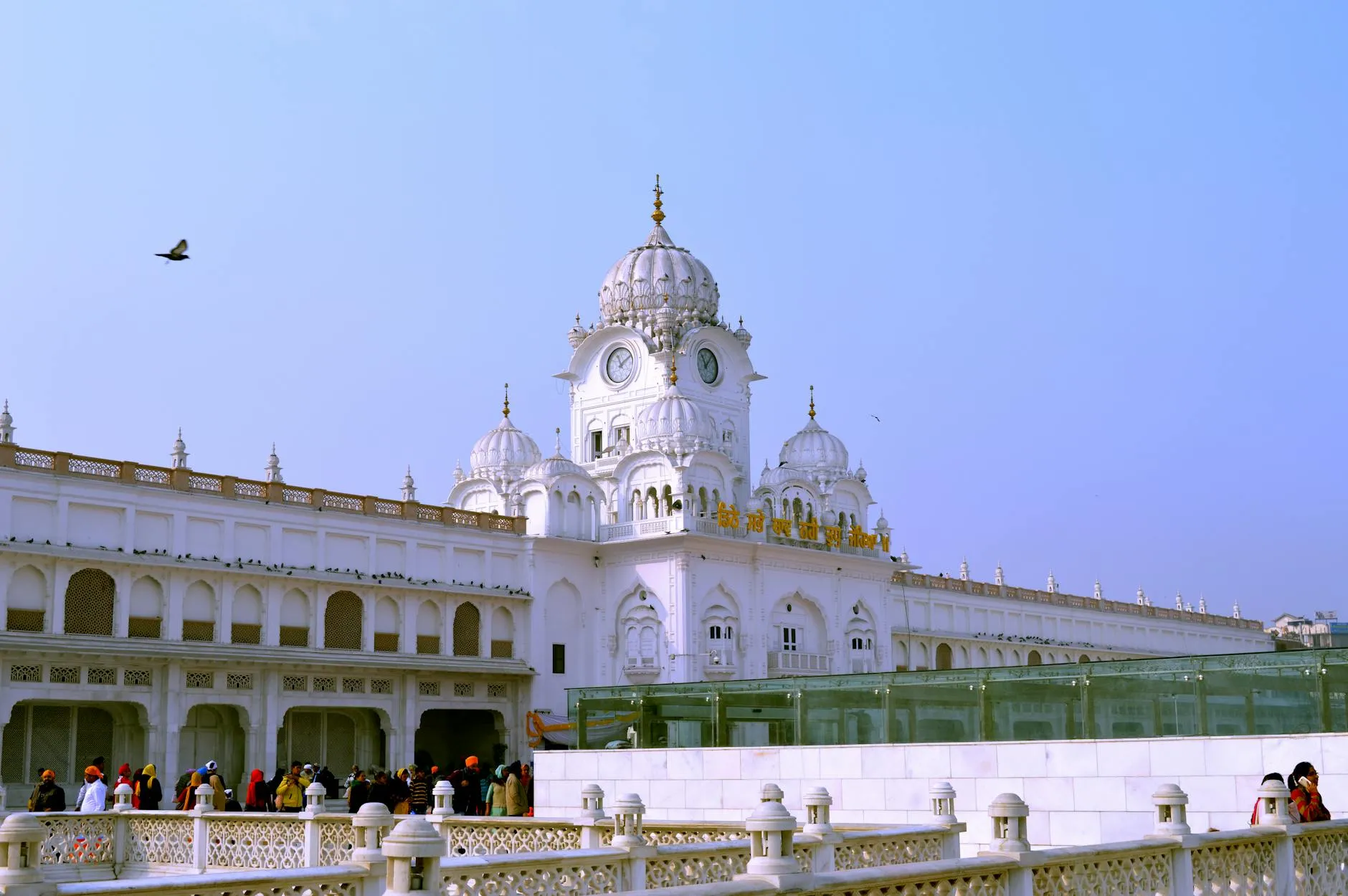
Harmandir Sahib is the centre of Sikhism, a gold-leafed shrine set in the middle of the Amrit Sarovar — the sacred pool that gave Amritsar its name, meaning “pool of nectar.” Entry is free, open to all faiths, day and night.
The etiquette is specific and enforced: cover your head (cloths handed out free at the entrance, or buy a bandana from a nearby stall for ₹10–20), remove and check your shoes at the free counter, and wash your feet through the shallow channel before stepping onto the marble. No shorts or bare shoulders; no alcohol or tobacco anywhere in the complex. Photography is fine around the pool; not inside the inner sanctum.
The temple is at its best before dawn and after dark, when the gold is lit and reflected in the still water. Allow at least two hours to visit properly — longer if you join the slow queue across the causeway into the inner shrine, which runs an hour or more at peak times.
The langar — the temple’s free communal kitchen, serving a vegetarian meal round the clock to anyone who arrives — is worth experiencing as a visit in its own right. Sit cross-legged in long rows, take a plate, eat, hand it back. Volunteers cook and serve tens of thousands of meals a day. A donation is welcome; no one asks for one. It is one of the largest free community kitchens in the world.
Five minutes’ walk from the temple, Jallianwala Bagh is the walled garden where British troops fired on an unarmed crowd on 13 April 1919, killing hundreds. Entry is free. The bullet-marked walls and the memorial well are preserved. Treat it as a companion visit rather than an afterthought — 30 to 45 minutes, and a sober counterweight to the shrine.
🕰️ Golden Temple layover math — minimum 5 hours
The round trip from ATQ is roughly 22 km and 50–60 minutes of driving with traffic, plus a minimum two-hour check-in and security buffer for an international return departure, plus time at the temple itself. Under 5 hours between flights, stay airside. With 6 hours, you can visit without watching the clock. Do not conflate “quick look” with “visit” — the inner shrine queue alone can run an hour.
🚩 The Wagah Border Ceremony — Not a Layover Option
The Wagah–Attari border ceremony is a synchronised flag-lowering retreat conducted every evening at the only road crossing between India and Pakistan — high-stepping guards, a roaring crowd on both sides, and a piece of choreographed nationalism that has run for decades. Attendance is free; you pay only for transport. The ceremony starts in the late afternoon: roughly 4:15–4:30 pm in winter and 5:15–5:30 pm in summer. Times shift with the season, so verify locally on the day. Seating fills well before the start and security screening at the venue is slow — plan to be in position at least 90 minutes before the ceremony begins. In practice, leave Amritsar around 2:30–3:00 pm in winter.
Getting there (Wagah is ~30 km): a double-decker tourist bus runs from the city for around ₹350 (US$3.70), with an open-air top deck. A shared or return autorickshaw for a small group runs about ₹800 (US$8.40). A private car return is roughly ₹1,800 (US$18.80).
⚠️ Wagah is not a layover — minimum full day
The round trip is about 60 km; the ceremony plus crowd egress runs 2–3 hours; the venue is congested getting in and out; and you still need a two-hour airport buffer for an international departure. Figure 7–8 hours minimum, with margin for traffic. Wagah works as an evening trip when you are staying overnight in Amritsar, not as a connection activity.
Summer visits are uncomfortable — Amritsar pushes past 40°C in May and June, and Wagah’s outdoor venue has no shade. The ceremony is at its most atmospheric in the cooler months.
🏛️ If You’re Staying a Night or More
The sights beyond the temple that earn the time:
The Partition Museum in the old Town Hall, a short walk from Harmandir Sahib, is the most substantive visit in the city after the temple itself. A documentary record of the 1947 Partition told through survivor testimony and objects, it runs 1–2 hours and offers a direct account of why Amritsar is what it is today.
Gobindgarh Fort, a restored 18th-century fort near the city centre, runs sound-and-light shows and food stalls under a single ticketed entry and works well as an evening activity.
Ram Tirath, around 11 km west of the city, is a temple site connected with the Ramayana tradition that draws a large fair in November.
The Maharaja Ranjit Singh Museum and Durgiana Temple — a Hindu temple built on the architectural model of the Golden Temple — fill out a full city day. None of these is viable on a layover; they are for travellers who have committed at least one night.
A Realistic One-Night Plan
Land, take the prepaid taxi (₹350–500) to a hotel near the temple. Walk to Harmandir Sahib in the late afternoon. Eat kulcha or a thali at a city dhaba (₹100–250). Leave for Wagah by 2:30–3:00 pm if it’s winter, watch the ceremony, return to the old city for the evening. See the Golden Temple again after dark when the lighting is on. Next morning: the Partition Museum or Jallianwala Bagh, then back to ATQ. That sequence covers most of what people come here for inside 24 hours with no car required.
🔧 Connectivity, Currency, and Practical Notes
📶 Wifi and SIM
The terminal provides 30 minutes of free wifi; top it up at the help desk or selected retail outlets for roughly ₹20 per hour afterward. Sufficient for summoning a cab or sending an arrival message. Don’t rely on it for pulling up travel documents at the immigration counter — carry a printed or downloaded copy of your e-Visa approval.
SIM counter availability at ATQ is unreliable; reports of an active telecom desk at arrivals are mixed. The two networks that matter for Punjab coverage are Airtel and Jio. An eSIM bought before you fly is the cleanest solution for a short visit — you land already connected and skip the activation delay (Indian tourist SIM activation can take a few hours). If you prefer a physical SIM, buy it in the city with your passport and visa in hand.
💵 Currency and ATMs
The rupee is not freely convertible outside India — arrive with little or no INR and get it here. Use the ATMs in the arrivals concourse rather than the airport currency-exchange desks, which carry the worst rates you’ll encounter all trip. Cards work widely in Amritsar; UPI, India’s instant-payment system, runs most local transactions but generally requires an Indian bank account, so as a visitor you’ll rely on cash and cards.
⚠️ Refuse ₹2,000 notes as change
The ₹2,000 note has been largely withdrawn from circulation since 2023. Anyone offering one as change is likely trying to offload an illiquid note onto you. The denominations in active use are ₹10, ₹20, ₹50, ₹100, ₹200, and ₹500.
Carry small denominations — ₹10s, ₹20s, and ₹50s — for autorickshaws, small donations, and the Wagah tourist bus. Tell your bank you’re travelling to Punjab before departure, or a ₹500 ATM withdrawal from Amritsar may trigger a block.
🌡️ Heat and Seasonality
🌡️ Summer heat — May and June exceed 40°C
The marble around the Golden Temple pool gets fiercely hot underfoot in summer (you are barefoot in the precinct). Visit before 8:00 am or after sunset in the hot months. The Wagah outdoor venue is similarly brutal in full sun — winter is the right season for that trip.
November through February is the comfortable window for sightseeing. Dense morning fog is the only operational downside in those months, and ATQ’s CAT III-B instrument landing system handles it better than most smaller north-Indian airports. Winter departure delays at Amritsar are less common than at fog-prone fields nearby.
🔌 Power and Other Practicalities
India runs on 230V with Type C, D, and M sockets (round-pin European-style and larger three-round-pin). UK and US visitors need an adapter; buy one before you fly rather than airside. Charging points exist in the departure halls but are not plentiful.
Tipping: round up the taxi fare; ₹50–100 for a porter; 5–10% at a sit-down restaurant if service isn’t already added. At the langar, donations go in the box, not to the servers.
Tap water is not safe for visitors — use bottled or filtered water throughout. The Golden Temple serves clean drinking water inside the complex. The main health risk in the hot months is heat, not food; the usual travel-food caution applies regardless.
❓ Frequently Asked Questions
📊 At a Glance — ATQ 2026
| Feature | Detail |
|---|---|
| IATA / ICAO | ATQ / VIAR |
| Full name | Sri Guru Ram Dass Jee International Airport |
| City / region | Amritsar, Punjab, India |
| Operator | Airports Authority of India (AAI) |
| Terminal | One integrated terminal (~40,000 m²), international + domestic wings |
| Runway | Single, 3,657 m, CAT III-B ILS |
| Distance to Golden Temple | ~11 km / 25–30 min |
| Distance to Wagah border | ~30 km / ~60 min |
| Currency | Indian rupee (INR, ₹); ~₹95.8 = US$1, ~₹111.4 = €1 (late May 2026) |
| Entry system | India e-Visa (indianvisaonline.gov.in); visa-free for Nepal/Bhutan only |
| e-Visa fees | ~US$10–25 (30-day), ~US$40 (1-year), US$200 (5-year; US$160 US, US$484 UK) |
| Health form | None — Air Suvidha discontinued; e-Arrival card online within 72h |
| Prepaid taxi to city | ₹350–500 (US$3.70–5.20) |
| App-cab to city | ₹250–400 (US$2.60–4.20), surge-dependent |
| Private transfer | ₹600–900 (US$6.30–9.40) to Golden Temple |
| Rail / metro / public bus | None |
| Lounges | Primus (domestic dep.), The Airr Lounge & Bar (intl dep.); Priority Pass; walk-in ₹800–1,200 |
| Airline flagship lounge | None |
| Airlines served (~9 total) | Air India, Air India Express, IndiGo, SpiceJet, Qatar Airways, Malaysia Airlines, AirAsia, Scoot, Thai Lion Air |
| Key international routes | Birmingham, London, Dubai, Sharjah, Doha, Singapore, Kuala Lumpur |
| Free wifi | 30 min, then ~₹20/hr top-up |
| Fast immigration | FTI-TTP e-gates (September 2025); Indian passport + OCI only |
| 2026 expansion | ₹240 crore; capacity 2.5M → 5.5M/year; peak-hour 1,600 → 2,000 |
| Passengers (yr to Mar 2026) | ~2.94 million |
| Wagah ceremony times | ~4:15–4:30 pm winter / ~5:15–5:30 pm summer (verify locally) |
| Tap water | Not safe for visitors — bottled or filtered only |
| Best season | November–February; heat exceeds 40°C in May–June |