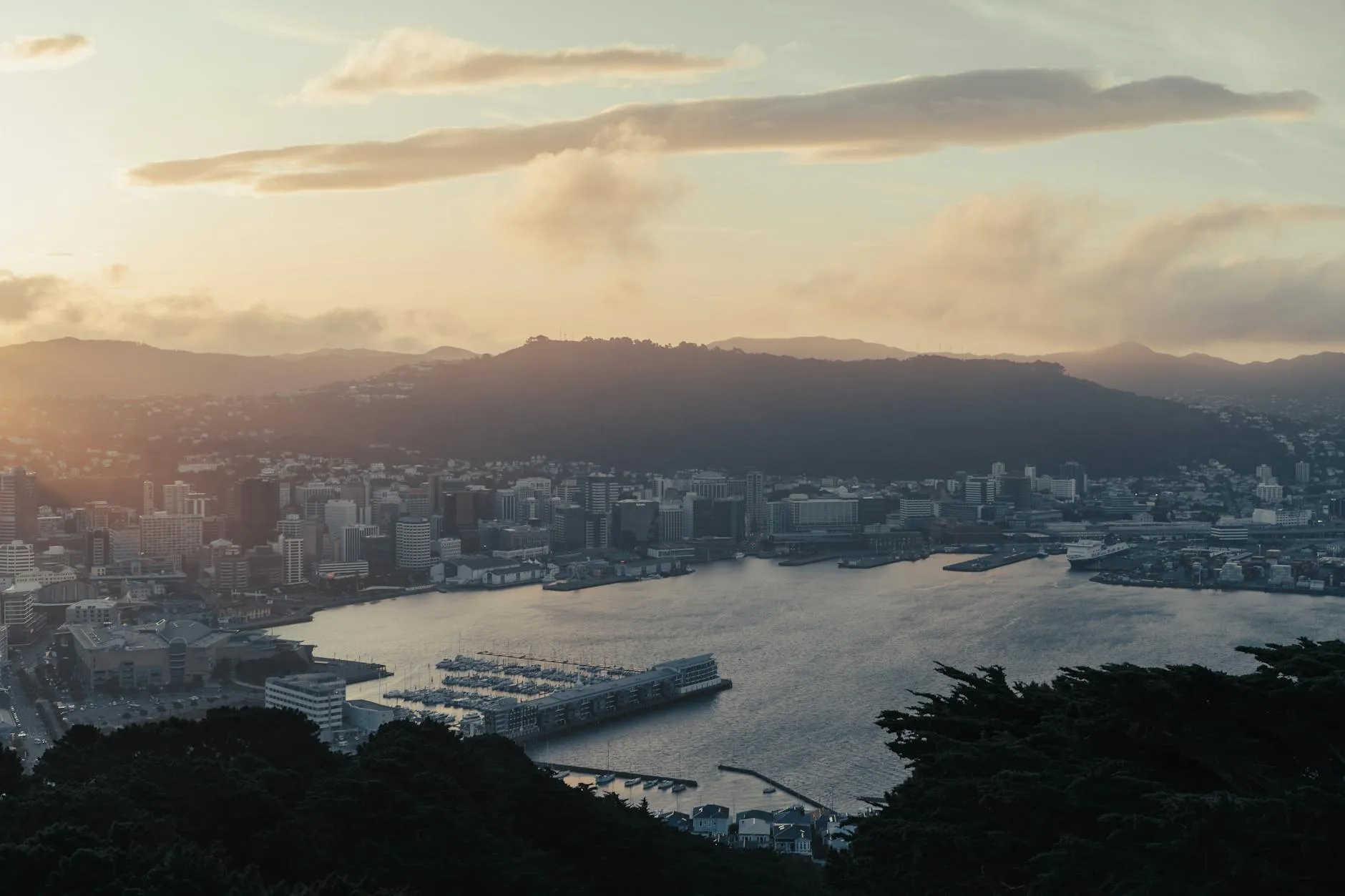
Wellington International Airport (WLG) — Airport Guide 2026
Wellington’s airport charges visa-waiver visitors NZD 117 in pre-travel paperwork before they’ve set foot on the plane — and then delivers one of the more memorable landings in commercial aviation once they do.
Quick Reference
Wellington International Airport
WLG / NZWN
Rongotai isthmus, 5.5 km southeast of the CBD
One building, three piers (south, south-west, north-west)
Single, 1,815 m; EMAS arrestor beds extend effective stopping length to 1,947 m (completed March 2026)
New Zealand dollar (NZD); 1 NZD ≈ USD 0.59 / EUR 0.51 (late May 2026)
Air New Zealand
Sydney, Melbourne, Brisbane, Gold Coast; Nadi (Fiji)
None — runway too short for a fully loaded widebody
NZeTA required before boarding (visa-waiver visitors); Australian citizens exempt
NZD 17 (mobile app) or NZD 23 (website)
NZD 100, paid alongside the NZeTA
NZD 9.23 Snapper / NZD 12.00 cash or contactless; 25–35 min to CBD
NZD 35–55; 15–25 min
Air New Zealand Koru (regional and international; the domestic lounge is closed); Qantas Lounge (international)
Not accepted at WLG
Yes — “WLG Airport Free WiFi”
Safe to drink
Not expected
~5.4 million (~4.6M domestic, ~0.8M international)
25 October 1959 (current configuration)
🏢 Terminal Layout: One Building, Three Piers
Everything at WLG flows through a single terminal of about 32,300 square metres, split into three piers. You can walk the full length of it in under ten minutes — one of its genuine practical advantages over large multi-terminal airports where inter-terminal transfers eat your connection buffer.
Gate numbering follows the airlines:
- Gates 3–12 handle regional turboprops and the Sounds Air and Air Chathams services keeping the lower North Island and the Chathams connected.
- Gates 13–17 are Air New Zealand’s domestic jet gates.
- Gates 21–29 cover Jetstar domestic and all international departures.
Departures are upstairs, arrivals downstairs. The building is straightforward enough that signage is more courtesy than necessity.
The current airport opened on 25 October 1959 after a major rebuild. An earlier airfield operated on the same isthmus from 1929 to 1947 before being shut on safety grounds — short runway, bad approaches, the same hostile geography that still defines the place today. The 1959 reconstruction lengthened and realigned the runway. The fundamental constraint didn’t move.
⚠️ No runway extension coming soon
The 1,815-metre runway is why WLG has never sustained a direct long-haul route — the numbers don’t work for a fully loaded widebody. A physical extension into Cook Strait has been discussed for years without progressing. The southern seawall work is a separate coastal-protection renewal — the Wellington region’s first fast-track approval, in May 2026, with construction planned for 2029–2034 — not a runway project. For Asia, the Middle East, Europe or North America, you connect through Auckland.
In 2025 the airport installed Engineered Materials Arrestor System (EMAS) beds at the runway ends — crushable material that stops an overrunning aircraft. Work finished in March 2026, pushing effective stopping distance to 1,947 metres. This is a safety measure, not a capacity expansion. The broader NZD 500 million, five-year investment programme announced in late 2024 also covers terminal upgrades and new public space around Lyall Bay.
✈️ The Approach
Cook Strait acts as a wind tunnel. Pre-frontal north-westerlies accelerate through the gap between the North and South Islands, hit the Rongotai isthmus, and turn the final approach into a wrestling match. Crosswind landings, late go-arounds and the occasional cancelled service in a southerly gale are routine here in a way they aren’t at Auckland or Christchurch. Pilots earn their pay at WLG; passengers grip the armrests.
It is almost always fine. It rarely feels fine.
🛂 NZeTA, IVL & Entry Requirements
New Zealand requires visa-waiver visitors to have their paperwork in order before they board, not on arrival. The NZeTA — New Zealand Electronic Travel Authority — is checked at the gate by the airline. Turn up without one and you don’t fly. This catches people every year who assumed New Zealand still ran on landing cards.
⚠️ Get the NZeTA before you book, not the night before
The NZeTA must be obtained before boarding. It costs NZD 17 through the official Immigration New Zealand mobile app or NZD 23 through the website. On top of that you pay the International Visitor Conservation and Tourism Levy (IVL) of NZD 100 at the same time. Total: NZD 117 via the app or NZD 123 via the website — roughly USD 69–73. The NZeTA is valid for two years or until your passport expires. Australian citizens are exempt from both; Australian permanent residents need the NZeTA but not the IVL. The IVL is non-refundable even if your NZeTA is declined.
The IVL was raised from NZD 35 to NZD 100 in October 2024 — a near-tripling that generated sustained complaints from the tourism industry. It is now the third-largest upfront cost of visiting New Zealand for most travellers, after flights and accommodation.
Use the official app or immigration.govt.nz. Third-party “NZeTA service” websites charge a markup for filling in the same form, and there is no faster processing to buy.
💰 Currency
The New Zealand dollar splits into 100 cents. Notes run NZD 5–100; coins from 10c to NZD 2 (1c and 5c were discontinued years ago; cash totals round to the nearest 10c). In late May 2026, one NZD bought roughly USD 0.59 or EUR 0.51, putting the NZD 12 airport bus fare at about USD 7.10 or EUR 6.10.
New Zealand operates almost entirely on cards. Contactless works on the airport bus, in taxis, and in virtually every café and shop. You can land without cash and function normally. ATMs and a currency exchange desk are both in the terminal, but airport exchange rates are the standard poor deal — if you need notes, draw from a town ATM rather than the terminal counter.
🩺 Health
No vaccinations are required for entry. Wellington tap water is safe to drink; fill a bottle at the terminal rather than buying one airside. The genuine local health risk is UV: New Zealand sits under a thin ozone layer and the UV index runs high even on overcast days, with real burn risk from spring through autumn. Pack sun cream regardless of forecast cloud cover.
🚆 Getting Into the City
The airport is 5.5 km from the Wellington CBD. Wellington has a commuter rail network, but it stops at the Wellington Station — the isthmus was never connected. Your options are bus, taxi, or rideshare.
🚌 Airport Express (AX) — NZD 9.23–12.00, 25–35 min
The Metlink AX runs from the terminal forecourt to Wellington Station (Lambton Interchange, Stop B) every 10–20 minutes on electric buses. NZD 9.23 with a Snapper card, NZD 12.00 cash or contactless (the off-peak Metlink discount does not apply to the AX). For one or two people travelling light, it’s about USD 5.50–7 to the centre of town and unbeatable value.
🚕 Taxi — NZD 35–55, 15–25 min
Metered, with an airport pick-up fee of around NZD 6 included in the typical NZD 35–55 range to the CBD. No official flat rate — if a driver offers a fixed price, agree it before moving. For three or four people with luggage, the taxi splits to something competitive with the per-head bus cost.
Rideshare (Uber). Uber has a designated pick-up zone one lane over from the taxi rank on the ground level — follow the app-based signage rather than walking to the taxi stand. Pricing usually tracks NZD 30–50 to the CBD, but Wellington rideshare prices surge hard in bad weather and when a delayed evening flight lands and an entire planeful opens the app simultaneously. When the surge multiplier is ugly, the AX is sitting there at a fixed NZD 12.
The decision is simple: one or two people with light luggage, take the AX. Three or four with bags, split a taxi. Rideshare only when the app price is sitting in the normal band.
🛋️ Lounges
For a capital-city airport, WLG’s lounge situation is thin. Worth knowing the gap before you arrive expecting a network lounge.
Air New Zealand Domestic Lounge — Level 2 of the south-west pier, Gates 13–17. Closed. Smoke damage from a terminal fire took the main domestic Koru lounge out of service, and neither Wellington Airport nor Air New Zealand has announced a reopening date — plan on not having it. Access, when it returns, requires Koru Club membership (paid), Airpoints Gold or Elite status, Air New Zealand business class, or Star Alliance Gold on a qualifying Star Alliance business or first-class ticket.
Air New Zealand Regional Lounge — First floor of the main terminal, before central security, near the regional turboprop gates. Smaller, same access rules broadly. It is the substitute while the domestic lounge is out, running a reduced food offering and other temporary arrangements to handle the extra demand; Koru Silver lounge eVouchers are not being accepted.
Air New Zealand International Lounge — In the international departure area, post-security, for travellers heading to Australia or Fiji.
Qantas Lounge — Also in international departures, to the right of Subway and the bathrooms per the airport’s own wayfinding. Admits Qantas Platinum One, Platinum, Gold and Qantas Club members, Emirates Skywards Platinum and Gold, and oneworld Emerald and Sapphire members on a qualifying flight.
⚠️ No Priority Pass lounge at WLG — none at all
WLG has no Priority Pass, LoungeKey, DragonPass, or pay-on-the-day independent lounge. There is no Plaza Premium-style walk-up option. If your lounge access is a Priority Pass card from a travel credit card, it buys you nothing here. Unless you hold airline status, a business-class ticket, or a paid Koru membership, you are in the general terminal with the rest of the passengers. The terminal is small and the cafés are adequate, so it isn’t a disaster — but there is no option to buy your way in at the gate.
🍽️ Food Before You Fly
WLG’s food offering is concentrated — one small terminal, not a food hall on every pier. There’s a cluster of cafés, fast-food and grab-and-go outlets, and a bar both landside near check-in and airside past security. International chains are present (a Subway sits airside near the Qantas Lounge); New Zealand café-style operators handle flat whites, pies and counter food.
Prices carry the standard captive-audience markup: a flat white that costs NZD 5.00–5.50 in town runs NZD 6.50–7.00 here; a meat pie or sandwich lands NZD 8–12 versus NZD 6–8 at a city bakery. Expect 25–40% above street prices across the board.
Wellington’s actual food culture makes a reasonable argument for eating in town rather than at the gate. The city has one of the highest café-per-capita ratios in the world and treats coffee with disproportionate seriousness. The airport versions worth seeking out are a proper meat pie (mince-and-cheese or steak), a flat white, and — in season — anything involving green-lipped mussels or Bluff oysters, though the genuine seafood proposition is a restaurant in town, not a terminal grab-and-go.
🛒 Duty-free worth buying: New Zealand wine and manuka honey
The international departures duty-free covers the wine regions that matter: Marlborough sauvignon blanc, Martinborough pinot noir. Manuka honey is the other purchase that travels without issue. New Zealand’s biosecurity runs in both directions — if you’re connecting onward or carrying food products, declare them. The detector dogs at arrivals are good at their job.
💡 Wellington in Transit: What’s Realistic and What Isn’t
Wellington’s compact CBD and the airport’s proximity make it a reasonable city to leave the terminal during a long layover — within honest limits.
⏰ Layover maths: four-plus hours minimum for the city
The AX bus is 25–35 minutes each way, so a round-trip to the CBD and back is 50–70 minutes of transit alone. Add a 30-minute security buffer on return for domestic connections (more for international), and you need at least four hours to do anything in town beyond the airport. For a domestic layover of four hours you get roughly two usable hours in Wellington. Weta Workshop in Miramar — 10 minutes from the terminal — is the one attraction reachable on a tighter window, but pre-booking is essential.
🏛️ Te Papa
The Museum of New Zealand Te Papa Tongarewa, on the waterfront, is the country’s national museum and consistently its top-rated attraction. It’s a 15-minute walk from the Wellington CBD, or a short bus or taxi from the airport. Since 17 September 2024, Te Papa has charged international visitors aged 16 and over NZD 35 for general entry — the first time it has charged admission. New Zealanders, residents, and international visitors under 16 remain free. At NZD 35, it’s still a half-day of one of the better national museums in the southern hemisphere; budget for it.
🚡 Wellington Cable Car
A 19th-century funicular climbing from Lambton Quay in the CBD to the Botanic Garden and the Cable Car Museum at the top. Adult return: NZD 9.00; the ride takes about five minutes. Walk down through the Botanic Garden afterwards rather than riding both ways. The view back over the city and harbour from the top is the postcard shot.
🎬 Weta Workshop, Miramar
The effects and props house behind The Lord of the Rings, Avatar and a long list of other productions runs guided experiences at its Miramar base. Miramar is the suburb immediately adjacent to the airport — about 10 minutes by car or 26 minutes on Metlink route 2. If you’re flying from WLG and want to do something before departure, this is the closest major attraction to the terminal by a significant margin. Pre-booking is mandatory; you cannot walk in and tour the working studio.
🐦 Zealandia
A fully fenced, predator-free urban ecosanctuary in Karori, about 10 minutes from the CBD, where native birds — tūī, kākā, takahē — that have been lost across most of the mainland can be heard and seen. General adult admission is around NZD 24; the night tour to spot wild kiwi costs more and books out in advance. It’s the explanation for why Wellington’s city birdlife is noticeably louder than most New Zealand cities’.
🍷 Day-Trips: the Travel-Time Reality
Martinborough, the pinot noir village in the Wairarapa, is 80 km and 1–1.5 hours by road over the Remutaka Hill. A full day with tastings, not a half-day proposition around a flight.
Matiu/Somes Island — the former quarantine island in Wellington Harbour — is reachable by a short ferry from Queens Wharf.
The Cook Strait ferry crossing to Picton takes about 3.5 hours on the Interislander or Bluebridge, and the passage through the Marlborough Sounds is a genuinely good crossing. It is a journey in its own right, not something to slot around a connection.
🔧 Practical Notes
📶 Wifi & SIM
Free terminal wifi: connect to “WLG Airport Free WiFi”. For mobile data, the three New Zealand networks are One NZ, Spark and 2degrees. Prepaid tourist SIMs are available at electronics and convenience shops in Wellington and at Auckland’s international arrivals hall. An eSIM activated before landing is the cleaner option for a short trip. Coverage is solid across Wellington and the main centres; patchy in backcountry.
🌡️ Weather
Wellington’s Cook Strait geography ensures the harbour front is genuinely cold even in summer and that the city delivers four seasons in an afternoon more reliably than any forecast will suggest. Pack a windproof layer regardless of what the app says.
🌏 Safety & Seismicity
Wellington is a low-crime, walkable city by international standards. Physical risks are primarily environmental: wind, high UV, and seismicity. New Zealand sits on a major fault system. If you experience a serious earthquake, the public advice is drop, cover and hold; if you are on the coast and the shaking is long or strong, move to high ground immediately without waiting for an official warning.
❓ Frequently Asked Questions
📊 At a Glance — WLG 2026
| Feature | Detail |
|---|---|
| Airport | Wellington International Airport |
| IATA / ICAO | WLG / NZWN |
| Location | Rongotai isthmus, 5.5 km SE of CBD |
| Terminals | One (south, south-west, north-west piers) |
| Runway | Single, 1,815 m; EMAS extends effective stopping length to 1,947 m (completed March 2026) |
| Approach reputation | Strong, gusty Cook Strait crosswinds; demanding landings |
| Opened | 25 October 1959 |
| 2024 passengers | ~5.4 million (~4.6M domestic, ~0.8M international) |
| Hub airline | Air New Zealand |
| International carriers | Air New Zealand, Qantas, Jetstar, Fiji Airways |
| International destinations | Sydney, Melbourne, Brisbane, Gold Coast, Nadi |
| Long-haul | None (runway too short) |
| Currency | NZD; ≈ USD 0.59 / EUR 0.51 (late May 2026) |
| Entry requirement | NZeTA before boarding (visa-waiver visitors) |
| NZeTA + IVL total | NZD 117 (app) / NZD 123 (website) |
| Airport Express (AX) | NZD 9.23 Snapper / NZD 12.00 cash; 25–35 min |
| Taxi / rideshare to CBD | NZD 35–55; 15–25 min |
| Lounges | Air NZ Koru (regional + international; domestic closed) + Qantas Lounge |
| Priority Pass | Not accepted at WLG |
| Free wifi | “WLG Airport Free WiFi” |
| Tap water | Safe to drink |
| Tipping | Not expected |
| Te Papa entry | Free for NZ residents; NZD 35 international adults 16+ (since 17 Sep 2024) |
| Wellington Cable Car | NZD 9.00 adult return |
| Zealandia | ~NZD 24 adult |
| 2026 development | EMAS arrestor beds completed March 2026; NZD 500M terminal upgrade programme underway |