Alghero Airport (AHO) — Airport Guide 2026
Quick Reference
Alghero–Fertilia Airport (Riviera del Corallo)
AHO / LIEA
Alghero, northwest Sardinia, Italy
About 8–10 km northwest of Alghero, by Fertilia
One terminal, recently enlarged to ~14,000 m²
1,770,493 passengers — a record, up about 10%, heading for 2 million
Ryanair dominant (~60 weekly departures); seasonal others
Italy — Schengen, euro; EES live since April 2026, ETIAS expected, date not announced
Euro (€)
ALFA city bus ~€1 (~30 min); ARST buses to Sassari; no rail; taxi
One Club Lounge (Priority Pass) — reported temporarily closed; verify
🛫 1. What Alghero Airport is — and the route boom
Alghero is the airport for the northwest corner of Sardinia, the stretch the Italians call the Riviera del Corallo, the coral coast. It is a leisure airport, seasonal in rhythm, and it is in the middle of the busiest spell in its history. The recent change worth leading with is one of growth: 2025 closed as a record at 1,770,493 passengers, up close to 10% on the year, and the airport is openly chasing two million.
That growth is a Ryanair story, and it has changed the shape of the place. The airline runs around sixty departures a week here and now flies far more than the old domestic-and-a-few-cities pattern. The 2026 schedule lists roughly 46 routes — about a third domestic, the rest international to some eighteen countries, with a clutch of new international links including Kraków, Dublin and Vienna and a sharp rise in foreign services overall.
What that means for you: Alghero has flipped from a mostly-Italian regional field into an airport with real international reach into northwest Sardinia, but it has done it on one airline’s network. Ryanair sets the fares, the bag rules and the timetable here. Outside the summer peak the international map thins quickly, so the cheap direct flight you find in July may simply not exist in February — check the season, not just the route.
So treat Alghero as what it is: an arrivals airport for a coast, not a hub you would ever connect through. The honest framing for most readers is that you are landing here to reach Alghero town and the beaches around it, and the only question that matters on the ground is the short hop into the city.
A single-airline schedule also shapes how you should book. Ryanair has long based aircraft at Alghero, which is why the morning and evening waves are heaviest, and with little competition the fares move with demand — cheap if you book the shoulder months and fly midweek, much less so for a peak-August weekend. Set a price alert early rather than hoping a last-minute deal appears; on a route only one carrier flies, it usually does not.
🛬 2. The terminal and the lounge
One terminal handles everything, enlarged in recent years to around 14,000 square metres, and it is an easy building to read — a single departures hall, security, and a compact airside with the gates a short walk away. On a summer Saturday, when several flights turn around together, the one security line is the pinch point; allow two hours then, and ninety minutes is plenty off-peak.
The food and shopping airside are limited to the usual bar-and-newsstand level, so this is not a terminal to arrive at hungry expecting choice. Eat in Alghero before you come back, or carry something through.
Boarding is the small-airport kind: expect walk-out gates and steps onto the aircraft rather than air bridges, and on a busy turnaround the gate area fills fast. Have your boarding pass and passport or ID ready before you reach the gate — the airline checks documents tightly here, and the queue moves quicker when nobody is hunting for a phone screen at the desk.
On the lounge, be cautious. Alghero has a single Club Lounge that takes Priority Pass and comparable cards, but it has been listed as temporarily closed, so do not count on it — check its current status with your lounge programme before you rely on it for a wait. If it is shut, the landside and airside seating is all there is.
🛂 3. The border: Italy, Schengen, the euro
Sardinia is part of Italy, which is in the Schengen Area and uses the euro, so for most arrivals the border is straightforward and quick.
Arriving from elsewhere in Schengen — most of Alghero’s traffic — you clear no passport control at all. Arriving from outside it, chiefly UK flights, you now meet the EU’s EES biometric system, live since 10 April 2026, which records fingerprints and a photo on entry; expect a slightly slower queue the first time at a small airport like this. ETIAS, the EU’s pre-travel authorisation, is expected to follow, with no launch date announced.
Visa-exempt visitors from the UK, US, Canada, Australia and many other countries enter the Schengen Area for up to 90 days in any 180; EU and Swiss nationals come and go freely. Everything is priced in euros, with ATMs in the terminal and cards taken almost everywhere, including on the city bus app.
A practical note on which queue you are in: Alghero’s domestic flights to mainland Italy are internal Schengen movements, so they involve no border check either way, and the busy Italian-city routes make up a large share of the schedule. The EES queue only applies to the smaller set of arrivals from outside Schengen, so on most days the border is a non-event — but if you are on a UK flight in peak season, build a little extra time into the arrival.
🚌 4. Getting into Alghero — the €1 bus, and no train
The airport sits about 8–10 km northwest of Alghero near the village of Fertilia, and the good news is that the cheap option is also the sensible one.
The ALFA city bus runs between the airport and central Alghero for roughly €1 a ticket — about €1 from a machine or the Dropticket app, a little more if you buy from the driver, valid 90 minutes — and takes around half an hour, roughly hourly through the day (thinner early, late and out of season, so check the timetable against your flight). It drops near the centre and the port. For most arrivals it is the right call, and the run is short enough that a taxi is a convenience rather than a necessity.
There is no railway at the airport and no train station in Alghero’s immediate setup that you would use from here — the rail network runs through Sassari, about 35 km away, reached by ARST regional bus, and only there do you pick up Trenitalia services across the island. So if your plan involves the train, the sequence is bus to Sassari first. For most beach-bound visitors that is academic; you are going to Alghero town or a nearby resort, and the city bus or a pre-booked transfer covers it.
A taxi from the rank is the door-to-door alternative for a late arrival or a group with bags, at a higher fixed-ish fare into town (confirm before you set off). The one thing to avoid is treating the short transfer as a problem to be solved with an expensive private car — the €1 bus does the same job, and the distance is small enough that the saving is real for very little hassle.
If you are pushing on beyond Alghero, the ARST regional buses from the airport and the town reach Sassari and other northern towns, and that is the network to use rather than assuming a train exists. It is slower than driving, so anyone planning to roam the northwest coast — Bosa, Stintino, the Porto Conte park — will get more out of a hire car, with desks in the terminal; for a town-and-beach trip, the bus is enough.
🪸 5. The reason to come: Catalan Sardinia and the coral coast
Alghero is the odd one out among Sardinian towns, and it is the genuine reason this airport is more interesting than its size. The old town inside the sea walls is Catalan, not Italian — a relic of the 14th-century Crown of Aragon — and the Algherese dialect of Catalan is still spoken by part of the population, which is why the place is nicknamed l’Alguer and “the Barceloneta of Sardinia.” Street signs run in two languages and the cooking leans toward Catalan seafood; it is a pocket of Catalonia on an Italian island.
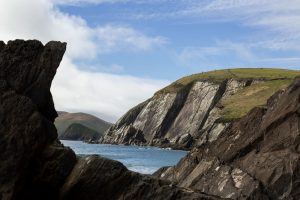
The coast is the other draw, and the airport’s formal name points straight at it. Riviera del Corallo means coral coast, for the red coral still fished off these waters and sold, dear, in the town’s jewellers — worth looking at, worth haggling over, and worth knowing that the cheap “coral” on a market stall usually is not.
Eat with a little judgement once you are in. The restaurants packed against the ramparts and along the main tourist run trade on the view and the footfall, and many serve a tired set menu at a marked-up price; the better seafood and the genuinely Catalan-tinged cooking tend to sit a street or two back from the walls, where locals actually eat. Order the local fish and look for the places that fill up after nine, when Italians dine, rather than the ones touting photo-menus at six.
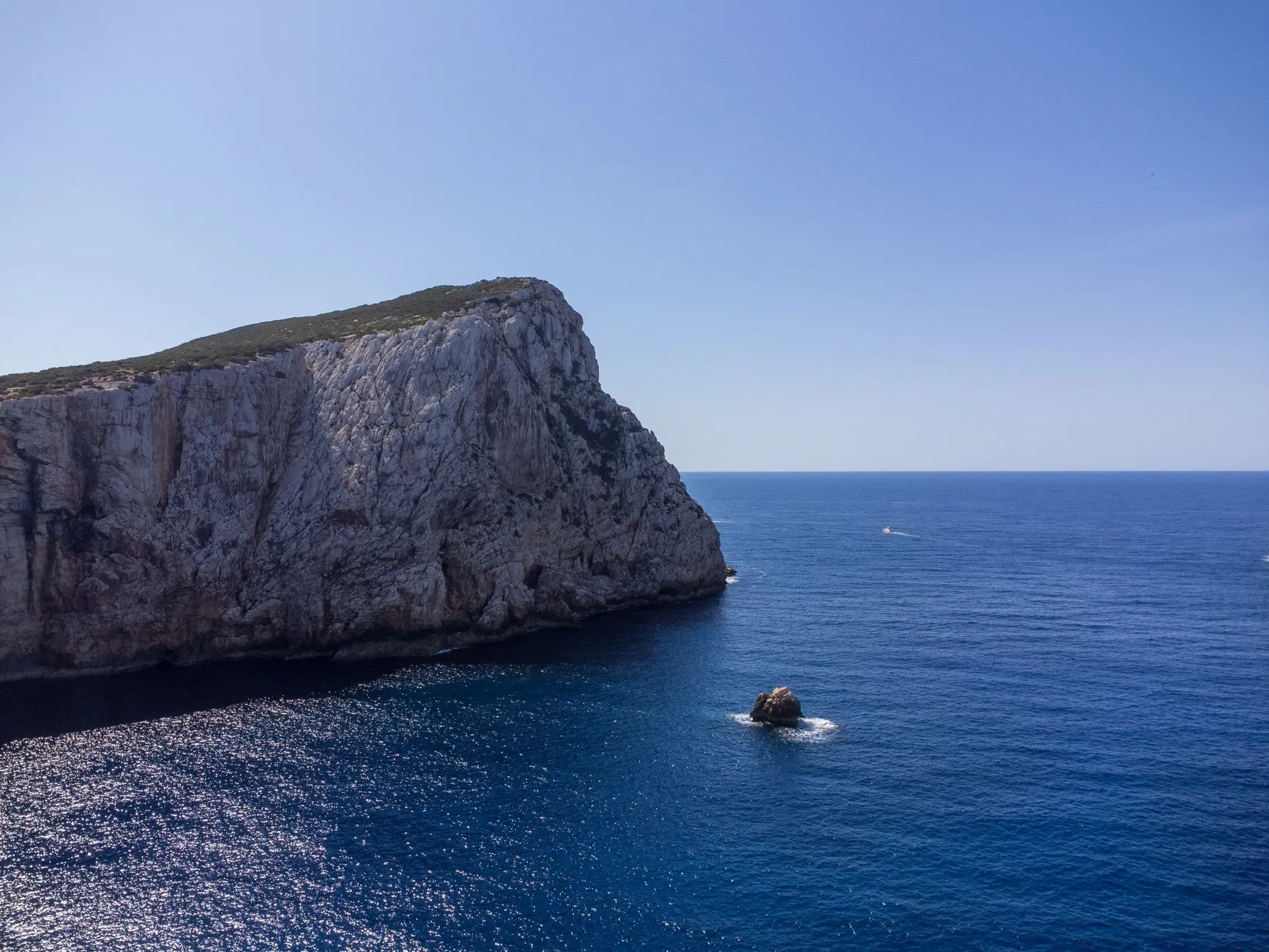
The set-piece is Neptune’s Grotto, the Grotta di Nettuno, a sea cave under the cliffs of Capo Caccia west of the town. You reach it on foot down the Escala del Cabirol — the Goat’s Steps, 654 of them cut into the cliff, a serious climb back up in the heat — or, far easier, by boat from Alghero’s port in season. Take the boat if the day is hot; the steps are the photogenic option, not the comfortable one.
The beaches are the practical pull, and the good ones start close. The white sand around Fertilia and the bays north of the airport are an easy bus or short drive from town, and the coast runs on toward Capo Caccia and the Porto Conte park; you do not need to range far for a swim. Late spring and September are the kindest stretches — the sea is warm, the prices are lower than August, and the airport is busy but not at its summer crush.
There is already an aifly Sardinia island guide, linked below, so this is orientation rather than a tour: the walled old town and its ramparts at sunset, the coral, and Capo Caccia with the grotto are the core of a few days here, and the beaches of the Riviera del Corallo are why most people fly in at all. The food worth eating is the local seafood and the Catalan-tinged dishes; what is worth carrying home, if anything, is a real piece of Alghero coral from a proper jeweller rather than a stall, bought with your eyes open.
❓ 6. FAQ
📋 7. At a glance
| Item | Detail |
|---|---|
| Airport | Alghero–Fertilia (AHO / LIEA), ~8–10 km NW of Alghero |
| Terminal | One terminal (~14,000 m²); arrive ~2h in summer peak, ~90 min off-season |
| 2025 traffic | 1,770,493 passengers (record, ~+10%); aiming for 2 million |
| Carriers | Ryanair dominant (~60 weekly departures); ~46 routes for 2026, mostly summer-led |
| To Alghero | ALFA city bus ~€1, ~30 min, ~hourly; taxi at a higher fare |
| To Sassari / rail | ARST bus to Sassari (~35 km); no rail at the airport |
| Border | Italy; Schengen; euro; EES live since 10 April 2026; ETIAS expected, date not announced |
| Currency | Euro (€) |
| Lounge | One Club Lounge (Priority Pass) — reported temporarily closed; verify |
| Worth your time | Catalan old town (l’Alguer), the coral coast, Neptune’s Grotto at Capo Caccia |
🔗 8. Explore More
- Sardinia Island Guide — what to actually do across the island: Alghero, the coast, the interior and the beaches
- Cagliari Airport (CAG) guide — the southern Sardinian airport for the capital and the south coast
- Olbia Airport (OLB) guide — the northeast airport for the Costa Smeralda