Figari Airport (FSC) — Airport Guide 2026
Quick Reference
Figari–Sud Corse Airport
FSC / LFKF
Figari, southern Corsica, France
~25 km from Porto-Vecchio, ~20 km from Bonifacio
One terminal — 7 check-in desks, 3 gates; built for ~550,000, handling far more
877,070 passengers (+1.6%); ~85% domestic, summer-led
Air Corsica year-round; easyJet, Volotea, Air France, BA seasonal
France — Schengen, euro; EES live since 10 April 2026, ETIAS expected, date not announced
Euro (€)
Shuttle to Porto-Vecchio ~€10 (~35 min); no rail; taxi ~€48–50; hire car
None
🛫 1. What Figari Airport is
Figari is the airport for the deep south of Corsica — the corner of the island that holds Bonifacio, Porto-Vecchio and the beaches the rest of the Mediterranean is jealous of. It is a small, seasonal, leisure airport, and almost everyone passing through it is arriving for the coast rather than connecting anywhere. You do not transit Figari; you land, and the only thing that matters next is the transfer south.
There is no shiny recent change to lead with — no new terminal, no rail link — so the honest opening is what the place actually is: a single small building doing a very seasonal job. In 2024 it handled 877,070 passengers, around 85% of them on domestic French routes, against a terminal built for roughly 550,000. The arithmetic tells you the rest. For most of the year it is quiet; for ten weeks in summer it is overstretched, and that is the airport you should plan for.
The seasonality is the single most useful fact about Figari. Only Air Corsica flies year-round, mostly to Marseille, Nice and Paris-Orly; everything international — London, Geneva, Zurich and the rest — is summer-only on easyJet, Volotea, British Airways and others. Off-season, the cheap direct flight you found in July may not run at all, and you reach the south of Corsica via a mainland French hub instead.
So set expectations to a high-summer beach airport that empties out in winter. The questions worth answering are practical ones: how you get to Porto-Vecchio or Bonifacio, what the border looks like, and why this end of the island is worth the faff in the first place.
The seasonality also dictates how you book. Summer seats to a small island airport with limited capacity go early and dear, and the international routes are thin enough that there is rarely a last-minute bargain — set a price alert months out and fly the shoulder weeks if the dates are flexible. The same logic applies to the hire car and the hotel, both of which sell out for August well before the flights do.
🛬 2. The terminal and the (missing) lounge
One terminal, seven check-in desks, three gates — small enough to cross in a couple of minutes, and that is both its charm and its problem. Out of season it is calm and quick. On a July or August changeover day, when several flights leave within the same window, the single security line and the modest airside seating fill fast, and the building feels its age and its size. Allow a comfortable two hours for a peak-summer departure; off-peak, an hour is plenty.
Airside food and shopping run to the bar-and-newsagent level, so this is not a terminal to rely on for a meal. Eat in Porto-Vecchio or Bonifacio before you head out, or carry something through security.
Boarding is the small-airport kind — expect walk-out gates and steps onto the aircraft rather than air bridges, and a short walk across the apron. On a busy summer turnaround the gate area is tight, so have your boarding pass and passport or ID out before you reach it; the queue moves faster when nobody is searching a bag at the desk.
On lounges, the answer is plain: Figari has no airport lounge. Priority Pass and the rest do not get you a quiet room here, because there is not one — only external “VIP terminal” meet-and-assist services sold separately. If you are used to a lounge wait, plan to spend it in the general seating, and time your arrival so you are not sitting in a crowded hall for hours.
🛂 3. The border: France, Schengen, the euro
Corsica is part of France, which is in the Schengen Area and uses the euro, so the border is light and quick for most arrivals.
Arriving from mainland France or elsewhere in Schengen — the great bulk of Figari’s traffic — you clear no passport control at all. Arriving from outside it, chiefly the summer UK flights, you now meet the EU’s EES biometric system, live since 10 April 2026, which records fingerprints and a photo on entry; at a small terminal in peak season that can mean a slow first queue, so leave a little margin. ETIAS, the EU’s pre-travel authorisation, is expected to follow, with no launch date announced.
Visa-exempt visitors from the UK, US, Canada, Australia and many other countries enter Schengen for up to 90 days in any 180; EU and Swiss nationals come and go freely. Everything is priced in euros, with ATMs in the terminal and cards taken almost everywhere, including the seasonal shuttle.
Worth knowing which queue you are in: the bulk of Figari’s flights are domestic French routes to Marseille, Nice and Paris, which are internal Schengen movements with no border check either way. The EES system only touches the smaller summer set of arrivals from outside Schengen, so on most days the border is a formality — it is the August UK flights that should leave the extra few minutes.
🚌 4. Getting to Porto-Vecchio and Bonifacio — and why you’ll want a car
Figari sits roughly halfway between its two towns, about 25 km from Porto-Vecchio and 20 km from Bonifacio, and the honest headline is that transport here is thin and seasonal. There is no railway — Corsica’s little train does not run to the south of the island at all — so it is shuttle, taxi or hire car.
The cheap option is the seasonal shuttle to Porto-Vecchio, around €10 and about 35 minutes, but it runs only a few times a day and largely in season, timed loosely to flights rather than frequently — check it against your arrival, and don’t assume a late flight will meet one. The old direct airport shuttle to Bonifacio is gone; for Bonifacio you generally go via Porto-Vecchio (a separate bus, roughly €9, about 30 minutes) or take a seasonal Figari–Bonifacio shuttle when it runs. A taxi is the reliable fallback at around €48 to Porto-Vecchio or €50 to Bonifacio.
For most visitors the real answer is a hire car, and Figari is built around that assumption — the rental desks are the busiest part of the terminal in summer. The south of Corsica is a place you drive: the beaches are spread along the coast, the towns are apart, and public transport thins to almost nothing once you are off the airport-to-Porto-Vecchio line. Book the car well ahead for August, when demand outstrips the island’s fleet and walk-up prices climb hard.
If you are not driving, plan the transfer before you fly rather than after you land. The taxi rank is small, a late-evening arrival can find it picked over, and the shuttle will not always be waiting. A pre-booked transfer to your hotel costs more than the bus but removes the gamble at a one-road airport with limited options after dark.
🏖️ 5. The reason to come: the south of Corsica
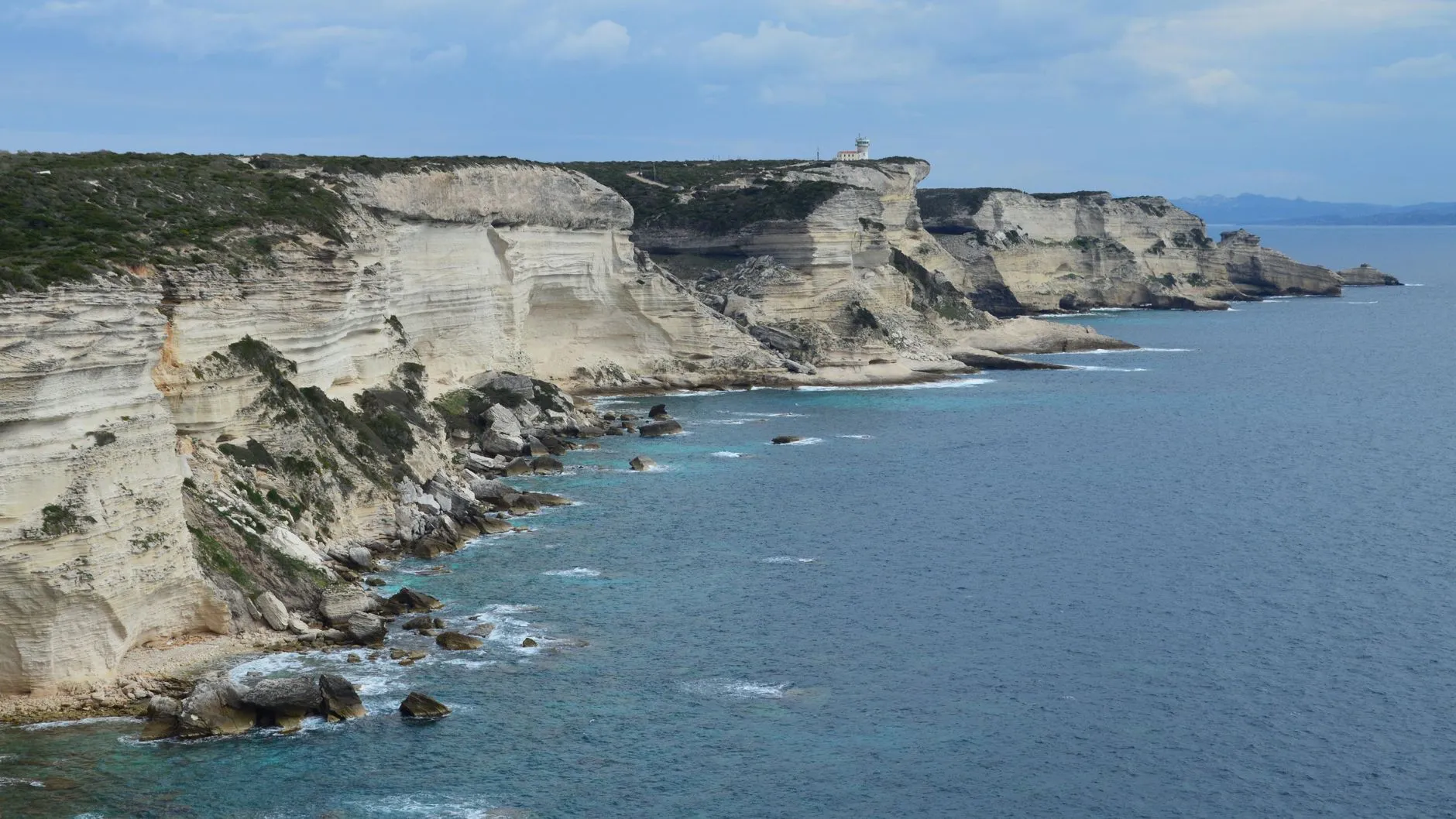
This is the expensive, beautiful end of the island, and it earns the trip. Bonifacio is the set-piece: a medieval citadel perched on white limestone cliffs above a fjord-like harbour, with the Lavezzi islands and Sardinia visible across the strait. Porto-Vecchio is the lively base — an old upper town and a marina that fills with yachts and a moneyed summer crowd — and the beaches strung south and north of it, Palombaggia and Santa Giulia chief among them, are the postcard Corsica people come for.
Where you base yourself shapes the trip. Porto-Vecchio is the practical choice — the most beds, the most restaurants and the easiest reach to the big beaches — and it has the livelier evenings. Bonifacio is the more striking place to stay but smaller and steeper, better as a day out than a logistics base. Either way you are within a short drive of the other and of the coast, which is the whole point of taking a car here.
That popularity is also the catch, and it is worth saying plainly. The Porto-Vecchio–Bonifacio strip is the jet-set corner of Corsica, and in August it is priced like it — restaurants on the Porto-Vecchio marina and the Bonifacio quayside trade on the view, the beach clubs at Palombaggia charge for a sunbed what a meal costs elsewhere, and a paddle-and-lunch day can quietly become an expensive one. The cooking worth seeking is inland and in the back streets: Corsican charcuterie, brocciu cheese, wild-boar stew, and the island’s own wines from around Figari and Porto-Vecchio.
Bonifacio rewards a little planning. The medieval citadel sits high above the harbour, so the town is a climb from the marina — pleasant in the morning, punishing at midday in August — and the boat trips to the Lavezzi islands and along the cliff face leave from the port, busiest and dearest at peak times. Going early in the day beats both the heat and the queues, and parking in Bonifacio in summer is its own small ordeal, another argument for arriving before the crowds.
The headline beaches take the same advice. Palombaggia and Santa Giulia, south of Porto-Vecchio, are genuinely beautiful and genuinely mobbed in high season, with car parks that fill by mid-morning and charge for the privilege. Arrive early or come late in the afternoon, and look at the smaller coves between the famous names if you would rather not share the sand with the whole island.
A practical opinion: go either side of the peak. June and September give you the same sea and the same light with thinner crowds, lower prices and a transfer that is not a scrum — and the airport itself is far calmer. August is glorious and busy and dear; if you can choose, choose the shoulder.
There is already an aifly Corsica island guide, linked below, so treat this as the operational layer rather than a tour: you fly into Figari for the deep south, you almost certainly want a car, and Bonifacio and the Porto-Vecchio beaches are the core of why you came. What is worth carrying home is Corsican — a coppa or lonzu charcuterie, a bottle of the local wine, a jar of chestnut honey or jam — bought from a producer or a proper shop rather than an airport shelf.
❓ 6. FAQ
📋 7. At a glance
| Item | Detail |
|---|---|
| Airport | Figari–Sud Corse (FSC / LFKF), ~25 km from Porto-Vecchio, ~20 km from Bonifacio |
| Terminal | One terminal (7 desks, 3 gates); arrive ~2h in summer peak, ~1h off-season |
| 2024 traffic | 877,070 passengers (+1.6%); ~85% domestic; heavily summer-led |
| Carriers | Air Corsica year-round; easyJet, Volotea, Air France, BA seasonal |
| To Porto-Vecchio | Seasonal shuttle ~€10 (~35 min, few daily); taxi ~€48 |
| To Bonifacio | Via Porto-Vecchio (~€9 bus) or seasonal shuttle; taxi ~€50; no direct airport bus |
| Rail | None — Corsica’s railway does not reach the south |
| Border | France; Schengen; euro; EES live since 10 April 2026; ETIAS expected, date not announced |
| Currency | Euro (€) |
| Lounge | None |
| Worth your time | Bonifacio’s cliff citadel, Porto-Vecchio, Palombaggia and Santa Giulia beaches |
🔗 8. Explore More
- Corsica Island Guide — what to actually do across the island, including the southern beaches and Bonifacio
- Ajaccio Airport (AJA) guide — the west-coast airport for the capital and Ajaccio
- Bastia Airport (BIA) guide — the northern airport for Cap Corse and the east coast