Punta Cana — Complete Travel Guide 2026
Punta Cana isn’t a city — it’s a 50-kilometre coastline of all-inclusive resorts at the eastern edge of the Dominican Republic, sold to you by the week with the wristband included. Come knowing exactly what it is — a sun-and-buffet machine wrapped around genuinely gorgeous white sand and warm turquoise water — and it delivers brilliantly. Come expecting an independent-traveller adventure and you’ll spend the trip wondering why a taxi to dinner costs €37.
Quick Reference
Eastern tip of the Dominican Republic, Caribbean (La Altagracia province)
Punta Cana International (PUJ) — the thatched-roof one
Dominican peso (DOP); US dollars accepted almost everywhere
Spanish (English spoken at resorts and on excursions)
Visa-free for most Western visitors; free E-Ticket migration form required
December–April (dry, low sargassum); February and April are the sweet spot
All-inclusive resorts, Bávaro’s white-sand beaches, Saona Island, golf
Bávaro (lively, central), Cap Cana (upscale), Uvero Alto (quiet)
Editor’s Note: Two Decisions That Make or Break the Trip
Almost everything about a good Punta Cana holiday comes down to two choices you make before you fly.
The first is which zone you book, and it matters more than the star rating. Punta Cana spreads across distinct stretches of coast that feel like different holidays: party-central Bávaro, polished Cap Cana, far-flung Uvero Alto. People who get this wrong — booking a “quiet retreat” 50 minutes from anything when they actually wanted the buzz, or a sprawling family megaresort when they wanted couples-only calm — are the ones who come home lukewarm.
The second is your mindset about the all-inclusive bubble. The wristband economy is seductive: pay once, and food, drink, pools and entertainment are all “free” for the week. The trap is treating the resort as the whole destination. The buffets are fine, occasionally good, never the real thing. The most memorable hours of most trips happen the moment you walk out the gate — a plate of fresh-grilled fish in a beach shack, a boat to a desert-island sandbar, a colonial city older than anything in the United States. Budget time and a little cash to leave. That’s the single best piece of advice in this guide.
Punta Cana is one corner of a whole country. This guide covers the resort east coast. If you want the rest of the island — Santo Domingo’s colonial old town, the Samaná whale peninsula, the north-shore kite beaches and the cool mountain interior — read our full Dominican Republic guide.
Insider tip: The “best resort” is the one in the right zone for your group, not the one with the most Instagram photos. Pick the zone first, then the hotel inside it.
Should You Go? Who Punta Cana Is For — and Isn’t
Be honest with yourself before booking. Punta Cana is one of the world’s great all-inclusive beach destinations, and a poor fit for a particular kind of traveller.
It’s perfect for families who want a hassle-free week with the kids entertained and the bill paid up front; couples and honeymooners after a low-effort romantic reset; groups who want pools, swim-up bars and zero logistics; and anyone whose idea of a great holiday is a lounger, a book, a frozen drink and warm water you can see your feet in. The water is genuinely spectacular, the resorts deliver consistent value, and the flying time from the US East Coast (and a growing list of European cities) is reasonable.
It’s a poor fit for independent backpackers, city-and-culture travellers, foodies chasing authentic local restaurants every night, or anyone allergic to the resort-bubble vibe. Punta Cana has almost no walkable town life, no cheap public transport worth the name, and getting anywhere off-resort is surprisingly expensive. If your dream trip is wandering a real Dominican town and improvising your days, you’ll be happier basing in Santo Domingo, Las Terrenas or Cabarete — and visiting Punta Cana for a few beach days, not the whole trip.
Be honest with yourself: If the phrase “all-inclusive resort” makes you wince, Punta Cana is not your destination. There’s no shame in that — just don’t book a week and then resent the wristband.
Getting There: PUJ Airport & Transfers
Punta Cana International (PUJ) is one of the most charming airports you’ll land at: open-sided terminals under a signature thatched palm-frond (palapa) roof, tropical air moving through the building instead of aggressive air-con. It’s also one of the busiest leisure airports in the Caribbean — 2025 was its busiest year on record, with more than a million passengers in December alone and a single-day peak around 51,000 travellers on 29 December. There’s a piece of trivia worth knowing: PUJ was built by the private Grupo Puntacana in 1984 and was the Western Hemisphere’s first privately owned international airport. The thatch is a deliberate brand, not just decoration.
The charm has a flip side. The open-air design means immigration and baggage halls get hot and crowded when several wide-bodies land together, so don’t book a tight onward connection and pack patience for arrival queues at peak times.
Getting from PUJ to your resort is almost always pre-arranged. The cleanest option is the transfer your hotel or tour operator includes or sells — you walk out, find your name on a board, and you’re whisked away. If you’re booking transport yourself, private transfers (typically €28–€65 each way depending on zone and party size) are reliable and fixed-price. Avoid the temptation to wing it: do not invent a budget around cheap public transport from the airport — there essentially isn’t any for tourists. (We cover the taxi/Uber reality in detail below.)
Travel times from PUJ set expectations: Cap Cana is closest at 10–15 minutes, Bávaro is 25–35 minutes, and Uvero Alto is a solid 45–60 minutes up the coast. That last figure is one of the most overlooked facts in trip planning — a “secluded paradise” can mean an hour each way every time you want to leave it.
Where to Base: Bávaro vs Cap Cana vs Uvero Alto
This is the decision. Each zone is a different holiday.
Bávaro is the heart of it — the long, postcard-famous stretch of white sand with the highest density of resorts, beach bars, excursion pick-ups, shops and nightlife. The sand is stark white, the water generally calm, and you’re never far from a beach bar or a tour desk. It’s lively, social and central; if you want options, walkability between beach spots, a buzz in the evenings, and the shortest hop to most excursions, base here. The trade-off is exactly that buzz: busier beaches, more foot traffic, more sales pitches. Sub-areas like Los Corales and El Cortecito have the cluster of independent (non-resort) restaurants and beach shacks — the easiest place in the whole region to actually eat off-resort.
Cap Cana is the upscale enclave just south, a gated luxury district built around a marina, championship golf, and the genuinely stunning Juanillo and Playa Blanca beaches. It’s quiet, polished and exclusive, with higher-end resorts and à la carte dining standards — and it’s the closest zone to the airport (10–15 minutes). Choose it for honeymoons, a premium feel, marina dinners and calm. The trade-off is price and a more sterile, contained atmosphere: less spontaneous local life, more curated resort world. A clutch of high-profile properties opened here recently (an adults-only W landed in late 2025), so it’s the zone seeing the most new luxury supply.
Uvero Alto sits further north and trades convenience for calm. The beaches are golden rather than stark white, the Atlantic surf hits harder (good for boogie-boarding, less so for toddlers), and the crowds thin dramatically. It feels wilder and more private — perfect if your whole plan is to switch off and not leave the resort. The catch is the 45–60-minute airport run and the same long haul every time you want an excursion or a meal elsewhere. Uvero Alto rewards people who genuinely intend to stay put; it punishes people who booked it for the photos and then want to go out three times.
Avoid this mistake: Don’t book Uvero Alto for its “seclusion” if you’re the type who’ll want to leave the resort for dinners, day trips, and the buzzy beach bars. You’ll burn an hour and a fat taxi fare each way, every single time.
The Beaches (and the Sargassum Truth)
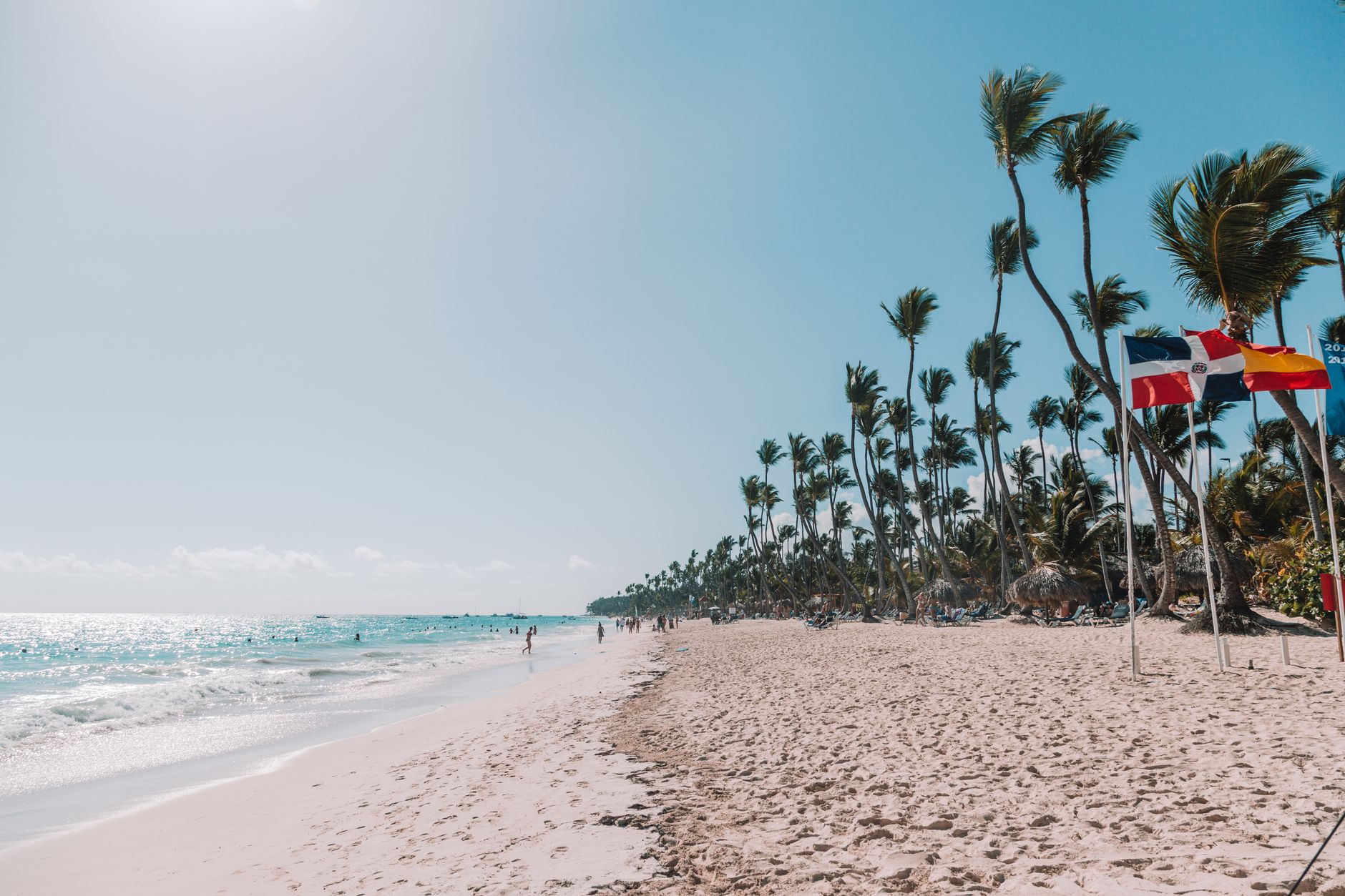
The water is the reason you came, and on a good day it’s everything the brochures promise: warm, clear, calm in the resort zones, lined with coconut palms.
- Bávaro Beach is the classic — calm, broad, stark white, the most family-friendly, and lined with the most resorts and bars. It’s the default and a good one.
- Macao Beach is the most beautiful and the most “real” — a public, free, protected stretch with rougher Atlantic surf, the area’s best surfing, and a wilder, undeveloped feel. Its northern orientation means it tends to get less sargassum than the east-facing resort beaches. Go for a half-day, take cash, eat at the simple beach shacks.
- Juanillo (Cap Cana) is the most exclusive — meticulous white sand, calm turquoise water, fewer crowds, upscale beach-club energy.
- Playa Blanca (Cap Cana) is arguably the whitest sand in the region, shallow and flat — popular with kitesurfers thanks to the trade winds.
Now the part the resort websites bury: sargassum. This is the brown seaweed that washes up on Caribbean beaches in waves, can pile up on the sand, and smells of sulphur as it rots. It is not pollution and it doesn’t ruin every beach every day — but it’s the single biggest variable in a Punta Cana beach holiday, and you should plan around it.
The hard facts for 2026: a large sargassum mat was detected in the central Atlantic in late 2025, and forecasters expect 2026 to look like recent heavy years. Peak season is roughly March/April through August, with the worst typically in late spring and summer. Punta Cana’s east-facing resort beaches (Bávaro, much of the main strip) catch the most; west-facing, sheltered, or northern-facing beaches see less, which is why Macao fares better and some southern/sheltered beaches like Bayahibe (toward La Romana) stay almost clean. Many of the bigger resorts run daily clean-up crews, beach tractors and even offshore booms — a genuine differentiator between hotels in peak months.
Seaweed warning (RED): If a clean beach is non-negotiable, travel late November to February — your odds of seaweed-free sand are highest then (around 80–90%). Book between roughly April and August and you’re gambling. Before you book a specific resort for a summer trip, check recent sargassum photos/reports for that beach, and favour hotels that openly run clean-up operations.
Excursions & Beyond the Resort
Leaving the resort is where Punta Cana stops being generic and starts being memorable. The catch is that the excursion market is crowded with overpriced, over-bussed tours. Here’s the honest cut.
Worth it:
- Saona Island (€80+) — the iconic Caribbean desert-island day: catamaran and speedboat to palm-fringed sandbars in Cotubanamá National Park, a natural pool you can stand in offshore, rum on the boat. It’s the classic and it’s genuinely beautiful. The honest caveat: it’s a long day with a lot of transit (bus to the boat, catamaran out, speedboat back), so you actually spend less time on the island than you’d hope, and the big group tours can feel like a conveyor belt. Book a smaller-group or premium version if you can, and treat it as a full-day commitment.
- Hoyo Azul & Scape Park (~€80–€120 combo) — a stunning cobalt-blue cenote/lagoon at the foot of a cliff, inside a 50-hectare adventure park with ziplines, Taíno caves and trails. The big advantage over Saona: the driving is short, so you spend your day in the experience instead of on a bus. The combo (cenote + zipline + cave) is the better value for most people; the cenote-only ticket is cheaper but you’ll wish you’d done more.
- Macao Beach + buggies/ATVs (~€65 shared) — the standard “off-road dune buggy through the countryside to Macao” tour is muddy, chaotic fun and ends at a beautiful free beach. Just know you’ll get filthy; wear clothes and shoes you don’t care about, and bring a bandana for the dust.
- Montaña Redonda — an off-the-beaten-track favourite: a flat-topped mountain inland with swings and hammocks over a panorama of lagoons and coast. It’s a bit of a drive and more of a half-day, but it’s a real change of scenery and one of the more genuinely Dominican photo spots.
- Los Haitises National Park — mangroves, caves with Taíno rock art, and bird-rich limestone islets, reached by boat. The most “nature, not theme-park” option in range, and a strong pick if you want something quieter and wilder.
Manage your expectations on: the snorkelling/booze-cruise “party boat” tours (fun if you want a party, mediocre as actual snorkelling — the local reef has taken a beating), and any tour that’s mostly a sales pitch with a beach stop bolted on. Reef diving and snorkelling exist (Catalina and Catalinita islands, near La Romana, are better reef than the Punta Cana shore), but serious divers should temper expectations versus, say, Cozumel.
Tour-desk tip: Book excursions through an independent operator or online in advance rather than the resort’s in-house desk — you’ll usually pay noticeably less for the same trip. The resort tour desk is convenient and the most expensive way to do it.
When to Visit: Month by Month
Punta Cana is warm year-round (highs of roughly 28–31°C/82–88°F). The variables that matter are rain, hurricanes, sargassum, crowds and price — and they pull in different directions.
- December–April (dry season): the best weather of the year — warm, dry, clear skies, low humidity. February is the standout: peak dry weather and the lowest sargassum risk. April is nearly as good with slightly thinner crowds and softer prices than the March spring-break peak. This window is also the lowest-seaweed stretch (late Nov to Feb especially). It’s the most expensive and busiest time precisely because it’s the best — book early.
- May–June: a sweet spot for value. Prices drop, hurricane risk is still very low this early, and while the rainy season has technically begun, May/June rain tends to be short tropical showers rather than washouts. The catch is rising sargassum, which peaks across these months.
- July–August: hot, humid, peak family-holiday crowds, and typically the heaviest sargassum. Beautiful between the seaweed and the afternoon showers, but the least reliable for pristine sand.
- September–October: the cheapest months — and the riskiest. This is the heart of hurricane season (the Atlantic season runs 1 June to 30 November, peaking Aug–Oct), and the rainiest stretch. Punta Cana sits on the eastern tip and is statistically less battered than other Caribbean spots, but a direct storm or a week of rain is a real possibility. Travel insurance with trip-interruption cover is not optional here.
- November: a shoulder month that improves as it goes — by late November the rains ease, sargassum drops off, and you can catch dry-season conditions at shoulder-season prices.
Hurricane-season caution (RED): If you book June–November, buy travel insurance that covers hurricanes and trip interruption, and choose a flexible/refundable rate. Punta Cana is often spared the worst, but “often” is not “always,” and September–October is the genuine risk window.
What to Eat
Here’s the uncomfortable truth about food in an all-inclusive: the buffets and à la carte restaurants inside the resorts are fine — sometimes genuinely good at the higher-end properties — but they’re a hotel kitchen’s idea of variety, not real Dominican cooking. The best meals of your trip will almost certainly be the ones you go out for.
Seek out these Dominican dishes:
- La bandera (“the flag”) — the national plate: white rice, red beans, and stewed chicken or beef, often with a side salad and fried plantain. Simple, hearty, the real everyday Dominican meal.
- Mangú — mashed green plantains, the classic breakfast, traditionally served “los tres golpes” (the three hits) with fried cheese, salami and eggs. Order it at a local spot, not the buffet.
- Mofongo — mashed fried plantains with garlic and pork crackling, packed into a mortar; the comfort-food showpiece. Some local restaurants in Bávaro do dozens of versions.
- Fresh fish and seafood in the towns — grilled snapper, lobster, pescado frito — best eaten at a beach shack or a seafood spot in Los Corales / El Cortecito, where the catch is local and the bill is a fraction of resort à la carte.
- Sancocho — a rich, slow-cooked meat-and-root-vegetable stew, the Sunday-lunch soul food.
Where to find it without a guide: the independent restaurants and beach shacks clustered in Los Corales and El Cortecito in Bávaro are the easy answer — walkable seafood grills, beach bars and local kitchens steps from the resort strip. For the most authentic (and cheapest) version, look for a comedor — a simple local lunch counter where a generous plate of la bandera or sancocho costs a few dollars and tastes like the real country.
Don’t eat only at the resort: You flew to the Caribbean; budget two or three meals out. The single most “I’m actually in the Dominican Republic” hour of most trips is a plate of grilled fish at a beach shack in El Cortecito, not the resort buffet’s “international night.”
Getting Around
This is where Punta Cana frustrates the independent-minded, so set expectations early: there is no cheap, convenient public transport for tourists, and getting off-resort costs real money.
- Taxis are the default, and they are not metered — fares are fixed by zone and posted, and they are expensive relative to the distances. Reckon roughly: airport to Bávaro €32–€37 to Cap Cana €28–€32 to Uvero Alto €55–€65; short hops within Bávaro €9–€19; cross-zone or attraction runs €37–€75. Always agree the price before you get in. Treat taxis as the price of leaving the bubble, not a casual convenience.
- Uber technically exists but is impractical for the two things you most want it for. Drivers cannot enter the airport, and most all-inclusive resorts and gated communities won’t let rideshare drivers onto the property — so you can’t be picked up at the lobby. You end up walking with your luggage to the main gate or highway to meet the car. It can save money on a planned trip between points if you’re willing to walk to a pickup spot, but it’s no substitute for an airport transfer.
- Resort shuttles and pre-booked private transfers are the path of least resistance and what most people sensibly use.
- Car hire (Budget, Europcar and others at PUJ) buys real freedom — Macao, Montaña Redonda, beach-hopping, a Santo Domingo run on the modern toll highway. The trade-off is local driving: aggressive habits, informal road rules, livestock and motoconchos, and a hassle factor many holidaymakers would rather avoid. Worth it if you genuinely want to explore independently and are a confident driver; overkill if you’re mostly resort-based.
- Guaguas (local minibuses) exist for getting around cheaply, but the routes, stops and Spanish-only nature make them impractical for most visitors.
Taxi warning (RED): Confirm the fare out loud before the doors close. Quotes drift upward at the airport, late at night, and any time the driver senses you don’t know the going rate. Have small US bills ready and don’t expect change for a €95.
Where to Stay: By Zone & Budget
Punta Cana is wall-to-wall all-inclusive, so the real choices are zone, adults-only vs family, and tier.
- Budget all-inclusive (roughly €95–€190/night for two): big, dependable resort brands deliver remarkable value — pools, multiple restaurants, nightly entertainment, beach service, all in. These cluster heavily in Bávaro. Expect crowds, buffet-forward dining and a “good value, not boutique” feel. For a first Caribbean all-inclusive or a family on a budget, this tier is the workhorse.
- Mid-to-upper all-inclusive (€190–€360+/night): the average Punta Cana all-inclusive runs around €360/night, buying better à la carte restaurants, nicer rooms, more polished service and quieter beaches. The current development trend is “all-inclusive with high-end-hotel quality” — package certainty with genuinely good restaurants and bars.
- Luxury (Cap Cana, premium Bávaro, Uvero Alto): marina access, championship golf, refined dining and the best of the beaches (Juanillo, Playa Blanca). This is where the splashiest new openings are landing.
Adults-only vs family is the other fork. Family megaresorts come with waterparks, kids’ clubs and a certain volume; adults-only properties (many in Cap Cana and Uvero Alto, plus dedicated adult sections of big resorts) trade that for calm and romance. Decide which holiday you’re booking — a couple who lands in a 2,000-room family resort during school holidays will feel it.
A note on scale: the region keeps adding rooms fast (thousands delivered in 2025, and giant new luxury all-inclusives in the pipeline for 2026), which is good for choice and competition but means “newest and biggest” isn’t automatically “best.” Match the property to your group, not the marketing.
Costs & Budget
The all-inclusive rate is the headline, but it is not the whole bill. Budget realistically for the extras.
- The room rate (all-inclusive): roughly €95–€190/night for two at budget resorts; ~€360/night average; more for luxury. This covers food, drinks (often including local-brand spirits; premium brands sometimes cost extra), pools, beach and standard entertainment.
- Tipping — culturally expected and economically meaningful (resort staff often earn very modest monthly wages). It’s not optional just because it’s “all-inclusive.” Rough guide: €2–€3/day for housekeeping (leave it on the bed marked “Propina”), a couple of dollars per drink round at the bar (or a few dollars a day to your favourite bartender, which pays off in service), and €5–€9 per person to excursion guides for half-day tours, more for full-day. A couple should budget roughly €140 in tips for a week. Carry small US bills ($1s and $5s) — they’re the easiest tipping currency.
- Excursions are the big variable add-on: Saona ~€80 Hoyo Azul/Scape Park combo ~€80–€120 dune buggies ~€65 Santo Domingo day tour higher. Two or three excursions for a couple easily adds a few hundred dollars.
- Off-resort meals and taxis add up fast precisely because taxis are pricey — a dinner out plus the round-trip taxi can cost more than the meal.
- The tourist card is already bundled into your airfare (see below), so it’s not a surprise cash cost at the airport.
Overall: budget travellers can do a day on roughly €95–€140 beyond the room; mid-range and luxury scale up from there. The single biggest budgeting mistake is forgetting that leaving the bubble — taxis, tips and tours — is where the “all-inclusive” stops being inclusive.
Practical Information
Entry & the E-Ticket (2026): Most Western visitors (US, Canada, UK, EU, and many others) need no visa for tourism. Two things you do need to know:
- The tourist card — once a €9 cash purchase on arrival — has, for years now, been included in the price of your airline ticket. Your airline handles it; you don’t pay it separately at the airport.
- Every traveller must complete the free electronic E-Ticket (the digital entry/exit form) at the official migration site (
eticket.migracion.gob.do) — a single QR-coded form covering migration and customs for both arrival and departure. It’s free, takes a few minutes, and should be done at least 72 hours before travel to avoid airport stress. Beware copycat third-party sites that charge for the “free” form. The E-Ticket does not replace the tourist card — they’re separate things — but since the card is already in your airfare, in practice the E-Ticket is the only form you actively fill out.
Currency & money: the Dominican peso (DOP) is the official currency (very roughly 55–60 DOP to the US dollar), but US dollars are accepted almost everywhere in the resort zone — hotels, excursions, shops and tips. You rarely need to change much; locals often prefer small USD bills for tips. Cards work at resorts and bigger establishments; carry some small US cash for tips, beach shacks and taxis. You’ll generally get worse value paying USD for big in-town purchases priced in pesos, but for the convenience-priced resort world, dollars are fine.
Safety: the resort zones are heavily policed tourist bubbles and broadly safe for the usual beach-holiday behaviour. The honest caveats: don’t flash valuables, use the room safe, be sensible after dark off-resort, only use known taxis/transfers, and treat unfamiliar areas and late-night solo wandering with the same caution you would anywhere. Petty theft and overcharging are the realistic risks, not drama. Check your government’s current travel advisory before you go.
Water warning (RED): Don’t drink the tap water — drink bottled water (resorts provide it, and it’s cheap to buy). Use bottled or filtered water for brushing teeth if you have a sensitive stomach, and be a little wary of ice and salads at the cheapest off-resort spots. This is standard Caribbean precaution, not Punta Cana-specific alarm.
Tipping culture: covered above — expected, appreciated, and best paid in small US bills. “Propina” means tip.
Connectivity: resorts have Wi-Fi (sometimes patchy or paid for the fast tier in rooms); a local eSIM or SIM (Claro, Altice) gives reliable data if you need to be online off-property. For a pure switch-off week, the resort Wi-Fi is usually enough.
Day-trip context — Santo Domingo & Higüey: The single best escape from the resort bubble is Santo Domingo, about 2.5–3 hours west on a good modern highway. The capital’s Zona Colonial (Colonial Zone) is the oldest permanent European settlement in the Americas — first cathedral, first university, first paved street in the New World, 500-year-old stone everywhere, and a living Caribbean city around it. As a guided day tour it’s a long door-to-door day (often 12–13 hours), but for anyone with the slightest interest in history and “real” Dominican urban life, it’s the most rewarding thing you can do from Punta Cana. Closer to home, Higüey — the regional hub inland — is worth knowing as the local working town, home to the huge modernist Basílica de Higüey, and is often a stop on countryside excursions. Neither is a beach day; both are the antidote to a week of wristbands.
Frequently Asked Questions
Cheapest Flights to Punta Cana
We have tracked 1,454 fares to Punta Cana from 106 cities. As of June 2026, here is what a good price looked like from each — the lowest fare we recorded, and a “great-deal” benchmark to judge a quote against. These are tracked observations, not live prices: by the time you read this they will have moved, so treat them as a yardstick, not a quote.
| From | Lowest fare we tracked | Great-deal benchmark |
|---|---|---|
| Madrid (MAD) | €382 | €546 |
| Seville (SVQ) | €394 | €563 |
| Dublin (DUB) | €411 | €587 |
| Milan (LIN) | €430 | €614 |
| Nice (NCE) | €438 | €625 |
| Frankfurt (FRA) | €444 | €634 |
| Porto (OPO) | €446 | €637 |
| Venice (VCE) | €454 | €648 |
| Paris (CDG) | €456 | €652 |
| Budapest (BUD) | €462 | €660 |
| Mallorca (PMI) | €465 | €665 |
| Palermo (PMO) | €466 | €666 |
| Malta (MLA) | €474 | €677 |
| Luxembourg (LUX) | €475 | €679 |
Recent deals we have posted to Punta Cana:
- Montreal to Punta Cana, Dominican Republic from C$451
- Orlando Sanford to Punta Cana, Dominican Republic from $232
- Belfast to Punta Cana, Dominican Republic from £199
- Montreal to Punta Cana, Dominican Republic from C$438
- Amsterdam to Punta Cana, Dominican Republic from €485
- Toronto to Punta Cana, Dominican Republic from C$375
- Madrid to Punta Cana, Dominican Republic from €517
- Amsterdam to Punta Cana, Dominican Republic from €460
These are fares aifly tracked to this destination, not live quotes — they have changed since and several of the deals above may have expired. Browse current flight deals →