New York City — The Complete City Guide 2026
Forget everything you’ve seen in movies. The real New York isn’t Times Square or the Statue of Liberty ferry line — it’s a $1.50 slice eaten standing at 2am, a jazz club in the Village where legends still play, a walk across the Brooklyn Bridge at sunrise before the crowds arrive. After the pandemic reshaped the city’s restaurant scene, congestion pricing finally arrived (2024), and new observation decks changed the skyline, 2026 New York is a city that rewards those who know where to look. This guide will show you.
$100–180/day budget
Best: Apr–Jun, Sep–Nov
Why New York? An Editor’s Note
Let me tell you about two New Yorks.
The first is “Tourist New York” — Times Square’s seizure-inducing billboards, an $18 cocktail in a rooftop bar that’s mostly tourists, the Olive Garden in the theatre district (yes, it exists), standing in a three-hour line to get into the Statue of Liberty crown only to discover the view is… fine. This New York is exhausting, overpriced, and will confirm every cliché you’ve heard about Americans.
The second is “Real New York” — dim sum in Flushing where no one speaks English, a bodega bacon-egg-and-cheese at 7am after a night out, discovering a gallery opening in Chelsea with free wine, finding your new favourite neighbourhood by getting off the subway one stop too early. This New York is the greatest city in the world. It’s not hyperbole.
The gap between these two cities is enormous, and it’s measured in subway stops. Times Square and Chinatown are 15 minutes apart, but they’re different planets. The Museum of Modern Art costs $30; the Metropolitan Museum of Art is pay-what-you-wish for New York State residents (and technically for everyone — they just don’t advertise it). A slice of pizza costs $1.50 or $8 depending on which door you walk through.
The purpose of this guide: to ensure you experience the second New York. Every recommendation passes one test: “Would a New Yorker actually do this?” If the answer involves Times Square, a double-decker bus, or anything with “I ❤ NY” on it, it’s not in here.
One surgical tip before we begin: The High Line is free, but it’s mobbed from 10am-6pm. Go at 7am. You’ll have the elevated park to yourself, watching the city wake up below you. This is the gap between Tourist New York and Real New York in a single morning.
Extending the trip? See our Los Angeles city guide (6h transcontinental), San Francisco city guide (6h transcontinental), and London city guide (7h by air) for the same treatment. (No Boston, DC or Chicago guide on aifly.one yet — coming.)
Table of Contents
- → Top Attractions
- → NYC’s Best Neighbourhoods
- → Where to Stay — By Budget
- → Where to Eat in NYC
- → Pizza — A Religion
- → Bagels — The Other Religion
- → Delis & Diners
- → World Cuisines (Flushing, Jackson Heights)
- → Coffee Culture
- → Bars & Cocktails
- → Museums
- → Broadway & Theatre
- → Live Music & Nightlife
- → Sports in NYC
- → Shopping
- → Parks & Outdoors
- → The Outer Boroughs
- → Day Trips from NYC
- → Arriving at JFK, LGA & EWR
- → Getting Around NYC
- → NYC with Kids
- → Romantic New York
- → Architecture & Film Locations
- → Free New York
- → Best Time to Visit
- → Safety & Practical Info
- → Frequently Asked Questions
Top Attractions in New York City
New York has more iconic attractions than any city in America — but “iconic” doesn’t always mean “essential.” Here’s what’s actually worth your time and money.
1. Central Park — The Masterpiece
843 acres of designed wilderness in the middle of Manhattan. Frederick Law Olmsted and Calvert Vaux created this in the 1850s, and it remains one of humanity’s great urban achievements. You could spend a week here and not see everything.
Entry: FREE. Always open.
The Essential Walk: Enter at 72nd and Central Park West (Strawberry Fields, John Lennon memorial). Walk east to Bethesda Fountain and Terrace, north to the Loeb Boathouse (rent a rowboat $20/hr), then to Belvedere Castle. Exit at 79th and Fifth for the Met. 3 miles, 2 hours, perfect introduction.
Hidden Gems: The Ramble (wild woodland, easy to get lost), the Conservatory Garden (formal gardens, quiet), the North Woods (actually feels like forest).
Skip: The horse carriages. Controversial, expensive ($65+ for 20 min), and the same views can be had on foot.
2. The Metropolitan Museum of Art — One of the World’s Greatest
Two million works spanning 5,000 years. The Egyptian Temple of Dendur, European paintings that rival the Louvre, American art, arms and armor, the rooftop bar with Central Park views. You cannot see it all in one visit — don’t try.
2026 Prices: $30 adults, $22 seniors, $17 students. Under 12 free. Pay-what-you-wish for NY State residents (they don’t advertise this — just say you’re a resident and pay what you want).
The Three-Hour Met: Egyptian Wing (Temple of Dendur, mummies) → European Paintings (Vermeer, Rembrandt, the Impressionists) → American Wing (Washington Crossing the Delaware) → Rooftop (seasonal, stunning views). Done.
Free Days: None, but the “pay-what-you-wish” policy means you can visit for $1 if you’re shameless (and a NY resident).
3. The High Line — The Elevated Park
A 1.45-mile elevated railway converted into a public park, running from the Meatpacking District to Hudson Yards. The design integrates wild plantings, art installations, and views of the city and the Hudson River. It’s genuinely innovative and completely free.
Entry: FREE. Open 7am-10pm (hours vary seasonally).
The Move: Go at 7am or after 8pm. Between 10am-6pm, it’s a slow-moving conga line of tourists. Early morning, you’ll have it almost to yourself.
Best Stretch: Gansevoort to 20th Street has the best views and the most interesting architecture. Continue north to Hudson Yards only if you want to see the Vessel (see below).
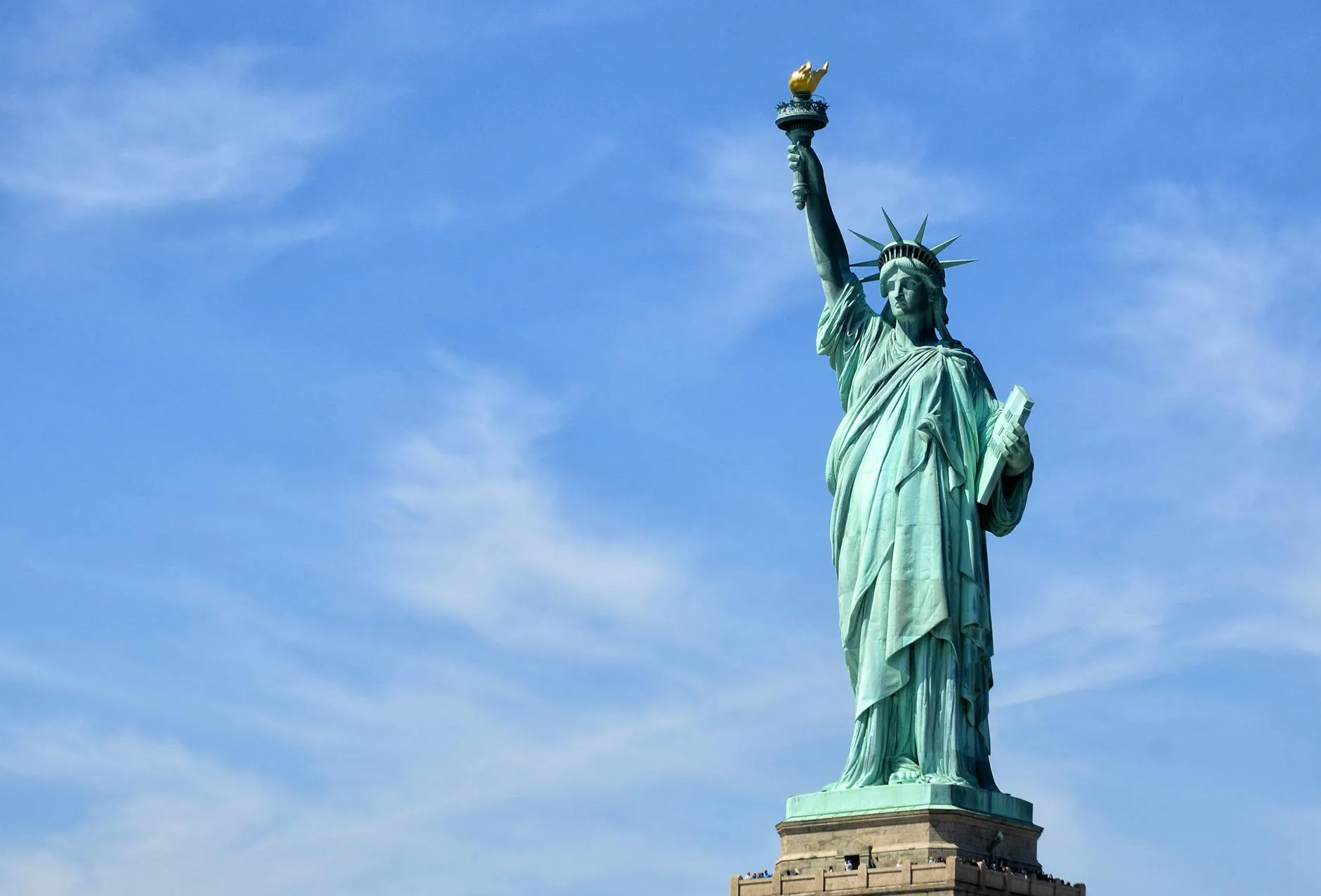
4. Statue of Liberty & Ellis Island — The Symbol
Yes, it’s touristy. But Lady Liberty is genuinely moving, and Ellis Island’s immigration museum — where 12 million immigrants entered America — is one of the best historical museums in the country. Budget a full day.
2026 Prices: Ferry + grounds access: $24.50 adults. Crown tickets ($24.50 extra) sell out months ahead — book at statuecruises.com the moment they release.
The Move: Take the first ferry (8:30am from Battery Park). Do the Statue first, then Ellis Island. The last ferry back is around 5pm. Skip the crown if tickets aren’t available — the views from the pedestal are nearly as good.
Alternative: The Staten Island Ferry is FREE and passes right by the Statue. You don’t disembark, but the views are excellent and it’s a genuine New York experience.
5. Brooklyn Bridge — The Walk
The Gothic towers, the wooden boardwalk, the views of Manhattan’s skyline — walking the Brooklyn Bridge is a rite of passage. It’s 1.1 miles and takes about 30 minutes at a moderate pace.
Entry: FREE.
The Move: Walk from Brooklyn to Manhattan (better views ahead of you). Start at the Brooklyn side entrance (near the York Street subway), walk west. End in lower Manhattan and grab a coffee in the Financial District or walk up to Chinatown for lunch.
Timing: Sunrise is magical and nearly empty. Sunset is beautiful but crowded. Midday is a nightmare.
6. One World Observatory — The View
The observation deck atop the tallest building in the Western Hemisphere (1,776 feet, obviously). The elevator ride alone — a time-lapse of NYC history projected on the walls — is worth the price. The views are unmatched.
2026 Prices: $44 standard, $75 for skip-the-line. Book online.
Best Time: Sunset. Book a ticket for 30-45 minutes before sunset and stay until after dark. You get both daytime and nighttime views.
7. 9/11 Memorial & Museum
The twin reflecting pools sit in the footprints of the original towers, with the names of the 2,983 victims inscribed around the edges. The underground museum is extensive, moving, and difficult — budget 2-3 hours and be emotionally prepared.
Memorial: FREE, open 8am-8pm.
Museum: $33 adults, $27 seniors/students, free for 9/11 family members. Timed entry required.
8. The Museum of Modern Art (MoMA) — Modern Art’s Home
Starry Night, Campbell’s Soup Cans, Les Demoiselles d’Avignon, The Persistence of Memory — MoMA’s collection defines modern art. The building itself, redesigned in 2019, is a work of art. The sculpture garden is free and peaceful.
2026 Prices: $30 adults, $22 seniors, free for under 16. Free Friday evenings 5:30-9pm (crowded but free).
9. Grand Central Terminal — The Cathedral of Transit
The main concourse, with its celestial ceiling, is one of America’s greatest public spaces. It’s also a functioning train station, which makes it even more impressive. The Whispering Gallery (outside the Oyster Bar), the secret cocktail bar (Campbell Bar), the food hall downstairs — Grand Central rewards exploration.
Entry: FREE. It’s a train station.
Don’t Miss: The constellations on the ceiling (painted backwards by accident), the Oyster Bar (raw bar since 1913, still excellent), the Apple Store (controversial but architecturally interesting).
10. The Vessel & Hudson Yards — The Controversial One
The $200 million honeycomb staircase is either a sculptural triumph or a monument to excess, depending on who you ask. Climbing its 154 staircases is free but requires timed tickets. The surrounding Hudson Yards development is Manhattan’s newest neighborhood — glossy, corporate, and decidedly un-New York.
Entry: FREE with timed reservation at hudsonyardsnewyork.com. Reopened with additional safety measures.
Worth It? The structure is genuinely impressive. The neighborhood is soulless. Go for the Vessel, leave immediately.
11. Empire State Building — The Classic
The original New York observation deck, open since 1931. Yes, it’s touristy. Yes, the lines can be brutal. But there’s a reason it’s iconic — the views are spectacular and the Art Deco lobby alone is worth seeing.
2026 Prices: 86th floor: $47. 86th + 102nd floor: $84. Express pass: $90+. Sunrise experience: $136.
The Move: If you’re choosing one observation deck, One World or SUMMIT One Vanderbilt offer better experiences. But the Empire State has history on its side.
12. SUMMIT One Vanderbilt — The New Star
Opened in 2021, SUMMIT combines an observation deck with immersive art installations, glass skyboxes jutting out over Madison Avenue, and mirror rooms that multiply the Manhattan skyline infinitely. It’s designed for Instagram, but it delivers.
2026 Prices: From $42. Various packages with different experiences.
NYC’s Best Neighbourhoods
New York is a city of neighbourhoods. Manhattan alone has 20+, and that’s before you count Brooklyn, Queens, the Bronx, and Staten Island. Where you stay shapes your entire experience.
The West Village & Greenwich Village — The Romantic One
Tree-lined streets, brownstones, the beating heart of New York’s literary and LGBTQ+ history. Bob Dylan played Café Wha?, Stonewall happened on Christopher Street, and the townhouses look exactly like you imagine. It’s expensive, it’s beautiful, and it feels like a village.
Best For: Couples, first-timers who want “classic New York,” walkability, boutique shopping.
Eat: Joe’s Pizza (cash only, $1.50 slice), Via Carota (Italian, book ahead), Murray’s Bagels, Employees Only (late-night cocktails).
Stay: The Marlton Hotel (from $250), The Jane Hotel (tiny cabins from $130, a true NYC experience).
SoHo & NoLita — The Shopping District
Cast-iron architecture, cobblestone streets, and some of the world’s best shopping. SoHo has the flagship stores; NoLita (North of Little Italy) has the boutiques. On weekends, it’s mobbed. On weekday mornings, it’s magical.
Best For: Shopping, architecture, galleries, brunch.
Eat: Balthazar (French brasserie, institution), Prince Street Pizza (the pepperoni square), Café Gitane, Ruby’s (Australian coffee).
Warning: Hotels here are expensive. Consider staying elsewhere and visiting.
Lower East Side — The Gritty-Now-Cool One
Once the most densely populated place on Earth (immigrant tenements), now a mix of remaining Jewish delis, cocktail bars, music venues, and that specific NYC energy where old and new coexist. The Tenement Museum here is essential.
Best For: Nightlife, history, live music, pickles.
Eat: Katz’s Delicatessen (pastrami since 1888, worth the line), Russ & Daughters (appetizing, smoked fish), Essex Market, Dimes.
Stay: The Ludlow Hotel (from $280), Hotel on Rivington (from $200).
Williamsburg, Brooklyn — The Hipster Capital
Williamsburg gentrified so hard it became a parody of itself, then looped back around to being genuinely good. The food scene is excellent, the music venues are legendary (Music Hall of Williamsburg, Brooklyn Steel), and the waterfront has Manhattan views. One L train stop from Manhattan.
Best For: Food, music, nightlife, Brooklyn Bridge views, young creative energy.
Eat: Peter Luger (steakhouse since 1887 — still no credit cards in the dining room, only cash, debit, US checks, or the proprietary Peter Luger Card; $$$), Smorgasburg (weekend food market), Diner (the original farm-to-table before the term existed), Lilia (pasta, book months ahead).
Stay: The William Vale (rooftop pool, from $250), The Hoxton Williamsburg (from $180).
DUMBO, Brooklyn — The Photogenic One
“Down Under the Manhattan Bridge Overpass” — cobblestone streets, the most photographed view in New York (Manhattan Bridge frame), converted warehouses, and Jane’s Carousel. Small, walkable, extremely Instagram-friendly.
Best For: Photography, views, families, combining with Brooklyn Bridge walk.
See: Washington Street (the famous view), Jane’s Carousel ($2, in a Jean Nouvel pavilion), Brooklyn Bridge Park.
Chelsea — Art & The High Line
Over 200 art galleries in a few square blocks, plus the High Line running through. Chelsea Market (food hall in an old Nabisco factory) is touristy but good. The neighborhood has a residential calm unusual for Manhattan.
Best For: Art lovers, the High Line, foodies.
Eat: Chelsea Market (Los Tacos No. 1, Lobster Place, Doughnuttery), Cookshop.
Harlem — The Renaissance
Harlem is experiencing another renaissance. Historic brownstones, soul food institutions (Sylvia’s, Red Rooster), live jazz and gospel, and prices that are (relatively) sane. Don’t come expecting danger — that’s decades out of date. Come expecting culture.
Best For: History, music, soul food, Apollo Theater, African American culture.
Eat: Sylvia’s (soul food since 1962), Red Rooster (Marcus Samuelsson, reservations essential), Amy Ruth’s, Melba’s.
Don’t Miss: The Apollo Theater amateur night (Wednesdays, $25-40), Sunday gospel at Abyssinian Baptist Church (arrive early).
Upper West Side — Museum Mile Adjacent
Residential, quiet, family-friendly, and home to the Natural History Museum. Lincoln Center, Zabar’s deli, and Riverside Park along the Hudson. Less sexy than downtown, but comfortable and convenient.
Best For: Families, museum access, a “real neighborhood” feel.
Eat: Zabar’s (appetizing, prepared foods), Barney Greengrass (sturgeon king), Jacob’s Pickles.
Chinatown — The Real Deal
Manhattan’s Chinatown is less sanitized than many — neon signs, fish markets, sensory overload. The dumplings are $1, the soup dumplings are transcendent, and the feeling of being transported to another country is worth the disorientation.
Best For: Food, cheap eats, authentic energy.
Eat: Joe’s Shanghai (soup dumplings), Nom Wah Tea Parlor (dim sum since 1920), Xi’an Famous Foods, Spicy Village.
The Gap: For even more authentic (and better) Chinese food, take the 7 train to Flushing, Queens. It’s the largest Chinatown in the US.
Where to Stay in NYC — By Budget
New York hotel prices are brutal. Accept this. Location matters enormously — a cheap hotel in Times Square is still a bad decision.
Budget: $100-180 per night
Hostels, outer-borough hotels, and the rare Manhattan deal. You’ll need to use the subway, but you’ll save hundreds.
The Jane Hotel (West Village): Tiny cabin rooms (no bathroom) from $130 in one of NYC’s best neighborhoods. The bar is excellent.
HI NYC Hostel (Upper West Side): The best hostel in Manhattan. Dorms from $50, privates from $150. Historic building, social atmosphere.
Pod Hotels (multiple): Compact rooms, good design, central locations. Pod 51 from $150.
The Local NYC (Long Island City): One subway stop from Manhattan in Queens. Modern, affordable, rooftop bar. From $130.
Mid-Range: $200-400 per night
The Hoxton, Williamsburg: Brooklyn’s best hotel. Rooftop bar with Manhattan views, design-forward rooms. From $180.
citizenM (multiple): Self-check-in, tech-forward, excellent locations (Bowery, Times Square, World Trade Center). From $200.
The Marlton Hotel (Greenwich Village): Boutique in the heart of the Village. Literary history (Jack Kerouac wrote here). From $250.
Public Hotel (LES): Ian Schrager’s “luxury for all.” Rooftop bar, central location. From $200.
Luxury: $500+ per night
The Bowery Hotel (NoHo): Velvet ropes, fireplace lobby, celebrity-spotting. From $550.
The Greenwich Hotel (Tribeca): Robert De Niro’s hotel. Lantern-lit pool, Japanese-style spa. From $850.
The Plaza (Midtown): The iconic Central Park South landmark. Starting around $600 and up to infinity.
1 Hotel Brooklyn Bridge: Sustainable luxury with jaw-dropping views of Manhattan. Rooftop pool. From $450.
Where to Eat in New York City
New York’s restaurant scene is the best and most diverse in America — arguably the world. Every cuisine is represented at every price point. The challenge isn’t finding good food; it’s choosing among thousands of excellent options.
Pizza — A Religion
New York pizza isn’t just food; it’s identity. The thin, foldable slice — crisp at the edge, slightly floppy in the middle, minimal toppings — defines the city. At its best, it’s perfection for $3.
The Dollar Slice
Chains like 2 Bros and 99¢ Fresh Pizza serve slices for $1.50-2. They’re not transcendent, but they’re filling, they’re fast, and they’re an essential New York experience. Look for the neon signs.
The Classic Slice
Joe’s Pizza (multiple): The benchmark. The West Village original is a pilgrimage site. Cash only.
Prince Street Pizza (SoHo): The spicy pepperoni square is the most Instagrammed slice in the city. Worth the hype.
Scarr’s Pizza (LES): Flour milled in-house, wood-fired, serious pizza. The plain slice is exceptional.
Di Fara Pizza (Brooklyn): Dom DeMarco made every pie by hand for 50+ years. He passed in 2022, but his family continues. Worth the trek to Midwood.
Neapolitan & Beyond
Una Pizza Napoletana (LES): Minimalist, obsessive, five pizzas only. Some say it’s the best in America.
Lucali (Brooklyn): BYO wine, no reservations, legendary pies. The wait can be hours.
Paulie Gee’s (Greenpoint): Wood-fired, creative toppings, outstanding. Also excellent vegan options.
Bagels — The Other Religion
A proper New York bagel is boiled then baked, with a chewy interior and slightly crisp exterior. It’s best within hours of baking, and it’s nothing like what you’ve eaten elsewhere.
Russ & Daughters (LES): Appetizing (smoked fish, cream cheese, the works) since 1914. This is the standard. The bagel with lox, cream cheese, capers, and onion is transcendent.
Ess-a-Bagel (Midtown, multiple): Massive bagels, generous schmears, classic New York.
Murray’s Bagels (Greenwich Village): Hand-rolled, kettle-boiled, no toasting allowed. Purist’s choice.
Tompkins Square Bagels (East Village): Newer, excellent, creative cream cheese flavors.
The Gap: Bagels should be eaten within 4 hours of baking. A day-old bagel is a different (and lesser) thing.
Delis & Diners
Katz’s Delicatessen (LES): Pastrami since 1888. The hot pastrami on rye is mandatory. Take a ticket when you enter, don’t lose it, tip the counter man who slices your meat. Cash preferred.
Russ & Daughters (LES): See Bagels above. This is technically an “appetizing” store (smoked fish, not meat — a kosher distinction).
Barney Greengrass (Upper West Side): “The Sturgeon King” since 1908. Lox, whitefish, herring, and Upper West Side old-timers.
Veselka (East Village): Ukrainian diner, 24 hours, pierogi and borscht at 3am. A NYC institution.
Cheap Eats — Under $15
Xi’an Famous Foods (multiple): Hand-pulled noodles and cumin lamb burger. Life-changing for $12.
Los Tacos No.1 (Chelsea Market, Times Square): The best tacos in Manhattan. Adobada and carne asada.
Joe’s Shanghai (Chinatown): Soup dumplings (xiaolongbao). The broth inside the dumpling is the point.
Halal Guys (Midtown, multiple): The original street cart (53rd and 6th) is worth the line. Chicken over rice with white and red sauce.
Punjabi Grocery & Deli (East Village): Samosas, chai, vegetarian Indian food at 1990s prices. Cash only.
Michelin Stars — The Highlights
New York has more Michelin stars than any city except Tokyo and Kyoto. Here are the standouts:
Three Stars: Eleven Madison Park (plant-based tasting, $365), Le Bernardin (seafood, $220 tasting), Masa (sushi, $600+), Chef’s Table at Brooklyn Fare, Per Se ($390 tasting).
Two Stars Worth the Splurge: Atomix (Korean, $375), Aquavit (Scandinavian, $198), Daniel ($260).
One Star, More Accessible: Don Angie (Italian, $60-80), Claro (Oaxacan, $90 tasting), Frenchette ($60-100), Rezdôra (pasta, $70-100).
Coffee Culture
New York coffee has evolved from bitter diner swill to a world-class specialty scene. The city has more excellent coffee shops per square mile than anywhere outside Seattle.
The Leaders
Stumptown Coffee (multiple): Portland import that helped spark the third wave in NYC. The Ace Hotel lobby location is iconic.
Blue Bottle Coffee (multiple): California transplant with pristine pour-overs. The Williamsburg location in a former auto-body shop is beautiful.
La Colombe (multiple): Philadelphia roaster with serious NYC presence. The draft latte is their signature.
Variety Coffee (multiple): Brooklyn-based, serious roasting, unpretentious vibes.
Local Favorites
Abraço (East Village): Tiny counter, perfect espresso, olive oil cake. Cash only.
Devoción (Williamsburg, Flatiron): Colombian roaster with beans flown in weekly. The Williamsburg space is stunning.
Partners Coffee (multiple): Brooklyn staple with excellent pastries.
Café Integral (multiple): Nicaraguan single-origin only. Minimalist, focused, exceptional.
The Gap: Diner Coffee
Sometimes you want the bottomless cup at a diner counter, not a $7 single-origin pour-over. That’s valid. Veselka, Russ & Daughters Café, and any Greek diner will serve you hot, serviceable coffee with unlimited refills.
Bars & Cocktails
New York is the birthplace of the modern cocktail renaissance. From speakeasies to dive bars, the city has it all.
Speakeasies & Cocktail Bars
Please Don’t Tell (PDT) (East Village): Enter through a phone booth inside Crif Dogs. Reservations (via text) at 3pm daily, gone in seconds. The cocktails match the hype.
Death & Co (East Village): The bar that defined the craft cocktail era. Dark, serious, exceptional drinks. Book ahead.
Employees Only (West Village): Absinthe, psychics, late-night bone marrow. Open until 4am.
Attaboy (LES): No menu — describe what you want, they’ll make it. Continuation of the Milk & Honey legacy.
Katana Kitten (West Village): Japanese cocktail bar from the team behind PDT. Highballs and izakaya food.
Dive Bars — The Real New York
McSorley’s Old Ale House (East Village): Operating since 1854. Two choices: light or dark. Sawdust floors. Cash only.
Milano’s (SoHo): Old-school Italian-American bar that survived SoHo’s gentrification. Frank Sinatra photos, cheap drinks.
Rudy’s Bar & Grill (Hell’s Kitchen): Free hot dogs. Cheap pitchers. The pig sign outside is legendary.
Rooftop Bars
Westlight (Williamsburg): 22nd floor of The William Vale. Best Manhattan views in Brooklyn.
The Roof at PUBLIC (LES): Ian Schrager’s hotel rooftop. Excellent views, excellent crowd.
230 Fifth (Flatiron): Enormous rooftop with Empire State Building views. Touristy but the view is real.
Museums
New York has more world-class museums than any city except London. Unlike London, most aren’t free — but several have pay-what-you-wish policies or free hours.
The Big Five
The Metropolitan Museum of Art: See Attractions above. The best encyclopedic museum in America.
MoMA: Modern art’s home. See Attractions above.
The Whitney Museum of American Art: American art from the 20th century to now. The Renzo Piano building is stunning. $30, pay-what-you-wish Fridays 7-10pm.
The Guggenheim: Frank Lloyd Wright’s spiral. The building is the attraction — the art is almost secondary. $30, pay-what-you-wish Saturdays 6-8pm.
American Museum of Natural History: Dinosaurs, the planetarium, the blue whale. Family essential. $28 suggested donation for NY residents (pay what you wish).
Free & Pay-What-You-Wish
National Museum of the American Indian (Financial District): In the spectacular Customs House building. Free. Excellent.
The Bronx Museum of the Arts: Contemporary art, community-focused. Free.
Brooklyn Museum: First Saturday of each month free, 5-11pm. Egyptian art, feminist art, excellent programming.
MoMA PS1 (Queens): MoMA’s contemporary outpost. $10, free with MoMA ticket.
Specialist Museums
The Tenement Museum (LES): Tours of restored immigrant apartments. Essential NYC history. $30, book ahead.
The Frick Collection (Upper East Side): Old masters in a Gilded Age mansion. Reopened in its new (temporary) location. $26.
The Morgan Library (Midtown): JP Morgan’s personal collection — illuminated manuscripts, original scores, Gutenberg Bibles. Gorgeous. $26.
The New Museum (LES): Contemporary art in a striking stacked-box building. $18, pay-what-you-wish Thursdays 7-9pm.
Broadway & Theatre
Broadway is the commercial heart of American theatre — 41 venues in the Times Square area staging musicals, plays, revivals, and megahits. But NYC theatre extends far beyond Broadway.
Getting Tickets
TKTS Booth (Times Square, Lincoln Center, Brooklyn): Same-day discounted tickets for Broadway and Off-Broadway. 20-50% off. The Times Square booth has brutal lines; try Lincoln Center or Brooklyn.
Lottery & Rush: Most shows offer digital lottery (TodayTix app) or in-person rush tickets ($30-50). Hamilton lottery is daily; odds are terrible but free to enter.
Book Direct: For hits like Hamilton, The Lion King, or Wicked, book via the official show website. Resale sites charge enormous markups.
What to See in 2026
Long-Running Hits: The Lion King (since 1997), Wicked (since 2003), Hamilton (since 2015), Chicago (since 1996 revival). The Phantom of the Opera closed on Broadway on 16 April 2023 after 35 years at the Majestic Theatre (a touring production revisits the Majestic briefly in January 2027).
Current Buzz: Check listings closer to your visit — Broadway changes constantly.
Beyond Broadway
Off-Broadway: Smaller theatres (100-499 seats) with edgier programming. The Public Theater, Playwrights Horizons, Atlantic Theater.
Off-Off-Broadway: Under 100 seats, experimental, often cheap. La MaMa, HERE Arts Center.
Shakespeare in the Park (Summer): Free Shakespeare in Central Park’s Delacorte Theater. Line up early or enter the lottery. A perfect New York summer night.
Live Music & Nightlife
Every musical movement of the 20th century passed through New York. The jazz clubs, rock venues, and dance floors remain essential.
Jazz
Village Vanguard (West Village): The most important jazz club in the world. A basement since 1935. Legends have played here; legends still do. $35-40, cash only.
Blue Note (West Village): More commercial than the Vanguard, bigger names, higher prices. Two sets nightly.
Smalls Jazz Club (West Village): Intimate, late-night, more affordable. $20 cover, open until 4am.
Jazz at Lincoln Center: The establishment option. Dizzy’s Club has views of Central Park South.
Rock & Indie
Bowery Ballroom (LES): The city’s best mid-size venue (575 capacity). Perfect sound, perfect sightlines.
Brooklyn Steel (Williamsburg): 1,800 capacity, excellent sound, the new standard for indie shows.
Music Hall of Williamsburg: Sister venue to Bowery Ballroom. Slightly smaller, equally excellent.
Baby’s All Right (Williamsburg): Small club, bar, and venue. The place to catch bands before they break.
Clubs
Nowadays (Ridgewood, Queens): Outdoor dance party in an industrial lot. The closest NYC gets to Berlin vibes.
Good Room (Greenpoint): House and techno in an intimate space. Serious DJs, serious dancers.
Basement (West Village): Cipriani’s underground techno den. Unexpected location, excellent sound.
Shopping
New York invented department store shopping and remains the American capital of retail — from Fifth Avenue flagships to Williamsburg vintage.
Department Stores
Bergdorf Goodman (Fifth Avenue): The pinnacle of luxury retail. The Christmas windows are an institution.
Saks Fifth Avenue: Slightly more accessible luxury. The shoe floor is legendary.
Bloomingdale’s (59th Street): More contemporary, more approachable. The flagship is worth browsing.
Boutique Neighborhoods
SoHo: International flagships and luxury brands on West Broadway, Mercer, and Greene Streets. Weekday mornings for fewer crowds.
NoLita: More independent boutiques, fewer chains. Elizabeth and Mott Streets.
Williamsburg: Brooklyn indie brands, vintage, and design. Bedford Avenue and surrounding streets.
Vintage & Secondhand
Beacon’s Closet (multiple): Buy, sell, trade. The Greenpoint location is best.
Awoke Vintage (Williamsburg): Curated, pricier, excellent quality.
L Train Vintage (multiple): Priced by color — easy to find deals.
Books
The Strand (Union Square): “18 miles of books.” New, used, and rare. The basement bargains are legendary.
McNally Jackson (multiple): Independent bookstore with excellent curating. SoHo flagship is best.
Books Are Magic (Brooklyn): Emma Straub’s Cobble Hill shop. Charming, well-curated.
Records
Rough Trade NYC (Rockefeller Center): Relocated from Williamsburg. Massive selection, in-store performances.
Academy Records (East Village): Used vinyl, jazz and classical specialists.
A1 Records (East Village): Deep crates, serious diggers.
Parks & Outdoors
New York has more green space than you’d expect — and New Yorkers use every inch of it.
Central Park
See Attractions above. 843 acres, endless exploration.
Brooklyn Bridge Park
85 acres along the Brooklyn waterfront with playgrounds, sports facilities, and postcard Manhattan views. Jane’s Carousel, Pier 6 beach, and Time Out Market for food. Free.
The High Line
See Attractions above. Free, elevated, essential.
Prospect Park (Brooklyn)
Olmsted and Vaux’s “greatest work” (they said so themselves, over Central Park). 526 acres, Smorgasburg on Sundays (summer), the Long Meadow, the Boathouse. Free.
Governors Island
A car-free island a 7-minute ferry from Manhattan. Bike rentals, art installations, hammock groves, and views back at the Statue of Liberty. Ferry $4 round trip. Open May-October.
Hudson River Park
5 miles of waterfront from Battery Park to 59th Street. Running, biking, sunsets. Little Island (Pier 55) is a floating park with free performances.
The Outer Boroughs
Manhattan is not New York. The outer boroughs — Brooklyn, Queens, the Bronx, Staten Island — have 70% of the population and much of the best food.
Brooklyn Highlights
Already covered in neighbourhoods above (Williamsburg, DUMBO). Also explore:
Park Slope: Brownstones, families, excellent restaurants. Prospect Park’s front door.
Cobble Hill/Carroll Gardens: Italian heritage, tree-lined streets, charming boutiques.
Bushwick: Street art, galleries, warehouse parties. The new frontier.
Queens — The Most Diverse
Flushing: The largest Chinatown in the US, far more authentic than Manhattan’s. Soup dumplings, hand-pulled noodles, Sichuan cooking, Cantonese bakeries. Take the 7 train.
Jackson Heights: Little India and Little Colombia on the same street. 74th Street for Indian; Roosevelt Avenue for Latin American. Best samosas in NYC.
Astoria: Greek heritage (tavernas on Ditmars), young professionals, excellent beer bars and restaurants.
The Bronx
Arthur Avenue: The “real Little Italy” — Italian delis, bakeries, and restaurants that predate Manhattan’s tourist version. Grab fresh mozzarella at Casa Della Mozzarella.
The Bronx Zoo: The largest urban zoo in America. $30, free Wednesdays.
New York Botanical Garden: 250 acres, historic conservatory, adjacent to the zoo. $28, free all day Wednesday, Saturday 9-10am.
Yankee Stadium: Tours available ($25), or catch a game ($15 standing room to $$$).
Staten Island
The Ferry: Free, 25 minutes, passes the Statue of Liberty. Worth doing once.
Snug Harbor: Cultural center in a historic sailor’s hospital. Chinese Scholar’s Garden, arts programming.
Day Trips from NYC
New York is a surprisingly good base for exploring the Northeast.
Hudson Valley
Art, estates, and fall foliage within 90 minutes of Manhattan. Storm King Art Center (massive sculpture park, $22), Dia Beacon (contemporary art in a factory, $20), and the Culinary Institute of America restaurants.
Getting There: Metro-North from Grand Central to Beacon (90 min, $25 round trip off-peak).
The Hamptons & Montauk
Beach towns for the wealthy, but the beaches are public. Montauk at the tip of Long Island has excellent surfing, seafood, and a lighthouse.
Getting There: LIRR from Penn Station to Montauk (3 hours, $30-50 round trip). Or the Hampton Jitney bus.
Philadelphia
America’s first capital — Independence Hall, the Liberty Bell, and a food scene that rivals NYC’s. Cheesesteaks at Pat’s or Geno’s (tourist traps, but tradition) or John’s Roast Pork (the real deal).
Getting There: Amtrak from Penn Station (75 min, $30-100+) or bus (2 hours, $15-30).
Washington, D.C.
Free museums (Smithsonian!), monuments, and political theatre. Easily done as a day trip but better as an overnight.
Getting There: Amtrak (3-4 hours, $50-200+) or bus (4-5 hours, $20-50).
Arriving at JFK, LGA & EWR
New York has three major airports, and which one you fly into will significantly affect your first hours in the city.
JFK (John F. Kennedy International) — The Main Hub
15 miles southeast of Manhattan in Queens. Handles most international flights. Six terminals, often chaotic.
- AirTrain + Subway: $8.50 AirTrain to Jamaica or Howard Beach, then $3.00 subway. Total: ~$11.50, 60-90 minutes. The budget option.
- AirTrain + LIRR: $8.50 AirTrain to Jamaica, then LIRR to Penn Station ($8-11). Total: ~$17-20, 45-60 minutes. Faster but still involves transfers.
- NYC Airporter Bus: $19, to Grand Central, Port Authority, or Penn Station. 60-90 minutes depending on traffic.
- Taxi: $70 flat rate to Manhattan (plus tolls and tip). 45-90 minutes depending on traffic.
- Uber/Lyft: $50-90 depending on demand. Similar timing to taxis.
The Verdict: JFK connections are bad. No direct train to Manhattan. The AirTrain + subway works but involves multiple transfers with luggage. Taxi/Uber is worth it if there are two or more of you.
LaGuardia (LGA) — The Domestic Hub
8 miles east of Midtown in Queens. Recently renovated, mostly domestic flights. No rail connection.
- Bus + Subway: Q70 LaGuardia Link (free) to Jackson Heights or Woodside, then subway or LIRR. $3.00-5, 45-90 minutes. The budget option.
- NYC Airporter Bus: $18 to Grand Central or Midtown. 30-60 minutes.
- Taxi: Metered, typically $35-55 plus tolls/tip to Midtown. 20-40 minutes (traffic dependent).
- Uber/Lyft: $30-60, similar timing.
The Verdict: LaGuardia is the closest airport but has the worst transit connections. For Midtown, taxi/Uber is often fastest and not much more expensive than the bus.
Newark (EWR) — The New Jersey Option
15 miles southwest of Manhattan in New Jersey. Often has better international flight prices than JFK.
- AirTrain + NJ Transit: $7.75 AirTrain, then $15.25 NJ Transit to Penn Station. Total: ~$23, 45-60 minutes. The best public transit option of any NYC airport.
- Newark Express Bus: $18.70 to Port Authority. 40-60 minutes.
- Taxi: $50-75 to Manhattan plus tolls (~$15) and tip. 30-60 minutes.
- Uber/Lyft: $50-80 plus tolls.
The Verdict: Newark has the best direct train to Manhattan. If flying internationally, compare EWR prices — it’s often cheaper and the transit is superior.
Getting Around NYC
New York has the most extensive public transit system in America. Master the subway and you can go anywhere.
The Subway
472 stations, 24/7 service, 1.6 billion rides per year. It’s crowded, sometimes dirty, and occasionally unreliable — but it works.
2026 Fare (from 4 January 2026): $3.00 per ride with OMNY (contactless) or MetroCard (up from $2.90). Single Ride ticket at vending machines is $3.50. OMNY enforces a rolling 7-day fare cap of $35 — after 12 rides in any 7-day window, the rest of the week is free. Weekly and Monthly Unlimited MetroCards are being phased out in 2026; buy the $35 weekly pass loaded onto an OMNY card if you prefer flat-rate.
OMNY: Tap your contactless card or phone on the reader. Automatically caps at $34/week. No need to buy a MetroCard if you have Apple Pay, Google Pay, or a contactless debit/credit card.
Tips:
- Check mta.info for weekend service changes (construction is constant)
- Express trains skip stations — make sure you want the express
- Uptown = north, Downtown = south
- “Stand clear of the closing doors, please”
Buses
Same fare as subway ($3.00 from 4 January 2026). Slower but useful for crosstown travel in Manhattan. OMNY or MetroCard.
Citibike
Bike share with 1,000+ stations. Single ride: $4.49 (45 min). Day pass: $19. Ebikes: additional $.20/minute. App shows availability and docking.
Ferries
NYC Ferry runs routes to Brooklyn, Queens, the Bronx, and Governors Island. $4 per ride (same as subway — surprisingly good value for the views). OMNY compatible.
Congestion Pricing (launched 5 January 2025)
Driving into Manhattan below 60th Street (the Congestion Relief Zone) currently costs $9 at peak (weekdays 5 AM–9 PM and weekends 9 AM–9 PM) and $2.25 off-peak for passenger cars with E-ZPass. The original 2024 plan was $15 but was reduced before launch; the MTA’s phased schedule raises this to $12 in 2028 and $15 in 2031. This doesn’t affect most visitors (you shouldn’t be driving), but it does mean taxis add a surcharge.
Walking
Manhattan is 2.3 miles wide and 13.4 miles long. Most of the interesting stuff is below 59th Street. Walking is often faster than the subway for short distances, and it’s how you’ll discover the city.
Best Time to Visit NYC
The Sweet Spots
September–October: The best time. Summer heat fades, fall colors arrive, Fashion Week kicks off, the cultural season begins. Hotel prices drop slightly after Labor Day.
April–May: Spring in Central Park (cherry blossoms!), warming weather, manageable tourists. Before summer humidity sets in.
When to Avoid
July–August: Hot (90°F+), humid, and the subway platforms become saunas. That said, summer has free outdoor concerts, movies in the park, and Shakespeare in the Park.
Late December: The Christmas windows are beautiful and Rockefeller Center is magical, but the crowds are brutal and hotel prices peak. If you must come, book months ahead.
2026 Events Worth Planning Around
The Tribeca Festival (June): Film festival founded by De Niro, now including TV, music, and talks. Screenings around Lower Manhattan.
US Open (August 29–September 11, 2026): Tennis in Flushing, Queens. Grounds passes from $25; main stadium seats much more. The atmosphere is electric.
NYC Marathon (November 1, 2026): 50,000 runners through all five boroughs. Amazing to watch for free anywhere along the course.
Thanksgiving Parade (November 26, 2026): Macy’s parade with floats and balloons. Central Park West and 77th is the best viewing; arrive very early.
New Year’s Eve (Times Square): Tourist madness. If you must, get there by 3pm, stand in a pen for 8+ hours with no bathroom access, and watch the ball drop. Most New Yorkers watch from literally anywhere else.
Also in 2026: Fleet Week (May), Pride March (June), Fourth of July fireworks (Macy’s, best from Brooklyn or Queens waterfront), Village Halloween Parade (October 31).
Safety & Practical Information
Safety
New York is one of the safest large cities in America. The 1970s-80s era of crime is ancient history. That said:
Subway: Crowded platforms invite pickpockets. Keep your phone in your pocket, not your hand. Avoid empty subway cars late at night — if a car is empty when others are full, there’s a reason.
Times Square: The hustlers (CD sellers, costumed characters demanding tips) are annoying, not dangerous. Don’t engage, don’t stop walking.
Neighborhoods: Most of Manhattan and the gentrified parts of Brooklyn are safe at all hours. Be more aware late at night in isolated areas (parks after dark, some train stations, certain blocks in the outer boroughs).
Common Sense: Don’t flash expensive electronics, keep bags closed and in sight, be aware of your surroundings on subway platforms. You’ll be fine.
Money
Currency is the US Dollar ($). Cards accepted almost everywhere — some places are card-only. Tipping is mandatory (see below). ATMs are everywhere; use bank ATMs to avoid fees.
Tipping
American tipping culture is in full effect:
- Restaurants: 18-20% of pre-tax bill. 15% is stingy; 25% is generous.
- Bars: $1-2 per drink, or 18-20% on a tab.
- Taxis/Uber: 15-20%.
- Coffee shops: $1 or round up, especially for complicated orders.
- Hotels: $2-5/night for housekeeping, $1-2/bag for bellhops.
Service workers rely on tips as income. Not tipping is not an option.
Electricity
Type A/B plugs, 120V/60Hz. European and UK electronics need adapters and possibly voltage converters.
Sales Tax
NYC sales tax is 8.875% (4% state + 4.5% city + 0.375% MTA surcharge) and is not included in displayed prices at stores, restaurants, or bars. The menu price is rarely what you actually pay.
Hotel Occupancy Tax
New York City stacks four separate hotel taxes and fees on top of the displayed room rate — almost nothing on Booking.com or Expedia includes them until the final checkout screen. Breakdown:
- Combined state + city sales tax: 8.875% of the room rate
- NYC Hotel Room Occupancy Tax: 5.875% of the room rate
- NYC per-night fee: $2.00 flat, per room, per night
- New York State unit fee: $1.50 flat, per room, per night
Effective total: ~14.75% of room rate + $3.50 fixed per night, charged per room (not per person). A $200 room becomes roughly $232.90/night after all taxes. A $400 boutique room becomes roughly $462.50/night. Over a five-night stay in a mid-range hotel, expect $160–180 of taxes you won’t see until you check out. These are collected by the hotel; there is no separate tourist levy to pay on top.
Language
English, with every other language you can imagine. New York is the most linguistically diverse city on Earth.
Phones
US networks: Verizon, AT&T, T-Mobile. European and UK phones will roam but check charges. Prepaid SIM cards available at electronics stores.
Emergency Numbers
- Emergency: 911
- Non-emergency: 311 (city services, noise complaints, etc.)
Frequently Asked Questions
Do I need a visa or ESTA to visit NYC?
Depends on your passport. Visa Waiver Program countries (around 40 nations including the UK, EU member states, Canada via a separate eTA exemption, Australia, New Zealand, Japan, Singapore, South Korea) can enter the US for up to 90 days for tourism or business without a full visa, but must hold an approved ESTA (Electronic System for Travel Authorisation) before boarding. As of September 2025 the ESTA costs $40.27 (a $4 processing fee plus a $36.27 authorisation fee, charged only if approved) and is valid for two years or until your passport expires. Apply at esta.cbp.dhs.gov at least 72 hours before travel — applications are usually approved in minutes but some go to manual review. ESTA denials are rare but final. Travellers from non-VWP countries need a full B-1/B-2 visitor visa from a US embassy, which takes weeks. Passport must be valid for at least six months beyond your planned departure (practically, most VWP countries get a waiver on that rule but don’t rely on it).
How many days do I need in NYC?
Five days minimum for a first visit. Manhattan alone demands 3-4 days; you need at least one day for Brooklyn. A week lets you breathe. Two weeks and you’ll still feel like you’ve barely scratched the surface.
Do I need to tip in NYC?
Yes. Always. 18-20% in restaurants, $1-2/drink at bars. Not tipping is effectively stealing — servers are paid below minimum wage with the expectation of tips.
Is New York dangerous?
No. It’s one of the safest large cities in America. Use common sense (don’t flash valuables, be aware late at night) and you’ll be fine.
Should I buy the New York Pass?
Maybe. The pass costs $144+ for 1 day and includes Empire State Building, Top of the Rock, etc. Do the math for your specific itinerary. If you’re mainly doing free museums and eating, skip it.
What’s the best neighborhood to stay in?
First-timers: West Village (classic, walkable), Lower East Side (food and nightlife), or Williamsburg (Brooklyn, views). Avoid Times Square — the hotels are mediocre and the neighborhood is awful.
Do I need a car?
Absolutely not. Parking is $50+/day, traffic is miserable, and the subway goes everywhere. A car in NYC is a liability, not an asset.
When is the best time to visit?
September-October (fall) or April-May (spring). Avoid July-August (brutal heat) and late December (tourist madness) unless those experiences are specifically what you want.
How do I get Broadway tickets?
TKTS booth for same-day discounts, TodayTix app for lottery and rush, or official show websites for advance booking. Avoid scalpers and third-party resellers — markups are enormous.
Sports in NYC
New York is the most passionate sports city in America. Two baseball teams, two football teams, two basketball teams, three hockey teams, two soccer teams — and rivalries that define generations. Attending a game is as quintessential a NYC experience as Broadway or the Met.
Baseball — Yankees vs Mets
New York Yankees (Bronx): 27 World Series titles. The pinstripes, the monuments, the history. Yankee Stadium opened 2009 but the ghosts of Ruth, Gehrig, and Jeter still linger. Tickets $25-300+ depending on opponent and seating.
How to Get There: 4, B, or D train to 161st Street–Yankee Stadium. 30 minutes from Midtown.
The Experience: Roll call in the bleachers (bleacher creatures shout each player’s name until they wave), garlic fries, the seventh-inning stretch. Even if you don’t care about baseball, Yankee Stadium is worth experiencing.
New York Mets (Queens): The loveable underdogs. Citi Field is beautiful, the food is excellent (Shake Shack, lobster rolls, David Chang’s Fuku), and the fans are passionate in a different way than Yankees fans. Tickets often cheaper and easier to get.
How to Get There: 7 train to Mets–Willets Point. 40 minutes from Times Square.
The Verdict: Yankees for history and prestige, Mets for atmosphere and value. Both are worth the trip.
Basketball — Knicks, Nets & Liberty
New York Knicks (Madison Square Garden): “The Mecca of Basketball” — MSG is hallowed ground regardless of how the Knicks are playing. The celebrity sightings (Spike Lee is courtside every game), the energy, the arena itself. Tickets $75-500+ and sell out fast when the team is good.
Brooklyn Nets (Barclays Center): Newer franchise in Brooklyn, more modern arena, often easier (and cheaper) to get tickets. The Barclays Center is also a major concert venue.
New York Liberty (Barclays Center): WNBA team with rising attendance and elite talent. Tickets from $20. An underrated experience.
Hockey — Rangers & Islanders
New York Rangers (MSG): Historic franchise, passionate fans, outstanding atmosphere. Hockey at MSG is loud, intense, and unforgettable. Tickets $75-400+.
New York Islanders (UBS Arena, Long Island): Brand new arena (2021) in Elmont, accessible via LIRR. Hardcore fan base.
Football — Giants & Jets
New York Giants & New York Jets (MetLife Stadium, New Jersey): Both teams play in East Rutherford, NJ — not technically New York. The stadium holds 82,500 and game-day traffic is brutal. Tickets $100-500+ and are notoriously difficult for big matchups. Consider the NJ Transit bus from Port Authority.
Reality Check: NFL tickets are expensive and the stadium is far. Unless you’re a die-hard fan, basketball or baseball offers a more accessible NYC sports experience.
Soccer — NYCFC & Red Bulls
NYC FC (Yankee Stadium, eventually new stadium in Queens): MLS team playing in Yankee Stadium until their Queens stadium opens (~2027). Atmosphere is excellent, tickets affordable ($30-100).
New York Red Bulls (Red Bull Arena, Harrison, NJ): Across the Hudson in New Jersey. Beautiful soccer-specific stadium, easy via PATH train.
US Open Tennis (August-September)
Held at the USTA Billie Jean King National Tennis Center in Flushing, Queens. Ground passes (access to all courts except the main stadiums) from $25 during qualifying and early rounds — an incredible value. Arthur Ashe Stadium tickets for main matches: $75-500+. The energy is electric, and the food scene has improved dramatically.
Getting There: 7 train to Mets–Willets Point, same stop as Citi Field.
New York with Kids
Forget the myth that NYC isn’t for families — it’s one of the best cities in the world for kids, with world-class museums designed for young minds, parks everywhere, and food they’ll actually eat.
Best Museums for Kids
American Museum of Natural History: Dinosaurs. The 94-foot blue whale. The planetarium. This is the museum that inspires future scientists. Budget 3-4 hours minimum. $28 suggested donation for NY residents, $28 fixed for others.
Intrepid Sea, Air & Space Museum (Hudson River): An aircraft carrier! With a space shuttle! And a submarine! Pure kid paradise. $36 adults, $26 children.
Brooklyn Children’s Museum: The world’s first children’s museum (1899), recently renovated. Interactive, playful, educational. $15.
New York Hall of Science (Queens): Hands-on science museum with outdoor science playground. $16 adults, $13 children.
Best Parks & Playgrounds
Central Park: The Central Park Zoo ($19.95 adults, $14.95 kids), the carousel ($3.50), rowboats on the lake ($20/hr), Bethesda Fountain, the Conservatory Water (model sailboats), playgrounds throughout. A full day easily.
Brooklyn Bridge Park: Playgrounds including the famous Pier 6 playground with water features, Jane’s Carousel ($2), and the pop-up pool in summer.
Hudson River Park: Runs along the West Side of Manhattan. Playgrounds, bike paths, and the Whitney Museum nearby.
Entertainment
Broadway: Lion King, Aladdin, and Wicked are perennial kid favorites. Check age recommendations — some shows are too long for younger children.
Bronx Zoo: 265 acres, 6,000 animals, the largest urban zoo in America. Go early, bring comfortable shoes. $41.95 adults, $31.95 kids; pay-what-you-wish Wednesdays (suggested $0 = free).
Coney Island (Brooklyn): Luna Park rides, the beach, Nathan’s hot dogs, the New York Aquarium ($29.95). A classic summer day trip. D/F/N/Q to Coney Island–Stillwell Avenue.
Kid-Friendly Eating
Pizza: Obviously. Kids love Joe’s, Prince Street, and any corner slice shop.
Shake Shack: The original in Madison Square Park has a playground adjacent. Perfect combo.
Serendipity 3 (Upper East Side): Famous for Frrrozen Hot Chocolate (a giant, shareable dessert). Expect a wait.
Ellen’s Stardust Diner (Times Square): Singing waitstaff perform Broadway numbers. Touristy, but kids love it.
Practical Tips
- Strollers: NYC sidewalks are rough on strollers, but doable. The subway has elevators at most major stations now (check mta.info). Buses are easier with strollers.
- Bathrooms: Starbucks, Barnes & Noble, and department stores are your friends.
- Timing: Museums are least crowded weekday mornings. Central Park is packed on sunny weekends.
- Books: Read “From the Mixed-Up Files of Mrs. Basil E. Frankweiler” before visiting the Met.
Romantic New York
New York is a city built for romance — from first dates to proposals to anniversary celebrations. Here’s how to do it right.
Classic Romance
Central Park: Row a boat on the lake ($20/hr, Loeb Boathouse), walk through the Ramble at sunset, or have a picnic on Sheep Meadow. In winter, ice skating at Wollman Rink.
Brooklyn Bridge at Sunset: Walk from Brooklyn to Manhattan as the sun sets behind the Statue of Liberty. Stop at Brooklyn Bridge Park first for wine and cheese.
Top of the Rock at Night: The Empire State Building view is iconic. Less crowded than Empire State, arguably better views.
Romantic Restaurants
One if by Land, Two if by Sea (West Village): A converted carriage house, candlelit, with a pianist. The most romantic restaurant in New York. Book weeks ahead.
Balthazar (SoHo): The quintessential French brasserie. Perfect for a special occasion without being stuffy.
The River Café (DUMBO): Under the Brooklyn Bridge, waterfront Manhattan views, Michelin-starred food. Jacket required.
Via Carota (West Village): Rustic Italian, always packed, perfect date vibes. No reservations — go early.
Le Bernardin: For serious occasions. Three Michelin stars, seafood-focused, impeccable. Dress code enforced.
Speakeasy Dates
Please Don’t Tell (PDT): Enter through the phone booth. The reservation process is half the adventure.
Angel’s Share (East Village): Japanese cocktail bar hidden behind a Japanese restaurant. Intimate, quiet, exceptional drinks. No standing, groups of 4 or fewer only.
Employees Only (West Village): Absinthe drinks, psychic readings, late-night romance.
Proposal Spots
Central Park Bow Bridge: The most photographed bridge in the park. Golden hour is magic.
DUMBO: The Washington Street view framing the Manhattan Bridge. Iconic NYC backdrop.
Top of the Rock: Open-air, Empire State views, and the staff is experienced with proposals.
Brooklyn Botanic Garden: In spring, the cherry blossoms are proposal-perfect.
World Cuisines — Beyond Manhattan
New York’s greatest food isn’t in Manhattan — it’s in Queens, Brooklyn, and the Bronx, where immigrant communities have created the most diverse culinary landscape on Earth.
Flushing, Queens — The Real Chinatown
Manhattan’s Chinatown is for tourists. Flushing is where Chinese New Yorkers actually eat. One of the largest Asian communities outside Asia, with restaurants representing every regional cuisine.
How to Get There: 7 train to Flushing–Main Street. End of the line. 40 minutes from Times Square.
Where to Eat:
New World Mall Food Court (basement): A dozen stalls serving authentic regional Chinese. Hand-pulled noodles, Sichuan, Cantonese BBQ, dumplings. Everything under $15.
Nan Xiang Xiao Long Bao: Soup dumplings as good as any in Shanghai. The crab xiaolongbao are exceptional. $20-30.
White Bear: Famous for “wontons in chili oil” — spicy, numbing, addictive. Cash only, under $15.
Hunan House: Authentic Hunan cuisine — spicy, smoky, intense. $25-35.
Corner 28: Cantonese dim sum, packed on weekends. Carts rolling, chaos, delicious. $20-30.
Tian Jin Dumpling House: Hand-made dumplings, incredible lamb varieties. Under $15.
What to Do: Walk Main Street, visit the Golden Shopping Mall food court, stop at a bubble tea shop (Tiger Sugar, Kung Fu Tea). It’s a full sensory experience.
Jackson Heights, Queens — The Americas and South Asia
The most diverse neighborhood in the most diverse city in America. Indian, Bangladeshi, Pakistani, Nepali, Colombian, Ecuadorian, Mexican — all within a few blocks.
How to Get There: E/F/M/R/7 to Roosevelt Avenue–Jackson Heights. 30 minutes from Midtown.
South Asian:
Jackson Diner: The famous Indian buffet. Not the best food in the neighborhood anymore, but still an institution. $18 buffet.
Sammy’s Halal: Outstanding Bangladeshi and Pakistani food. Biryani, kebabs, curries. Under $15.
Bangladeshi Plaza (73rd Street): The street food vendors — jhal muri, puchka, kebabs. Essential.
Latin American:
Los Arrieros (Roosevelt Ave): Colombian food — bandeja paisa, arepas, sancocho. Under $20.
La Pequeña Colombia (multiple): Another excellent Colombian option.
The Arepa Lady: Maria Cano started as a street vendor, now has a storefront. Her arepas (corn cakes with cheese) are legendary.
Tortilleria Nixtamal (Corona): Hand-made tortillas ground fresh from dried corn. The tacos are the best in NYC. Nearby in Corona, worth the extra stop.
Arthur Avenue, The Bronx — Little Italy (The Real One)
Manhattan’s Little Italy is a tourist trap. The Bronx’s Arthur Avenue is where Italian-Americans actually shop and eat — the markets, the delis, the family restaurants that haven’t changed in 80 years.
How to Get There: B/D to Fordham Road, then Bx12 bus, or take the Metro-North from Grand Central.
Essential Stops:
Arthur Avenue Retail Market: Indoor market with butchers, bakers, cheese shops, pasta makers. Buy mozzarella made that morning.
Mike’s Deli: Inside the market. Italian sandwiches piled high. Cash only, around $15.
Cosenza’s Fish Market: Fresh seafood for over 100 years.
Zero Otto Nove: Wood-fired pizza, Neapolitan style. Roberto Paciullo’s flagship. Excellent.
Enzo’s (Roberto’s): Old-school Italian-American. No frills, massive portions, family-run since 1960.
Brighton Beach, Brooklyn — Little Odessa
The Russian and Ukrainian community along the beach. Cyrillic signs, borscht, blinis, vodka, and a boardwalk vibe completely unlike anywhere else in NYC.
How to Get There: B/Q to Brighton Beach. 45 minutes from Manhattan.
Where to Eat:
Tatiana Restaurant: On the boardwalk, floor shows on weekends, Russian feast cuisine. Go for the experience. $50-80.
Cafe Glechik: Excellent Ukrainian food — borscht, vareniki, kotleta po-kyivsky. $15-25.
M & I International Foods: Massive Russian supermarket. Smoked fish, caviar, pickles, dumplings — everything.
Sunset Park, Brooklyn — Brooklyn’s Chinatown
While tourists go to Manhattan and food obsessives go to Flushing, Sunset Park quietly has the third Chinatown — with some of the best Cantonese BBQ and dim sum in the city.
How to Get There: D/N/R to 8th Avenue or 9th Avenue.
Must-Eat:
East Harbor Seafood Palace: Massive dim sum hall, weekend carts. $25-35.
Pacificana: Another excellent dim sum option.
Ba Xuyen: Vietnamese sandwiches (banh mi) for $5-7. Cash only, legendary.
Harlem — Soul Food & African
Soul food joints, West African restaurants, and Southern comfort food with a New York edge.
Sylvia’s: The queen of soul food since 1962. Sunday gospel brunch is an institution. $25-40.
Red Rooster: Marcus Samuelsson’s upscale take on Harlem comfort food. Packed, excellent, reservations needed. $40-70.
Africa Kine: Senegalese restaurant — thieboudienne (fish and rice), mafe, yassa. Under $20.
Architecture & Film Locations
New York is the most filmed city in the world and one of the greatest architectural palettes on Earth — from cast-iron SoHo to Art Deco Midtown to contemporary Hudson Yards.
Architectural Highlights
Chrysler Building: The most beautiful building in New York. The Art Deco spire, the eagle gargoyles, the lobby (open to the public). Lexington Ave at 42nd Street.
Grand Central Terminal: Beaux-Arts masterpiece. The celestial ceiling, the staircases, the light streaming through the windows. Still a functioning train station.
Flatiron Building: The wedge-shaped icon, built 1902. Best photographed from Madison Square Park.
Woolworth Building: Gothic skyscraper, once the tallest in the world. The lobby requires a tour ($30 guided, weekdays).
The Dakota: Where John Lennon lived (and died). Gothic apartment building on Central Park West at 72nd.
Cast-Iron District (SoHo): The largest collection of cast-iron architecture in the world. Greene Street, Broome Street, Grand Street.
The Vessel (Hudson Yards): Love it or hate it, it’s architecturally significant. 154 interconnected staircases.
56 Leonard (“The Jenga Building”): Herzog & de Meuron’s stacked box tower in Tribeca. Controversial and striking.
Free Walking Tours
Big Apple Greeter: Free volunteer guides show you around various neighborhoods. Book ahead at bigapplegreeter.org.
The Municipal Art Society: Offers guided walking tours ($25-35) focused on architecture and urban planning.
Film & TV Locations
Friends: The apartment building exterior is at 90 Bedford Street in the West Village. The apartments inside were filmed on a Hollywood set.
Ghostbusters: The firehouse (Hook and Ladder 8) is at 14 North Moore Street in Tribeca. Still a functioning firehouse.
Sex and the City: Carrie’s apartment steps are at 66 Perry Street, West Village. The actual interior was filmed elsewhere. Magnolia Bakery, featured in the show, is around the corner.
When Harry Met Sally: Katz’s Delicatessen. “I’ll have what she’s having.” The table is marked.
Spider-Man: The Queensboro (59th Street) Bridge, the Flatiron Building, and half of Midtown appear in various Spider-Man films.
The Godfather: The wedding scene was filmed at a house on Staten Island (not open to the public). The Italian restaurant meeting was at the old Luna Restaurant in the Bronx (now closed).
Law & Order: The courthouse steps are the New York County Supreme Court at 60 Centre Street. The “dun-dun” sound was recorded here.
Home Alone 2: The Plaza Hotel (Eloise and Kevin), FAO Schwarz (now closed), Rockefeller Center, Central Park.
TV Tapings
Saturday Night Live: Free tickets via lottery at nbc.com/tickets. Standby line starts Friday night and is brutal.
Late Night Shows (Colbert, Fallon, Seth Meyers): Free tickets online, book months in advance.
The Daily Show: Free tickets via their website.
Free New York
New York is expensive, but the best things are often free — world-class museums, iconic parks, stunning architecture, and experiences you can’t buy.
Free Museums & Culture
- National Museum of the American Indian — always free, spectacular building
- The Bronx Museum of the Arts — always free, contemporary art
- Federal Reserve Bank of New York — free tours, see $400 billion in gold (book ahead)
- New York Public Library (Main Branch) — free, stunning Beaux-Arts building, Rose Reading Room
- Morgan Library — free Friday 7-9pm
- MoMA — free Friday 5:30-9pm (crowded)
- Whitney — pay-what-you-wish Friday 7-10pm
- Guggenheim — pay-what-you-wish Saturday 6-8pm
- Brooklyn Museum — free first Saturday of each month, 5-11pm
- Met Museum — pay-what-you-wish for NY residents
- American Museum of Natural History — pay-what-you-wish for NY residents
Free Parks & Outdoor Spaces
- Central Park — 843 acres, always open, always free
- The High Line — elevated park, 7am-10pm, free
- Brooklyn Bridge Park — waterfront, playgrounds, views, free
- Governors Island — ferry $4, island is free, open May-October
- The Cloisters Gardens — included with Met admission, peaceful medieval gardens
- Prospect Park (Brooklyn) — Brooklyn’s Central Park, designed by the same team
- Green-Wood Cemetery (Brooklyn) — 478 acres of rolling hills, famous graves, stunning views
Free Experiences
- Staten Island Ferry — free, passes the Statue of Liberty, 25-minute ride
- Brooklyn Bridge Walk — free, iconic, best at sunrise
- Times Square — free to walk through (once is enough)
- Grand Central Terminal — free, the Whispering Gallery, the ceiling, the Oyster Bar atmosphere
- Chelsea Galleries — hundreds of free art galleries, Thursday openings with wine
- Williamsburg Street Art — murals throughout, self-guided walking
- Roosevelt Island Tram — $3.00 with OMNY, Manhattan skyline views
Free Events (Seasonal)
- Shakespeare in the Park (Summer) — free tickets via lottery or line at the Delacorte Theater
- SummerStage (Central Park) — free concerts all summer
- Movies in the Park — Bryant Park, Brooklyn Bridge Park, other locations, free
- Celebrate Brooklyn (Prospect Park) — free outdoor concerts
- Tribeca Festival outdoor screenings — some free events
- Pride March (June) — free to watch, one of the world’s largest
- Village Halloween Parade (October 31) — free to watch, free to march in costume
Cheap Eats (Under $10)
- Dollar slice — $1.50-2.50 slices throughout the city
- Xi’an Famous Foods — hand-pulled noodles, $10-14
- Punjabi Grocery & Deli — samosas, chai, under $10
- Halal carts — chicken over rice, $8-10
- Joe’s Shanghai — soup dumplings, $12-15 for a filling meal
- Gray’s Papaya — hot dogs and papaya juice, classic NYC, $5
- Mamoun’s Falafel — falafel sandwich, $5-7
Cheapest Flights to New York
We track flight deals to New York from 1 city worldwide. Here are the best recent fares:
Prices are based on recent deals and may no longer be available. Browse all flight deals