Aeropuerto de Valencia (VLC) — Airport Guide 2026
Valencia’s airport hit 11.8 million passengers in 2025 — an all-time record — and entered 2026 with two new realities: EU biometric border registration for every non-EU national, and the airport’s first direct transatlantic route.
Quick Reference
Aeropuerto de Valencia
VLC / LEVC
Valencia, Spain
Aena
11.8 million (2025, record)
2
Euro (€)
Schengen — EES live from 10 Apr 2026; ETIAS expected, date not announced
Carretera del Aeropuerto, 46940 Manises, Valencia
🗓️ What Changed in 2026
Two things shifted VLC’s operating reality this year.
EES went live on 10 April 2026. The EU Entry/Exit System now applies at every Schengen border point, including Valencia. Non-EU/EEA/Swiss nationals arriving from outside Schengen must register biometrics — fingerprints and a facial scan — on their first Schengen entry of the year. Subsequent entries draw on the stored record. The 90-in-180-day stay limit is now tracked automatically by the system; overruns are flagged at exit. First-time registration adds 30–45 minutes at immigration during peak summer weeks while queue management at VLC settles into a routine. If you registered at another Schengen entry earlier this year, the process is close to the old stamp-and-go speed.
Air Transat launched Valencia’s first direct transatlantic route — to Montréal (YUL) — as a seasonal service running June through October 2026. Before this, every transatlantic itinerary from Valencia required a connection. Madrid (MAD), Amsterdam (AMS), and London Heathrow (LHR) remain the practical onward hubs for the US, Latin America, and Asia.
The backdrop: passenger growth of 8% over 2024 makes VLC the tenth busiest airport in Spain. Aena has announced a €402 million expansion to push capacity to 15 million annually, but construction does not begin until 2027. Until then, the airport is absorbing its own success, and it shows most in July and August queues.
⚠️ EES first-registration adds 30–45 minutes at peak
Non-EU/EEA/Swiss nationals doing biometric registration for the first time this year should build the extra time into any connection or layover calculation. During July and August, immigration queues at VLC are not a short formality.
🔮 ETIAS: not yet live, but coming
Targeted for a date that has not been announced, ETIAS will require nationals of currently visa-exempt countries — USA, Canada, Australia, UK — to obtain online pre-authorisation (€20, valid 3 years) before any Schengen entry. It had not launched as of this guide’s publication. Verify on the official EU ETIAS site before you travel; the launch date has moved before.
🚆 Getting Into the City
Metro (Lines 3 and 5)
The default, and for most passengers the right choice. The airport has its own Metrovalencia station on the ground floor of Arrivals — follow the signs. Lines 3 and 5 both serve central Valencia, stopping at Xàtiva (next to the main Renfe long-distance station), Colón, and Àngel Guimerà. Journey time to Xàtiva: 20–25 minutes.
Frequency: every 15 minutes on weekdays and Saturdays; every 20 minutes on Sundays and public holidays. First departure from the airport is around 05:30 on weekdays; the last train back to the airport is around 23:00 on most days — check the Metrovalencia app for current timetable, as late-night service adjusts seasonally.
🚆 Metro — €3.90 single, 25 minutes
A single Zone AB ticket costs €3.90, bought from machines at the platform. If you’re spending more than one day in Valencia, the TuiN reloadable card drops the per-journey fare to around €1.45–€1.50. Buy it at the airport station or any Metrovalencia office in the city.
Taxi
Taxis queue outside Arrivals around the clock. The trip to the city centre costs €20–25 including Valencia’s €5.40 airport supplement, under normal traffic. Journey time: 20–25 minutes, longer during morning rush hours. The official rank is directly outside the terminal. Do not accept offers from anyone soliciting fares inside the building — licensed cabs are at the rank only.
Bus 150 (MetroBus)
Line 150 serves the city via several suburban stops. Fare: €1.50 paid on board; journey time: 35–40 minutes in moderate traffic. The bus does not run on Sundays. For most passengers, the metro is faster and, once you have a TuiN card, cheaper. The bus makes sense primarily if you are travelling to western suburbs on its route.
High-Speed Train Connections
There is no direct Renfe connection from the airport. Metro Lines 3 and 5 to Xàtiva station (25 minutes) is the transfer point for AVE high-speed services to Madrid (roughly 90 minutes, frequent departures) and Barcelona (1 hour 40 minutes to 3 hours depending on the train).
🛂 Border & Visa
Spain is a full Schengen member and uses the euro.
EU/EEA/Swiss nationals present a national ID card or passport, use e-gates where available, and proceed. EES does not apply.
Non-EU/EEA/Swiss nationals from outside Schengen: EES applies from 10 April 2026. First Schengen entry this year — biometric registration at the border. Later entries this year draw on the stored record. The 90-in-180-day Schengen allowance is tracked in the system automatically.
UK nationals follow standard Schengen rules: 90 days in 180, EES biometric registration from April 2026, and ETIAS once that launches. The UK ETA (£10, valid 2 years) covers entry into the United Kingdom and is irrelevant for Spain.
US nationals are subject to the Schengen rules above. ESTA is for US domestic re-entry, not Spain.
Spain does not offer visa-on-arrival for most nationalities. Travellers who need a Schengen visa must obtain it in advance from a Spanish consulate.
✈️ Airlines & Routes
Ryanair is the dominant operator at VLC by a substantial margin — over 1,100 monthly flights to more than 60 destinations. Vueling and Wizz Air Malta are the second and third largest presences. The three LCCs collectively set price expectations: intra-European fares from Valencia are competitive, with genuine sub-€50 options to many markets — particularly the UK, Germany, the Benelux countries, and North Africa.
Full-service carriers at VLC include Iberia, Air France, Lufthansa, British Airways, KLM, and Air Europa. Air Nostrum — Iberia’s regional franchise, based at Valencia — handles domestic connectivity to smaller Spanish cities. ITA Airways added a Rome route in 2026. Finnair expanded with Helsinki service.
💸 Ryanair dominates — budget accordingly
Ancillary fees at VLC are a real cost, not optional: cabin bags, priority boarding, and seat selection add up fast on Ryanair. Budget for them. Gate assignments for Ryanair at VLC tend toward the more distant piers — factor in the walk from security.
For long-haul travel, the Air Transat Montréal route covers one transatlantic corridor in summer. Everything else connects. Madrid has the most departures for US, Latin America, and Asian routes, and typically offers the shortest transfer window.
🛋️ Lounge
VLC has exactly one lounge: the Sala Joan Olivert, airside in the main departures zone near Gate 12, between Terminals 1 and R.
🛋️ Sala Joan Olivert — the only airside option
Access via Priority Pass, selected premium credit cards (American Express Platinum, Diners Club), or walk-in at €35–40 per person. LoungePass.com typically prices it around £27. The space runs across two floors: seating and self-serve bar downstairs, workstations upstairs. The buffet covers tapas and hot dishes; Spanish wines and spirits are self-serve. Showers, Wi-Fi, and charging points throughout. Reviews from early 2025 are consistently positive on the wine and food quality.
The capacity caveat: during July and August, the lounge fills. If you arrive and find it at capacity, your alternative is the public departures area and standard airport café pricing. There is no second option.
There is no airline-branded lounge at VLC. No Iberia Velázquez equivalent. The Sala Joan Olivert is the only airside option, full stop.
⏱️ Layover Math
Valencia city centre is 20–25 minutes from the airport by metro. The honest calculation:
- Metro to Colón or Xàtiva: 25 minutes
- Minimum time in the city to make the trip worthwhile: 2–3 hours
- Metro back to the airport: 25 minutes
- Return buffer for security, passport control, and gate: 90 minutes (add 30–45 for first-time EES registration at peak summer)
That totals roughly 5.5–6 hours of minimum layover to visit and return without stress. Under 5 hours, the city is not viable — the transit eats the window.
6–8 hours: A walk through the Turia Gardens (the linear park through the old riverbed) and a paella lunch near Malvarrosa or the city centre are achievable. The Ciudad de las Artes y las Ciencias warrants 4+ hours on its own — save it for a proper stay.
12+ hours: Valencia’s beach is 20 minutes from the centre by tram. The old quarter is compact and walkable. This is viable for a half-day.
⏱️ 2026 EES caution on return legs
If your connecting flight requires re-entering Schengen at VLC, or you are running a timed connection, do not treat the first-registration immigration queue as a short formality during peak summer. It is not.
🍽️ Food Before You Fly
The airport’s food options are standard terminal fare: Lizarrán for pintxos, Dehesa Santa María for Iberian charcuterie and raciones, Starbucks, Burger King. Prices run €6–9 for a sandwich, €2.50 for coffee. Functional. Do not arrive expecting to eat a meaningful Valencian meal at the airport.
If your schedule allows, eat in the city.
🥘 Paella is a lunch dish — and it takes time
Served between 13:30 and 15:30, 30–40 minutes to prepare, minimum two people per pan at any kitchen that takes it seriously. The serious options are in Malvarrosa and Cabanyal — the beach-adjacent districts about 20 minutes from the centre. A restaurant with a staff member standing outside soliciting customers is a reliable indicator of tourist pricing and low standards. Same goes for any place with a menu exclusively in English.
Horchata — the cold drink made from tiger nuts (chufa), nothing like Mexican horchata — is the other genuine Valencia speciality. Drink it with fartons (a soft, elongated pastry for dipping) at a dedicated horchatería for around €3.80. It does not survive the flight home in liquid form.
What to take through security: Turrón — nougat in either the soft Jijona style or the hard Alicante style with whole almonds — runs €5–8 per package and travels without issue. Powdered horchata mix (around €3.50) is the practical format. Spanish wines are available airside, though better value and selection are in the city.
💡 Insider
The comparison that frames Valencia most clearly is the one with Barcelona, because most international travellers have one on a shortlist.
Barcelona has Gaudí, the Ramblas, and global name recognition. It also has more aggressive street theft — safety index 48/100 versus Valencia’s 63/100 by comparable surveys — higher restaurant prices (a tourist-zone Barcelona lunch runs €15–25 versus €8–15 for equivalent quality in Valencia), and a nightlife scene that has tilted toward international stag tourism. Valencia’s nightlife is predominantly Valencian people going out, which is either a feature or a limitation depending on what you are after.
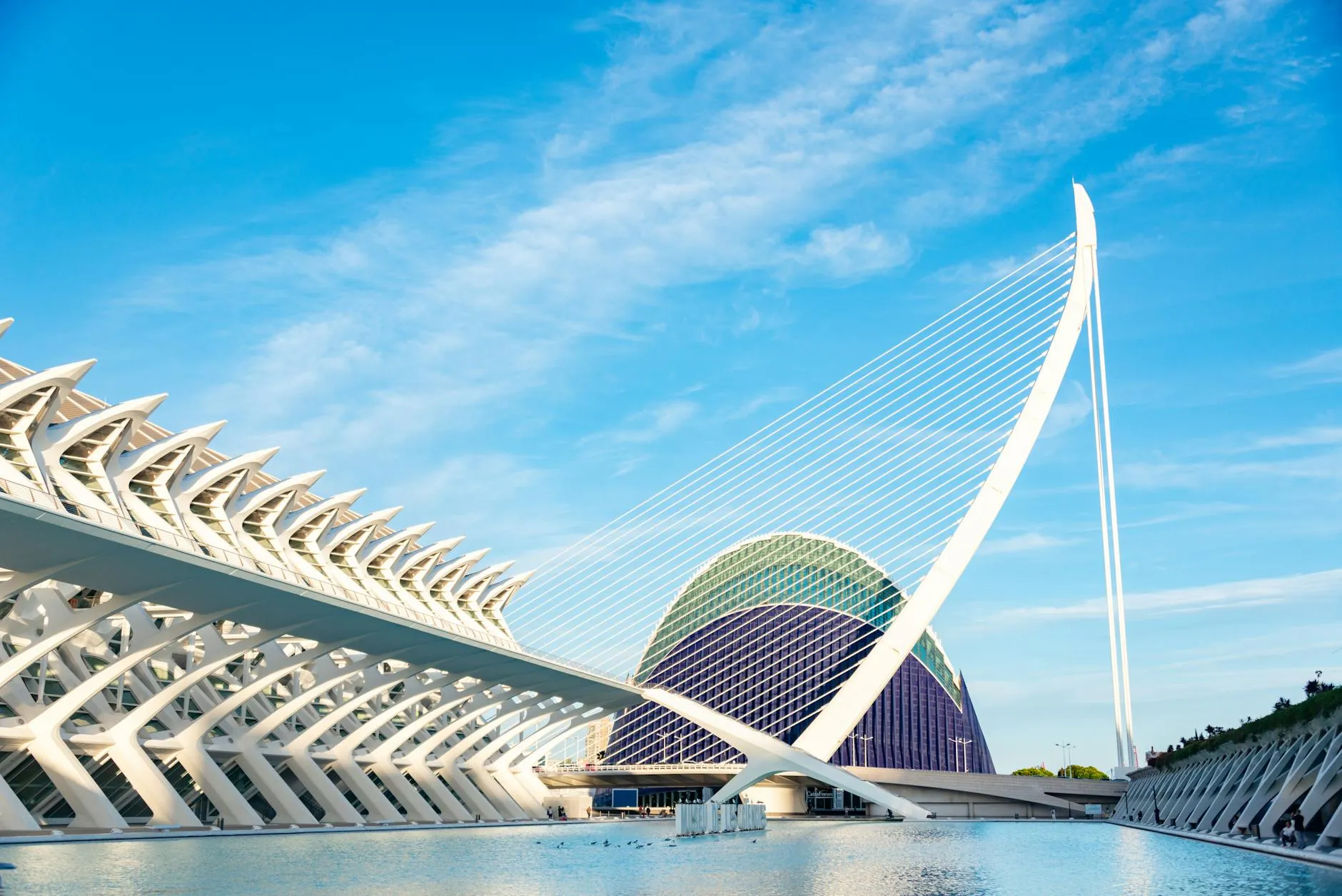
The one thing Valencia has that Barcelona simply does not: the Ciudad de las Artes y las Ciencias — Santiago Calatrava’s two-kilometre complex of science museum, opera house, aquarium, and IMAX dome built along the drained Turia riverbed. White ribbed structures, shallow reflecting pools, geometric forms with no equivalent in Spanish Gothic or Modernisme. Budget four hours minimum; visit in the late afternoon when the light on the water is at its best and the heat has dropped. The food inside is expensive and not good — eat before you go.
🗺️ Avoid the square, walk five minutes
Tourist trap geography at VLC is concentrated around La Plaça de la Reina. Restaurants within one block charge tourist margins. Walk five minutes north and west into Barrio del Carmen (the medieval quarter) or take a cab to Ruzafa (a neighbourhood of local restaurants south of the centre) and the price-to-quality ratio improves immediately. Any restaurant with someone standing outside trying to bring you in: keep walking.
🕐 Best and worst times at security
Queues are lightest on Tuesday and Wednesday mornings; worst on Friday afternoons and Sunday evenings. With the terminal already running close to capacity during high summer, three hours before an international flight in July or August is not overcautious.
❓ FAQ
📋 At a Glance — VLC 2026
| Airport | Aeropuerto de Valencia |
| IATA | VLC |
| City | Valencia, Spain |
| Country | Spain — Schengen Area, European Union |
| Currency | Euro (€) |
| Border system | Schengen — EES biometrics live from 10 Apr 2026; ETIAS expected, date not announced |
| Annual passengers | 11.8 million (2025 record) |
| Metro to city centre | Lines 3 & 5 — 20–25 min — €3.90 single — every 15 min (weekdays) |
| Taxi to city centre | €20–25 — 20–25 min — 24/7 |
| Bus to city centre | Line 150 — €1.50 — 35–40 min — no Sunday service |
| Lounge | Sala Joan Olivert — Priority Pass — €35–40 walk-in |
| Dominant carrier | Ryanair (60+ destinations from VLC) |
| Transatlantic | Montréal YUL via Air Transat — June–October 2026 |
| Minimum layover for city visit | 6 hours |
| Expansion programme | €402 million — starts 2027 — target 15 million passengers |
🌍 Planning the trip? Read our The Costa Blanca travel guide — best time to go, where to stay, and how to get around.