Bari Karol Wojtyła Airport (BRI) — Airport Guide 2026
Bari Karol Wojtyła is Puglia’s main airport, and it does a lot more traffic than most people picture for the heel of Italy: just under 8 million passengers in 2025, up nearly 10% on the year. It is a Ryanair-heavy, point-to-point leisure airport rather than a connecting hub — but the thing that actually makes it easy to use is the train. Unlike most Italian regional airports, BRI is wired straight into the city by a 17-minute rail line to Bari Centrale, which changes the whole arithmetic of getting in and out. This guide is the operational one: the terminal, the border, that train, the lounges, and the honest onward math to the Puglia coast.
Quick Reference
Bari Karol Wojtyła Airport (Aeroporto di Bari-Palese)
BRI / LIBD
Bari, Puglia, Italy
One passenger terminal
One (3,000 m asphalt)
7,977,881 (up 9.7% on 2024)
About 8 km northwest
FM2 train to Bari Centrale, about €5, 17 minutes
Yes — Ferrotramviaria FM2 line to Bari Centrale
Executive VIP Lounge + Work Lounge (Priority Pass accepted)
Ryanair and Volotea (both focus cities)
Euro (EUR)
Schengen (EES live since 10 Apr 2026; ETIAS expected, date not announced)
🛬 1. What BRI is, and why the train matters
There is no glamorous recent headline here — no shiny new pier opened this year — so the honest framing is what the airport IS rather than what it just became. BRI is the busiest of Puglia’s two airports (the other is Brindisi to the south), it is growing fast on the back of low-cost leisure demand, and Ryanair runs the show with more than 50 destinations, with Volotea the second focus carrier.
🚆 The rail link is the real advantage
Most Italian airports this size dump you onto a bus or a taxi queue; Bari has a dedicated metropolitan train, the Ferrotramviaria FM2 line, running from a station inside the airport straight to Bari Centrale in 17 minutes. That single piece of infrastructure is why a tight connection between a flight and an onward regional train to the Puglia coast is realistic here, where at many comparable airports it would not be.
The FM2 train is the move: about €5 one way, 17 minutes to Bari Centrale, roughly every 20–30 minutes from 05:26 to 23:38, with 41 services on weekdays. Buy at the station machine or online; seats are never the problem, so don’t pre-book.
🛂 2. The border: Schengen, euro, and EES now live
Italy is a long-standing Schengen and eurozone member, so the rules here are the standard Schengen ones. For EU, EEA and Swiss nationals, entry is the usual passport or ID check. For visa-exempt non-EU travellers (UK, US, Canada, Australia and others), Italy counts toward the 90-days-in-any-180 Schengen allowance.
🛬 EES — live since 10 April 2026
The Entry/Exit System became fully operational across the Schengen external border on 10 April 2026, so it now applies at Bari like everywhere else in the zone. On your first entry after EES went live you are registered biometrically rather than getting a passport stamp.
Allow a few extra minutes at passport control the first time through after EES — a facial image and fingerprints replace the stamp.
🗓️ ETIAS — with no announced launch date
ETIAS, the separate pre-travel authorisation, is expected in the final quarter of 2026 with a transitional grace period after that, so it is not yet required and you cannot apply for one yet. Verify the official timeline before you travel, as the launch date has slipped before.
🚆 3. Getting into Bari (and onward)
The airport is about 8 km northwest of the centre. The realistic options:
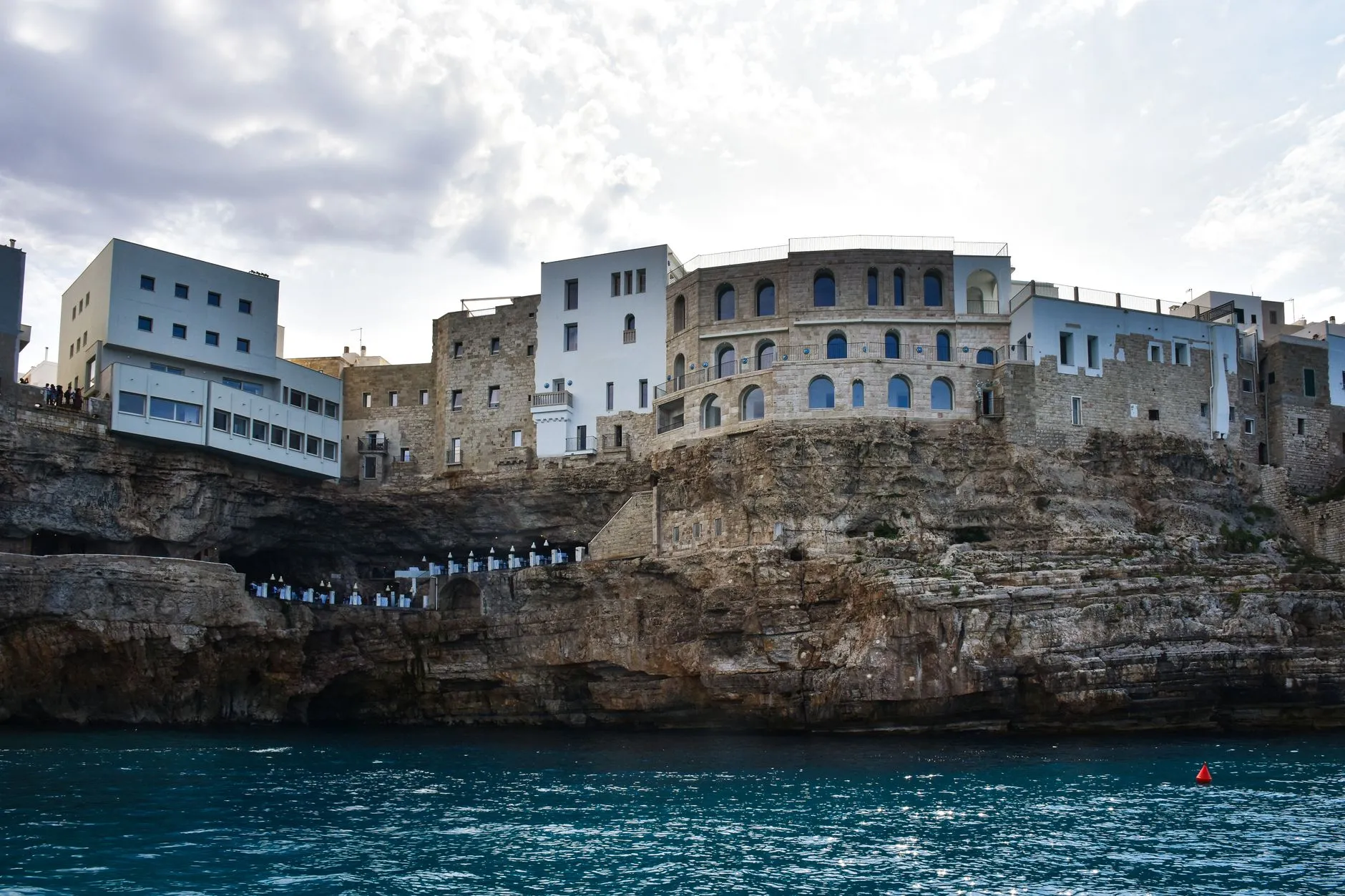
From Bari Centrale you are on the main Puglia rail spine. Polignano a Mare — the cliff town everyone photographs — is roughly 30–40 minutes south by regional train, no car needed. That makes a half-day at the coast genuinely doable on a layover or a short trip.
You are usually arriving here, not connecting through, so the real question is the onward leg, not a transit. If your trip is the trulli at Alberobello, the white hill town of Ostuni, or Matera over the border in Basilicata, you will want a car or a slower onward train (the Ferrovie del Sud Est and FAL lines); the airport-to-Bari-Centrale train is the easy first hop, and the rest is regional rail or a hire car from the airport’s car-rental desks.
🛋️ 4. Lounges
Bari is better served than most airports its size — two airside lounges, including Priority Pass access.
If you hold Priority Pass or fly a contract carrier in a premium cabin, the lounge is worth using in the summer crush; otherwise the airside bars are perfectly fine for a short wait.
🍽️ 5. Food worth eating, and what to carry home
Don’t make the airport your Puglia meal — eat in town, where the food is the point. Bari’s signature plates are orecchiette con cime di rapa (the little ear-shaped pasta with turnip tops), focaccia barese (thick, tomato-and-olive, eaten standing up), and the region’s burrata and cured meats. In the old town, Bari Vecchia, the women along Arco Basso — locally the strada delle orecchiette — make and dry the pasta by hand on tables in the street, which is a real thing to see and not a staged one.
Skip the tourist menus around the waterfront and the Murat grid near the port; they charge for the location, not the cooking. Walk into Bari Vecchia or out into the working neighbourhoods and the bill drops while the food improves.
What travels home: taralli (the little wine-biscuit rings), good Puglian olive oil, and a bottle of Primitivo or Negroamaro. Burrata is the regional glory but it will not survive the trip — eat it here.
💡 6. Is Bari worth your time?
Bari itself earns a day before you move on. Bari Vecchia is a dense, lived-in old town rather than a museum piece, and the Basilica di San Nicola — which holds the relics of St Nicholas and draws Orthodox pilgrims as well as Catholics — is the anchor most visitors actually remember.
Beyond that, the city is best treated as the entry point to Puglia rather than the whole trip: the coast at Polignano a Mare and Monopoli, the trulli at Alberobello, the baroque of Lecce in the Salento, and Matera an hour west are what the region is really about. The honest read: Bari is a working southern Italian port city, not a manicured resort, and that is its appeal — but it means the rewards take a little walking to find. Use the train, eat where the locals eat, and give Bari a day before you head down the coast.
❓ Frequently asked questions
📊 Bari Airport 2026 at a glance
| Item | Detail |
|---|---|
| Codes | BRI / LIBD |
| Terminals | One |
| Runway | One (3,000 m) |
| 2025 passengers | 7,977,881 (up 9.7%) |
| Distance to centre | About 8 km |
| Train | FM2 (Ferrotramviaria) to Bari Centrale, ~€5, 17 min, every 20–30 min |
| City bus | AMTAB 16, around €1, slower |
| Taxi | Short ride; train usually wins on price and time |
| Lounges | Executive VIP Lounge + Work Lounge (Priority Pass) |
| Dominant carriers | Ryanair, Volotea (focus cities) |
| Currency | Euro |
| Schengen | Yes |
| EES | Live since 10 April 2026 |
| ETIAS | Expected, with no date announced (not yet required) |
Explore more
- Brindisi Salento Airport (BDS) guide: Puglia’s other airport, the better gateway for Lecce and the Salento.
- Cheap flights to Bari: current tracked fares into BRI from across Europe.