Vigo Airport (VGO) — Airport Guide 2026
Quick Reference
Vigo–Peinador Airport
VGO / LEVX
Vigo, Galicia, Spain
About 9 km east of central Vigo, at Peinador
One terminal
1,114,810 passengers (+5.3%) — a regional, mostly-domestic airport
Spain — Schengen, euro; EES live since April 2026, ETIAS expected, date not announced
Euro (€)
Vitrasa city bus ~€1.50 (~30 min); taxi ~€20–25
Sala VIP Illas Cíes (Priority Pass; ~€39 walk-in)
Iberia, Vueling, Air Europa, Binter — Ryanair leaving early 2026
🛫 1. What Vigo Airport is
Vigo is the airport for Galicia’s largest city — a working Atlantic port in the green northwest corner of Spain, about as far from a sun-and-sand resort as Spanish airports get. It’s a small, single-terminal regional field, handling a little over 1.1 million passengers in 2025, and it’s defined right now by who’s leaving rather than who’s arriving.
The big news at Vigo is a loss. Ryanair is pulling out entirely from early 2026, in a fees row with the airport operator Aena, and it’s taking the cheap low-cost seats with it. The airline has dangled a return if Aena cuts charges, but for now the airport runs without it. What’s left is a mostly domestic field — Iberia, Vueling and Air Europa to Madrid, Barcelona and the Canaries — and for cheap international flights, Santiago or Porto are the realistic doors into Galicia.
So set your expectations to match the place: this is a city-and-region airport, not a holiday machine, serving the foodie Atlantic coast of the Rías Baixas rather than a beach strip. The practical part is short; the reason to come is across the water.
🛬 2. The terminal and the lounge
One terminal, small and quick to cross, with a single security line that only really queues when a couple of the busier domestic flights leave together. For a regional airport of this size, allow ninety minutes to two hours and you’re well clear. Walks are short and there is nothing to connect to.
For a small airport, the lounge is a pleasant surprise. The Sala VIP Illas Cíes sits past security on the first floor, and it takes Priority Pass, LoungeKey, DragonPass and Diners Club, or a walk-in pass around €39, with wines, a few cocktails, baggage storage and a long opening day (roughly 05:30 to 22:00, later in summer). It’s named, fittingly, for the islands the whole region revolves around.
✈️ 3. Carriers, and the Ryanair gap
With Ryanair on the way out, Vigo’s schedule is essentially the Spanish flag-and-low-cost carriers flying domestic routes: Iberia, through its regional arm Air Nostrum, and Vueling and Air Europa, linking the city to Madrid and Barcelona, with Binter running the long hop to the Canaries. The international map, never large here, thins further without the Irish low-cost seats.
For booking, the read is honest: if you’re coming from within Spain, Vigo is convenient and well-served to the two big hubs. If you’re flying in from abroad, you’ll most likely connect through Madrid or Barcelona — or, just as sensibly, fly into Santiago de Compostela an hour north, or across the border into Porto, both of which carry more direct international routes. Galicia’s three airports sit close together and compete for the same flights, and the Ryanair retreat has only sharpened that.
The one quietly useful route beyond the mainland is Binter’s hop to the Canaries, which gives the region a direct line to winter sun without doubling back through Madrid, and it’s the airport’s main non-domestic connection now. Beyond that, treat Vigo as a spoke to the Spanish hubs rather than a destination airport in its own right.
🛂 4. The border: Spain, Schengen, the euro
Spain is in the Schengen Area and uses the euro, and at Vigo the border barely features, because so much of the traffic never crosses one.
Most flights here are domestic Spanish, so the majority of arrivals clear no passport control at all; Spain is in Schengen, so the few intra-European flights skip it too. Only a non-Schengen arrival — now rare with Ryanair gone — would meet the EU’s EES biometric system, live since April 2026. And unlike the Canary Islands, this is mainland Spain with ordinary VAT, so there are no tax-free bargains to chase at the duty-free.
For the record, visa-exempt visitors from the UK, US and elsewhere enter the Schengen Area for up to 90 days in any 180, and ETIAS, the pre-travel authorisation, is expected to follow EES, with no launch date announced. Everything is priced in euros, with ATMs in the terminal and cards taken everywhere.
🚌 5. Getting into Vigo — and which Galician airport
The airport is about 9 km east of central Vigo, and getting in is cheap and simple.
The cheap way in is the city bus. Vitrasa’s airport line runs to central Vigo in about half an hour for roughly €1.50, dropping near Plaza de América; a taxi is €20–25 for the run. There’s no railway at the airport itself, but Vigo’s two city stations put you on the high-speed Atlantic line up to Santiago and A Coruña in well under an hour.
Tickets for the city bus are bought on board, and it ties into Vigo’s urban network if your hotel is beyond the centre. The taxi rank is outside arrivals for a door-to-door run of fifteen to twenty minutes. The bigger transport decision is often made before you fly: with Santiago (SCQ) an hour north and Porto a couple of hours south, both carrying more direct flights, it’s worth pricing all three against where in Galicia you’re actually headed. Vigo wins if the city and the Rías Baixas are the target; Santiago wins for the Camino and the wider route map.
It’s also worth weighing the train against a domestic flight altogether. Vigo is on Spain’s high-speed network, with fast AVE services to Madrid and frequent trains up the coast to Santiago and A Coruña; for the Madrid run especially, the train competes hard once you add the airport transfers at both ends, and it leaves you in the centre rather than 9 km out.
🦪 6. The reason you’re here: the Rías Baixas, the Cíes and the seafood
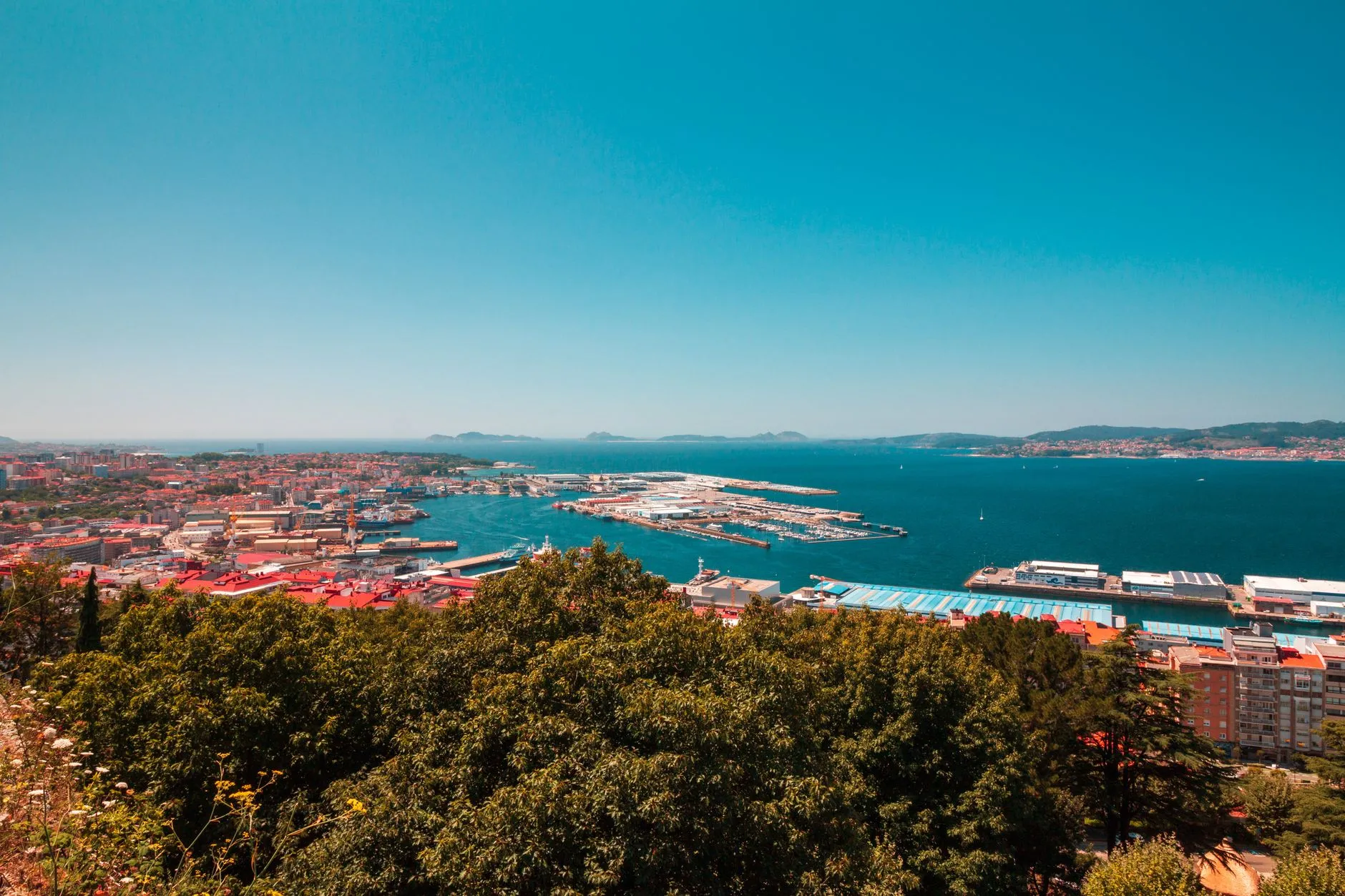
Galicia is the green, wet, Atlantic Spain, and Vigo is its hard-working heart — a fishing and shipbuilding port, gritty rather than pretty, and far better for it once you’re standing among the oyster sellers shucking to order on the Rúa da Pescadería, the lane everyone calls A Pedra. The Rías Baixas, the drowned valleys that notch this coast, are the reason the food is what it is: crisp Albariño white wine from the vineyards inland, octopus and goose barnacles, and the rafts of mussels that quilt the estuary in front of the city.
Don’t come to Vigo for sun — come for one of Europe’s great beaches. At the mouth of the ría lie the Cíes Islands, part of the Atlantic Islands of Galicia National Park, whose Rodas beach The Guardian once named the best in the world. The catch is the protection: the islands are capped at 1,800 visitors a day and reached only by a booked ferry with an authorisation, which is precisely why they stay that good. Sort the permit and the boat in advance, mostly in summer.
There’s a pilgrim angle here too, easy to miss among the seafood. The coastal branch of the Camino Portugués, the Portuguese Way to Santiago, runs straight through Vigo, so a fair share of arrivals are walkers starting or pausing here rather than holidaymakers — for them the city is a working waypoint, with the cathedral a few days’ walk north.
There’s no aifly guide to the city yet, so take this as orientation, not a tour: the old town, Casco Vello, and the old fishing quarter of O Berbés are the walkable core, the Rías Baixas towns of Cambados and Baiona are an easy drive, and Santiago de Compostela is ninety minutes up the coast. If you carry one thing home, make it a bottle of Albariño, which travels better than the seafood and tastes of exactly this coast.
❓ 7. FAQ
📋 8. At a glance
| Item | Detail |
|---|---|
| Airport | Vigo–Peinador (VGO / LEVX), ~9 km from central Vigo |
| Terminal | Single terminal; arrive ~1.5–2h for a domestic flight |
| Bus | Vitrasa city bus to central Vigo, ~€1.50, ~30 min, tickets on board |
| Taxi | ~€20–25, 15–20 minutes |
| Rail | None at the airport; Vigo’s city stations link to the high-speed Atlantic line |
| Border | Spain; Schengen; euro; mostly domestic (no control); EES live since April 2026 |
| Currency | Euro (€); mainland VAT, no Canary-style tax break |
| Lounge | Sala VIP Illas Cíes; Priority Pass / ~€39 walk-in; ~05:30–22:00 |
| Carriers | Iberia, Vueling, Air Europa, Binter — Ryanair leaving early 2026 |
| Near the airport | Vigo city, the Rías Baixas, and the Cíes Islands National Park by ferry |
🔗 9. Explore More
- Santiago de Compostela Airport (SCQ) guide — the larger Galician airport an hour north, the Camino gateway and a real alternative
- Madrid–Barajas Airport (MAD) guide — the hub you’ll most likely connect through to reach Vigo from abroad