Dublin — The Complete City Guide 2026
Literary pubs, Viking history, world-class museums, and the best Guinness you’ll ever taste — your complete guide to Ireland’s capital, from Temple Bar alternatives to locals-only spots.
10°C avg
No Schengen / EUR €
Last verified: March 2026. Every price, opening hour, and booking link in this guide has been checked against official sources. Verify at the listed URLs before visiting — Dublin changes faster than any guide can keep up with.
I have written city guides for two decades across four continents, and Dublin remains one of the most misunderstood capitals in Europe. Not because it’s complicated — it’s one of the most walkable cities on the continent — but because its tourist infrastructure actively misleads visitors toward a version of the city that Dubliners themselves avoid.
Here is the gap: the top-line Dublin experience (Guinness hat, Temple Bar selfie, €10 pint of something that isn’t quite Guinness) bears almost no resemblance to the city that produces more Nobel laureates per capita than any nation on earth, shelters a Caravaggio that hung unrecognised in a Jesuit dining room for 200 years, and maintains a pub culture so particular that the temperature of the glass matters more than the brand on the tap.
This guide closes that gap. It covers everything a visitor needs — attractions, food, pubs, transport, safety, day trips, budgets — but it also tells you what to skip, when to go, what the locals actually do, and why. It is opinionated by design. A guide that recommends everything recommends nothing.
Who this guide is for: First-time and returning visitors who want the real city. Families, solo travellers, couples, literary pilgrims, history nerds, food people, and anyone who’d rather talk to a barman than take a selfie with a statue. Budget to luxury. Two days to a week.
This is where modern Ireland was born, and there is nothing else quite like it in Europe. The leaders of the 1916 Easter Rising were executed in the Stonebreaker’s Yard — one by one, over nine days in May 1916. James Connolly was so badly wounded from the fighting that he was carried to the yard on a stretcher and tied to a chair to face the firing squad. The British command thought the executions would end the rebellion’s popular support. They created a martyrology instead. Within six years, Ireland had won its independence.
The Victorian Wing, added in 1861, is architecturally extraordinary — a panopticon of iron balconies, catwalks, and a soaring glass roof that has been filmed for The Italian Job and Paddington 2. But the power of this place is not architectural. The guided tour takes you through the East Wing (pre-Famine cells that held up to five people each in spaces designed for one), the infirmary where 1916 prisoners were detained, and the Stonebreaker’s Yard itself, where small execution crosses mark the exact spots. The guides are among the finest historical interpreters in Ireland — their depth of knowledge and emotional intelligence elevate the visit from tourism to education.
Price: Adult €8 | Senior €6 | Child 12—17 €4 | Under 12 free (with ticket) Book: kilmainhamgaol.admit-one.eu Hours: Daily, multiple tour times. Guided tours only — no independent access. How to get there: Luas Red Line to Heuston, then 15-minute walk, or Dublin Bus 69/79 from Aston Quay. Access: Limited — multiple staircases, uneven stone floors, narrow corridors. Not wheelchair accessible. Contact the gaol directly for visitors with mobility needs.
Editor’s tip: Tickets are released at midnight Irish time, exactly 28 days before your visit date. Not 9:00 AM — midnight. Set a calendar reminder, book before you go to sleep, and choose the first morning slot for the smallest group and the best guide-to-visitor ratio. If you miss the release, check again between 09:15 and 09:30 — returned tickets appear daily in that window. This is the single most time-sensitive booking in Dublin.
Walk through the Front Arch on College Green and the noise of Dame Street vanishes. Trinity is Ireland’s oldest university, founded in 1592 on the orders of Elizabeth I, and its campus — five centuries of academic architecture arranged around a sequence of cobblestoned squares, with the 1853 Campanile at its centre — is one of the finest in Europe.
The Long Room is the centrepiece: a 65-metre barrel-vaulted oak library on two levels that appeared in the Star Wars Jedi Archives design and remains one of the most photographed library interiors in the world. However — and this matters — as of 2026, most of the 200,000 books that normally fill the shelves are in conservation as part of a €90 million restoration project running until 2027—2030. Only the first four bays (as you enter) retain their books — the other 200,000 volumes have been removed, cleaned, tagged and relocated to climate-controlled storage. Sou Fujimoto’s suspended Gaia sculpture hangs in the Long Room through September 2026 to fill the visual gap, and the barrel-vaulted architecture is intact, but the visual impact is significantly diminished from photographs. Check visittrinity.ie for current conditions before committing to the ticket price.
The Book of Kells — an illuminated manuscript of the four Gospels produced by Celtic monks around 800 CE — is on full display and justifies the visit regardless. The manuscript’s level of decorative detail is almost hallucinogenic: interlaced spirals, fantastical animals, and human figures rendered with a precision that seems impossible given the tools available in 9th-century Ireland. Look for the Brian Boru Harp in the Long Room: Ireland’s oldest surviving harp, carved from willow (not oak, despite the common claim), deceptively small, over 600 years old, and the model for the emblem on every Irish coin, passport, and pint of Guinness.
Price: From €21.50 self-guided (€25 peak) | From €65 guided Book of Kells Experience | From €16 Trinity Trails walking tour Book: visittrinity.ie — first slot of the day Hours: Daily. Check website for seasonal variations. Access: Lift access to the Long Room. The campus is flat and wheelchair-friendly throughout.
Editor’s tip: Book the earliest available slot. The first hour after opening, before the tour-bus groups arrive, is the only time the Long Room approaches the silence it deserves. The afternoon experience is a shuffling queue rather than a visit.
The single most undervisited world-class institution in the city. It sits behind Dublin Castle in a building most tourists walk past without noticing, yet it has been voted European Museum of the Year — twice. Entry is free, which creates a paradox: the gallery is quiet, unhurried, and attended by people who genuinely want to look at things, rather than people who paid €25 and feel obligated to.
Sir Alfred Chester Beatty (1875—1968) — an American-born mining magnate who spent six decades collecting — donated his entire collection to Ireland on his death and was made Ireland’s first honorary citizen in return. The donation is staggering in scope and quality: Chinese oracle bones from 1500 BCE, Japanese illustrated scrolls, Persian miniatures of microscopic precision, Quranic manuscripts considered among the finest in existence, Western European medieval Books of Hours, and papyrus fragments of the New Testament dating to the 2nd century CE. The Islamic Art collection alone is considered one of the finest in Western Europe outside the great national museums.
The Roof Garden — planted with species referenced in ancient manuscripts — is on the third floor and offers views over Dublin Castle’s grounds. The ground-floor café serves excellent lunch at prices that genuinely reflect a public institution rather than a tourist trap.
Price: Free — suggested donation €10 Hours: Tue—Fri 9:45am—5:30pm | Wed until 8pm | Sat 9:45am—5:30pm | Sun 12—5:30pm | Closed Mon Nov—Feb Access: Fully wheelchair accessible. Lift to all floors including the Roof Garden. Website: chesterbeatty.ie
Editor’s tip: Wednesday evening (open until 8pm) is the quietest visit in any given week. The permanent galleries are never crowded at this time and the staff — who are knowledgeable and generous with their time — have more opportunity to discuss individual pieces. This is the highest-value free cultural experience in Dublin, full stop.
A seven-storey temple to a single product, built inside the 1904 fermentation plant at St. James’s Gate — the site where Arthur Guinness signed a 9,000-year lease on a disused brewery in 1759, paying £45 per year. The lease is framed and displayed at the entrance. The central atrium is built in the shape of a giant pint glass, and the building is the most visited paid tourist attraction in Ireland, which means visiting in the afternoon on any day in summer is an exercise in crowd management rather than enjoyment.
Most visitors follow the standard upward route without pausing on the side exhibits. This is a mistake. The Cooperage — demonstrating the now-extinct process of making the wooden barrels that defined Guinness production for 150 years — is in a side room on the second floor and is consistently the most overlooked exhibit. A master cooper could produce a watertight barrel from raw staves in under 30 minutes using only hand tools, and the craft supported thousands of Dublin families for generations. The Connoisseur Bar on the fifth floor, where pints are poured by hand rather than self-serve, has a shorter queue than the Gravity Bar and produces a demonstrably better pint.
The Gravity Bar at the top offers a genuine 360-degree view over the city with your complimentary pint — one of Dublin’s best panoramas if you time it right.
Price: Dynamic pricing — adult €26–36 depending on day/time (weekends and peak hours cost more) | Students/seniors €23–32 | Children 6–12 €10–15 | Under 6 free. Cheapest slots are weekday mornings and late afternoons; book online as far ahead as possible. Book: guinness-storehouse.com Hours: Daily from 09:30 Access: Fully wheelchair accessible. Lifts to all floors including the Gravity Bar.
Editor’s tip: Book the 09:30 first entry. The Storehouse is navigable in under two hours at this time; by afternoon, the Gravity Bar queue alone can take 45 minutes. The 5pm Super Saver slot (€15) is excellent value if you prefer a quieter, shorter visit.
Tucked behind the Dáil on Kildare Street, this is one of Europe’s finest archaeological collections and — improbably — entirely free. The building itself, an 1890 Victorian rotunda with an extraordinary mosaic floor, is worth visiting for the architecture alone.
The Bog Bodies are the absolute highlight, and most visitors miss them because they are on the lower ground floor with minimal signage. Clonycavan Man (c. 200 BCE) is displayed face-up: his mohawk haircut is held in place by pine resin imported from France or Spain — evidence of sophisticated continental trade networks across Iron Age Europe that most narratives of “ancient Ireland” omit entirely. His moustache is intact. His expression is readable. Oldcroghan Man (c. 200 BCE), found 25km away, was over 1.9 metres tall and displays the well-manicured hands of someone who never performed manual labour — possibly an aristocrat or a ritual king. Both died violently in what archaeologists believe were ritual sacrifices or political killings. The preservation is so complete that you are looking at individuals, not artefacts. Their humanity stops you cold in a way that no amount of description prepares you for.
The Treasury holds the Tara Brooch (8th century CE) and the Ardagh Chalice — the two finest examples of early medieval Irish metalwork in existence. The Viking collection — swords, trade weights, iron chains, the celebrated Dublin Cross — illustrates the city’s Norse origins more vividly than any other exhibit in Ireland.
Price: Free Hours: Tue—Sat 10am—5pm | Thu until 8pm | Sun 1—5pm | Closed Mon Access: Wheelchair accessible on all floors via lift. The lower ground floor (bog bodies) is reachable by lift — ask at reception. Website: museum.ie
Editor’s tip: Ask staff for directions to the bog bodies — “lower ground floor” is not intuitive from the entrance hall. Thursday evening (until 8pm) is the quietest time in the building, and you may have the bog bodies and the Treasury almost entirely to yourself.
Free, 2,500 works, and routinely overlooked in favour of paid attractions that are not as good. The standout works alone justify rearranging a day around this gallery.
Caravaggio’s The Taking of Christ — one of fewer than 70 confirmed Caravaggios in the world — was rediscovered in 1990 hanging in a Jesuit dining room in Dublin, where it had been misattributed and essentially lost for 200 years. The rediscovery was one of the most significant art finds of the 20th century. Vermeer’s Lady Writing a Letter with her Maid is here. Jack B. Yeats’ The Liffey Swim — the painting that best captures what Dublin actually looks and feels like as a living city — is here. The Natural History Museum across Merrion Street is equally free, equally undervisited, and a perfectly preserved Victorian “dead zoo” that hasn’t substantially changed since 1857.
The free guided tours at 11am and 2pm daily are run by specialist art historians rather than general tour staff, and they are genuinely excellent — the Caravaggio tour alone is worth more than any paid Dublin attraction.
Price: Free — suggested donation €10 Hours: Mon—Sat from 9:15am | Sun from 11am | Thu late opening until 8:30pm Access: Fully wheelchair accessible. Lifts between all wings and floors. Website: nationalgallery.ie
Editor’s tip: The Caravaggio is in the Dargan Wing on the ground floor. Don’t navigate by the map — ask the gallery attendants and you’ll find it in five minutes. The gallery café looks over Merrion Square and serves lunch at public-institution prices rather than tourist-zone rates.
At CHQ Custom House Quay in the Docklands — the most unexpectedly excellent museum in Dublin. Voted Europe’s Leading Tourist Attraction three consecutive years at the World Travel Awards, which sounds like marketing copy until you visit. The museum traces the story of 10 million Irish emigrants across 400 years through 20 themed galleries of genuinely innovative interactive design. This is not a passive experience: you carry a stamped passport through the exhibits, hear recorded voices from six continents, and trace diaspora routes that connect Dublin to Buenos Aires, Boston, Melbourne, and Lagos.
Allow 90 minutes minimum. The walk from the city centre along the north bank of the Liffey to CHQ takes 20 minutes and is one of Dublin’s best urban walks, passing the Famine Memorial sculptures on Custom House Quay (among the most affecting public art in Ireland), the Custom House itself, and the Samuel Beckett Bridge.
Price: Adult €24 | Child €16 | Family and concession rates available | Free return visit within 10 days (one of the best value propositions in Dublin) Book: epicchq.com Access: Fully wheelchair accessible. All 20 galleries are on one level.
Editor’s tip: The 5pm Super Saver slot gives you the museum virtually to yourself for €15 — the best-value cultural ticket in Dublin. Book online rather than at the door. Combine the walk there with a stop at the Famine Memorial — the bronze sculptures are impossible to pass without pausing.
A Norman fortress first built in 1204, the administrative centre of 700 years of British rule in Ireland, and the site where that rule formally ended on 16 January 1922, when the Castle was handed to Michael Collins. The handover was reportedly 17 minutes late; Collins remarked, “We’ve been waiting 700 years, you can have the 17 minutes.” He was shot dead in an ambush six months later.
The State Apartments (16th—17th century) are lavishly restored. The Chapel Royal (1814) is one of Dublin’s finest ecclesiastical interiors. But the most interesting part — and the one tourists consistently spend the least time on — is the Viking Excavation: glass floors over the foundations of Dublin’s 10th-century Viking defensive wall and postholes from Norse longhouses. This is the city’s origin point, visible underfoot, and most visitors give it five minutes. It rewards twenty.
Price: Self-guided: Adult €8 | Senior/Student €6 | Child 12—17 €4 | Under 12 free. Guided: Adult €12 | Senior/Student €10 Book: dublincastle.ie Access: State Apartments accessible via lift. The Viking Excavation has steps — ask staff for alternative viewing arrangements.
Editor’s tip: The Viking Excavation is included in all tickets and is the most rewarding section for anyone interested in how Dublin actually began. Spend more time here than you planned.
707 hectares of enclosed parkland three kilometres west of the city centre — larger than Central Park and Hyde Park combined, and one of the largest urban parks in Europe. The park has been here since 1662, when it was established as a royal deer park. The herd — approximately 600 fallow deer, descended from the original 17th-century animals — still grazes freely across the open grassland. They are wild, not tame. Maintain at least ten metres distance.
The Wellington Monument (62 metres, the tallest obelisk in Europe) dominates the eastern end. The Áras an Uachtaráin — the Irish presidential residence since 1938, previously the house of the British Viceroys of Ireland — is visible from the main road. Free guided tours of the Áras run most Saturdays: tickets are issued first-come-first-served at the Phoenix Park Visitor Centre on the morning, with no advance booking, no website listing, and no guarantee of entry if you arrive after 9:30am. Bring photographic ID. The tour covers the state rooms, the formal gardens, and the grounds — it is one of Dublin’s finest free experiences and almost nobody knows how to access it.
Price: Free. Deer herd: free. Áras tours: free (photographic ID required). Access: Main roads and paths are flat and paved — fully wheelchair accessible. The Áras tour route includes some gravel paths; contact the Visitor Centre in advance for mobility assistance. Website: phoenixpark.ie
Editor’s tip: Hire a bike from Phoenix Park Bike Hire near the Visitor Centre (approximately €5/hour). The park is too large to walk comfortably in an afternoon, but a bike covers the Áras, the deer grounds, the Wellington Monument, Dublin Zoo’s perimeter, and the Magazine Fort in a single circuit.
Dublin has two medieval cathedrals — a peculiarity of ecclesiastical politics dating to the 12th century — and both are worth visiting for different reasons.
St. Patrick’s Cathedral (founded 1191) is the national cathedral of Ireland and the largest church in the country. Jonathan Swift — author of Gulliver’s Travels and one of the sharpest satirical minds in the English language — served as Dean here from 1713 to 1745. His tomb lies inside, alongside that of his companion Esther Johnson (“Stella”). The interior is Gothic, austere, and profoundly impressive. The choir is among the finest in Ireland.
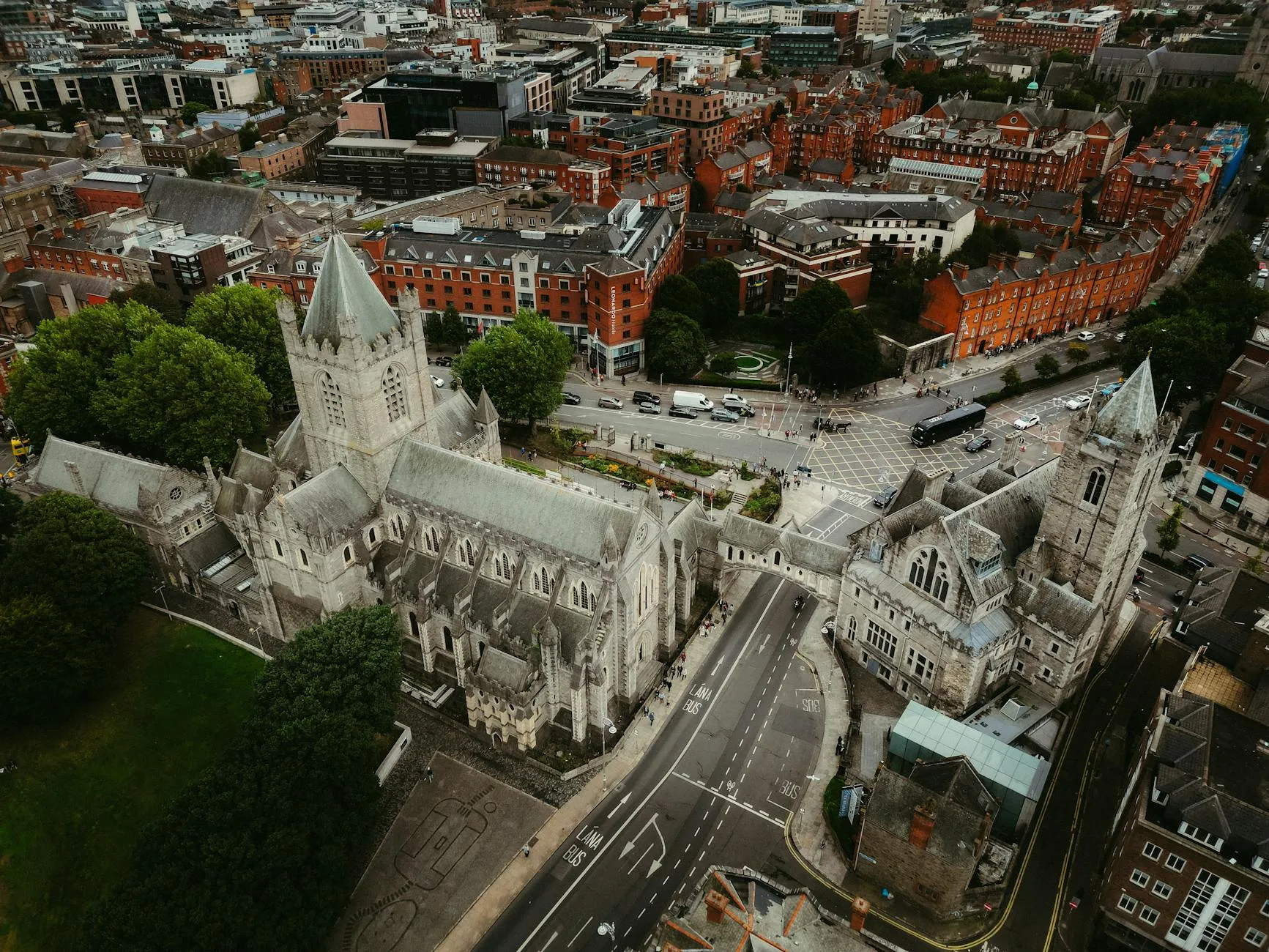
Christ Church Cathedral (founded 1030) is older, smaller, and architecturally more complex — a Norman-Romanesque-Gothic hybrid built atop the site of Dublin’s original Viking church. The medieval crypt — the largest in Ireland or Britain — is extraordinary: a 12th-century undercroft stretching the entire length of the cathedral, displaying medieval stonework, the mummified remains of a cat and a rat found trapped in an organ pipe (known locally as “Tom and Jerry”), and a stunning collection of ecclesiastical silver. The Strongbow monument (the Norman conqueror of Ireland, 1170) is in the nave.
Price: Each approximately €8—10 adult admission. Check stpatrickscathedral.ie and christchurchcathedral.ie for current prices. Access: St. Patrick’s is wheelchair accessible at ground level. Christ Church nave is accessible; the medieval crypt has steps — check christchurchcathedral.ie for current arrangements.
Editor’s tip: For a free alternative that is arguably the better experience, attend Sung Choral Evensong at Christ Church — the acoustics are extraordinary, the choir is world-class, and no ticket is required. Check the cathedral website for service times.
A single Georgian townhouse that tracks the full arc of Dublin’s social history — from an aristocratic address in 1740 to a tenement slum housing over 100 people in 17 rooms by the early 1900s. Guided only. The tour reveals layers of wallpaper from different centuries, exposed brickwork, original fittings, and — in one room — children’s handprints preserved in century-old paint. The building was saved from demolition in 2016, and the restoration deliberately preserved the decay rather than erasing it: peeling plaster, blocked fireplaces, patches of wallpaper from seven different periods — all left intact as evidence of the lives lived here.
This is the most emotionally honest historical site in Dublin. The guides have extraordinary depth of knowledge and will personalise the tour around your interests. It is consistently the most overlooked attraction in the city by visitors who simply don’t know it exists.
Price: €10 Book: 14henriettastreet.ie Access: Limited — the building is a preserved historic tenement with multiple staircases and uneven floors. Not wheelchair accessible. Contact in advance for visitors with mobility needs.
Editor’s tip: Combine with a 15-minute walk to Collins Barracks — now the Decorative Arts and History museum of the National Museum of Ireland. Free entry (Sundays free for all special exhibitions). One of the finest collections of Irish furniture, silver, and military history in the country.
A walk rather than a destination — and that is precisely what makes it essential. Dublin’s Georgian quarter, laid out between 1714 and 1830, contains the finest collection of intact Georgian domestic architecture in Europe: five-storey brick terraces with ornate fanlights, iron railings, and painted doors in colours originally chosen to distinguish one house from another when most Dublin residents were illiterate.
Start at the Oscar Wilde statue in the southwest corner of Merrion Square — the bronze figure reclining on a granite rock, one leg crossed, expression deliberately poised between irony and sorrow. Walk north through the square (the park is open, free, and used by Dublin’s office workers at lunch — not cordoned off for visitors), then west along Upper Mount Street to Fitzwilliam Square (the most complete Georgian square in the city), then north to the National Gallery on Merrion Square West. The Natural History Museum is opposite. The entire walk takes 45 minutes and costs nothing.
Price: Free. Open daily.
Editor’s tip: Walk this route on a weekday morning when the square is animated by the city’s working life rather than weekend tourist traffic. The doors on Merrion Square North are the most photogenic — the colour variety is best seen in late morning light. If you extend this walk to the Ha’penny Bridge (1816, Dublin’s most photographed bridge), photograph it from the north quay at low tide between 7am and 9am — eastern light, minimal pedestrians, and you avoid shooting other tourists shooting the bridge. This walk, combined with the National Gallery and Chester Beatty, constitutes the best free day in Dublin.
The cultural heart of Dublin’s south bank — cobblestone streets, galleries, live music venues, and bars spilling onto pavements on summer weekends. It is genuinely vibrant and the best area in the city for an outdoor evening pint in warm weather. It is also the most expensive part of Dublin: a pint here costs €2—3 more than on Dame Street 200 metres away, and the restaurants are uniformly tourist-oriented. Come for the atmosphere and September’s Culture Night events. Eat and drink elsewhere.
A working-class neighbourhood between St. Patrick’s Cathedral and Thomas Street that has survived gentrification without being consumed by it. The area was historically “the Liberties of the city” — exempt from Dublin’s municipal jurisdiction and permitted to distil its own whiskey. That legacy lives on in the Teeling and Roe & Co distilleries, the Meath Street market (Tuesday and Saturday mornings), and an unhurried pace that the rest of the city centre has lost. Jameson Distillery Bow St. — Dublin’s most-visited whiskey experience and a 10-minute walk north on Smithfield — completes the triangle for anyone interested in the city’s distilling history. This is where Dublin’s character is most intact: independent cafés, affordable restaurants, and some of the best pints of Guinness in the city. It is interesting now, before the up-and-coming phase concludes. If you’re here on a Sunday, arrive at the Meath Street market before 10am — that’s when it’s run by producers rather than for tourists. After 10am, the character shifts.
The Cobblestone pub, the Luas tram, Collins Barracks — and around those anchors, a neighbourhood that has genuinely transformed over 15 years. Once one of Dublin’s most deprived areas, it now attracts a younger, arts-oriented population drawn by reasonable rents and good pubs. The architecture is utilitarian — red-brick warehouses and council flats — but the energy is authentic. At night, Smithfield fills with people heading to the Cobblestone for trad music, and the neighbourhood has a community coherence that Temple Bar has lost.
Four kilometres south on the Luas Green Line, Rathmines feels like a self-contained small town inside Dublin. The main street has independent shops, coffee houses, and restaurants that locals genuinely eat in — rarer than it sounds. The pubs (The Dropping Well, The Baggot Street) see more Dubliners than tourists. Ranelagh, immediately adjacent, has some of the best restaurants on Dublin’s south side.
Rathmines’s more expensive sibling — large Victorian houses, the RDS showgrounds, and neighbourhood pubs that serve food at tables rather than at the bar. Several embassy buildings lend a slightly formal character. Pleasant, quiet, extremely safe. Popular with families. The Four Blue Gates gastropub on Mespil Road is the standout dining option.
Where Dublin shops and parks its smart hotels. The Green is a beautiful 22-acre Victorian park at the heart of the southside, surrounded by the city’s best shops. The area west of the Green connects naturally to the Creative Quarter and Temple Bar. This is the most convenient base for a first visit: everything is walkable, transport connections are excellent, and you are at the heart of what the city has chosen to present. One detail most visitors miss: Grafton Street buskers are auditioned — the pitch licences are competitive and the quality is consequently high. Stop and listen between 12pm and 2pm on weekday lunchtimes rather than walking through.
Dublin is a better family city than it gets credit for. Dublin Zoo (in Phoenix Park — combine with the deer herd and a bike hire for a full-day outing; from €20 adult / €15 child; dublinzoo.ie) is one of Europe’s oldest zoos and genuinely well-run. The Ark (Eustace Street, Temple Bar) is a dedicated children’s cultural centre with rotating theatre, art, and music programmes — one of the few things in Temple Bar worth the address. The Viking Splash Tour is a WWII amphibious vehicle that drives through the city and into the Grand Canal Basin — children love it unreservedly, and it’s a surprisingly informative overview of the city (from €25; vikingsplash.com). For rainy afternoons, Imaginosity in Sandyford (Luas Green Line) is a hands-on children’s museum aimed at ages 2—9. The National Museum, EPIC, and the Natural History Museum are all free and genuinely engage children — the bog bodies, the emigration passport, and the Victorian taxidermy are memorable in ways that compete with screens.
Gardiner Street corridor (north of the Liffey, near Connolly Station) — the best-value hostel accommodation in the city, walkable to the centre with immediate Luas and DART access. Smithfield — younger, more characterful, with the Red Luas line connecting to the centre in five minutes. Both areas are safe. Dublin’s northside reputation is outdated and largely unfair.
South Great George’s Street — tucked between Temple Bar and St. Stephen’s Green, local-feeling streets with excellent independent restaurants at non-inflated prices. Rathmines — more residential, quieter, 20-minute Luas ride, with Dublin’s best neighbourhood pubs on your doorstep.
St. Stephen’s Green — Dublin’s most elegant hotels, the National Gallery, and Chester Beatty within walking distance. Grand Canal Dock — Dublin’s most interesting luxury area: newest restaurants, EPIC museum, the Liffey walk, and genuine neighbourhood character. The best view in Dublin is here, and it’s nearly free: walk into the Marker Hotel’s ground-floor bar, buy a coffee, take the lift to the first floor — the 360-degree panorama is identical to the Guinness Gravity Bar and costs the price of an Americano.
Any hotel described as “near the airport” or “near the M50” will cost you 45 minutes each way to reach everything in this guide. Avoid regardless of price.
Dublin is a UNESCO City of Literature — the first city in the world to receive that designation. The city produced Joyce, Beckett, Yeats, Wilde, Behan, Synge, and Heaney in roughly a century — a per-capita literary output that has no equivalent in the English-speaking world.
The walk (3 hours, four pubs, one museum, one bridge):
Start at Davy Byrne’s pub (21 Duke Street, established 1798, still open) — where Leopold Bloom stops in Ulysses for a burgundy and a gorgonzola sandwich, described so precisely by Joyce that a reader can navigate the interior without having been there. The pub serves food and is open daily.
Next, the Museum of Literature Ireland (MoLI) at 86 St. Stephen’s Green — opened 2019 in the Newman House building where Joyce studied from 1899 to 1902. The collection includes Joyce’s handwritten notebooks, first editions of Ulysses, and manuscripts spanning the Irish literary tradition. From €12. moli.ie.
Then, the Oscar Wilde statue in Merrion Square.
Then, the Dublin Literary Pub Crawl (dublinpubcrawl.com) — running every evening since 1988, visiting four historic pubs with professional actors performing scenes from Joyce, Behan, Wilde, and Beckett. Ranked among the Sunday Times’ World’s 50 Best Walks. €15—20 and worth significantly more.
End by crossing the Samuel Beckett Bridge — a harp-shaped cable-stayed structure in the Docklands — and walking back along the south quays to close the loop.
Three hours of your life, a handful of pubs, and Dublin’s literary history will make more sense than any book.
Dublin’s food reputation has undergone a genuine transformation. The clichés about boiled meat and floury potatoes belong to a different era. The one rule that holds without exception: never eat in Temple Bar. Walk two streets south to Dame Street, Drury Street, or Fade Street — the same neighbourhood, four minutes on foot — for food at half the price and twice the quality.
Bunsen (7 Wexford St & other locations | bunsen.ie) — The best burger in Dublin by a significant margin. The menu fits on a business card: single, double, or cheese. No reservations, no app, no Instagram décor. The queue moves fast, the beef is Irish, the brioche bun holds together to the last bite. €8—12.
Brother Hubbard (153 Capel St, Dublin 1) — The best breakfast on the northside and one of the best in the city. Middle Eastern—inflected brunch (shakshuka, Turkish eggs, spiced grain bowls) in a bright room with good coffee and no pretension. The lunch menu is equally strong. €10—16. Go before 10am on weekends or queue.
The Bernard Shaw (Cross Guns Bridge, Glasnevin, Dublin 9) — A countercultural institution operating from a converted double-decker bus. The €6 breakfast roll is one of the best-value meals in the city. Free live music several evenings a week. The crowd is young, the vibe is genuinely alternative.
Leon (multiple city-centre locations) — Plant-based fast casual. Breakfast pots, grain bowls, and wraps in the €9—12 range. The breakfast pots (slow-cooked eggs, roasted tomatoes, spiced lentils) are the standout.
777 (7 South Great George’s Street) — Contemporary Mexican in the Creative Quarter. The carnitas tacos — 8-hour braised pork shoulder with pickled red onion and chipotle crema — justify the reputation entirely. Frozen margaritas are formidably good. Book ahead for weekends. €18—25 mains.
The Fumbally (Fumbally Lane, Dublin 8) — In the Liberties, a ten-minute walk from St. Patrick’s Cathedral. Seasonal, locally sourced, served in a converted warehouse with communal tables and good light. The weekend brunch is exceptional. Lunch €12—18. The kind of place that feels like it belongs to the neighbourhood rather than to a postcode.
The Woolwich (1 Forbes St, Dublin 1) — Gastropub near Custom House Quay. The beef cheek (slow-braised, truffle chips, bone marrow) is the dish that gets people back. Craft beer selection among the city’s best. €18—28.
Oxmantown (7 Mary’s Abbey, Dublin 7) — On the north quays near the Four Courts. Exceptional brunch and lunch in a small, thoughtful room. The toasties are unreasonably good. Coffee is taken seriously. €10—16. Closed evenings — this is a daytime destination.
Pickle (6 Caxton St) — Modern Indian that earned its reputation on cooking rather than atmosphere. The butter chicken is the benchmark against which Dublin’s Indian restaurants are judged. Lunch deal: two courses, €15—18. Book ahead for dinner.
The best seafood in the Dublin area is not in the city centre — it’s in Howth, 30 minutes by DART. Fresh crab sandwiches at The Bloody Seal, fish and chips at Beshoff (€12—16), or the full seafood treatment at The Oar House or Wright’s Cave (€20—35). Combine with the cliff walk for one of the best food-and-activity half-days in Ireland.
Dublin’s pub culture is the real thing — not a performance, not a theme, and not reproducible elsewhere. These are the pubs where it survives intact.
The Cobblestone (Smithfield Square) — The best pub in Dublin for traditional music and the standard against which every trad session in the country is measured. No microphones. No amplification. Musicians sit in a corner and play for each other — the audience is welcome but incidental. Open session most nights. No cover charge. Do not take photographs without asking.
The Gravediggers / John Kavanagh’s (1 Prospect Square, Glasnevin) — Serving pints since 1833, run by the same family for seven generations. No music. No television. No food. No cocktails. No social media presence. The Guinness here is routinely cited by serious drinkers as the best in Dublin — dark, slow-poured, velvety. €6—9.
The Stag’s Head (1 Dame Court, Dublin 2) — A Victorian pub dating to 1770 with original fittings: mahogany bar, stained glass, mosaic floor, taxidermy on the walls. Quiet and authentic in a way that Temple Bar pubs are not. The Guinness is excellent. The basement hosts comedy and spoken word on weekends. €7—9.
Kehoe’s (9 South Anne Street) — Southside institution with creaking floorboards, open fires, and snugs so small they hold four people at a push. No music. No food beyond bar snacks. The best place in central Dublin to sit with a book and a pint. €7—9.
The Long Hall (51 South Great George’s Street) — A Victorian gem with ornate plasterwork ceilings and open fires. One of the most beautiful pub interiors in Ireland. Open late.
The Dublin Literary Pub Crawl — Professional actors, four historic pubs, scenes from Joyce, Behan, Wilde, and Beckett. Every evening. Founded 1988. €15—20. dublinpubcrawl.com. The best thing to do on your first evening in Dublin that isn’t a museum.
Hofmann’s — Specialist gin bar with 200+ gins, knowledgeable staff. Booking essential — the room is small.
The Long Hall — Open late, gorgeous interior, reliably interesting crowd in the back room.
Cameron — Late-night, cheap pints, open until 3am Fri/Sat. Verify current status before visiting.
Dublin Bus Airlink 747 to the city centre: €7, 30—45 minutes, every 20 minutes, 24 hours. The 757 runs to Heuston Station. Taxis to the centre: €25—35 with metering. Agree the fare before departing if the meter is queried. Use licensed taxis from the rank only. There is no rail link from Dublin Airport — long discussed, not yet built.
The single most important purchase of your Dublin trip. Available at the Airport SPAR and Centra stores. Covers all Dublin Bus, Luas, DART, and commuter rail. The 72-hour card costs €18 and saves money from the first journey. Do not buy single tickets. Buy it at the airport — the price is identical, the queue is shorter, and you have transit coverage from the moment you board the Airlink. Download the Leap app before arrival: leapcard.ie.
Two lines. Green Line: St. Stephen’s Green to Sandyford/Brides Glen, via Ranelagh and Rathmines. Red Line: Tallaght to Saggart via the city centre, Smithfield, and Heuston Station. €2.20 per ride with Leap card. Peak hour (08:00—09:30 and 17:00—18:30) is very crowded on the Red Line — stand clear of doors and watch bags.
Runs along the coast from Malahide and Howth in the north to Bray and Greystones in the south, via city-centre stations at Connolly, Tara Street, and Pearse. Essential for Howth and Malahide day trips. Frequency drops on Sundays — check irishrail.ie.
Dublin’s city centre is compact enough to surprise people accustomed to larger capitals. Walking from the Guinness Storehouse to Temple Bar to St. Stephen’s Green takes 20 minutes at moderate pace. The Luas and DART are for reaching the edges. Everything central is walkable and streets are safe in daylight.
Free Now (formerly Hailo) has better Dublin coverage than Uber. City-centre to airport: €25—35. Tipping is not mandatory; €2—3 is standard for a good ride.
Visa & Entry (Ireland Is Not in Schengen)
Ireland is in the EU but not in the Schengen Area — a Schengen visa does not get you in, and an Irish stamp does not cover the rest of Europe. EU/EEA and Swiss citizens enter freely with a national ID card or passport. UK citizens enter under the Common Travel Area with no document check in practice (passport strongly recommended for airline boarding). US, Canadian, Australian, New Zealand, Japanese, Korean, Singaporean and most Western nationalities are visa-free for up to 90 days — just a valid passport and proof of onward travel. Everyone else checks the Irish Immigration Service visa list before booking. Crossing to Northern Ireland is a UK entry: apply for the UK Electronic Travel Authorization (ETA) before you travel if you are going to Belfast, the Giant’s Causeway, or any UK territory.
Late April through June is the sweet spot: daylight until 10pm in June, moderate crowds, parks in full colour, and St. Patrick’s Festival safely past. Hotel prices are lower than July—August and the weather — while never guaranteed — is at its most cooperative. May is the optimum month.
July–August is peak season: highest prices, largest crowds. The August Bank Holiday weekend (last Monday in August) fills every pub and hotel in the city — avoid if possible, or book months ahead.
September–October is excellent: crowds thin, prices drop, the city returns to its normal rhythm. The autumn light on Georgian streets and Phoenix Park is exceptional. October is arguably the best month for someone who wants Dublin without the tourist infrastructure at full capacity.
November–March is quiet, cheap, and short on daylight (dark by 4:30pm in December). Virtually every attraction operates full hours. January and February are the cheapest months. Dublin’s pub culture does not require good weather.
St. Patrick’s Day (17 March) is worth experiencing once. The parade is a genuine civic event, not a tourist performance, and the city’s atmosphere is electric. Hotels must be booked months ahead and cost significantly more. The festival now runs several days — check stpaddysfestival.ie.
Aer Lingus is adding two new US routes in 2026 (Raleigh/Durham from April, Pittsburgh from late May), bringing total US routes to 18 from Dublin. Budget carrier entry means US-based airlines may drop competing fares. If you are planning to cross into Northern Ireland, the UK Electronic Travel Authorization (ETA) is now being actively enforced at borders — apply before travelling if your itinerary includes Belfast, the Giant’s Causeway, or any UK territory.
Two days (minimum): Kilmainham Gaol and the Guinness Storehouse on Day 1, evening at The Cobblestone. Trinity College and a Merrion Square walk to the National Gallery on Day 2, dinner in the Docklands near EPIC. This covers the essentials but leaves no room for the unexpected.
Three days (recommended): Add a morning at the Chester Beatty Library, an afternoon at Phoenix Park (with the Áras tour if Saturday), and an evening on the Howth Peninsula — cliff walk, harbour seafood, DART home. Three days gives you Dublin properly.
Four days (comfortable): Add the Literary Travellers walk (Davy Byrne’s, MoLI, Wilde statue, Beckett Bridge), a full day trip to Glendalough or Newgrange, and an evening at the Dublin Literary Pub Crawl. This is the pace at which Dublin becomes a city rather than a collection of attractions.
Five days or more: Two day trips (Howth + Malahide on one DART day, Glendalough or Newgrange on the other), a full morning at the National Museum, a Sunday in the Liberties Market, a Christ Church Evensong, and time to eat your way through the restaurant recommendations at a pace that respects the food.
Dublin in the rain (and it will rain): Chester Beatty Library (free, unhurried, warm) → walk through Dublin Castle courtyard to the National Gallery (free, the Caravaggio alone justifies the detour) → lunch at Pickle on Caxton Street → DART or Luas to EPIC at the 5pm Super Saver slot → evening pint at Kehoe’s. Six hours, two world-class museums, one great meal, one great pint, and you never stand in the rain for more than three minutes between stops. This is the best bad-weather day in Dublin and it costs under €30 plus food.
The easiest and most satisfying day trip from Dublin. Howth is a working fishing village, a wild Atlantic headland, and home to one of Ireland’s finest coastal walks — all accessible in a single afternoon without a car.
The Cliff Path Loop (6km, or 10km extended) traces the top of Howth Head above sheer drops to the sea. You will pass the Baily Lighthouse (automated since 1814), cross open heathland with views stretching to the Mourne Mountains on clear days, and return through yellow gorse and bracken. Allow 2—3 hours for the full loop. For a shorter walk, take the path to Balscadden Bay — one of Ireland’s most photographed coastal views — and return via the West Pier, where a colony of grey seals gathers daily at the harbour mouth. Bring nothing. Just watch.
The harbour village rewards you after the walk: fresh crab sandwiches at The Bloody Seal, fish and chips at Beshoff, or the full seafood treatment at The Oar House or Wright’s Cave (book ahead for dinner). The Saturday morning market at the Station House has local cheese, bread, and produce.
Price: Free to walk. Fish and chips: €12—16. Full seafood restaurant: €20—35. Getting there: DART from Connolly Station, 30 min. Return every 20 min. ~€5 return with Leap card. Allow: 3—4 hours (cliff walk + harbour meal)
Editor’s tip: Go on a weekday morning in spring or autumn for the quietest path and best photography light. Saturday afternoon is the busiest. Waterproofs regardless of forecast.
A glacial valley of extraordinary natural beauty — two dark lake tarns surrounded by craggy mountain walls, a sixth-century monastic settlement of international significance, and hiking trails ranging from a gentle 30-minute lakeside loop to a full day on the Spinc ridge.
Glendalough (Gleann Dá Loch — “valley of the two lakes”) was founded by Saint Kevin around 570 CE. His monastic community grew into one of early medieval Ireland’s most important centres of learning, attracting scholars from across Europe until the 9th-century Viking raids began its long decline. The Round Tower (30m, built c. 10th—11th century) is intact and remarkable. St. Kevin’s Kitchen (a stone oratory with a distinctive chimney), the Cathedral, and the stone Celtic crosses are all within the Lower Lake valley on a flat 1km interpretive trail (45 minutes).
The Spinc Trail (9km, 3—4 hours, moderate-strenuous) climbs above the Upper Lake to viewpoint plateaus with unobstructed valley panoramas. Follow yellow waymarker posts carefully.
Price: Free to enter the valley and monastic site. Parking €5. Guided day trip from Dublin: €45—65. Getting there: St. Kevin’s Bus from College Green (~€15 return, weekends — stkevinbus.ie). Or guided tours via Viator/GetYourGuide. Allow: Half day (monastic site only) to full day (with Spinc Trail) Website: glendalough.ie
Editor’s tip: Arrive before 10am on summer weekends — the car park fills by 11. The Upper Lake is significantly quieter than the main valley.
Older than the Egyptian pyramids. Older than Stonehenge. Older than the city of Troy. Newgrange is a Neolithic passage tomb built around 3200 BCE — 640 years before the Great Pyramid of Giza — by farming communities who left no written record, only this.
The mound is 85 metres in diameter and 11 metres high, faced in white quartz, surrounded by 97 decorated kerbstones. The passage (19m) leads to a cruciform central chamber with a corbelled stone roof that has not leaked in 5,200 years. On the winter solstice (December 21st), a shaft of sunlight enters through a roof-box above the entrance and illuminates the chamber for 17 minutes — one of the oldest confirmed calendrical alignments in the world.
The winter solstice lottery (~30 places, the most coveted free experience in Ireland) opens in October via heritageireland.ie and fills within hours. The standard guided tour reproduces the effect artificially — still remarkable.
Price: Adult €18 (full tour + chamber) | €10 (Newgrange + exhibition only). Children free with adult. Getting there: Irish Rail to Drogheda (50 min), then Bus 163 to Brú na Bóinne Visitor Centre (20 min). Day tours from Dublin: ~€45—65. Book: heritageireland.ie — 30 days in advance Apr—Nov, 7 days in advance otherwise. Allow: Half day minimum (including travel)
Editor’s tip: First tour of the day is quietest. Enter the solstice lottery every October regardless of travel plans — if you win, rearrange everything else.
One of Ireland’s most complete castles — a Gothic and Tudor structure in 260 acres of parkland, home to the Talbot family from 1185 until 1973, one of the longest unbroken private occupancies in Ireland or Britain.
The interior retains its 18th-century character: ornate stucco ceilings, a portrait gallery spanning 800 years, the Oak Room with original 16th-century panelling, and a dining room laid as if the family were expected back. The walled garden includes subtropical plants that thrive in Dublin’s mild coastal climate. The castle demesne walk to the sea is free and excellent.
Price: Castle & Gardens: Adult €22—26. Gardens only: €10—12. Getting there: DART from Connolly Station, 25 min. ~€6 return with Leap card. Book: malahidecastle.net — guided tours (mandatory) run throughout the day. Allow: 2—3 hours (castle tour + gardens + demesne walk)
Editor’s tip: Combine Malahide and Howth on the same DART day — they are 10 minutes apart on the same line. Howth cliff walk and harbour in the morning, DART north to Malahide for lunch and the castle in the afternoon. This is the best single-day itinerary from Dublin.
General safety: Dublin is one of Europe’s safer capitals. Violent crime is rare and the vast majority of visits pass without incident. Emergency services: 112 or 999. Nearest central Garda station: Pearse Street.
Late nights: Temple Bar and Grafton Street draw stag/hen party crowds on Friday and Saturday nights. Stick to well-lit streets after midnight. The Southside is consistently safer than the north inner city for late-night returns.
Pickpockets: Grafton Street, O’Connell Street, the packed Luas at peak hours, and queues at major attractions. Phones in front pockets. Bags should zip, not clasp.
Areas requiring care after dark: Sheriff Street and parts of the north inner city (Dominick Street/Summerhill) have higher crime rates but are rarely visited by tourists. The city centre, Temple Bar, Southside, Smithfield, and Docklands are well-patrolled and well-lit.
Weather: It rains — regularly, without warning, in 20-minute bursts. Bring a light waterproof jacket, not an umbrella (the Atlantic wind will destroy it). UV is deceptively high on overcast days; wear sunscreen from April onward.
SIM cards: Three, Vodafone, and Eir sell prepaid SIMs at Dublin Airport arrivals. €15—25 for 30GB/30 days. Eir has the best rural coverage for day trips. eSIMs available from all three — load before arrival.
Tipping: 10% in restaurants if no service charge. Round up taxis. In pubs, tipping is not customary — buying a round back (“the next one”) is the social mechanism.
Payment: Card and contactless accepted almost everywhere. Small pubs and market stalls may require cash — carry €20—30.
Currency: Euro. Use bank-affiliated ATMs, not independent machines. Decline dynamic currency conversion — always — it costs 3—8% above bank rate.
Yes — one of the more expensive capitals in Western Europe. Here’s what to budget: a pint of Guinness runs €6—9 in most pubs (€8—10 in Temple Bar). A mid-range dinner for two with wine: €60—90. Central hotel: €150—250/night mid-range. Budget daily spend (hostel, casual food, free attractions): €70—100. Mid-range daily: €180—250. The upside: Dublin’s best attractions — Chester Beatty, National Gallery, National Museum, Phoenix Park, Merrion Square — are entirely free, which means a visitor who plans well can have a world-class cultural day for the price of lunch.
€6—9 in most city-centre pubs. The Cobblestone, Kehoe’s, and The Stag’s Head fall in this range. Temple Bar charges €8—10 for the same pint purely because of the address. Late-night spots like Cameron tend toward €5—7. The rule that holds universally: every street you walk away from the obvious tourist route, the pint gets cheaper and the company gets better. Budget €7—8 per pint in your planning and you will be pleasantly surprised more often than not.
No. Dublin’s city centre is entirely walkable, and the Luas, DART, and Dublin Bus cover everything in this guide. A car is a liability in the city centre — parking is expensive, streets are narrow, and the one-way systems are designed to confuse. For day trips, the DART reaches Howth and Malahide directly, and buses serve Glendalough and Newgrange. A car is only useful if you plan extended travel into rural Ireland beyond the day trips listed here.
The Dublin Pass (via gocity.com/dublin, from €139/3 days adult) covers 25+ attractions and transport. Important caveats: Trinity College / Book of Kells and Kilmainham Gaol are not included and require separate tickets. If you plan to visit 3+ paid attractions, the pass can save money — but given that many of Dublin’s best experiences (Chester Beatty, National Gallery, National Museum, Phoenix Park) are free, the pass’s value diminishes quickly for culturally-oriented visitors. Calculate your specific itinerary before buying.
This guide was written with the conviction that the best travel writing tells you not just what to see, but what it means, why it matters, and when to put the guide down and get properly lost. Dublin rewards that — more than most cities, and more than most guides let on.
All prices verified March 2026. Verify at listed URLs before visiting.
Cheapest Flights to Dublin
We track flight deals to Dublin from 15 cities worldwide. Here are the best recent fares:
- New York to Dublin from $303
- Miami to Dublin from $410
- Calgary to Dublin from C$413
- Boston to Dublin from $415
- Victoria to Dublin from C$440
- Kelowna to Dublin from C$444
- Washington to Dublin from $445
- St. Louis to Dublin from $476
- Nashville to Dublin from $478
- Charleston to Dublin from $484
- Jacksonville to Dublin from $490
- Dallas to Dublin from $492
- Minneapolis to Dublin from $497
- Houston to Dublin from $503
- San Antonio to Dublin from $506
Flight Deals from Dublin
Looking for cheap flights departing Dublin? Here are deals to 11 destinations:
- Dublin to New York, USA from €326
- Dublin to New Delhi, India from €332
- Dublin to Boston, USA from €335
- Dublin to Raleigh, USA from €405
- Dublin to Singapore from €430
- Dublin to Phuket City, Thailand from €511
- Dublin to Rio De Janeiro, Brazil from €522
- Dublin to Lagos, Nigeria from €589
- Dublin to Cancún, Mexico from €595
- Dublin to Ashgabat, Turkmenistan from €600
- Dublin to Brisbane, Australia from €621
Prices are based on recent deals and may no longer be available. Browse all flight deals