Hanoi is the city where the pavement is the dining room, the motorbikes are the traffic, and a bowl of pho at 06:00 costs less than a cup of coffee in Paris. The capital of Vietnam has been doing street food for a thousand years — long before anyone called it a trend. Tiny plastic stools line pavements at dawn, egg coffee steams in colonial-era cafés, and the Old Quarter’s 36 streets still trade by the guilds that named them centuries ago. With 8.5 million people, Hanoi is loud, chaotic, and addictive. The Vietnamese Dong’s rate (€1 ≈ 28,800₫) makes this one of the world’s cheapest capital cities for European visitors.
Last verified: April 2026. Every price, opening hour, and practical detail in this guide has been checked against current sources. All prices are in Vietnamese Dong (₫ / VND); €1 ≈ 28,800₫ / $1 ≈ 26,000₫ / £1 ≈ 34,000₫ at time of writing. Hanoi is extraordinarily affordable — a full pho breakfast costs 40,000–65,000₫ (€1.50–2.30) and a bia hoi (fresh draught beer) is 5,000–10,000₫ (€0.20–0.35).
Why Hanoi? An Editor’s Note
Hanoi is the most underrated food city on earth. That is not hyperbole. Bangkok gets the hype, Tokyo gets the Michelin stars, but Hanoi is where a 70-year-old grandmother makes the same bowl of pho her mother made, in the same shophouse, with the same recipe, for 40,000₫. It is a city where the best meals happen at street level, where a €2 bun cha lunch on a plastic stool is more memorable than a €200 tasting menu. The French colonial architecture gives it a faded elegance that no other Southeast Asian capital matches. The lakes provide calm in the chaos. And the coffee culture — egg coffee alone is worth the flight. If you only visit one city in Southeast Asia for food, make it Hanoi.
Table of Contents
- Top Attractions & 2026 Prices
- Phở — Hanoi’s Soul in a Bowl
- Bún Chả & the Obama Effect
- Street Food & Must-Eat Dishes
- Egg Coffee & Café Culture
- Chả Cá & Specialty Dishes
- Bia Hơi & Drinking Culture
- Fine Dining & Michelin Vietnam
- Neighbourhoods
- Markets
- Temples & Pagodas
- French Quarter & Colonial Architecture
- Lakes & Green Spaces
- Shopping
- Getting Around
- Day Trips
- Budget & Money
- Weather & Best Time to Visit
- Safety & Scam Awareness
- Cultural Tips & Etiquette
- What’s New in 2026
- How Many Days?
- Frequently Asked Questions
- Explore More Guides
Top Attractions & Verified 2026 Prices
| Attraction | Price | Hours |
|---|---|---|
| Temple of Literature (Văn Miếu) | 30,000₫ (night tour 199,000₫) | 07:30–18:00 daily; night tour 18:30–22:30 |
| Hoan Kiem Lake & Ngọc Sơn Temple | 50,000₫ (temple) | Lake 24/7; temple 08:00–18:00 |
| Ho Chi Minh Mausoleum Complex | Free (Vietnamese) / 25,000₫ (foreigners) | Tue–Thu, Sat–Sun 07:30–10:30; closed Mon, Fri & Sep–Nov maintenance |
| Hoa Lo Prison (“Hanoi Hilton”) | 50,000₫ | 08:00–17:00 daily |
| Vietnam Museum of Ethnology | 40,000₫ (outdoor +40,000₫) | 08:30–17:30, closed Mon |
| Imperial Citadel of Thang Long | 100,000₫ | 08:00–17:00, closed Mon |
| Vietnamese Women’s Museum | 40,000₫ | 08:00–17:00 daily (last entry 16:30) |
| Old Quarter (36 Streets) | Free | Walking streets: Fri–Sun 18:00–23:00 |
| St. Joseph’s Cathedral | Free | Open outside mass times |
| Vietnam Museum of Fine Arts | 40,000₫ | 08:30–17:00, closed Mon |
| Train Street | Free (café escort required) | Restricted — café owner must escort you past barriers |
| One Pillar Pagoda | 25,000₫ (foreigners) | Part of Mausoleum complex hours |
Temple of Literature (Văn Miếu — Quốc Tử Giám)
Vietnam’s first university, founded in 1070 and dedicated to Confucius. Five courtyards lead through increasingly serene gardens to the 82 stone stelae on tortoise backs — each recording a doctoral examination from the 15th–18th centuries (UNESCO Memory of the World). This is the most peaceful site in Hanoi and the country’s most iconic cultural monument. The Khue Van Pavilion on the 100,000₫ banknote is here. Budget 60–90 minutes. Entry: 30,000₫. Audio guide 50,000₫. A night tour with 3D mapping shows runs 18:30–22:30 for 199,000₫ (shows at 19:45 and 20:45). Morning visits (before 09:30) are much less crowded. 2026 note: The Temple is celebrating its 950th anniversary of Quoc Tu Giam with a special exhibition “Troi, Non, Nuoc” (April 24–May 10, 2026).
Hoan Kiem Lake & Ngọc Sơn Temple
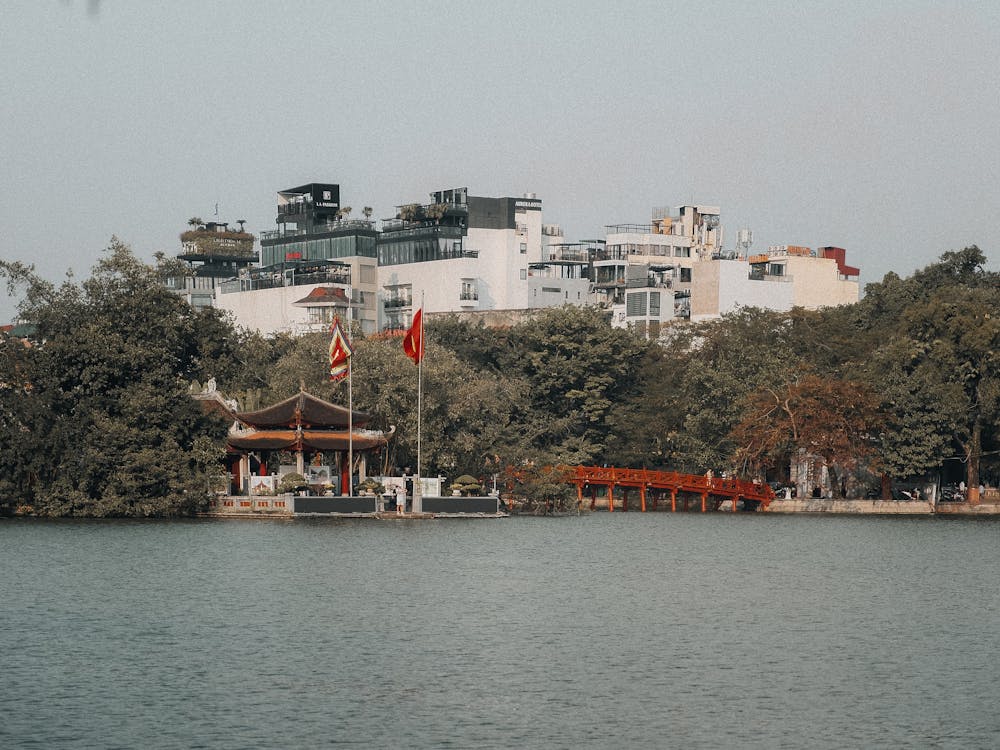
The spiritual heart of Hanoi. The small lake in the city centre has a 19th-century temple on a tiny island, reached by the iconic red Thê Húc bridge. The legend of the golden turtle returning a magic sword to the lake is foundational to Vietnamese identity. Walk the full circumference (1.7 km, 20 minutes) at sunrise when locals practice tai chi. On Friday–Sunday, the entire lake perimeter becomes a traffic-free pedestrian zone. Temple entry: 50,000₫. The lake itself is free and beautiful at any hour.
Ho Chi Minh Mausoleum Complex
The embalmed body of “Uncle Ho” lies in a Soviet-style granite mausoleum. Entry is free for Vietnamese citizens and 25,000₫ for foreigners. Strict rules apply: no shorts, no sleeveless tops, no sandals, no photography inside, no speaking. Bags must be stored at the free cloakroom. The queue moves efficiently — you’ll spend more time in line (30–60 minutes) than inside (2–3 minutes). The surrounding complex includes the Presidential Palace (exterior only), Ho Chi Minh’s stilt house (40,000₫), the One Pillar Pagoda (25,000₫ foreigners), and the Ho Chi Minh Museum (40,000₫). Closed Mondays, Fridays, and typically Sep–Nov for annual maintenance (the body is sent to Russia for preservation). Summer hours: 07:30–10:30; winter hours: 08:00–11:00.
Hoa Lo Prison (“Hanoi Hilton”)
Originally built by French colonists to hold Vietnamese political prisoners, later used during the American War to house POWs including Senator John McCain (his flight suit is on display). The remaining section (most was demolished for a high-rise) provides a sobering look at colonial-era torture methods and wartime propaganda. Entry: 50,000₫. Audio guide: 50,000₫. Night tours available at 19:00 (399,000–499,000₫). Budget 60–90 minutes. Open daily 08:00–17:00.
Vietnam Museum of Ethnology
The best museum in Vietnam. Excellent indoor exhibits on all 54 ethnic groups, plus an outdoor garden with full-scale traditional houses (stilt houses, longhouses, Cham towers). Entry: 40,000₫ indoor galleries + 40,000₫ outdoor garden (separate ticket). Water puppet shows at 10:00, 11:30, 14:30, 16:00 on weekdays (extra 50,000₫). Closed Mondays. Budget 2–3 hours. Take a taxi (100,000₫ from Old Quarter) or bus 14.
Imperial Citadel of Thang Long (UNESCO)
A UNESCO World Heritage Site since 2010, this was the political centre of Vietnam for over 1,000 years. The excavated archaeological layers show foundations from the 7th century through the 20th. The Kinh Thiên Hall foundation, Flag Tower, Doan Mon Gate, and D67 underground bunker (where the Vietnam War was commanded) are highlights. Entry: 100,000₫ (increased January 2025; 50,000₫ students/elderly; free under 16). Closed Mondays. Budget 90 minutes.
Vietnamese Women’s Museum
One of Hanoi’s most well-presented museums, covering women’s roles in Vietnamese society, war, and culture. Four floors of exhibits including textiles, wedding customs, and the extraordinary stories of women soldiers. Entry: 40,000₫ (10,000₫ children under 16; free under 6). Open daily 08:00–17:00, last entry 16:30. Budget 60–90 minutes. Central location on 36 Ly Thuong Kiet street.
Train Street (Phố Cà Phê Đường Tàu)
A narrow residential lane where the Hanoi–Saigon railway passes between houses with barely a metre of clearance on each side. Cafés line the tracks and patrons sit centimetres from passing trains. Access restrictions have been in effect since 2019 and are periodically enforced and relaxed. As of early 2026, the cafés on the northern section near Le Duan are generally accessible — but you must be escorted past police barriers by a café owner. Group tours are banned by Hanoi authorities. The more famous Phung Hung/Tran Phu section (narrower, more photogenic) is more heavily restricted. Ask your hotel for the current situation before going. Train times: approximately 15:30 and 19:30 daily (verify locally). Free to visit; café purchase expected.
Old Quarter (36 Streets)
Hanoi’s thousand-year-old commercial heart, where each street was historically named after the guild that traded there: Hang Gai (silk), Hang Bac (silver), Hang Ma (paper goods), Hang Thiec (tin). Today the trade names mostly still match the merchandise. The Old Quarter is the best place in Vietnam for aimless walking — every corner has a pho shop, a hardware store, a tailor, and a temple squeezed between them. On Friday, Saturday, and Sunday evenings (19:00–23:00), several streets close to traffic for a walking night market centred on Hang Dao and Dong Xuan.
West Lake (Hồ Tây)
Hanoi’s largest lake (17 km circumference) is a world away from Old Quarter chaos. Cycle or walk the shaded lakeside path. Visit Tran Quoc Pagoda (Hanoi’s oldest, 6th century, free entry) and Quan Thanh Temple (10,000₫). The Xuan Dieu strip on the south-east shore has Hanoi’s best international restaurants and expat cafés. Sunset over the lake from any lakeside café is essential.
Phở — Hanoi’s Soul in a Bowl
Phở (pronounced closer to “fuh” than “foe”) originated in Hanoi in the early 20th century and remains the city’s defining dish. Hanoi-style phở is different from the southern version: the broth is clearer, more subtle, and relies on beef bones simmered for 12–24 hours with star anise, cinnamon, and charred ginger. The garnish table is minimal — maybe some chilli, lime, and fresh herbs, but none of the bean sprout/hoisin mountains you’ll find in Saigon or Western pho restaurants.
Phở Bò (Beef Pho) vs. Phở Gà (Chicken Pho)
Phở bò is the classic: beef broth with rice noodles and sliced beef (tái = rare, chín = well-done, nám = flank, gân = tendon, gàu = fatty brisket). The best shops let you choose your cut combination. Phở gà (chicken) is lighter, often served on specific days (traditionally Thursday and certain lunar dates). Locals debate endlessly which is superior. Both cost 40,000–65,000₫ at a street-level shop.
Where to Eat Pho in Hanoi
Phở Thìn (13 Lò Đúc) — The most famous bowl in Hanoi. The “original” Phở Thìn has spawned global franchises, but this Lo Duc address is the source. Unique style: beef is stir-fried with garlic before being added to the broth, giving it a rich, slightly smoky flavour. Queue expected. 70,000–100,000₫. Cash only. Opens 06:00, open until 21:00.
Phở Gia Truyền (Bát Đàn) (49 Bát Đàn) — Michelin-recognised. The perpetual queue tells you everything. This tiny shopfront has been serving the same recipe for decades. The broth is intense, the portions generous, the experience chaotic. Tái nám (rare + flank beef) is the order. 40,000–60,000₫. Cash only. Opens 06:00, sells out by 10:00 on busy days.
Phở 10 Lý Quốc Sư (10 Lý Quốc Sư) — A reliable, slightly more tourist-friendly option near the Old Quarter. Good for first-timers who want the experience without the 06:00 wake-up. 45,000–65,000₫. Cash only.
Phở Suớng (24B Tràng Tiền) — Cleaner, more elegant broth. Slightly higher-end setting by Hanoi pho standards (meaning actual chairs instead of plastic stools). 50,000–80,000₫.
Bún Chả & the Obama Effect
Bún chả is Hanoi’s lunch dish the way pho is its breakfast. Grilled pork patties and sliced pork belly served in a bowl of sweet-sour dipping broth (nước chấm) with rice vermicelli noodles and a plate of fresh herbs. You dip the noodles and meat into the broth, add herbs, and eat. It is simple, perfect, and completely addictive.
The Obama Bun Cha
In 2016, Anthony Bourdain and Barack Obama sat on plastic stools at Bún Chả Hương Liên (24 Lê Văn Hưu) and ate bun cha with bia Hanoi. The meal cost $6. The table is now preserved behind glass. The shop is still excellent. The “Combo Obama” (bun cha + seafood spring roll + Hanoi beer) costs 105,000–130,000₫; a regular bun cha set is 40,000–60,000₫. It is busier than before but the food is still made the same way. Go at 11:30 to avoid the worst crowds.
Other Top Bún Chả Spots
Bún Chả Đắc Kim (1 Hàng Mành) — Old Quarter institution, charcoal grill on the pavement, smoky and wonderful. 50,000–70,000₫.
Bún Chả 34 Hang Than — Locals’ favourite, no English menu, point and sit. Grilled patties have a perfect char. 35,000–45,000₫.
Street Food & Must-Eat Dishes
Hanoi is the street food capital of the world. Not a food market, not a night market — the actual streets. Every pavement is a restaurant. Plastic stools appear at dawn and don’t disappear until midnight. The city eats on the street not because it’s charming, but because it’s how Hanoi has always worked. Most vendors have served one dish, from one location, for decades.
| Dish | Description | Typical Price |
|---|---|---|
| Phở bò | Beef rice noodle soup — Hanoi’s breakfast religion | 40,000–65,000₫ |
| Bún chả | Grilled pork patties with vermicelli & dipping broth | 35,000–50,000₫ |
| Bánh mì | Vietnamese baguette stuffed with pâté, pork, herbs, chilli | 15,000–30,000₫ |
| Bún bò Nam Bộ | Dry beef noodle salad with peanuts & herbs | 35,000–55,000₫ |
| Chả cá | Turmeric & dill fish with vermicelli & peanuts | 150,000–350,000₫ |
| Bánh cuốn | Steamed rice rolls with minced pork & mushrooms | 25,000–40,000₫ |
| Phở cuốn | Fresh rolled pho sheets with beef & herbs | 30,000–50,000₫ |
| Xôi (sticky rice) | Sweet or savoury sticky rice — breakfast staple | 15,000–30,000₫ |
| Nem ran / Chả giò | Fried spring rolls — Hanoi version uses rice paper | 10,000–20,000₫ per piece |
| Bún ốc | Snail noodle soup with tomatoes & tofu — Hanoi specialty | 30,000–45,000₫ |
Bánh Mì — Hanoi Style
Hanoi’s bánh mì is different from the Saigon version. The bread is lighter, the filling simpler (often just pâté, cha lua sausage, and herbs), and the whole thing costs 15,000–40,000₫. Bánh Mì 25 (25 Hàng Cá) in the Old Quarter is the most popular with tourists (~40,000₫). Bánh Mì Phố Huế on Hue Street is where locals go for a meatier, messier version (from 15,000₫).
Bún Bò Nam Bộ (Dry Beef Noodles)
Not to be confused with bún bò Huế (which is a soup), this is a dry noodle salad with seared beef, peanuts, crispy shallots, and a light sweet-sour dressing. The signature address is Bún Bò Nam Bộ at 67 Hàng Điếu. Expect a queue. 40,000–55,000₫.
Bánh Cuốn (Steamed Rice Rolls)
Delicate steamed rice sheets filled with minced pork and wood-ear mushrooms, served with crispy shallots and nước chấm dipping sauce. Watch the maker pour batter onto a cloth-covered steamer — the technique is mesmerising. Best early morning. Bánh Cuốn Bà Hạnh (26A Thọ Nhuom) and Bánh Cuốn Gia Truyền (14 Hàng Gà) are two excellent options. 25,000–40,000₫.
Bún Ốc (Snail Noodle Soup)
A distinctly Hanoian dish that tourists often miss: rice vermicelli in a tangy tomato-based broth with snails, tofu, and fried shallots. Bún Ốc Phụ Thụy and stalls around the Dong Xuan area are reliable. 30,000–45,000₫. Adventurous but delicious.
Xôi (Sticky Rice)
Vietnam’s original fast food. Xôi xéo (turmeric-coloured sticky rice with mung bean and fried shallots) and xôi gà (chicken sticky rice) are breakfast staples. Xôi Yến (35B Nguyễn Hữu Huân) is the most famous, with a queue of motorbikes at 07:00. 15,000–35,000₫.
Egg Coffee & Café Culture
Hanoi’s coffee culture is unlike anywhere else in the world. Vietnamese coffee (cà phê) uses robusta beans brewed through a small metal drip filter (phin) directly into a cup. The result is strong, dark, and usually served with sweetened condensed milk (cà phê sữa đá for iced, cà phê sữa nóng for hot). But Hanoi’s signature contribution is egg coffee.
Cà Phê Trứng (Egg Coffee)
Invented in 1946 by Nguyen Van Giang when milk was scarce during the French war. He whisked egg yolk with condensed milk and Vietnamese coffee to create a thick, custard-like foam that sits atop a small cup of strong coffee. The cup is served in a bowl of hot water to keep it warm. It is the best thing you will drink in Vietnam.
Cà Phê Giảng (39 Nguyễn Hữu Huân) — The original. Giang’s family still runs this narrow, multi-storey café in the Old Quarter. The upstairs seats overlooking the street are the ones to get. Egg coffee: 35,000–45,000₫. Also serves egg beer and egg cocoa (both excellent).
Cà Phê Định (13 Điện Biên Phủ) — A 1950s café with a rooftop terrace overlooking the Mausoleum area. Egg coffee here is slightly sweeter and served in a porcelain cup. 35,000–50,000₫.
Loading T Café (8 Chân Cầm) — A hip third-wave take on egg coffee in a beautifully designed space near the Cathedral. 45,000–65,000₫.
Coffee Culture Beyond Egg Coffee
Cà phê sữa đá (iced milk coffee) is the everyday drink — strong, sweet, addictive. 20,000–35,000₫ at local shops.
Cộng Cà Phê — A chain with communist-chic décor (propaganda posters, military green). Their coconut coffee is iconic. Multiple locations. 29,000–55,000₫.
The Note Coffee (11 Lương Ngọc Quyến) — Every surface covered in sticky notes left by visitors. Gimmicky but fun, decent coffee, great rooftop view of the Old Quarter. 35,000–65,000₫.
Tranquil Books & Coffee (5 Nguyễn Quang Bích) — A tiny bookshop café hidden down an alley. Perfect for a quiet afternoon read. 25,000–45,000₫.
Chả Cá & Specialty Dishes
Chả Cá (Turmeric & Dill Fish)
Hanoi’s signature special-occasion dish: chunks of white fish (catfish or snakehead) marinated in turmeric and galangal, pan-fried with dill and spring onions at your table, then served over rice vermicelli with peanuts, shrimp paste (mắm tôm), and herbs. The dish is so iconic that an entire street is named after it: Phố Chả Cá (Cha Ca Street).
Chả Cá Lã Vọng (14 Chả Cá) — The original since 1871. Five generations of the same family. The experience is unchanged: you sit upstairs, the fish arrives sizzling. Base fish portion from 170,000₫; a full meal with extras reaches 350,000–500,000₫ per person. Service is famously brusque. That is part of the charm.
Chả Cá Thăng Long (6B Đường Thành) — Michelin Bib Gourmand. Better value, more generous portions, slightly friendlier service. 150,000–170,000₫ per person.
Phở Cuốn (Fresh Rolled Pho)
Fresh (not fried) rice noodle sheets rolled around sliced beef and herbs, served with a sweet dipping sauce. A lighter, cooler alternative to pho soup, popular in warm weather. The best concentration of phở cuốn vendors is on Ngư Xã street near Truc Bach Lake. 30,000–50,000₫ for a plate of 8–10 rolls.
Cơm Bình Dân (Rice Plates)
The Vietnamese equivalent of a budget lunch canteen. Point at dishes behind glass and get a plate of rice with 2–3 toppings: braised pork, fried tofu, morning glory, fried egg, sour soup. A full lunch costs 25,000–45,000₫. Found everywhere. Look for shops with a crowd of motorbike drivers outside — that’s your quality indicator.
Bia Hơi & Drinking Culture
Bia hơi is Hanoi’s fresh draught beer, brewed daily and delivered in kegs to street corners across the city. It’s light (around 3–4% ABV), unfiltered, and costs as little as 5,000–10,000₫ per glass (€0.20–0.35) — making it the cheapest beer experience on earth. Bia hoi is a social ritual: tiny plastic stools, no walls, no music, just beer and conversation on the pavement.
Bia Hoi Corner (Ta Hien Street)
The intersection of Ta Hien and Luong Ngoc Quyen in the Old Quarter is the epicentre of Hanoi’s beer culture. On any evening, hundreds of people sit on plastic stools spilling onto the road, drinking bia hoi and eating bar snacks (peanuts, dried squid, boiled eggs). Tourist-priced bia hoi here costs 10,000–15,000₫ — still absurdly cheap. Go after 19:00 when the walking street starts and the whole area becomes pedestrianised.
Beyond Bia Hoi
Bia Hà Nội and Bia Saigon are the main bottled brands. A 330ml can costs 12,000–18,000₫ at a convenience store, 25,000–40,000₫ at a restaurant. Bia 333 is a popular cheap lager. Vietnam also has a growing craft beer scene: Pasteur Street Brewing (various locations), Furbrew (longest-running Hanoi craft brewery), and Standing Bar (31 Yen Phu) offer IPAs and stouts from 60,000–80,000₫.
Fine Dining & Michelin Vietnam
Vietnam received its first Michelin Guide in June 2023, covering Hanoi and Ho Chi Minh City. Da Nang was added in 2024. The 2025 edition features 181 establishments across Vietnam: 9 one-star, 2 green-star, 63 Bib Gourmand, and 109 Selected.
Michelin-Starred Restaurants in Hanoi (2025 edition)
Note: the Michelin Guide Vietnam 2025 is the most recent edition as of April 2026 — Gia, Hibana by Koki, and Tầm Vị all retained their one stars. A 2026 edition is expected but has not been officially released at time of writing. Verify at guide.michelin.com before booking.
| Restaurant | Stars | Cuisine | Price Range |
|---|---|---|---|
| Gia | ⭐ | Modern Vietnamese (12-course tasting menu) | 1,500,000–2,500,000₫ |
| Hibana by Koki | ⭐ | Japanese teppanyaki / omakase | 2,000,000–3,500,000₫ |
| Tầm Vị | ⭐ | Traditional Northern Vietnamese home cooking | 1,200,000–1,800,000₫ |
Lamai Garden holds Hanoi’s only Michelin Green Star for sustainability — a plant-based menu using ingredients from its own organic farm (new 2025).
Bib Gourmand (11 Restaurants in Hanoi)
Hanoi’s Michelin Bib Gourmand list is where the real action is — street food and local restaurants serving exceptional food for under 500,000₫ per person. Key picks:
- Phở Bò Lâm (48 Hàng Vải) — 30-year family phở shop, specialty phở lõi with top blade steak. 40,000–70,000₫. Opens 05:00–10:00 only. (New 2025)
- Chả Cá Thăng Long — Turmeric fish, 150,000–170,000₫/person
- Bún Chả Tá (Nguyễn Hữu Huân) — Classic bun cha
- Bún Chả Chân — Rich broth version
- Hà Thành Mansion — Century-old French villa, Vietnamese fine casual. 300,000–500,000₫ (New 2025)
- Mậu Dịch Số 37 — Nostalgic Truc Bach setting, traditional dishes (New 2025)
- Miến Lươn Chân Cầm — 40-year eel noodle specialist (New 2025)
- Ưu Đàm Chay — First vegetarian Bib Gourmand in Hanoi (New 2025)
Notable Non-Starred Restaurants
La Badiane (10 Nam Ngư) — Michelin Selected. French-Vietnamese fusion in a colonial villa. Set lunch from 800,000–900,000₫.
Home Hanoi Restaurant (34 Châu Long) — Modern Vietnamese in a beautifully restored French-era house. Tasting menu from 800,000₫.
Neighbourhoods
Old Quarter (Hoàn Kiếm)
The beating heart of Hanoi. The 36 ancient streets, Hoan Kiem Lake, the night market, the best street food, and the most energy per square metre in Southeast Asia. This is where 90% of tourists stay, and for good reason. Noisy, chaotic, unforgettable. Hotels here range from 200,000₫ hostel dorms to 5,000,000₫+ boutique rooms.
French Quarter (Hai Bà Trưng / Trang Tien)
South of Hoan Kiem Lake, this area has Hanoi’s grandest French colonial architecture: the Opera House, the Sofitel Metropole hotel, leafy boulevards, upscale cafés, and the best bookshops. Less frantic than the Old Quarter, more European in feel. The area around Trang Tien Plaza is Hanoi’s luxury shopping strip.
West Lake (Tây Hồ)
Hanoi’s expat neighbourhood wraps around the southern edge of its largest lake. Xuan Dieu and To Ngoc Van streets have international restaurants, yoga studios, brunch spots, and craft beer bars. Quieter and more spacious than the Old Quarter. Great for medium-term stays. The lakeside cycling path is beautiful at sunset.
Ba Đình
The government and diplomatic quarter, home to the Mausoleum, Presidential Palace, and several major museums (Ho Chi Minh Museum, Fine Arts Museum). Quieter, tree-lined, with a more residential Vietnamese feel. Good for those who want to be near sights but away from Old Quarter chaos.
Dong Da
A residential district south-west of the centre that tourists rarely visit. This is where you find authentic local life: morning markets, com binh dan lunch spots, and streets with zero English signage. The Temple of Literature sits on its northern edge. Great for food-focused wandering.
Long Biên
Across the Red River from the Old Quarter, this former industrial area is Hanoi’s emerging creative district. Warehouses becoming galleries, new cafés, and the Long Bien Market — Hanoi’s wholesale fruit and vegetable market that comes alive at 02:00–05:00. The iconic Long Biên Bridge (designed by the same firm that built the Eiffel Tower, completed 1903) connects the two sides. Walk across at sunset.
Hoàng Mai / Thanh Xuân
Southern Hanoi’s rapidly developing suburbs. Not tourist destinations, but useful to know if taking the Metro Line 2A (Cat Linh–Ha Dong), which runs through this area. Prices for everything are 30–50% cheaper than the Old Quarter.
Markets
Dong Xuan Market
Hanoi’s largest covered market, at the northern end of the Old Quarter. Three floors of everything: textiles, souvenirs, dried goods, spices, kitchenware, and a bustling food area on the ground floor. This is a wholesale market, so bargaining is expected. Open daily 06:00–18:00. The surrounding streets have cheaper goods than inside the market building itself.
Weekend Night Market
Every Friday, Saturday, and Sunday 19:00–23:00, several Old Quarter streets (centred on Hang Dao, extending to Dong Xuan) close to traffic. Street food stalls, souvenir vendors, performers, and general festive chaos. It’s touristy but fun. The food stalls at the Dong Xuan end are better value.
Long Bien Market
Hanoi’s main wholesale produce market, accessible via Long Bien Bridge. The action runs from approximately 02:00–06:00 — hundreds of vendors, towering stacks of fruit, flowers being unloaded from boats on the Red River. This is not a tourist market; it’s a working market. Go with a guide or at least a Grab motorbike (the return trip at 04:00 is difficult alone). Fascinating but not for everyone.
Temples & Pagodas
Tran Quoc Pagoda
Hanoi’s oldest Buddhist temple, dating to the 6th century, sitting on a small peninsula in West Lake. The red pagoda reflected in the water is one of Hanoi’s most photographed sights. Free entry. Dress modestly (knees and shoulders covered). Most beautiful at sunset. Open 07:30–11:30, 13:30–18:00.
Quan Thanh Temple
A Taoist temple near the shore of West Lake, built during the Ly dynasty (11th century). Houses a 4-tonne bronze statue of Tran Vu, one of the four guardians of Thang Long. 10,000₫ entry. Peaceful, uncrowded, and atmospheric.
Bach Ma Temple
The oldest temple in the Old Quarter (1010 AD), dedicated to the white horse spirit that guided King Ly Thai To in building the city. Small but beautifully maintained. Free entry. Found at 76 Hang Buom — easy to miss among the shops.
Ngoc Son Temple
On an island in Hoan Kiem Lake, reached by the famous red bridge. Small, atmospheric, and central to the city’s identity. Contains a preserved giant turtle from the lake. 30,000₫ entry.
One Pillar Pagoda (Chùa Một Cột)
A tiny pagoda built on a single stone pillar in a lotus pond, designed to resemble a lotus flower. Originally built in 1049, destroyed by the French in 1954, rebuilt immediately after. It’s very small (you’ll spend 5 minutes here) but architecturally unique. 25,000₫ for foreigners (included in the Mausoleum complex visit). Located within the Mausoleum grounds.
French Quarter & Colonial Architecture
Hanoi was the capital of French Indochina from 1902 to 1954, and the architectural legacy is extraordinary. The French Quarter south of Hoan Kiem Lake contains tree-lined boulevards, mustard-yellow villas, wrought-iron balconies, and some of Southeast Asia’s finest colonial buildings.
Key Colonial Buildings
Hanoi Opera House (1 Trang Tien) — Built 1901–1911, modelled on the Palais Garnier in Paris. Attend a performance if possible (Vietnamese opera, symphony, or dance). Tickets from 150,000–1,500,000₫.
Sofitel Legend Metropole (15 Ngo Quyen) — Hanoi’s most famous hotel, opened 1901. You can visit the bar (Le Club) for a cocktail or take a Path of History tour (free for guests, 500,000₫ for non-guests) that includes the wartime bomb shelter discovered in 2011.
St. Joseph’s Cathedral (40 Nhà Chung) — Neo-Gothic church built 1886. The facade is deliberately modelled on Notre-Dame de Paris. Open for mass and visiting hours. Free entry.
National Museum of History (1 Trang Tien) — In a former colonial school building. Covers Vietnamese history from prehistoric to modern. 40,000₫.
Lakes & Green Spaces
Hanoi is a city of lakes. There are dozens within the city limits, and they provide crucial breathing space in a dense urban environment.
Hoan Kiem Lake — The spiritual centre. 1.7 km circumference. Ngoc Son Temple. Sunrise tai chi. The place Hanoians go to slow down.
West Lake (Ho Tay) — 17 km circumference. Cycling, lakeside cafés, Tran Quoc Pagoda, lotus fields in summer (June–July). The most beautiful at golden hour.
Truc Bach Lake — A smaller lake separated from West Lake, quieter and more local. This is where John McCain’s plane was shot down in 1967 — a monument marks the spot on the shore. Good phở cuốn vendors on Ngu Xa street nearby.
Thien Quang Lake — In the south of the old city, surrounded by mature trees. Peaceful walking.
Lenin Park (Thống Nhất Park) — Hanoi’s largest central park, surrounding a lake. Morning joggers, elderly exercisers, and families on weekends. Free entry. Paddle boats available.
Shopping
What to Buy
Silk & Textiles — Hang Gai (Silk Street) is the traditional centre. Quality varies enormously. Tan My Design (61 Hang Gai) offers high-quality silk products. Custom tailoring can be done in 24–48 hours.
Lacquerware & Ceramics — Traditional Vietnamese craft. Best quality at Bat Trang Ceramic Village (day trip, 30 minutes from centre) or curated shops on Hang Bac and Nha Tho streets.
Coffee Beans — Excellent souvenirs. Buy from reputable roasters like Highlands Coffee or speciality shops (not tourist markets, where beans are often stale or fake). Expect 100,000–300,000₫ per 250g bag for good quality.
Propaganda Art — Reproduction communist-era propaganda posters make striking souvenirs. Available on Hang Bong street and near the Fine Arts Museum. 50,000–200,000₫ for prints.
Conical Hats (Nón Lá) — The iconic Vietnamese hat. Available everywhere from 20,000–50,000₫. The poetry hats (nón bài thơ) with hidden verses visible when held to the light are from Huế but sold in Hanoi.
Bargaining: Expected in markets and non-fixed-price shops. Start at 40–50% of the asking price and work up. Never bargain aggressively — smile, walk away if the price doesn’t suit. Fixed-price shops (with a sign saying “giá cố định”) do not bargain.
Getting Around
| Transport | Price | Notes |
|---|---|---|
| Airport Bus 86 | 45,000₫ | Noi Bai → Old Quarter, every 25–30 min, ~1 hr |
| Grab car (airport) | 250,000–350,000₫ | Noi Bai → Old Quarter, 40–60 min depending on traffic |
| Taxi (airport) | 350,000–450,000₫ | Use Mai Linh or Vinasun only — pre-book or use app |
| Metro Line 2A | 8,000–15,000₫ | Cat Linh–Ha Dong, 12 stations, useful for locals more than tourists |
| City bus | 7,000–9,000₫ | Extensive network, AC, confusing routes, Google Maps helps |
| Grab motorbike | 15,000–30,000₫ | Short trips within centre, fastest in traffic |
| Cyclo | 100,000–200,000₫/hr | Tourist experience — agree price BEFORE starting, in writing |
| Motorbike rental | 120,000–200,000₫/day | International Driving Permit required; chaotic traffic — experience needed |
From Noi Bai Airport
Noi Bai International Airport is 25 km north of the city centre. The best options:
Bus 86 — Air-conditioned express bus from Terminal 1 and 2 to the Old Quarter (Hanoi Railway Station). 45,000₫. Runs every 25–30 minutes from 06:25–23:05. Takes about 1 hour. This is the best budget option.
Grab — Book a Grab car in the app. 250,000–350,000₫ to Old Quarter depending on traffic and vehicle type. The most convenient option. Pick-up is in the designated ride-hailing area outside arrivals.
Taxi — Use ONLY Mai Linh (green) or Vinasun (white) taxis. Avoid unofficial taxis. Insist the meter runs. 350,000–450,000₫ to the Old Quarter.
Metro
Line 2A (Cat Linh–Ha Dong) opened in November 2021 after years of delays. It runs 13.1 km with 12 elevated stations, primarily serving commuters in the south-west. Fares 8,000–15,000₫ (day pass 30,000₫). Hours 05:30–22:00, every 6 min peak / 10 min off-peak. Useful for tourists mainly if heading from near the Temple of Literature (Cat Linh station) south-west. Line 3 (Nhon–Hanoi Station) elevated section (8 stations) opened August 2024; fares 9,000–15,000₫, day pass 24,000₫. The underground section to Hanoi Station is expected late 2027.
Grab & Ride-Hailing
Grab is essential in Hanoi. Works like Uber. Available for cars (GrabCar) and motorbikes (GrabBike). GrabBike is the fastest way to get around in traffic — riders weave through jams that cars sit in for hours. Short trips cost 15,000–30,000₫. Always book through the app for metered, fair pricing.
Crossing the Street
Hanoi traffic is legendary. Motorbikes flow in a continuous, chaotic stream. Traffic lights exist but are loosely respected. How to cross: Walk at a slow, steady pace. Do NOT stop, run, or make sudden movements. The motorbikes will flow around you. Make eye contact with oncoming drivers. Start walking when you see a gap, and the traffic will part. It is terrifying the first time and second nature by day two.
Day Trips from Hanoi
Ha Long Bay (UNESCO)
Vietnam’s most famous natural wonder: nearly 2,000 limestone karsts and islands rising from emerald waters. A day trip from Hanoi is possible (4–4.5 hours each way by road) but exhausting — you’ll spend more time on a bus than on the water. An overnight cruise is strongly recommended.
Day trip: 800,000–1,500,000₫ per person including transport, boat, lunch, and kayaking.
Overnight cruise (budget): 1,500,000–2,500,000₫ per person for a basic junk boat, shared cabin, meals, and activities.
Overnight cruise (mid-range): 3,000,000–5,000,000₫ per person for a private cabin, better food, kayaking, and cave visits.
Overnight cruise (luxury): 7,000,000–15,000,000₫+ per person for boutique vessels like Heritage Line or Paradise.
Ninh Binh / Trang An / Tam Coc
Often called “Ha Long Bay on land” — limestone karsts rising from flooded rice paddies, with boat rides through caves and past ancient temples. A UNESCO World Heritage Site. 100 km south of Hanoi (2–2.5 hours by car).
Trang An boat ride: 250,000₫ per person for a 2–3 hour boat trip through caves and past temples. Three route options. Includes temple entries.
Tam Coc boat ride: 250,000₫ per person (combo with Bich Dong Pagoda: 340,000₫) for a scenic route through three caves.
Add Bai Dinh Pagoda (Vietnam’s largest temple complex, free entry), Mua Cave (100,000₫, 500 steps to a spectacular viewpoint), and Hoa Lu ancient capital. A full Ninh Binh day trip can be done independently by renting a motorbike or booking a group tour from 500,000–900,000₫ per person. 2026 note: Online reservation system introduced for peak season (April–July).
Sapa
The mountain town 320 km north-west of Hanoi, base for trekking through terraced rice fields and ethnic minority villages (H’mong, Dao, Tay). 5–6 hours by road or 8 hours overnight train to Lao Cai (sleeper berth from 400,000₫), making it a 2–3 day trip minimum. The Fansipan Legend cable car takes you to the summit of Indochina’s highest peak: 850,000–900,000₫ return (Mon–Fri vs weekends/holidays; combo with buffet + Muong Hoa funicular: 1,250,000₫). Sapa town itself has become very touristy — treks to the surrounding villages are the real draw. Best months: March–May and September–November.
Mai Chau
A lush valley 135 km south-west of Hanoi (3.5 hours by road), home to White Thai ethnic communities. Cycling through rice paddies, homestay overnight in a stilt house (300,000–500,000₫ per person including dinner and breakfast). More peaceful and less commercial than Sapa. Best in September–November when rice paddies are golden.
Perfume Pagoda (Chùa Hương)
A complex of Buddhist temples built into limestone caves, 70 km south-west of Hanoi. The journey involves a scenic boat ride along the Yen Stream (45–60 minutes through limestone gorge) followed by a hike (2 hours) or cable car up to the main cave temple. Site entry: 80,000₫. Boat: 50,000₫/person. Cable car: 180,000₫ one-way / 260,000₫ return. The main festival season runs February–May (very crowded on weekends). Allow a full day. Bring cash — no ATMs on-site.
Bat Trang Ceramic Village
Just 10 km south-east of central Hanoi, this 600-year-old village is Vietnam’s most famous pottery centre. Walk through workshops, watch artisans throw pots, paint your own ceramics (50,000–150,000₫), and buy direct from makers. Bus 47 runs from the Old Quarter (7,000₫). No entry fee. Half-day trip.
Budget & Money
| Category | Budget | Mid-Range | Luxury |
|---|---|---|---|
| Accommodation | 150,000–300,000₫ dorm | 500,000–1,200,000₫ | 2,500,000–10,000,000₫+ |
| Food (per day) | 150,000–250,000₫ | 400,000–800,000₫ | 1,500,000–5,000,000₫ |
| Transport (per day) | 50,000–100,000₫ | 150,000–300,000₫ | 500,000–1,000,000₫ |
| Activities (per day) | 30,000–60,000₫ | 100,000–500,000₫ | 1,000,000–5,000,000₫ |
| Daily Total | 400,000–700,000₫ (~€15–25) | 1,200,000–2,800,000₫ (~€45–100) | 5,000,000–20,000,000₫+ (~€180–720+) |
Hanoi is one of the cheapest capital cities in the world for tourists. A backpacker eating street food, staying in hostels, and using city buses can survive on €15–25/day. A mid-range traveller with a private hotel room, restaurant meals, and occasional taxis will spend €45–100/day. Luxury is extraordinary value: the Sofitel Metropole starts around €200/night, and a 10-course tasting menu at a top restaurant costs €60–90.
Money Tips
Cash is king. Vietnam is still overwhelmingly cash-based, especially for street food. ATMs are everywhere and dispense up to 3,000,000–5,000,000₫ per withdrawal. Avoid exchange counters at the airport — rates are 5–10% worse. The best rates are at gold/jewellery shops in the Old Quarter (Hang Bac street).
Tipping is not expected in local restaurants or taxis. For guides and hotel staff, 50,000–100,000₫ per person is appreciated.
Be careful with large denominations. The 500,000₫ note looks similar to the 20,000₫ note (both are blue/green). Count your change carefully, especially in taxis.
Weather & Best Time to Visit
Hanoi has four distinct seasons — unusual for Southeast Asia. It can be genuinely cold in winter.
Spring (Feb–Apr): Cool to warm (18–25°C), occasional drizzle. The best overall weather. Tet falls in late January or February.
Summer (May–Aug): Hot and humid (30–40°C). Monsoon rains bring short, intense downpours, usually in the afternoon. The city steams.
Autumn (Sep–Nov): The most pleasant season. Warm days (25–30°C), cool evenings, low humidity, clear skies. Typhoons possible September–October.
Winter (Dec–Jan): Cold and damp (10–18°C). Not freezing, but the humidity makes it feel colder than the numbers suggest. Pack layers. Locals wear puffer jackets.
Best months: October–November and March–April. Avoid July–August if you dislike extreme heat and humidity.
Safety & Scam Awareness
Hanoi is a safe city for tourists. Violent crime against foreigners is extremely rare. The main risks are petty theft, scams, and traffic.
Common Scams
Taxi overcharging: The biggest issue. Use Grab exclusively, or only Mai Linh/Vinasun taxis with the meter running. Never get in a taxi that “doesn’t have a meter” or quotes a flat rate.
Cyclo overcharging: Agree the price in writing (on your phone) before starting. Some cyclo drivers will quote “50” and claim they meant $50 at the end, not 50,000₫.
Shoe shine scam: Someone squirts glue on your shoes, then a nearby “shoe cleaner” offers to fix them for an outrageous price. Walk away.
Fake Bia Hoi Corner: Some establishments near the real Bia Hoi Corner charge 5–10x the normal price and get aggressive when you object. Check prices before ordering.
“My friend’s shop”: A friendly local starts a conversation, then steers you to a specific shop where they earn commission on anything you buy. Politely decline.
Traffic Safety
Traffic is Hanoi’s biggest real danger. Motorbikes are everywhere, traffic rules are suggestions, and accidents happen. Use Grab instead of renting a motorbike unless you have significant experience riding in Asian cities. Always wear a helmet (required by law). When crossing the street: walk slowly and steadily, do not stop or run.
Health
Do NOT drink tap water. Bottled water is available everywhere for 5,000–10,000₫. Ice in restaurants is generally factory-made (tube-shaped with a hole) and safe. Crushed ice from unknown sources — skip it.
Street food hygiene: Eat where the locals eat. High turnover = fresh food. If a stall is empty, there’s usually a reason.
Cultural Tips & Etiquette
Temples: Remove shoes before entering. Cover knees and shoulders. Do not touch statues or point with your feet. Speak quietly.
Greetings: A slight nod or bow is polite. Handshakes are common in business settings. Vietnamese names put the family name first (e.g. Nguyen is the surname, not the given name).
Photography: Ask before photographing people, especially ethnic minority individuals. Do not photograph military installations.
Water puppet theatre: Hanoi’s signature art form — wooden puppets perform on water to traditional music. Thang Long Water Puppet Theatre (57B Dinh Tien Hoang) near Hoan Kiem Lake shows 50-minute performances at 15:00, 16:10, 17:20, 18:30, and 20:00 daily. Tickets: 100,000–200,000₫. Book ahead for evening shows.
Language: Vietnamese is tonal with six tones. Key phrases: “Xin chào” (hello), “Cảm ơn” (thank you), “Bao nhiêu?” (how much?), “Không” (no), “Vâng” (yes — northern), “Người nước ngoài” (foreigner). English is spoken in tourist areas but limited elsewhere. Google Translate works well for menus.
What’s New in 2026
Vietnam e-Visa (90 days): Available to ALL nationalities. Valid up to 90 days, single or multiple entry. Fee: $25. Apply online at evisa.gov.vn (83 checkpoints accept e-visas). This replaced the previous 30-day limit and has made Vietnam far more accessible for longer stays.
Visa exemptions (45 days): Citizens of 25+ countries including the UK, France, Germany, Italy, Spain, Japan, South Korea, and 12 additional EU nations (Belgium, Netherlands, Poland, Czech Republic, Switzerland, and others) get 45-day visa-free entry — effective through 2028. US citizens need the e-visa (no visa-free entry).
New July 2026: Two new visa categories — UD1 for tech professionals and UD2 for their families — valid up to 5 years.
Metro Line 3: The elevated section (8 stations, Nhon–Cau Giay) opened August 8, 2024. Fares 9,000–15,000₫; day pass 24,000₫. Note: Ticket vending machines not yet in service as of February 2026 — buy QR tickets at counters or via the Hanoi Metro app. The underground section through the Old Quarter to Hanoi Station remains under construction, expected late 2027. Metro Line 2 (Nam Thang Long–Tran Hung Dao) broke ground October 2025; Line 5 (Van Cao–Hoa Lac, 39.6 km automated) began route clearance March 2026.
Train Street: Periodic crackdowns continue. Cafés in the northern section (near Le Duan) are generally operational as of early 2026, but access is not guaranteed. Authorities increase enforcement unpredictably.
Tết (Vietnamese New Year) 2026: February 17, 2026 (Year of the Horse). Public holiday: approximately February 14–22. Most shops and many restaurants close for 3–5 days around the main date. Hanoi empties as residents return to their home villages. If visiting during Tet, expect closures but also beautiful flower markets and decorations.
Mid-Autumn Festival 2026: September 25. The Old Quarter fills with lanterns, mooncakes, and lion dances. Hang Ma street is especially festive.
Hung Kings’ Temple Festival 2026: April 6 (10th day of 3rd lunar month). National holiday, 1 day off.
Reunification Day: April 30 + International Workers’ Day: May 1 — back-to-back public holidays, expect domestic tourism surge.
National Day: September 2 — Independence Day. Parades and celebrations around the Mausoleum and Ba Dinh Square.
Digital infrastructure: Viettel (best coverage), Mobifone, and Vinaphone all offer tourist SIMs at the airport arrivals hall with English-speaking staff. Viettel tourist SIM: 150,000₫ for 3GB/day for 30 days. Other plans: 60,000–200,000₫ for 15–30 days. Identity registration required (airport counters handle this automatically). eSIM options: Airalo from $4.50/1GB, Holafly unlimited data from $1.55/day. 4G/5G coverage excellent in Hanoi.
How Many Days in Hanoi?
3 days: Old Quarter, Hoan Kiem Lake, Temple of Literature, pho breakfast, bun cha lunch, egg coffee, Hoa Lo Prison, water puppet show, bia hoi evening.
5 days: Add West Lake, Museum of Ethnology, Citadel of Thang Long, French Quarter walk, cha ca dinner, Train Street, craft beer, Long Bien Bridge sunset.
7+ days: Add Ha Long Bay overnight, Ninh Binh day trip, Bat Trang ceramics, cooking class, motorbike food tour, deeper neighbourhood exploration.
Frequently Asked Questions
How many days do I need in Hanoi?
Three days covers the highlights. Five days lets you eat deeply and add a museum day. A week or more is ideal if you want to include Ha Long Bay and Ninh Binh day trips.
Is Hanoi safe for solo travellers?
Very safe. Violent crime against tourists is extremely rare. Solo women travellers report feeling safe. Main concerns are traffic, petty scams, and bag snatching from motorbikes. Keep valuables close and use Grab for transport.
Is Hanoi expensive?
One of the cheapest capitals in the world. Street food meals 30,000–60,000₫ (€1–2), bia hoi 5,000–10,000₫ (€0.20–0.35), attractions 30,000–40,000₫ (€1–1.50). A comfortable mid-range day costs €50–100.
Do I need a visa for Vietnam?
Most nationalities can get a 90-day e-visa ($25) online. Citizens of 13 countries (UK, France, Germany, Italy, Spain, Japan, South Korea, and others) get 45-day visa-free entry. US citizens need an e-visa. Apply at evisa.xuatnhapcanh.gov.vn.
Can I drink the tap water?
No. Never drink tap water in Hanoi. Bottled water costs 5,000–10,000₫. Factory-made ice (tubular with a hole) is safe in restaurants.
When is the best time to visit Hanoi?
October–November (warm, dry, clear) and March–April (spring, mild). Avoid July–August (extreme heat) and deep winter December–January (cold and damp). Tet (late Jan/Feb) is festive but many places close.
Should I rent a motorbike in Hanoi?
Only if you have significant experience riding in Asian traffic. Hanoi’s traffic is chaotic and an International Driving Permit is required. For most visitors, Grab motorbike (with a driver) is safer and costs 15,000–30,000₫ per ride.
What should I eat first in Hanoi?
Phở for breakfast (Pho Gia Truyen or Pho Thin, 06:00), bun cha for lunch (Bun Cha Huong Lien), egg coffee at Giang Café in the afternoon, and bia hoi on Ta Hien Street in the evening. Repeat daily.
Explore More Guides
- 🇹🇭 Bangkok City Guide 2026
- 🇸🇬 Singapore City Guide 2026
- 🇮🇩 Bali Island Guide 2026
- 🇲🇾 Kuala Lumpur City Guide 2026
- 🇭🇰 Hong Kong City Guide 2026
- 🇯🇵 Tokyo City Guide 2026
- 🇰🇷 Seoul City Guide 2026
- 🇹🇼 Taipei City Guide 2026
- 🇹🇷 Istanbul City Guide 2026
This guide was researched and written by the AiFly editorial team. Last verified April 2026. Prices and opening hours are subject to change — always confirm locally. AiFly may earn a commission from partner links at no extra cost to you.
🌍 See the bigger picture: our Vietnam travel guide covers regions, when to go, and getting around.
Cheapest Flights to Hanoi
We track flight deals to Hanoi from 4 cities worldwide. Here are the best recent fares:
Prices are based on recent deals and may no longer be available. Browse all flight deals