Cairo, Egypt — City Guide 2026
The Complete City Guide 2026
Cairo Guide 2026
Five thousand years of civilisation meet twenty million people in a city that never sleeps, rarely whispers, and rewards anyone willing to cross the street. Cairo is chaotic, loud, overwhelming, and absolutely magnificent — the kind of place where you eat koshari on a plastic chair while staring at the only surviving Ancient Wonder of the World.
EGP 1,000–7,500+/day (Budget to Luxury)
25°C avg
e-Visa available / EGP £E
Photography Guide — Essential Cairo Shots
Seven shots that justify the camera weight in a city built for the lens.
- Pyramids at Dawn (6–7am): The Great Pyramid catching first light with no crowds. Walk to the panoramic viewpoint southwest of the complex for the all-three-pyramids shot. The camel silhouette shot requires patience and negotiation — and sunrise is usually clearer than sunset.
- GEM Atrium (Midday): The Ramesses II statue at the Grand Staircase, and the floor-to-ceiling windows that frame the Pyramids of Giza. Interior photography is permitted in most galleries (no flash). Use a wide angle for the atrium scale.
- Al-Muizz Street at Sunset: A kilometre of medieval minarets catching golden light. Walk south from Bab al-Futuh. The density of medieval Islamic architecture is unmatched in the world. Shoot looking south with the minarets framed against the sky.
- Khan el-Khalili Lanterns (Evening): Brass lantern shops illuminated after dark. Narrow alleys, warm light, metalwork reflections. Ask vendors before photographing their displays — most welcome it and many will even hold up the best pieces for you.
- Citadel Panorama (Late afternoon): From the Citadel walls looking west over Islamic Cairo’s skyline of minarets. On clear days, the pyramids are visible 12km to the west. Golden hour light on the medieval cityscape.
- Felucca on the Nile (Sunset): The triangular sail silhouetted against the setting sun. Shoot from the Corniche or, better, from another felucca. The Cairo skyline behind adds context.
- Coptic Cairo (Morning): The Hanging Church interior, the narrow lanes between churches. Soft morning light through ancient windows. Modest dress required — no shorts, shoulders covered.
12 Essential Attractions
| Attraction | Price (EGP) | Why Visit |
|---|---|---|
| Pyramids of Giza | 700 (site) / 1,500 (Great Pyramid interior) | Last surviving Ancient Wonder — 3 pyramids, Great Sphinx, panoramic viewpoint. Card-only payments. |
| Grand Egyptian Museum (GEM) | 1,450 | World’s largest archaeological museum — opened Nov 2025, 100,000+ artefacts incl. complete Tutankhamun collection. Online-only tickets for foreigners. |
| Egyptian Museum (Tahrir) | 550 | The legendary pink palace — still open with 120,000+ artefacts, reduced crowds since GEM opened |
| Khan el-Khalili | Free | 14th-century bazaar — gold, spices, perfume oils, lanterns, and El Fishawi café since 1797 |
| Citadel of Saladin | 180 | 12th-century fortress with Muhammad Ali Mosque, National Military Museum, panoramic Cairo views |
| Al-Muizz Street | Free | Kilometre-long open-air Islamic museum — mosques, madrasas, sabils from 10th–19th century |
| Coptic Cairo | Free | Hanging Church, Abu Serga (Holy Family cave), Ben Ezra Synagogue, Coptic Museum EGP 280 |
| Cairo Tower | 350 | 187m lotus-shaped tower on Zamalek island — 360° views of the city and Nile |
| Al-Azhar Mosque | Free | Founded 970 AD — one of the world’s oldest universities, rooftop views of Islamic Cairo |
| Al-Azhar Park | 50–70 | 30-hectare hilltop park with Ayyubid wall remains, lakeside café, views of minarets at sunset |
| Mosque of Ibn Tulun | Free | 879 AD — Cairo’s oldest intact mosque, massive courtyard, spiral minaret inspired by Samarra |
| Nilometer (Roda Island) | 100 | 861 AD flood-measuring device — one of the oldest Islamic-era structures in Egypt |
Pyramids of Giza — The Practical Guide
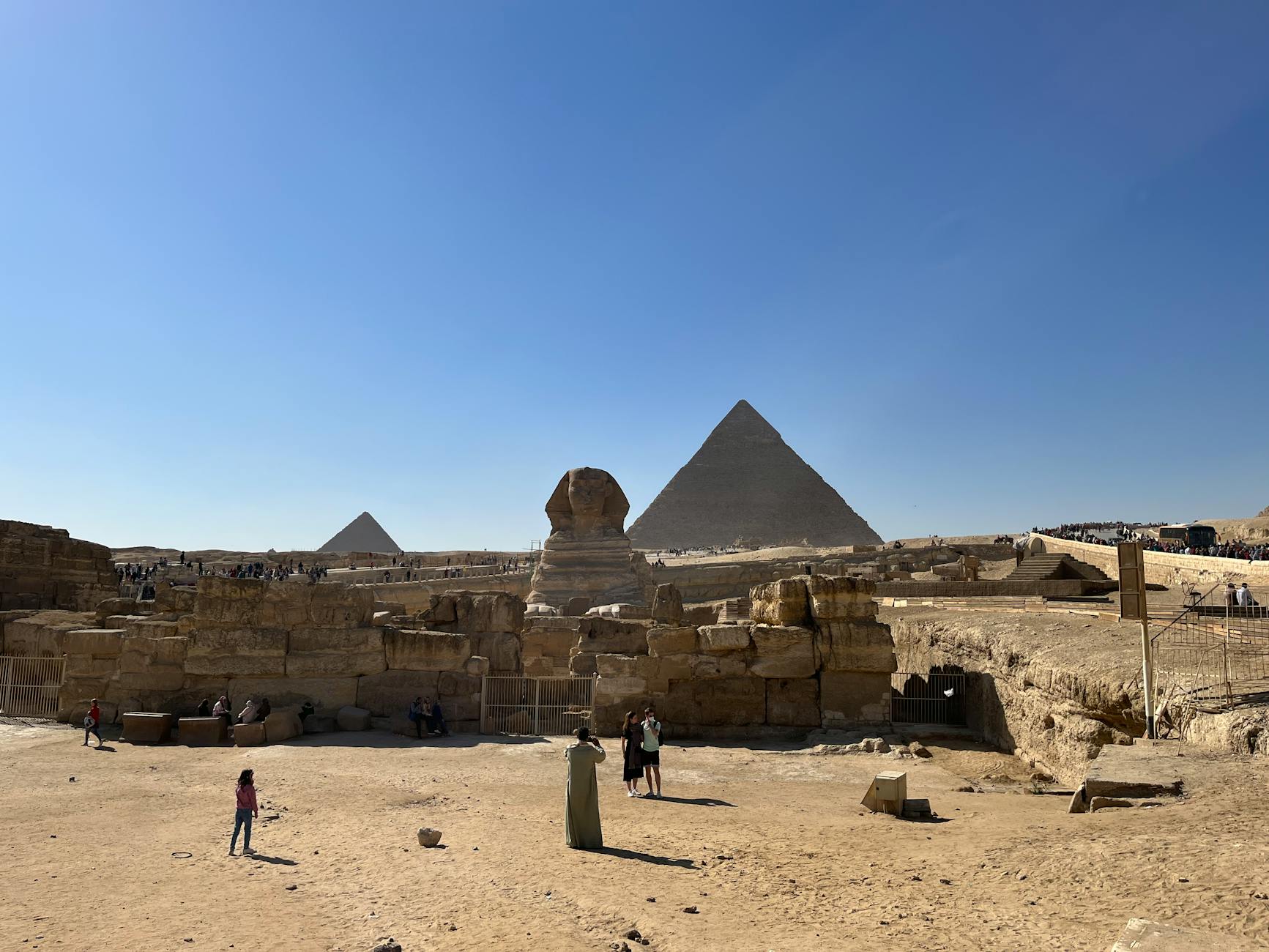
The Giza pyramid complex sits at the edge of the city — quite literally on the last street of the suburb. The three main pyramids (Khufu/Cheops, Khafre/Chephren, Menkaure/Mykerinos) plus the Great Sphinx are all within walking distance of each other, though the site is much larger than photos suggest.
Ticket structure (2026 prices, increased October 2024): The general area ticket costs EGP 700 for foreigners (EGP 350 students) and gets you access to the entire plateau, the Sphinx, and the panoramic viewpoint. Entering the Great Pyramid of Khufu costs an additional EGP 1,500 — only 300 tickets per day are sold (150 morning, 150 afternoon). The Pyramid of Khafre interior costs EGP 280 extra, and Menkaure is EGP 200. The Khufu Ship (Solar Boat) has been relocated to the GEM — the original museum at Giza was dismantled in 2021.
IMPORTANT: All archaeological sites in Egypt are now cashless. Credit or debit card required at ticket counters — no cash accepted. This applies to the pyramids, GEM, Egyptian Museum, Citadel, and virtually all major sites.
The site is huge — walking from the entrance to the panoramic viewpoint is about 2.5 km over sand and rock. Wear proper shoes, bring water, and consider a golf cart (EGP 200–300 for a circuit). Camel and horse rides are aggressively offered; if you want one, negotiate hard — a 30-minute camel ride should be EGP 300–500, not the initial ask of EGP 1,000+.
The Grand Egyptian Museum (GEM) — Finally Open
After two decades of construction and delays that became a running joke among Egyptologists, the Grand Egyptian Museum finally opened on November 1, 2025. Located 2 km from the Giza pyramids on the Cairo–Alexandria Desert Road, the GEM is the world’s largest archaeological museum at over 500,000 square metres.
The museum’s crown jewel is the complete Tutankhamun collection — over 5,000 artefacts reunited for the first time since Howard Carter’s 1922 discovery, including items never previously displayed. The golden death mask, the innermost coffin, jewellery, chariots, and furniture are spread across purpose-built galleries. The Khufu Solar Boat, relocated from Giza in 2021, is also displayed here.
Tickets: Admission is EGP 1,450 for foreign adults (EGP 730 students/children 6–12, free under 6). One ticket covers all galleries including Tutankhamun. All foreign visitor tickets must be purchased online at visit-gem.com — there are no on-site sales for foreigners. Timed entry slots.
Allow 4–6 hours minimum. The building alone is impressive — the Grand Staircase features a 3,200-year-old statue of Ramesses II at the entrance, and the vast atrium frames the pyramids through floor-to-ceiling windows. Hours: complex 8:30 AM–7 PM daily; galleries 9 AM–6 PM (extended to 9 PM Wednesday and Saturday).
Egyptian Museum (Tahrir Square)
The original Museum of Egyptian Antiquities in its famous pink neo-classical building remains open despite the GEM’s inauguration. Many major artefacts have been transferred, but the Tahrir museum still houses over 120,000 objects across 107 rooms — you could easily spend half a day here. Entry is EGP 550 for foreigners (EGP 275 students). Hours: 9 AM–5 PM daily (9 AM–4 PM during Ramadan).
The atmosphere has actually improved since the GEM drew away tour groups. The Tutankhamun collection has moved to the GEM, but you can still examine Middle Kingdom jewellery, Tanis silver coffins, Yuya and Thuya funerary treasures, Old Kingdom statues, and Graeco-Roman sarcophagi. The building itself is a 1902 masterpiece with a raw, 19th-century archaeological atmosphere that the modern GEM simply cannot replicate.
Khan el-Khalili — Shopping the Souq
This labyrinthine bazaar has been the commercial heart of Cairo since 1382. The main tourist strips sell souvenirs, but deeper inside you’ll find workshops where artisans still make items by hand — brass lanterns, inlaid wooden boxes, hand-blown glass, and genuine Egyptian cotton.
El Fishawi Café has served tea and shisha since 1797, allegedly never closing its doors in over 225 years. A tea costs around EGP 50–80, shisha EGP 60–100. For a more local experience, walk north to Al-Muizz Street — the kilometre-long spine of Islamic Cairo lined with mosques, madrasas, and sabils (public fountains) dating from the 10th to 19th century.
Citadel of Saladin
Built by Saladin in 1176 to fortify Cairo against the Crusaders, the Citadel dominates the eastern skyline. The Mosque of Muhammad Ali (the Alabaster Mosque) inside is one of Cairo’s most recognisable landmarks, its Ottoman-style domes and minarets visible from across the city. Entry to the Citadel complex is EGP 180 (EGP 90 students). Inside you’ll also find the National Military Museum, the Police Museum, and several smaller mosques.
The views from the Citadel walls are some of the best in Cairo — on a clear day you can see the pyramids to the west. Come at sunset for golden light across the minarets of Islamic Cairo below.
Coptic Cairo
The oldest part of the city, built on the Roman fortress of Babylon. The Hanging Church (Al-Mu’allaqa) dates to the 3rd–4th century and gets its name from its position above the fortress gatehouse. Saints Sergius and Bacchus Church (Abu Serga) supposedly shelters the cave where the Holy Family stayed during their flight to Egypt. The Ben Ezra Synagogue, the Coptic Museum (EGP 280), and several other churches make this a compact, walkable area. All churches are free; modest dress required.
Egyptian Food — What to Eat in Cairo
Egyptian cuisine is one of the great underrated food cultures — deeply plant-based, intensely flavoured, and almost absurdly cheap. Cairo’s food scene runs from plastic-chair street stalls serving EGP 30 koshari to Nile-view restaurants with tasting menus. The best eating is almost always at the cheapest places.
| Dish | Price (EGP) | What It Is |
|---|---|---|
| Koshari | 30–75 | Egypt’s national dish — rice, lentils, macaroni, chickpeas, crispy onions, spicy tomato sauce, vinegar |
| Ful medames | 20–50 | Slow-cooked fava beans with oil, lemon, cumin — breakfast staple since pharaonic times |
| Ta’ameya | 5–15 each | Egyptian falafel made from fava beans (not chickpeas) — bright green inside, crispy outside |
| Shawarma | 40–100 | Spit-roasted meat (beef or chicken) in bread with tahini and pickles |
| Fiteer | 50–200 | Egyptian layered pastry — savoury (cheese, meat) or sweet (honey, cream), made to order |
| Molokhia | 50–100 | Jute leaf soup with garlic and coriander — served over rice with chicken or rabbit |
| Kebab & kofta | 100–250 | Grilled lamb chunks (kebab) and spiced minced meat (kofta) — charcoal-grilled, served with bread |
| Hawawshi | 30–80 | Spiced minced meat stuffed inside bread dough and baked until crispy — Egypt’s meat pie |
| Om Ali | 30–70 | Egypt’s bread pudding — puff pastry, milk, nuts, raisins, baked until golden and bubbly |
| Basbousa | 15–40 | Semolina cake soaked in sugar syrup — dense, sweet, topped with almonds |
Koshari — Egypt’s National Dish
If Egypt has a soul food, it’s koshari — a carb-on-carb tower of rice, brown lentils, short macaroni, and chickpeas, topped with crispy fried onions and doused in a spicy tomato sauce and a sharp garlic-vinegar dressing (da’a). It sounds improbable but tastes extraordinary. The combination of textures (soft lentils, crunchy onions, chewy pasta) with the tangy-spicy sauce is addictive.
Abou Tarek in Downtown is the most famous koshari joint in Egypt — a four-storey restaurant that serves nothing else. A small bowl costs around EGP 40–55, medium EGP 55–75. The place is always packed, the queue moves fast, and a full meal with a drink costs less than $2. Other excellent options include Koshari El Tahrir and Sayed Hanafy (since 1950, known for extra da’a).
Ful & Ta’ameya — The Egyptian Breakfast
Every morning, Cairo wakes up to ful — fava beans slow-cooked overnight in a giant damasa (copper pot), served warm with a drizzle of olive oil, a squeeze of lemon, and a dusting of cumin. A ful sandwich from a street cart costs EGP 10–20 and is one of the most satisfying breakfasts on earth.
Ta’ameya is Egypt’s version of falafel, and it’s different from the Levantine kind — made from fava beans rather than chickpeas, mixed with fresh herbs (parsley, dill, coriander, leek), giving it a distinctive bright green interior. Freshly fried ta’ameya from a street stall is a revelation — crispy outside, moist and herbaceous inside. Typically served in baladi bread (Egyptian flatbread) with tahini and pickled turnips.
For a classic Egyptian breakfast, try Gad (a chain, but genuinely good) or Felfela in Downtown — both serve ful, ta’ameya, eggs, cheese, and fresh bread for around EGP 80–150 per person.
Fiteer — Egyptian Layered Pastry
Fiteer (also spelled feteer) is a flaky, multilayered pastry that’s been made in Egypt since pharaonic times. The dough is stretched thin like strudel, folded repeatedly with butter or ghee, and baked in a wood-fired oven. It comes savoury (filled with cheese, ground beef, or eggs) or sweet (drizzled with honey, dusted with sugar, spread with cream).
El Abd Bakery in Downtown has been Cairo’s go-to fiteer spot since 1969. Their fiteer meshaltet (plain, served with honey and clotted cream) is legendary. A whole fiteer feeds 2–3 people and costs EGP 80–200 depending on toppings. For a more traditional experience, seek out Fiteer El Hussien near Khan el-Khalili.
Hawawshi — Egypt’s Meat Pie
A quintessential Cairo street food: baladi bread stuffed with spiced minced meat (onions, peppers, herbs) and baked in a wood-fired oven until the outside is crispy and the inside is juicy. The best hawawshi comes from neighbourhood bakeries, not restaurants. A good one costs EGP 30–80 and is a meal in itself. Hawawshi El Rabie in Heliopolis is a local favourite.
Molokhia — The Pharaohs’ Soup
This intensely green soup made from jute leaves (Corchorus olitorius) has been eaten in Egypt for thousands of years — the word possibly derives from “mulukiyya” (royal food). The leaves are finely chopped (traditionally with a makhrata, a crescent-shaped blade), cooked in broth, and finished with a sizzling garlic-coriander sauce called ta’leya. Served over white rice with chicken, rabbit, or shrimp. Molokhia divides opinions — the texture is famously “slimy” in the best possible way.
Kebab & Kofta — Grill Culture
Egypt’s grill tradition centres on two dishes: kebab (chunks of marinated lamb on skewers) and kofta (seasoned minced meat formed around flat skewers). Both are charcoal-grilled and served with bread, tahini, salad, and grilled tomatoes and onions.
Abou El Sid in Zamalek serves high-end Egyptian classics in a beautifully decorated dining room — kebab/kofta platters around EGP 250–400. For a more local experience, Sobhy Kaber in Sayeda Zeinab is a neighbourhood legend — enormous platters of mixed grills for EGP 150–300. Andrea near the pyramids is famous for its chicken grills and garden setting.
Om Ali & Egyptian Desserts
Om Ali (Mother of Ali) is Egypt’s comfort dessert — a warm bread pudding made with puff pastry or filo, soaked in hot milk, sweetened with sugar, and loaded with nuts, raisins, and coconut. It arrives bubbling from the oven. Naguib Mahfouz Café in Khan el-Khalili does an excellent version. Other essential Egyptian sweets: basbousa (semolina cake in syrup), konafa (shredded pastry with cream or cheese, soaked in syrup), and roz bi laban (creamy rice pudding with nuts).
Where to Eat — Restaurant Guide
Cairo doesn’t have Michelin stars yet, but the dining scene ranges from world-class fine dining to some of the most rewarding street food anywhere. The best meals in Cairo often cost under $5.
Street Food & Budget Eats
- Abou Tarek (Downtown) — The koshari temple. Four floors, one dish. Small EGP 40–55, medium EGP 55–75.
- Sayed Hanafy (Downtown) — Since 1950. Known for extra da’a (garlic-vinegar sauce). Similar prices to Abou Tarek.
- Gad (multiple locations) — Chain but excellent for ful, ta’ameya, shawarma. Full breakfast EGP 80–150.
- Felfela (Downtown) — Tourist-friendly Egyptian classics. Mezze, grills, ful. Mains EGP 100–250.
- El Abd Bakery (Downtown) — Since 1969. Fiteer, ice cream, pastries. Fiteer EGP 80–200.
- Kazouza (Zamalek) — Modern Egyptian street food, well-executed. Burgers, sandwiches EGP 80–150.
Mid-Range & Fine Dining
- Abou El Sid (Zamalek) — Iconic Egyptian fine dining. Ornate décor, classic dishes. Mains EGP 250–500.
- Naguib Mahfouz Café (Khan el-Khalili) — Named after the Nobel laureate. Egyptian cuisine in a restored caravanserai. Mains EGP 200–400.
- Zooba (Zamalek, Downtown) — Street food elevated — ful, ta’ameya, hawawshi reimagined. Mains EGP 100–200.
- Andrea (Mariouteyya, near pyramids) — Garden restaurant famous for charcoal chicken. Half chicken EGP 200–300. Families love it.
- Sequoia (Zamalek) — Nile-view terrace restaurant. International and Middle Eastern. Mains EGP 300–600. The sunset views are the real draw.
- Crimson (Zamalek) — Contemporary Egyptian and Mediterranean. One of Cairo’s newest elevated dining rooms. Tasting menu from EGP 1,500.
Nile-View Dining
Eating with a view of the Nile is a Cairo experience. Sequoia is the most celebrated terrace. Le Pacha 1901 is a floating restaurant on a moored Nile boat near Zamalek — multiple restaurants inside, including steakhouse and Asian options (mains EGP 300–700). For budget Nile views, the Costa Coffee on the Corniche near the Four Seasons does the job.
Coffee, Tea & Drink Culture
Ahwa — Egyptian Coffee Culture
Cairo’s coffee culture centres on the ahwa (coffeehouse) — plastic or wicker chairs on the pavement, tiny cups of Turkish-style coffee, and shisha pipes. This is where Cairo socialises. Ahwa coffee comes in three styles: sada (no sugar), mazbouta (medium sugar), and ziyada (sweet). A cup costs EGP 15–30 at a traditional ahwa. The coffee is unfiltered, thick, and served with a glass of water.
El Fishawi in Khan el-Khalili is the most famous (since 1773), but it’s touristy and pricier (EGP 50–80 for tea). For a more authentic ahwa experience, sit at any local coffeehouse in Islamic Cairo or Downtown — just point at what others are drinking.
Karkade, Sahlab & Fresh Juice
Karkade (hibiscus tea) is Egypt’s other national drink — deep red, tart, served hot or cold. In summer, iced karkade with mint is everywhere. Sahlab is a warm, thick, milky drink thickened with orchid root powder, topped with cinnamon, coconut, and crushed nuts — the Egyptian winter warmer (EGP 30–60). Fresh juice is astonishingly cheap — a large glass of fresh mango, guava, strawberry, or sugarcane juice costs EGP 20–50 from ubiquitous juice bars. Try ‘aseer asab (sugarcane juice, EGP 10–20) from roadside vendors — pressed while you watch.
Shisha Culture
Shisha (hookah/water pipe) is deeply embedded in Cairo social life. You’ll smoke shisha at ahwas, restaurants, Nile-side cafés, and dedicated shisha bars. Common flavours: apple (tuffah), grape (enab), mint (na’na), and double-apple (tuffahtein). A shisha session costs EGP 40–100 at a local ahwa, EGP 100–250 at an upscale venue. The best shisha experience is Nile-side — try any of the floating cafés along the Corniche near Zamalek.
Alcohol
Egypt is a Muslim-majority country but alcohol is widely available in hotels, restaurants, bars, and liquor stores (outside Ramadan). Stella (the Egyptian one, not Artois) is the national beer — a decent lager, EGP 40–80 in bars. Sakara is another local option. Imported beer costs EGP 80–150. Wine is available but mediocre unless imported. Cocktails at hotel bars run EGP 150–350.
During Ramadan (approximately February 17 – March 18, 2026), alcohol service is restricted at most non-hotel restaurants. Major hotels maintain service throughout.
Shopping & Souvenirs
Khan el-Khalili — What to Buy & How to Bargain
Khan el-Khalili is both a tourist market and a working bazaar. The trick is knowing which is which. The main tourist strips sell mass-produced souvenirs; the alleyways behind sell the real stuff.
| Item | Tourist Price | Fair Price | Tips |
|---|---|---|---|
| Brass lantern (small) | EGP 500–1,000 | EGP 150–300 | Check for hand-hammered vs machine-made |
| Papyrus painting | EGP 300–800 | EGP 100–250 | Real papyrus doesn’t crack when bent. Banana leaf “papyrus” is cheaper. |
| Perfume oils (10ml) | EGP 200–500 | EGP 50–150 | Test on skin, wait 15 min. Genuine jasmine/lotus are pricier. |
| Alabaster vase | EGP 300–700 | EGP 100–300 | Hold up to light — real alabaster is translucent. |
| Spices (100g) | EGP 100–200 | EGP 30–80 | Buy whole, not ground. Saffron “deals” are usually safflower. |
| Inlaid wooden box | EGP 500–1,500 | EGP 200–600 | Real inlay uses mother-of-pearl; cheap ones use plastic. |
| Cartouche necklace (silver) | EGP 400–1,000 | EGP 200–500 | Your name in hieroglyphics — insist on sterling silver, get it engraved while you wait. |
| Egyptian cotton scarf | EGP 200–500 | EGP 80–200 | Feel the softness — genuine Egyptian cotton is silky smooth. |
Haggling rules: Always haggle — it’s expected and part of the culture. Start at 30–40% of the asking price and work up. Walk away if the price doesn’t feel right — the seller will often call you back with a lower offer. Tea will be offered; accept it, it doesn’t obligate you to buy. The later in the day (especially after 4 PM), the more flexible vendors become.
Beyond Khan el-Khalili: Tentmakers’ Street (Sharia el-Khayamiya) near Bab Zuweila is where artisans create hand-appliqued tent panels and cushion covers — beautiful and unique. Wikalet El Ghouri complex hosts art exhibitions and sometimes evening performances (Sufi dancing).
More Khan el-Khalili Streets to Explore
Coppersmith’s Alley (Sikket al-Nahaseen): Tucked off Al-Muizz, this is where Cairo’s coppersmiths still hammer trays, lanterns, and serving sets to order. The rhythmic clang of metalwork has been the soundtrack of this alley for 600 years. Watch a craftsman finish an engraved tray for EGP 800–1,500.
Muski Street: The historic shopping artery running from the bazaar to the city centre. Less touristy than the inner Khan, more local crowd, lower prices on the same goods. The walk from Khan el-Khalili back to Ataba Square along Muski takes about 25 minutes and is half the experience of Islamic Cairo.
Tentmakers’ Street (Sharia Khayamiya): The covered medieval market where the appliqué tents and quilts of Cairo are still hand-stitched. The only surviving covered market of its kind in the city. Wall hangings from EGP 400, full quilts EGP 1,500–3,500.
Neighbourhoods — Where to Stay & Explore
Downtown (Wust el-Balad)
Cairo’s beating heart — the area around Tahrir Square, built in the 19th century to rival Paris. Faded Belle Époque apartment buildings line wide boulevards. This is where you’ll find the Egyptian Museum (Tahrir), Abou Tarek, Felfela, El Abd Bakery, and the cheapest hotels. It’s noisy, polluted, chaotic, and absolutely authentic. Budget hotels from EGP 500–1,000/night; mid-range EGP 1,500–3,000.
Zamalek
Cairo’s island oasis — leafy, upscale, slightly calmer. Sitting on Gezira Island in the middle of the Nile, Zamalek has embassies, boutique hotels, art galleries, bookshops, and Cairo’s best restaurants (Abou El Sid, Sequoia). The Cairo Tower is here. Hotels EGP 3,000–8,000/night. This is where most well-heeled visitors stay.
Islamic Cairo (Al-Muizz & Al-Azhar)
The medieval city — Al-Muizz Street is a kilometre-long avenue of mosques, madrasas, and Mamluk architecture. Al-Azhar Mosque and University, Khan el-Khalili, Bab Zuweila, the Citadel, and dozens of lesser-known gems. Not a “staying” neighbourhood for most tourists, but the essential day destination. Come at sunset when the minarets light up.
Coptic Cairo (Old Cairo)
The oldest continuously inhabited part of the city, built on the ruins of the Roman fortress of Babylon. The Hanging Church, Abu Serga, Ben Ezra Synagogue, and the Coptic Museum are all here. Small, walkable, atmospheric. Metro stop: Mar Girgis (Line 1).
Heliopolis
Originally a garden suburb built by Belgian industrialist Baron Empáin in the early 1900s. Now a busy urban district but with beautiful architecture including the Baron Empáin Palace (restored, EGP 200 entry), Basilica, and Korba shopping area. Close to the airport. Hotels EGP 1,500–4,000/night.
Giza
The suburb that happens to contain the pyramids. Staying in Giza puts you within walking distance of the pyramid complex and the GEM. Hotels range from budget (EGP 600–1,000) to luxury (Marriott Mena House, from EGP 8,000+, with garden views of the pyramids). The downside: it’s far from central Cairo’s restaurants and nightlife.
Maadi
A quieter, greener residential suburb popular with expats. Good restaurants, tree-lined streets, a relaxed pace. Not central, but the metro (Line 1) connects it to Downtown in 15 minutes. Hotels EGP 1,500–4,000/night.
New Cairo & 5th Settlement
Cairo’s modern expansion — malls, gated communities, chain restaurants. Not interesting for tourists but home to Cairo Festival City Mall and some of the city’s newer restaurants. Far from central attractions (30–60 minutes by car).
The Nile — Cruises, Feluccas & Sunset Sails
Felucca Rides
A felucca — a traditional Egyptian sailboat — is the most romantic way to experience the Nile. The boats depart from various points along the Corniche, particularly near the Four Seasons in Garden City and near the Cairo Tower in Zamalek. A one-hour felucca ride costs EGP 200–400 for the entire boat (seats 6–8 people), but you’ll be quoted much more — negotiate firmly. Sunset is the best time. Bring your own drinks and snacks.
Dinner Cruises
For a more structured experience, several companies operate Nile dinner cruises with buffet dinner, live music, and belly dancing. The boats depart nightly from the Corniche near the Cairo Marriott. Expect to pay EGP 500–1,000 per person for a basic cruise, EGP 1,000–2,500 for luxury options. Nile Maxim and Pharaohs’ Cruise are popular operators. The food is typically decent but not exceptional — you’re paying for the experience and the views.
Riverside Walking — Zamalek & Maadi Corniche
The Nile is best experienced from a felucca, but the riverside walks are an underrated way to see Cairo at its calmest. Zamalek Corniche stretches the length of the island and is busiest in the early evening when families gather and street vendors sell sugarcane juice. Cleaner pavements, less traffic, and the city’s embassies and 1920s villas as backdrop. Maadi Corniche further south is leafier, quieter, and the local choice for morning runs and sunset jogs. Both walks are free, safe, and require no planning beyond comfortable shoes.
Islamic Architecture — Cairo’s Greatest Treasure
Cairo has the densest concentration of medieval Islamic architecture in the world. The area known as Historic Cairo is a UNESCO World Heritage Site covering hundreds of monuments. You could spend a week exploring mosques alone.
Must-Visit Mosques & Monuments
- Ibn Tulun Mosque (879 AD) — Cairo’s oldest intact mosque. Massive courtyard, spiral minaret, stunning simplicity. Free entry.
- Al-Azhar Mosque (970 AD) — One of the world’s oldest universities. Active mosque and educational institution. Free, rooftop access for views.
- Sultan Hassan Mosque (1356–1363) — Mamluk masterpiece, one of the largest mosques in the Islamic world. Entry EGP 200.
- Al-Rifa’i Mosque (1912) — Opposite Sultan Hassan. Houses the tombs of Egypt’s last royal family, including King Farouk. Entry EGP 100.
- Mosque of Muhammad Ali (1848) — Inside the Citadel. Ottoman-style alabaster mosque with panoramic views. Entry included in Citadel ticket (EGP 450).
- Al-Hakim Mosque (1013) — Fatimid-era, at the northern end of Al-Muizz Street. Restored, free entry.
- Bab Zuweila — 11th-century gate with twin minarets you can climb for Islamic Cairo panorama. EGP 100.
- Wekalet El Ghouri — 16th-century caravanserai. Free Sufi whirling dervish performances on Monday, Wednesday, and Saturday evenings (arrive early, seats fill fast).
Sound & Light Show at the Pyramids
The Sound and Light Show at the Giza pyramids projects images and lights onto the pyramids and Sphinx while a narration tells the story of ancient Egypt. The show runs nightly in multiple languages. Tickets cost $19 USD regular / $23 VIP / $11 children (card payment). The experience is somewhat dated but undeniably atmospheric — seeing the Sphinx illuminated against the night sky is memorable. Shows last about 45 minutes. Check the schedule for your language (English shows are typically the first or second time slot).
Day Trips from Cairo
Saqqara — The Step Pyramid
The necropolis of ancient Memphis, 30 km south of Cairo. The Step Pyramid of Djoser (2667 BC) is Egypt’s oldest pyramid and the world’s oldest large-scale stone structure. The complex also includes the Serapeum (underground tombs of sacred Apis bulls, reopened), the Pyramid of Teti (open to enter), and several decorated mastabas with vivid wall paintings. Entry to Saqqara is EGP 600 for the general area. Djoser’s interior costs an additional EGP 280. Imhotep Museum at the entrance is excellent and often overlooked. By taxi/Uber from central Cairo: EGP 200–400 one way, or hire a driver for a Saqqara-Dahshur day trip (EGP 800–1,500).
Dahshur — Bent & Red Pyramids
15 km south of Saqqara, Dahshur has two remarkable pyramids. The Bent Pyramid (2600 BC) with its distinctive change of angle midway up is visually unforgettable and was opened to visitors in 2019. The Red Pyramid is Egypt’s first true pyramid and you can enter its chambers for free (steep, low-ceilinged descent). Entry to Dahshur is EGP 300. Far fewer tourists than Giza. Often combined with Saqqara in a day trip.
Memphis Open-Air Museum
The ancient capital of Egypt, now a small open-air museum 20 km south of Cairo. The star exhibit is the colossal limestone statue of Ramesses II lying in a covered building. Entry EGP 300. Small but worth 30–45 minutes, especially combined with Saqqara/Dahshur.
Alexandria
Egypt’s Mediterranean city, 220 km north of Cairo. Take the Egyptian Railways train from Ramses Station — tickets range from EGP 25 (basic) to EGP 2,530+ (premium Talgo), journey time 2.5–3 hours. See the Bibliotheca Alexandrina (EGP 200), Citadel of Qaitbay (EGP 100), the Catacombs of Kom el-Shoqafa (EGP 100), and eat fresh seafood on the Corniche. A full day trip is possible but tight — consider an overnight stay.
Fayoum Oasis
A lush depression 100 km southwest of Cairo. Main attractions: Wadi El Rayan waterfalls and lake (EGP 50), Wadi Al-Hitan (Valley of the Whales, EGP 100) — a UNESCO World Heritage Site where 40-million-year-old whale fossils lie exposed in the desert. Lake Qarun and the Fayoum Portraits in the Kom Aushim Museum. A car with driver for the day costs EGP 1,000–1,500 from Cairo. Camping in the desert around Wadi El Rayan is popular.
Wadi Natrun
Four ancient Coptic monasteries in the desert, 110 km northwest of Cairo on the Alexandria road. Deir Anba Bishoi and Deir al-Suriani are the most interesting. Free entry, modest dress required. The monasteries are still active religious communities. By taxi/Uber: EGP 600–800 return.
Getting Around Cairo
Cairo Metro
Cairo’s metro is the oldest in Africa and the Middle East (opened 1987). Three lines cover the main tourist areas. Line 1 (Helwan–El Marg) passes through Sadat (Tahrir/Downtown), Mar Girgis (Coptic Cairo), and Maadi. Line 2 (Shobra–El Mounib) passes through Cairo University and connects to Line 1 at Sadat. Line 3 (Attaba–Rod El Farag/Airport) is being extended towards Cairo Airport.
Fares are incredibly cheap: EGP 10 for up to 9 stations, EGP 12 for 10–16 stations, EGP 15 for 16–23 stations, EGP 20 for 23+ stations (prices increased March 27, 2026). Buy tickets at the station or use a reloadable card. The first two cars of every train are reserved for women — this is strictly enforced.
Uber & Careem
Ride-hailing is the best way to navigate Cairo. Uber and Careem (now Uber-owned) work excellently, are metered, and avoid the negotiation hassle of taxis. A ride from Downtown to the Pyramids costs around EGP 80–150. Airport to Downtown: EGP 120–250 (roughly 30–45 minutes without traffic). Always use the app — never accept a driver’s offer to go “off-meter.”
Taxis
Cairo’s white taxis have meters but drivers often refuse to use them. If you must take a taxi, agree on the price before getting in, or insist on the meter. A typical cross-city ride should be EGP 50–100. The black-and-white Fiat taxis are cheaper but have no air conditioning. Frankly, use Uber.
Airport Transfer
Cairo International Airport (CAI) is 20 km northeast of central Cairo. The best options:
- Uber/Careem: EGP 120–250 to Downtown, 30–45 minutes (without traffic) to 60–90 minutes (rush hour). Simplest option.
- Metro Line 3: Partially serves the airport area via Adly Mansour station, then taxi for the final stretch.
- East Nile Monorail (NEW March 2026): Launched March 20, 2026 — connects Cairo Stadium (Nasr City) to the New Administrative Capital. 56.5 km, 22 stations, driverless trains. Connects with Metro Line 3 at Cairo Stadium. Not yet directly useful for most tourist routes, but a glimpse of Cairo’s transport future.
- Private hotel transfer: EGP 400–800. Arranged through hotels or online.
What’s New in 2026
- Grand Egyptian Museum: Fully opened November 1, 2025. All galleries operational including complete Tutankhamun collection. Online-only ticketing for foreign visitors at visit-gem.com.
- Pyramid area prices: Significant increases since October 2024 — general Giza entry now EGP 700 (was EGP 240), Great Pyramid interior EGP 1,500 (was EGP 400).
- Cashless archaeological sites: 99% of Egyptian archaeological sites now accept card payments only — no cash at ticket counters. Bring a credit or debit card.
- Egyptian Museum (Tahrir): Still open despite GEM. Reduced crowds, Tutankhamun moved to GEM but 120,000+ artefacts remain. Entry EGP 550.
- Cairo Monorail — East Nile Line: Launched March 20, 2026. Driverless trains connecting Cairo Stadium to the New Administrative Capital (56.5 km, 22 stations). West Nile Line (6th October City) expected later in 2026.
- Metro price increase: Effective March 27, 2026 — short routes up EGP 2 (now EGP 10 for up to 9 stations).
- Ramadan 2026: Started approximately February 17, Eid al-Fitr March 19–23. Many restaurants close during daylight hours; hotels maintain service. Iftar buffets are a wonderful cultural experience.
- New Administrative Capital: Egypt’s new capital city 45 km east of Cairo is partially operational with government offices relocated, connected by the new monorail. Not a tourist destination yet.
- E-visa: Available for 70+ nationalities at visa2egypt.gov.eg. Single-entry 30 days: $25. Multiple-entry: $60. Process takes 3–7 business days.
- Visa on arrival: Increased to $30 USD from March 2026 (enforcement may vary). Exact change in USD recommended.
- Exchange rate: Approximately EGP 50–54 per $1 USD (April 2026). Egypt floated the pound in March 2024, and rates have been volatile.
Practical Information
Month-by-Month Weather
| Month | High/Low | Rain Days | Key Notes |
|---|---|---|---|
| January ⭐ | 19/9°C | 3 | Cool, pleasant. Low season pricing. |
| February ⭐ | 21/10°C | 2 | Still cool. Ramadan may overlap (check dates). |
| March | 24/12°C | 1 | Warming. Khamsin sandstorms possible (Mar–May). Ramadan 2026: ~Feb 17–Mar 18. |
| April | 28/15°C | 1 | Warm. Khamsin risk. Easter/Coptic Easter. |
| May | 32/18°C | 0 | Hot. Khamsin tailing off. Shoulder season pricing. |
| June 🔥 | 35/21°C | 0 | HOT. Outdoor sightseeing becomes gruelling after 11am. |
| July 🔥 | 35/23°C | 0 | Peak heat. Budget-friendly but physically demanding. |
| August 🔥 | 35/23°C | 0 | Hottest. Avoid midday pyramid visits. |
| September | 33/21°C | 0 | Still hot. Cooling begins late month. |
| October ⭐ | 29/18°C | 0 | BEST MONTH. Warm but manageable. Tourist season begins. |
| November ⭐ | 24/14°C | 1 | Excellent. Comfortable for all activities. |
| December ⭐ | 20/10°C | 2 | Cool, pleasant. Holiday peak — prices rise. |
Cairo rarely rains. The heat (Jun–Sep) is the main weather consideration. Plan outdoor sightseeing for early morning and late afternoon in summer. Source: Egyptian Meteorological Authority climate data.
Best Time to Visit
October–April is ideal — warm days (20–30°C), cool evenings. Avoid June–August when temperatures exceed 40°C. The khamsin (sandstorm season) hits in March–May — hot, dry winds carry sand from the Sahara. Ramadan can affect restaurant availability but adds cultural richness (iftar dinners, festive evenings).
Safety
Cairo is generally safe for tourists. Common concerns are scams and persistent touts, not violent crime. Always-on alert areas: the Giza pyramid entrance (unofficial “guides”), Khan el-Khalili (aggressive sellers), and taxis (meter manipulation). Use Uber, keep valuables in front pockets, and ignore anyone who approaches with “where are you from?” at tourist sites — it’s invariably a pitch. Solo female travellers should expect stares and occasional comments; dressing modestly (covered shoulders and knees) significantly reduces unwanted attention.
Dress Code
Modest dress is appreciated throughout Cairo and required at mosques (long trousers/skirt, covered shoulders; women should carry a headscarf). Mosques often lend coverings at the entrance. At hotels and tourist restaurants, Western casual is fine. At the pyramids, wear comfortable shoes — sandals are impractical on sand and rock.
Tipping (Baksheesh)
Tipping culture is pervasive. Restaurant service: 10–15% (even if “service charge” is on the bill). Hotel porters: EGP 20–50. Bathroom attendants: EGP 5–10. Tour guides: EGP 100–200/day. Guards who “open” a special area or pose for a photo: EGP 10–20. Having small notes (EGP 10 and 20) on hand is essential.
SIM Card & Internet
Buy a SIM card at the airport arrivals hall from Vodafone, Orange, or Etisalat. A tourist package with 10–20 GB of data and local calls costs EGP 200–400. Bring your passport. Free WiFi is available at most hotels and many cafés but quality varies.
Budget Guide — What Things Cost
| Category | Budget | Mid-Range | Luxury |
|---|---|---|---|
| Daily budget | EGP 1,000–1,500 ($20–30) | EGP 2,500–4,000 ($50–80) | EGP 7,500–12,500+ ($150–250+) |
| Accommodation | EGP 750–1,250/night | EGP 2,000–4,000/night | EGP 5,000–15,000+/night |
| Meal | EGP 30–100 | EGP 150–400 | EGP 500–1,500+ |
| Transport (per ride) | EGP 10–20 (metro) | EGP 50–150 (Uber) | EGP 300+ (private car) |
| Attraction entry | Free–EGP 200 | EGP 200–600 | EGP 600–1,500 |
Cairo is one of the world’s great value destinations. A filling koshari meal costs EGP 40–75 ($0.80–$1.50), a ful sandwich EGP 10–20 ($0.20–$0.40), and the metro costs EGP 10–20 ($0.20–$0.40). Even mid-range dining and good hotels are remarkably affordable by international standards. The main tourist expenses are attraction entry fees, which have risen sharply since 2024.
Best value in Cairo: The contrast between attraction prices (EGP 180–1,500 for major sites) and food/transport costs (EGP 10–100) is extreme. Budget travellers can eat like royalty while spending most of their budget on sightseeing.
Find cheap flights to Cairo from European cities — check our latest Cairo flight deals.
Ready to Book Your Cairo Trip?
Find the best flight deals to Cairo International (CAI)
Suggested Itineraries
3 Days — The Essentials
- Day 1: Pyramids of Giza (early morning) → GEM (afternoon) → Sound & Light Show (evening)
- Day 2: Egyptian Museum (Tahrir, morning) → Islamic Cairo walk: Citadel, Sultan Hassan, Al-Muizz Street, Khan el-Khalili (afternoon/evening)
- Day 3: Coptic Cairo (morning) → Zamalek & Cairo Tower (afternoon) → Nile felucca sunset → dinner at Abou El Sid or Sequoia
5 Days — Deep Dive
- Days 1–3: As above
- Day 4: Saqqara & Dahshur day trip → Memphis Open-Air Museum → evening in Downtown (Abou Tarek, El Abd)
- Day 5: Al-Azhar Park sunrise → return to Islamic Cairo for deeper exploration (Ibn Tulun, Gayer-Anderson Museum, Tentmakers’ Street, Bab Zuweila) → Sufi show at Wekalet El Ghouri
7 Days — The Full Experience
- Days 1–5: As above
- Day 6: Day trip to Alexandria (train from Ramses Station)
- Day 7: Fayoum Oasis — Wadi Al-Hitan whale fossils + Wadi El Rayan
Browse flights from your city to Cairo — see our latest flight deals for inspiration.
Getting to Cairo
Cairo International Airport (CAI) is the main gateway, served by EgyptAir, most European carriers, and Gulf airlines. Direct flights from London (5h), Paris (4.5h), Frankfurt (4.5h), Istanbul (2.5h), Dubai (4h), and dozens of other cities. Sphinx International Airport (SPX) near the pyramids handles some charter and low-cost flights.
From the airport to Downtown Cairo: Uber is simplest (EGP 120–250, 30–60 min). The metro Line 3 partially serves the airport area. Private hotel transfers cost EGP 400–800.
Looking for cheap flights to Cairo? Check our latest deals from European cities.
Hidden Cairo
Beyond the pyramids and museums, Cairo rewards exploration. Crumbling Art Deco downtown, rooftop views, and neighborhoods tourists rarely find.
Downtown Curiosities
Beyond the main Downtown neighbourhood coverage (see Neighbourhoods above), a handful of specific spots are worth seeking out: Groppi Café (faded Art Deco tearoom), Odeon Palace Hotel rooftop (cheap beer, pyramid views), Cinema Radio (functioning 1930s theatre), and Estoril bar (downtown institution).
City of the Dead (Al-Qarafa)
The medieval cemetery where the living and dead share space — families live in and around historic tombs and mausoleums. Contains spectacular Mamluk architecture, including the tombs of Sultan Barquq and Imam Al-Shafi’i. Respectful visits welcomed during daylight.
Manial Palace
Eccentric 19th-century palace on Rhoda Island — Ottoman, Moorish, Persian, and European styles clash beautifully. Prince Mohamed Ali Tewfik’s fever dream of a residence. EGP 180. Undervisited and fascinating.
Garbage City (Manshiyat Naser)
The Zabbaleen community — Cairo’s informal recyclers who process 85% of the city’s waste. The Cave Church (St. Simon the Tanner) carved into the cliff seats 20,000. Visits best with a guide; several responsible tourism operators run trips.
Pricing, festival dates, and transport costs reflect data verified in April 2026 via the official sources linked throughout this guide. Travel costs are subject to annual adjustments — attractions and transport authorities typically refresh prices each spring. We recommend confirming real-time prices and booking windows via the authority links in each section before your trip. Where this guide references Michelin stars, the data reflects the most recent edition of the relevant Michelin Guide at time of publication.
Romantic Cairo
Cairo isn’t conventionally romantic, but the ancient setting, Nile sunsets, and sense of history create their own magic.
Romantic Experiences
Felucca at sunset: Private sailboat on the Nile as the sun sets behind the city. Bring wine (Egypt makes decent wine) and cheese. EGP 200-400/hour.
Pyramids at sunrise: Beat the crowds and the heat. The light on the pyramids at dawn is incomparable. Organize through your hotel or a private guide.
Sound & Light Show: Cheesy but atmospheric — the pyramids lit up as a narrated history plays. Multiple language options. $19 regular, $23 VIP. soundandlight.show
Rooftop drinks: Cairo has excellent rooftop bars. The Nile Ritz-Carlton terrace, Fairmont Nile City pool bar, or the backpacker-budget Odeon Palace Hotel roof (pyramid views, cheap Stella beer).
Romantic Dining
Sequoia: Sprawling Nile-side restaurant on the northern tip of Zamalek. Shisha, mezze, river breezes. EGP 400-800 for two. sequoia-cairo.com
Crimson: Fine dining at the Nile Ritz-Carlton. Contemporary Mediterranean with Nile views. EGP 1,500-3,000 for two.
Andrea: Legendary chicken restaurant in Giza. Outdoor garden setting, whole grilled chickens, Nile views. EGP 300-500 for two.
Romantic Stays
Marriott Mena House: The only hotel with direct pyramid views — literally wake up to the Great Pyramid. Historic property (1869), beautiful gardens. From EGP 6,000/night. marriott.com/mena-house
Four Seasons First Residence: Understated luxury in Garden City. Nile views, excellent restaurants. From EGP 8,000/night.
Budget romantic: Hotel Longchamps in Zamalek (faded charm, riverside, EGP 800-1,500) or Talisman Hotel downtown (boutique in Art Deco building, EGP 1,500-3,000).
Data Provenance & Verification
- Attraction Pricing: Verified via official Egyptian Ministry of Tourism & Antiquities sites, April 2026 (post-October 2024 price increases)
- GEM: Tickets and hours verified via visit-gem.com, April 2026
- Restaurant Pricing: Direct menu checks and local sources, March–April 2026
- Transit Fares: Cairo Metro fares verified post-March 27, 2026 increase
- Exchange Rate: EGP 50–54 per USD per XE.com, April 2026
- Weather: Based on Egyptian Meteorological Authority climate data
- Ramadan 2026: Approximately February 17 – March 18 (lunar calendar, dates approximate)
- Monorail: East Nile Line launch March 20, 2026 per NAT (National Authority for Tunnels)
- Last Updated: April 2026
🌍 See the bigger picture: our Egypt travel guide covers regions, when to go, and getting around.
Frequently Asked Questions
Is the Grand Egyptian Museum (GEM) fully open in 2026?
Yes. The GEM opened on November 1, 2025 and is fully operational with all galleries, including the complete Tutankhamun collection. Admission is EGP 1,450 for foreign adults. All foreign visitor tickets must be purchased online at visit-gem.com — there are no on-site sales for foreigners.
How much does it cost to visit the Pyramids of Giza?
The general area ticket is EGP 700 for foreigners (approximately $14). Entering the Great Pyramid of Khufu costs an additional EGP 1,500 (only 300 tickets/day). Khafre interior is EGP 280 extra, Menkaure EGP 200 extra. All sites accept card payments only — no cash. Prices increased significantly in October 2024.
Is Cairo safe for tourists?
Generally yes. The main concerns are scams and persistent touts at tourist sites, not violent crime. Use Uber instead of taxis, agree prices before any service, ignore unsolicited “guides” at the pyramids, and keep valuables secure. Solo female travellers should dress modestly and be prepared for unwanted attention in busy areas.
What’s the best time to visit Cairo?
October to April offers the most comfortable weather (20–30°C days). Summer (June–August) brings extreme heat exceeding 40°C. Ramadan timing varies yearly (started approximately February 17 in 2026). Ramadan affects daytime restaurant availability but evenings are festive and culturally rich.
How do I get from the airport to the city centre?
Uber or Careem is the easiest option (EGP 120–250 to Downtown, 30–60 minutes depending on traffic). Metro Line 3 partially serves the airport area. Private hotel transfers cost EGP 400–800. Avoid unofficial taxi drivers inside the terminal.
Do I need a visa for Egypt?
Most nationalities can get an e-visa online ($25 single entry / $60 multiple entry) or a visa on arrival at the airport ($25–30 — increase to $30 reported from March 2026). The e-visa is faster and avoids queues. Apply at visa2egypt.gov.eg at least a week before travel. EU, US, UK, Canadian, and Australian citizens are all eligible for e-visa.
Should I visit the Egyptian Museum (Tahrir) or the GEM?
Both, if time allows. The GEM is the main event — purpose-built, modern, with the complete Tutankhamun collection. But the Egyptian Museum in Tahrir is atmospheric, less crowded since the GEM opened, and still holds over 120,000 artefacts in a beautiful 1902 building. Budget half a day for each.
Is it worth entering the Great Pyramid?
The interior is impressive but claustrophobic — a narrow ascending passage leads to the King’s Chamber, which is a plain granite room. No paintings or treasures. The experience is the history and the engineering, not visual spectacle. At EGP 1,500 and with only 300 daily tickets, it’s a bucket-list item for some and a “skip” for budget travellers.
What is the best day in Cairo for under EGP 1,000 ($20)?
Metro to Mar Girgis station (EGP 10). Walk Coptic Cairo — Hanging Church, Abu Serga, Ben Ezra Synagogue (all free). Metro to Sadat/Tahrir (EGP 10). Walk through Downtown to Al-Azhar (free). Walk Al-Muizz Street — the kilometre-long open-air Islamic museum (free). Ibn Tulun Mosque (free). Khan el-Khalili browse and tea at a local ahwa (EGP 50). Ful and ta’ameya sandwich lunch from a street cart (EGP 30). Walk to the Citadel exterior viewpoint (free from outside). Evening: koshari at Abou Tarek (EGP 55). Metro home (EGP 10). Total: EGP 175 (~$3.50). You’ve seen 2,000 years of religious history, a millennium of Islamic architecture, the oldest intact mosque in Cairo, a medieval bazaar, and eaten Egypt’s national dish — for less than the price of a single museum ticket.
More City Guides
- Ho Chi Minh City Guide 2026 — Phở, bánh mì, cơm tấm & the new Metro Line 1
- Vancouver City Guide 2026
- San Francisco City Guide 2026
- Montreal City Guide 2026
- Mexico City City Guide 2026
- Santiago City Guide 2026
- Kyoto City Guide 2026
- Cape Town City Guide 2026
- Lima City Guide 2026
- Buenos Aires City Guide 2026
- Osaka City Guide 2026
- Bogotá City Guide 2026
- Medellín City Guide 2026
- Toronto City Guide 2026
Cheapest Flights to Cairo
We track flight deals to Cairo from 2 cities worldwide. Here are the best recent fares:
Prices are based on recent deals and may no longer be available. Browse all flight deals