Mexico City — The Complete City Guide 2026
From Aztec ruins under the Zócalo to a Michelin-starred taco stand in San Rafael — the 2026 guide to one of the densest food cities on the continent.
MXN 800–8,000+/day (Budget to Luxury) budget
Best: Oct–May
Why Mexico City? An Editor’s Note
Let me be direct about what you’re getting into.
There are two Mexico Cities. “Tourist CDMX” is the Zócalo selfie, the 90-minute queue at Frida Kahlo’s house, and a $15 margarita in a Polanco rooftop bar while you wonder what all the fuss was about. This Mexico City is crowded, exhausting, and will have you questioning whether 22 million people really know something you don’t.
“Real CDMX” is eating tacos al pastor at 2am from a fluorescent-lit stand where the taquero has been perfecting his craft for 30 years. It’s discovering that Pujol — consistently ranked among the world’s best restaurants — costs less than a mediocre dinner in London. It’s realizing that this city, built directly on top of Tenochtitlan, the capital of the Aztec Triple Alliance until Cortés razed it in 1521, has produced a food culture, an art scene, and a street life with very few peers anywhere.
This guide bridges that gap. I’ve lived in this city. I’ve made the mistakes so you don’t have to. I’ll tell you which neighbourhoods to avoid (Tepito is a no-go zone; parts of Juárez are still rough), which sights on the standard list are tourist traps (the Anthropology Museum is not — it is genuinely essential), and where the working city actually is.
Top Attractions
| Attraction | Price (2026) | Tips |
|---|---|---|
| Museo Nacional de Antropología | MXN 95. Pro tip: Go Tuesday morning — it’s free for Mexicans so locals assume it’s crowded, but tourists don’t know this, so it’s actually quieter. The Aztec Hall alone needs 2 hours | Pedro Ramírez Vázquez’s 1964 building; 23 halls. Half-day minimum. |
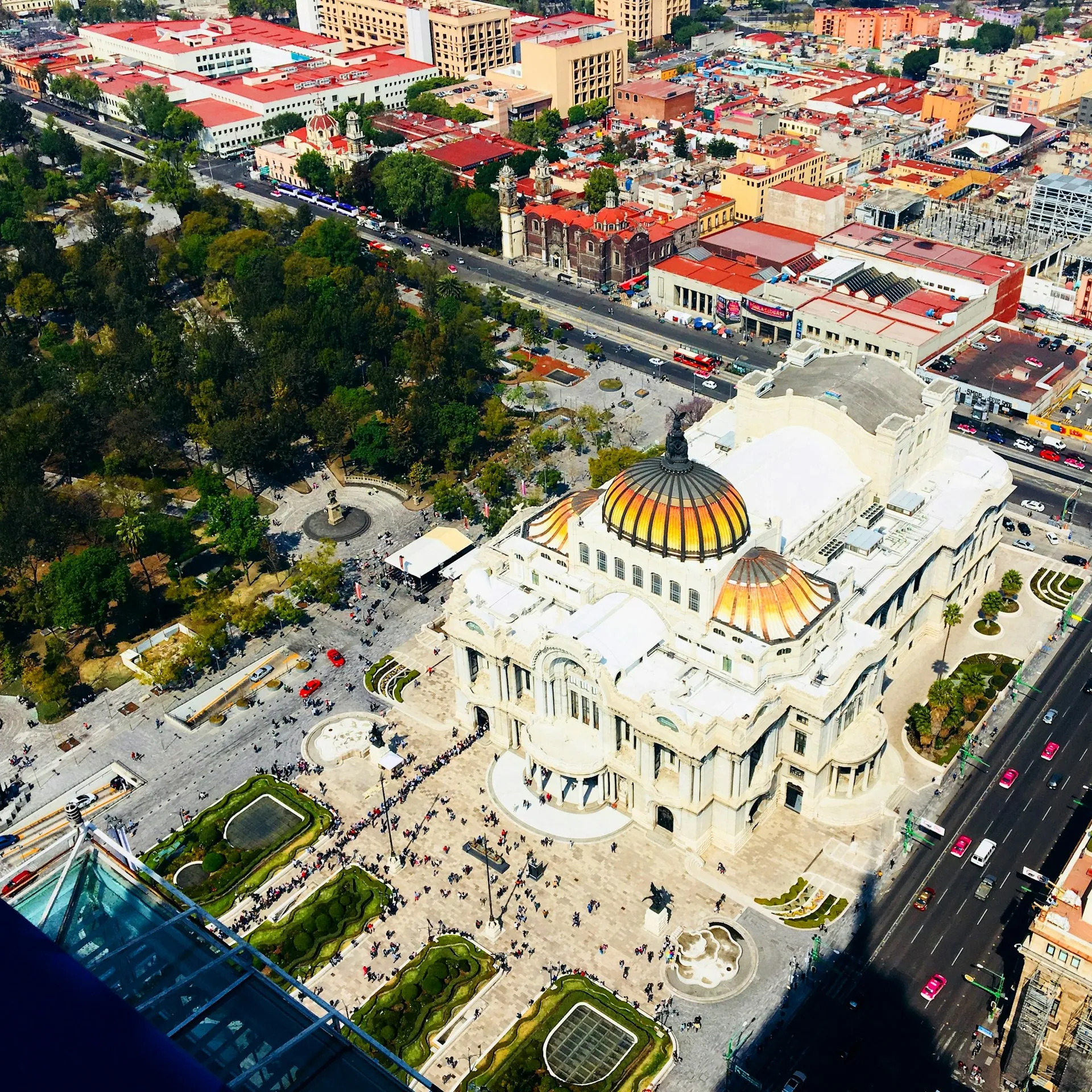
| Palacio de Bellas Artes | MXN 85 / Free Sunday | Art Deco/Art Nouveau marvel. Rivera, Orozco, Siqueiros murals. |
| Templo Mayor | MXN 95 | Aztec temple ruins in the Zócalo. Museum included. |
| Museo Frida Kahlo (Casa Azul) | MXN 270 / MXN 230 weekdays. Surgical tip: Tickets release at midnight Mexico City time, exactly 30 days ahead. Set an alarm — weekends sell out within hours | Tickets release midnight CDMX time, 30 days ahead. Weekends sell out in hours. |
| Castillo de Chapultepec | MXN 95 | Hilltop castle, city views, history museum. |
| Xochimilco Floating Gardens | MXN 600-800/hr per trajinera | Negotiate firmly. Weekends are festive; weekdays calmer. |
| Teotihuacán Pyramids | MXN 95 | 1 hour from city. Go early, bring water, wear hat. |
| Zócalo & Metropolitan Cathedral | Free | One of world’s largest plazas. Cathedral sinking visibly. |
| Museo Soumaya | Free | Billionaire’s collection. Rodin, European masters. |
| Coyoacán | Free | Colonial neighbourhood. Markets, cafes, Frida’s hood. |
| Palacio Nacional (Diego Rivera Murals) | Free | Book online. ID required. Rivera’s epic history murals. |
| Bosque de Chapultepec | Free | Massive urban park. Zoo, museums, lakes, jogging. |
Free Sundays: Most national museums are free for Mexican residents and foreigners on Sundays. Expect crowds but significant savings.
Museo Nacional de Antropología
This is not optional. The National Museum of Anthropology is one of the world’s great museums — the Aztec Sun Stone alone justifies the visit, but the 23 exhibition halls covering Mesoamerican civilizations will reshape your understanding of pre-Columbian America.
Skip This
Xochimilco tourist boats on weekend afternoons: Blaring speakers, overpriced beer, and tourist chaos. Skip the weekend afternoon party scene — go Tuesday-Thursday morning for the authentic experience. If you DO go on a weekend, book a private trajinera from Embarcadero Cuemanco or Zacapa; the floating gardens deserve better than the Nativitas mob.
Highlights: The Aztec Hall (Sun Stone, Coatlicue), Maya Hall (jade masks, Palenque reproductions), Oaxaca Hall (Zapotec and Mixtec treasures). The central courtyard with its “umbrella” fountain is architectural poetry.
Strategy: Arrive at opening (9am), start with the Aztec Hall while crowds are thin, work counter-clockwise. Three hours minimum; serious visitors need a full day.
Casa Azul (Museo Frida Kahlo)
Frida’s cobalt-blue childhood home in Coyoacán, where she lived with Diego Rivera and died in 1954. The house is preserved as she left it — kitchen, studio, garden, her wheelchair at the easel.
Booking: Reserve online weeks ahead, especially for weekends. Timed entry slots. Weekday mornings are calmest.
Combo: The nearby Museo Diego Rivera Anahuacalli (MXN 100) houses Rivera’s pre-Columbian art collection in a volcanic stone pyramid he designed. Less crowded, equally fascinating.
Teotihuacán
The ancient city of the gods, 50km northeast. At its peak (circa 450 CE), Teotihuacán was one of the largest cities on Earth. The Pyramid of the Sun is the third-largest pyramid in the world.
Getting there: Buses from Terminal del Norte (MXN 104 return, every 15 minutes). 1 hour journey. Or book a tour (from MXN 800) that includes transport and guide.
Tips: Go early (opens 8am) to beat heat and crowds. Bring water, sunscreen, hat — there’s no shade. Climbing the pyramids is strenuous. Allow 3-4 hours minimum.
Hot air balloons: Sunrise flights over the pyramids run roughly MXN 3,500–5,000 per person (verify current pricing with the operator before booking). Vuelo en Globo is one of the longer-established operators.
Food & Drink
Mexico City is one of the world’s great food cities — perhaps the best value fine dining destination on earth, certainly the taco capital of the universe. The depth goes from MXN 15 street tacos to MXN 5,000 tasting menus, all excellent.
Essential Dishes
Tacos: The foundation. Al pastor (spit-roasted pork with pineapple), suadero (brisket), carnitas (slow-cooked pork), barbacoa (pit-roasted lamb), lengua (tongue), cabeza (head meat). Every style has its specialists.
Quesadillas: Not just cheese. Flor de calabaza (squash blossoms), huitlacoche (corn fungus — trust us), chicharrón prensado, tinga. Best at markets.
Tortas: Mexican sandwiches. The torta de milanesa (breaded cutlet) and torta ahogada (drowned in salsa) are gut bombs of joy.
Tamales: Steamed corn dough parcels with various fillings. Green salsa chicken, mole, rajas con queso. Breakfast or late-night fuel.
Pozole: Hominy soup with pork or chicken, garnished with cabbage, radish, oregano, lime. Weekend dish, ceremonial origins.
Mole: Complex sauces with 20+ ingredients, sometimes including chocolate. Mole negro (Oaxacan), mole poblano (with turkey), mole rojo. Best at Nicos (see Fine Dining) and at fonderías inside the markets.
Chiles en Nogada: Stuffed poblano peppers with walnut cream and pomegranate. August-September only (Independence Day dish). The patriotic colours — green poblano, white nogada, red pomegranate — are the dish’s reason for being.
Taco Guide
Mexico City has an estimated 100,000+ taco vendors. These are the essential stops.
Tacos al Pastor
Spit-roasted pork, Lebanese-Mexican fusion, the city’s signature taco. Watch the trompo (vertical spit) spin, the taquero slice meat and catch pineapple in one motion.
Editor’s Pick
El Vilsito in Narvarte. An auto-mechanic shop that turns into a pastor stand after 8pm. The green chorizo and suadero are the picks. No sign, no menu, no English — follow the smoke off Avenida Universidad.
El Califa de León: Awarded one Michelin star in May 2024 — the first taco stand in the world to receive one. San Rafael location is the classic; expect standing room only and a queue. MXN 45–55 per taco.
El Vilsito: See the Editor’s Pick above — 9pm–3am, Narvarte (Avenida Universidad), MXN 20–30 per taco.
El Huequito: Since 1959, Centro Histórico. Claims to have invented tacos al pastor. Multiple locations, consistent quality. MXN 35-45.
Tacos de Canasta
“Basket tacos” — steamed soft tacos sold from bicycles and baskets. Chicharrón, frijoles, papa. Breakfast food, MXN 10-15 each. Found on street corners everywhere, morning only.
Tacos de Guisado
Stewed fillings, market-style. Tinga (chipotle chicken), mole verde, chicharrón en salsa verde, rajas. Best at mercados — try Mercado de Medellín or Mercado de San Juan.
Tacos de Carnitas
Slow-cooked pork, often from giant copper pots. Carnitas El Michoacano in La Condesa is excellent. Los Cocuyos downtown serves late-night carnitas to taxi drivers and insomniacs. MXN 25-40.
Tacos de Barbacoa
Pit-roasted lamb, traditionally weekend-only. Arroyo in Tlalpan does the full experience — pulque, barbacoa, live music. Barbacoa El Güero in Coyoacán is more accessible. MXN 40-60.
Taco Etiquette
Salsa goes ON the taco, not for dipping. Lime squeeze before eating. Eat standing or sitting on plastic stools. Don’t ask for utensils. Cilantro and onion are default toppings — say “sin cebolla” (no onion) or “sin cilantro” if needed.
Fine Dining
Mexico City has more Michelin stars than you’d expect, at prices that make European fine dining look absurd. The scene blends Mexican ingredients with global techniques.
The Elite
Pujol: Enrique Olvera’s flagship, consistently ranked in the top 20 of the World’s 50 Best Restaurants. The mole madre is reheated, refed, and re-aged daily — the restaurant gives the count as 2,500+ days as of the most recent menu (verify against the current menu before quoting). Tasting menu MXN 4,500-5,500. Surgical tip: Reservations open exactly 60 days ahead at 9am Mexico City time — set an alarm. The bar seats have the same menu with a better view of the kitchen and are slightly easier to book.
Quintonil: Jorge Vallejo’s vegetable-forward Mexican fine dining. Consistently ranked in the top 10 of the World’s 50 Best Restaurants. More intimate than Pujol. Tasting menu MXN 3,800–4,500. Lunch is cheaper and easier to book — and the natural light in the courtyard is better for photos.
Rosetta: Elena Reygadas’ Italian-Mexican restaurant in a Roma mansion. One Michelin star. Pasta perfection. MXN 800-1,200 mains. The bakery next door (Panadería Rosetta) is unmissable.
Sud 777: Edgar Núñez’s contemporary Mexican. One star. Excellent value tasting menus from MXN 1,800. Pedregal neighbourhood.
The Next Tier
Contramar: Gabriela Cámara’s Roma seafood restaurant, open since 1998 and full at lunch every day it opens. The tuna tostadas and the half-red-half-green grilled fish are the order. No reservations, expect queues. MXN 400–700.
Máximo Bistrot: Eduardo García’s Bib Gourmand spot. Market-driven menu, natural wines, Roma Norte casual elegance. MXN 600-900.
Nicos: Gerardo Vázquez Lugo’s traditional Mexican, Bib Gourmand. Home-style cooking elevated. The mole and carnitas are exemplary. MXN 300-500.
Expendio de Maíz Sin Nombre: Corn-focused tasting menu in a market stall. Bib Gourmand, deeply Mexican, unforgettable. Reserve via Instagram DM.
Mezcal & Drinks
Mexico City is the best place outside Oaxaca to explore mezcal. The craft cocktail scene is also excellent.
Understanding Mezcal
Mezcal is the mother spirit; tequila is just mezcal made from blue agave in specific regions. Mezcal can be made from 50+ agave varieties, each with distinct character. The smoky flavour comes from pit-roasting the agave hearts.
Key terms: Espadín (most common agave), Tobalá (rare, complex), Cuishe (herbal), Madrecuishe (tropical). Joven (unaged), Reposado (2-12 months), Añejo (1+ years aged).
Mezcalerías
Bósforo: Downtown cantina with 200+ mezcals. Knowledgeable staff, traditional atmosphere. Flights from MXN 250.
La Clandestina: Casual Roma spot — see also Music & Nightlife. MXN 80–200 per pour.
Expendio de Agaves: Hidden Roma bar with deep agave expertise. Rare bottles, serious drinking.
Cocktail Bars
Licorería Limantour and Hanky Panky are the two anchors — see Bar Culture under Music & Nightlife for the full entries (both consistently ranked in World’s 50 Best Bars). Baltra is the third — also see Bar Culture; the original is a small Condesa room, not the Jáurez rooftop sometimes confused with it.
Pulque
Fermented agave sap, pre-Hispanic, milky and slightly viscous — see Pulquerías under Music & Nightlife for full venue notes. Las Duelistas (Centro, founded 1912) is the easiest first try; curados (flavoured — guava, celery, oatmeal) are more approachable than pure. MXN 30–60.
Neighbourhoods
No-Go Zones: Tepito is off-limits for tourists — even Mexicans avoid it. La Merced after dark is risky. Parts of Doctores and Juárez remain rough despite gentrification claims. The Centro Histórico side streets empty after 9pm — stick to main avenues and the blocks immediately around established venues (Zinco, Bar La Ópera, Salón Corona). Don’t wander residential side streets after dark; take a rideshare between Centro venues.
Roma Norte
The most walkable, liveable neighbourhood for visitors. Art Nouveau and Art Deco architecture, tree-lined streets, excellent restaurants, boutique hotels. Álvaro Obregón is the main artery. Stay here if: you want the best concentration of dining and nightlife.
Condesa
Adjacent to Roma, greener and slightly more residential. Parque México and Parque España anchor the neighbourhood. Cafes, bookshops, dog-walkers. Stay here if: you want a local-feeling base with good access to everything.
Centro Histórico
The colonial core, UNESCO-listed since 1987. Zócalo, Metropolitan Cathedral, Palacio Nacional, Templo Mayor. Gentrification is spreading — hotels and rooftop bars are multiplying. Stay here if: you want immersion in history and don’t mind grit.
Coyoacán
Southern neighbourhood with colonial charm. Frida Kahlo’s house, leafy plazas, weekend markets, student atmosphere (UNAM is nearby). More relaxed pace than central areas. Stay here if: you want a village feel within the city.
Polanco
The upscale district. Museo Soumaya, designer boutiques, expensive restaurants, embassies. More corporate/residential, less characterful, but safe and polished. Stay here if: you want luxury hotels and proximity to Chapultepec.
Juárez & Cuauhtémoc — Pink Zone Adjacent
Between Roma and Zona Rosa, Juárez has become its own destination. LGBTQ+ scene around Zona Rosa, Korean restaurants on Calle Londres, emerging bars and galleries. Architecture ranges from Porfirian mansions to 1970s apartments. Edgier than Roma but catching up fast.
Eat: Cardinal (seafood), Casa Virginia (Italian), Blanco Colima (contemporary Mexican). Drink: Gin Gin (gin bar), Xaman (pre-Hispanic cocktails).
Stay here if: you want to see the next Roma before it arrives.
San Rafael — The Next Roma
Working-class neighbourhood just north of Reforma with old mansions, a faded-glory aesthetic, and rising restaurant scene. Art Deco gems, excellent street food, cheaper than Roma, more authentic. Antique shops on Avenida Ribera de San Cosme. El Califa de León (first Michelin-starred taco stand in the world) is here.
Eat: Contramar (if you can get a reservation), Lalo! (tacos de guisados), Panadería La Central (traditional bakery). Drink: Department Store (craft cocktails), La Floridita (cantina). See: Museo del Chopo (university museum with excellent exhibitions).
Day trip: great for eating, not for staying.
Santa María la Ribera — Victorian Time Capsule
North of Roma, this working-class neighbourhood has beautiful Victorian-era architecture (the Kiosko Morisco is gorgeous), a strong local identity, and relatively few tourists. See: Museo de Geología, Kiosko Morisco, Alameda de Santa María. Eat: market fondas and local taquerías.
San Ángel — Colonial Village
Southern neighbourhood that retains colonial-era atmosphere. Cobblestone streets, flower markets, upscale restaurants. The Saturday Bazaar Sábado (crafts market) is the main draw. Eat: San Ángel Inn (traditional in a 17th-century hacienda), El Cardenal (upscale Mexican). See: Museo Casa Estudio Diego Rivera y Frida Kahlo.
Xochimilco — Floating Gardens
Southern borough, home to the famous trajineras (colourful boats). UNESCO World Heritage — the last remnants of the lake system that covered the Valley of Mexico. Weekend afternoons get crowded and party-like; weekday mornings are peaceful. Do: hire a trajinera (MXN 500-700/hour, fits 10-15 people), visit Chinampa farms, eat from floating food vendors. Pro tip: skip the touristy Embarcadero Nativitas; try Cuemanco or Zacapa for fewer crowds.
Tepito — Handle With Care
Legendary working-class neighbourhood, birthplace of Mexican popular culture, infamous for crime and contraband. Not recommended for unguided visits, but cultural tours with local guides exist. The street art, lucha libre culture, and market energy are unparalleled — but this requires planning and local knowledge. (See also the No-Go Zones box above.)
Museums Beyond the Essentials
Mexico City has 150+ museums — more than any city except Paris and London. After the big three (Anthropology, Bellas Artes, Frida Kahlo), consider these.
Art Museums
MUNAL (Museo Nacional de Arte): Mexican art from pre-Columbian to 20th century. Porfirian-era building (Silvio Contri, 1905). MXN 85.
Museo de Arte Moderno: 20th-century Mexican art, including Frida and Diego. Chapultepec park setting. MXN 85.
Museo Tamayo: Contemporary art in a Teodoro González de León building. Strong rotating exhibitions. MXN 85.
Museo Soumaya: Carlos Slim’s collection in a striking silver building. Rodin sculptures, European masters. Free.
Museo Jumex: Contemporary art, excellent exhibitions. Adjacent to Soumaya. Free Sunday, otherwise MXN 80.
History & Culture
Museo Memoria y Tolerancia: Holocaust and genocide museum. Heavy but important. MXN 100.
Museo del Estanquillo: Carlos Monsiváis’ collection of Mexico City ephemera. Quirky, local, free.
Museo Nacional de Historia (Castillo de Chapultepec): Mexican history from conquest to revolution, in the hilltop castle. MXN 95.
Quirky/Niche
Museo del Juguete Antiguo México: Vintage toy collection, surreal building, deep nostalgia. MXN 70.
Museo Nacional de Culturas Populares: Folk art and traditions. Coyoacán location. MXN 22.
Day Trips
Puebla
Colonial city, 2 hours southeast. Talavera ceramics, mole poblano’s birthplace, baroque churches. The Museo Amparo is excellent. Bus from TAPO station (MXN 300 return, 2 hours).
Taxco
Silver-mining town with whitewashed buildings cascading down a hillside. Excellent silver jewelry shopping. 3 hours by bus (MXN 500 return). Consider overnight — the evening atmosphere is magical.
Cuernavaca
Weekend escape for chilangos. “City of Eternal Spring” — warm climate, gardens, Cortés palace. 1.5 hours. The Robert Brady Museum is worth the trip alone.
Xochimilco
Technically within the city but feels like a day trip. Hire a trajinera (flat-bottomed boat) and float through canals that predate the conquest. Mariachi boats, food vendors, pulque. Weekend afternoons are festive; weekday mornings are peaceful.
Valle de Bravo
Lake town 2.5 hours west. Paragliding, sailing, cobblestone streets. Popular with wealthy weekenders. Consider overnight if you want outdoor activities.
Romantic CDMX
Sunset Spots
Chapultepec Castle: City views at golden hour. The terrace bar inside serves cocktails.
Terraza Cha Cha Chá: Centro Histórico rooftop with cathedral views. Mezcal cocktails, mariachi below.
Lago de Chapultepec: Rent a paddleboat and watch the sun set behind the trees. Cheesy in the best way.
Romantic Dining
Pujol, Rosetta, and Contramar all qualify — see Fine Dining for the long entries. Of the three, Rosetta’s candlelit Roma mansion is the most conventionally romantic; Contramar is shared and joyful, not intimate.
Romantic Stays
Las Alcobas: Polanco boutique luxury. Spa, Dulce Patria restaurant, understated elegance. From MXN 8,000.
Hotel Carlota: Modernist gem on Reforma. Pool, design focus, Juárez neighbourhood. From MXN 4,000.
Círculo Mexicano: Centro Histórico design hotel from Grupo Habita. Rooftop, courtyard, colonial bones. From MXN 5,000.
Condesa DF: The original boutique hotel, still excellent. Rooftop with park views. From MXN 4,500.
CDMX with Kids
Attractions
Papalote Museo del Niño: Interactive children’s museum in Chapultepec. Excellent for ages 3-12. MXN 249.
Zoológico de Chapultepec: Free zoo with pandas, Mexican wolves, diverse exhibits. Can get crowded on weekends.
Six Flags Mexico: Theme park south of the city. Roller coasters, family rides. From MXN 650.
Xochimilco: Kids love the trajineras, the floating vendors, the colours. Go on a weekday morning for calmer waters.
Kid-Friendly Food
Mexican food is generally child-friendly — quesadillas, tacos, tortas, fresh fruit. Most restaurants accommodate families easily. Churros con chocolate make excellent bribes.
Practical Tips
Altitude (2,240m) can affect children — hydrate, take it slow the first day. Air quality varies — check forecasts before outdoor activities. Metro during rush hour with strollers is inadvisable.
Hidden CDMX
Secret Spots
Biblioteca Vasconcelos: Alberto Kalach’s 2006 “megalibrary” — suspended bookshelves in a vast glass enclosure (see also Architecture). Free, rarely crowded. Near Buenavista station.
Ex Teresa Arte Actual: Deconsecrated baroque church hosting contemporary art installations. Centro Histórico. Free.
MUAC (Museo Universitario Arte Contemporáneo): On the UNAM campus south of the city. Excellent contemporary art, Teodoro González de León building. MXN 50.
Mercado de Sonora: The witchcraft market. Herbs, amulets, live animals, folk remedies. Not for everyone, utterly unique.
Local Experiences
Lucha Libre: Mexican wrestling at Arena México (Friday nights) or Arena Coliseo (Tuesday nights). Masks, drama, beer, families. Tickets MXN 100-400. Unforgettable.
Mariachi in Plaza Garibaldi: Hire a mariachi group for a few songs. Touristy but authentic. Go after 10pm when the scene peaks. Negotiate price before hiring (MXN 200-300 per song).
Café de Tacuba: Operating since 1912, traditional Mexican cuisine in a gorgeous tiled space. Centro Histórico. Not hidden but overlooked by tourists chasing tacos.
Breakfast & Brunch Culture
Chilangos (Mexico City residents) take breakfast seriously. From street-side tamales at dawn to multi-hour weekend brunches, morning eating is a ritual. Forget the hotel buffet — this is where you find the real city.
Traditional Breakfast
Chilaquiles: The hangover cure — fried tortilla chips bathed in green or red salsa, topped with crema, cheese, and optionally chicken or eggs. Every neighbourhood has its champion.
- Café Chilango (Roma Norte): Classic preparation, generous portions, reasonable prices. Opens at 8am for the early crowd.
- Los Panchos (multiple locations): Local institution since 1945. Chilaquiles verdes with poached eggs. Cash only, no-frills setting, excellent execution.
- Ojo de Agua (Roma Norte, Condesa, Polanco): Upscale-casual chain with excellent chilaquiles and fresh juices. Good for easing into Mexican breakfast.
Huevos Rancheros: Fried eggs on tortillas with ranchero sauce. Simple, satisfying, everywhere.
Huevos Divorciados: “Divorced eggs” — two eggs, one with green salsa, one with red, separated by refried beans. A visual joke that tastes serious.
Molletes: Open-faced bolillo bread with refried beans, melted cheese, and pico de gallo. Substantial, inexpensive, found at any fondería.
Tamales
Before 9am, look for street vendors selling tamales from large steaming pots. Types vary by filling (chicken in green sauce, pork in red sauce, sweet with strawberry, rajas with cheese and poblano strips) and by region (Oaxacan tamales wrapped in banana leaves). MXN 15-30 each.
The classic pairing is a tamal inside a bolillo roll — the torta de tamal or guajolota. Carb on carb, a working-class breakfast that keeps you fueled until lunch.
Weekend Brunch Spots
Weekend brunch is a competitive sport in Roma and Condesa. Expect queues at popular spots from 11am-2pm.
Las Pancitas (Roma Norte): The brunch queue is legendary. Chilaquiles, eggs, fresh juices, and the namesake pancita (tripe soup for the brave). Worth the wait — arrive before 11am or after 2pm.
Eno (Roma Norte): Modern Mexican breakfast with excellent coffee. Chilaquiles with bone marrow, eggs with huitlacoche. More expensive than local spots (MXN 180-280) but beautifully executed.
Panadería Rosetta (Roma Norte): Elena Reygadas’ bakery attached to her fine-dining restaurant. European-style pastries with Mexican ingredients — guava danish, corn brioche, hibiscus croissants. Coffee from Casa Cacao. MXN 60-120 per pastry.
Cicatriz (Roma Norte): Chef Gerardo Vázquez Lugo’s casual breakfast spot. Regional Mexican dishes, fermented hot sauces, masa-focused menu. Reservations recommended on weekends.
Carlota (Hotel Carlota, Juárez): Hotel-courtyard brunch in the Hotel Carlota pool patio (Reforma 32) — see Romantic Stays. Strong cocktails (micheladas, Bloody Marias), stylish crowd. MXN 300–500 per person.
Coffee Culture
Mexico produces excellent coffee (Chiapas, Oaxaca, Veracruz), and CDMX’s specialty coffee scene has exploded in the past decade.
Café Avellaneda (Coyoacán): Pioneer of third-wave coffee in Mexico City. Single origins from Mexican farms, meticulous roasting. The original Coyoacán location has a lovely courtyard.
Buna 42 (multiple locations): Mexican-roasted specialty coffee with a focus on sustainability. Good pour-over, comfortable workspaces.
Cucurucho (Roma Norte): Small, focused, excellent espresso. Standing-room only reflects their seriousness about the coffee itself.
Chiquitito Café (Roma Norte): Tiny space, big reputation. Single-origin Mexican coffees, knowledgeable baristas. Expect a queue on weekends.
Casa Cacao (Roma Norte): Excellent café attached to Panadería Rosetta. Bean-to-cup chocolate drinks alongside coffee.
Blend Station (Condesa): Aussie-style flat whites done properly. Also serves breakfast — avocado toast done the Mexico City way with chilies and cotija.
Café Nin (Roma Norte): Upscale café inside a beautiful old house. French-Mexican pastries, excellent coffee, the occasional fashion crowd. Good for a lingering weekend morning.
Traditional Cafés
Not everything needs to be third-wave. These classic cafés serve café de olla (cinnamon-spiced coffee) and atmosphere in equal measure.
Café La Habana (Centro): Where Che Guevara and Fidel Castro allegedly planned the Cuban Revolution. Art Deco interior, old-school waiters, café de olla. More about ambiance than coffee quality, but the ambiance is considerable.
Café Jekemir (Centro Histórico): Traditional café in operation since the 1950s. Café con leche, pan dulce, tile floors, slow service. A time capsule.
Markets
Every neighbourhood has a mercado, and they’re where most Mexicans actually shop and eat. Tourist markets have their charms, but the municipal markets are where you see the city unfiltered.
Essential Markets
Mercado de San Juan (Centro): The gourmet market. Imported cheeses, exotic meats (lion, alligator, ostrich — ethically questionable but available), the best selection of chiles, seafood so fresh it’s still moving. Chefs shop here. Excellent for lunch at one of the food stalls. Higher prices than neighbourhood markets, but unparalleled selection.
La Merced: One of the largest traditional markets in the Americas. Wholesale quantities of everything from chiles to piñatas. Not for the faint-hearted. Go early (before 10am), watch your belongings, and prepare to get lost.
Mercado de Coyoacán: Manageable size, excellent tostadas, strong neighbourhood character. Good option after Casa Azul — it’s a 10-minute walk.
Mercado Roma (Roma Norte): Modern food hall rather than traditional market. Stalls selling tacos, oysters, pasta, burgers, cocktails. Tourist-friendly, curated, higher prices. Good introduction if traditional markets feel intimidating.
Mercado de Medellín (Roma Norte): The Colombian market. Strong Cuban, Venezuelan, and Colombian communities have made this the spot for arepas, empanadas, tropical fruits. Excellent cazuelas and fruit stalls.
Mercado de Jamaica: The flower market. Vast, colourful, overwhelming. Worth visiting even if you’re not buying — the scale of Mexico’s flower culture is visible here.
Tianguis (Street Markets)
Weekly street markets that take over entire neighbourhoods. Different days in different areas:
- Tianguis del Chopo (Saturday): Alternative/punk/goth market near Buenavista. Vinyl records, band t-shirts, piercings, subculture people-watching.
- Tianguis Cultural del Chopo (Saturday): The original. Counterculture books, independent music, political pamphlets.
- Sunday Bazaar La Lagunilla (Sunday): Massive antiques market. Furniture, old photographs, religious icons, kitsch, junk, and occasional treasures. Haggling expected.
Shopping
Mexican Craft & Design
Mexico’s craft traditions are living, not museum pieces. Contemporary designers are interpreting traditional techniques in ways that feel current without being appropriative.
Ciudadela Market (Centro): Government-run craft market with stalls from every Mexican state. Fair fixed prices, quality controlled, good introduction to regional crafts. Talavera ceramics from Puebla, black pottery from Oaxaca, alebrijes, textiles, silver.
Fonart (multiple locations): Government craft stores with quality assurance. Higher prices than markets, but guaranteed authenticity and fair artisan compensation.
COMO un Lunes (Roma Norte): Contemporary Mexican design — homeware, jewelry, clothing. Collaborations with traditional artisans using modern aesthetics.
Taller Experimental (Roma Norte): Ceramics studio and shop. Beautiful plates, cups, serving pieces in modern shapes with traditional glaze techniques.
Manos de Oaxaca (San Ángel): Direct-trade crafts from Oaxacan artisans. Textiles, black pottery, wood carvings. Prices reflect fair wages.
Acopio (Roma Norte): Curated selection of contemporary Mexican craft — mezcal glasses, woven baskets, leather goods, ceramics. The taste level is high; so are the prices.
Fashion & Accessories
Carla Fernández (Roma Norte): Fashion designer working with indigenous communities on contemporary clothing using traditional weaving techniques. Expensive (jackets from MXN 5,000+) but exceptional craftsmanship.
Lorena Saravia (multiple locations): Leather bags and accessories with clean modern design. Local favourite.
180° Shop (Roma Norte): Mexican-designed streetwear, sneakers, accessories. Good for younger fashion.
Goodbye Folk (Roma Norte): Vintage clothing, especially 70s-80s Mexican and American finds. Curated selection, reasonable prices.
Books & Music
Librería El Péndulo (Condesa, Roma, Polanco): Beautiful bookstores with cafés, good English selections, and that specific bookstore atmosphere that makes you stay longer than planned.
Cafebrería El Péndulo (Condesa): The original location in a gorgeous space. Books, live music some nights, excellent café.
Under the Volcano Books (Centro Histórico): English-language bookstore specializing in Mexican literature, history, and culture. Small but exceptionally curated.
Discos De Vinilo (Roma Norte): Vinyl records — tropical, cumbia, rock en español, international. Good prices, knowledgeable staff.
Malls & Department Stores
If you need conventional shopping:
Palacio de Hierro (multiple locations): Mexico’s luxury department store. Polanco flagship has the full designer selection.
Liverpool (multiple locations): Mid-range department store. Good for forgotten toiletries or practical items.
Antara Fashion Hall (Polanco): Outdoor luxury mall with international brands, restaurants, cinema.
Centro Santa Fe: Massive mall in the western suburbs. Everything you’d find in any international mall. Not worth a special trip unless you’re in the area.
Architecture & Art
Mexico City is an architecture textbook spanning 700 years. Pre-Hispanic ruins lie beneath colonial cathedrals, Art Deco towers shadow brutalist social housing, and contemporary buildings by Pritzker winners share blocks with self-built informal settlements. Walking the city is a course in architectural history — and contradictions.
Pre-Hispanic & Colonial
Templo Mayor (Centro Histórico): The main temple of Aztec Tenochtitlan, accidentally discovered during subway construction in 1978. The museum contextualizes the ruins beautifully. MXN 90. Essential.
Metropolitan Cathedral (Centro Histórico): Built over 240 years (1573-1813) on the soft lakebed that was once Lake Texcoco, resulting in visible tilting and settling. Multiple architectural styles as construction spanned centuries. Free entry, MXN 60 for tower climb.
Palacio Nacional (Centro Histórico): Diego Rivera’s murals covering Mexican history occupy the main staircase and upper floors. Free with ID. Don’t miss the smaller murals showing pre-Hispanic marketplaces — you can see exactly what La Merced looked like 500 years ago.
Art Deco & 20th Century
Mexico City embraced Art Deco enthusiastically in the 1930s-40s. The Condesa neighbourhood is effectively an open-air Art Deco museum.
Edificio Basurto (Condesa): Residential building designed by Francisco J. Serrano in 1945. White curves, porthole windows, ocean liner aesthetic. Best viewed from Parque México.
Edificio San Martín (Condesa): Another Serrano streamline moderne building on Avenida México.
Palacio de Bellas Artes (Centro Histórico): Art Nouveau exterior (begun 1904), Art Deco interior (completed 1934). Rivera and Orozco murals inside. Evening performances illuminate the building beautifully.
Lotería Nacional Building (Centro): 1930s skyscraper with ornate deco detailing. Still operating as lottery headquarters.
Mid-Century & Brutalism
UNAM Campus (Ciudad Universitaria): UNESCO World Heritage Site. 1950s campus featuring integrated art by Diego Rivera (Central Library mural), David Alfaro Siqueiros (Rectory Building), and Juan O’Gorman (Library exterior mosaics). Free to wander. The Espacio Escultórico is worth the trip alone — a massive volcanic-rock sculpture garden.
Museo de Antropología: Pedro Ramírez Vázquez’s 1964 masterpiece. The concrete umbrella of the central courtyard, the cantilevered exhibition halls — architecture serving archaeology perfectly.
Biblioteca Vasconcelos (Buenavista): Alberto Kalach’s 2006 “megalibrary.” Suspended bookshelves in a vast glass-enclosed space. Controversial (called a “monument to ego”) but undeniably dramatic. Free entry.
Contemporary Architecture
Museo Soumaya (Polanco): Fernando Romero’s 2011 building — organic curves clad in 16,000 hexagonal aluminum tiles. The collection (Rodin, European art) is less impressive than the building. Free entry.
Museo Jumex (Polanco): David Chipperfield’s 2013 sawtooth-roofed museum directly adjacent to Soumaya. Better art, subtler architecture, interesting dialogue between the two buildings.
Centro Cultural El Rule (Centro Histórico): Adaptive reuse of a 1903 Art Nouveau building as cultural centre. Rotating exhibitions, often focused on Mexico City history.
Hotel Carlota (Juárez): JSa Arquitectura’s conversion of a 1960s hotel — see Romantic Stays for room rates. The pool courtyard is publicly accessible if you order a drink.
Street Art
Mexico City’s muralism tradition continues in street art. The distinction between commissioned murals and graffiti is blurrier here than elsewhere.
Roma Norte: Walk any residential street and find painted building facades, from small interventions to full-wall murals.
Tepito: Working-class neighbourhood with strong street art culture. Visit with a guide (safety) and respect (this isn’t a gallery).
Coyoacán: More commissioned murals, often with political themes.
Museo a Cielo Abierto (Iztapalapa): Open-air museum featuring massive murals on public housing. Worth the trek to see community-based public art at scale.
Music & Nightlife
Mexico City’s nightlife runs late — very late. Dinner at 10pm, bars filling at midnight, clubs until 5am or later. The scenes are fragmented by genre and neighbourhood, so know what you’re looking for.
Live Music
Salón Los Ángeles (Guerrero): Legendary dance hall since 1937. Danzón, cumbia, salsa — live bands and a mostly local crowd who actually know how to dance. Thursday and Saturday nights. MXN 150-250 entry. Dress to dance (no sneakers).
Mama Rumba (Roma Norte): Live salsa and Cuban music. Smaller, more accessible than Salón Los Ángeles. Good for beginners — the dance floor welcomes all skill levels.
Zinco Jazz Club (Centro Histórico): Basement jazz club in an Art Deco building. International and local acts. Intimate setting, strong cocktails. Check the schedule for act times.
Parker & Lenox (Roma Norte): Jazz bar with small-group performances. More casual than Zinco, good for drinks and background jazz.
Auditorio Nacional: Large concert venue for international touring acts. Well-organized, good sound, good sightlines.
Foro Sol: Stadium shows — major international tours land here.
Lunario del Auditorio Nacional: Smaller venue attached to the Auditorio. Singer-songwriters, acoustic acts, intimate settings for medium-profile performers.
Bar Culture
Cocktail Bars: The Roma/Condesa cocktail scene is exceptional and still evolving.
Licorería Limantour (Roma Norte): Consistently ranked among Latin America’s best bars. House-made ingredients, mezcal-forward cocktails, excellent technique. Reservations essential on weekends.
Hanky Panky (Roma Norte): Speakeasy-style bar hidden behind a taquería. Find the unmarked door. Excellent cocktails, intimate space, knowledgeable bartenders.
Baltra Bar (Roma Norte): Top 50 bar. Ecological focus — zero-waste cocktails, local ingredients, sustainability without sacrificing quality.
Departamento (Roma Norte): Mezcal-focused bar with a vast selection. Good for exploration if you’re learning the category.
La Clandestina (Roma Norte): Mezcal bar and shop. More casual than Departamento, strong selection, knowledgeable staff willing to guide newcomers.
Xaman Bar (Centro Histórico): Pre-Hispanic ingredients in cocktails — grasshopper salt, ant larvae, cacao, chile. Sounds gimmicky, executed brilliantly.
Pulquerías
Pulque — fermented agave sap — predates mezcal and tequila by millennia. It’s viscous, slightly sour, low-alcohol, and an acquired taste. Traditionally working-class, now experiencing hipster revival.
Pulquería Las Duelistas (Centro Histórico): Founded 1912. Traditional, no-frills, local crowd. Pure and curado (flavoured) pulque. Very cheap.
La Nuclear (Xochimilco): Famous for creative curados — mango, oatmeal, peanut, celery. Worth the trek to Xochimilco (combine with trajinera ride).
Pulquería Los Insurgentes (Roma Norte): More accessible location, good curados, younger crowd.
Clubs
Departamento (Friday/Saturday after midnight): The Roma Norte bar transforms into a dance floor late night. House, techno, local DJs.
Rhodesia Club (Polanco): Upscale club. Dress code enforced. International DJs, bottle service available.
M.N. Roy (Roma Norte): Underground electronic. Techno, house, experimental. Starts late (after 1am), runs until sunrise.
Bar Oriente (Roma Norte): Asian-themed bar that becomes a packed dance floor after midnight. Diverse music, diverse crowd, sweaty fun.
LGBTQ+ Scene
Zona Rosa was historically the LGBTQ+ centre, but the scene has dispersed across Roma, Condesa, and Centro. Mexico City is generally progressive — same-sex marriage has been legal since 2010.
Tom’s Leather Bar (Zona Rosa): Classic gay bar, bear/leather crowd.
Marrakech Salón (Zona Rosa): Drag shows, loud music, dance floor. Weekend institution.
La Purísima (Centro Histórico): Cantina-style gay bar. Older crowd, traditional atmosphere.
Rico Club (Roma Norte): Mixed queer party on weekends. Inclusive vibe, good music.
Cantinas
Traditional cantinas are male-dominated drinking halls serving cheap beer and spirits with free botanas (bar snacks). Some have modernized; others remain defiantly unchanged.
La Coyoacana (Coyoacán): Classic cantina with excellent botanas. Mixed crowd, good afternoon drinking.
Salón Corona (Centro Histórico): Iconic cantina since 1928. Cheap beer, free botanas, sawdust on the floor.
Bar La Ópera (Centro Histórico): Famous for the bullet hole Pancho Villa allegedly shot into the ceiling. Touristy but beautiful Art Nouveau interior.
Cantina Tío Pepe (Centro Histórico): Working-class cantina near Garibaldi. Serious drinking, excellent botanas, local crowd.
Sports & Activities
Football (Soccer)
Football is religion. The city has multiple top-tier teams with passionate followings.
Club América (Estadio Azteca): The most successful club in Mexican history, loved and hated in equal measure. Estadio Azteca seats 87,000 and hosted World Cup finals in 1970 and 1986. The experience is overwhelming — go once. Tickets MXN 200-2,000.
Cruz Azul (Estadio Ciudad de los Deportes): América’s rival. Blue-collar fanbase, newly renovated stadium.
Pumas (Estadio Olímpico Universitario): The university team, based at UNAM. Beautiful stadium with Diego Rivera mosaic exterior. Strong youth development, loyal following.
Tickets: Available through Ticketmaster Mexico or at stadium box offices. Big matches (América-Cruz Azul, América-Pumas) sell out — buy early.
Lucha Libre
Mexican professional wrestling is performance art disguised as sport. Masked luchadores, dramatic storylines, rowdy crowds, flying moves. Family-friendly (mostly), utterly entertaining.
Arena México (Doctores): The cathedral of lucha libre. Friday nights are the main event. Arrive early for good seats. MXN 100-400.
Arena Coliseo (Centro): Tuesday nights. Smaller, grittier, arguably more authentic.
Boxing
Mexico has produced more world champion boxers than any country except the USA. Fights happen regularly at Arena México, Arena Coliseo, and various venues. Check local listings.
Baseball
Diablos Rojos del México (Estadio Alfredo Harp Helú): The city’s baseball team plays in the FGR architects-designed stadium in the southeast (opened March 2019). Season March–August. Tickets MXN 100–500.
Cycling
Sunday Ciclotón: Every Sunday, Paseo de la Reforma closes to cars and opens to cyclists, runners, and skaters. 7am-2pm. Rent bikes near any entrance point. Free, fun, family-friendly, unmissable if you’re in town on Sunday.
Ecobici: The city’s bike-share system. Short rides MXN 34/trip or MXN 525/month. Stations throughout Roma, Condesa, Centro, Polanco. Useful for short hops, less practical for exploring due to traffic and altitude.
Running
Bosque de Chapultepec: The most popular running location. Shaded paths, decent air quality (better than streets), some hills. Morning is best — less crowded and cooler.
Parque México/Parque España (Condesa): Smaller loops in the Condesa parks. Good for short runs, better for walks.
Gyms & Fitness
Smart Fit: Budget chain with locations everywhere. Day pass MXN 100-150.
CrossFit gyms: Multiple boxes in Roma and Condesa. Drop-ins MXN 200-300.
Hotel gyms: Most mid-range and up hotels have reasonable fitness facilities.
Seasonal Guide & Events
Month-by-Month Weather
| Month | High/Low | Rain Days | Key Events & Notes |
|---|---|---|---|
| January | 22/6°C | 3 | Cool and dry. Post-holiday quiet. Museum season. |
| February | 24/7°C | 3 | Warming up. Zona Maco art fair. Carnaval (date varies). |
| March ⭐ | 26/9°C | 3 | BEST MONTH. Warm, dry, pre-rainy season. Feria de las Culturas Amigas. |
| April | 27/11°C | 5 | Warm, still dry. Holy Week if Easter falls here — can be crowded. |
| May | 27/12°C | 10 | Hot. First rains possible late month. Cinco de Mayo (minor in Mexico). |
| June | 25/13°C | 17 | Rainy season starts. Afternoon storms. Mornings clear. Pride events. |
| July | 23/12°C | 20 | Full rainy season. Daily afternoon storms. Cooler. Fewer tourists. |
| August | 24/12°C | 19 | Rainy continues. Chiles en Nogada season begins. School holidays. |
| September | 23/12°C | 18 | Rains decreasing. Independence Day (Sep 15-16). Earthquake memorials (Sep 19). |
| October ⭐ | 23/10°C | 9 | EXCELLENT. Rains ending. F1 Grand Prix. Día de los Muertos prep begins. |
| November ⭐ | 22/8°C | 4 | DÍA DE LOS MUERTOS (Nov 1-2). City transforms. Book months ahead. |
| December | 21/6°C | 3 | Cool and dry. Posadas. Holiday decorations. Some closures Dec 24-Jan 1. |
Source: Servicio Meteorológico Nacional (SMN) climate normals for Mexico City (2,240m elevation).
Major Events 2026
Zona Maco (February): Latin America’s largest contemporary art fair. International galleries, local collectors, art world networking. zsonamaco.com
Festival de México Centro Histórico (March): Music, dance, theatre performances in historic venues throughout the Centro.
Formula 1 Mexico City Grand Prix (October): Autódromo Hermanos Rodríguez. High altitude affects car performance. Massive party atmosphere. Tickets sell out months ahead.
Día de los Muertos (November 1-2): Not a single event but city-wide celebration. Parade on Reforma (inspired by the James Bond film Spectre), ofrendas throughout the city, cemetery visits, sugar skulls, marigolds everywhere. The city at its most magical.
Feria Internacional del Libro de Guadalajara (November-December): Not in Mexico City, but the Spanish-speaking world’s largest book fair is just an hour’s flight away. Worth considering.
Ready to Book Your Mexico City Trip?
Find the best flight deals to Mexico City (MEX/NLU)
Sample Itineraries
3-Day Essential Mexico City
Day 1: Centro Histórico
- 9:00 AM: Templo Mayor + museum (2 hours)
- 11:30 AM: Palacio Nacional for Rivera murals (free, 1 hour)
- 12:30 PM: Walk Zócalo, Metropolitan Cathedral
- 1:30 PM: Lunch at Café de Tacuba or market fondas
- 3:00 PM: Palacio de Bellas Artes (1.5 hours)
- 5:00 PM: Walk to Alameda Central
- 7:00 PM: Dinner in Roma Norte
- 9:30 PM: Mezcal at Bósforo or La Clandestina
Day 2: Chapultepec + Roma/Condesa
- 9:00 AM: Museo Nacional de Antropología (3 hours minimum)
- 12:30 PM: Walk through Bosque de Chapultepec to Castillo
- 1:30 PM: Lunch at Contramar (arrive by 1:15 or wait)
- 3:30 PM: Roma Norte architecture walk (Álvaro Obregón, Colima, Orizaba)
- 5:00 PM: Coffee at Chiquitito or Café Avellaneda
- 7:00 PM: Panadería Rosetta for pastries
- 9:00 PM: Dinner at Rosetta or Máximo Bistrot
- 11:00 PM: Cocktails at Licorería Limantour
Day 3: Coyoacán + Xochimilco
- 9:00 AM: Casa Azul / Museo Frida Kahlo (pre-booked, 1.5 hours)
- 11:00 AM: Museo Anahuacalli (1 hour)
- 12:30 PM: Mercado de Coyoacán for tostadas
- 2:00 PM: Xochimilco trajinera ride (2 hours, weekday preferred)
- 5:00 PM: Return to Roma/Condesa
- 8:00 PM: Farewell taco crawl: El Vilsito (pastor), then mezcal at Expendio de Agaves
5-Day Deep Dive
Days 1-3 as above, plus:
Day 4: Teotihuacán + Evening Culture
- 6:30 AM: Bus from Terminal del Norte to Teotihuacán
- 8:00 AM: Pyramids (3-4 hours — bring water, hat, sunscreen)
- 12:30 PM: Return to city, late lunch
- 4:00 PM: MUNAL or Museo Tamayo
- 8:00 PM: Lucha Libre at Arena México (Fridays) or Zinco Jazz Club
- 10:30 PM: Late tacos at Los Cocuyos
Day 5: Deep Neighbourhoods + Markets
- 8:00 AM: Tamales from street vendor + café de olla at Café La Habana
- 10:00 AM: Mercado de San Juan (browse, eat, buy chiles)
- 12:00 PM: San Rafael walk + El Califa de León for Michelin-starred tacos
- 2:00 PM: Biblioteca Vasconcelos
- 4:00 PM: Sunday: Ciclotón on Reforma / Other days: Museo Soumaya + Museo Jumex
- 7:00 PM: Pulquería Las Duelistas
- 9:00 PM: Farewell dinner at Pujol (booked 60 days ahead) or Quintonil
Budget Breakdown
Mexico City offers excellent value, especially for food and culture. Your biggest variable is accommodation — from MXN 400 hostel bunks to MXN 15,000+ boutique hotels.
Budget: MXN 800-1,500/day ($45-85 USD)
- Sleep: Hostel dorm (MXN 400-600) or budget Airbnb (MXN 600-900)
- Eat: Street food and markets (MXN 200-400)
- Transport: Metro, Metrobús (MXN 30-60)
- Activities: One paid museum (MXN 50-100), lots of walking
Example day: Tamales for breakfast (MXN 30), Anthropology Museum (MXN 95), market lunch (MXN 80), Roma/Condesa walking, taco dinner (MXN 100), pulquería (MXN 50). Total: ~MXN 400 plus accommodation.
Mid-Range: MXN 2,500-5,000/day ($140-280 USD)
- Sleep: Boutique hotel or nice Airbnb (MXN 1,500-3,000)
- Eat: Cafe breakfast (MXN 150), restaurant lunch (MXN 300), good dinner (MXN 500-800)
- Transport: Mix of Uber and metro (MXN 150-300)
- Activities: Multiple museums, cooking class or tour (MXN 500-1,500)
Example day: Brunch at Las Pancitas (MXN 250), Casa Azul + Coyoacán (MXN 350), mezcal tasting (MXN 400), dinner at Pujol (MXN 3,500). Total: ~MXN 4,500 plus accommodation.
Luxury: MXN 8,000+/day ($450+ USD)
- Sleep: Top hotel (Four Seasons, Las Alcobas, Ritz Carlton) MXN 6,000-15,000+
- Eat: Fine dining (MXN 2,000-4,000 per meal)
- Transport: Private car/Uber Black
- Activities: Private guides, exclusive experiences
Money-Saving Tips
- Free museum Sundays: INAH museums (Anthropology, Templo Mayor, Teotihuacán) are free for Mexican residents and international students on Sundays. Crowded but free.
- Eat where locals eat: Street tacos MXN 15-25 beat restaurant tacos MXN 80-150. Follow the lines.
- Metro is excellent: MXN 5 takes you anywhere. Uber is convenient but adds up.
- Sunday Ciclotón: Free entertainment every Sunday morning.
- Markets over restaurants: Fondas inside markets serve full meals for MXN 50-80.
Where to Stay
Roma Norte: The Default Choice
Walkable, safe, excellent restaurants, good transit. The only downside is everyone else has figured this out too — the neighbourhood has gentrified rapidly.
Budget: Hostel Home (MXN 500-700 dorm), Casa Goliana (MXN 1,000-1,500)
Mid-range: Hotel Casa Goliana, Casa Prim (MXN 1,800-2,800)
Upscale: Las Alcobas (MXN 6,000+), Ignacia Guest House (MXN 4,000+)
Condesa: Art Deco Charm
Leafy parks, Art Deco buildings, slightly quieter than Roma. Good for those who want walkability with less nightlife intensity.
Budget: Limited options — try Airbnb (MXN 1,000-1,800)
Mid-range: Condesa DF (MXN 3,000+), Casa Condesa (MXN 2,500+)
Upscale: Hotel Roosevelt (MXN 4,500+)
Centro Histórico: History First
Walking distance to major monuments. Can feel less safe at night. Good for those prioritizing cultural immersion over restaurant scene.
Budget: Multiple hostels along Isabel la Católica (MXN 400-700)
Mid-range: Hotel Catedral (MXN 1,500+), Downtown México (MXN 2,000+)
Upscale: Gran Hotel Ciudad de México (MXN 4,000+) — the Art Nouveau atrium is worth a look even if not staying
Polanco: Luxury Quarter
Designer shops, international restaurants, wealthy residential feel. Less neighbourhood character, more polish.
Upscale: Four Seasons (MXN 10,000+), W Mexico City (MXN 5,000+), Las Alcobas (MXN 6,000+)
Coyoacán: Local Life
University neighbourhood, local families, quieter feel. Further from Roma/Condesa nightlife but close to Casa Azul and UNAM.
Budget: Airbnb best option (MXN 800-1,500)
Mid-range: Limited hotels — boutique options emerging
Booking Tips
- Airbnb regulations: Legal but enforcement increasing. Prices competitive with hotels.
- Day of the Dead: Book 2-3 months ahead. Prices spike.
- F1 weekend: Book early. Eastern/southern hotels closest to circuit.
- Noise consideration: Lower floors in Roma/Condesa near bars can be noisy Thursday-Sunday.
Working Remotely
Mexico City has become one of the world’s major digital nomad hubs. The combination of excellent internet, low cost of living, great food, and North American time zones attracts remote workers year-round.
Coworking Spaces
WeWork (multiple locations): Hot desk from MXN 3,500/month. Roma, Polanco, Centro locations. Reliable if predictable.
Selina (Roma Norte): Coworking + hostel combo. Day pass MXN 200, monthly from MXN 2,500. Social atmosphere, younger crowd.
Homework (Roma Norte): Local coworking with strong community. Monthly membership MXN 3,000+. Less corporate than WeWork.
Public (Roma Norte): Design-focused space. Day pass MXN 250. Beautiful interior, good coffee.
Laptop-Friendly Cafés
Most specialty coffee shops tolerate laptop workers. Buy something every few hours, don’t hog tables during rush, and be respectful of space.
- Café Avellaneda (Coyoacán): Spacious, fast wifi, outlets, good coffee
- Blend Station (Condesa): Large tables, accepts workers
- Quentin Café (Roma Norte): Quiet, good pastries, laptop-friendly
- Buna 42 (multiple): Designed for working
Practical Considerations
Visa: Tourist visa allows 180 days. Working remotely on a tourist visa is legally ambiguous but widely done. For longer stays, temporary resident visa requires proof of income.
Internet: Generally excellent. Coworking spaces and cafés have reliable connections. Home internet (Izzi, Telmex, Totalplay) is affordable — around MXN 500-800/month for fibre.
Cost of living: Very affordable. Comfortable lifestyle on $1,500-2,500 USD/month (nice apartment, restaurants, activities). Budget living possible under $1,000 USD.
Community: Large digital nomad community. Facebook groups, coworking events, language exchanges provide social connections. The community is large enough to find your niche, small enough to actually meet people.
Neighbourhood for Remote Work
Roma Norte: Most infrastructure, most nomads, most expensive
Condesa: Slightly quieter, same price range
Coyoacán: Cheaper, more local, fewer coworking options
Centro: Cheapest, most chaotic, limited infrastructure
Getting There
Benito Juárez International Airport (MEX) is the main gateway, one of Latin America’s busiest hubs. The newer Felipe Ángeles International Airport (NLU) opened in 2022, 45km north — and is a trap for the unwary. Unless you’re flying a domestic Volaris route and staying in the far north of the city, the “savings” are eaten by the 90-minute commute, and you risk highway protests blocking the route entirely. Stick to MEX
From MEX to the City
Metro: Line 5 from Terminal 1 to the centre. MXN 5 (yes, five pesos — about $0.30). Avoid rush hour with luggage. Terminal 2 requires a shuttle to T1 first.
Metrobús: Line 4 runs from both terminals to the centre. MXN 30, dedicated lane avoids traffic. Runs 4:30am-midnight.
Taxi: Use only authorized airport taxis (buy ticket at booth inside terminal). MXN 250-350 to Roma/Condesa, MXN 300-400 to Centro Histórico. Fixed prices, safe.
Uber: Works but pickup is restricted. Follow signs to designated area. Often cheaper than official taxis but can surge.
From NLU (Felipe Ángeles)
Further from the city — budget 90+ minutes. Mexicana de Aviación runs shuttle buses to central locations (MXN 200-300). Uber/taxi will cost MXN 600-900. The new Tren Suburbano extension to NLU opened late 2024, connecting to Buenavista station (MXN 30, 45 minutes).
Getting Around
Metro
12 lines, 195 stations, one of the world’s busiest systems. MXN 5 per ride (absurdly cheap). Efficient but avoid rush hour (7-10am, 6-9pm) — the crowding is intense. Official site has maps and service updates.
Women-only cars: First three cars are women-and-children-only during rush hours. Respected and enforced.
Metrobús
Bus rapid transit on dedicated lanes. Faster than regular buses, avoids traffic. MXN 7 per ride. Lines 1 (Insurgentes), 3 (Etiopia-Tenayuca), and 7 (Reforma) are most useful for visitors. Official site.
Uber/DiDi
Both work well. Often cheaper than taxis, GPS-tracked for safety. DiDi tends to be slightly cheaper. Download both apps.
Taxis
Use only sitio taxis (from stands) or radio taxis (called by phone). Avoid street hails — safety concerns. Pink and white taxis are government-regulated. Apps are generally safer and more convenient.
Ecobici
Bike-share system, excellent in Roma/Condesa where protected lanes exist. 1-day pass MXN 111, 3-day MXN 177. Register online. Helmets not provided — bring your own if concerned.
Walking
Roma, Condesa, Centro Histórico, and Coyoacán are walkable. Beyond those areas, distances get long and sidewalk quality varies. Air quality can be poor — check the air quality index before outdoor exertion.
Pricing, festival dates, and transport costs reflect data verified in April 2026 via the official sources linked throughout this guide. Travel costs are subject to annual adjustments — attractions and transport authorities typically refresh prices each spring. We recommend confirming real-time prices and booking windows via the authority links in each section before your trip. Where this guide references Michelin stars, the data reflects the most recent edition of the relevant Michelin Guide at time of publication.
Practical Information
Safety
Mexico City is safer than its reputation suggests — violent crime affecting tourists is rare. Petty theft exists; take normal precautions. Avoid displaying expensive items. Use rideshares instead of street-hail taxis. The tourist areas (Roma, Condesa, Polanco, Centro) are generally safe.
Specific concerns: Express kidnappings (forced ATM withdrawals) have decreased but still occur — don’t take unofficial taxis. Some areas are best avoided at night (Tepito, parts of Iztapalapa). Ask locally about current conditions.
Altitude
At 2,240 metres (7,350 feet), Mexico City is high enough to notice. Expect mild shortness of breath, faster intoxication, and possible headaches the first day or two. Hydrate aggressively. Alcohol hits harder.
Air Quality
Can be poor, especially in dry season (November-May). Check the SINAICA index before outdoor activities. When air quality is bad, limit outdoor exertion, especially if you have respiratory issues.
Money
Mexican Peso (MXN). ATMs everywhere. Cards widely accepted in restaurants and hotels; markets and street food are cash-only. Tip 10-15% at restaurants.
Language
Spanish. English is spoken in tourist areas, hotels, and upscale restaurants, but not universally. Basic Spanish helps enormously. Google Translate works for menus and signs.
When to Visit
Best: March-May (dry, warm, before rainy season). October-November (post-rainy, Day of the Dead).
Rainy season: June-September. Afternoon storms are common but usually brief. Mornings are typically clear.
Events: Día de los Muertos (Nov 1-2) is extraordinary but crowded. Book accommodation months ahead for this period.
2026 Updates
Tren Suburbano expansion: New line to Felipe Ángeles Airport (NLU) operational since late 2024.
El Califa de León: First taco stand to receive a Michelin star (2024), cementing CDMX’s food reputation.
Cablebús: Two aerial gondola lines are operational — Línea 1 (Indios Verdes–Cuautepec, opened July 2021) and Línea 2 (Constitución de 1917–Santa Marta, opened August 2021), plus the Línea 3 partial extension along the Bosque de Chapultepec opened July 2024. Verify current routes via the CDMX Cablebús page before relying on them.
Data Provenance & Verification
- Transit Fares: Verified via STC Metro and Metrobús 2026 fare schedules
- Attraction Pricing: Sourced from INAH and official museum websites, verified April 2026
- Restaurant Pricing: Verified via direct menu checks and reservation systems, March–April 2026
- Michelin: Per Michelin Guide Mexico 2025/2026
- Festival/Event Dates: Verified via official event websites for 2026 season
- Weather: Based on Servicio Meteorológico Nacional (SMN) climate normals for Mexico City
- Safety: Informed by CDMX Tourism advisories and current travel guidance
- Last Updated: April 2026
Frequently Asked Questions
Is Mexico City safe for tourists?
Generally yes, with normal precautions. Stick to known neighbourhoods (Roma, Condesa, Polanco, Centro, Coyoacán), use rideshares instead of street taxis, don’t flash expensive items, and be aware of your surroundings. Violent crime against tourists is rare. The city is safer than its reputation suggests.
How many days do I need?
Minimum 4-5 days to cover essentials (Anthropology Museum, Centro Histórico, Roma/Condesa, Teotihuacán, food exploration). A week allows deeper neighbourhood exploration and day trips. Two weeks and you’ll still have more to discover.
Can I drink the tap water?
No. Drink bottled or filtered water only. Ice in restaurants is typically made from purified water, but ask “¿es agua purificada?” if concerned. Brushing teeth with tap water is fine for most people.
Will I get sick from street food?
Possibly, but locals eat the same food safely. Tips: choose busy stalls (high turnover = fresh food), watch that food is cooked to order, avoid raw vegetables and tap-water ice at dodgy-looking places, build up gradually. Your stomach will likely adapt within a day or two. Carry Imodium just in case.
Do I need to speak Spanish?
Helpful but not essential. English is spoken in tourist areas, hotels, and upscale restaurants. For markets, street food, and local neighbourhoods, basic Spanish (or Google Translate) helps enormously. Locals appreciate any effort.
What’s the best neighbourhood to stay in?
Roma Norte or Condesa for most visitors — walkable, safe, excellent restaurants, good transit access. Centro Histórico for history immersion. Polanco for luxury. Coyoacán for a quieter, more local experience.
How do I book Casa Azul (Frida Kahlo Museum)?
Book online at museofridakahlo.org.mx as far in advance as possible — slots fill up weeks ahead, especially for weekends. Timed entry is strictly enforced. Weekday mornings have the shortest queues.
Is Uber safe in Mexico City?
Yes, generally safer than street taxis. GPS tracking, driver identification, and electronic payment reduce risks. DiDi is the main competitor and works similarly. Both are widely used by locals and visitors.
What is the best day in Mexico City for under MXN 500?
Street tamales and café de olla for breakfast (MXN 50). Metro to Centro Histórico (MXN 5). Palacio Nacional Rivera murals (free, ID required). Walk the Zócalo and Metropolitan Cathedral (free). Market lunch at a fonda (MXN 70). Metro to Chapultepec (MXN 5). Museo Nacional de Antropología — free on Sundays, or MXN 95 other days. Walk the Bosque de Chapultepec (free). Metro to Roma Norte (MXN 5). Taco dinner at El Vilsito (MXN 100). Pulque at Las Duelistas (MXN 50). Total: MXN 285 on a Sunday (museum free), MXN 380 on other days. Both safely under MXN 500.
More City Guides
- Ho Chi Minh City Guide 2026 — Phở, bánh mì, cơm tấm & the new Metro Line 1
- Cairo City Guide 2026
- Toronto City Guide 2026 — CN Tower, Michelin, Kensington Market & the new Crosstown LRT
- Medellín City Guide 2026
- Osaka City Guide 2026 — Takoyaki, Dotonbori, Universal Studios & Japan’s kitchen
- Cape Town City Guide 2026 — Table Mountain, Robben Island & Cape Winelands
- Kyoto City Guide 2026
- Vancouver City Guide 2026
- Montreal City Guide 2026
- Buenos Aires City Guide 2026
- Bogotá City Guide 2026
- Lima City Guide 2026
- Santiago City Guide 2026
🌍 See the bigger picture: our Mexico travel guide covers regions, when to go, and getting around.
🔍 Every deal on AiFly passes automated verification gates and human editorial review before publishing — how we verify deals.