Menorca — The Complete Island Guide 2026
Three islands stacked on the same 700-square-kilometre rock — the Postcard Menorca of south-coast calas, the Working Menorca of interior cheese towns, and the Layered Menorca where British sash windows, Catalan fiestas, and 3,200-year-old taulas sit on top of each other. An honest guide for 2026.
€60–200/day budget
Mediterranean: 11–30 °C
Schengen / EUR €
UNESCO Biosphere + Talayotic
Why Menorca? An Editor’s Note
On the last Sunday before midsummer each year, a man dressed in a raw lambskin walks through the medieval streets of Ciutadella with a live ram draped across his shoulders. He is announcing — by tradition, by drum, by a single reed pipe called a fabiol — that the Festes de Sant Joan will begin in forty-eight hours. Two days later, nearly two hundred Menorquín horses in black velvet and silver bridles will rear on their hind legs in Plaça des Born while the crowd presses forward to touch their chests, and the entire town — not the tourist quarter, the entire town — will drink pomada, which is Xoriguer gin cut with lemonade, served in plastic cups, until the fireworks end the fiesta at 4 a.m. on June 25th.
This is not performed for visitors. It has happened continuously under Moorish, Catalan, British, French, British again, and Spanish rule for six hundred years. If you are in Ciutadella on the wrong week, you will not see it. If you arrive at 11 a.m. on a July Thursday expecting beaches and bunting, you will find an island that is genuinely quiet — and you will probably mistake the quiet for a lack of substance.
Menorca is three islands stacked on the same seven-hundred-square-kilometre rock. Understanding that is the difference between a holiday and a trip.
The first is the Postcard Island — the south coast calas that Instagram and TikTok have spent the last decade strip-mining for content: Macarella, Macarelleta, Turqueta, Cala Galdana, Cala en Porter. Turquoise water, a fringe of Aleppo pines, white sand so fine it squeaks. In July and August these beaches are genuinely spectacular and genuinely unbearable in equal measure. The Consell Insular has now restricted private-car access to most of them from June 1 to September 30; you reach them by shuttle bus from Ciutadella (€8.40 return), by walking the coastal path, or you don’t reach them at all. The queuing begins before the sun does. These are the calas the island cannot protect from its own popularity, and this guide will show you how to get around them.
The second is the Working Island — the interior spine running from Alaior through Es Mercadal to Ferreries, where the cheese is made, where the avarca sandals that are now sold in Liberty and Barneys are still stitched by hand in small factories, where cattle graze behind dry-stone walls that have not been repaired in a century because they have not needed to be. This is where Menorcans actually live. It is also where you will eat your best meals. The Sunday morning market in Es Mercadal, the Coinga cheese cooperative in Alaior, the tiny Hort de Sant Patrici dairy outside Ferreries — these are the island’s kitchen.
The third is the Layered Island — Menorca’s defining trick, which is that British, Catalan, and Bronze Age inheritance sit on top of each other within a ten-kilometre radius of the capital. Maó is a Georgian port town: sash windows with the bull’s-eye glass locals still call boinders, long balconies, and one of the largest and deepest natural harbours on earth. The 18th-century gin distillery on the harbour front still runs on the copper pot stills installed during the first British occupation (1708). Drive fifteen minutes inland and you are walking past 3,200-year-old funerary monuments — the naveta, a limestone boat-shape unique to this island — that have been sitting undisturbed in farmers’ fields since before the Phoenicians. In September 2023 UNESCO inscribed 280 such sites as a single World Heritage property, Talayotic Menorca. The island holds the highest density of prehistoric monuments per square kilometre in the Mediterranean.
This guide sorts those three islands out, with attention to which calas are worth the queue and which are not, why Menorca has zero Michelin-starred restaurants in the 2026 guide (Mallorca has twelve; Ibiza three) and why that is a feature rather than a bug — the best dinner you will eat on this island is a plate of caldereta de llagosta in Fornells that costs €70 and was pulled from the bay the night before — and when Sant Joan is (23–24 June 2026), how to watch it without being trampled, and why you should plan a trip around it. The Camí de Cavalls, a 185-kilometre path that traces the entire coastline, is open to everyone, and is free.
Who this guide is for: First-time visitors who want to skip the Instagram treadmill. Families travelling with kids who’ve outgrown sandcastles. Couples on a second honeymoon. Hikers. Cheese people. Hauser & Wirth people. Anyone who would rather understand a small place completely than skim a famous one. Budget to luxury. Three days is the minimum; a week does it justice; a fortnight in early October with a rental car and no fixed plans is one of the great slow holidays in Europe.
Table of Contents
- Top Things to Do in Menorca
- Menorca’s Villages and Towns
- Where to Stay in Menorca — By Budget
- Where to Eat in Menorca
- Gin, Pomada, and the Menorca Drinks Culture
- Getting Around Menorca
- Best Time to Visit Menorca
- Menorca Weather Month by Month
- Daily Budget Breakdown
- Sample Itineraries
- Best Day in Menorca Under €25
- Hot Summer Day Plan
- Day Trips from Menorca
- Menorca Safety and Practical Information
- Visa and Entry Requirements
- Hidden Menorca
- Romantic Menorca
- Menorca With Kids
- What’s New in Menorca in 2026
- Frequently Asked Questions
Top Things to Do in Menorca
1. Walk Talayotic Menorca — The Bronze Age That Still Lives in the Fields
This is the most under-appreciated cultural visit in the western Mediterranean, and the reason is that it is not inside a building. On 18 September 2023, at the 45th Session of the World Heritage Committee in Riyadh, UNESCO inscribed Talayotic Menorca as a single serial World Heritage property — 280 sites across nine territorial areas, dating from roughly 1600 BCE to the Roman conquest in 123 BCE. The density is extraordinary: the highest concentration of prehistoric monuments per square kilometre anywhere in the Mediterranean basin.
Three structures define Talayotic architecture, and all three were invented here and exist nowhere else in the world:
Talayots are cone-shaped stone towers, typically 4–8 metres high, built with cyclopean masonry (massive, roughly-shaped blocks laid without mortar). Their function is contested — watchtowers, chieftain residences, cult centres — but their visual impact is not. They loom out of agricultural fields with the weight of Stonehenge.
Taules are T-shaped monuments: a vertical pillar capped by a horizontal slab, forming a gigantic stone T up to five metres tall. They sit in enclosed sanctuaries and seem to have functioned as cult centres. There is no parallel anywhere else in Mediterranean archaeology.
Navetes are boat-shaped funerary monuments — an inverted hull of stone, entered through a small portal, containing collective burials. Naveta des Tudons, five kilometres east of Ciutadella on the main Maó–Ciutadella road, is the most complete: built around 1200 BCE, restored in the mid-twentieth century, and among the oldest intact roofed stone buildings in Europe.
The best sequence for a half-day visit, moving west to east:
- Naveta des Tudons — €2 adult / €1.20 teenager / free on Mondays. Five-minute walk from the car park at km 40 of the Me-1. You cannot enter the monument (conservation), but you can walk around it in near-total solitude if you arrive at opening.
- Torralba d’en Salort (Alaior) — monumental taula enclosure, beautifully preserved. Go at dusk: the T-shaped pillar catches the last light and the site falls almost entirely silent as the bus tours leave.
- Torre d’en Galmés (south of Alaior) — the largest prehistoric settlement in the Balearics, 66,000 square metres of talayots, houses, a hypostyle hall, and a reconstructed water-collection system. Give this one at least ninety minutes.
Price range: €2–4 per site | Combined Menorca Arqueològica pass also available
How to get there: Rental car essential for the multi-site circuit; taxi-and-wait from Ciutadella runs €70–90 for a morning.
Access: Uneven rocky ground, no paved paths. Wear real shoes, not sandals.
2. Ciutadella and the Festes de Sant Joan (June 23–24, 2026)
Ciutadella was Menorca’s capital until the British moved the administration to Maó in 1722 because Ciutadella’s shallow harbour could not take warships. The loss froze the town. Its cathedral, palaces, and tight sandstone-coloured streets were never overwritten by later development, and as a result Ciutadella today is the finest preserved medieval town in the Balearics — with a medieval cathedral (Catedral de Menorca, begun in the 14th century after the Catalan conquest, occupying a site at the heart of the pre-conquest town), aristocratic palaces (the Palau Torresaura and Palau Salort, both still privately owned, open limited hours), and the arcaded Plaça des Born that functions as the town’s living room.
For fifty-one weeks of the year it is a quiet, elegant place to spend two days. For one week — the third week of June — it becomes a fiesta that is older than the United Kingdom and more intense than Pamplona.
The Festes de Sant Joan officially run 23–24 June, but the full rhythm spans a week. The public events that matter:
- Diumenge des Be (Sunday 21 June, 2026): At 9 a.m. the fabioler — a country man who plays the traditional fabiol (wooden flute) and tamborí (small drum) — announces the fiesta from the home of the Caixer Senyor. S’Home des Be, dressed in raw lambskins with a live ram across his shoulders, then walks the streets for hours, visiting each of the noble houses and the major civic buildings.
- Revetlla (23 June): The first caragol, a horse procession around Plaça des Born in the afternoon. The crowd presses forward to touch the horses’ chests — a gesture of respect and benediction. The horses rear on their hind legs. This is the image.
- Sant Joan (24 June): The Jocs des Pla at dusk on a dedicated field outside town — medieval equestrian games, including córrer abraçats (riders gallop in parallel, gripping each other by the arm) and ses carotes (riders charge at a hanging mask and try to smash it with a lance).
The scale is genuine: nearly 200 riders, tens of thousands of spectators packed into Ciutadella’s old town. Accommodation in Ciutadella books out by February for fiesta week. If you can’t find a hotel there, stay in Ferreries and take the express bus (line L14, 25 minutes) — but check the bus is running; service is reduced on fiesta days.
Website: fiestasmenorca.com/sant-joan
3. The Port of Maó and Its Georgian Legacy
Maó’s harbour is one of the longest in the Mediterranean — nearly six kilometres long, up to 30 metres deep — and one of the deepest natural harbours in southern Europe. The Royal Navy used it as its principal Mediterranean base for most of the 18th century, and the evidence is embedded in the town’s fabric: the long Georgian sash windows (found nowhere else in Spain), the terraced balconies, even the island’s road network, which the British laid out in straight lines between the four main towns.
Maó is walkable in a morning. The key sequence:
- Plaça d’Espanya and the Claustre del Carme market — a restored 18th-century Carmelite cloister that now hosts stalls for cheese, cured meat, bread, and produce. Open Monday to Saturday, 7 a.m. to 2 p.m. approximately. The ground-floor stalls are where you buy your Mahón-Menorca DOP cheese direct from the producers (Hort de Sant Patrici, Son Mercer de Baix, Binigarba). Ask for curat (aged 6–10 months) if you want the definitive version.
- Santa Maria Church — home to one of the largest pipe organs in the Balearics, an early 19th-century instrument of around three thousand pipes. Free organ concerts Monday to Saturday at 11:00 in July and August, otherwise check the parish schedule.
- Xoriguer Gin Distillery (Moll de Ponent 93) — see the dedicated entry below. Free tasting room.
- Mirador des Port — the balcony behind the town hall, offering the best high-level view over the harbour. Free.
- Costa de Ses Voltes — the switchback staircase down to the harbour front. The port-side promenade is where Maó eats in the evening; reservations recommended at Ses Voltes, Es Moll, or La Minerva in high season.
4. The Lazareto — Menorca’s Quiet Reckoning with Disease
The Lazareto has gained new relevance since the 2020 pandemic. In the 18th century, Maó harbour was one of the busiest points of entry into the western Mediterranean, and with ships came plague, yellow fever, and cholera. Between 1793 and 1817, the Spanish crown built an entire quarantine city on an island at the harbour’s mouth — the Lazareto de Maó, twenty-three hectares of walled hospitals, dormitories, cemeteries, a chapel, and a system of controlled passage through progressively “cleaner” zones.
Ships anchored offshore. Passengers and crews lived inside the Lazareto’s compartmentalised wards for 40 days (“quarantine” is literally the Italian for forty) before being released into Europe. The architecture is medical infrastructure designed around miasma theory — the idea that disease travelled by air — so every building is aligned for cross-ventilation, separated by high walls from its neighbours, and equipped with censer grates where belongings were fumigated with sulphur.
The Lazareto operated until 1917, when advances in bacteriology rendered it obsolete. It was used intermittently through the Spanish Civil War. The site was restored in stages between 1993 and the 2010s, and today it operates as a guided-tour-only heritage site. You cannot visit it independently.
The visit is 2.5 hours, guided (available in English and Spanish), and the boat leaves from the Pier of Cales Fonts in Es Castell — not from Maó itself. This is one of the most frequent sources of visitor confusion; your boat leaves from the small harbour of the village next door.
2026 schedule (confirm at booking):
– Tuesdays 17:00–19:30 (July 15 – August 31 only)
– Thursdays 10:00–12:30
– Saturdays 10:00–12:30
– Sundays 17:00–19:30
Book: via the Consell Insular de Menorca website or the Fundació Illa del Llatzeret directly. Tours are capped at small group sizes.
Price: approximately €15–20 adult.
Walking the Lazareto’s empty corridors — whitewashed, sun-flooded, with the wards still signposted in 18th-century Spanish — is one of the most affecting heritage experiences in the Mediterranean. If you have any interest in medical history, in the architecture of public health, or in how societies responded to pandemic pressure before the germ theory of disease, book this before anything else.
5. Hauser & Wirth Menorca — Illa del Rei
In 2021 the Swiss mega-gallery Hauser & Wirth opened its Menorca outpost on Illa del Rei, a small wooded island in the middle of Maó harbour that once housed an 18th-century British naval hospital — one of the earliest purpose-built military hospitals in Europe. The restoration — by architect Luis Laplace and landscape designer Piet Oudolf — is a masterpiece of adaptive reuse: long Georgian corridors turned into galleries, the former surgery wing into a sculpture garden, and Oudolf’s prairie-style planting softening the 18th-century stone. The restaurant Cantina, in the former kitchen wing, is open in season.
The gallery is free to enter. The ferry from Moll de Llevant 61 in Maó costs €10 return, runs hourly with returns on the half-hour, and is the only way to reach the island (private boats cannot dock). To protect the endemic Balearic lizard Podarcis lilfordi balearica, no pets are allowed except guide dogs.
2026 season (confirmed):
– Martin Creed — opens 25 April 2026 (Opening Day on Illa del Rei, check the H&W events page for programme).
– Directionless — opens 21 June 2026.
– In-season hours: Wednesday to Sunday, 10:00–16:30. Ferry returns on the half-hour until 16:30.
Website: menorca.hauserwirth.com
6. Walk a Stage of the Camí de Cavalls
The Camí de Cavalls (GR 223) is an 185-kilometre coastal path that loops the entire island. It has been walked, ridden, and maintained for over six hundred years — originally as a military patrol route under the British and the Spanish crown — and is now Menorca’s defining outdoor experience. Twenty marked stages of 5–14 kilometres each cover beaches, cliffs, pine forests, wetlands, and almost every cala on the island. It is free, fully waymarked in red and white, and open to the public on private land — a status secured by a 2000 law that ended decades of dispute with landowners.
You do not need to walk all of it. Two stages reward a day-hike above the rest:
Stage 6: Binimel·là to Cala Pilar (9.6 km, ~3 hours, moderate). North coast. Wild, red-rock coastline, the enormous empty beach of Cala Pregonda with its iron-oxide red sand, pine shade, and no infrastructure whatsoever. This is the Camí at its most elemental. Bring water; there are no fountains, no cafés, no phone signal in places.
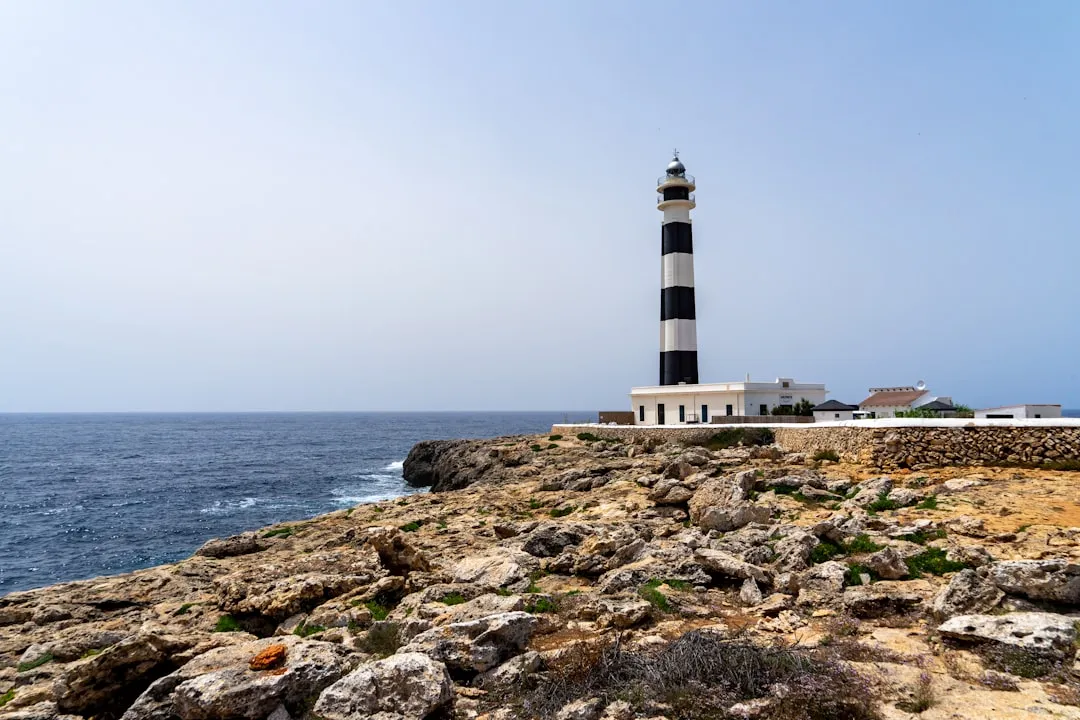
Stage 3: Es Grau to Favàritx (8.6 km, ~2.5 hours, easy). Inside the S’Albufera des Grau Natural Park, the island’s wetland centre. Lagoons, migratory birds, and the black-and-white striped lighthouse of Cap de Favàritx — a genuinely lunar landscape of slate rock. Best in April–May and October when the birds are moving.
For a gentler south-coast sampler, Stage 13: Son Xoriguer to Cala Galdana (7.8 km) passes through Son Saura, Cala des Talaier, Turqueta, and Macarelleta — effectively a walking tour of the south coast’s best beaches, in sequence. In July and August this is busy. In May or October it is empty, silent, and yours.
7. Fornells and the Lobster Stew Ritual
Fornells is a small fishing village on Menorca’s north coast, inside a long narrow bay that is also the island’s premier wind-surfing centre. It is tourist-aware — half the seafront is restaurants — but it is also the last working lobster port on the island, and it is the place where the definitive Menorcan dish is eaten.
Caldereta de llagosta is spiny lobster (llagosta, Palinurus elephas) cooked slowly in an earthenware pot with a sofregit of tomato, onion, green pepper, and garlic, then served in two courses: first the broth poured over toasted bread at the bottom of your bowl, then the halved lobster itself. This is neither paella nor bisque, but a long-cooked coastal fisherman’s stew scaled up into something closer to ceremony.
It is also genuinely expensive. Authentic caldereta is priced by the weight of the lobster, and realistic prices for a single portion of two-person calibre start at €65 and climb above €90 per person at the recognised kitchens. Anything billed as “caldereta de llagosta” under €50 is almost certainly rice cooked in lobster-flavoured stock with shellfish fragments. Do not pay for the imitation.
Sa Llagosta (Carrer de Gabriel Gelabert 12, Fornells) is the island’s standard-bearer. Chef David de Coca trained at Arzak (three Michelin stars, Donostia) and spent years at El Celler de Can Roca (three Michelin stars, Girona) before opening in Fornells. The restaurant is listed in the Repsol Guide with one Sol (renewed 2025). Book two to three weeks ahead in July and August. Expect a €125-per-person bill once wine is included; this is not a budget meal, it is the meal you plan the trip around.
How to get there: TMSA bus L71 Maó–Fornells (approximately 40 minutes); no express line, service reduced November–April. A taxi from Maó is €30–35 one-way.
8. Fortalesa d’Isabel II (La Mola)
At the mouth of Maó harbour, on the northern headland, stands the largest 19th-century European coastal fortress still surviving in original form. The Fortalesa d’Isabel II — locally known as La Mola — was begun in 1848 after Britain lost Menorca for the final time (1802) and Spain decided it could never again be taken by sea. Completed in 1875, the fortress covers 2.4 square kilometres. The Krupp cannons installed in 1891 still mount the eastern ramparts; the underground powder magazine and the tunnel network beneath are both Victorian-era.
La Mola has never fired a shot in anger. The fortress was still an active military base until the 1960s, then used as a prison and intelligence post under Franco. It was opened to the public in 2005.
Price: €8 adult (guided tour), €6 self-guided
Hours: Daily from 10:00 in season; last entry 18:00 in summer, 16:00 in winter.
Access: A car is the only practical way to get there (no bus). Parking is free inside the fortress grounds. Closed-toe shoes essential — the ramparts are uneven and the tunnels unlit in places.
Website: fortalesalamola.com
9. The South Coast Calas — The Instagram Circuit, Honestly
These are the beaches you came for. They are genuinely among the most beautiful in the Mediterranean. They are also, in July and August, the single most stressed ecosystem on the island. Here is how to navigate the circuit without ruining either your day or the beach.
Cala Macarella and Cala Macarelleta are the iconic pair — twin coves separated by a short coastal path, both fringed by pines, both with the ultra-fine white sand and ultra-saturated turquoise water that define the postcard. Macarella has a single low-key chiringuito and some shade; Macarelleta has neither and is clothing-optional. In high season these beaches can be genuinely crowded by 10 a.m. and untenable by noon.
Access, high season (June 1 – September 30):
– Private cars are prohibited on the access road. A police checkpoint enforces this.
– The official shuttle bus runs from the Ses Ametlles car park in Ciutadella to the Macarella parking every 20 minutes, 08:30 to 20:20. Return ticket €8.40; book online in advance in July–August.
– Alternative: TMSA bus line 51 or 52 from Ciutadella or Maó to Cala Galdana, then walk the Camí de Cavalls coastal path (approximately 45 minutes) to Macarella. This is the authentic route and it is free.
Cala Turqueta — just west of Macarella, reached by a separate unsurfaced track. Parking is limited and may fill by 11 a.m. in July and August; when full, cars are turned back. Smaller than Macarella, usually slightly less crowded, spectacular water. There is nothing on the beach — bring everything.
Cala Galdana — the largest south-coast beach, with full resort infrastructure (hotels, parasols, showers, restaurants, a bus stop). For families with small children or visitors with limited mobility, this is the most practical south-coast beach. Less photogenic than its neighbours, but the walking access to Macarella and Mitjana is excellent.
Cala Mitjana — ten minutes east of Cala Galdana on the Camí. Beautiful small cove, popular cliff-jumping spot, free parking but walk-in only (15 minutes from the road).
10. The North Coast Calas — The Alternative You Should Actually Pursue
Menorca’s north coast is the other island. The geology is different (red sandstone, dark basalt, jagged rock formations), the water colder (northern exposure, deeper), the vegetation wilder (no pines, just low resistant scrub), and the crowds a fraction of the south. The Tramontana wind blows harder here, which is exactly why it is quieter. Locals call it the cap de banda — the untameable end.
If you only have one north-coast day, go to Cala Pregonda and Binimel·là, reached together. Park at Binimel·là (free; occasional shuttle from Es Mercadal in high season), walk the Camí de Cavalls west for 45 minutes, and you are standing on a red-sand beach fringed by basalt outcrops with a view of a small island that looks like a pyramid rising from the sea. Binimel·là itself is a wider, darker beach with basic beach-bar service in summer. The combination of the two is, in my view, the finest half-day you can spend on a Menorcan beach.
Other north-coast picks:
– Cala Pilar — the wildest of them all, reached by a 2-kilometre walk from a rough parking area near Ets Alocs. No infrastructure. Sandstone cliffs. You will probably have it to yourself outside August.
– Cala Cavalleria — the black-and-white lighthouse of Cap de Cavalleria is Menorca’s northernmost point; the nearby beach is sheltered, twin-cove, with genuinely clear water and a food truck in season.
– Platja de Cala Tortuga (inside S’Albufera des Grau Natural Park) — remote, completely undeveloped, 40-minute walk from Favàritx lighthouse. Bring water.
Menorca’s Villages and Towns
Menorca has two cities — Maó (the current capital, eastern end) and Ciutadella (the old capital, western end) — and five inland villages spaced along the single central road. The interior villages are where the island lives.
Maó (Mahón) — The Georgian Capital
The seat of the Consell Insular, the airport’s nearest town, and the historical British creation. Maó is quieter than Ciutadella — less postcard, less pedestrian, more administrative — but it has the island’s best market, the Xoriguer distillery, the Hauser & Wirth ferry, the Lazareto boats, and the long harbour promenade that comes alive from 20:00 onwards. Two days here is correct; a week would be too many.
Ciutadella — The Medieval Heart
The aristocratic old capital, the fiesta town, and the base for the south coast beach circuit. Ciutadella is where you spend your evenings: Plaça des Born, Ses Voltes (the arcaded main street), the cathedral square, and the small harbour at the foot of the old town, which is ringed with restaurants and bars. In high season the town is busier than Maó; out of season it is quieter than Maó. Choose your visit accordingly.
Es Castell — The Harbour Extension
The British-built town at the south entrance to Maó harbour (originally called Georgetown, for King George III). Small, grid-planned, and home to Cales Fonts — the pretty port cove that empties in the day and fills with restaurants at night. This is where the Lazareto boats depart.
Alaior — Cheese Country
Fifteen kilometres west of Maó on the central road, Alaior is the traditional centre of the Mahón-Menorca DOP cheese industry. The Coinga cooperative, which aggregates milk from most of the island’s dairy farms, has its main cheese plant here. Alaior is also the old shoe town — the avarca sandal industry, now stocked across Spanish department stores, is concentrated in and around Alaior.
Es Mercadal — The Geographic Centre
Home to Monte Toro, the island’s highest point (358 m) — a short drive or bus up from the town to a 17th-century Augustinian convent with 360° views of the entire island. On a clear day you can see Mallorca to the west. Es Mercadal has a decent Saturday morning market and is the right base for Fornells day trips (12 km north) and the north coast beach circuit.
Ferreries — The Shoe-and-Cheese Village
The prettiest of the interior villages, Ferreries sits in a shallow valley below Santa Àgueda hill (264 m), the island’s third-highest point. Hort de Sant Patrici is two kilometres outside town — cheese factory tours three mornings a week (confirm at santpatrici.com), an excellent farm shop, and the boutique hotel Ca Na Xini inside the estate. The Saturday morning market is small but genuinely local.
Sant Lluís — The French Imprint
South-east of Maó, Sant Lluís was founded during the seven-year French occupation (1756–1763) as a garrison town for French settlers. The town’s grid plan and the small whitewashed houses reflect that origin. The surrounding area has some of the island’s best small vineyards — Binifadet is the largest and runs excellent lunchtime wine-and-tapas experiences in season.
Where to Stay in Menorca — By Budget
Menorca’s accommodation market is strongly seasonal. In high season (June to September) expect to pay 40–60% more than the shoulder season, and expect availability to vanish by April for any week around Sant Joan. Out of season (November to March) a substantial number of hotels, villas, and apartments are closed; Ciutadella and Maó town-centre options stay open year-round, beach resorts do not.
Budget (€60–110 per night, double)
- Hostal La Isla (Ciutadella, central old town). Simple family-run guesthouse, clean rooms, ten minutes from Plaça des Born. Best value in town.
- Hostal Orsi (Maó, central). Classic 1960s pensión, renovated rooms, extraordinary central location.
- Menorca’s agroturismo farmstays off-season — many of the interior rural hotels drop to €70–90 per night in April and October. Agroturismosmenorca.com is the cooperative platform.
Mid-range (€130–260 per night, double)
- Can Alberti 1740 (Maó). Restored 18th-century mansion, eleven rooms, discreet design, a short walk from the harbour. The most characterful town-centre option in Maó.
- Ca Na Xini (Ferreries, at Hort de Sant Patrici). Eight-room boutique farmstay on the working cheese and wine estate. Genuinely quiet; the restaurant draws from the estate’s kitchen garden.
- Hotel Tres Sants (Ciutadella, old town). Small restored mansion, rooftop pool, intelligent modern design inside a 17th-century shell.
Luxury (€350–900+ per night, double)
- Torralbenc (Alaior, rural). A cluster of whitewashed talaiot-era farmhouses converted into a Relais & Châteaux hotel by Barcelona designer Lázaro Rosa-Violán. The restaurant is excellent; the pool looks out over vineyards.
- Menorca Experimental (Sant Lluís area). The island outpost of the Paris-based Experimental Group, in a restored 19th-century estate. Design-led, young crowd, good cocktail bar.
- Cugó Gran Menorca (Sant Lluís). Eleven-suite country house hotel with one of the most recognised tasting menus on the island.
- Vestige Binidufà (north coast, opens 30 April 2026). New boutique hotel from the Vestige Collection, with the vegetarian restaurant Mesura on-site, sourcing from neighbouring farms.
- Hotel Indigo Menorca (Maó harbour-side, opens summer 2026). IHG’s first Menorca property; port-facing terraces, outdoor pool.
Where NOT to Stay
Most large resort strips on the south coast — Cala en Porter, Son Bou, Cala Blanca — were built in the 1970s for package tourism and show their age. They are not unpleasant, but they are not Menorca. Unless you need an all-inclusive with children, base yourself in Ciutadella, Maó, or an interior agroturismo, and treat the south-coast beaches as a day trip.
Balearic Tourist Tax (Ecotasa)
The regional government charges a sustainable-tourism tax on all accommodation. In 2026, high-season (May to October) rates are approximately:
– €0.50–1.00 per person per night for hostels, apartments, and 3-star hotels
– €1.50–3.00 per person per night for 4-star and 4-star superior hotels
– €4.00 per person per night for 5-star and luxury
– Plus 10% VAT.
– Low season (November 1 – April 30): up to 75% discount.
– From night 9 of the same stay: 50% discount on the nightly rate.
Most hotels collect the tax at checkout, separate from the room price. Budget roughly €2 per person per night for most stays.
Where to Eat in Menorca
Menorca does not have a Michelin-starred restaurant in the 2026 guide. Neighbouring Mallorca has twelve, Ibiza has three, and Menorca has zero. This tells you everything and nothing.
What it tells you: Menorca’s restaurant culture is built around the fishing port, the village butcher, the cheese dairy, and the farm estate. Fine dining here means a three-hour lunch at an agroturismo, not a twelve-course tasting menu at a design hotel. The island’s best chefs are conservatives — they cook with local sobrasada, local cheese, local lobster, local beef, and they do not feel any pressure to plate like the peninsula. This is a feature.
What it does not tell you: Menorca is easy on the palate. Several kitchens on the island would hold a star comfortably in another region. The two names to know are Mon in Ciutadella (chef Felip Llufriu, contemporary Menorcan with Catalan and French technique, set in a restored 1935 Art Deco building that is also a small hotel) and Smoix, which relocated in 2024 to Hotel Rural Sant Ignasi (outside Ciutadella) and continues to be recognised in the Michelin Guide as contemporary Menorcan cooking of seasonal produce.
The Dishes to Know
- Caldereta de llagosta — spiny lobster stew. Fornells is the temple. See attraction #7.
- Sobrasada — spreadable cured pork sausage, Mallorcan in origin but made widely here. Eat on toast with honey.
- Mahón-Menorca cheese (DOP) — cow’s milk, square-shaped, rind-painted orange with pimentón. Ask for curat (6–10 months) or semicurat (2–6 months) depending on preference.
- Ensaïmada — lard-pastry coil dusted with icing sugar. Breakfast standard.
- Coca de verdura — flatbread with roasted vegetables, sold everywhere.
- Arrós de la terra — wheat-grain (not rice) pilaf with pork belly and vegetables; an inland, agrarian counterpoint to the coast’s lobster focus.
- Perol de caragols — snails stewed with pork, served traditionally at fiestas.
- Formatjades — small enclosed pastries filled with cured meat or sobrasada. The best are sold from the Maó market bakers at 8 a.m.
Budget Eats (€8–20 per head)
- Ca n’Aguedet (Es Mercadal). Working-lunch canteen from a family that has been running it for generations. A €15 three-course menú del dia with proper Menorcan cooking. Go at 13:30 or not at all.
- Maó market (Claustre del Carme). Cheese, bread, tomatoes, cured meat — a €8 picnic assembled by you, eaten at the mirador.
- Bar Roma (Ciutadella). Old-school tapas bar near the cathedral. Standard-issue Spanish repertoire, very reasonable prices, locals at the bar.
Mid-range (€30–55 per head)
- Es Tast de na Silvia (Ciutadella). Market-driven small-plates, slow-food movement, menu changes weekly.
- Molí des Comte (just outside Ciutadella). A windmill converted into a rural restaurant; grills and seasonal produce, outdoor terrace.
- Binifadet (Sant Lluís). Winery lunches on a terrace overlooking the vines. Good tapas, their own rosé.
- La Minerva (Maó harbour). Long-standing harbourside classic. Fish, paella, linen tablecloths, sunset.
Special Occasion (€80–160 per head)
- Sa Llagosta (Fornells). Caldereta de llagosta; see attraction #7.
- Mon (Ciutadella). Contemporary Menorcan, chef Felip Llufriu. Tasting menu or à la carte. Book one to two weeks ahead in high season.
- Smoix (Hotel Rural Sant Ignasi, outside Ciutadella). Langoustine ravioli and cod loins are the signatures. Michelin Guide-recognised.
- Torralbenc (Alaior). The agroturismo restaurant, open to non-guests by reservation. Seasonal tasting menu, vineyard terrace.
- Cugó Gran (Sant Lluís). Ambitious Menorcan tasting menu, most design-forward of the island’s rural hotels.
Avoid
- Any restaurant on Ciutadella’s harbour-front promenade advertising “caldereta de llagosta – €25”. It is not real caldereta; it is a rice dish.
- The big signposted resort restaurants in Cala en Porter, Cala Blanca, and parts of Son Bou. Mass-market, over-priced, under-cooked. If you are staying in these resorts, drive inland for dinner.
- Any “paella valenciana” offered as a set menu at lunch. Paella is a Valencian dish, it takes 40 minutes to cook fresh, and it is not the point of coming to Menorca.
Gin, Pomada, and the Menorca Drinks Culture
The British gave Menorca three things that outlived them: the road network, the long sash window, and the gin.
Xoriguer Gin has been made in Maó by the Pons family for several generations, carrying a distilling tradition that began under British rule in the eighteenth century. It is made from wine alcohol — not grain — distilled over juniper in copper pot stills, several of them more than a hundred years old and still in daily use. The gin is protected by the Gin de Mahón geographical indication; only Xoriguer holds the designation.
The drink that matters is pomada — Xoriguer gin cut with Spanish-style cloudy lemonade. It is drunk by the plastic-cup-full at fiestas (Sant Joan in Ciutadella, Verge del Carme in the harbour villages, Sant Jaume in Es Castell), served in bars all summer, and is the single most Menorcan thing you can order. A decent pomada at a plaza bar in Ciutadella runs €4–5. At the fiestas, a plastic-cup pomada is €3–4 from the temporary bars set up on every corner.
The Xoriguer Tasting Room
The distillery shop at Moll de Ponent 93, Maó, offers a free in-and-out tasting of the full range — the flagship Mahón gin, the pomada, and the fruit liqueurs (palo, calent, herbes). This is not the €15 one-hour guided distillery tour (available via GetYourGuide); it is simply the shop, which has a tasting counter.
Summer hours (June to September): Monday–Friday 08:00–19:00, Saturday 09:00–13:00. Closed Sunday.
Winter hours: Monday–Friday 10:00–18:00, Saturday 10:00–14:00. Closed Sunday.
Confirm at: +34 971 362 197 or xoriguer.es
Beyond Gin
- Wine — small but growing. The Vi de la Terra Illa de Menorca denomination covers 15+ producers. Binifadet (Sant Lluís), Hort de Sant Patrici (Ferreries), Ses Terrasses, and Torralbenc’s own vineyard are the names to know. Try the rosés in summer; the reds in autumn.
- Beer — Cervezas Lowlander, Es Drac, and Grahame Pearce are small island breweries. Stocked at better restaurants; not yet in the supermarkets at scale.
- Herbes and palo — bitter herbal liqueurs, drunk as digestifs. An acquired taste.
Getting Around Menorca
Menorca is 50 kilometres long and 18 wide. A car is the easiest way to see it thoroughly, but not the only way. Public transport works, the island is flat enough to cycle, and a week with a bike and the bus network is entirely feasible for a fit traveller.
From the Airport (MAH)
- Public bus, line L10, runs from Menorca Airport to Maó Bus Station. Journey time 15 minutes; departs every 30 minutes approximately 05:45–23:00; ticket €2.60 one way. Bought on the bus or from the airport kiosk. No connection to anywhere other than Maó; if you are going elsewhere, you connect at Maó bus station.
- Taxi to Maó runs €15–20; to Ciutadella €55–70; to Cala Galdana or Son Bou €40–55.
- Pre-booked shuttle via Shuttle Direct, Jayride, or Hoppa — typically €30–45 per vehicle one-way to anywhere on the island.
- Car rental — desks in the arrivals hall. Book ahead; in July and August the island effectively runs out of cars by mid-morning.
Buses (TMSA)
- TMSA (tmsa.es) is the public bus network — well-run, punctual, affordable. Buy tickets on the bus (cash or card) or online.
- Line L01 is the local Maó–Ciutadella service, with multiple stops, approx. 60 minutes.
- Line L14 is the express Maó–Ciutadella, no intermediate stops, 45 minutes. Monday to Friday only; no service on Saturdays, Sundays, or fiesta days.
- Summer-only lines serve the south-coast beaches: L51 and L52 to Cala Galdana from Ciutadella and Maó respectively; the Macarella shuttle from Ciutadella (€8.40 return). Operate June to September.
- North-coast lines (L71 to Fornells, lines to Es Grau, Favàritx) run reduced service in winter.
Car Rental
- Budget €35–70/day for a small car in shoulder season; €75–130/day in July and August.
- The speed limit on most rural roads is 50 km/h; the main Me-1 between Maó and Ciutadella is 80 km/h.
- Fuel — petrol stations are limited outside Maó, Ciutadella, and Alaior. Do not let the tank drop below a quarter when touring the coast.
- Cala access — private cars are prohibited from accessing most south-coast calas from 1 June to 30 September. Park-and-ride from Ciutadella (Ses Ametlles) or Maó during this window.
Ferries
- Barcelona–Maó (Baleària, Grimaldi): 8.5-hour overnight crossings, from approximately €45 foot passenger, €140+ with car.
- Valencia–Maó (Baleària): 12–15 hours, less frequent.
- Alcúdia (Mallorca)–Ciutadella (Baleària, Trasmediterránea): 60-minute fast ferry, 2.5-hour slow ferry, from €30 foot passenger. Practical for island-hopping.
- Ferry frequencies increase in summer (new 2026 capacity confirmed by both Baleària and Grimaldi).
Walking and Cycling
- Camí de Cavalls as covered in attraction #6 — 185 km coastal path, free, open to walkers, mountain bikers (some stages), and riders.
- Bike hire from most towns; €15–25/day for a hybrid. Velos Joan in Ciutadella and Bike Menorca in Maó are long-established.
- The island is flat enough that a bike genuinely works as a primary transport mode out of season.
Best Time to Visit Menorca
The sweet spot is late May through early June, and September through the first week of October. Water temperature is above 21 °C in both windows, the sun is reliable, flight prices are moderate, accommodation runs at 60–70% of peak rates, and the beaches are not under quota management. In early June you also catch the lead-up to Sant Joan (the Diumenge des Be is on 21 June 2026), which is the best soft-opening to the fiesta calendar.
Season by season:
Winter (December–February) — cold (11–14 °C), genuinely windy (the Tramontana blows hard), most beach resorts closed, but Maó and Ciutadella open and almost entirely to themselves. Accommodation prices at their lowest. Camí de Cavalls walking is at its best — empty, green, with flowering winter wildflowers.
Spring (March–May) — the island greens up. By mid-April the agroturismos re-open, the almond blossom is finished but the fields are full of wildflowers, and the water reaches swimmable by the last week of May. Easter week is busy (Spanish holiday); either side of it is peaceful.
Summer (June–August) — peak. Sant Joan (23–24 June) is the highlight of the calendar. July and August are hot (27–30 °C high), busy, and expensive. If you must come in high summer, book accommodation by February, rent a car by March, and plan south-coast beach visits for 17:30 onwards.
Autumn (September–November) — September is arguably the best single month: warm water, low crowds, reliable sun, fiesta-free calm. October is changeable; the Tramontana often reasserts itself by mid-month. November brings the rainy season (84 mm average, the wettest month) and many beach resorts close for the season.
Menorca Weather Month by Month
Temperatures are averages at Maó (similar across most of the island; Ciutadella runs 1–2 °C warmer in summer).
| Month | High / Low (°C) | Rainy days | Key events and notes |
|---|---|---|---|
| January | 14 / 7 | 8 | Quietest month. Tramontana peaks. Most resort hotels closed. |
| February | 14 / 7 | 7 | Almond blossom mid-month. Cool walking weather. |
| March | 16 / 8 | 7 | Spring begins. Agroturismos start re-opening. Easter busy if late in month. |
| April ⭐ | 18 / 10 | 7 | Ideal for Camí de Cavalls. Wildflowers peak. Water too cold to swim. |
| May ⭐ | 22 / 13 | 5 | Swimming begins end of month. Low crowds, soft shoulder pricing. |
| June | 26 / 17 | 3 | Sant Joan 23–24. Season fully open. Last shoulder pricing until October. |
| July | 29 / 20 | 1 | Peak tourism. Driest month (4 mm). Beach quotas active. Hot midday. |
| August | 30 / 21 | 2 | Hottest and busiest. Verge del Carme and town fiestas throughout month. |
| September ⭐ | 27 / 19 | 5 | Best single month. Warm water, lower crowds, restaurants still open. |
| October ⭐ | 23 / 15 | 7 | Last reliable swimming week. Camí de Cavalls at its best. |
| November | 18 / 12 | 9 | Rainy season (84 mm). Beach resorts begin closing. |
| December | 15 / 8 | 8 | Low and quiet. Good for city-break Maó/Ciutadella. |
Source: AEMET (Spanish State Meteorological Agency), Mahón Airport station.
Daily Budget Breakdown
All figures in EUR. Rates reflect summer 2026 market pricing; shoulder-season deduct 30–40%.
| Category | Budget | Mid-range | Luxury |
|---|---|---|---|
| Accommodation (per couple) | €60–110 | €130–260 | €350–900 |
| Meals & drinks (per person) | €25–35 | €55–80 | €120–220 |
| Transport (per group per day) | €5–15 bus/walk | €45–75 car | €80+ car / taxis |
| Activities & entries | €5–15 | €20–40 | €60–120 |
| Ecotasa (per person per night) | €0.50–1.00 | €1.50–3.00 | €4.00 |
| Daily total (per person, double occ.) | €60–90 | €130–200 | €300–600 |
Budget: Hostal or simple agroturismo, self-catering picnics from Maó market, a restaurant lunch, bus and walking, one paid attraction per day.
Mid-range: Boutique town hotel or mid-tier agroturismo, rental car shared, one menu-del-dia lunch and one €40-per-head dinner per day, two or three paid attractions.
Luxury: Torralbenc, Menorca Experimental, Cugó Gran. Driver or premium rental. Caldereta at Sa Llagosta or tasting menu at Mon. Private Camí de Cavalls guide. Yacht day.
Sample Itineraries
3-Day Essential
Day 1 — Maó and Illa del Rei
– 08:30 — Breakfast at a harbour café (ensaïmada + café con leche, €4).
– 09:30 — Claustre del Carme market. Cheese tasting, buy cured meat and tomatoes for a picnic later.
– 11:00 — Xoriguer distillery shop and free tasting.
– 12:00 — Hauser & Wirth ferry from Moll de Llevant 61 to Illa del Rei (€10 return). Gallery + Cantina lunch.
– 16:00 — Return ferry. Walk Costa de Ses Voltes and the port.
– 18:00 — Rest at hotel.
– 20:30 — Dinner at Ses Voltes or La Minerva. Pomada nightcap at Nelson’s Bar.
Day 2 — Talayotic Menorca and Ciutadella
– 09:00 — Drive (or bus + taxi) to Naveta des Tudons. Free on Mondays, otherwise €2.
– 10:00 — Torralba d’en Salort. Taula and talayot sanctuary.
– 11:30 — Torre d’en Galmés. Largest prehistoric settlement in the Balearics.
– 14:00 — Late lunch in Ciutadella — menú del dia at Es Tast de na Silvia or Bar Roma.
– 16:00 — Walk the old town: Plaça des Born, cathedral, Ses Voltes, harbour.
– 19:00 — Sunset on the cathedral square. Aperitif in Plaça des Born.
– 21:00 — Dinner at Mon (book ahead) or Smoix.
Day 3 — The Calas and the Camí
– 08:30 — Early departure for Cala Turqueta (south coast; turn back if the car park is full, which happens by 11 in high season).
– 11:30 — Walk the Camí de Cavalls coastal path east to Cala Macarelleta and Macarella (45 minutes).
– 14:00 — Beach lunch at the Macarella chiringuito or packed picnic.
– 16:30 — Swim, nap, then walk back toward Cala Galdana for the late-afternoon ferry pick-up.
– 19:00 — Dinner in Fornells (Sa Llagosta, if you’ve booked; otherwise a port-side grill).
– 21:30 — Star-gazing on the Fornells quay.
Day 4–5 Add-Ons
Day 4 — North coast day. Drive to Cap de Cavalleria lighthouse, walk a segment of Camí Stage 6 (Binimel·là to Cala Pregonda), swim at Pregonda. Afternoon: Fortalesa La Mola guided tour. Dinner in Es Castell at Cales Fonts.
Day 5 — Cheese and wine day. Morning: Hort de Sant Patrici (Ferreries), cheese factory tour and farm shop. Afternoon: Binifadet winery (Sant Lluís), tasting and tapas. Evening: Monte Toro sunset (island’s highest point, 358 m, panoramic). Late dinner back in Maó.
One Week (7 Days)
Combine the 3-day essential with both add-ons, plus one day for the Lazareto guided tour (Tuesday, Thursday, Saturday, or Sunday — book in advance) and one full day walking either Stage 3 (Es Grau to Favàritx) or Stage 6 (Binimel·là to Cala Pilar) of the Camí de Cavalls.
One Fortnight
Do the full week above, then add: two full days on the Camí de Cavalls with luggage transfer (Camí de Cavalls 360°), a ferry day trip to Alcúdia in Mallorca, a cooking class at one of the agroturismos, and — if your visit overlaps — the summer festivity of the harbour village you’re near (Verge del Carme, 16 July in Fornells and Es Castell; Sant Jaume, 25 July in Es Castell; Sant Llorenç, 10 August in Alaior).
Best Day in Menorca Under €25
Menorca will not beat Cairo or KL on absolute budget — this is a Balearic island in euro pricing — but a disciplined foot-and-bus day in Ciutadella costs genuinely little, and you will feel you got the island.
- Bus from your accommodation to Ciutadella — TMSA L01 from anywhere inland, ~€5 return if staying near the central road; free if you’re already in Ciutadella.
- Morning at the Mercat del Peix (Ciutadella’s harbour fish market, most mornings except Sunday). Watch the sale, then pick up bread, cheese, tomatoes, and fruit from the adjacent municipal market. Picnic supplies: €7.
- Walk to the cathedral and Plaça des Born. Free.
- Walk south to Cala Blanca via the Camí de Cavalls — approximately 35 minutes through pine woods and over scrubland. Free.
- Swim, eat the picnic, read a book. All free.
- Walk back to town via the coastal path. Free.
- Pomada and tapas at a Plaça des Born bar at sunset: €8–12.
- Return bus to your accommodation: €5.
Total: €20–24 per person. You will have seen the old town, swum at a beach the postcards don’t feature, eaten a market lunch, and had your island drink in the square where the horses rear at Sant Joan. If you time this for a Monday, add a €3 taxi detour or bus connection to Naveta des Tudons — free Monday entry — for less than €30 all-in, and you add a UNESCO World Heritage site to the day.
Hot Summer Day Plan
In July and August the midday heat on exposed limestone can hit 33 °C by 14:00, and the south-coast beaches lose half their capacity. The Menorca trick is to split the day around the heat.
07:30–11:00 — Early beach, ideally north coast (cooler wind). Cap de Cavalleria or Binimel·là are good bets. You will have the beach largely to yourselves.
11:30–16:30 — Retreat indoors. Options, ranked:
– Lunch in Alaior or Es Mercadal at a proper air-conditioned restaurant; follow with a siesta at the hotel.
– Lazareto guided tour (Thursday or Saturday 10:00 boat): the harbour is cooler than land, the wards are shaded, and the visit runs through the worst of the heat.
– Hauser & Wirth gallery visit: white Georgian rooms, air conditioning, a lunch at Cantina.
17:30–20:30 — Return to beaches. By 17:30 the Instagram crowd is leaving the south coast. The light goes gold, the water warms, and you get Macarella or Turqueta at one-third of midday capacity.
21:00 onwards — Dinner late, outdoors. Fornells port, Es Castell harbour, Plaça des Born. The sea breeze drops after 22:00, which is when Menorcans eat.
Budget version of the above: L10 bus + L51 to Cala Galdana (~€10 return), picnic from Ciutadella market (€10), walking swim at Macarella (free), menú del dia at a village bar on the way back (€15), pomada at sunset in Plaça des Born (€4). Total: €39.
Day Trips from Menorca
Menorca is small enough that most of the “day trips” are really just other parts of the same island. The one genuine external day trip is:
Alcúdia, Mallorca (by ferry) — the fast ferry from Ciutadella to Alcúdia takes one hour. Once in Alcúdia, the Roman town of Pollentia, the medieval walled old town, and the long beach of Platja d’Alcúdia are all reachable on foot or by local bus. This is a practical day trip if you are on the island for ten days or more and want a change of scale; it is not a substitute for seeing Menorca itself. From €30 foot-passenger return.
The island itself has five distinct day-trip “regions” that change the feel of your trip:
- The Talayotic circuit (Naveta des Tudons + Torralba d’en Salort + Torre d’en Galmés). Half-day with a car.
- The north coast calas (Cap de Cavalleria, Binimel·là, Cala Pregonda). Full day.
- The south coast calas (Cala Galdana + Macarella + Turqueta). Full day in shoulder season, morning + late-afternoon in high summer.
- The interior cheese and wine day (Hort de Sant Patrici + Binifadet + Monte Toro at sunset). Full day.
- La Mola + Es Castell + the Lazareto. Full day, needs boat booking.
Menorca Safety and Practical Information
Menorca is one of the safest destinations in the Mediterranean. Violent crime against tourists is vanishingly rare; the principal risks are pick-pocketing in peak-season Ciutadella and Maó (rare) and — far more commonly — road accidents on the country lanes after dark.
Genuine risks worth knowing:
– The Tramontana wind. Violent gusts can rise in under an hour, especially October to April. Check the forecast before any north-coast walk or ferry. If the catamaran harbour tour is cancelled, it is because the wind is above 25 knots — respect it.
– Undertow on the north coast. Beaches like Cala Pregonda and Cavalleria can have strong currents in windy weather. No lifeguards. Swim within the first breakwater line.
– Midday sun on exposed rock (Camí de Cavalls in July–August). Two litres of water minimum for a half-day walk; more for a full stage.
– Rental-car incidents on narrow country roads. Drive slowly. Pull into the shoulder for oncoming cars on single-track roads rather than forcing the issue.
Money
- Currency: Euro (€). All cards accepted almost universally; smaller inland villages may be cash-only at small stalls.
- ATMs in all towns and larger beach resorts. Avoid the private “Euronet” ATMs in tourist zones — they charge €4–6 per withdrawal.
- Tipping is not expected. 5–10% on a restaurant bill is generous and warmly received. Round up on taxis and cafés.
Language
- Catalan (Menorquí dialect) is the island’s first language; Spanish (Castellano) is universally spoken.
- English is widely spoken in tourism-facing contexts (hotels, restaurants, car rental) and in Ciutadella and Maó generally. Less so in inland villages and with older residents.
- A few words go a long way: bon dia (good morning), gràcies (thank you), si us plau (please), una pomada, si us plau (a pomada, please).
Connectivity
- EU roaming: your UK/EU SIM works without surcharge. 4G/5G coverage excellent on the main road, patchy on the Camí de Cavalls, absent in some north-coast coves.
- Free public WiFi in most libraries, tourist offices, and the bigger beach resorts.
Tourist Offices
- Maó: Plaça de la Constitució 22 (near the town hall)
- Ciutadella: Plaça de la Catedral 5
- Menorca Airport (MAH): arrivals hall, in season only
Emergency Numbers
- Pan-European emergency: 112 (fire, police, medical — English support)
- Coastguard (Salvamento Marítimo): 900 202 202
- Hospital Mateu Orfila (Maó): +34 971 48 70 00
Visa and Entry Requirements
Menorca is part of Spain, which is part of the Schengen area. Standard Schengen rules apply.
EU / EEA / Swiss nationals: National ID card or passport. No visa. No time limit.
UK nationals: Valid passport (not expiring within 6 months of your travel dates). No visa for stays up to 90 days in any 180-day period across the Schengen zone. Once ETIAS launches, ETIAS (European Travel Information and Authorisation System) will be required — a €20 online pre-authorisation valid for three years. ETIAS will become mandatory in 2027 after a transitional period of at least six months. Check the official ETIAS portal (travel-europe.europa.eu) before booking.
US / Canadian / Australian / NZ nationals: Valid passport (6-month validity beyond travel). 90 days visa-free in any 180-day period, Schengen-wide. ETIAS requirement Once ETIAS launches, same rules as UK.
EES (Entry/Exit System): The EU’s biometric border system has been in gradual rollout since 12 October 2025 and is fully operational at all Schengen external borders from 10 April 2026. On entry you will have fingerprints and a face photo registered; subsequent entries reuse the record. Allow extra time at the border for your first post-April 2026 entry.
Citizens of countries requiring a Schengen visa must obtain it before travel from a Spanish consulate.
Hidden Menorca
Five places that don’t make most published itineraries.
Pedrera de s’Hostal (Líthica), Ciutadella. A disused sandstone quarry on the outskirts of Ciutadella that has been slowly transformed since 1994 by the non-profit Líthica into a botanical and architectural park. Labyrinthine corridors of cut stone, gardens planted in quarried voids, and an open-air concert venue in summer. €6 entry. One of the most quietly profound places on the island.
S’Albufera des Grau Natural Park. Menorca’s wetland reserve — lagoons, migratory birds, the fishing village of Es Grau. The small reserve centre has a free introductory exhibition. The Camí de Cavalls Stage 3 walks through the reserve to the Favàritx lighthouse.
The Ecomuseu de Cap de Cavalleria. A small archaeology and ethnography museum at the northernmost point of the island, inside a restored finca. Roman shipwreck artefacts, talaiotic fragments, a history of the salt pans. €4.
The Centre de Geologia, Ferreries. Two rooms of Menorcan geology — dinosaur fossils, the island’s tectonic history, the Tramontana explained. Free. Two minutes from Hort de Sant Patrici.
Cementiri de Sant Lluís. The 18th-century French cemetery, recently restored, accessible most mornings. A quiet 20-minute walk from Sant Lluís. The Gothic mausoleums and Menorcan family histories are a window into an unexpected layer of the island.
Romantic Menorca
- Dinner on the Maó harbour-front at 22:00. Any of the Moll de Llevant restaurants. Lights on the water.
- Sunset at Cap de Cavalleria lighthouse. Drive up, bring a bottle of Binifadet rosé, watch the light fade over the Mediterranean.
- Private boat charter from Ciutadella or Maó — half-day from ~€400 for a couple. Skipper drops you at a cala no road reaches.
- Torralbenc for a slow tasting-menu lunch on the vineyard terrace. Stay the night.
- The cathedral square in Ciutadella at 11 p.m. in May or October — empty, floodlit, silent.
Menorca With Kids
Menorca is one of the most family-friendly destinations in the Mediterranean. Low crime, short distances, excellent beaches, and a genuine child welcome in restaurants (a Spanish trait).
- Son Bou beach (south coast) — the island’s longest beach, gently shelving, dune system, lifeguards, full amenities. The best all-day family beach.
- Centre de la Natura de Menorca, Ferreries — the island’s natural-history centre, small but well-curated.
- Cova d’en Xoroi, Cala en Porter — spectacular cliff-cave complex. Daytime visits are family-friendly (€7 for daytime access with a drink); evening turns into a DJ bar.
- Hauser & Wirth Cantina — kid-welcoming, outdoor seating on a quiet island.
- Camí de Cavalls Stage 13 (Son Xoriguer to Cala Galdana) — flat, coastal, full of beach breaks. Doable in stages with children.
- Fornells kite-surfing lessons — the enclosed bay is a global centre for flat-water wind-surfing and kite-surfing. Kids’ lessons from ~€60.
Practical kids’ notes:
– Beach shoes essential on some rocky calas (especially north coast).
– Hire a car with child seat; Menorca law requires booster seats for children up to 12 or 135 cm.
– Pharmacies throughout the island; suncream is expensive — buy in a supermarket, not a beach resort shop.
What’s New in Menorca in 2026
- Hauser & Wirth Menorca reopens 25 April 2026 with “Martin Creed” (through June), followed by “Directionless” from 21 June.
- Hotel Indigo Menorca (IHG) opens summer 2026 on the Maó harbour-front: the first international-brand four-star hotel in central Maó.
- Vestige Binidufà boutique hotel opens 30 April 2026 in the quiet north of the island, with its in-house vegetarian restaurant Mesura sourcing from neighbouring farms.
- EES biometric border checks fully operational from 10 April 2026. Budget 15–30 extra minutes on arrival.
- ETIAS launch confirmed for a date that has not been announced, not mandatory until 2027.
- Ferry capacity increases from Baleària and Grimaldi on Barcelona–Maó and Valencia–Maó summer routes.
- New direct flights from UK regional airports (Birmingham, Edinburgh, Bristol) and expanded German and Scandinavian services confirmed for summer 2026.
- Balearic ecotasa increases for peak summer months (June, July, August) are expected in 2026, with specific figures to be published by the regional tourism authority. Assume the upper end of the range in your budgeting.
🌍 See the bigger picture: our Spain travel guide covers regions, when to go, and getting around.
Frequently Asked Questions
How many days do I need in Menorca?
Three days covers the essentials (Maó, Ciutadella, one round of south-coast calas). Five days lets you add the Talayotic circuit and one proper day on the north coast. A full week lets you add the Lazareto, a day on the Camí, and a cheese-and-wine day. Two weeks in shoulder season (May or October) is one of the great slow holidays in Europe.
Is Menorca better than Mallorca?
Different. Mallorca has mountains, a medieval capital (Palma) ten times the size of Ciutadella, twelve Michelin-starred restaurants, and a deeper bench of luxury hotels. Menorca is smaller, quieter, better-preserved, and heavier on prehistoric archaeology and British history. If you want cosmopolitan volume, go to Mallorca. If you want seven days without a queue, go to Menorca.
Is Menorca expensive?
Moderately. Accommodation is the biggest variable — high-season beachfront villas are Mallorca-plus pricing, but rural agroturismos in April or October are genuinely affordable. Food costs less than Ibiza and less than the French Riviera. Budget €60–90 per person per day at the low end, €130–200 at the mid-range, and €300+ for luxury. See the budget breakdown.
Can I do Menorca without a car?
Yes, with caveats. The TMSA bus network covers the main towns and the summer beach lines well; you can base yourself in Ciutadella or Maó and reach 80% of the island by bus and walking. The Talayotic sites and the north-coast calas are harder without a car. For a shoulder-season visit of 4–5 days, buses and a bicycle work fine; for a beach-focused summer holiday of a week, a rental car is the faster option.
When is Sant Joan in Ciutadella in 2026?
The main days are 23 and 24 June 2026. The Diumenge des Be (the Sunday before) falls on 21 June 2026. The whole fiesta week runs 21–25 June; fireworks close the fiesta on the night of 25 June. Book accommodation by February if you want to be in Ciutadella itself — it sells out completely. Alternative: stay in Ferreries and take the L14 express bus.
What’s the best day in Menorca on a budget?
Our Best Day Under €25 routine: the Ciutadella Walking Day. Claustre del Carme market picnic + Plaça des Born + a walk to Cala Blanca + pomada at sunset + a menu-del-dia lunch. Under €25 per person if you are disciplined.
Can I climb or enter the Naveta des Tudons?
No — entry is prohibited for conservation reasons. You walk around it on a small path. Admission €2 adult, free on Mondays. Five kilometres east of Ciutadella on the Me-1, parking at km 40.
Is there a Michelin-starred restaurant in Menorca?
Not in the 2026 guide. Mon (Ciutadella) and Smoix (Hotel Rural Sant Ignasi, outside Ciutadella) are Michelin-recognised without stars. For Michelin dining, ferry to Alcúdia or Palma (Mallorca has twelve stars in 2026).
Do I need ETIAS to visit Menorca in summer 2026?
Probably not. ETIAS has no confirmed launch date and will not be mandatory until 2027. EES biometric border registration is fully active from 10 April 2026, but requires no advance application — just a few extra minutes at the border. Check travel-europe.europa.eu before booking late-autumn 2026 travel.
What’s the water like — and when is it warm enough to swim?
Mediterranean water at Menorca reaches 20 °C by mid-to-late May and stays above 20 °C through late October. Peak temperature in August is 25–26 °C. The north coast is 1–2 °C cooler than the south; the Tramontana wind can make the north coast genuinely cold even in July on windy days.
Can I walk the entire Camí de Cavalls?
Yes. The 185-kilometre loop takes 8–10 days at a comfortable pace, or 5–6 days if you are experienced and fit. Camí de Cavalls 360° (camidecavalls360.com) organises luggage transfer and accommodation bookings. Self-organised is possible but requires careful water planning on the north coast.
Explore More Aifly Guides
Cheapest Flights to Menorca