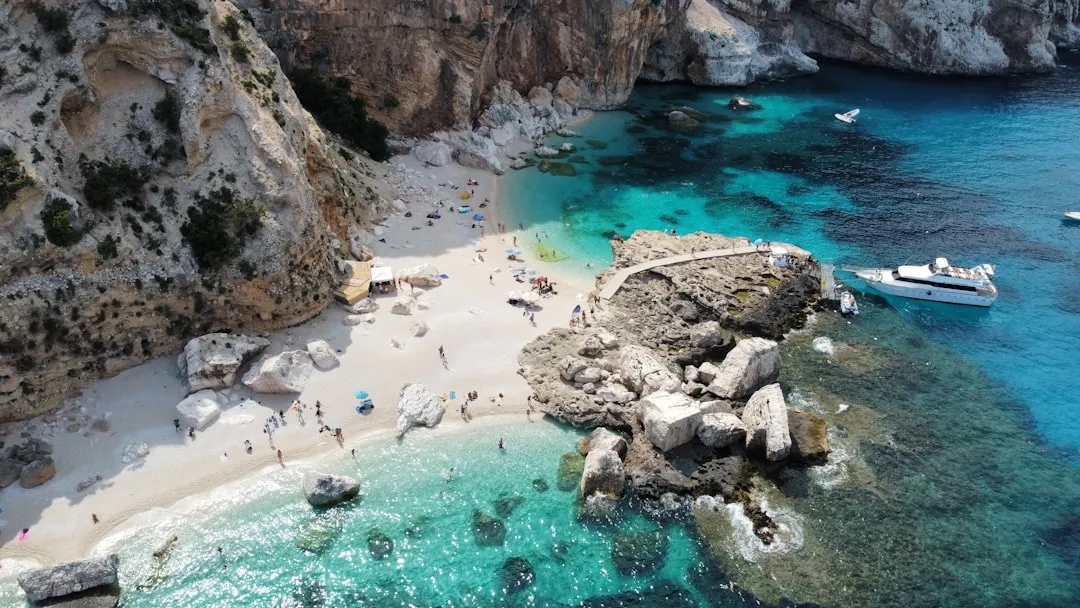
Sardinia — The Complete Island Guide 2026
Three Sardinias on one island — the Postcard coast of Costa Smeralda and Cala Goloritzé, the Real interior of the Barbagia Blue Zone, and the Ancient Sardinia of 7,000 nuraghi and the Giants of Mont’e Prama. An honest guide to all three, for 2026.
OLB ✈️ Olbia
AHO ✈️ Alghero
€70–180/day budget
Mediterranean: 11–32 °C
Schengen / EUR €
UNESCO Barumini
Why Sardinia? An Editor’s Note
The plane banks over the Gulf of Cagliari and you see three things at once: flamingos standing in a salt pan, a fourteenth-century tower on a limestone ridge, and a beach that glows white even through dusty cabin glass. Saltmarsh, stone, shore — those three images turn up everywhere on this island, whether you drive an hour inland or sit still on a beach for six days. You just need to know what you are looking at.
Sardinia sells itself to the world as a beach. That is the first layer, and the most misleading. Call it Postcard Sardinia — the Costa Smeralda, invented from scratch in 1962 by the Aga Khan as a Mediterranean playground for people who own boats; La Pelosa in Stintino with its ankle-deep Caribbean shallows; Cala Goloritzé on the east coast cut into a limestone cliff so white it reads as overexposed. These places are real, genuinely beautiful, and in August they are mostly full of people who have flown in for a week, paid to access them through a reservation app, and seen almost nothing else. Postcard Sardinia is the island’s trap. If your only plan is Porto Cervo in high season, cancel and rebook for late May.
The second layer — Real Sardinia — is what happens thirty minutes inland in any direction. The Barbagia mountains, where villages still sit above the road on defensive rock because that is what Sardinians have done since they first watched Phoenician ships approach the coast and concluded the coast was not safe to live on. This is where the food comes from: culurgiones, ravioli sealed with a pinch that looks like a wheat sheaf; porceddu, suckling pig roasted vertically over myrtle wood; pane carasau, the parchment-thin shepherd’s bread that keeps for a month in a saddlebag. This is where the Blue Zone lives — the cluster of villages in Nuoro province where men reach 100 at rates researchers still argue about, and where the local explanation (red wine, aged pecorino, walking up mountains, never retiring, sitting on benches) has been commercialised to the edge of parody, but the village graveyards are not lying. Real Sardinia is where you will eat the meal you remember six months later.
The third layer — Ancient Sardinia — is older than almost everything tourists visit in the rest of Italy. The nuraghi, conical stone tower-fortresses built between roughly 1800 and 1100 BCE, are unique to this island. No one else in the Mediterranean built anything like them, and no one, still, fully understands why they were built or what happened to the civilization that raised them. There are about 7,000 of them left, sitting in olive groves and on hilltops and in the middle of roundabouts. Su Nuraxi di Barumini, the best-preserved, is a UNESCO site and the only nuragic complex you can enter on a guided tour. The Giants of Mont’e Prama — a set of nearly life-sized stone warrior statues discovered in 1974 and dated to around 900–750 BCE — rewrote what archaeologists thought Bronze Age Mediterranean civilizations were capable of. After thirty years of bureaucratic wrangling they are finally all reunited in a small provincial museum in Cabras. You can be almost alone with them on a Tuesday morning. That is the closest thing on this island to a religious experience.
Who this guide is for. You are not here for a week at Baja Sardinia. You have a flight, seven to fourteen days, and a curiosity about why Sardinia keeps turning up on “underrated” lists. This guide moves you between the three layers — coast, interior, deep past — without pretending the beaches are not the reason you flew here. It names the tourist traps and offers the alternatives. It tells you which access fees are worth paying and which are a tax on laziness. It is written for design-literate travellers who can taste a generic AI travel guide in two paragraphs and close the tab. It assumes you want to eat well, spend less than you think you need to, and come back with a story that is not “we went to Porto Cervo.”
Sardinian, the local language, is among the most conservative Romance languages still in everyday use; in the interior you will hear it more often than Italian.
Table of Contents
- Top 10 Attractions
- The Seven Regions of Sardinia
- Where to Stay — by Budget
- Where to Eat
- Drinking — Cannonau, Vermentino, Mirto, Ichnusa
- Getting Around
- Best Time to Visit
- Month-by-Month Weather
- Daily Budget Breakdown
- Sample Itineraries
- Best Day Under €25
- Hot Day Plan
- Day Trips
- Safety & Practical Information
- Visa & Entry Requirements
- Hidden Sardinia
- Sardinia with Kids
- What’s New in 2026
- Frequently Asked Questions
- Explore More AiFly Guides
Top 10 Attractions
1. Su Nuraxi di Barumini — The Bronze Age Fortress That Changed European Archaeology
In 1949 a Sardinian archaeologist named Giovanni Lilliu started excavating what the villagers in Barumini thought was a natural hill on the edge of town. Over the next seven years he dug up a stone tower-fortress built around 1500 BCE, surrounded by a complex of four secondary towers, a curtain wall, and the footprint of a Bronze Age village that housed perhaps four hundred people. Nobody had ever seen anything like it. In 1997 UNESCO inscribed Su Nuraxi as a World Heritage Site and described the nuraghi as “the most important example of this remarkable form of prehistoric architecture in the Mediterranean.” That is a lot of adjectives for a stack of stones. Stand inside the central tower’s tholos chamber — a stone dome built without mortar, corbelling inward by gravity alone — and you will understand why.
What surprises first-time visitors is that you cannot wander. Entry is exclusively by guided tour, departing roughly every half hour, alternating between Italian and English (and on a good day French, German, or Spanish). This is a feature, not a bug. The guide walks you through the central tower, the four secondary towers, the remains of circular houses with stone benches and hearths intact, and ends at a strange oblong structure where children may have been taught rites. The archaeology is genuinely uncertain in places, and good guides are honest about it. Bad guides give you names and dates; the honest ones will pause and say, “we do not know what this room was for.”
The ticket includes two other sites in Barumini that are almost as good as the main attraction. Casa Zapata is a 17th-century Aragonese aristocratic house built literally on top of a smaller nuraghe, with a glass floor in the main hall revealing the Bronze Age stones below the Baroque parquet. The Giovanni Lilliu Centre is a small but well-curated museum dedicated to the archaeologist who dug Barumini up. Do both. The Casa Zapata glass-floor moment — where you stand on 300 years of colonial Spain looking down through 3,500 years of stacked civilisation — is one of the quietly best things in Italian museum design.
- Price: €15 adult combined ticket (Su Nuraxi + Casa Zapata + Lilliu Centre). Children under 12 free. Reductions for students, over-65s, and families.
- Hours: 9:00–19:30 April to October (last entry 18:30). 9:00–17:00 November to March (last entry 16:00). Closed 25 December and 1 January.
- How to get there: By car — 60 km north of Cagliari on the SS131, about 1 hour. ARST bus 428 runs from Cagliari via Sanluri but turns a one-hour drive into a half-day expedition.
- Accessibility: The central tower’s internal staircase is genuinely narrow and steep — not viable for wheelchairs or reduced mobility. The external site, Casa Zapata, and the museum are all accessible.
- Book: fondazionebarumini.it. Walk-ins work outside July and August, but booking saves you the 11:00 queue.
- Editor’s tip: Check the tour schedule before arriving and skip the Italian-only slots if you do not speak Italian — you will otherwise spend forty minutes missing the entire point. The first English tour is usually 10:30. Bring a hat: the main site has almost no shade, and summer temperatures inside the site touch 35°C.
2. Cagliari’s Castello — Catalan Spain on a Limestone Ridge
Sardinia’s capital has a skyline problem: the old city, Castello, sits on a 100-metre limestone ridge that dominates everything below it, and the view from the Bastione Saint Remy — a monumental nineteenth-century terrace built onto the bastion’s south edge — ruins every subsequent photograph you take on the island. You will keep comparing other views to this one. That is not a problem you need to solve.
Castello was built by the Pisans in the thirteenth century as a fortified acropolis, rebuilt by the Aragonese after 1326, inhabited by successive Sardinian, Spanish, Piedmontese, and finally Italian aristocrats, and is today a walled old city the approximate size of an American high school campus. Every other façade has a Catalan coat of arms above the door. Every third church is medieval. The Cathedral of Santa Maria (twelfth century, redone in Baroque in the seventeenth, stripped back to neo-Romanesque in 1933) is free to enter and contains one of the Mediterranean’s great pulpits — a twelfth-century marble work carved for Pisa Cathedral, then given to Cagliari in 1312. The treasury, tucked behind the main altar, is free with your cathedral visit, and almost nobody goes in. It is full of medieval reliquaries, silver processional crosses, and one extraordinary fifteenth-century Catalan retablo.
Keep walking. Torre dell’Elefante (1307, named for a small marble elephant still visible on the façade, €3 entry, climbable) has the best roof in the city. Piazza Palazzo holds the former vice-regal palace. The National Archaeological Museum on the same square — now that the Giants of Mont’e Prama have been moved to Cabras — still houses some of the most important nuragic bronzes on the island, including the tiny bronze boats and warriors that put Nuragic civilisation on the map before the Giants did. The ridge ends at Torre di San Pancrazio (also 1307, identical sister tower, also climbable, €3).
- Price: Bastione Saint Remy free. Cathedral free (treasury included). Archaeological Museum €9 adult. Torre dell’Elefante and Torre San Pancrazio €3 each.
- Hours: Bastione Saint Remy 24/7 (exterior; closed for private events occasionally). Cathedral 08:00–13:00 and 16:30–20:00. Archaeological Museum 09:00–20:00, closed Monday. Towers 10:00–18:00.
- How to get there: 20 minutes walking up from Piazza Yenne via Via Manno — or take the Elevatore del Bastione, a free glass lift from Via Regina Margherita up to the Bastione terrace.
- Accessibility: Piazza Palazzo and the cathedral are level-access. The bastion is accessible via the free lift. The towers and the archaeological museum’s upper floors are not wheelchair-accessible.
- Editor’s tip: Come at 19:00 in summer for golden-hour on the Bastione — the light hits the Gulf of Angels behind you and the limestone ridge in front. Stay until dark, walk down through Castello’s alleys as the restaurants light up, and eat in Marina below. If you have one evening in Cagliari, this is it. The aperitivo at Antico Caffè (Piazza Costituzione, €8 for a Campari Spritz with serious stuzzichini) is the best pre-dinner stop.
3. Cala Goloritzé — The Beach That Costs €7 and Requires a Two-Hour Hike
Cala Goloritzé is the most beautiful beach on the east coast, and possibly on the whole island. It sits at the foot of the Supramonte limestone cliffs where they drop directly into the Mediterranean on the Gulf of Orosei, backed by a 143-metre rock spire called the Aguglia and fronted by water so transparent that the white pebble bottom is still visible at fifteen metres. It was declared an Italian national monument in 1995. It is also subject to some of the strictest access rules on the island, and that is precisely why it remains worth visiting.
The logistics: 250 people per day, €7 per person, 72-hour advance booking through the Heart of Sardinia app or heartofsardinia.com. The trail opens at 07:30 and closes to new arrivals at 14:00; you may stay on the beach until 17:00. The hike in from the Su Porteddu trailhead is 3.5 km, descends roughly 400 metres, takes 90 minutes to two hours down, and is hot, exposed, and rocky throughout. The walk back up, in direct afternoon sun, is worse. Bring 1.5 litres of water per person, real shoes (not flip-flops), a sun hat, and sunscreen. There is no food or water at the beach and no shade on the trail. The Corpo Forestale regularly evacuates people who underestimated this hike. Do not be one of them.
The reward, for those who plan properly: a cove that looks computer-rendered. You are not allowed to sunbathe directly on the white pebbles — they are national-monument protected from the oils and lotions of 250 bodies per day — so bring a straw mat. Swimming is allowed; cliff-jumping is not. The locals who built this access system are clear about the social contract: you are a guest in a fragile place for a fixed window, and you leave no trace. The rules saved the beach from the damage that Pelosa suffered in the 2010s, and they are defended with spot fines. Respect them.
- Price: €7/adult, free under 6.
- Booking: heartofsardinia.com or the “Heart of Sardinia” app, 72 hours in advance, non-refundable. Slots sell out same-day in July and August.
- Hours: Trail 07:30–14:00 (last entry), beach open until 17:00.
- How to get there: Drive to the Su Porteddu trailhead on the Golgo plateau above Baunei — a 15 km mountain road from Baunei village, about 40 minutes, narrow in places. Parking €5. Boat access also possible from Cala Gonone, Santa Maria Navarrese, and Arbatax.
- Editor’s tip: If you cannot book a slot, take the boat from Santa Maria Navarrese (€35–45 return). Tourist boat visitors may step off for roughly 30 minutes without hiking; less atmospheric, but the water is the same water. And if you are hiking, plan to be at the trailhead at 07:30 — you get the cove in low-angle light, avoid the 11:00 heat, and are back at your car before the afternoon sun breaks you.
4. Alghero — Catalan Sardinia’s City
Alghero is the one town on the island where the street signs are in two languages, Italian and Catalan. After the Aragonese took the city from Genoa in 1353, they expelled the local population and repopulated it with Catalan colonists — a demographic transplant so complete that algherese, a dialect of Catalan locally called l’alguerès, is still taught in schools and spoken in certain fishing families. It is the last living remnant of medieval Mediterranean colonial linguistics outside the Balearics, and UNESCO recognises it as intangible cultural heritage. If you want to hear it, sit on a bench outside the covered market at ten in the morning and eavesdrop on the old men.
The old town — Sa Ciutat Vella — sits on a rocky spur ringed by sixteenth-century Spanish sea walls. Walk them at sunset: the western bastions, Torre de Sant Jaume and Torre de Sant Joan, face directly into the light, and the view west to Capo Caccia is one of the best in the Mediterranean. Inside the walls, the Duomo (late Gothic, early 1500s) is free. The Torre de Sant Joan is climbable and has the best roof. Coral has been traded here since the twelfth century, and the coralium rubrum shops along Via Carlo Alberto are the real thing — but prices are high, quality varies enormously, and the honest dealer you want is Fedi Gioielli on Via Roma, a family business that has been selling Alghero coral since 1931 and will explain exactly what you are looking at and why one piece costs €80 and the next one costs €800.
- Price: Old town free to walk. Duomo free. Torre de Sant Joan €3.
- Hours: City 24/7. Duomo typically 07:30–12:00 and 17:00–19:30, closed during services.
- How to get there: Alghero-Fertilia airport (AHO) is 10 km out; the airport bus runs every 30 minutes to the centre, €1.30.
- Editor’s tip: Arrive in Alghero after 17:00 — when the cruise day-trippers and the package tour buses leave, the city empties and the old bastion walk becomes a different experience. Dinner at Andreini (Via Arduino) is the quintessential Alghero meal: Catalan-influenced seafood, house-made pasta, Vermentino from the Santa Maria la Palma co-op twelve kilometres away. Book ahead in season.
5. Neptune’s Grotto (Grotte di Nettuno) — A Cathedral in the Sea
At Capo Caccia, fifteen kilometres west of Alghero, the cliff falls 200 metres into the Mediterranean, and at sea level a cave system runs nearly a kilometre inland. You can visit it two ways, and the choice matters. By boat from Alghero port: forty minutes each way, about three hours in total, and on a choppy day you will not love the sea legs. On foot down the Escala del Cabirol, a staircase of 656 steps cut into the cliff face in the 1950s: the steps are spectacular, and the steps are also exactly 656 going down and 656 coming back up. The boat is more forgiving; the walk gives you the cliff in a way no camera catches.
Once inside, a 30–40 minute guided tour moves through the Lake of Lamarmora — a brackish internal pool where stalactites meet their reflections in water so still it disappears — the Great Dome chamber, and the Royal Hall with its pipe-organ-shaped formations. The acoustics are extraordinary; the guides sometimes clap to demonstrate the ten-second reverb. The light, filtered through the narrow sea entrance, is strange and underlit, which is part of the appeal. Bring a light jacket: the cave is consistently around 16°C regardless of season.
- Price: Cave entry €14 adult. Boat from Alghero €16 return (operated by Smeralda Lines, Navisarda, and others). Combined boat + cave tickets through algheroexperience.it or directly at the Alghero port kiosks.
- Hours: Cave open 09:00–18:00 summer (April–October), 10:00–15:00 winter. Closed 24 and 25 December. Closure possible in heavy seas — call ahead.
- How to get there: Boat from Alghero port. Drive + walk via the Escala del Cabirol from the Capo Caccia car park (50 minutes from Alghero centre).
- Editor’s tip: In July and August the boat schedule compresses and the tourists queue. Take the Escala del Cabirol instead — slower, harder, but on a hot day the cool walk down and the underground cave make a better sequence than two sticky boat rides back-to-back. Avoid if it has rained: the steps get slippery enough that people fall.
6. Orgosolo’s Murals — The Village Where the Walls Argue
Orgosolo is the kind of Sardinian village that sits above a valley on its own private rock, and until the 1960s was best known outside Sardinia for banditry and shepherd feuds. In 1975 a Tuscan art teacher named Francesco Del Casino began painting political murals on the walls with his students. Other artists — Sardinian, Italian, international — followed. Fifty years later there are roughly 200 murals across the village, and they are genuinely political. Not decorative political: actual arguments, about the United States military bases on the island, the expropriation of shepherd land by the Italian armed forces, the Vietnam War, anti-capitalism, environmentalism, feminism, the Spanish Civil War, and Sardinian autonomy from Rome.
Some are faded. Some are recent. Some contradict each other deliberately. Walk the main Via Vittorio Emanuele and its side streets for two hours and you get an unauthorised political history of the late twentieth century as interpreted by a mountain village that still produces its own pecorino and still buries its dead in a cemetery where the headstones carry photographs of everyone who ever lived there. It is the kind of place that makes the Costa Smeralda look like what it is: an invention by a prince who had never set foot on the island.
- Price: Free.
- Hours: 24/7. The main street is pedestrianised 11:00–16:00.
- How to get there: By car only — 1 hour from Nuoro, 30 minutes from Oliena. The ARST bus 306 from Nuoro exists but schedules are thin.
- Editor’s tip: Combine with lunch at Ai Monti del Gennargentu (traditional Sardinian, €25–30 set menu, reservation essential), then drive thirty minutes further into the Supramonte to the Sorgente di Su Gologone for the afternoon. The Autunno in Barbagia festival (weekends from mid-September through early December, rotating between Barbagia villages including Orgosolo) is when the region is at its cultural peak — food stalls, open houses, shepherd demonstrations — and you can visit fifteen Blue Zone villages over six weekends.
7. Su Gorropu — Europe’s Deepest Canyon (Sort Of)
Su Gorropu is marketed as “Europe’s Grand Canyon,” which is both an exaggeration and not entirely wrong. The limestone gorge cuts roughly 500 metres deep into the Supramonte between Dorgali and Urzulei, narrow enough in places that the walls on either side are close enough to touch and long enough (4 km of accessible gorge floor) that the light changes dramatically as you walk upstream. It is dramatic geography. It is also a serious hike that kills people most summers through heat exhaustion.
Three access routes, in increasing order of difficulty. From Genna ‘e Silana pass: 4 km down, 2 hours, then 4 km back up — the standard. From Sa Barva bridge: 4 km of mostly flat riverbed walking into the gorge mouth, gentler, but the river is only wet in spring. From Urzulei: a full-day Supramonte traverse for experienced hikers with GPS only. There is no running water inside the gorge once the Gorropu River goes dry in June; bring 2 litres per person, whatever the route. Guides (€20–30 per person) are not legally required on the main routes but are a very good idea, particularly for the Urzulei traverse.
- Price: €5 entry fee at the Sa Barva approach; free from Genna ‘e Silana. Licensed guides €20–30 per person.
- Hours: Daylight only; no gates but local cooperatives recommend starting before 09:00 in summer.
- How to get there: Drive to Genna ‘e Silana (SS125 between Dorgali and Baunei) or Sa Barva (bridge just outside Dorgali).
- Editor’s tip: Avoid mid-summer (30°C+ inside the gorge, no shade on the exposed approach). May and late September are ideal. The Gorropu River is fed by winter rains and dry by July — if you want to see running water and the emerald pools that appear in the travel photography, come in April or early May.
8. The Giants of Mont’e Prama — 2,800-Year-Old Statues in a Small Museum
In March 1974 a farmer near Cabras, ploughing a field on the Sinis peninsula, hit stone. When the archaeologists arrived they found fragments of nearly life-sized stone warrior statues, carved from local sandstone sometime between 900 and 750 BCE. There were archers, boxers, and warriors. Their eyes were blank concentric discs. They were the earliest known large-scale stone sculptures in the western Mediterranean, and nobody had ever seen Nuragic-civilisation artefacts on this scale before. Then the Italian state spent decades arguing over where to keep them. As of early 2026, after decades of argument between Cagliari and Cabras, all of the Giants are finally reunited at the Giovanni Marongiu Civic Museum in Cabras — the village nearest the find site — rather than being split between Cabras and the National Archaeological Museum in Cagliari, as they were for most of the 2010s.
The result: a small provincial museum, in a town most tourists drive past on their way to Is Arutas beach, now contains one of the most important groups of Iron Age statuary in Europe. Allow ninety minutes. The information panels are in Italian and English. The scale, the gestures, the blank disc eyes — you come out of this room thinking about what Europe looked like when most of it was still forest and these people, on this island, were carving stone warriors larger than life-size.
Stand in front of the archer — one arm raised, bow pulled back, sandstone sleeve still showing the texture of woven fabric — and you are looking at a face that was being shaped almost a thousand years before Christ. Do it on a Tuesday morning in May when the museum is quiet and you can hear your own footsteps on the stone floor. You will remember it.
- Price: €7 adult Giovanni Marongiu Museum. Combined ticket with Tharros archaeological site €15 (worth it).
- Hours: 09:00–13:00 and 15:00–20:00 summer; reduced hours October to April. Closed Monday.
- How to get there: 100 km north of Cagliari, 30 minutes from Oristano. The ARST bus from Oristano to Cabras runs roughly hourly.
- Editor’s tip: Go in the morning, then drive fifteen minutes to Tharros (a Phoenician–Punic–Roman archaeological site on the tip of the Sinis peninsula, €8 entry) and eat lunch on the Cabras bottarga — the dried mullet roe for which this specific lagoon is famous — at Il Caminetto in Cabras. The Giants in the morning, Tharros at noon, bottarga lunch in Cabras is one of the great half-days on the island.
9. La Pelosa and the Crowd Trap
Here is the direct version. La Pelosa, at the tip of the Stintino peninsula on the far northwest, is what Instagram thinks Sardinia looks like: ankle-deep turquoise, white sand, the bulk of the island of Asinara shimmering half a kilometre offshore. It is a genuinely spectacular beach. It is also, in high season, one of the most tightly regulated beaches in the Mediterranean, and the rules exist because the beach was physically being destroyed by foot traffic and sunscreen and towels lifting sand grain by grain.
The rules for 2026. Access limited to 1,400 people per day between 15 May and 15 October. €3.50 per person. Mandatory rigid straw or bamboo mat — soft fabric beach towels are prohibited and the fine for non-compliance is €100, issued on the spot by beach wardens. Of the 1,400 slots, 700 are bookable any time in advance through spiaggialapelosa.it, and 700 are released 48 hours before the day. After 18:00 the beach is free to enter without a ticket.
This is a genuinely beautiful beach that has been industrialised to the point of becoming its own parody. An honest opinion: visit La Pelosa either at dawn (enter at 07:30 with a beach booking) or at 18:00 free entry with a chilled bottle of Vermentino and a sunset, and spend the rest of your beach days elsewhere. The island has 2,000 km of coastline and perhaps fifty beaches that are as good as La Pelosa. The queue, the spot fines, and the low-season closure are all symptoms of the fact that La Pelosa is now a brand, not a beach.
The alternatives. Is Arutas near Oristano — quartz-sand grains rather than silica, no reservation, no fee, €2.50 parking. Tuerredda near Teulada — 729 bookable slots daily in high season, €2.00 booking fee, half the crowds of La Pelosa, arguably prettier. Spiaggia del Principe on the Costa Smeralda — free entry, and prettier than most paid Costa Smeralda beaches because the Aga Khan’s Consortium trust keeps the density low. Cala Luna between Dorgali and Baunei — accessible only by boat from Cala Gonone or a two-hour hike from Cala Fuili, and preserved by that inconvenience. Cala Mariolu and Cala Biriola in the same stretch — boat only, and worth the boat.
- Price: €3.50 adult; free under 12; free after 18:00.
- Booking: spiaggialapelosa.it. 700 slots release anytime; 700 slots release 48 hours in advance. Sells out in July and August.
- Hours: 08:30–18:00 ticketed. Free access after 18:00 until sunset.
- How to get there: Shuttle bus from Stintino town in summer (€2.50). Parking 1 km away, €10–15/day.
- Editor’s tip: The view of Asinara is free from the Tonnara di Stintino a few kilometres away, and almost identical. The best swim on this peninsula is not actually La Pelosa but the second, smaller beach behind the Pelosa tower — a short walk over rocks — which has no cap and fewer people.
10. Bosa — The Brightest Town on the Island
Bosa is not on most three-day itineraries and that is its charm. The old town, Sa Costa, climbs a hill capped by the ruined twelfth-century Castello Malaspina, and the hillside houses are painted in an unruly chromatic riot — ochre, terracotta, rose, cerulean, mint, sulphur yellow — that reads as a small, private, non-commercial Cinque Terre. The Temo river, Sardinia’s only navigable river, runs through town and out to the sea at Bosa Marina four kilometres downstream. It is one of the prettiest provincial towns in Italy.
Rent a kayak at Bosa Marina (€20 for three hours through kayaksardegna.it), paddle upstream towards the medieval bridge, and you will pass cormorants, the occasional heron, fishermen still using old narrow wooden boats called fassois, and the backs of the painted houses reflected in completely still water. Climb up to the Castello (€5 entry) for a view that takes in the whole valley and the ruined twelfth-century chapel of Nostra Signora de Sos Regnos Altos with its frescoes still visible. Have dinner at Borgo Sant’Ignazio (home-cooked Sardinian, roughly €30–40 per person) or, for something more ambitious, head out of town to La Pineta on the coastal road.
- Price: Old town free. Castello Malaspina €5.
- Hours: Castello 10:00–13:00 and 15:00–19:00. Reduced winter hours.
- How to get there: 45 minutes from Alghero on the SP105 coastal road, which is one of the great drives on the island — cliff-top, curving, passing the griffon-vulture territory at Capo Nieddu.
- Editor’s tip: Drive the coast road to Bosa, not the inland SS292. The coastal route adds twenty minutes and is what you will remember of the trip. Time your arrival for 17:00, stay the night, and do the morning kayak before the wind picks up.
The Seven Regions of Sardinia
Sardinia is too big for neighbourhoods in the city sense. It breaks instead into seven regions with genuinely different characters, and the regional split is what matters for itinerary planning.
Cagliari and the Southern Coast. The capital and its beaches. Cagliari itself (see attractions) is underrated as a city — the best food, the best urban architecture, the best museums. Poetto beach is the city’s 7 km stretch of fine sand on the eastern side, reachable by city bus PF or PQ in fifteen minutes; good for a swim, not a destination. The real southern coast begins at Chia, forty minutes south by car. Chia has the best sequence of white-sand beaches on the island (Su Giudeu, Sa Colonia, Cala Cipolla) and a string of low-key resorts. Costa Rei, an hour east of Cagliari, is family territory with Italian weekenders. Neither has August-Porto-Cervo madness. Base in Cagliari for city + day-trip access; base in Chia for a beach week.
Sulcis-Iglesiente (the Southwest). Sardinia’s industrial heart, abandoned and reclaimed. Iglesias and Carbonia were fascist-era mining boomtowns, then collapsed. Today the region is a mix of working-class towns, Carthaginian archaeology (Sant’Antioco, site of ancient Sulky), striking mining heritage like Porto Flavia (a mine entrance cut into a sea cliff, accessible only by guided tour) and the Galleria Henry, and the Costa Verde’s genuinely empty long-sand dunes. Sardinia’s most dramatic coastal hike — the Cala Domestica to Masua ridge — is here. Stay a night in Iglesias; the old Aragonese centre is the most underrated provincial town in Italy and dinner at Gazebo Medievale is a surprise.
Oristano and the Sinis Peninsula. Flat, windblown, strange. This is flamingo country — the salt flats of Santa Giusta and the Sinis lagoons are major pink-flamingo habitats — and the sand at Is Arutas is not really sand but pulverised quartz granules from an eroded rock formation on the peninsula. The beach reflects white-gold under direct sun, like packed snow. Oristano city is modest but has Sa Sartiglia (15 and 17 February 2026), one of the great equestrian spectacles in Europe — masked horsemen charge at hanging stars with spears. Sleep in Cabras if you can, eat the bottarga.
Barbagia and Ogliastra (the Interior East). This is Real Sardinia, the interior. The mountain heart of the island, where Italian is an accent and Sardinian is the language, where shepherds still outnumber tourists, where the Blue Zone villages are and the Supramonte cliffs rise behind the interior like a wall. Bases: Oliena, Orgosolo, Mamoiada (home of the Mamuthones masks and a small but serious museum), Dorgali, Baunei, Urzulei. Drive here, rent a small car, stay in an agriturismo, eat what the farm produces. The landscape here feels closer to rural Greece or inland Crete than to the Italian mainland. If you come to Sardinia and skip this region, you went to Greece by accident.
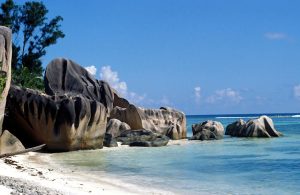
Gallura and the Costa Smeralda (the Northeast). Pink granite country. This is where Postcard Sardinia lives: Porto Cervo, the Aga Khan’s Consortium playground, super-yachts, €5,000 hotel suites, restaurants serving €85 spaghetti alle vongole. It is also where the physical landscape — enormous wind-sculpted granite boulders, juniper forest, Caribbean-blue bays — is at its most extraordinary. Stay in San Pantaleo or Palau rather than Porto Cervo itself. The best Costa Smeralda beaches (Cala Brandinchi, La Cinta in San Teodoro, Liscia Ruja, Spiaggia del Principe) are on the resort’s edges, not at its core. Take the ferry to the Maddalena archipelago from Palau — 15 minutes, €7 return — and spend a day beach-hopping islands that feel Caribbean.
Alghero and the Northwest. Catalan Sardinia. Alghero, Stintino (La Pelosa), Castelsardo (a medieval village perched on a castle-topped peninsula, a classic photograph), Bosa, and the Capo Caccia peninsula. The coastline here is the island’s most dramatic cliff landscape outside Ogliastra, and the food is more overtly Catalan — lobster with fregula, paella-adjacent rice dishes, pan-fried fish. Use Alghero as a base for five days and you can see most of the west side.
Nuoro and the Mountains (the Central Interior). Often skipped by coast-focused visitors, which is most of them. Nuoro city — birthplace of Grazia Deledda, Italy’s only female Nobel laureate in Literature (1926) — has a superb ethnographic museum (MEN, €3) and is the base for the Blue Zone villages and the mountains themselves. The Gennargentu range, including Punta La Marmora (1,834 m, Sardinia’s highest point), is genuine alpine terrain. You can hike here for days without seeing another tourist. The highest villages — Fonni, Desulo — get snow in winter and there is a small ski lift at Bruncu Spina.
Where to Stay — by Budget
Budget (€35–80/night). Agriturismi and B&Bs in the interior, hostels in Cagliari and Olbia. Marina Hostel Cagliari (Via XX Settembre, dorm from €28, private rooms from €65) is the best budget option in the capital — clean, central, rooftop. For a week in the interior at €50–70 a night with three meals included, look at agriturismi in the Barbagia: Su Gologne (Oliena), Sa Marighedda (Mamoiada), Costiolu (Nuoro). In Alghero, the Guest House Alghero on Via Principe Umberto starts at €55 in shoulder season.
Mid-range (€90–220/night). This is the sweet spot on the island. Hotel Miramare (Cagliari, Piazza Sardegna, €120–160) has rooftop views straight into Castello and serves one of the better hotel breakfasts in Italy. Hotel Villa las Tronas (Alghero, 19th-century villa on a private peninsula with sea access, €160–250 in shoulder) is the Alghero splurge disguised as a mid-range choice out of season. Hotel Aquadulci (Chia, four-star, beachfront, €180–260) is the southern coast winner. In the interior, Hotel Su Gologne (Oliena, the original Barbagia design hotel, €150–250) is worth the drive for one night even if you are based elsewhere.
Luxury (€280–1500+/night). The Costa Smeralda resorts. Hotel Pitrizza, Hotel Cala di Volpe, Hotel Romazzino — all Marriott Luxury properties, all between €800 and €3,500 per night in season. Of the three, Hotel Romazzino is slightly more approachable and has the better beach. For something Real rather than Postcard, Faro Capo Spartivento in Chia (a converted lighthouse, six rooms, €550–900) is the island’s best intimate luxury, and Su Gologne’s top suites (€450–700) let you stay in a Barbagia estate with a Michelin-level restaurant on site. Faro di Punta Falcone in Santa Teresa di Gallura (another converted lighthouse) is the northern equivalent.
Where NOT to stay. Porto Cervo in August — you are paying €600 for a room you would happily get for €200 in June. Alghero in July for the old town — the pedestrian street noise is significant. Poetto beach in Cagliari for families — the city bus is easier than it looks and the beach hotels are overpriced for what they offer. Any hotel marketed as “just 15 minutes from the Costa Smeralda” is, in reality, 45 minutes of winding road from the Costa Smeralda.
Accommodation tax (imposta di soggiorno). In Cagliari, from 1 April 2026: €1/night for one-star hotels, €2/night two-star, €4/night four-star, €5/night five-star; €2/night for non-hotel stays Q1/Q2/Q4 and €3/night Q3; €1.50/night hostels. Usually charged at check-out in cash. Other municipalities set their own rates; Alghero and Olbia levy similar €1–4 per night. Budget €10–40 additional over a week.
Where to Eat
Sardinian cuisine is not Italian cuisine. It is older, more pastoral, heavier on cheese and bread, lighter on tomato, and built around two categories of protein that outsiders underestimate: sheep, and the sea. This island was mostly inland-facing until the twentieth century — malaria made the coast dangerous — and most of the classic dishes are shepherd-food, then inflected by the seaside in the last hundred years.
Dishes to know, in order of priority.
Culurgiones — ravioli with a decorative pinch seal that looks like a wheat sheaf, traditionally filled with potato, pecorino, and mint, served with tomato sauce and more aged pecorino. PGI-protected. The Ogliastra version is the real one; elsewhere on the island the filling varies. If a menu offers culurgiones with a ricotta filling, that is a Sardinian restaurant outside Sardinia.
Porceddu — suckling pig, up to 20 days old, spit-roasted vertically over an open fire of myrtle and juniper wood. The skin is lacquer-crisp, the meat falls off the bone. Best eaten at an agriturismo in Barbagia or Ogliastra where they raise their own pigs, not at a restaurant that buys them in. Served with myrtle leaves as a garnish and aromatic.
Pane carasau — the parchment-thin shepherd’s bread, twice-baked so it keeps for weeks. Also called carta da musica (sheet music). Eaten in its hard form as a cracker; or softened with water and oil and layered for pane frattau (an egg-and-tomato layered dish) or pane guttiau (brushed with oil, salted, briefly grilled).
Fregula — tiny toasted pasta pearls, similar in concept to Israeli couscous but older, usually served with clams (fregula con le arselle) or in brothy seafood dishes. Alghero’s fregula with lobster is a regional signature.
Malloreddus — small ridged gnocchi-shaped pasta, traditionally served with sausage and tomato sauce and saffron (malloreddus alla campidanese). Campidano region staple.
Bottarga — dried, pressed grey mullet roe from the Cabras lagoon. Sliced thin over spaghetti with oil and lemon, or grated over dishes. The Cabras version is the best in the Mediterranean; Sicilian bottarga is tuna-based and different.
Pecorino Sardo — the island’s signature cheese, sheep’s-milk, made with kid-stomach enzymes in the curdling. The dolce (sweet, young) and maturo (aged) are two different animals. Pecorino Sardo DOP is everywhere; the rarer casizolu (a pear-shaped stretched-curd cheese) is the one to buy to take home.
Seadas — fried pastry parcels filled with sweet pecorino and served with local honey. Sardinia’s signature dessert. If the honey is not the darker bitter corbezzolo (strawberry-tree honey), it is not the real version.
Mirto — liqueur distilled from myrtle berries. Every household has a bottle. The red is made from the fruit, the white from the leaves. Served as a post-dinner digestivo.
Budget eats — where to eat under €15 a meal.
In Cagliari: Sa Schironada (Via Sassari) — stand-up pizzeria, €4 slices, famous for pizza with fregula or bottarga. Trattoria Sarda da Lillicu (Via Sardegna) — family trattoria, plates €8–12, genuinely Sardinian, no tourist menu. Il Fantasma (Via San Domenico) — €6 panini with Sardinian salumi.
In Alghero: Il Vecchio Forno (Piazza Sulis) — pizza al taglio from €3. Frisch (Via del Carmine) — German-style bakery with house-baked pane carasau €4. Mercato Civico covered market (mornings only) — buy bread, pecorino, tomato, and sit on the wall with €8 total.
In Olbia: Gusta Gelato or Muntoni on Corso Umberto for cheap eats on the main strip. The port trattorie all blur together in August — do not eat dinner near the ferry terminal.
Mid-range — €20–40 per person, proper dinner.
Cagliari: Trattoria Lillicu again but order up. Crackers (Via Sardegna, €30–40, modern Sardinian interpretation). Framento (Marina district) for a well-priced seafood dinner by locals. Cucina.eat on Piazza Galilei for a lunch menu at €20 that punches above its weight.
Alghero: Andreini (Via Arduino, €30–45) — the Alghero dinner, Catalan seafood, book ahead. Al Tuguri (Via Maiorca, €40–55) — slightly more ambitious, seasonal menu, excellent Vermentino list.
Oliena / Orgosolo / Barbagia: Su Gologne (fixed menu, currently ~€50 including wine) — the interior’s most famous agriturismo restaurant, worth the hour’s drive from Nuoro. Pedrinelli (Cabras, €40–55) — the one to book on the Sinis peninsula. Il Rifugio (Nuoro, €30) — historic, traditional, no frills.
Olbia/Gallura: Il Portolano (Olbia port, €30–40) — the honest port trattoria. Tavola Brillanti (Palau, €35–50) — family-run, excellent seafood.
Special occasion / Michelin.
The Michelin Guide Italy 2026 gives Sardinia five starred restaurants. The reunited roster:
Il Fuoco Sacro (San Pantaleo, near Porto Cervo) — 1★, chef Alessandro Menditto, in the Petra Segreta Resort. €180–230 tasting menu. The most exciting one-star in Sardinia in 2026.
Fradis Minoris (Pula, south coast, inside the Forte Village) — 1★, chef Francesco Stara, Green Star for Sustainability three years running. Lagoon-focused cuisine, €160–200 tasting.
Somu (Baja Sardinia) — 1★, Salvatore Camedda’s project, €140–180.
Gusto by Sadler (Baja Sardinia, inside the Grand Hotel Resort) — 1★, €150–200.
Capogiro (Baia Sardinia) — 1★, new entry 2026, contemporary Italian, €140–180.
Note: Dal Corsaro in Cagliari, which carried the one star that represented the capital for years, closed before the 2026 Guide — chef Stefano Deidda moved to Seville. This is a loss. As of 2026, Cagliari has zero starred restaurants, which is structurally surprising and probably temporary.
The tourist traps to avoid.
Any restaurant in Porto Cervo that serves spaghetti alle vongole at €60 — they will be frozen clams. Any restaurant on Alghero’s Via Carlo Alberto with an English-language chalkboard and a “menu turistico” — the real ones do not need a menu turistico. In Cagliari, skip the restaurants directly on Via Roma facing the port: they are volume operations, same food for 50% more than the same thing two streets in. The rule for tourist-trap detection anywhere on the island: if the menu is translated into Russian and Chinese but the waiter cannot answer “where is the pecorino from?” — leave.
Drinking — Cannonau, Vermentino, Mirto, Ichnusa
Sardinia is not a wine tourism destination in the Tuscany sense, but it should be. Two indigenous grapes carry the island: Cannonau (the Sardinian name for Grenache, almost certainly introduced by the Aragonese in the 14th century, though Sardinian winemakers will argue strenuously that it was the other way around — that Grenache is actually Cannonau taken to Spain) and Vermentino (white, aromatic, citrus and saline, DOCG in Gallura). Cannonau is the Blue Zone wine — the polyphenol content of Sardinian Cannonau is among the highest measured in any red wine globally, and the local interpretation of the longevity statistics gives the red its due.
Wineries to visit. Sella & Mosca near Alghero (founded 1899, the biggest and the easiest for day-trip tours, €20 tasting with cellar visit — book at sellaemosca.com). Cantina Santadi in the south (Sulcis, known for its old-vine Carignano) — €15 tasting. Argiolas in Serdiana (between Cagliari and Barumini, the most commercial of the quality producers) — €25 full visit. For something smaller, Audarya in Serdiana (natural wines, by appointment only, €20–30) is one of the island’s most exciting operations.
Wine bars to drink in. Cucina.eat in Cagliari (Marina district) — 40+ Sardinian wines by the glass, €5–9. Mar.Ti.In in Alghero (Via Principe Umberto) — smart natural-wine list. Enoteca Mokador in Nuoro — the interior’s best bottle shop that also serves at tables.
Beer. Ichnusa is the island’s mainstream beer — a good pilsner-style lager from Assemini. Drink the non filtrata (unfiltered) version if you see it; it is a better beer. Smaller craft: Birra Barbagia (from Nuoro), P3 (Pirri, near Cagliari), Birrificio Seo (Cagliari Marina). Every bar in the country has Ichnusa on tap.
Liqueurs. Mirto (red from berries, white from leaves), served ice-cold as a digestivo — the local version costs €3–4 a pour, the commercial versions in every supermarket are fine but the homemade one your agriturismo host pulls out after dinner is better. Limoncello everywhere but not as sharp as Amalfi’s. Fil’e Ferru — the island’s own grappa, 40%+ ABV, named for the iron wire farmers used to mark the hiding spot when it was distilled illegally; now legal, still rustic.
Culture and etiquette. Aperitivo runs 18:30–20:30 in city bars — order a €8 Aperol Spritz and you get a plate of cheese, bread, olives, and cured meats substantial enough to replace dinner. Tips are not expected but rounding up is appreciated. Coffee culture: an espresso at the bar is €1.10–1.30; a cappuccino after 11:00 will raise eyebrows but not objections.
Getting Around
Sardinia is the size of Belgium. There are three airports, one narrow-gauge tourist train, a limited national train network, a regional bus network that thins dramatically in the interior, and very few Uber options. Plan for a car for at least part of the trip unless you are doing a coast-focused week out of a single base.
From the airports.
Cagliari-Elmas (CAG). The busiest. Trenitalia train runs from the airport to Cagliari Central station every 15–30 minutes, 7 minutes, €1.30. The ARST bus runs every 30 minutes, 10 minutes to the ARST bus station on Piazza Matteotti, €4. Taxis are €20–30 to central Cagliari. Train is the sensible default.
Olbia Costa Smeralda (OLB). ARST buses link the airport to Olbia town centre, €1.30, every 30 minutes. From the town centre, buses continue to Porto Cervo, Palau, and the Costa Smeralda resorts. The airport has two notable 2026 developments: a new rail connection to Olbia central is under construction (expected completion late 2026 / early 2027), and Delta Air Lines launches a direct JFK–Olbia route on 21 May 2026, four weekly frequencies.
Alghero-Fertilia (AHO). The airport bus runs every 30 minutes to Alghero town centre, 20 minutes, €1.30. From Alghero, ARST buses continue to Bosa, Stintino, and Sassari. Alghero is expected to exceed 2 million passengers in 2026 for the first time, with 46 routes including 10 new international lines — check Ryanair and easyJet schedules for non-obvious city pairs to your home.
Local transit within cities.
Cagliari has a serviceable CTM bus network, a single tram line (Metrocagliari), and enough taxis. Single ticket €1.30, day pass €3.30. The bastion glass lift (Elevatore del Bastione) is free.
Alghero is walkable in 20 minutes end-to-end. Bosa is 15 minutes.
Olbia is ugly and not worth walking; take the ARST bus straight through to your final coastal base.
Intercity — ARST buses and Trenitalia trains.
ARST (Azienda Regionale Sarda Trasporti) runs the island’s intercity bus network. Tickets from €1.30 short trips up to €20 for the longest north-south journey (Cagliari–Santa Teresa di Gallura, 4 hours). Buy tickets at bus station counters or tabaccherie (tobacconists) — never on the bus. Summer schedules are serviceable between main towns (Cagliari–Nuoro–Olbia, Sassari–Alghero, Cagliari–Iglesias); rural villages get 1–2 buses a day, some none. Timetables at arstspa.info.
Trenitalia runs a limited network: Cagliari to Oristano, Sassari, Olbia, and Golfo Aranci, plus a few internal routes. Not a practical way to see the island — most of the interior has no rail access at all. Tickets €5–20 depending on distance.
The Trenino Verde della Sardegna. The scenic narrow-gauge tourist train, running five heritage routes in summer only (May to October typically, some routes April and November). The Mandas–Laconi line crosses the Sarcidano region and is the classic for 2026; Luras–Tempio Pausania, Arbatax–Lanusei, Bosa–Tresnuraghes, and Cagliari–Mandas round out the schedule. Tickets €15–40. Calendar and booking at sardegnatreninoverde.com or sardiniagreentrain.com. Not transport; an excursion.
Driving and rental cars. Drivers must be 19–75, with licence for at least one year. Expect €30–50/day for a compact car in high summer and €20–35 shoulder season. Highway speed 110 km/h; country roads 90 km/h; towns 50 km/h. Headlights must be on at all times on main roads, day and night, by law. Blue parking lines are pay-and-display (€1–2/hour in cities); white lines are free. White gravel on the shoulder usually means a dirt track leading to a beach — take them slowly; some are 4×4-only.
Fuel stations in the interior close early (20:00) and on Sundays. Fill up before driving into the Barbagia.
Ride-hailing and taxis. Uber is limited in Sardinia — Cagliari has some coverage, Olbia during peak summer, but not the interior. FreeNow (IT Taxi) works in Cagliari. Taxis are metered in cities (starting ~€4.50, ~€1.20/km) and negotiate for interior trips (roughly €1/km + return-empty surcharge).
Best Time to Visit
Sardinia has a clear sweet spot: late May through June, and mid-September through early October. Weather is warm but not punishing, the sea is swimmable, beach reservation caps have not hit their summer crush, the interior is wildflower-green (spring) or harvest-dry (autumn), and prices are 30–50% below July–August.
Spring (April–mid-June). Wildflowers, cool mornings, swimmable sea from mid-May, accommodation from €90. Easter week is surprisingly busy — Italian school holidays — so target the two weeks after Easter.
High summer (July–August). The beaches are capped, hotels are full, car rentals spike 60–100%, and Porto Cervo becomes what Porto Cervo is. July is marginally cheaper than August; the Italian Ferragosto week (13–20 August) is the peak madness.
Autumn (September–October). Arguably better than spring. Sea still warm (22–24°C) into early October. Autunno in Barbagia runs weekends September through early December — a village-rotating festival of food, open houses, and shepherd demonstrations across the interior, and easily the best cultural time to be on the island.
Winter (November–March). Cagliari is mild (12–15°C), almost nobody on the beaches, interior villages get dustings of snow, and this is when you can get a Costa Smeralda hotel for €120 instead of €600. The downside: many coastal restaurants close, beach access limited to walking, and half the tourist infrastructure hibernates. For city breaks in Cagliari and cultural tours in Alghero, winter is viable and underrated.
Month-by-Month Weather
Temperatures shown for Cagliari. Interior mountain villages (Fonni, Desulo, Nuoro) run 5–10°C cooler; coast equivalents (Alghero, Olbia) run within 1–2°C of Cagliari.
| Month | High/Low | Rain days | Key events & notes |
|---|---|---|---|
| Jan | 14°/7°C | 7 | Coldest month. Interior sees snow. Mostly dead season. |
| Feb | 15°/7°C | 6 | ⭐ Sa Sartiglia in Oristano (15, 17 Feb 2026). Mamoiada Mamuthones carnival masks. |
| Mar | 17°/8°C | 6 | Shoulder. Almond blossom in Barbagia. Easter prep. |
| Apr | 19°/10°C | 6 | ⭐ First realistically warm month. Monumenti Aperti 18–19 April 2026 (Cagliari). Trenino Verde opens. |
| May | 23°/13°C | 4 | ⭐ Best month, arguably. Swimmable sea from mid-month. Wildflowers. Beach caps not yet in full force. |
| Jun | 27°/17°C | 3 | ⭐ Peak shoulder. Light is at its best. All beaches open, prices moderate. |
| Jul | 31°/20°C | 1 | S’Ardia horse race in Sedilo (6–7 July 2026). Peak heat, peak prices, beach caps in full force. |
| Aug | 32°/21°C | 1 | Italian Ferragosto (13–20 Aug). Costa Smeralda at maximum volume. Avoid if possible. |
| Sep | 28°/19°C | 3 | ⭐ The secret best month. Sea still warm (24°C), crowds thinning. Autunno in Barbagia begins. |
| Oct | 24°/15°C | 7 | ⭐ Still swimmable early month. Autumn food festivals in interior. Harvest season for grapes and olives. |
| Nov | 19°/11°C | 8 | Rainy month (highest precipitation). Beach season over. Interior truffle hunts. |
| Dec | 15°/8°C | 7 | Quiet. Christmas markets in Cagliari and Alghero modest but pleasant. |
Source: Italian Meteorological Service (Aeronautica Militare) 30-year averages for Cagliari-Elmas station; cross-referenced with Regione Sardegna climate data.
Daily Budget Breakdown
All figures in euros, per person per day, assuming two people sharing a room.
| Category | Budget | Mid-range | Luxury |
|---|---|---|---|
| Accommodation | €35–60 | €90–180 | €280–1500+ |
| Meals & drinks | €25–40 | €55–90 | €120–250 |
| Transport (car share, bus, parking) | €15–25 | €25–45 | €60–120 |
| Activities & entry fees | €5–15 | €15–35 | €40–100 |
| Daily total | €80–140 | €185–350 | €500–1970+ |
Budget tier (€80–140/day). Agriturismo or hostel base, picnic lunches from the markets, one proper restaurant dinner, bus and shared-car transport, free beaches (Is Arutas, Spiaggia del Principe) rather than paid ones. The cheapest week on Sardinia is a week in Cagliari + day trips + one night in Barbagia — realistically €650 per person for a week including flights if you come from continental Europe in May.
Mid-range (€185–350/day). Three-star hotel or premium agriturismo, one sit-down lunch and one proper dinner, rental car for the whole trip, paid beach access when wanted, one Michelin lunch. This is the comfortable Italian-family-of-four mode. €1,400–2,500 per person per week.
Luxury (€500–1970+/day). Four- or five-star resort, every dinner €60+, premium rental car (convertible, 4×4 to reach the off-road beaches), multiple Michelin, private boat day (€1,200–2,500 for an eight-hour charter to the Maddalena islands or the Gulf of Orosei), helicopter transfer. Costa Smeralda in season takes this tier seriously.
Sample Itineraries
3-Day Essential Sardinia (South and interior)
Day 1 — Cagliari. Morning in Marina (07:30–11:00): walk Via Roma, climb into Castello via the Elevatore del Bastione, cathedral + treasury (free), tower climb at Torre dell’Elefante (€3). Lunch at Trattoria Sarda da Lillicu (Via Sardegna, €15 for primi + glass of wine). Afternoon (13:00–17:00): National Archaeological Museum (€9) for the nuragic bronzes. Walk down through Stampace. Beach at Poetto (bus PF, 15 min) until 18:30 (€0 + €2.60 return bus). Aperitivo at Antico Caffè (Piazza Costituzione, €8). Dinner at Framento (Marina district, seafood, €35–50).
Day 2 — Barumini and Orgosolo. Early drive north (08:00) to Barumini. Su Nuraxi + Casa Zapata + Lilliu Centre (€15, 2.5 hours, book the 10:30 English tour). Lunch in Barumini at Sa Lolla (agriturismo, €20). Drive east through the Sarcidano to Orgosolo (2 hours). Walk the murals 17:00–19:00 in the cool light. Dinner at Ai Monti del Gennargentu in Orgosolo (€28 set menu). Overnight at an agriturismo near Oliena.
Day 3 — Gulf of Orosei. Drive from Oliena to Cala Gonone (45 min). Boat trip to Cala Luna or Cala Mariolu (€40–55, 6 hours, includes stops at Grotta del Bue Marino). Or, if you booked ahead: Cala Goloritzé hike (2 hours each way). Back to Cala Gonone for dinner at Il Pescatore (seafood, €40). Drive to Olbia airport (1.5 hours) for evening flight.
Day 4–5 Add-Ons (West and north)
Day 4 — Alghero and Neptune’s Caves. Drive west to Alghero (2.5 hours from Oliena via the central route, or 3.5 hours via coastal). Morning: old town walking tour, Duomo, Torre de Sant Joan climb. Afternoon: Neptune’s Grotto via the Escala del Cabirol — the 656 steps are non-negotiable but cinematic. Dinner at Andreini (€40). Overnight Alghero.
Day 5 — La Pelosa or Bosa. Either option: (a) Stintino and La Pelosa (book the 18:00 free slot, and swim at the quieter second beach behind the Pelosa tower in the afternoon), or (b) the coastal drive from Alghero to Bosa (45 min), kayak the Temo river, explore the painted old town, dinner at Borgo Sant’Ignazio. Both days end with a drive back to Alghero airport (AHO) for an evening flight.
7-Day Deep Sardinia
Day 1–3 as 3-Day Essential above. Day 4: Alghero. Day 5: Bosa + Tharros + Giants of Mont’e Prama (Cabras). Day 6: the Sulcis — Iglesias, Porto Flavia mine tour, dinner at Gazebo Medievale. Day 7: the southern coast — Chia, Nora archaeological site, swim at Su Giudeu. Fly out of Cagliari. This itinerary touches all seven regions except Gallura / Costa Smeralda — add two days for that.
Best Day Under €25
A full day in Cagliari, Marina-to-Castello-to-Poetto, on €22 total.
- Coffee and cornetto at Caffè Svizzero (Largo Carlo Felice) — €2.50
- Walk up through Marina and climb to Castello via the free Elevatore del Bastione lift
- Cathedral of Santa Maria + treasury — free
- Torre dell’Elefante climb — €3
- Market picnic from Mercato di San Benedetto: a wedge of pecorino sardo, 100g of salsiccia sarda, half a pane carasau, two tomatoes, one apple — €7
- Eat the picnic on the Bastione Saint Remy with the view to the Gulf of Angels — free
- Bus to Poetto (PF, return €2.60); swim afternoon; walk back along the beach
- Granita at one of the Poetto kiosks — €2.50
- Aperitivo in Marina at Antico Caffè with free stuzzichini — €8 and you will not need dinner
Total: €22. Alternative budget days: Is Arutas beach (free + €2.50 parking) with a Cabras market lunch, the Sella del Diavolo hike from Poetto (free), or back-alley walks through Castello at golden hour.
Hot Day Plan
The July–August afternoon peak (32°C+) is not an hour for being outdoors between 13:00 and 17:00 unless you are horizontal in water. Plan around it.
Comfortable version (€45–70).
– 08:00 arrival at Cala Brandinchi, San Teodoro (free parking until 10:00, then €5; beach reservations via sangiovannistella.it for high-season weekends). Three hours in the shallows with a rented umbrella + lounger pair (€15–25 from beach concession). Morning swim, breakfast at the beach bar (cornetto + cappuccino, €5).
– 11:30 back to town. Lunch at La Taverna in San Teodoro (set lunch, €18).
– 13:00–16:00 air-conditioned hotel siesta or museum visit. If siesta feels wrong: Museo Navale di San Teodoro or a drive to the (air-conditioned) Giovanni Marongiu museum in Cabras (an hour and ten minutes south-west, and the Giants are there).
– 17:00 return to Cala Brandinchi or a different beach for late swim.
– 19:30 aperitivo somewhere with a view, €10.
Budget version (€10).
– Free beach (Is Arutas, Spiaggia del Principe, Cala Domestica) from 08:00 until 11:00.
– Supermarket picnic (€7) eaten under a tree in a town square.
– 13:00–16:00 in the coolest public building nearby — a cathedral, a museum, a library, a bookshop. Cagliari’s Biblioteca Universitaria on Via Università will let you sit and read in 22°C.
– Late swim 17:00 onwards.
Day Trips
The Maddalena Archipelago (from Palau). Essential if you are in Gallura. Ferries run every 15–30 minutes from Palau to La Maddalena town (€7 return passenger, €30 return with small car, 15 minutes each way; operated by Maddalena Lines and Delcomar). La Maddalena’s main island is walkable; rent an electric scooter or a quad on the island (€40–60/day) to reach the quieter beaches (Cala Spalmatore, Cala Lunga, Monti d’a Rena). Alternatively, take a “giro delle isole” boat tour from Palau (€40–70 depending on operator and whether lunch is included) that visits four or five smaller islands — Spargi, Santa Maria, Budelli — including the famous pink-sand Spiaggia Rosa, which you can only view from the water since it was closed to foot traffic in 1992 to protect the pink coral granules that give it its colour. Day-trip length: 6–8 hours. Essential.
Corsica (from Santa Teresa di Gallura). Sardinia and Corsica are 11 km apart across the Strait of Bonifacio, and the ferry from Santa Teresa to Bonifacio runs in 50 minutes (€20–40 return, operated by Moby Lines and Blu Navy). A Bonifacio day — climbing up to the cliff-edge citadel, eating moules-frites on the old port, sailing back with Sardinia on the horizon — is the most dramatic day trip available on Sardinia. Day-trip length: 10–12 hours, including ferry. Book in advance in summer.
Tavolara Island (from Porto San Paolo). The 565-metre rock offshore from Olbia is its own micro-kingdom (long story — the island’s royal family still claims sovereignty). Local boats from Porto San Paolo run half-day trips (€25–40) with swim stops and lunch options at the island’s only restaurant. Tavolara’s Spiaggia di Spalmatore di Terra is a white crescent beach with Gallura granite on one side and deep blue on the other.
Asinara Island (from Stintino or Porto Torres). The former prison island, now a national park. Day trips by boat (€35–55) include wildlife stops (the white donkeys of Asinara — a feral population whose distinctive pale coats come from a recessive gene, not from selection over time) and access to beaches that most of the island’s visitors miss. Bicycle rental on the island to explore.
Tharros (from Oristano or Cabras). The Phoenician-Punic-Roman archaeological site on the tip of the Sinis peninsula. Entry €8; combined with Giants of Mont’e Prama museum €15. Allow two hours on site. Lunch at one of the Cabras trattorie (Il Caminetto, Sa Funtà) for bottarga. Afternoon swim at Is Arutas (quartz-grain beach) or Mari Ermi. Day-trip length: 6 hours. This is the second-best half-day on the island after the Su Nuraxi + Barumini combo.
Nora (from Cagliari). A 40-minute drive south, another Phoenician-Roman site on a peninsula with beach access. €8 entry, guided tour included, daily 09:00–20:00 summer. Combines with a swim at Spiaggia di Nora or Chia’s beaches. Lunch at Su Gioghixeddu in Pula. Day-trip length: 5 hours.
Costa Verde and the mining coast (from Iglesias or Cagliari). Porto Flavia (guided tour only, €10, book at fondazioneiglesias.it) is a mine-entrance cut into a sea cliff 50 metres above the water — industrial archaeology as drama. Dune di Piscinas further south is a 5 km stretch of mobile sand dunes, some reaching 60 metres high, leading to empty beach. The drive on the SP83 coastal road is one of the great road trips in the western Mediterranean. Day-trip length: 8 hours from Cagliari, 4 from Iglesias.
Safety & Practical Information
Personal safety. Sardinia is among the safest regions in Italy. Violent crime is negligible. Petty theft is present but far less common than in Rome, Naples, or Milan; the usual precautions (no phone in back pocket, no bag hanging open on a shoulder, no car left with visible valuables) are sufficient. The “banditry” reputation of the Barbagia is historical, not current — the last famous shepherd-feud kidnappings were in the 1980s and the island’s interior is genuinely rural-quiet now.
Swimming safety. The sea looks placid and often is not. Read the flag on every lifeguarded beach: red means do not enter. Undertows on the west coast (Costa Verde, Buggerru, Masua) can be serious in any swell above 1.5 metres. Never swim directly after a storm: sewage overflow from rural villages into bays is a real thing.
Currency, cards, ATMs. Euro everywhere. Cards accepted in 95% of city establishments, perhaps 70% in the interior. Carry €50–100 in small notes for agriturismi and rural cafés. ATMs (Bancomat) in every town above 2,000 people; some rural ones may be limited to €250/day per card.
Language. Italian works everywhere. Sardinian (Sardu) is the working language in rural interior areas but you will not need it. English is functional in tourism zones (hotels, major restaurants, airports) and limited elsewhere. A dozen Italian words — grazie, prego, scusi, buonasera, un caffè, il conto — go a long way.
Connectivity. 4G/5G coverage is excellent along the coasts and in major towns; interior mountains have patchy 3G in some valleys (Supramonte, Gennargentu). Free Wi-Fi in most cafés and hotels. EU-SIM and EU-plan international roaming works without surcharge within the euro-zone package.
Tipping. Not expected anywhere. Rounding up a restaurant bill to the nearest €5 is polite in cities; leaving €2 for a bartender after good service is appreciated. Hotel porters €1 per bag; housekeepers €1–2 per day if you leave it on the pillow. There is no tipping culture, and overtipping is slightly awkward.
Tourist information offices. Cagliari: Via Roma (waterfront). Alghero: Piazza Porta Terra (old town gate). Olbia: Corso Umberto. Oristano: Piazza Eleonora. Most run 09:00–13:00 and 15:00–18:00, reduced winter hours.
Emergency numbers. 112 is the European emergency number, operational throughout Sardinia. 118 for medical emergencies. 117 for the Guardia di Finanza (customs/financial police, occasionally useful for serious tourist fraud cases). The Corpo Forestale — the forest/mountain rescue service — is reached via 112.
Visa & Entry Requirements
Sardinia is part of Italy, which is part of the European Union and the Schengen Area. Entry rules follow Schengen.
EU citizens. National ID card or passport. No restrictions on length of stay.
UK citizens. Post-Brexit: passport with at least 3 months’ validity beyond intended stay. Limited to 90 days in any rolling 180-day period across the entire Schengen zone. Once ETIAS launches, ETIAS travel authorisation will be required (see below).
US, Canadian, Australian, New Zealand citizens. Passport with 3+ months’ validity. 90 days visa-free in Schengen zone in any 180-day period. Once ETIAS launches, ETIAS travel authorisation will be required.
ETIAS. The European Travel Information and Authorisation System has no announced launch date. Initial implementation includes a six-month transition period where ETIAS is advisory rather than mandatory, followed by a further six-month grace period. From late 2027, ETIAS will be mandatory for all non-EU visa-exempt visitors to the Schengen area. Application: online, €20, approval typically within hours for most applicants, valid 3 years or until passport expiry. Apply at the official EU ETIAS portal — do not use third-party sites that charge extra for identical processing. Do not confuse ETIAS with EES (the Entry/Exit System, which went operational on 10 April 2026 and records entries/exits at every Schengen border; passengers do not need to “apply” for EES, they are processed automatically at border checkpoints with fingerprints and facial scan).
Customs. Standard Schengen allowances. If arriving from outside the EU: 200 cigarettes, 1 litre of spirits or 2 litres of wine, €430 other goods. Cultural property over 70 years old (Sardinian antiques, archaeological fragments) must not be purchased — Italian export laws are strict, and “antique” coral jewellery sometimes falls in a grey zone; keep receipts from licensed dealers.
Hidden Sardinia
The Giants of Mont’e Prama museum in Cabras. See attraction #8 — small provincial museum holding one of the most important groups of Iron Age statuary in Europe.
Las Plassas’ castle. A lone ruined castle on a pointed hill near Barumini, free to walk up to, 360-degree views over the Marmilla region’s rolling nuragic countryside. Combine with Su Nuraxi.
The Mamoiada Mamuthones. The Mamuthones mask-and-bell ritual figures of Mamoiada (a Barbagia village) have been doing the same slow, masked, black-sheepskin dance for perhaps 2,000 years. The Museo delle Maschere Mediterranee in Mamoiada (€5, daily) is genuinely good; the ritual itself takes place on 17 January (Feast of Saint Anthony) and during Carnival.
Su Gologne spring. A blue-green karst spring at the base of the Supramonte cliffs, 7 km from Oliena. €3 entry. Walk in through pines, lunch at the attached restaurant (€35, famous set menu). One of the island’s most photogenic and undervisited stops.
Pan di Zucchero and Cala Domestica. On the west coast south of Buggerru. Pan di Zucchero (Sugarloaf) is a 133-metre limestone stack offshore, one of the most photographed formations on the island and almost always with nobody on the cliff path above it. Cala Domestica, a few kilometres north, has 19th-century mining ruins on the headland.
The Ichnusa Nuragic boat at the Cagliari museum. Specifically, the little bronze votive boat with multiple animal heads along the rim — tenth century BCE. It is the size of a hand. It is, quietly, one of the most beautiful ancient objects in the Mediterranean. Third floor of the National Archaeological Museum, easy to miss.
Monte d’Accoddi. North of Sassari, the Mediterranean’s only known ziggurat-style pyramid temple, dated to 4000–3650 BCE. It pre-dates the nuraghi by two millennia and looks like it should be in Mesopotamia, not Sardinia. €5 entry, rarely more than ten people on site.
Sardinia with Kids
Sardinia is a quietly excellent family destination. The beaches are shallow (children can wade out 50 metres on La Pelosa, Chia, Cala Brandinchi without losing footing); the food is forgiving (pasta and pizza everywhere); the climate is mild outside the July–August peak; and Italians genuinely like children, which makes restaurants accommodating in ways that northern European parents find surprising.
Best beaches for young children. La Pelosa (shallow, but plan around the booking system). Chia’s Su Giudeu (very shallow, long white-sand stretch, no cap). La Cinta in San Teodoro (gradient shallow, small waves). Cala Brandinchi (“Little Tahiti”). Poetto in Cagliari (city bus, lifeguards, food on-beach).
Activities for slightly older kids (8+). The Trenino Verde train is an obvious hit — a 2-hour ride on a tiny narrow-gauge train through canyons. Su Nuraxi, in the right frame of mind, is genuine Indiana Jones territory for kids who like stones and mysteries. The Neptune’s Grotto staircase is dramatic if they can handle 656 steps. Snorkelling off any beach on the Gulf of Orosei rewards patient kids with octopus sightings.
Rainy day options. Museo Archeologico in Cagliari (the nuragic bronzes, the Phoenician sarcophagi). Museo del Costume (MAN) in Nuoro — Sardinian traditional costumes, puppetry. Museum of Mediterranean Masks in Mamoiada. Aquarium of Cala Gonone (€15, small but solid).
Practical. Most supermarkets stock Italian formula (Plasmon), nappies (Pampers, Mio), wipes. Pharmacies carry fever medications in child-dose. Car seats are mandatory for under 12 or under 1.5 metres tall — pre-book from the rental agency or bring your own.
What’s New in 2026
Delta Airlines direct New York–Olbia route. Launches 21 May 2026, four weekly frequencies on Olbia–JFK. First-ever direct between the US East Coast and Sardinia. Expect transformative effect on Costa Smeralda demographics (and on flight prices, in the short term).
Olbia airport rail connection. Construction began in 2025; expected completion late 2026 or early 2027 for the rail link between Olbia airport and Olbia central station. Not yet operational for 2026 travel — buses remain the airport-to-city link.
Cagliari tourist tax reform. From 1 April 2026, updated imposta di soggiorno rates in Cagliari: €5/night five-star hotels; €4/night four-star; €2/night two-star; €1/night one-star. Non-hotel accommodations €2/night in Q1/Q2/Q4 and €3/night in Q3. Hostels unchanged at €1.50/night. Check-out cash payment standard.
EES operational (European Entry/Exit System). Fully active since 10 April 2026 at all Schengen borders. All non-EU arrivals undergo biometric registration (fingerprints + facial scan) at first entry to the Schengen zone. Subsequent entries verify against the stored biometric; passport stamping is being phased out. No application required by travellers.
Alghero’s 2 million passenger milestone. Alghero-Fertilia airport is expected to exceed 2 million annual passengers for the first time in 2026, driven by new routes from Ryanair and easyJet. Ten new international routes announced for summer 2026; 46% growth in international capacity year-on-year.
Capogiro Michelin star. Capogiro in Baia Sardinia received a new one-star designation in the Michelin Guide Italy 2026 — the notable new Sardinian entry. Total starred restaurants on the island holds at five for 2026.
Sartiglia 2026 dates. 15 February (Sunday) and 17 February (Tuesday), the last Sunday and Tuesday of Carnival.
S’Ardia 2026. 6 and 7 July in Sedilo. Main horse race 7 pm on 6 July, repeat 7 am on 7 July.
Sardinia Cycle Route expansion. Long sections of the cross-island Ciclovia della Sardegna are scheduled to open during 2026, with dedicated cycleways connecting key coastal and interior destinations. Tourism board promoting sustainable cycling tourism as part of the deseasonalisation push.
🌍 See the bigger picture: our Italy travel guide covers regions, when to go, and getting around.
Frequently Asked Questions
How many days do I need for Sardinia?
Absolute minimum is three nights on either the south or the north — enough for Cagliari + Barbagia + one beach day, or Alghero + Costa Smeralda + one beach day. Honest minimum is a week, split between two bases (e.g., Cagliari + Oliena, or Alghero + a Barbagia agriturismo). Two weeks lets you touch all seven regions without rushing. The common mistake is basing in Porto Cervo and only visiting beaches — you see the brochure, not the island.
Is Sardinia expensive?
Less than the Amalfi Coast, more than mainland Puglia. A mid-range week in September for two people runs €2,500–3,500 including flights from northern Europe, rental car, mid-range hotel, and dinners out. A budget week in May can be done for €1,300 per person. August in Porto Cervo can exceed €10,000 per person for a week.
Do I need to rent a car?
Almost certainly yes, unless you are doing a single-base city break. The interior is unreachable by public transport in any meaningful sense, and the best beaches are accessed by driving down minor roads to small parking lots. If you do not drive, base in Cagliari or Alghero for walkable city access and take guided tours for the interior.
What’s the best day under €25 in Sardinia?
Cagliari at €22 — Marina + Castello walking, market picnic on the Bastione Saint Remy, Poetto beach, aperitivo in Marina. See the dedicated Best Day Under €25 section above for the hour-by-hour breakdown.
What’s the rainy day plan?
The National Archaeological Museum in Cagliari. The Giovanni Marongiu Museum in Cabras (the Giants). Museo del Costume in Nuoro. A long lunch at an agriturismo. Neptune’s Grotto via boat (the cave is indoors, obviously). The MAN contemporary art museum in Nuoro. The Sant’Antioco Catacombs if you are in the south.
Is La Pelosa worth the hassle?
Only at 07:30 on a booking, or at 18:00 on free entry. Otherwise no — the island has fifty beaches as good or better, without the ticket-scan and towel-fine enforcement.
Which airport should I fly into?
Cagliari (CAG) for the south and interior (Barbagia, Sinis peninsula, Costa Verde, Chia). Olbia (OLB) for Costa Smeralda and the northeast — Delta launches direct New York–Olbia on 21 May 2026, four weekly. Alghero (AHO) for Alghero itself, Stintino, and Bosa. Cagliari has the most international connections; Olbia is busiest in summer; Alghero is the cheapest from Ryanair/easyJet markets.
When’s the best time to visit?
Late May, June, and mid-September to early October. Weather is warm, prices are moderate, beaches are not yet capped at frustration levels, and the light is exceptional. Avoid mid-July to mid-August unless you have specifically planned around the peak.
Will I need ETIAS to visit Sardinia in 2026?
Sardinia is part of Italy and the Schengen Area. The European Travel Information and Authorisation System (ETIAS) has no confirmed launch date with a six-month transition period followed by a six-month grace period — meaning ETIAS becomes mandatory for non-EU visa-exempt visitors in late 2027. Application is online, €20, valid 3 years. Separately, the Entry/Exit System (EES) has been operational at all Schengen borders since 10 April 2026 — biometric registration at first entry, no application required by travellers. See Visa & Entry Requirements above for details.
Can I visit with children?
Easily. Sardinia is among Europe’s better family beach destinations — shallow water, safe towns, forgiving food. The interior is a hard sell for toddlers; older children enjoy Su Nuraxi and the narrow-gauge train.
Are the beach reservation systems new?
For La Pelosa, Cala Goloritzé, Tuerredda, and a handful of others — yes, within the last five years, and the Sardinian regional government has announced plans to expand these schemes. Check each specific beach’s booking website before making beach plans; this is a fast-moving space.
Explore More AiFly Guides
- 🇮🇹 Menorca Island Guide 2026 — Sardinia’s cousin across the western Med, also layered, also misunderstood.
- 🇮🇹 Rome City Guide 2026 — the mainland counterpoint.
- 🇪🇸 Barcelona City Guide 2026 — the Catalan connection Alghero keeps alive.
- 🇲🇹 Malta Guide 2026 — the other ancient-stone Mediterranean island.
- 🇮🇹 Palermo City Guide 2026 — Sicily next door, a different kind of Italian-not-Italian.
- 🇬🇷 Crete Island Guide 2026 — the shepherd-island comparison Barbagia earns.