La Gomera — The Complete Island Guide 2026
The second-smallest of the inhabited Canary Islands, an hour by ferry from south Tenerife, holding the only laurel forest left in this part of the Atlantic, the only whistled language taught as a school subject anywhere in the European Union, and the cave where the Castilian conquest of the archipelago effectively ended in November 1488. Four nights minimum; seven for the long version.
€105–370/day budget
Coastal 18–24°C year-round
🇪🇸 EU / Schengen / EUR €
No tourist tax · IGIC 7%
EES active · ETIAS late 2026
Why La Gomera? An Editor’s Note
In one place on earth, children take mandatory primary-school classes in a whistled language with two pitches and four vibrations. The whistles carry across valley distances of three to four kilometres, in some conditions five — across the kind of basalt-walled ravine where a shouted human voice does not cross at all. The decision to teach this language as a compulsory school subject was made by the Canarian regional government in July 1999 and applies to one island only. UNESCO added the language to its Representative List of the Intangible Cultural Heritage of Humanity ten years later, in 2009. The island is La Gomera, and the language is called Silbo Gomero.
This guide is about the island that produces, requires and still uses that language.
La Gomera is best understood as an island of three survivals.
The first is the language. Silbo survived because the geography made it necessary — a roughly circular island of 370 square kilometres carved by deep radial barrancos that descend from a central cloud-forest plateau to a coast of black-sand bays — and because, in 1999, a mandatory curriculum decision protected it from extinction at the moment when motorbikes, mobile phones and tarmacked roads had finally reached every village.
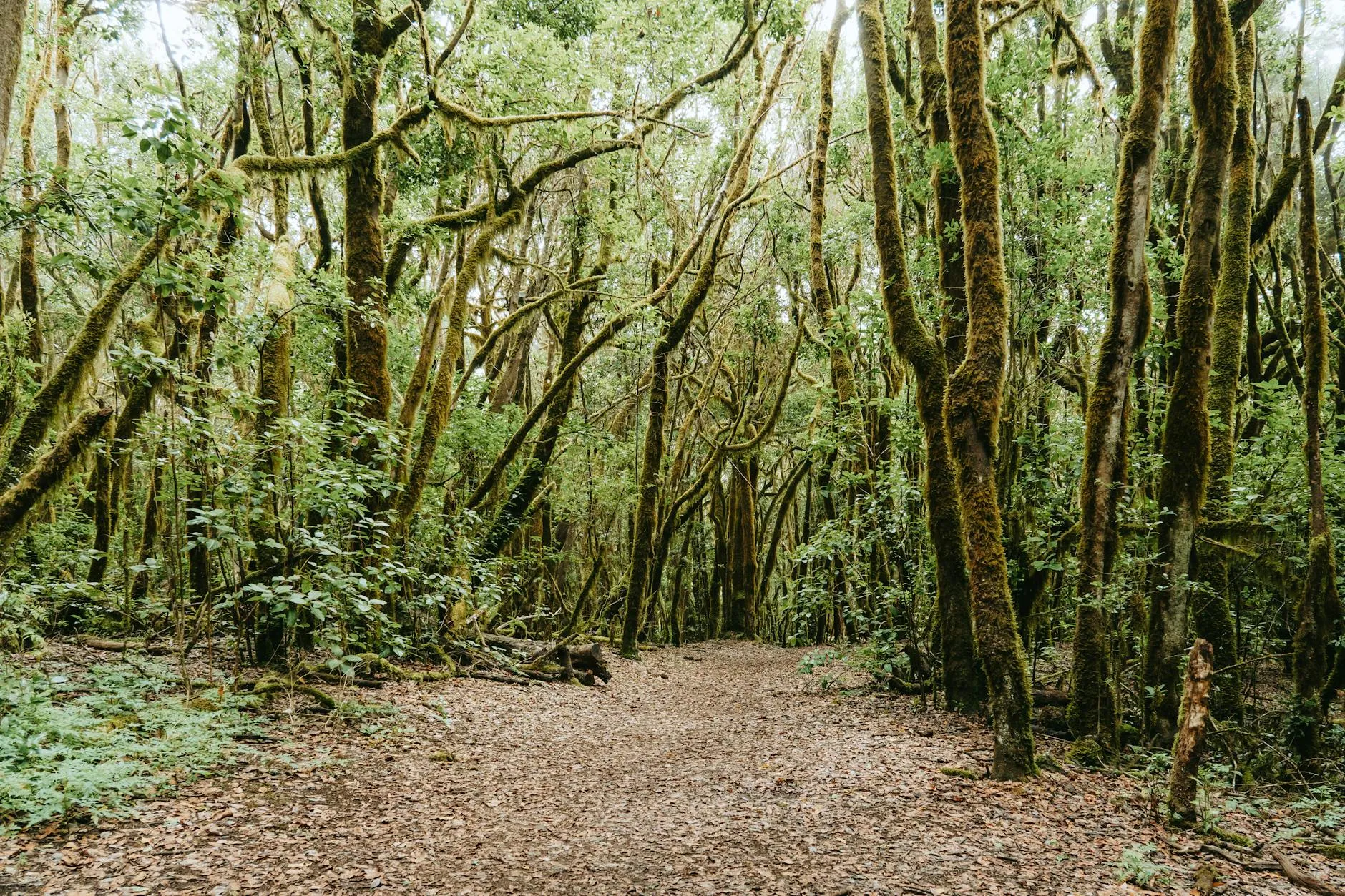
The second is a forest. The laurisilva that covers most of Garajonay National Park (UNESCO World Heritage, 1986) is a relict ecosystem from the Tertiary period — the kind of subtropical evergreen rainforest that once covered much of the Mediterranean basin and southern Europe before climate change wiped it out elsewhere. La Gomera’s altitude, near-permanent trade-wind cloud cover and isolation from the mainland kept the forest alive. The August 2012 wildfire — arson, eighteen percent of the National Park burned, several weeks of national emergency — nearly destroyed it. Recovery is partial; the LIFE+ GARAJONAY VIVE restoration ran 2014–2018 and replanted approximately 60,000 native trees across 189 hectares. Walk the El Cedro trail in 2026 and you will see both the recovered understorey and the still-charred trunks of the older laurels.
The third is a coastline that never became Tenerife. La Gomera has no Maspalomas, no Playa del Inglés, no twelve-storey package tower. The single biggest hotel on the island has 276 rooms; most accommodation is in old-town houses, family-run paradores and small valley pensions. The counterculture that landed in Valle Gran Rey in the late 1960s — first American Vietnam-era draft dodgers, then a sustained German community that eventually outnumbered the Castilians and gave the valley its local nickname Klein Deutschland — survived because the package-tour economy never crossed the Tenerife channel. The island had no airport at all before 1999, and no charter flight has ever served it. Every visitor either takes the fifty-minute fast ferry from Los Cristianos or boards a Binter Canarias turboprop from one of the two Tenerife airports or Las Palmas. The island filters its visitors at the dock.
The trap to avoid is the day trip. Several of the daily Fred. Olsen and Naviera Armas crossings from Los Cristianos are sold as part of organised excursion packages — leave Los Cristianos in the morning, bus-loop around the south of the island with photo stops at the Mirador César Manrique and Roque Agando, lunch in San Sebastián, ferry back in the late afternoon. That itinerary delivers a few photographs and no understanding of the place. Anything below four nights on the island — three minimum to do Garajonay, Hermigua, Vallehermoso and Valle Gran Rey at a pace that lets the place register, four to add a day in the south and a hike — is the day-trip mistake at slightly larger scale.
This guide is for travellers who have planned to spend at least four full days on La Gomera, who like walking more than lying down, who are willing to accept that there are no Michelin stars on the island in 2026 (Tenerife has six; Gran Canaria has five; La Gomera and El Hierro share zero), and who are interested in the kind of place that does not perform for them. Skip the rented quad bike day-tour and the “demonstration of the whistling language” at any restaurant that has it on a printed menu in four languages — the genuine demonstrations are at the Mirador de Igualero in Alajeró and at the schools, not in tourist canteens.
Table of Contents
- Top Attractions
- The Six Municipalities
- Where to Stay — by Budget
- Where to Eat
- Drinking — Wine, Palm Syrup and Coffee
- Getting Around
- Best Time to Visit
- Month-by-Month Weather
- Daily Budget Breakdown
- Sample Itineraries
- Best Day Under €30
- Cloud Day / Hot Day Plan
- Day Trips and Boat Trips
- Safety and Practical Information
- Visa and Entry Requirements
- Hidden La Gomera
- Romantic La Gomera
- La Gomera with Kids
- What’s New in 2026
- Frequently Asked Questions
- Explore More Aifly Guides
Top Attractions
1. Garajonay National Park and the Alto de Garajonay summit
Garajonay covers about ten percent of La Gomera, sits roughly in the centre of the island, and contains the largest, oldest and most intact laurel forest left in the Macaronesian region. Laurel forest covers roughly seventy percent of the park’s area; the rest is heath, ridge scrub, cleared pasture and the still-recovering scars of the 2012 fire. The forest is a Tertiary relict — the kind of subtropical, broad-leafed evergreen woodland that once stretched across the Mediterranean basin and southern Europe and went extinct everywhere else when the climate dried. La Gomera’s central plateau, with its near-permanent canopy of trade-wind cloud, was one of three Macaronesian refuges (the others are on Madeira and the Azores) where the trees survived.
The species count is not big numbers — it is one of those places where the kind of plant matters. A single section of forest at El Cedro contains twelve species of laurel-leaved evergreen tree growing over and through one another. The trunks are mossed and lichened. The ground is fern. The light is filtered through three or four layers of canopy and the temperature drops noticeably the moment you step in.
The summit, the Alto de Garajonay, is 1,487 metres — the highest point on the island and the highest point in any Canary Island national park. The shortest walk to it is the loop from the Pajaritos parking area: about three kilometres each way, gentle gradient, around two hours return at an honest pace, no permit. The most rewarding walk is AllTrails Trail 14 — Laguna Grande to Alto de Garajonay and back through the El Contadero lookout — about ten kilometres, three hours, 4.5★ on AllTrails over almost five hundred reviews. Laguna Grande itself is a forest recreation area with a single restaurant (cooking over a wood fire in the local style) and a 900-metre interpretive loop suitable for anyone with normal mobility.
The park’s interpretive centre is Centro de Visitantes Juego de Bolas in La Palmita, Agulo (3 km outside the park boundary; open 09:30 to 16:30, Monday to Sunday; admission free; phone +34 922 477 222). Three exhibition rooms, an audiovisual on the laurisilva, a gardens of endemic Canary flora, and the Casa de la Memoria — a reconstructed traditional house with farm equipment, a cellar and the pottery of El Cercado.
Practical: Park entry is free. There are no ticket gates and no time-slot reservation. Parking at Pajaritos and Laguna Grande is free but fills by 11:00 in July–August and on Easter weekend. The summit can be cool and damp even when the coast is warm — a fleece is sensible from October to April; serious wind shell from December to February. Water is available at Laguna Grande only.
Editor’s tip: The Garajonay summit is famously, frequently, in cloud. Locals call the cloud the panza de burra — donkey’s belly. If you arrive at El Contadero and can see nothing, the trick is to drop down 200 metres on the El Cedro trail; the cloud usually sits in a band between roughly 800 and 1,300 metres, and the clearer views of the island are often below the summit, not from it. Come back at sunset on the same day if the trade-wind cloud lifts.
2. 1488
The Cueva de Guahedum — also called the Cueva del Conde, also called the Cueva de Iballa — sits southeast of a place called the Degollada de Peraza in the municipality of San Sebastián. It is a pre-Hispanic cave, archaeologically attested as a Gomeran ritual and dwelling site for several centuries before the Castilian conquest. The November 2026 visitor walks down to it on a marked footpath. The November 1488 visitor was Hernán Peraza the Younger, lord of La Gomera and El Hierro, and he did not walk back out.
To understand what happened in this cave it helps to know what the Pact of Guahedum was. Hernán Peraza the Old, Peraza the Younger’s father, had signed an agreement with the cantonal heads of the Gomera bands of Ipalán and Mulagua. The Gomeros understood the pact as a pacto de coligación — a treaty of brotherhood, sealed by drinking goat’s milk from the same wooden bowl. To the Gomeros it made the Castilians and the Mulagua and Orone families ritual siblings, with the obligations and prohibitions that ritual siblings have. To the Peraza family it was a vassalage. Peraza the Younger, who succeeded his father in the lordship, broke the pact on both interpretations. He enslaved the Gomeros and mistreated them, and — by the traditional account — took up with Iballa, a Gomera woman of the Mulagua band. Under the Pact, that affair was incest.
On 20 November 1488, Iballa’s cousin Hautacuperche, a Gomeran warrior who had been her intended husband, was charged with arresting Peraza at the cave. He killed him with a spear. The Gomeros rose. They besieged the Torre del Conde in San Sebastián, where Peraza’s widow Beatriz de Bobadilla had taken refuge with her household and the surviving Castilian garrison. The siege failed. Hautacuperche died in the assault.
Beatriz, twenty-six years old and in command of an island whose population had just risen against her, sent a message across the channel to Pedro de Vera, the conquistador-governor of Gran Canaria. Vera arrived with troops and used a tactic. He proclaimed an amnesty. He summoned the Gomeros to a religious ceremony in honour of the murdered Peraza, promising forgiveness to all who attended. Those who came were arrested. Those who did not were hunted.
Beatriz then condemned to death every male over the age of fifteen from the Mulagua and Orone bands. The survivors — women, younger boys, the men of other bands — were embarked and sold as slaves in Castile and on the African coast. Spanish historians of the conquest treat the 1488 reprisal as the moment the conquest of La Gomera was effectively completed. Modern population genetics studies of present-day Gomeran communities consistently find a smaller pre-Hispanic genetic contribution than on Tenerife or Gran Canaria — a long quiet echo of what was done in the four months after Peraza died in this cave.
The Cueva de Guahedum can be visited. The site is unstaffed and uninterpreted: a marked track, the cave itself, and the Atlantic visible through the gap in the ridge.
Practical: Free. Take the GM-2 from San Sebastián towards the centre, turn off at the signed Degollada de Peraza, walk down the indicated track. Sturdy shoes; the descent is on loose volcanic gravel.
Editor’s note: The cave is also reachable on the longer Agando–Casa del Manco–Agando hike from the Roque Agando viewpoint area (signed; about three hours round trip, descending and re-ascending the barranco). That route gives you the cave in its landscape rather than just at the end of a footpath. Bring water; there is none at the site. If you only have time for one historical visit on La Gomera, this is it. The Casa de Colón and the Torre del Conde are well-kept museums and tell you about the conquerors. This is where the conquest happened.
3. Silbo Gomero — where to actually hear it
Silbo Gomero is a whistled register of Spanish. It is not a code or a “secret language”: it is Spanish — every sentence in Silbo can be transcribed back into a Castilian sentence, which a non-whistler will understand, given a quiet room and a glossary. What is unusual about Silbo is the encoding. The five Spanish vowels are encoded as two whistled pitches — high and low — and the roughly twenty consonants as four whistled vibrations, distinguished by whether the whistle is interrupted or continuous and by where it pauses. The whistler shapes the pitch by altering the position of the tongue and the shape of the lips, often with a finger inserted into the mouth to direct the airstream. The whistle then carries on the trade wind across distances that the unaided human voice cannot — three or four kilometres in valley conditions, sometimes more.
It exists because of the geography. La Gomera’s interior is a star of barrancos radiating from the central cloud-forest. Hermigua is two ridges from Vallehermoso. Vallehermoso is two ridges from Valle Gran Rey. Walking goat-paths between cantons could take half a day. A whistle that crossed the gap directly was the rational technology. Silbo predates the Castilian conquest — the pre-Hispanic Gomeros had their own whistled register of their own language, and the whistlers simply re-coded after the conquest to whistle Spanish vocabulary instead.
The language nearly died in the late twentieth century. Goatherding declined. Roads were built. Telephones, radios, mobile phones arrived in the valleys. By the 1980s only a few hundred fluent silbadores remained. In July 1999 the Canarian regional government made Silbo a mandatory subject in primary and secondary education on La Gomera; in 2018 the curriculum was extended into years three and four of secondary and rolled out across the wider Canary Islands school network. By 2026 most school-age Gomeros can hold a basic whistled conversation. A smaller number — the trained silbadores who go through the Escuela de Silbo Gomero — work as cultural ambassadors and teachers.
Where to actually hear it:
- Schools. No ticket required, no special access — but ask at the Cabildo de La Gomera tourism office in San Sebastián if there is a public school visit during your stay. The schools welcome respectful observers when notice is given.
- Mirador de Igualero. The viewpoint just outside the village of Igualero (Alajeró municipality, signed off the GM-2) hosts demonstrations by trained silbadores on most Wednesdays and Saturdays at 12:00, weather permitting. Free.
- Centro de Visitantes Juego de Bolas. Includes silbo as part of its programme; staff can usually demonstrate on request.
- Festivals. The Lustral Festival of the Virgen de Guadalupe (every five years, next in 2028) and the Romería of San Sebastián (third Sunday of August) include public silbo performances.
The “demonstrations” at restaurants are a different category. Some are sincere. Most are stage-managed pieces of cabaret in which the whistler is paid to whistle a sentence, the audience claps, and the lunch service continues. They are not the language as it is used.
4. The Mirador de Abrante glass skywalk and the village of Agulo
A seven-metre cantilevered glass walkway projects from the cliff face two hundred metres directly above the village of Agulo on La Gomera’s north coast. You step onto the platform; the floor is glass; the village’s red-tiled roofs are four hundred metres below; Tenerife is on the horizon, Mount Teide above the cloud line on a clear morning; the wind is constant and steady in the channel. The viewpoint is free. There is a small café and restaurant attached.
Agulo itself, two hundred metres below, is the reason most Gomeros call it the bonbón of the island. The village is built in concentric circles on a small natural amphitheatre between cliff and sea, with about a thousand inhabitants, a parish church on the central plaza, and an old town that can be walked end to end in twenty minutes. The combination — viewpoint above, village below — is one of the strongest single-photograph compositions on La Gomera. Park at the viewpoint, walk down the marked footpath through the cliff (about forty-five minutes descent, an hour back up), have lunch in Agulo, return up the path or take a taxi back.
Practical: Mirador de Abrante: free entry; open 10:00–18:00 October–May, 11:00–19:00 June–September. Restaurant on site. The parking lot is small; on weekends and in summer it fills before 11:00. Wheelchair accessible to the viewpoint; the descent path to Agulo is not.
Editor’s tip: Bring socks and stand on the glass barefoot for a moment. The sensation of the wind under the glass at four hundred metres is what you came for.
5. Torre del Conde and the old town of San Sebastián
The Torre del Conde is the most important surviving example of Castilian military architecture from the conquest period in the Canary Islands — and, of the towers built across the archipelago during the conquest, the only one that still stands. Hernán Peraza the Old built it in 1477, eleven years before his son was killed at Guahedum and the family sheltered behind these walls during the Gomeran siege. It is a stocky, square, white-painted tower with thick rough-stone walls, narrow defensive windows, and a flat roof. There is a small interior exhibition of historical maps of La Gomera. The town around the tower was sacked and largely incinerated in the Dutch attack of June 1599 — Pieter van der Does landed at Playa de Hablaos with a fleet of seventy-three ships, climbed to the high ground above the town, and descended on San Sebastián from the rear; the tower itself was damaged repeatedly across the sixteenth and seventeenth centuries by pirate raids and reconstructed.
San Sebastián’s old town runs from the Plaza de las Américas (the harbour-side square) up the Calle del Medio for about four hundred metres, ending at the Plaza de la Constitución and the church. The walk is twenty minutes if you do not stop. With stops it can be a morning. The buildings are eighteenth and nineteenth century in their current form, white-painted with timber balconies, the architectural type that the Canarian tourist board calls “traditional Canarian” and that is in fact a hybrid of Andalusian and Portuguese coastal styles brought across in the centuries when La Gomera was a stop on the Atlantic trade.
Three other Columbus-related sites stand within the old town and are worth ten minutes each:
- Iglesia de la Asunción — the church where Columbus and his men reportedly heard Mass before sailing for the New World on 6 September 1492. The original chapel was begun by Hernán Peraza the Old in approximately 1450; the current triple-nave church is an eighteenth-century reconstruction over earlier elements. A pointed Gothic arch between the altar and the nave survives from the fifteenth-century structure. Free.
- Casa de Colón — a seventeenth-century house on Calle del Medio. Permanent exhibition on pre-Columbian sculpture and pottery from the Chimú culture of northern Peru (eleventh to fifteenth centuries), some good Caribbean colonial-era pieces. Free; Monday to Friday, 10:00 to 18:00 (some sources show a midday closure 13:00–16:00 — call to confirm).
- Pozo de la Aguada — the well in the inner courtyard of the former Casa de la Aduana (Customs House) where Columbus drew water for the journey. A modern plaque reads “Con esta agua se bautizó América, 1492” — with this water America was baptised, 1492. The plaque is a commemoration, not a primary source; the well itself, however, is verifiably the same well.
Practical: Torre del Conde — €2.50 for non-residents, free for La Gomera residents; Monday to Friday 09:00–14:00 and 15:00–17:00. Hours are inconsistently observed; call the Cabildo if you want a guaranteed visit.
Editor’s tip: Walk the old town in this order — Plaza de las Américas at the harbour, Calle del Medio uphill, Casa de Colón, Iglesia de la Asunción, Plaza de la Constitución, Pozo de la Aguada in the courtyard of the Casa de la Aduana, then circle back down to the Torre del Conde and the Parador hill above. About ninety minutes at a slow pace, free except the tower.
6. The El Cedro waterfall and laurel-forest hike
If the Garajonay summit gives you the forest from above, the El Cedro hike puts you inside it. The standard route descends from the El Contadero parking area on the GM-2 through about six kilometres of laurisilva to the village of El Cedro and then continues to the El Cedro waterfall — a roughly 150-metre drop where the El Cedro stream falls off the central plateau into the upper valley of Hermigua. The trail is conditioned in places, forest track in others; total elevation change about 550 metres over the day; honest walking time three and a half hours one way. Most walkers either turn back at the waterfall and re-ascend (full day, hard), or arrange to be picked up at the bottom in Hermigua (half day, moderate).
Twelve species of laurel-leaved evergreen tree grow in the El Cedro section alone. The trunks carry mosses; the branches carry lichens; ferns grow in the understorey; the cloud sits in the canopy. The El Cedro stream runs year-round — the only year-round watercourse on La Gomera, and the original water supply for the six watermills that once worked in Hermigua valley. The waterfall fills the irrigation reservoirs of the Hermigua banana valley. It is the most dependable natural water on the island.
Practical: Trail is free. Park at El Contadero (signed off the GM-2). No permit. Sturdy hiking shoes essential; the descent in damp weather is slippery. Bring two litres of water per person; there are no springs you should drink from. The Ermita de Nuestra Señora de Lourdes at El Cedro is worth ten minutes for the small chapel and the surrounding forest clearing.
Editor’s tip: Going down from El Contadero to Hermigua and arranging a taxi pickup at La Asomada or in Hermigua town is the gentlest way to do this hike. A taxi from Hermigua back to El Contadero costs roughly €25–€35 and takes about half an hour. Ask at your hotel to book the pickup before you start walking; mobile signal in the forest is unreliable.
7. Roque de Agando and the Los Roques viewpoints
A cluster of volcanic plugs rises out of the central ridge of La Gomera. Roque Agando is the largest and the one printed on the postcards: a near-vertical column of grey basalt, the south face rising roughly two hundred metres of clean rock above the road below, conical at the top, sliced from the surrounding lava by ten million years of erosion. The neighbouring plugs are Roque Ojila and Roque Zarcita; sources also include the smaller Roque Carmona and Roque Las Lajas in the group. Together they are the Monumento Natural de Los Roques.
The Guanches treated Roque Agando as a sacred place. Archaeological surveys have found ritual sites at its base — aras de sacrificio, sacrificial altars — used in pre-Hispanic religious practice. The rock is now closed to climbing for environmental and archaeological-protection reasons.
The two Mirador de Los Roques viewpoints sit on either side of the rock on the GM-2 road, which runs from San Sebastián up over the central ridge towards the south. From the southern of the two, on a clear morning, Mount Teide on Tenerife appears to be floating above the cloud bank in the channel — the rock in the foreground, the open Atlantic in the middle distance, the volcano behind. It is the cleanest single composition of the Canary archipelago in one frame.
Practical: Free. Both viewpoints are signed and have parking. The southern viewpoint is more accessible; the northern is the more dramatic angle on the rock itself. Sunrise (the rock backlit) and sunset (the rock in profile, Teide in silhouette) are both worth the drive.
Editor’s tip: The Garajonay summit, the Roque Agando viewpoint, and the Mirador de César Manrique (slightly further south on the GM-2, terraced into the cliff) form the central-ridge driving loop — a half-day on its own from San Sebastián, returning via the GM-2 north through Las Hayas and Vallehermoso. Combine with lunch at Casa Efigenia in Las Hayas, signed.
8. Vallehermoso, Roque Cano and the palm-syrup country
Vallehermoso sits in a wide green basin on La Gomera’s north coast — wider, gentler, more agricultural than the steep ravine villages of Hermigua and Agulo to the east. The town is dominated visually by Roque Cano, a 250-metre basalt plug rising directly above the urban centre, the eroded core of an old volcano. Roque Cano is on the municipal coat of arms. Rock climbing on its routes requires a special permit from the local government and is generally discouraged outside organised expeditions; the standard tourist activity is the Vallehermoso–Garabato–El Tión–Roque Cano circuit hike — about ten kilometres, six hundred metres of elevation, four to four and a half hours, hard. The route circles the rock without summiting it, with Mirador del Tión as the high point.
Vallehermoso is also the centre of the island’s miel de palma (palm syrup) production. The syrup is the cooked-down sap of the Canary Island date palm (Phoenix canariensis), collected nightly by guaraperos who climb the palms after dark — the sap, called guarapo, spoils in sunlight — and reduced to a thick golden liquid the consistency of warm honey. Each tree yields ten or more litres of guarapo per night during the harvesting season. The product has been made on La Gomera since at least the seventeenth century, and the technique has been functionally unchanged for four hundred years. The output is small, the sweetness is darker and more vegetal than honey, and the syrup is the standard accompaniment to almogrote, gofio escaldado and Canarian ice cream.
The local cooperative shop in Vallehermoso town centre is the most reliable source. Avoid the tourist-market jars of “miel” in San Sebastián that turn out to be cane-sugar syrup with palm flavouring.
Practical: Town walking and the cooperative shop are free. Roque Cano hike: free, no permit for the circuit (only the climbing routes need authorisation). Bus Line 2 connects Vallehermoso with San Sebastián and the hospital roughly five times a day; check the current schedule on the Guagua Gomera website.
Editor’s tip: The Vallehermoso playa (Playa de Vallehermoso) is dark, narrow, and pummelled by north-coast Atlantic swell — striking to look at, dangerous to swim. Locals do not enter the water here. The natural seawater pool Charco del Cantil at the playa is the swim alternative.
9. El Cercado and the loceras — pottery on the original method
El Cercado is a high-altitude hamlet in the south-central uplands, in the municipality of Vallehermoso, on the GM-2 road between Las Hayas and Chipude. A small number of women in El Cercado — the loceras, “the women of the clay” — keep alive a pottery tradition that is older than the Castilian conquest of the island. They sculpt clay vessels without a potter’s wheel and without moulds, building the wall of the pot freehand and finishing it by mashing with sticks and kneading by hand. The clay is dug locally; the colour comes from rubbing the dry surface with a sienna-red argillaceous earth before firing; the firing is in a wood-fired stone oven. The technique is essentially the same as the one used by the pre-Hispanic Gomeros, transmitted through approximately fifteen hundred years of mother-to-daughter teaching, never re-imported, never mechanised.
The Centro de Interpretación Las Loceras in the centre of the village explains the process and shows finished work. Most of the loceras still working — there are a handful, all women — sell directly from the workshop attached to their houses. A small undecorated bowl runs €15–€25; a larger pot €40–€80; the pieces with the traditional dark-red surface burnish are slightly more.
Practical: Visitor centre free. Las Loceras opening hours typically Tuesday to Saturday, mornings; check at the Cabildo de La Gomera website before driving up. The road is GM-2, paved, narrow in places.
Editor’s tip: If you buy a piece, ask the locera who made it. Each piece is signed underneath with the maker’s name and El Cercado. The signed pieces hold their value and are recognised in Canarian craft museums. The unsigned souvenir-shop knock-offs you see in San Sebastián tourist shops are not the real thing.
10. Valle Gran Rey — the counterculture coast
Valle Gran Rey is the broad palm-and-banana valley that descends to the southwest coast of La Gomera, between two long ridges, ending in three sheltered black-sand bays separated by low cliffs and the small fishing harbour of Vueltas. The valley’s name — “the valley of the great king” — refers to Hupalupa, the pre-Hispanic Gomeran chieftain of the canton of Orone, who lived in the valley because of its water and is remembered in the local tradition as a wise leader. By the traditional account, Hupalupa was one of the band leaders of the 1488 rebellion against Hernán Peraza the Younger.
What the valley has been since the 1960s, however, is the place foreigners came to drop out. The first wave was American Vietnam-era draft dodgers in the second half of the 1960s, when the valley had no tarmacked road, no mains electricity and a single ferry that left from the wrong side of the island and took most of a day to reach Tenerife. By 1975 only a handful of the original counterculture community were still there. A second wave, predominantly German, arrived in the 1980s and stayed; the valley still has a permanent German-speaking population large enough that the locals call it Klein Deutschland, and German bakeries, German-owned dive shops and German-language yoga retreats are part of the village texture.
The three beaches each have their own character:
- La Calera — about a kilometre of dark, fine, smoky-grey sand sloping gently into calm water. The most family-friendly of the three.
- La Puntilla — north of La Calera, narrower, more sheltered, with a small natural lava-rock pool at the south end.
- Vueltas — behind the working fishing harbour. Sheltered by the harbour wall, the calmest swimming on the coast, popular with divers and snorkellers because of the marine life around the harbour rocks.
Valle Gran Rey is the part of La Gomera where you most often hear someone say I came on a one-week ferry trip in 1986 and I never went home. That is sometimes a romantic exaggeration. Sometimes it is exactly true.
Practical: Beach access free. Lifeguards at La Calera and Vueltas in summer. The drum circle at La Playa beach at sunset is a forty-year-old Wednesday tradition; if you want to see it, that is the night.
Editor’s tip: Drive into the valley from the GM-1 in the early evening when the descending light catches the palm canopy in the lower valley. The signed Mirador de Palmarejo, just above the valley head, is the photograph everyone takes; the next pull-off down (unsigned) is the better composition.
11. Casa Efigenia at Las Hayas
Casa Efigenia is a small naturally-vegetarian restaurant in the village of Las Hayas, on the GM-2 between Garajonay and the descent to Valle Gran Rey. Doña Efigenia opened it in the late 1960s — in a corner of the family grocery store — because her father did not eat meat and the family ate what they grew. She has been running the place for almost sixty years. It is a fixed family-style menu, served at long communal tables: puchero gofio (a roasted-grain soup with chickpeas, vegetables and the local grain flour), mixed garden salad, almogrote (the island’s hard-cheese paste with garlic and paprika), sopa de berros (watercress soup), almond flan, lemonade. Bread, wine, miel de palma. The price is not on a menu; you settle at the end and it comes out at €15–€20 per person.
Doña Efigenia comes to your table. She has met every diner who has come through this room since the 1960s, and her practice is to greet each one personally. Angela Merkel ate here in 2007. Half the laminated postcards on the wall are from German walking groups who have been coming back annually for thirty years.
The food is not high cuisine. It is a piece of the island. There is no other restaurant on La Gomera that gives you, in two and a half hours, a clearer sense of what life on the central plateau actually tastes like.
Practical: Open lunch only, roughly 13:00–16:00. No reservations — turn up; if it is full, walk in the village for half an hour and come back. Cash preferred. Coordinates: Las Hayas, GM-2.
Editor’s tip: Combine with the Garajonay summit walk (Pajaritos parking is fifteen minutes north on the GM-2) and the Mirador de Palmarejo (twenty minutes south, descending towards Valle Gran Rey). Three things in one driving day, all at the right scale.
12. Playa Santiago and the south coast
Playa Santiago is the principal village of the southeast coast — a working fishing harbour, a long pebble-and-volcanic-sand beach (the widest beach on La Gomera), a palm-lined promenade and a small old-town quarter that climbs the ridge above the port. The water off Playa Santiago is the clearest on the island and the most marine-life-rich; the south-coast diving and snorkelling industry is concentrated here, with operators based at the harbour. The microclimate is the warmest and driest on La Gomera — the south coast sits in the rain shadow of the central plateau.
The big tourist presence in the village is the Hotel Jardín Tecina — see Where to Stay. For the rest of the village, Playa Santiago retains the character of a small Canarian fishing port that has accepted tourism but has not been remade by it. Walk the harbour, eat pescado a la sal at one of the restaurants on the seafront, and continue west along the coastal path to the smaller bay of Tapahuga.
Practical: Beach access free. Fred. Olsen also runs a small ferry shuttle service for hotel guests between San Sebastián and Playa Santiago in season; for everyone else, the road from San Sebastián takes about forty minutes (GM-1 south).
Editor’s tip: The Mirador de Tagaragunche, signed off the road from Playa Santiago up to Alajeró, gives the best single view of the south coast — the village below, the Playa Santiago beach, and on a clear day all of southern Tenerife on the horizon.
The Six Municipalities
La Gomera is divided into six municipalities. Each has a distinct geography and a distinct rhythm. A four-day visit fits each of them once.
San Sebastián de La Gomera (east coast). The capital, the ferry port, the administrative centre, the only town with the full set of services (hospital, supermarket, ATM array, several banks). About ten thousand inhabitants. The old town is walkable in a morning. Most international visitors land here and either stay in San Sebastián for the duration or use it as the first night before moving on. The Parador and the Bancal Hotel & Spa are here.
Hermigua (north coast). A long, narrow, banana-plantation valley descending from Garajonay to the Atlantic. The population (about 1,800) is concentrated along the floor of the valley. The Los Telares ethnographic park and the Convento de Santo Domingo are the main attractions; the beach is dark, narrow and dangerous to swim. This is the village where the El Cedro waterfall comes out of the forest.
Agulo (north coast). The smallest municipality on the island — about a thousand inhabitants. The village sits on a small natural amphitheatre below cliffs, four hundred metres directly under the Mirador de Abrante glass walkway. The Centro de Visitantes Juego de Bolas is in the municipality.
Vallehermoso (north). A wide green agricultural valley dominated by the Roque Cano basalt plug. The centre of the island’s miel de palma production. The El Cercado pottery hamlet is technically in this municipality. Roughly three thousand inhabitants in the main town and surrounding hamlets.
Alajeró (south). A high south-central plateau municipality. The airport (GMZ) is here. The village of Igualero, on the GM-2, hosts the regular silbo demonstrations at the Mirador de Igualero. About eighteen hundred inhabitants spread over a big quiet area.
Valle Gran Rey (southwest). The counterculture valley. The three beaches at La Calera, La Puntilla and Vueltas. The German diaspora. The drum circle. About four thousand inhabitants in the valley.
Where to Stay — by Budget
There are no five-star hotels on La Gomera. The most expensive room on the island in 2026 — the suite at Hotel Jardín Tecina — runs about €600 a night in high season. Most accommodation is in old-town houses, family-run paradores, casa rural conversions and small valley pensions. The island has 21,893 inhabitants and approximately three thousand tourist beds; over-tourism is not a problem here.
Budget — €40–€75 per double room
- Hotel Torre del Conde (San Sebastián). Two-star, central, basic but well-kept. Twenty-minute walk to the ferry. Doubles from around €55.
- Pensión Colombina (San Sebastián). Family pension on Calle del Medio. Shared bathrooms in the cheaper rooms; en suite from €70.
- Apartamentos Tapahuga (Playa Santiago). Self-catering apartments above the fishing village; about €60–€75. Walking distance to the beach.
Mid-range — €90–€180 per double
- Parador de La Gomera (San Sebastián). The one most visitors mean when they say “the parador.” Hilltop position above the harbour, sixty rooms, gardens, outdoor pool, sauna, restaurant Conde de Niebla. Standard doubles from around €110 in low season, €160–€185 in high season. The cheapest months are May and September.
- Hotel Rural Ibo Alfaro (Hermigua). Restored nineteenth-century manor in the valley, fifteen rooms, gardens, terraces. Doubles from €120.
- Hotel Gran Rey (Valle Gran Rey, La Puntilla). Three-star, walking distance to two beaches; around €100–€140.
- Casa Efigenia / Jardín de las Hayas (Las Hayas). The accommodation attached to the famous restaurant. Three rural rooms; €85–€110.
Top-end — €180–€400+ per double
- Bancal Hotel & Spa (San Sebastián, 5 km outside the centre on the cliff between Ávalo Beach and Roque Bermejo). 4-star; opened to guests in summer 2024, with the official press launch held on 26 July 2025. With 276 rooms it is the largest accommodation on the island and the only one running on 100% renewable electricity. Doubles from approximately €230 low season, €320–€450 high season. The hotel’s first-year press release reported approximately 64,000 guests across 71 nationalities.
- Hotel Jardín Tecina (Playa Santiago). 4-star, terraced into the cliff above the village, owned by Fred. Olsen. Completed a €20 million-plus refurbishment in December 2024. Doubles from €222 in shoulder season, €300–€500 in high season; suites considerably higher. Sovereign and TUI hold contract pricing with up to 18% peak discount for the 1 May – 30 June 2026 window and up to 10% Early Booking Discount for 1 July – 31 October 2026 booked by 28 February 2026 (verify the current promotion against the operator’s site before booking).
Where not to stay
There is no airport-adjacent overdevelopment to warn against on La Gomera (the airport is small, with no resort cluster). The genuine warning is more cultural: avoid booking any property in Valle Gran Rey or Vueltas if your image of the valley is “lively beach resort.” It is not. Music, evenings and bars finish early; the tone is yoga-mat and book-club rather than balconia and piña colada. Travellers who want a Canarian beach-resort week tend to be unhappy in Valle Gran Rey, and travellers who chose Valle Gran Rey for its yoga retreat tend to be unhappy in San Sebastián. Match the village to the holiday.
Where to Eat
La Gomera does not have a Michelin-starred restaurant in the 2026 selection. It does not have a Bib Gourmand. The Michelin Guide currently covers Tenerife (six stars across five restaurants in 2026), Gran Canaria (five starred restaurants, including La Aquarela, Los Guayres, Poemas by Hermanos Padrón, Tabaiba and Muxgo), and Lanzarote at the higher end. The high-end dining infrastructure of mainland Canary tourism has not crossed to La Gomera.
What you will find instead is a food culture organised around four things: the goats (cheese, milk, kid), the sea (snapper, parrotfish, vieja, mero), the highlands (gofio, watercress, potatoes, mojo) and the palm (miel de palma over almost everything sweet). Food is cheap by European standards. A menú del día — three courses with bread and water, often a small carafe of wine included — runs €12–€15 in working restaurants in San Sebastián, Hermigua and Vallehermoso. A full dinner at a fish restaurant on the harbour at Vueltas or Playa Santiago is €25–€35 per person with wine. Tipping is light: round up the bill, or leave 5–10% if the service was particularly good.
Traditional dishes to know
- Almogrote. The island’s most distinctive dish. Aged hard goat’s cheese (queso curado de La Gomera), garlic, olive oil, paprika and spicy red pepper, mashed in a mortar to a thick orange paste. Served with toasted bread; eaten with cold beer or local white wine. The paste was originally a way of using cheese that had become too hard to eat on its own. The version made with the genuine queso curado de La Gomera is unmistakable; the supermarket version is competent but not the same.
- Puchero gofio. Slow-cooked stew of chickpeas, root vegetables, meat or sometimes only vegetables, thickened at the end with toasted maize-or-wheat gofio flour. The stew of the highlands.
- Sopa de berros. Watercress soup, often with potato and a slice of pork; the soup of the irrigated valleys.
- Conejo en salmorejo. Rabbit slow-cooked in a marinade of garlic, paprika, white wine and herbs. A Canarian standard, executed well in Hermigua and the south.
- Vieja. Local parrotfish, baked or grilled whole, served with papas arrugadas (the small wrinkled-skin Canarian potatoes boiled in heavily salted water) and the green and red mojos.
- Pescado a la sal. Whole white-fleshed fish baked in a salt crust. Best at the fishing-port restaurants in Vueltas and Playa Santiago.
- Bienmesabe. Almond, honey (or miel de palma), egg yolk and lemon dessert. Comes thick, served with vanilla ice cream.
- Frangollo. Maize porridge with raisins and almonds, served warm with miel de palma drizzled.
Where to eat — a working list
San Sebastián.
– Restaurante Mirador de la Hila — terrace above the harbour; menú del día €13.50; honest cooking, good vieja.
– Bar Refugio — locals’ breakfast spot on Calle del Medio; tortilla, café cortado, fresh orange.
– El Charcón — fish, family-run, on the seafront. Pescado a la sal €16–€22 per person.
– Conde de Niebla at the Parador — for the view as much as the food. €30–€45 menu; reserve.
Hermigua.
– Tasca Telémaco — small, traditional, locally famous for the conejo en salmorejo; €18–€25.
– Restaurante Los Telares at the Ethnographic Park — gofio escaldado, almogrote, miel-de-palma desserts; €15–€25.
Agulo.
– El Mirador at the Mirador de Abrante glass walkway — Canarian and modernised dishes; the view is worth the cover price; €25–€35.
Vallehermoso.
– El Carraca — local-favourite tasca on the main square; almogrote and queso asado.
Las Hayas.
– Casa Efigenia — see attraction #11. The single most distinctive eating experience on the island; €15–€20 set lunch.
Valle Gran Rey.
– La Vieja Escuela (La Calera) — restored old school, German-Canarian fusion, €25–€35.
– Cuatro Caminos (Vueltas) — fish from the harbour. Cash, casual, busy at sunset.
– Mavi (La Puntilla) — natural-wine bar; tapas-and-glass €20–€30.
Playa Santiago.
– Restaurante Junonia (port) — pescado a la sal, vieja, the freshest fish on the island; €30–€40.
– Tasca el Pajar — locals’ lunch; menú del día €13.
Avoid
- The “Canarian buffet” at any of the small day-trip-tour-bus stops on the GM-2 between San Sebastián and Vallehermoso. These are coach-tour canteens that serve frozen croquettes and call them traditional.
- Restaurants on the harbour-front of San Sebastián that print their menus in five languages with photographs and that have a tout outside. The tout is the signal.
- The “miel de palma” sold in plastic bottles in the souvenir shops on the cruise-port pier of San Sebastián. The genuine product is glass-bottled, sold by the cooperative in Vallehermoso, and labelled with a regional product mark. The plastic-bottle version is dilute or adulterated.
Drinking — Wine, Palm Syrup and Coffee
Wine
La Gomera has had a Denominación de Origen Protegida since 2009 — small, just under 120 hectares of registered vineyard, almost entirely white. The signature grape is Forastera Gomera (also called Forastera Blanca), which is exclusive to the island. It accounts for roughly three-quarters of the registered vineyard area, has been grown on La Gomera for over four hundred years, and produces wines characterised by aromatic intensity and a sharp, well-judged acidity. The reds — based on Listán Negro and Negramoll — are rarer and more variable.
The DOP wines are sold in restaurants island-wide; in tourist shops the signage is Wines of La Gomera. A bottle of a good Forastera Gomera runs €10–€18 in a wine shop, €20–€30 on a restaurant list. The cooperative shop in Vallehermoso sells direct.
Pairing the local white with almogrote on toasted bread is one of the small, true Canarian flavour combinations: the Forastera’s bright acidity carries the cheese paste’s pepper and oil better than any beer.
Palm syrup (miel de palma)
See attraction #8 (Vallehermoso). Buy from the cooperative in Vallehermoso or from a producer with a regional product label, never from a souvenir shop. Use it as you would maple syrup. Drizzled over Canarian quesillo (a custard flan) it is one of the most distinctive sweet experiences in Spain.
Coffee
The Canarian coffee tradition is the barraquito — a layered drink: condensed milk, Licor 43, espresso, hot frothed milk, lemon zest, cinnamon, coffee bean. Order it con licor unless you want the alcohol-free version. Served in a small clear glass; €2.50–€3.50 in any village café.
The standard café cortado is €1.20–€1.80. There are no chain coffee bars on La Gomera. Every coffee is from a local-owned café.
Beer
The Canarian beers are Tropical and Dorada — both brewed on Tenerife, both lager, both €1.80–€3 in a working bar. Tropical en jarra (on tap, in a stein) at the harbour at Vueltas after a Garajonay walk is a defensible reward.
Getting Around
Arriving from Tenerife
Two operators run the Los Cristianos (south Tenerife) to San Sebastián de La Gomera fast-ferry route:
- Fred. Olsen Express with the Benchijigua Express and Bencomo Express trimaran fast ferries; typical departures from Los Cristianos at 09:30, 16:00 and 20:00 (verify against current schedule before travel).
- Naviera Armas with conventional fast ferries; additional departures fill out a combined schedule of 6 to 8 daily crossings.
Crossing time is fifty minutes either way. The non-resident passenger fare is from approximately €42.73 one way, varying by date and class. Canary Islands residents pay from €11 with the 75% subsidy. Vehicles are extra; book ahead in summer if you are bringing a hire car. The schedules are reliable in normal sea conditions. In winter, north-Atlantic swell occasionally cancels the late-night crossing; Fred. Olsen’s website is the most up-to-date source.
The ferry terminal in Los Cristianos is one of the busiest in the Canaries and has its own challenges (parking is paid and limited; allow forty-five minutes between arrival at the terminal and departure). The terminal in San Sebastián is small, calm and a five-minute walk to the centre of town.
Arriving by air
La Gomera Airport (GMZ) is the only airport, in the south near Alajeró. Binter Canarias is the only carrier, flying ATR 72 and ATR 42 turboprops twice a day to Tenerife North (TFN, 50 minutes) and twice a day to Las Palmas Gran Canaria (LPA, also 50 minutes for the 179-km hop). About 28 flights a week in total — no charter, international or scheduled-jet service. The taxi from GMZ to San Sebastián takes about forty-five minutes and costs €55–€70 with the regulated fare; to Valle Gran Rey, about €60–€75. There is a Binter shuttle bus to San Sebastián that meets some flights — €5 — but the service is not on every flight; the schedule is on Binter’s website, not on the airport board. Most international travellers arrive at TFN or TFS (Tenerife South), connect by Binter to GMZ, or transfer to Los Cristianos for the ferry. The ferry is usually faster door-to-door from TFS.
Driving on the island
A hire car is the practical default if you want to see the central plateau, the north-coast villages, the south coast and Valle Gran Rey on the same trip. A small economy car runs €25–€45 a day in shoulder season, €40–€65 in high season, with several local agencies (Cicar, Autoreisen) operating from the ferry terminal in San Sebastián. International chains have desks at GMZ and at the major hotels.
The roads are paved. They are also some of the most committed mountain hairpin driving in Spain. The GM-1 ring road and the GM-2 cross-island road both climb thousands of metres over barrancos with switchback gradients of 10–13%; the GM-1 between Hermigua and Vallehermoso, in particular, demands attention. Many sections are single-lane width with regular passing places. Average speeds rarely exceed 35 km/h. Plan double the time you would estimate from the distance. Cyclists share the road in stretches; tour-bus traffic is heavy on the central routes between roughly 11:00 and 15:00.
Public bus (Guagua Gomera)
Eight routes, 216 stops. Fares run €1 to €5 depending on distance — paid in cash on the bus (drivers may not have change for €20 notes). Line 1 — the long cross-island spine route — is sixty-five kilometres, takes under two hours and costs €5. Frequencies are good on weekdays and considerably reduced on Sundays and holidays. The current timetables are at guaguagomera.com; the printed ones at the stops are usually current but not guaranteed. The bus is workable for travellers without a car, though many of the most rewarding parts of the island (El Cedro forest interior, the Mirador César Manrique, El Cercado workshops) require a car or a hike.
Taxis
Available in San Sebastián, Playa Santiago, Vallehermoso and Valle Gran Rey. Fares are regulated and posted at the rank. A taxi from San Sebastián to Hermigua runs €25–€35; San Sebastián to Vallehermoso €40–€55; San Sebastián to Valle Gran Rey €60–€75. Cash; cards accepted by some drivers.
Walking
La Gomera is a hiking island. The marked trail network — the Senderos system — covers more than 600 km, from short loops in Garajonay to the multi-day GR-132 circuit of the entire coast. The Cabildo maintains the trails; trail maps are sold at the Juego de Bolas centre and at most hotel desks. Comfortable hiking shoes are non-negotiable for any forest or barranco walk; the volcanic gravel can chew the soles of inadequate shoes.
Best Time to Visit
The island is reachable year-round. The microclimate divides the experience.
February to mid-April is the strongest single window. Garajonay is at peak green, the wildflowers are out across the laurisilva, the carnival happens in San Sebastián (16–28 February in 2026), the cloud cover at the summit is high enough to be photographically dramatic but breaks often enough to give you the views. Daytime temperatures on the coast are 18–22 °C; the highlands are 12–16 °C. Sea is around 18 °C — cold for swimming for most northern Europeans.
Mid-April to June is the second window. The trade winds settle into their summer pattern, the laurel forest is dense and humid, the coast is consistently warm without being hot, prices have not yet hit summer high season. The Romería de San Isidro happens in mid-May.
July and August are the busiest months — and on La Gomera “busiest” still means manageable. The island fills with German walking groups, Canarian families on holiday from Tenerife and Gran Canaria, and a small contingent of British and Dutch hikers. Coastal temperatures peak around 24 °C; sea swims are pleasant. Garajonay is more crowded; book accommodation at least two months ahead.
September is the locals’ favourite month. The summer crowds are gone, the sea is at its warmest of the year (around 22 °C), the cloud forest is in good shape. Prices drop again from the second week.
October to early December is the wet window. Garajonay receives most of its rain in this period; coastal storms can cancel ferry crossings. The island is at its most lush. Hiking trails can be slippery; the laurel forest at El Cedro in November is at its photographically richest but also its most slippery underfoot.
Mid-December to mid-January is the festive lull. Christmas and Three Kings’ Day are quietly observed; local restaurants close for stretches; the island is at its most domestic. A good window for travellers who want to see the island in its working clothes rather than its tourist clothes.
Month-by-Month Weather
Coastal averages (San Sebastián de La Gomera). The Garajonay highlands are typically 5–8 °C cooler, considerably cloudier, and substantially wetter year-round.
| Month | High / Low | Sea temp | Rain days | Notes |
|---|---|---|---|---|
| January | 21 °C / 14 °C | 18 °C | 5 | ⭐ Quiet, good for hiking. Cloud forest is wet. |
| February | 21 °C / 14 °C | 18 °C | 4 | ⭐ Carnival 16–28 Feb. |
| March | 22 °C / 14 °C | 18 °C | 4 | Wildflowers in Garajonay. |
| April | 22 °C / 15 °C | 18 °C | 2 | ⭐ Best month for combined hiking and beach. |
| May | 23 °C / 16 °C | 19 °C | 1 | ⭐ Stable, dry, warm without heat. |
| June | 25 °C / 18 °C | 20 °C | 0 | Long sunny days. |
| July | 26 °C / 20 °C | 21 °C | 0 | Busy. |
| August | 27 °C / 20 °C | 22 °C | 0 | Busy and hot on the south coast. |
| September | 27 °C / 20 °C | 22 °C | 1 | ⭐ Locals’ favourite. |
| October | 25 °C / 19 °C | 22 °C | 4 | Wet weather begins. |
| November | 23 °C / 17 °C | 21 °C | 6 | Highlands wet, valleys lush. |
| December | 22 °C / 15 °C | 19 °C | 7 | Wettest month (~32 mm). |
Sources: AEMET coastal averages for San Sebastián de La Gomera; long-term climate norms.
Daily Budget Breakdown
For two adults sharing a double room. All figures in euros.
| Category | Budget | Mid-range | Top-end |
|---|---|---|---|
| Accommodation (double room) | €55–€75 | €110–€180 | €230–€450 |
| Meals & drinks | €40–€55 | €70–€110 | €140–€220 |
| Local transport | €5–€15 | €30–€50 (car) | €40–€70 (car + extras) |
| Activities and sites | €5–€15 | €15–€30 | €40–€80 |
| Daily total | €105–€160 | €225–€370 | €450–€820 |
Budget — small pension or apartment, breakfast in the room or at a café, menú del día at lunch, bocadillo dinner, walking and bus only, free attractions (the National Park, the Mirador de Abrante, the Iglesia de la Asunción, the Casa de Colón).
Mid-range — the Parador, hotel breakfast, lunch and dinner out, hire car, paid attractions on three or four days a week, a tasting bottle of the local Forastera with dinner.
Top-end — the Bancal or the Jardín Tecina, full board or breakfast plus à la carte, hire car or private taxi, spa treatments, a guided silbo demonstration tour, top-shelf wine.
The cheapest tier is genuinely possible: a couple can do La Gomera for under €110 a day each if they walk, use the bus, eat at the menú del día, and stay in pensions. The island is not Mallorca-priced.
Sample Itineraries
Three days (the minimum that does the island justice)
Day 1 — San Sebastián and the central ridge.
– 09:00 Walk the old town (Plaza de las Américas, Calle del Medio, Casa de Colón, Iglesia de la Asunción, Pozo de la Aguada in the Casa de la Aduana courtyard, Torre del Conde).
– 13:00 Lunch at El Charcón on the seafront — vieja with mojos, €18–€25.
– 14:30 Drive the GM-2 up to the Roque Agando viewpoints; continue to Pajaritos parking.
– 15:30 Walk the loop to the Alto de Garajonay summit.
– 18:00 Return to San Sebastián for the Mirador de la Hila terrace, sunset, Forastera with almogrote on toast.
Day 2 — The north and the laurel forest.
– 09:00 Drive Hermigua, Agulo, Mirador de Abrante.
– 10:00 Glass walkway, descend to Agulo village, coffee at the central plaza.
– 11:30 Drive up to El Contadero parking on the GM-2.
– 12:00 Walk the El Cedro trail down through the laurel forest to the El Cedro waterfall.
– 15:30 Pickup arranged from Hermigua (taxi pre-booked) — return to car at El Contadero.
– 17:00 Drive to Vallehermoso, walk through the centre, buy a small bottle of miel de palma at the cooperative.
– 19:30 Dinner at Tasca Telémaco in Hermigua on the way back — conejo en salmorejo.
Day 3 — The west, Garajonay and the counterculture coast.
– 09:00 Drive the GM-2 to Las Hayas.
– 10:00 Walk in El Cercado; visit the Las Loceras visitor centre and one of the working potter’s studios.
– 12:30 Lunch at Casa Efigenia (turn up at 13:00 for the family-style menu, €15–€20).
– 15:00 Continue down the GM-2 to the Mirador de Palmarejo and descend into Valle Gran Rey.
– 16:00 Beach time at La Calera or Vueltas.
– 19:00 Sunset at the harbour at Vueltas; dinner at Cuatro Caminos.
– 21:00 Drive back to San Sebastián if checked-out, or stay overnight in Valle Gran Rey.
Five days (the comfortable version)
Days 1–3 as above. Add:
Day 4 — The deep south.
– 09:00 Drive south to Playa Santiago.
– 10:00 Beach, harbour walk, Mirador de Tagaragunche.
– 13:00 Lunch at Restaurante Junonia — pescado a la sal.
– 15:00 Continue inland to Alajeró, Igualero (silbo demonstration if it is Wednesday or Saturday), Mirador de César Manrique on the way back north.
– 18:00 Return to base.
Day 5 — A full hike day.
– 09:00 Drive to Vallehermoso. Vallehermoso–Garabato–El Tión–Roque Cano circuit hike (4–4.5 hours, hard, do not attempt in rain).
– 14:30 Late lunch at El Carraca in Vallehermoso.
– 16:00 Drive to the Cueva de Guahedum / Cueva de Iballa — descend to the cave on the marked footpath.
– 18:30 Return to base.
Seven to ten days — the long version
Add: a full traverse of the GR-132 northern arc (Hermigua to Agulo to Vallehermoso to Vallegrande, three days with a small overnight bag, accommodation in valley pensions on the way); a guided diving day in Playa Santiago; a mid-week silbo school visit arranged through the Cabildo; a day on the boat between Valle Gran Rey and the Los Órganos basalt cliffs (see day trips).
Best Day Under €30
A working day in San Sebastián, on foot, that gives you more of the island’s history than you would get from any organised tour.
- 08:30 Café cortado and tortilla at Bar Refugio on Calle del Medio. €2.80
- 09:30 Walk the old town — Plaza de las Américas, Calle del Medio, Casa de Colón (free), Iglesia de la Asunción (free), Pozo de la Aguada in the Casa de la Aduana courtyard (free).
- 11:00 Torre del Conde — interior with the historic mapping exhibition. €2.50
- 12:00 Walk up the hill to the Parador gardens (free entry to the gardens; the bar serves a coffee for €2 with the harbour view).
- 13:30 Menú del día at Mirador de la Hila — three courses with bread and water. €13.50
- 15:00 Bus 2 from San Sebastián towards Vallehermoso; stop at Hermigua. €2.80
- 15:45 Walk in Hermigua: Convento de Santo Domingo, Los Telares Ethnographic Park (free entry to the gardens; the museum has a small charge but the gardens alone reward the visit).
- 17:30 Bus 2 back to San Sebastián. €2.80
- 18:30 Sundown on the seawall; small almogrote-on-toast and a half-glass of Forastera at the harbour bar. €3.50
Total: €29.90.
This is a real day. The arithmetic includes everything (transport in both directions, the only paid entry, the formal lunch). It assumes you have a base in San Sebastián and that you walk the parts that can be walked. If you would rather have the lunch at the Parador’s Conde de Niebla and skip the bus loop, the day comes out at about €40 — still cheap by Canary standards, and a different version of the same idea.
The under-€30 day is honest. It will not give you Garajonay, the El Cedro waterfall or Valle Gran Rey — those need transport and time. It will give you San Sebastián’s old town, the Torre del Conde, the bus to Hermigua and back, and a real sense of the small capital that has been the front door of La Gomera for five hundred years.
Cloud Day / Hot Day Plan
La Gomera does not have a single weather pattern. A January day at sea level can be 21 °C and dry while the Garajonay summit is 8 °C, in cloud, and dripping. An August day at Playa Santiago can be 28 °C and dry while Hermigua is 22 °C with low cloud spilling off the central ridge. Plan the day to the weather you actually have, not the one in the morning forecast.
If the highlands are in cloud and the coast is clear — the most common pattern — go to Valle Gran Rey or Playa Santiago for a beach morning, eat lunch at the coast, then drive up after 14:00 when the cloud often lifts on the central plateau.
If everything is in cloud (rare, mostly November–February) — the day is for San Sebastián’s old town, the indoor sites (Casa de Colón, Torre del Conde), the Centro de Visitantes Juego de Bolas (which has the audiovisual on Garajonay you would otherwise be missing), a long lunch, and the evening at the Parador for the bar terrace and dinner.
If everything is hot and dry (July–August coast) — the high-altitude itinerary is the relief. The forest is twelve to fifteen degrees cooler than the coast. The El Cedro hike from El Contadero is comfortable in shorts even when the harbour at Vueltas is at 28 °C. Take water; come back to a south-coast beach for the evening swim.
Day Trips and Boat Trips
From La Gomera to other islands
La Gomera is the natural inter-island base for visiting El Hierro and La Palma without long journeys. The Fred. Olsen schedule includes connections from San Sebastián to Valle Gran Rey to El Hierro (via Bencomo Express or Benchijigua Express configurations), with crossing times of about 2 hours 40 minutes. The Tenerife crossings (50 minutes) make a one-day return to either Tenerife North or Tenerife South entirely practical, though most visitors prefer to stay on the smaller island.
From La Gomera by boat
- The Los Órganos basalt cliffs. A spectacular section of vertical hexagonal basalt columns on the north coast, accessible only by boat (no road access). Boat trips depart from Vueltas in Valle Gran Rey, typically 4–5 hours, €40–€50 per person, with cetacean spotting along the way. The columns are an old geological feature — a vertical pipe-organ wall of grey basalt rising directly out of the sea.
- Whale and dolphin watching. Pilot whales and bottlenose dolphins are resident year-round in the channel between La Gomera and Tenerife. Half-day trips from Vueltas €30–€45.
Inland day trips by car
- The southern loop — San Sebastián → Roque Agando → Mirador de César Manrique → Las Hayas (lunch at Casa Efigenia) → El Cercado → return via the south coast and Playa Santiago.
- The northern loop — San Sebastián → Hermigua → Agulo → Mirador de Abrante → Juego de Bolas → Vallehermoso → return via Las Hayas.
- The full forest day — El Contadero → El Cedro hike to the waterfall → pick-up in Hermigua → drive up to the Garajonay summit at sunset.
Each of those is a full day. Two days (one north, one south) covers most of what makes La Gomera La Gomera.
Safety and Practical Information
General safety. La Gomera has the lowest violent-crime rate of any Canary Island. The genuine risks are environmental — sun exposure on the south-coast beaches, dehydration on the highland hikes, slipping on damp volcanic gravel on the El Cedro descent, and underestimating the Atlantic swell at the wilder beaches (Vallehermoso playa, Hermigua playa, parts of La Caleta). Respect water temperature: 18 °C in winter is colder than it sounds.
Hiking safety. Carry two litres of water per person on any forest walk longer than 90 minutes; mobile signal is intermittent in Garajonay; trail markings are good but follow the colour codes (yellow-and-white for shorter routes, red-and-white for the long-distance GR-132). Sturdy shoes; trekking poles are useful on the steeper barranco descents; a fleece in the highlands even in summer.
Currency and payments. Euros. Card payments are accepted at most hotels, restaurants and supermarkets in San Sebastián, Playa Santiago, Hermigua and Valle Gran Rey. Cash is preferred for the bus, for taxis in some cases, and for the village shops, the loceras’ workshops and the smaller pensions. ATMs in San Sebastián, Playa Santiago, Vallehermoso and Valle Gran Rey; not always reliable in the smaller villages.
Language. Spanish is the working language. Silbo Gomero is in active cultural use but not used to communicate with visitors. English is competent in San Sebastián tourist-trade businesses, hit-and-miss elsewhere; German is widely spoken in Valle Gran Rey. A few words of Spanish — hola, gracias, por favor, la cuenta, una caña, dos cafés — go further on La Gomera than they do on Tenerife or Gran Canaria.
Connectivity. 4G coverage is good in the populated valleys and patchy in the central uplands (essentially absent in deep barrancos and in the El Cedro forest interior). Public Wi-Fi at the ferry terminal, the airport, the Parador, the larger hotels and most cafés in San Sebastián.
Tipping. 5–10% if the service was good; rounding-up is standard. Not expected as a fixed percentage.
Tourist information. Cabildo de La Gomera tourism office at Calle Real 32, San Sebastián, opposite the Iglesia de la Asunción. Helpful staff; current bus and ferry schedules; trail maps for sale; can advise on silbo demonstration days.
Emergency numbers. 112 (general emergencies); 062 (Guardia Civil); maritime rescue 900 202 202.
Visa and Entry Requirements
La Gomera, as part of the Spanish Canary Islands, is in the European Union and the Schengen Area.
- EU and Schengen passport-holders — no entry formalities; ID card or passport; unlimited stay for EU citizens.
- United Kingdom — passport with at least three months’ validity beyond the planned departure; up to 90 days in any 180-day period under the post-Brexit Schengen rules. EES (the EU Entry/Exit System) has been fully operational since 10 April 2026; on first entry through any Schengen border (including arriving by ferry into Los Cristianos and onward to La Gomera, or flying into Tenerife and continuing to GMZ) UK passport-holders will have biometric data captured. The system has temporary flexibility provisions for the first 90 days post-rollout. ETIAS — the pre-travel authorisation requirement — has been pushed back and is currently with no announced launch date with a substantial transition window; check the EU’s official travel-Europe page before booking for travel after October 2026.
- United States, Canada, Australia, New Zealand, Japan and most other visa-exempt nationals — same EES and forthcoming ETIAS rules as the UK.
- All other nationalities — Schengen visa rules apply at first entry.
Note for clarity: there is no separate La Gomera visa or entry document. The entry control happens at the first Schengen border, which for almost every La Gomera visitor is Tenerife North (TFN), Tenerife South (TFS), Las Palmas (LPA), or Madrid (MAD). Onward inter-island ferries and Binter flights are domestic Spanish travel and do not require a separate document, though carriers will check your ID.
Hidden La Gomera
Six things on La Gomera that most visitors miss.
- The Convento de Santo Domingo, Hermigua. Sixteenth-century convent on the lower slopes of the Hermigua valley, with a small cloister and one of the best preserved Mudéjar coffered ceilings in the western Canary Islands. Free; usually open mornings; ask at the Hermigua tourism office on the day if not.
- Faro de San Cristóbal, San Sebastián. The active lighthouse that marks the approach to San Sebastián de La Gomera, on a headland north of the harbour. A short coastal walk from the town centre brings you to a clear view across the channel to Mount Teide. Sunset is the photograph.
- The Casa de la Memoria at Juego de Bolas. Already mentioned in the Garajonay attraction as part of the Visitor Centre, but worth its own visit: a reconstructed traditional Gomera house, full set of farm and kitchen implements, a small gofio mill demonstration, the loom on which Casa de los Telares wool was woven. The most concentrated piece of pre-tourism material culture on the island.
- Mirador del Santo, Alajeró. South-coast viewpoint on the GM-1, signed off the road between Alajeró and the airport. Almost no visitors; on a clear afternoon the view of the south coast and the Atlantic is the cleanest single panorama on the island.
- Charco del Cieno, Vallehermoso. A natural seawater pool at the foot of the cliffs below the Vallehermoso playa, accessible by a steep concrete path. Locals swim here when the playa surf is too dangerous. Free; no facilities.
- El Drago de Agalán, Alajeró. The oldest and largest Canary Island dragon tree (Dracaena draco) on La Gomera — more than four hundred years old by the standard branch count — on a ridge above the village of Agalán in the south. Free; signed; a short walk from the road.
Romantic La Gomera
- Sunset at Mirador de Abrante — book a table at the restaurant in advance, arrive at 17:30 (October–May) or 18:30 (June–September), order the local Forastera and watch Mount Teide on the horizon as the cliff goes into shadow.
- Dinner on the Parador terrace, San Sebastián. Conde de Niebla restaurant, garden seating, the harbour and the lights of the town below.
- A night at Hotel Rural Ibo Alfaro in Hermigua. Restored nineteenth-century manor, fifteen rooms, gardens that smell of bougainvillea, a quiet that is not city quiet.
- Stargazing on the central plateau. La Gomera is one of the better dark-sky islands in the Canaries; light pollution is negligible above 800 metres. Pull off the GM-2 above Las Hayas after 23:00 on a moonless night. The Milky Way is unmistakable.
- The boat to Los Órganos at sunset (special-charter; small private operators in Vueltas can arrange).
La Gomera with Kids
- The Mirador de Abrante glass walkway. Children love the glass floor; the railing is solid; the platform is short enough that anxious parents can manage it.
- La Calera beach in Valle Gran Rey. A kilometre of fine grey-black sand sloping gently into calm water, lifeguards in summer, family-friendly café-restaurants behind the seafront, soft volcanic rocks at the south end for tide-pool exploration.
- The Centro de Visitantes Juego de Bolas. The botanical gardens with endemic flora, the audiovisual on Garajonay (Spanish/English), the pottery section in the Casa de la Memoria. Kid-friendly, free, indoor on a wet day.
- Boat trips from Vueltas. Pilot whales and bottlenose dolphins are reliable sightings; the operators have child rates and life vests sized for younger children.
- Los Telares Ethnographic Park, Hermigua. The active gofio mill, the antique-implement collection, the small farm with bananas and mangoes — the most concrete piece of “how the island worked before tourism” for older children.
- The Mirador de los Roques on the GM-2. The volcanic-plug viewpoint between San Sebastián and Garajonay; combined with a stop at Laguna Grande for an outdoor lunch over a wood fire, it is a contained day even for younger children.
The island is generally well-set-up for family travel — hire-car agencies provide child seats, the larger hotels have children’s pools and family rooms, and Canarian restaurants are uniformly welcoming to children.
What’s New in 2026
- EES live, ETIAS pending. The EU’s Entry/Exit System has been fully operational since 10 April 2026. ETIAS — the pre-travel authorisation — has been pushed back to a date that has not been announced with a long transition window. Both apply to non-EU visitors arriving on La Gomera through Tenerife or Gran Canaria.
- Bancal Hotel & Spa completed its first full year of operation in 2025–2026 — see Where to Stay.
- Hotel Jardín Tecina re-released 2026 rates after its December 2024 renovation — see Where to Stay.
- IGIC consolidation. Legislative Decree 1/2025 (in force from 20 October 2025) consolidated the Canary Islands’ IGIC and AIEM tax regulations. Standard IGIC remains 7%. There is still no separate tourist accommodation tax in the Canary Islands in 2026.
- Carnaval de Cine — San Sebastián Carnival 2026 runs 16–28 February, with cinema as the central theme.
- Garajonay restoration. The LIFE+ GARAJONAY VIVE programme that ran 2014–2018 closed formally; ongoing monitoring continues. The southern Park boundary, hardest hit in 2012, is visibly recovering but will take decades to return to mature laurisilva.
- Bajada de la Virgen de Guadalupe — countdown. The next lustral festival is in October–December 2028 (years ending in 3 and 8). 2026 is a non-festival year; the smaller annual celebrations of the Virgin still happen in October.
Frequently Asked Questions
How many days do I need on La Gomera?
Three days is the absolute minimum that does the island justice. Four to five days is the comfortable version — the central plateau, the north coast, Valle Gran Rey, the south, and one full hike. Seven to ten days is the long version with a multi-day section of the GR-132 coastal trail. A six-hour day-trip-from-Tenerife is the day-trip mistake at small scale; do not do it that way.
Is La Gomera expensive?
No, by Canary standards. Mid-range couples spend €225–€370 a day all-in; budget couples €105–€160. Food is cheap (a menú del día for €12–€15 in working restaurants), entries are mostly free or under €5, the bus runs €1–€5 per route. The single biggest line item is the hire car if you take one.
What’s the best day under €30 on La Gomera?
The San Sebastián walking day at €29.90 — see the dedicated Best Day Under €30 section above.
What if it rains all day?
See the Cloud Day / Hot Day Plan above. La Gomera rarely loses a full day to weather, and a wet day in the laurel forest is, photographically, the right day to go.
Can I see the Silbo Gomero language being used?
Yes, but pick the venue. The trained-silbador demonstrations at the Mirador de Igualero (Wednesdays and Saturdays around midday, weather permitting) are the most reliable open-to-public option. School visits arranged through the Cabildo are the most authentic. The “demonstrations” at restaurants are often staged for tour groups; some are sincere, most are not. The annual festivals (the Romería of San Sebastián in late August, the next Bajada Lustral in 2028) include extensive public silbo.
Is the airport better than the ferry?
The ferry is usually faster door-to-door from southern Tenerife. The flight from TFN takes 50 minutes plus airport time at both ends; the ferry from Los Cristianos takes 50 minutes and lands you walking distance from the centre of San Sebastián. The flight makes sense if you are arriving on an evening Binter connection from Madrid or Las Palmas and the last ferry has already gone.
Do I need a hire car?
For the long version of the trip (4+ days, all corners of the island): yes. For a short stay based in San Sebastián (2–3 days, day trips by bus and taxi): no. The bus network covers all six municipalities; taxis cover the gaps. The El Cedro forest, the Mirador de César Manrique, the El Cercado pottery and the Cueva de Iballa are the destinations that genuinely need a car or an organised tour.
Is the food different from Tenerife or Gran Canaria?
The Canary basics — papas arrugadas with mojo, vieja, gofio, conejo en salmorejo — are the same across all the islands. La Gomera’s distinctive dishes are almogrote (the hard-cheese paste), miel de palma (the palm syrup), the Forastera Gomera white wine, and the family-style puchero gofio tradition that Casa Efigenia keeps alive. Skip the burger.
Are the beaches good for swimming?
The black-sand beaches at Valle Gran Rey (La Calera, La Puntilla, Vueltas) and the south-coast beach at Playa Santiago are calm and good for swimming. The north-coast beaches at Hermigua and Vallehermoso receive serious Atlantic swell year-round and are not safe for swimming despite their visual appeal. The natural seawater pools at Vallehermoso (Charco del Cantil, Charco del Cieno) are the local north-coast swim alternative.
Is there nightlife?
Not in the mainland-Spanish sense. San Sebastián has a handful of late bars on the Plaza de las Américas; Valle Gran Rey has the drum circle on the beach on Wednesdays at sunset and a small cluster of natural-wine bars and live-music tascas; everywhere else, dinner is the evening event. Most of the island is asleep by 23:00.
Is La Gomera a good first Canary Island?
Honestly: no, it is the second or third Canary Island. It is the island for travellers who already know what the Canaries are, who have been to Tenerife or Gran Canaria, and who are looking for the slower, quieter, more demanding version of the archipelago. As a first introduction it can read as too small or too quiet. As a second or third trip it reads as the one that finally explained what the Canaries are.
Explore More Aifly Guides
- 🇪🇸 La Palma Island Guide 2026 — Tajogaite eruption, Caldera de Taburiente, Roque de los Muchachos
- 🇪🇸 Lanzarote Island Guide 2026 — Timanfaya, Manrique, La Geria wine
- 🇪🇸 Fuerteventura Island Guide 2026 — Corralejo dunes, Pico de la Zarza, Tefía
- 🇪🇸 Gran Canaria Island Guide 2026 — Las Palmas, Maspalomas, Risco Caído
- 🇵🇹 Azores Archipelago Guide 2026 — Mount Pico, Sete Cidades, Capelinhos
- 🇪🇸 Mallorca Island Guide 2026 — Tramuntana, Palma cathedral, Cap Formentor