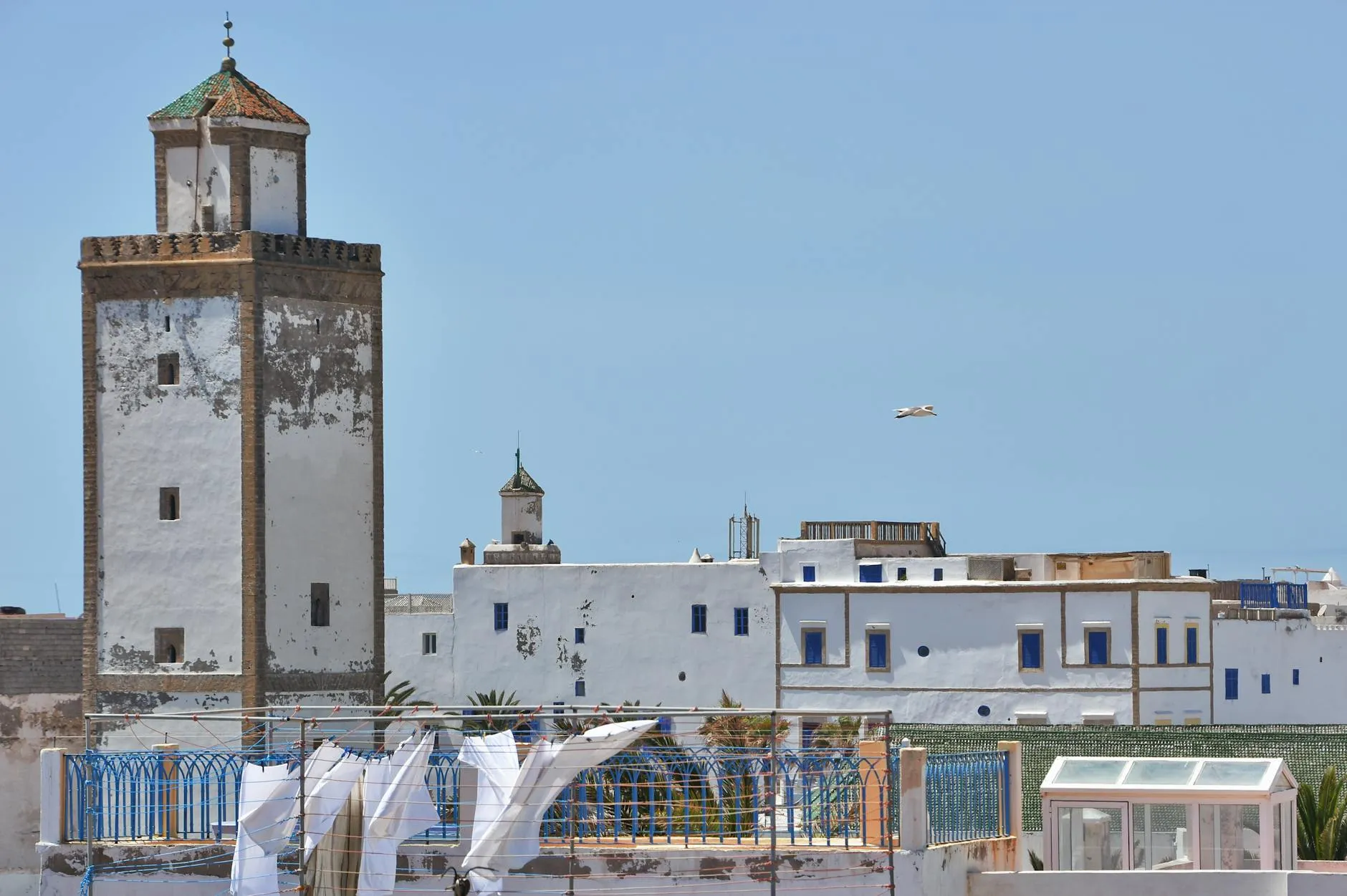
Essaouira-Mogador Airport (ESU) — Airport Guide 2026
Essaouira-Mogador Airport is a small airport 15 km south of Essaouira, a walled 18th-century town on Morocco’s Atlantic coast, served by European low-cost carriers.
Quick Reference
ESU / GMMI
Essaouira-Mogador Airport
~15 km south of Essaouira
Flat ~150 MAD (≈ €14 / $16) · 20–25 min · cash dirhams, agree before you ride
Moroccan dirham (MAD / DH) · 1 EUR ≈ 10.9 MAD · 1 USD ≈ 9.4 MAD (Bank Al-Maghrib, 9 Sep 2026)
Visa-free 90 days (US, UK, EU, Canada, Australia, Japan) — ~70 exempt nationalities in total, a few of them capped at 30 days or needing an AEVM
Ryanair · easyJet · Transavia (Royal Air Maroc does not list Essaouira)
None
Single terminal · café, restaurant, duty-free, prayer area · free Wi-Fi
Marrakesh (RAK), ~2.5–3 hr by road
✈️ A Quiet Airport for a Walled Atlantic Town
ESU is a single-terminal, single-runway operation, and its schedule is built around that fact. Ryanair runs the broadest network — six routes, from London Stansted, Paris Beauvais, Marseille, Madrid, Brussels Charleroi and Düsseldorf Weeze, none of them marked seasonal in the carrier’s own route feed — while easyJet operates year-round from Bordeaux and Lyon, and Transavia holds the Paris Orly route year-round. Royal Air Maroc’s own network page does not list Essaouira at all, so do not plan a Casablanca connection onto a domestic flight here. The European low-cost routes are the roster.
The practical consequence: when two low-cost flights land within the same hour, the arrivals hall bunches up. There’s no rail and no reliable bus, so the transfer requires a plan. For travellers whose dates don’t align with a direct ESU service, Marrakesh (RAK) is the fallback — about 2.5–3 hours by road — and a well-worn route at that.
⚠️ No rail, no shortcuts
The airport has no train connection and the only bus option is unreliable with luggage (see Getting Into Essaouira). Treat this as a taxi airport from the moment you land. Factor both the inbound and return taxis into your time budget.
🛂 Border & Visa: 90 Days and the Closed Dirham
🗂️ Entry requirements
The US, UK, EU/Schengen countries, Canada, Australia and Japan are among roughly 70 nationalities in total that Morocco exempts from visas, in most cases for up to 90 days on a valid passport — no eVisa, no advance form. Your passport is stamped on arrival, and for the nationalities named above the 90-day limit is per entry. A few exemptions are narrower: Maldives and Hong Kong passport holders get 30 days, and Mali, Congo (Brazzaville) and Guinea (Conakry) nationals need Morocco’s AEVM electronic authorisation.
Morocco’s parliament has periodically discussed reciprocal visa arrangements for some European nationalities, but as of 2026 the visa-free regime remains in place. If you’re flying significantly later than mid-2026, verify the current rules.
💱 The dirham problem
The Moroccan dirham is a restricted (“closed”) currency: it’s officially difficult to buy or sell outside Morocco, and there are limits on taking it in or out of the country. The operational implication is simple — don’t try to get dirhams before you fly. Draw cash from an ATM in the arrivals hall on landing. Airport ATMs take foreign cards and give the interbank rate; the bureau de change in the terminal is the wrong move. Change any leftover dirhams back before you leave, because they’re of limited use once you’re out.
⚠️ Get cash at the arrivals ATM — before you step outside
The airport taxi, most medina stalls, and many Essaouira restaurants are cash-only. Walking out without dirhams means negotiating a taxi with nothing to pay it. Hit the ATM before you exit arrivals. Skip the bureau de change; the ATM rate is better.
🚕 Getting Into Essaouira
🚖 Grand taxi: the actual option
Taxis wait to the far left of the car park as you exit the terminal. The standard fare into Essaouira is a flat 150 MAD (≈ €14 / $16), day or night, and the run takes 20–25 minutes. Cash in dirhams only — cards are not accepted. Agree the 150 MAD fare before you get in; it’s the going rate and you shouldn’t need to pay more. On the return journey from Essaouira, the same flat fare applies.
🚕 Grand taxi · 150 MAD flat fare · 20–25 min
Taxis stage to the left of the exit. Confirm the fare before you ride. The 150 MAD (≈ €14 / $16) figure is standard; cash dirhams only, no card payment.
🚌 Bus No. 2 (“Lima”): theory versus practice
Bus No. 2 is the cheap option on paper, running roughly 06:30–18:30. In practice, it often terminates at the junction on the main road rather than going all the way to the terminal, leaving a ~3 km walk to the airport entrance. With luggage or any kind of schedule, it’s not a realistic choice. The fare saving against the taxi does not compensate for the uncertainty.
🛋️ Facilities and Lounges
ESU has no Priority Pass lounge and no meaningful lounge offering of any kind. The terminal runs to a café, a restaurant, a duty-free shop, a prayer area, and free Wi-Fi. That’s adequate for the short pre-flight waits typical here, but it’s not a place to engineer a long layover around comfort. If you want a decent send-off, have it in Essaouira — 20–25 minutes away — and head to the airport once you’re done.
☕ No lounge — use the town instead
Pre-flight comfort at ESU means a café coffee, not a lounge. The town is 20–25 minutes by taxi. For a 4–5-hour layover, eat at the port and return to the airport with time to spare rather than arriving early and waiting in a small terminal.
🍽️ Food: Grilled Fish, Tagine, and Argan
Essaouira is a fishing port, and the food follows from that. The grilled-fish stalls at the working harbour are the thing to eat: pick your catch from the display — sardines, sea bream, calamari, prawns — and they cook it on the spot. Fix the price per weight before they start cooking; the harbour-market upsell is real and fixing it upfront is the standard move.
Beyond the port, the Moroccan kitchen covers the staples: tagine (the slow-cooked stew named for its conical clay pot), couscous (traditionally the Friday dish), pastilla (the elaborate sweet-savoury layered pie), and harira soup.
🐟 Port fish stalls: agree the price by weight before cooking
Pick your fish, point at what you want, and negotiate the price per 100g before anything goes on the grill. It’s not optional — the price is per weight and you need to fix it in advance. This applies at every stall along the port.
Two local specifics worth knowing. The argan tree grows almost exclusively in this region of Morocco — the Essaouira area is inside its natural range — and women’s cooperatives press the oil and sell it directly. Amlou, the paste made from argan oil, almonds, and honey, is eaten spread on bread. It’s available in the medina and worth trying on its own terms, separate from the cooking-oil version. The other constant is Moroccan mint tea, poured from height in a ritual that doubles as hospitality — it appears at the end of most transactions that aren’t purely transactional.
The airport café is basic. The port and the medina are where to eat.
💡 Insider: The Medina, the Ramparts, and the Wind
Essaouira is compact enough to cover usefully on a short stay, and its layout is unusual for Morocco: the 18th-century medina was designed by a European architect on a grid plan, which makes it more navigable than the labyrinthine medinas of Fès or Marrakesh. It was inscribed as a UNESCO World Heritage Site in 2001. The streets run with artisans’ workshops, galleries, and the smell of thuya wood — a local timber with a distinctive grain that’s used for carved boxes and furniture.
🏛️ Essaouira Medina — UNESCO World Heritage Site (2001)
The medina was laid out in the 18th century on a grid plan, unusual for a Moroccan medina. It’s compact and navigable. The main thoroughfare is Avenue de l’Istiqlal; the woodworkers’ souks are concentrated in the northern quarter.
The sea bastions — the Skala de la Ville, running along the northern ramparts — look out over the Atlantic and are lined with old brass cannons. This is the view most photographs of Essaouira use. The ramparts served as the slave city of Astapor in Game of Thrones, and Orson Welles used parts of Essaouira while filming Othello in the 1940s.
🎬 Skala de la Ville: ramparts over the Atlantic
The sea-facing bastions with their old brass cannons are the classic Essaouira vantage point. They doubled as Astapor in Game of Thrones and featured in Orson Welles’s Othello, filmed here in the 1940s. Walk the length in under 20 minutes.
The working fishing harbour sits below the ramparts, its wooden boats painted blue. It’s the most photographed scene in town and also the location of the fish stalls — the visit and the meal can be the same stop.
🌊 Wind City of Africa: good for sport, less so for sunbathing
Essaouira earns the nickname from the strong afternoon trade winds — the alizés — that push reliably off the Atlantic most of the year. This makes it one of the world’s better spots for windsurfing and kitesurfing. The town beach is wide and attractive, but the wind means it’s better for watching kites than lying on a towel. The Gnaoua World Music Festival, held in June, draws international acts to the medina.
⏱️ Layover math
The town is 20–25 minutes from the airport by taxi in each direction. On a 4–5-hour layover you can do the medina, walk the ramparts, eat at the port, and return with a buffer — budget the taxi each way (150 MAD each leg, cash) plus 30 minutes back at the airport before your gate. On anything under 3 hours, the transit time eats the visit; stay in the terminal.
❓ Frequently Asked Questions
📊 At a Glance — ESU 2026
| Feature | 2026 Data |
|---|---|
| IATA / ICAO | ESU / GMMI |
| Official name | Essaouira-Mogador Airport |
| City | Essaouira, Morocco |
| Distance to centre | ~15 km south (20–25 min by taxi) |
| Terminal | Single · café, restaurant, duty-free, prayer area · free Wi-Fi |
| Grand taxi | Flat ~150 MAD (≈ €14 / $16) · 20–25 min · cash dirhams, agree fare first |
| Bus No. 2 “Lima” | ~06:30–18:30 · often stops at highway junction (~3 km walk) · impractical with luggage |
| Rail link | None |
| Currency | Moroccan dirham (MAD / DH) · 1 EUR ≈ 10.9 MAD · 1 USD ≈ 9.4 MAD (Bank Al-Maghrib, 9 Sep 2026) · closed currency — ATM on arrival |
| Visa | Visa-free 90 days (US, UK, EU, Canada, Australia, Japan) · ~70 exempt nationalities in total · Maldives and Hong Kong 30 days · Mali, Congo (Brazzaville), Guinea (Conakry) need an AEVM |
| Lounges | None (no Priority Pass) |
| Carriers | Ryanair (six routes, none seasonal: London Stansted, Paris Beauvais, Marseille, Madrid, Brussels Charleroi, Düsseldorf Weeze) · easyJet (Bordeaux / Lyon) · Transavia (Paris Orly) · Royal Air Maroc does not list Essaouira on its own network page |
| Alternative gateway | Marrakesh (RAK) · ~2.5–3 hr by road |
| Layover viability | 4–5 hr: medina + ramparts + port fish lunch viable · under 3 hr: stay in terminal |
| Key landmarks | Essaouira Medina (UNESCO 2001) · Skala de la Ville ramparts · fishing port · windsurfing beaches |