Alejandro Velasco Astete International Airport (CUZ) — Airport Guide 2026
You land at Cusco and your body delivers the first piece of information before you have even cleared the gate: the air is thin. At 3,310 metres — roughly two-thirds of sea-level air density — the airport itself is the orientation experience, and everything else about CUZ follows from that fact.
Quick Reference
CUZ / SPZO
Alejandro Velasco Astete International Airport
3,310 m (10,860 ft)
~3,400 m
~3.7 km · 10–20 min by road
1 (domestic + limited international)
10/28 · 3,397 m asphalt
December 1964
Extended to ~04:00–02:00; night ops weather/terrain-constrained
~3.0 million (Peru’s second-busiest airport)
Peruvian sol (PEN, “S/”) · ~3.40/USD · ~3.96/EUR (late May 2026)
Visa-free 90 days, most Western nationals · digital TAM
Not required for Cusco — only for Amazon lowlands
Hanaq VIP (Priority Pass) · near Gate 9/10
LATAM, Sky Airline, JetSMART, Avianca
Lima (LIM) — multiple daily on all four carriers
~10–12 h from Cusco · overnight strongly recommended
Chinchero — under construction, not open, realistic 2027+
🏛️ The Airport — Layout, History and What That Long Runway Is Actually For
CUZ has one terminal and one runway, and for the purpose of planning your trip, that tells you most of what you need to know about the experience airside. The airport opened in December 1964 and is named for Alejandro Velasco Astete, the Peruvian aviator who made the first flight across the Andes from Lima to Cusco in 1925 — a trip that previously took days overland. He died that same September in a crash near Puno, reportedly steering away from a crowd of airshow spectators. The name is earned.
The runway runs 3,397 m. That length is not about traffic volume — it is a direct function of altitude. At 3,310 m, wings generate less lift and engines less thrust than at sea level, so aircraft need substantially more tarmac to rotate and climb. The approach geometry is fixed by the surrounding terrain: aircraft land from the west onto runway 28 and take off toward the east from runway 10. High ground past the eastern end means there is no alternative departure direction available to a loaded airliner. This is why you may find yourself sitting on the apron when cloud drops below roughly 3,800 ft over the airport — the one permitted geometry leaves no margin for bad weather. When landings pause, they pause.
The terminal is compact and runs over capacity when the Lima banks stack up in the mid-morning. Around 3.0 million passengers used it in 2023, making CUZ Peru’s second-busiest after Lima. The building was not designed for that load. Expect queues at the single security line and a domestic departures concourse that becomes genuinely crowded when three or four Lima flights are scheduled within an hour of each other. There is no airside rail, no second terminal, no people-mover — the layout is check-in, security, concourse, gates, the Hanaq lounge, and a handful of cafés.
The airport’s near-total closure at night is somewhat looser in 2026 than its reputation suggests. A schedule change extended the published operating window to roughly 04:00–02:00. But night and marginal-weather flying remain constrained by the same terrain and visibility rules that have always governed the field, and the practical reality — that morning departures are the reliable ones and afternoon weather build-up makes delays more likely later in the day — is unchanged. If you have a tight onward international connection from Lima, book the early flight.
⚠️ Chinchero is not open in 2026
The long-promised replacement airport, about 30 km away near the Sacred Valley, is under construction but is not operational and will not open this year. After a 2024 contract addendum narrowed the scope and pushed runway and control-tower construction into a later phase, the realistic timeline is late 2027 at the earliest. Any source presenting Chinchero as your 2026 arrival airport is out of date. You are landing at CUZ, inside the city.
🛂 Entry, the Sol, and the Altitude Warning That Outranks Everything
Visa and the digital TAM
Most Western travellers — US, Canada, UK, EU, Australia, New Zealand, and more than 90 nationalities — enter Peru visa-free as tourists for up to 90 days, extendable to 183 days at the border at officers’ discretion. Carry a passport valid at least six months past arrival, with blank pages for the stamp.
The old paper Tarjeta Andina de Migración (TAM) is now digital. Your entry is logged automatically when your passport is scanned; you receive no slip to keep. If you need proof of legal entry — most usefully to claim the 18% IGV (VAT) exemption that foreign tourists get on hotel stays — pull your Virtual TAM from the Migraciones website. One border note that catches people out: nearly all international arrivals clear immigration in Lima before connecting to Cusco. Walking off a Lima–Cusco flight at CUZ, you are a domestic passenger with no further border control.
The sol — denominations worth knowing
Peru’s currency is the nuevo sol, written PEN or “S/”. In late May 2026 it traded around 3.40 to the US dollar and 3.96 to the euro; verify before you travel. Coins: S/0.10, 0.20, 0.50, S/1, S/2, S/5. Notes: S/10, 20, 50, 100 and 200. The S/200 note is awkward almost everywhere — taxis, market vendors and small cafés will struggle to break it, and some refuse it over counterfeit concerns. Withdraw in mixed denominations and keep S/10 and S/20 notes in your pocket.
💱 Change money in town, not at the airport
The airport exchange spreads are wider. Bank ATMs in Cusco — BCP, Interbank, BBVA, Scotiabank — carry lower fees than the Globalnet machines. Peru has no meaningful parallel exchange market (unlike Argentina), so the official rate is the rate. At any ATM or card terminal, decline the “pay in your home currency” option — dynamic currency conversion always costs you money versus your bank’s own rate.
Yellow fever — the short answer
You do not need a yellow-fever certificate for Cusco, the Sacred Valley or Machu Picchu. These sit in the high Andes, above the mosquito zone. Vaccination is recommended only if you are combining your trip with the Amazon lowlands — Puerto Maldonado (a direct CUZ flight away), the Manu and Tambopata jungle lodges, or Iquitos — and should be done at least 10 days before exposure.
Soroche — the fact that outranks the sightseeing
Cusco sits near 3,400 m and the airport at 3,310 m. You have very likely flown up from Lima at roughly 150 m in under 80 minutes, a vertical jump your body has had no time to absorb. Soroche (acute mountain sickness) is not a dramatic exception here — it is the default first-day experience for a large share of arrivals. The range runs from pressing headache, breathlessness and poor sleep all the way to the genuine medical emergencies of pulmonary or cerebral oedema, which require immediate descent.
What actually helps, in order of usefulness:
- Do nothing strenuous on day one. No steep walking, no heavy meals, no alcohol. San Blas’s stepped streets are a day-two job.
- Hydrate hard. Far more water than you think you need. The dry mountain air dehydrates you quickly.
- Coca tea (mate de coca), offered free at virtually every hotel lobby in Cusco, is legal, mild and genuinely useful for symptoms. Coca leaves to chew work the same way.
- Acetazolamide (Diamox) if you are prone to AMS — start it the day before ascent and ask a doctor first.
- Machu Picchu is lower than Cusco. The citadel sits at roughly 2,430 m, nearly a kilometre below the city. Acclimatise in Cusco first and you descend to reach the ruins. A sound itinerary puts the Sacred Valley (Urubamba ~2,870 m, Ollantaytambo ~2,790 m) first, before Cusco itself — the valley floor is gentler on unadjusted lungs.
If symptoms turn severe — confusion, breathlessness at rest, a cough producing froth — that is not tough-it-out territory. Descend and get medical help.
⚠️ AMS is the real arrival risk, not crime
The bigger threat to most visitors in the first 48 hours is altitude combined with overexertion, not pickpockets. Pace the arrival day deliberately; the ruins will still be there on day three.
🚆 Getting Into the City — Apps, Official Taxis, and the S/2 Exit Fee
CUZ’s best quality as a transit experience is that it is genuinely inside Cusco. The Plaza de Armas is 3.7 km from the terminal, a 10-to-20-minute drive. There is no airport train and no dedicated express bus. Your options, in descending order of price transparency:
Ride-hailing — price fixed before you board
Cabify, inDrive and Uber all operate in Cusco. A ride to the historic centre runs roughly S/12–25 (approximately USD 3.50–7.50) with the fare visible in the app before you board. inDrive lets you name your fare and have drivers accept or counter it, which works well here. The one friction: drivers cannot always enter the controlled pickup zone, and you may be directed to walk just outside the terminal perimeter to meet your car. Have mobile data working before you leave the building.
📶 Get an eSIM before you fly
Buying a local prepaid SIM in-store now typically requires local ID and biometric registration, which most tourists cannot satisfy. An eSIM purchased online before departure is the cleanest solution: configure it at home and you land connected. Claro has the strongest coverage across Cusco and the Sacred Valley if you do find a physical SIM that works.
Official airport taxis — twice the price, zero negotiation
Licensed taxi counters inside arrivals sell fixed-price transfers, typically S/35–55 (roughly USD 10–16) to the centre. That is approximately double the app fare for the same 3.7 km. The exchange is certainty and an inside-the-terminal pickup. On a first arrival at altitude, after a night flight, or with heavy bags, plenty of travellers reasonably pay it.
Street taxis — cheapest, most caveats
Taxis flagged just outside the perimeter run S/15–30 after bargaining. Agree the full price out loud before you get in — Cusco taxis are unmetered. Expect drivers to ask for approximately S/2 on top to cover the airport exit fee; that is standard, not a scam. What is a red flag is any driver who refuses to agree a price at all, or one who is aggressively soliciting inside the arrivals hall.
Sacred Valley transfers
If your plan is to skip Cusco’s altitude on arrival night and head straight down to the valley, private transfers run from CUZ to Urubamba or Ollantaytambo (roughly 1h15–1h45 by road) and can be pre-booked. A shared colectivo is far cheaper but requires changing vehicles and is awkward with luggage on a first-day arrival.
Rental cars
Car-hire desks exist. Driving in Cusco is a poor idea for most visitors — narrow one-way colonial streets, aggressive local traffic, altitude fatigue, scarce parking, and the fact that virtually everything worth reaching is better handled by transfer or train. Rent only if you have a specific self-drive itinerary and Andean-road confidence.
🛋️ Lounges — What’s Here and What Isn’t
CUZ has one lounge. Calibrate accordingly.
The Hanaq VIP Lounge sits airside, after security, on the upper level near Gate 9/10. It is on the Priority Pass network and also accepts DragonPass, Diners Club, Amex Platinum and several other premium-card programmes. Walk-in access runs from around USD 35 per person. The room holds roughly 30–40 seats, has an open bar, a rotating but limited snack selection, and a bean-to-cup coffee machine that is a genuine step up from anything the cabin will offer. On a busy morning when the Lima flights bank simultaneously, it fills fast and “small” is the operative word.
There is no LATAM or Avianca flagship lounge here, no shower facility, no first-class suite. This is a regional Andean airport — the premium-lounge ecosystem of Lima or Bogotá does not exist at CUZ. If you hold Priority Pass, Hanaq is a good 45 minutes out of the concourse before an early departure. If you are not a cardholder and find yourself weighing USD 35, the honest alternative is one of the airside cafés — on a non-peak departure, quieter than the lounge itself.
🛋️ Hanaq VIP — Priority Pass, ~USD 35 walk-in
Small but functional: open bar, light food, decent coffee. Near Gate 9/10 after security. Fills during morning Lima banks — arrive early or accept the queue.
🍽️ Food Before You Fly — and What to Actually Eat in Cusco
The airport’s food is functional. Its value is mainly as a reminder of how much you overpaid once airside versus ten minutes away in town.
The Cusco food canon — eat these before you reach the gate
- Lomo saltado — beef stir-fried with onion, tomato, ají and soy over fries and rice, Peru’s Chinese-Peruvian chifa classic. S/18–30 at a working Cusco restaurant.
- Cuy (guinea pig) — Andean, ceremonial, roasted or fried whole. A genuine regional dish rather than a tourist gimmick, though priced as a specialty: often S/45–70 where it is done properly. It arrives looking exactly like what it is.
- Alpaca — lean, mild, increasingly available as steak or skewers: S/30–45.
- Rocoto relleno, chicharrón, sopa de quinua, ají de gallina — the everyday Andean-Peruvian plates that appear on most menú del día boards for S/12–20 including soup and a drink.
- Chicha morada (sweet, non-alcoholic purple-corn drink) is on every table; chicha de jora (the fermented, mildly alcoholic traditional version) is a market-and-village thing, not a restaurant staple.
San Pedro Market (Mercado Central de San Pedro), about 10 minutes’ walk from the Plaza de Armas, is the honest baseline: a full menú of soup, a main and juice runs around S/12–18, fresh-fruit juices a few soles. Airside cafés at CUZ charge two to three times that. A lomo saltado or sandwich that costs S/15–20 in town lands closer to S/30–45 behind security. A coffee that runs S/5–8 at a town café becomes S/12–18. The airport is a top-up, not a destination.
Duty-free and what to carry out
International duty-free at CUZ is thin, reflecting the overwhelmingly domestic flight profile. Do serious shopping in Lima. What Cusco does well is regional product bought in town and carried on: Maras pink salt from the Sacred Valley salt pans; single-origin Peruvian cacao and chocolate; Andean coffee; coca-leaf tea and sweets (legal within Peru and most of South America, but prohibited in many countries — check your destination’s import rules before you pack them); and alpaca textiles.
⚠️ “Baby alpaca” at tourist stalls is frequently acrylic
Genuine baby alpaca is expensive and sold through certified shops or cooperatives. If the price looks like a bargain, the fibre probably is too. There is nothing wrong with buying a souvenir blanket — just know what you are paying for.
💡 Insider — Machu Picchu, the Sacred Valley, Rainbow Mountain
Machu Picchu — do the arithmetic before you book
There is no road to Machu Picchu. The route from Cusco: drive to the railhead at Ollantaytambo (~1h45 by road), take the train to Aguas Calientes / Machu Picchu Pueblo (PeruRail or Inca Rail, roughly 1h45–2h), then the shuttle bus up to the citadel gate (~25 min), each way. Train fares from Ollantaytambo start near USD 80 round trip in economy (Expedition / Voyager), rise to roughly USD 140–180 for panoramic classes (Vistadome / 360°), and reach USD 500–600 for the luxury Hiram Bingham.
Add it up honestly: Cusco to Ollantaytambo (1h45) + train (~1h45) + bus (~25 min) + a minimum useful 2–3 hours on site + the full return = roughly 10–12 hours, assuming every connection holds and seats are available on the day. With train departures clustered and tickets selling out in peak season (May–October), a same-day round trip from Cusco is exhausting and fragile. Machu Picchu is not a layover sight. The sensible minimum is one overnight — either in Ollantaytambo or in Aguas Calientes — to catch an early entry slot and avoid the round-trip crush.
Entry is timed and capped under a circuit system: you book a specific circuit and time window, not open-ended access. Foreign adult entry has been running in the region of S/150–165 (confirm current circuit pricing before committing; the rules have changed more than once). The Huayna Picchu add-on sells out first. For peak-season morning slots, book 2–4 months ahead.
🏔️ Machu Picchu (2,430 m) is lower than Cusco
Spend two nights acclimatising in Cusco first and you descend nearly a kilometre to reach the citadel. Most people feel meaningfully better there than they did on arrival day. Front-loading acclimatisation in the Sacred Valley before Cusco is even better.
The Sacred Valley — the right first move
The Sacred Valley is the rewarding day trip from Cusco and the sensible acclimatisation stage, because the valley floor sits several hundred metres lower than the city. A full circuit hits: Pisac (cliff-edge Inca terraces and citadel above a market town, ~1 h from Cusco); Ollantaytambo (a still-inhabited Inca town with a steep sun-temple complex, and your Machu Picchu railhead, ~1h45); Moray (concentric agricultural terraces carved into a natural bowl — an Inca microclimate experiment); and the Maras salt pans (thousands of family-owned evaporation pools worked since before the Inca). The full loop is a 10–11 hour day.
Most of these sites run through the boleto turístico (tourist ticket), a consolidated pass covering a set of Cusco-region archaeological sites and museums. The Maras salt pans and some private sites sit outside it and charge separately. Altitude reference points: Urubamba ~2,870 m, Ollantaytambo ~2,790 m, Pisac ~2,715 m — all materially lower than Cusco, which makes the Valley an intelligently kinder first day.
Rainbow Mountain — not a casual day out
Vinicunca (Rainbow Mountain), the striped ridge in every tour-agency window, is a 12–14 hour round trip with a pre-dawn pickup, a long road day, and a final hike that tops out above 5,000 m — significantly higher than Cusco. Attempting it before you are properly acclimatised is a mistake, and the colours are weather-dependent so there is no guarantee of the photogenic result. Humantay Lake is the gentler, shorter alternative on similar very-early-start logic.
Cusco itself — the low-exertion first day
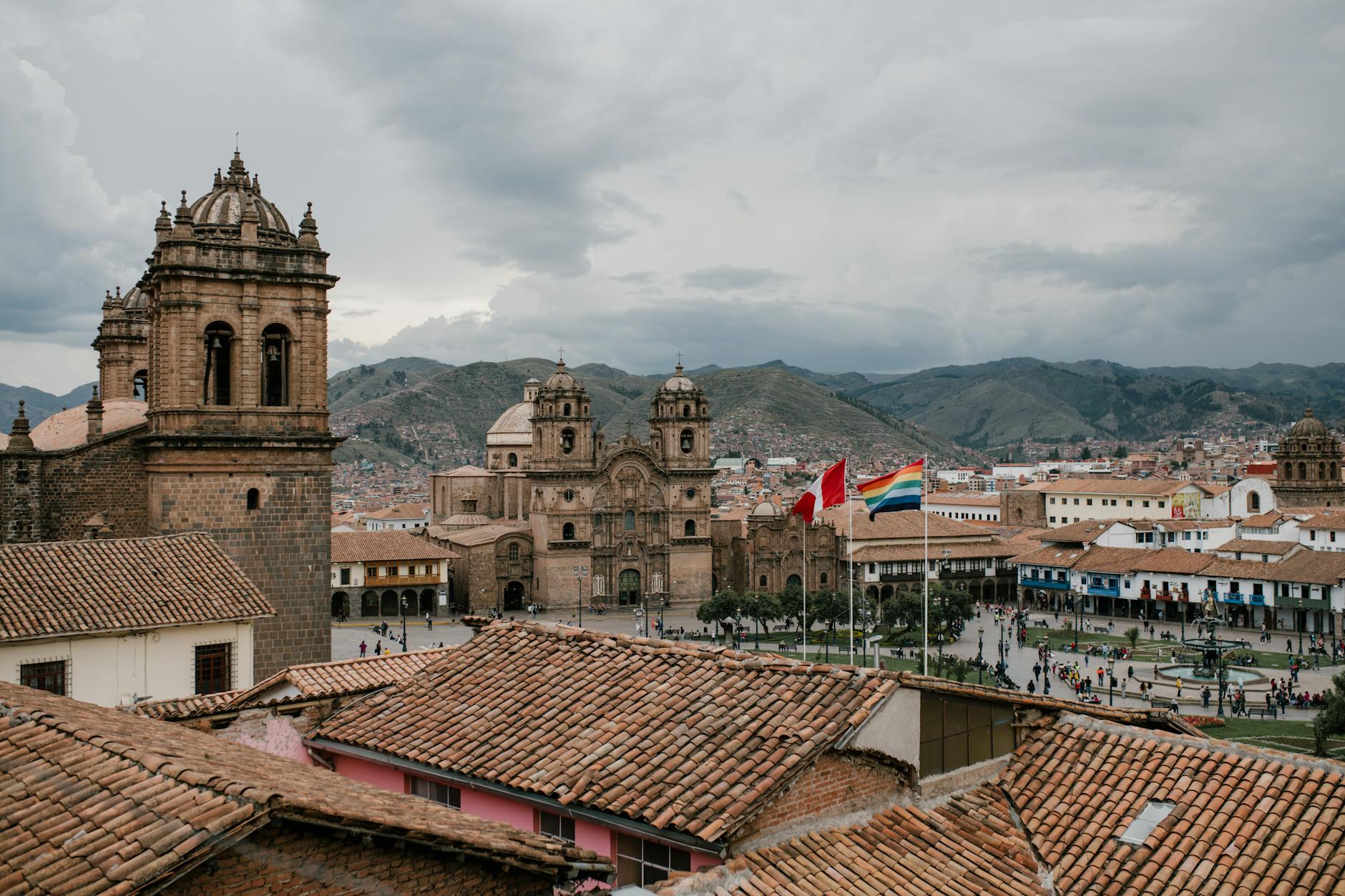
If altitude has put you horizontal, Cusco rewards a slow first day. The Plaza de Armas and its cathedral, the Qorikancha (the Inca sun temple beneath the Santo Domingo convent — the clearest illustration anywhere of Inca masonry overbuilt by the Spanish), and the San Blas artisan quarter are all walkable from the centre. San Blas’s stepped climb is a day-two job once your lungs have adjusted. The Twelve-Angle Stone on Calle Hatun Rumiyoc — a single block from the Plaza — is the standard demonstration of Inca dry-stone fitting and costs nothing to stand in front of. Sacsayhuamán, the fortress on the hill above the city, is a short taxi ride and a gentler introduction to monumental Inca stonework than a full Valley day; it is covered by the boleto turístico and pairs naturally with a slow first afternoon.
One scheduling note that repeatedly trips up tight itineraries: book departure flights to Lima for the morning rather than the afternoon. Morning departures are the reliable bank; afternoon weather delays at CUZ are common and can compress or miss onward international connections.
🔧 Practical Notes — Wi-Fi, Safety, Water, Tipping
Wi-Fi: The terminal has free Wi-Fi, serviceable for booking a ride and sending a message. Not for streaming or heavy use.
Safety: Cusco is comparatively safe for a major tourist city. Standard pickpocket risk applies in crowded spots — watch your bag at San Pedro Market, in the Plaza de Armas crush, and on packed tour buses. Use app-based or counter taxis at night rather than flagging unknown cars. The altitude-overexertion risk outweighs the crime risk for most visitors.
Water: Do not drink the tap water. Bottled or properly filtered only, including for ice at cheaper places and for brushing teeth if you are cautious.
Tipping: Not obligatory, and modest. Around 10% at sit-down restaurants if service is not already included; a few soles for guides and porters; rounding up rather than tipping for taxis. A US-style 20% is not expected.
❓ Frequently Asked Questions
📊 At a Glance — CUZ 2026
| Item | Detail |
|---|---|
| Airport | Alejandro Velasco Astete International Airport |
| IATA / ICAO | CUZ / SPZO |
| City served | Cusco, Peru |
| Elevation | 3,310 m (10,860 ft) |
| Cusco city altitude | ~3,400 m |
| Machu Picchu citadel altitude | ~2,430 m |
| Distance to Plaza de Armas | ~3.7 km · 10–20 min |
| Terminals / runways | 1 terminal · 1 runway (10/28, 3,397 m) |
| Operating pattern | Extended window ~04:00–02:00; night ops terrain/weather-constrained |
| Opened | December 1964 |
| 2023 passengers | ~3.0 million (Peru’s #2 airport) |
| Currency | PEN (“S/”) · ~3.40/USD · ~3.96/EUR (late May 2026) |
| Entry | Visa-free 90 days, most Western nationals · digital TAM |
| Yellow fever | Not required for Cusco/Sacred Valley/Machu Picchu |
| Ride-hailing to centre | Cabify / inDrive / Uber · ~S/12–25 |
| Official airport taxi | ~S/35–55 fixed |
| Street taxi | ~S/15–30 + ~S/2 exit fee |
| Lounge | Hanaq VIP (Priority Pass) · Gate 9/10 · walk-in ~USD 35 |
| Main carriers | LATAM, Sky Airline, JetSMART, Avianca |
| Busiest route | Lima (LIM) — multiple daily |
| Machu Picchu round trip | ~10–12 h · overnight recommended · book 2–4 months ahead |
| Ollantaytambo → Aguas Calientes train | ~1h45–2h · from ~USD 80 RT economy |
| Sacred Valley full loop | Pisac · Ollantaytambo · Moray · Maras · ~10–11 h |
| Rainbow Mountain (Vinicunca) | ~12–14 h · summit >5,000 m · acclimatise first |
| Replacement airport (Chinchero) | Under construction · not open · 2027+ |
| Tap water | Not potable — bottled/filtered only |
| Tipping | ~10% at restaurants · round up for taxis |