Chaudhary Charan Singh International Airport (LKO) — Airport Guide 2026
Lucknow airport finally has a building worthy of the city it serves: Terminal 3 opened on 10 March 2024 and now handles everything — domestic and international — under one 111,367 m² roof, ending a two-terminal split that dated back to 1986.
Quick Reference
LKO / VILK
Chaudhary Charan Singh International Airport
Amausi Airport (renamed 17 July 2008)
Lucknow International Airport Ltd — Adani-led consortium
Terminal 3 only (opened 10 March 2024)
111,367 m², seven aerobridges, stated capacity 13M+ passengers/year
~14 km to Hazratganj / Charbagh — 25–35 min by road
Red Line, CCSIA station; ₹30 / ~18 min to Charbagh; ~06:00–22:00
Uber & Ola; 25–35 min, dynamic pricing
Fixed-fare counter in arrivals
Indian rupee (₹); US$1 ≈ ₹95–96, €1 ≈ ₹111–112 (May 2026 — verify before travel)
30-day US$25 (US$10 Apr–Jun) / 1-yr US$40 / 5-yr US$200 (US$160 US / US$484 UK) + card surcharge
Nepal & Bhutan nationals only
Original WHO certificate required if arriving from endemic country
Adani Lounge (Plaza Premium; Priority Pass accepted), Budweiser — both T3
Not drinkable
🏢 Terminal 3 — The Only Building That Matters
For most of its life, Lucknow’s airport ran on an awkward split: a 1986 original that ended up handling international flights, and Terminal 2 — opened 2 June 2012, a domestic-only building whose roofline was meant to suggest the folded wings of a paper plane, carrying around four million passengers a year before T3 absorbed everything. That arrangement ended in March 2024 when Prime Minister Narendra Modi inaugurated Terminal 3, and as of 2026 both older buildings are out of passenger service. T2 is slated for demolition in the next expansion phase.
⚠️ Warning — Do Not Go to Terminal 2
A chunk of older travel content, some third-party map pins, and more than a few drivers still route to “Terminal 2.” T2 is closed and slated for demolition. Tell your driver Terminal 3, confirm the app’s pin before you get in, and ignore any booking confirmation that says T2. Being dropped at a decommissioned terminal at 03:00 is an avoidable problem.
T3 runs three levels: departures above, arrivals below, large basement. The design doesn’t go for the generic glass box — Chikankari embroidery motifs and Awadhi arch shapes work their way into the facade and ceilings, which is more than most new Indian airports bother with. The practical consequence of the single-terminal layout is that the domestic / international split is not fixed signage you can memorise: T3 uses swing gates, flipping between domestic and international use depending on the day’s schedule. Follow the screens, not the signs.
The airport serves roughly 42 non-stop destinations, around 11 of them international. Confirmed international service runs to Dubai (Flydubai), Muscat (SalamAir, Oman Air), Abu Dhabi (IndiGo), Jeddah and Riyadh (Air India Express, Saudia), Kuala Lumpur (AirAsia), and Bangkok (Thai AirAsia). Domestic traffic dominates — Delhi, Mumbai, Bengaluru, Hyderabad, Kolkata — mostly IndiGo and Air India.
The name causes more confusion than it should. Chaudhary Charan Singh was India’s fifth prime minister, briefly, in 1979–80, a farmer-politician from western UP. The airport was renamed after him on 17 July 2008; before that it was Amausi Airport, after the locality it sits in, and “Amausi” persists on older road signs and among drivers who’ve been doing this longer than T3 has existed. LKO is the booking code regardless.
A note on the expansion underway: Phase 2, due across 2026–27, extends the runway from 2,744 m to 3,514 m and adds a parallel taxiway — the infrastructure that makes wide-body aircraft practical and is the stated precondition for announced direct Singapore and Vietnam routes. Expect construction-side disruption around the airfield through this period. Any new long-haul route is “announced” until it’s actually selling tickets; verify before booking a connection that depends on it.
🛂 Border & Visa — e-Visa, Yellow Fever, and What the Pandemic Left Behind
India doesn’t do general visa-on-arrival. Nepal and Bhutan nationals enter visa-free; almost everyone else needs a visa arranged before flying. For tourists the practical route is the e-Visa at indianvisaonline.gov.in — that URL specifically, not the cluster of agent sites in the search results that charge US$40–80 above the government fee for completing the same form.
⚠️ Warning — e-Visa Site Impersonators
Search results for “India e-Visa” are thick with third-party agents charging a markup of US$40–80 over the official fee. The official portal is indianvisaonline.gov.in — use nothing else. Apply at least four days before travel.
The tourist e-Visa comes in three tiers:
- 30-day double-entry: US$25 for arrivals July–March, dropping to US$10 for April–June.
- 1-year multiple-entry: US$40.
- 5-year multiple-entry: US$200 for most nationalities.
A few nationalities pay flat rates instead — UK passport holders are quoted around US$484 for the five-year, US citizens around US$160 — so check the fee shown for your specific passport before paying. Card surcharges apply on top: roughly 3% on credit/debit, 4% via PayPal. The e-Visa is granted as an ETA you carry as a printout; Lucknow is a listed e-Visa arrival airport. Anyone ineligible for the e-Visa, or travelling for work, study, or extended stays, needs a paper visa from an Indian mission.
The Air Suvidha self-declaration India required during the pandemic is gone. The live requirement that does bite is yellow fever: if you are arriving from, or have recently transited, a yellow-fever-endemic country in Africa or South America, you must carry the original WHO yellow-fever vaccination certificate — not a scan, not a photo on your phone, the original. The certificate is valid from ten days after the jab. Non-compliance can result in quarantine of up to six days. For travellers coming directly from Europe, North America, or East Asia this never applies. For Gulf or Southeast Asia routes, check whether your itinerary touched an endemic country in the preceding days.
⚠️ Warning — Yellow Fever Certificate
If your routing touched an endemic country in Africa or South America, India requires the original WHO yellow-fever vaccination booklet at entry — not a photograph or digital copy. Up to six days’ quarantine on non-compliance. Arriving from Europe or East Asia: this doesn’t apply.
Visitors on ordinary short tourist e-Visas are almost never subject to FRRO registration (the Foreigners Regional Registration Office system). Check the conditions on your specific visa grant rather than assuming — the rules vary by visa type and stay length. There is no airport arrival tax to pay; airport charges are baked into the ticket.
Currency. The Indian rupee notes in active circulation run ₹10, ₹20, ₹50, ₹100, ₹200, and ₹500. The ₹2,000 note was withdrawn in 2023 — you will essentially never see one. As of May 2026, US$1 buys roughly ₹95–96 and €1 about ₹111–112, though that drifts. Pull cash from a bank ATM in the arrivals hall rather than changing notes at the counter; the rate is better. Carry some cash regardless — UPI (India’s instant-payment system) is ubiquitous among locals but foreign cards can’t easily connect to it, and many small vendors and auto-rickshaw drivers are cash-or-UPI only. One practical note on the ₹500 note: many small vendors and auto drivers won’t break a fresh one, so split larger ATM withdrawals into smaller denominations early.
🚆 Getting Into Lucknow — Metro, App Cabs, and the Rest
The city centre — Hazratganj for shopping and hotels, Charbagh for the main railway station — sits about 14 km from the terminal. Four options in order of value:
🚇 Metro (Recommended If You Land Before 22:00)
The Red Line has a station built into the airport. CCSIA is the southern terminus; nine stops underground to Charbagh for ₹30, about 18 minutes — faster and far cheaper than road in any real traffic. Stored-value GoSmart card shaves roughly 10% off. Service runs approximately 06:00 to 22:00.
🚆 Red Line Metro — ₹30, ~18 min to Charbagh
The CCSIA station is directly at Terminal 3. GoSmart card cuts the fare ~10%. Runs approximately 06:00–22:00 — if your flight lands after that window, you’re on a cab. Fares across the full line range ₹10–60 by distance.
The metro gets you to Charbagh and Hazratganj cleanly. If your hotel is in Gomti Nagar or a newer district off the Red Line, add a short app-cab leg at the far end.
⚠️ Caution — Metro Doesn’t Cover Late Arrivals
Gulf and Southeast Asia flights cluster in the late evening and small hours. A 02:00 arrival from Dubai or Muscat has no metro and falls back on app cabs or prepaid taxi, where late-night supply is thinner and surge more likely. Budget for the cab if you’re on one of those rotations.
📱 App Cabs (Uber / Ola)
Both work at LKO with a marked pickup zone in arrivals. Door-to-door with luggage, this is what most arriving travellers use. Pricing is dynamic — don’t trust any quoted figure from online content you can’t date — but the app shows the price before you confirm. App cabs routinely undercut the prepaid taxi counter on most runs.
🚕 Prepaid Taxi
A fixed-fare counter in arrivals where you pay by zone and hand the slip to the driver. The advantage is a locked price and no negotiation. The disadvantage is it typically costs more than an app cab for the same trip. Worth using if you’ve no local SIM or data, or you’re arriving at an hour when app supply is thin.
🚌 Bus and Auto-Rickshaw
City buses from the airport are infrequent, slow, and not set up for luggage — not a real option for most arrivals. Auto-rickshaws run from outside the terminal precinct, but the airport is the wrong place to use one: meter discipline at the arrivals point is poor and the “tourist” quote will be inflated. Autos work well inside the city for short hops once you’ve cleared the airport.
The short version: If you land between 06:00 and 22:00 and your hotel sits near the Red Line, the metro is the clear call — ₹30 versus several times that by cab, and not subject to traffic. App cab for anything door-to-door or outside metro hours. Prepaid taxi as the no-phone fallback.
🛋️ Lounges — Adani, Plaza Premium, and No Flagship
Lounge provision at T3 is modest. The headline facility is the Adani Lounge, operated by Plaza Premium, located airside in Terminal 3. It accepts Priority Pass — the booking slug on Plaza Premium’s listing flags the international-departures Adani Lounge — along with the major Indian credit-card lounge networks. There is also a Budweiser-branded lounge in T3. Paid walk-in access runs roughly ₹1,000–1,600 per person; confirm the current figure at the desk, as Indian lounge access pricing shifts with card-issuer reshuffles.
🛋️ Adani Lounge (Plaza Premium) — Priority Pass Accepted
The only Priority Pass-eligible lounge at LKO, airside in T3. Standard contract-lounge kit: hot and cold buffet, bar, wifi, showers. Walk-in around ₹1,000–1,600. If your card gets you in free it’s a clear upgrade on gate seating; if you’re paying ₹1,500 cash for a 90-minute domestic layover, the food court may serve you better.
What T3 doesn’t have: a premium airline flagship lounge. There is no Air India Maharaja Lounge, no international carrier’s own business or first-class space. International business-class passengers on Gulf and Southeast Asia carriers are routed into the Adani contract lounge. If you’re connecting through Lucknow on a premium ticket expecting a dedicated airline facility, the Adani Lounge is the ceiling — it’s competent, not a flagship.
One caveat on Indian credit-card access: most issuers now cap free visits to a handful per quarter and tie them to a minimum spend. The card that worked last year may not work this trip. Check your card’s current terms before relying on it at the desk, and carry the cash fallback.
A note for connecting passengers: a domestic-to-international connection at T3 doesn’t involve a terminal change, but you do clear immigration and re-clear security between the two. On the international side that’s a real queue at peak hours, particularly in the late-evening bank when several Gulf and Southeast Asia departures push out together. Give yourself more than the minimum connection time the booking engine quotes.
🍽️ Food Before You Fly — and Why the City Wins
The airport food court charges a 50–100% markup over town for a worse version of Lucknow’s food. Eat in the city if you have any time at all; the airport food is the last resort.
Lucknow’s cuisine is Awadhi — the slow-cooked court cooking of the old Nawabs, heavy on dum (sealed slow-steaming), fragrant rice, and meat worked to softness over long heat. The specific dish to chase is the galouti kebab: minced meat ground so fine it dissolves on the tongue. The traditional account holds it was created for Nawab Asaf-ud-Daula’s kitchen, for an ageing ruler who had lost his teeth, the mince worked with a spice blend that local legend puts at well over a hundred ingredients — treat the exact count as folklore rather than a recipe.
🍽️ Tunday Kababi — Galouti Kebabs Under ₹200
The long-running kebab house in Chowk and Aminabad in the old city. A plate of galouti kebab — buffalo or mutton, ground to a paste, served on a paratha — runs well under ₹200. The Chowk original is the one to find; it gets crowded at peak, so go off-hour. The airport version costs more and is blander.
Kakori kebab — a smoked, even finer minced-mutton skewer named for the town of Kakori on the city’s edge — is the second order alongside galouti. Nihari-kulcha, a slow-cooked meat stew eaten at breakfast with a soft baked bread, is the early-morning Old City institution. Lucknawi biryani is lighter and more perfumed than the Hyderabadi style, cooked dum-style with rice and meat sealed together; sheermal, a mildly sweet saffron flatbread, and roomali roti, tissue-thin handkerchief bread, are the standard accompaniments. For something cold: kulfi holds up year-round; makkhan malai is a winter-only whipped-cream-and-saffron dessert sold from Old City carts on cold mornings and gone by spring. Basket chaat — a fried-potato basket holding chickpeas, yoghurt, and chutneys — is the Hazratganj street snack sold for ₹50–100, eaten standing up. The most efficient food afternoon: galouti at Tunday Kababi, basket chaat in Hazratganj, paan to close.
Vegetarians are well served — the Awadhi kitchen takes dum vegetables and breads seriously. The generic Indian-airport food court doesn’t.
Duty-free and take-home. T3 carries standard international tobacco-and-spirits airside on the international side, plus packaged sweets, tea, and spices. Chikankari — the white-on-white shadow-work embroidery Lucknow is known for — is genuinely not worth buying at an airport kiosk markup: it’s a city purchase, best from Chowk or the government emporia, where hand-embroidered cotton kurtas start around ₹500–800, mid-range pieces ₹1,500–3,000, and heavily worked garments climb past ₹5,000. The tell between hand-embroidery and machine-printed imitation is a slightly irregular, raised stitch on the reverse. Boxed Lucknawi sweets are the one airport-buyable souvenir that’s actually regional and travels without damage. Airside tenancy at a two-year-old terminal still rotates, so verify any specific shop’s presence on the day.
💡 Lucknow Beyond the Terminal — Bara Imambara, Old City, Day-Trips
Lucknow’s monuments cluster in the old city around the Gomti river, 13–16 km from the terminal — a 25–40 minute drive depending on traffic.
🕌 The Old City — What to See and in What Order
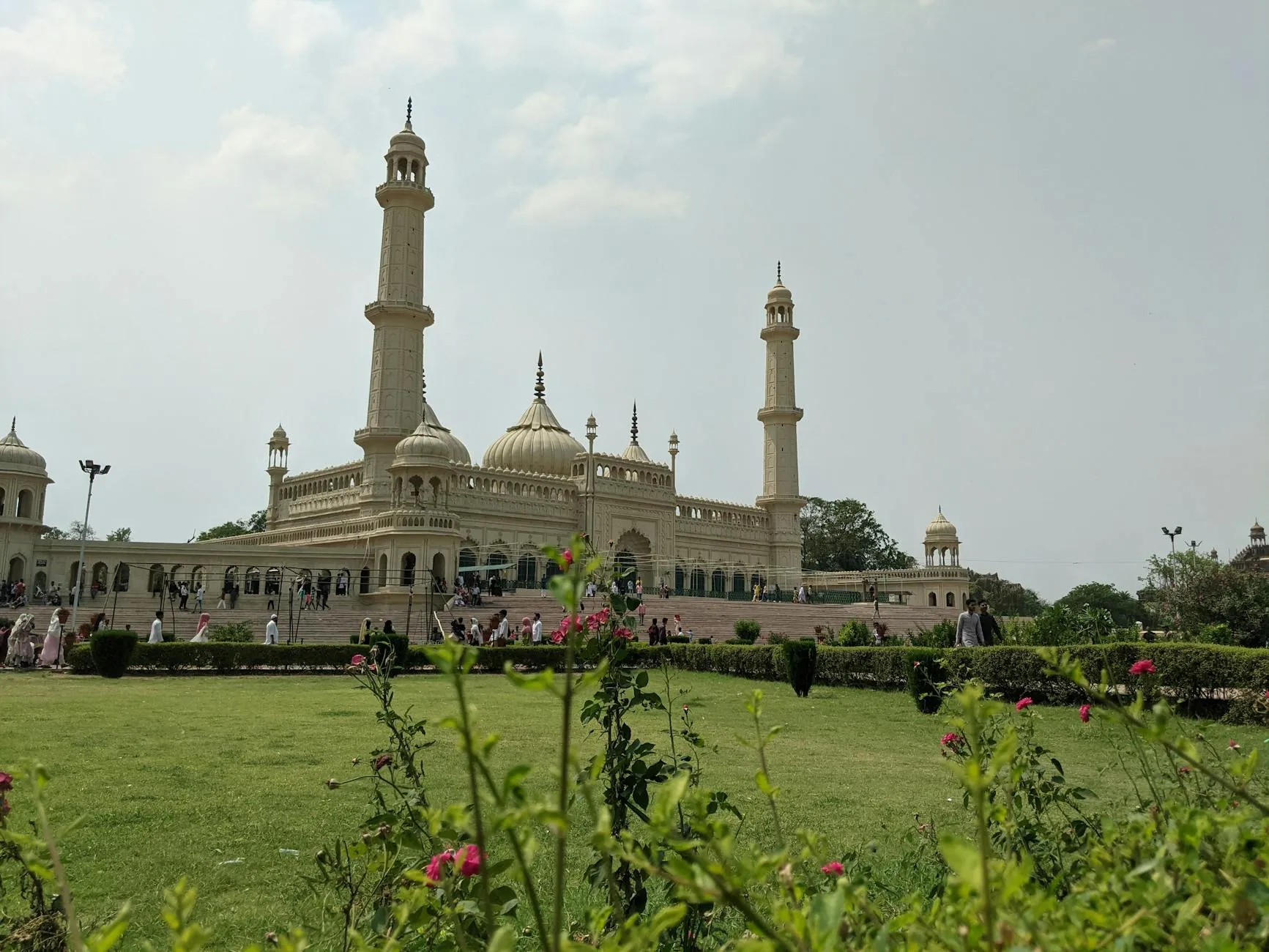
Bara Imambara (1784) is the one to see if you see one thing. Its central hall is a vaulted ceiling built without internal beam supports, one of the largest of its kind anywhere. Above it sits the Bhool Bhulaiya — a deliberate labyrinth of interconnecting passages. The maze is genuinely disorienting and unmarked; take the official guide for this part. The Imambara was commissioned by Nawab Asaf-ud-Daula as a famine-relief public-works project, which explains its scale: the point was to employ people through a bad harvest year.
💡 Bhool Bhulaiya — Take the Official Guide
The labyrinth above the Bara Imambara’s main hall is not a decorative maze — it’s a working disorientation device with dozens of unmarked passages. The official guide is worth it. Budget roughly 90 minutes for Bara Imambara plus maze; combine it with Rumi Darwaza next door, which is a two-minute walk and was commissioned in the same 1784 famine-relief works.
Rumi Darwaza, the 60-foot gateway beside the Imambara, dates from the same 1784 project and was modelled on a gate in Istanbul. Chota Imambara nearby is the more ornate, chandelier-heavy interior. The Residency ruins — shelled buildings preserved from the 1857 siege — are a quieter stop a short distance away, the bullet-pocked walls left as they were found.
Two further stops reward the time if you have a full day. La Martinière College, in the city’s southeast, is a working school built around “Constantia” — the French Baroque country residence of Major General Claude Martin, who died in 1800, a colonial-Nawabi architectural mash-up and the only school anywhere awarded a royal battle honour for its pupils’ role in the 1857 defence. Visiting is restricted around term-time activity; it’s a look-from-outside for most travellers rather than a free wander. Ambedkar Memorial Park in Gomti Nagar is the opposite register: 107 acres of red sandstone, 124 stone elephants, a domed central stupa, open roughly 11:00–21:00 daily. It takes a couple of hours to walk and photographs better than any of the Nawabi monuments.
🛍️ Markets and Chikankari
Hazratganj is the organised, air-conditioned end — established Chikankari boutiques at higher prices but guaranteed handwork. Aminabad and Chowk in the old city are the older, cheaper, denser bazaars where Chikankari has been a family trade for generations. Buy here rather than at the airport kiosk.
🗺️ Day-Trips and the Layover Question
The headline day-trip is Ayodhya, about 135 km east. The Vande Bharat Express (two trains run the route) covers it in roughly two hours each way; road is 2.5–3 hours. Since the Ram Mandir opened it’s a serious draw and a comfortable full-day return from Lucknow — but it requires an overnight in Lucknow. It is not a layover trip under any circumstances.
⚠️ Ayodhya Is Not a Layover Trip
Ayodhya is ~135 km away and two hours each way by the fastest train. It needs an overnight stay in Lucknow, not a transit visit. Kanpur is closer (80 km, 1.5 hours) but is an industrial city rather than a sightseeing one. Dudhwa National Park, on the Nepal border, is 200+ km north — a multi-day trip.
Kanpur is closer at about 80 km, roughly 1.5 hours, but it’s an industrial city rather than a sightseeing destination. Dudhwa National Park (tigers, on the Nepal border) is 200+ km north — a multi-day trip.
The layover maths. The airport is ~14 km out: 25–35 minutes each way in light traffic, more in the evening rush. For an international connection you need to be back airside with a 3-hour-plus check-in and security buffer. Bara Imambara and the old city are reachable only on a layover of about six hours or more — one hour each way with a traffic margin, 90 minutes on the ground, plus the airport buffer — and even then it’s tight. On anything under six hours, stay airside.
🔧 Practical Notes — Connectivity, Cash, Safety, and When to Come
📶 SIM and Connectivity
T3 has free airport wifi, but it authenticates by OTP to your mobile number — which is awkward before you have an Indian number. The practical fix is a local SIM: Airtel and Jio prepaid tourist SIMs need your passport, visa copy, and a passport photo, and activate within a few hours to a day. Indian mobile data is cheap once you’re on a local network; a tourist plan with generous data runs a few hundred rupees. An eSIM from a travel provider bought before arrival is the friction-free alternative if your phone supports it.
💰 Cash and Cards
UPI runs the country, but as a foreigner you’ll mostly use cash and card. Keep small notes (₹10–₹100) for autos, tips, and vendors who won’t break a ₹500. Withdraw from major bank ATMs rather than private surcharge-heavy machines. Carry enough cash for a full day; UPI isn’t accessible to foreign cards at most small vendors.
🧭 Safety and Scams
Lucknow is a relatively straightforward Indian city, but the airport-and-station scam playbook is standard: drivers claiming your hotel is “closed” to divert you to a commission property, inflated “tourist” quotes from autos without meters, prepaid-counter touts. Pre-book your first night, use app cabs with a price shown before you confirm, and ignore anyone who approaches you first. Solo women travellers consistently report Lucknow as calmer than Delhi; standard precautions after dark apply.
Tipping: round up taxi fares, ₹50–₹100 for a hotel porter, 5–10% at sit-down restaurants if service isn’t already added. Don’t tip auto-rickshaw drivers — agree or meter the fare instead.
🌡️ When to Come
The window is mid-November to mid-February: 18°C days, single-digit nights, good for walking the old city. April to June regularly hits 40–45°C and is punishing on foot. The monsoon runs mid-June to early October — cooler but with rain that disrupts day plans. There’s a visa-fee angle: the e-Visa drops to its cheapest (US$10 for the 30-day) in April–June, which is exactly when the weather is worst.
💧 Water and Health
Tap water is not drinkable. Sealed bottled water only — check the seal, skip ice in places you don’t trust. Standard India travel-health prep applies; talk to a travel clinic about recommended vaccinations before you go.
❓ FAQ
📊 At a Glance — LKO 2026
| Category | Detail |
|---|---|
| IATA / ICAO | LKO / VILK |
| Full name | Chaudhary Charan Singh International Airport |
| Former name | Amausi Airport (renamed 17 July 2008) |
| Operator | Lucknow International Airport Ltd — Adani-led consortium |
| Active terminal | Terminal 3 only (opened 10 March 2024) |
| T3 capacity | 13M+ passengers/year; 111,367 m²; 7 aerobridges |
| Distance to centre | ~14 km (25–35 min by road) |
| Metro | Red Line, CCSIA station; ₹30 / ~18 min to Charbagh; ~06:00–22:00 |
| App cabs | Uber & Ola; 25–35 min, dynamic pricing |
| Prepaid taxi | Fixed-fare counter in arrivals (typically more than app cab) |
| Currency | Indian rupee (₹); US$1 ≈ ₹95–96, €1 ≈ ₹111–112 (May 2026) |
| e-Visa fee | 30-day US$25 (US$10 Apr–Jun) / 1-yr US$40 / 5-yr US$200 (US$160 US / US$484 UK) |
| Visa-free | Nepal & Bhutan nationals only |
| Yellow fever | Original WHO certificate required if arriving from endemic country |
| Lounges | Adani Lounge (Plaza Premium; Priority Pass), Budweiser — both T3 |
| Premium lounge | None — no airline flagship lounge at LKO |
| Key international carriers | Flydubai, SalamAir, Oman Air, IndiGo, Air India Express, Saudia, AirAsia, Thai AirAsia |
| Signature dish | Galouti kebab (Tunday Kababi, Chowk) — under ₹200 |
| Top sight | Bara Imambara & Bhool Bhulaiya (1784) |
| Day-trip | Ayodhya ~135 km / ~2 hr by Vande Bharat — overnight required, not a layover trip |
| 2026 construction | Phase 2: runway extension 2,744 m → 3,514 m + parallel taxiway for wide-bodies |
| Tap water | Not drinkable |