Kabul International Airport (KBL) — Airport Guide 2026
The US, UK, Canada and Australia all rate Afghanistan at their highest-level travel advisory — Do Not Travel, advise against all travel — and neither the US nor UK embassy operates in Kabul. Read the advisory and visa sections first; everything else in this guide depends on them.
Quick Reference
KBL / OAKB
Kabul International Airport (reverted from Hamid Karzai International, September 2021)
Khwaja Rawash, northeast Kabul; ~5 km to central districts
1,791 m (5,877 ft) — ringed by the Hindu Kush
11/29, 3,511 m asphalt
Two: 1960 Soviet-built domestic; 2008/2009 Japan-funded international
Ministry of Transport & Civil Aviation (de-facto Taliban); GAAC Holding (UAE) ground/technical
Kam Air, Ariana Afghan Airlines, flydubai, Air Arabia, Turkish Airlines, Iranian carriers
Dubai, Sharjah, Istanbul, Tehran, Mashhad, Islamabad; Kam Air also publishes Delhi, Doha, Abu Dhabi and Kuwait
Herat, Kandahar, Mazar-i-Sharif
Afghani (AFN); ~64.5 AFN = US$1, ~74.5 AFN = €1 — cash dollars only, no foreign-card ATMs
Required; March 2026 single-entry tourist e-Visa available (KBL arrivals only); else in-person abroad
Level 4 — Do Not Travel; embassy closed since 31 August 2021
FCDO advises against all travel; detention risk; no embassy
Governed by the advisory: not a layover or stopover destination — stay airside
4G (Roshan, AWCC, Etisalat, MTN); biometric SIM registration required
🚨 Advisory Reality
This airport is one of the few functioning gateways into a country that the United States, the United Kingdom, Canada and Australia all tell their nationals not to enter under any circumstances. That framing shapes every section below. The guide is here to inform people who have a reason to fly — journalists, aid workers, researchers, and the small number of tourists who go regardless — not to suggest that “going regardless” is the obvious choice.
⚠️ Level 4 — Do Not Travel
The US State Department cites civil unrest, crime, terrorism, wrongful detention, kidnapping, natural disasters and extremely limited health facilities. The US embassy closed 31 August 2021 and provides no consular services inside the country. Travelling against this advice can void travel insurance.
⚠️ UK FCDO — Advises Against All Travel
The FCDO warns of a heightened risk of British nationals being detained for months or years, with no British embassy able to assist in person. Australia and Canada hold equivalent highest-level warnings.
⚠️ ISIS-K Threat Is Current
On 26 August 2021, an ISIS-K suicide bombing at Abbey Gate during the Western evacuation killed more than 180 people, including 13 US service members. The threat is active and specific — not historical context.
The security apparatus you encounter at this airport is a direct consequence of that history. Multiple checkpoints before the terminal, vehicle searches on the approach road, no e-gates, no fast-track, no automated immigration. Budget far more time than the modest passenger volume would suggest. The bottleneck is procedure, not crowds.
🏢 Terminals & History
KBL runs two physically separate buildings, and the split matters for routing decisions.
The domestic terminal
The 1960 Soviet structure at Khwaja Rawash — low-ceilinged, dated, functional. It handles flights to Herat, Kandahar and Mazar-i-Sharif. If you are connecting to domestic Afghanistan, this is your building.
The international terminal
The modern one: a ~US$35 million facility funded with Japanese assistance, inaugurated November 2008 and opened to international flights in 2009. It has two jet bridges, passport-control booths, a customs hall and a small airside duty-free area. There is no airside connection between the two buildings — a domestic-to-international transfer means leaving one terminal and crossing landside to the other.
🏔️ High-Altitude Airport
At 1,791 metres, with the Hindu Kush on every horizon, KBL demands specific approach and departure profiles. The 3,511-metre runway is long enough for wide-body jets — which it needed during the August 2021 airlift — but pilots treat this as a demanding field. High-altitude weight restrictions can affect baggage allowances on smaller aircraft; check with your carrier if you are connecting domestically.
The airport’s name has tracked the country’s politics. It was Kabul Airport for decades, renamed Hamid Karzai International by the Afghan cabinet in 2014, and reverted to Kabul International Airport by the Taliban in September 2021. Your ticket and the IATA code both read KBL regardless.
The two dates that define the recent identity: the 26 August 2021 ISIS-K bombing at Abbey Gate, and 30 August 2021, when Western forces left and the Taliban took full control of the field. Ground and technical operations since then have run under an arrangement with GAAC Holding, a UAE-based company, alongside the de-facto Ministry of Transport and Civil Aviation — which is the reason commercial international flights restarted at all.
Turkish Airlines’ resumption of Istanbul service in 2024, nearly three years after the Taliban takeover, is the clearest marker of the airport’s partial return to the international network. The schedule today is a fraction of the pre-2021 operation: a handful of Gulf, Turkish, Iranian and Pakistani routes plus domestic hops.
The carrier picture
Kam Air (Afghanistan’s largest private airline) and Ariana Afghan Airlines (the flag carrier) run the bulk of domestic and regional international service. flydubai and Air Arabia connect Dubai and Sharjah respectively — the most common way in for travellers routing through the UAE. Turkish Airlines flies Istanbul. Kam Air and Ariana fly the Islamabad route. Iranian carriers operate Tehran and Mashhad.
What is absent: no European, North American, East Asian or major Gulf full-service network carrier — no Emirates, no Qatar Airways scheduled passenger service — flies here. Reaching Kabul usually means routing through Dubai, Sharjah, Istanbul, Islamabad or Tehran and connecting to one of the carriers above; Kam Air also publishes Delhi, Doha and Abu Dhabi services, and advertises Kabul–Kuwait four times weekly from 24 August 2026. Schedules are thin and change at short notice; confirm operation before booking anything that depends on an onward connection.
🛂 Visa & Entry
There is no visa-free entry and no broad visa-on-arrival. Every foreign national needs a visa issued by the de-facto Taliban authorities. The process is strict, largely in-person at most missions, and uneven — a small paperwork error can end the trip at the embassy window.
The March 2026 e-Visa
The de-facto authorities launched an online tourist e-Visa portal in March 2026. It issues a single-entry visa valid for stays of up to 30 days, expiring 90 days from issue. The key restriction: it is currently valid only for arrivals through Kabul International Airport. Land borders and other airports do not apply. The portal is new and the rules are in motion — verify its current status directly before relying on it.
The traditional route
Apply in person at an Afghan mission abroad: most commonly Dubai, Islamabad, Peshawar or Tehran, usually with a letter of invitation arranged through a local tour operator. Fees verified this run vary sharply by post — roughly US$80 standard or US$130 express at Islamabad/Peshawar, from around US$150 in Dubai, with the all-in cost commonly exceeding US$200 once an invitation and agency handling are factored in. Processing runs from one to ten days. Passport needs at least six months’ validity and a blank page. Keep flights refundable until the visa is physically stamped.
⚠️ Letter of Invitation Is the Gatekeeper
Most missions will not issue a tourist visa to an unaffiliated individual. They want a sponsoring tour operator or organisation on record. This is why nearly everyone who reaches Kabul as a visitor goes through a specialist operator — the operator handles the invitation, the visa logistics and in-country movement as one package. Treating any fee or rule here as a guarantee rather than a starting point to confirm directly with the specific mission is a common mistake.
A note on passport stamps: an Afghanistan visa can complicate later visa applications and entry to some countries. Factor this in before committing if your travel pattern is sensitive to it.
Women travelling to Afghanistan
Under the de-facto authorities, women are expected to dress to cover arms, collarbone and ankles, carry a headscarf, and travel with a male relative (a mahram). Women travelling alone have been detained. Some operators run women-only group tours, but independent solo female travel is not treated as normal and the legal environment is actively restrictive. Verify the current position before any planning.
Health
Bring everything. Medical facilities are extremely limited and the US advisory cites this explicitly. There is no reliable emergency care, no functioning Western consular support, and medical evacuation insurance — if a deteriorating advisory hasn’t already voided your cover — is essential rather than optional.
🚆 Getting to the City
No metro, no rail, no published airport bus line, no Uber, no Cabify. App-based rideshare does not operate at KBL.
🚗 Pre-Arranged Driver — The Realistic Option
Anyone travelling to Kabul through a tour operator or organisation will almost always have a vetted driver meeting them at arrivals. This is standard practice and what the security situation effectively forces. Confirm exactly where and how you will be met before boarding your inbound flight — once you land there is no reliable airport WiFi, and a phone that will not work until you have a local SIM you cannot easily buy at the airport.
Taxi: Airport taxis to the city centre are cheap by international standards — figures around US$6–8 (roughly 390–515 AFN) appear across listings — but the price is negotiated, not metered, and foreigners are routinely quoted more. Agree the fare in full before you get in.
Central Kabul is roughly 5 km away over a four-lane highway. Drives are typically quoted at 20 to 40 minutes, but the real variable is checkpoints. Security stops on the approach and through the city add unpredictable time; traffic in central Kabul is heavy on top of that.
Pickups are typically held at a vehicle area away from the terminal door for security reasons. A meeting driver will usually have a specific protocol — a named contact, a vehicle description, a checkpoint they wait at. Sort all of this before you fly, not on arrival.
🛋️ Lounges
KBL’s lounge offering is thin, and the access rules are not what frequent flyers are used to.
💳 Pearl Lounge — ~US$35 Walk-Up
Airside in the international terminal, pay-at-the-door. Walk-up access quoted at approximately US$35 per person; prepaid passes also available. Verify the current price at the desk — this rests on limited sourcing. Carry dollars: the lounge will not take your card any more than the city will.
Ariana Business Class Lounge sits airside in the international terminal near Gate 1, opening around flight schedules. Access is restricted to Ariana Afghan Airlines business-class and eligible frequent-flyer passengers — not a pay-in option.
Meet-and-assist services can be booked through third-party providers — fast-track, escort through formalities, lounge access bundled in — aimed at the business and NGO traveller. These are arranged in advance, not bought at the door, and pricing is quoted per service rather than published. Verify any provider’s current operation directly before paying.
⚠️ No Priority Pass / LoungeKey / DragonPass
There is no verified Priority Pass, LoungeKey or DragonPass lounge at KBL. If you hold one of those cards, assume it buys you nothing here and plan to pay cash at the Pearl Lounge or skip the lounge entirely.
The terminal’s general airside seating is basic. Charging points are limited, food is minimal, and the departures hall is functional rather than comfortable. Long connections here are rare given the schedule — most passengers are point-to-point on the Gulf, Istanbul, Tehran or Islamabad runs.
🍽️ Food Before You Fly
Catering airside is limited: a small number of counters in the international departures zone, not a dining destination. The useful framing is the airport-versus-town price gap, which is steep.
🥘 Eat Before You Fly
A plate of kabuli pulao — steamed rice with lamb, carrot slivers and raisins, the national dish — that costs perhaps 200–300 AFN at a working Kabul restaurant can run several times that at the airside counters. The captive-audience markup applies as it does at any airport, but here it sits against a much lower town baseline. Eat in the city.
Afghan food is cheap and genuinely good in town. The dishes worth knowing:
- Mantu — steamed dumplings filled with spiced meat, topped with yoghurt and lentils
- Ashak — leek dumplings; similar to mantu but lighter
- Bolani — pan-fried flatbread stuffed with potato or leek; street-food cheap, sold for tens of afghani by vendors
- Kebabs — chopan (lamb), chapli (minced) — the everyday meal, eaten with naan and green tea
- Qabili rice and firni (a milk pudding) round out a typical spread
Green tea — chai sabz — is the default drink everywhere. Afghanistan is dry under the de-facto authorities. Alcohol is not discreetly available; it is absent.
On naming specific restaurants: Kabul’s scene shifts with the security situation, and a name that was open a year ago may not exist now. Eat where your driver, host or operator takes you — that local knowledge is more reliable than any printed list. Bring cash; card payment is not an option anywhere.
The airside duty-free is modest — a small shop with tobacco, perfume and confectionery. Treat it as a place to spend leftover dollars, not a reason to arrive early.
💡 Kabul Beyond the Airport
Set expectations against the advisory first: independent sightseeing is not a casual activity, and movement is shaped by security, checkpoints and — for women — escort requirements. What follows is descriptive.
Within Kabul
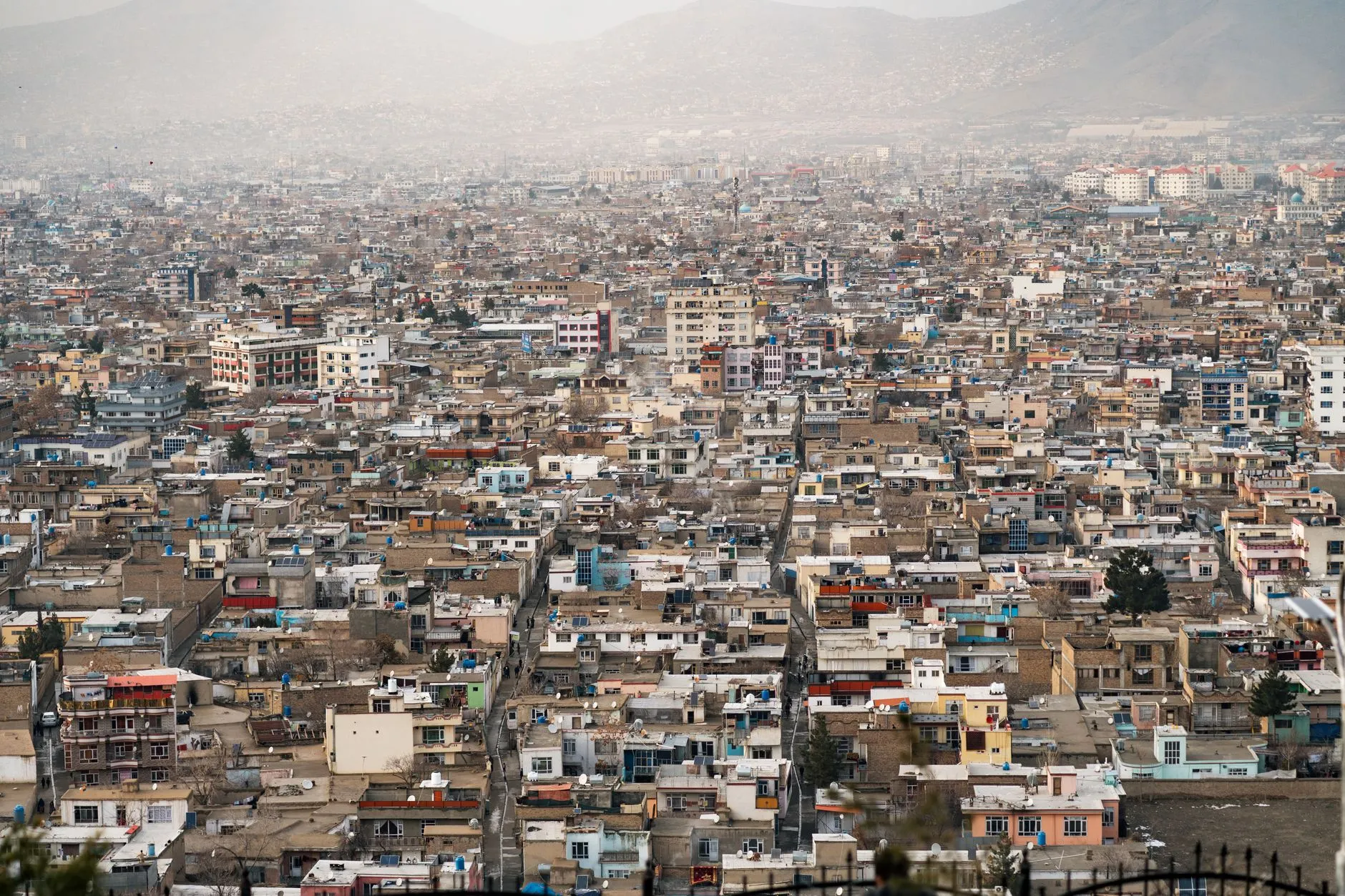
Bibi Mahro Hill — a park on high ground in the Wazir Akbar Khan area with a wide view over the city, a short drive from central districts. A common first orientation stop for organised groups.
OMAR Land Mine Museum — documents Afghanistan’s unexploded-ordnance legacy with surface-to-air missiles and demining displays. A sober, specific stop rather than a tourist attraction in the usual sense, and a direct reminder that mines remain a real hazard outside cleared areas.
National Museum of Afghanistan (Kabul Museum) — south of the centre near the Darulaman Palace, holding what survived the wars of the 1990s and the Taliban’s earlier destruction of artefacts. The restored Darulaman Palace sits nearby.
Ka Faroshi (the bird market) and the bazaars — atmospheric, but exactly the kind of crowded ground the advisories flag for crime and attack risk. Movement there is a security decision, not a stroll.
Beyond Kabul
The famous sites are real and not casually reachable.
Band-e-Amir and the Bamyan valley — a series of deep-blue travertine-dammed lakes that became Afghanistan’s first national park in 2009, roughly 180 km west of Kabul. The two giant Buddhas that stood in the cliff niches until the Taliban destroyed them in 2001. By road that is the better part of a day each way through terrain the advisories warn against — a multi-day undertaking with a vetted operator, not a day trip.
Herat (medieval citadel Qala Iktyaruddin) and Mazar-i-Sharif (the blue-tiled Shrine of Ali) are domestic flights from KBL, which is the more realistic way to reach Afghanistan’s other major sites if you are going at all.
The layover math
Bibi Mahro Hill is technically inside a generous connection window on paper: 20–40 minutes each way, plus checkpoint overhead, plus clearing immigration outbound and re-clearing heavy departure screening on return — a minimum two-to-three-hour round-trip floor before you have seen anything, and only if you hold a visa permitting entry and have a vetted vehicle waiting.
Band-e-Amir and Bamyan at ~180 km are not reachable on any layover length. That is a dedicated multi-day trip.
The binding constraint is not minutes or kilometres. It is the advisory. Every major government tells you not to leave the airport, not to enter the country, and that no consular help exists if something goes wrong. The verdict is governed by the advisory: this is not a layover destination, and the correct move on a KBL connection is to stay airside.
🔧 Connectivity & Practical Notes
Mobile and internet
Kabul has usable 4G — typically 5–15 Mbps when networks aren’t congested — on Roshan, Afghan Wireless (AWCC), Etisalat and MTN. AWCC and Roshan have the widest coverage; AWCC is the better choice if you leave the capital, where the other networks thin out fast.
📱 SIM Registration — Buy in Town, Not at the Airport
A local SIM requires biometric registration: passport plus a fingerprint scan. The airport SIM desk is hit-or-miss depending on the day’s security posture. Plan to buy in town from a carrier shop. A SIM costs around 100–200 AFN (~US$1–2); data bundles run roughly 500–1,000 AFN (US$8–15) for 10–20 GB. An international eSIM bought before you fly is the cleaner option for getting connected on arrival — verify legality and coverage before relying on it.
Assume hotel and guesthouse WiFi is monitored — by authorities and potentially others. Do not use it for banking, passport scans, booking sites or anything sensitive. Sort out a VPN before you arrive; app stores and VPN sites can be difficult to reach once you are on a local network.
Currency — the thing people get wrong
Cash US dollars only. No working ATMs for foreign cards, no card acceptance at scale, because of sanctions on the banking sector. The afghani trades at roughly 64.5 AFN to the US dollar and 74.5 AFN to the euro. Denominations in circulation run from 1 AFN to 1,000 AFN; the 500 and 1,000 notes do most of the transactional work. Clean US$100 bills typically fetch a better rate than small or worn notes, which dealers discount or refuse.
💵 Sarai Shahzada — Kabul’s Main Money Market
The traditional exchange hub. Your operator or host will know the current honest rate; walking in cold without that reference invites a poor deal. Carry more dollars than you think you need — there is no machine to bail you out if you miscalculate.
The afghani has been surprisingly stable through 2024–2026 relative to the sanctions context — the de-facto authorities have enforced afghani-only domestic pricing and clamped down on dollar circulation, which has held the official rate firm. That stability is real but brittle and does not change the foreigner’s practical situation.
Tipping and dress
A modest tip for a driver or porter is appreciated; small afghani notes work fine. Dress conservatively from the moment you land — this is enforced, not advisory, particularly for women. Photography near the airport, checkpoints, government buildings and military sites is a fast route to detention.
❓ Frequently Asked Questions
At a glance — KBL 2026
| Feature | 2026 Detail |
|---|---|
| IATA / ICAO code | KBL / OAKB |
| Official name | Kabul International Airport (reverted 2021) |
| Former name | Hamid Karzai International Airport (2014–2021) |
| Elevation | 1,791 m (5,877 ft) |
| Runway | 11/29, 3,511 m asphalt |
| Terminals | 2 — 1960 Soviet domestic; 2008/2009 Japan-funded international |
| Operator | Ministry of Transport & Civil Aviation; GAAC Holding (UAE) ground/technical |
| Distance to city | ~5 km to central districts; longer to outer areas |
| Transfer time | 20–40 min, checkpoint-dependent |
| Ground transport | Negotiated taxi (~US$6–8) or pre-arranged driver; no rideshare, bus or rail |
| Lounges | Pearl Lounge (pay-at-door ~US$35); Ariana Business Class (restricted) |
| Premium lounge networks | No verified Priority Pass / LoungeKey / DragonPass |
| Currency | Afghani (AFN); ~64.5/US$, ~74.5/€; cash dollars only — no foreign-card ATMs |
| Visa | Required; March 2026 single-entry tourist e-Visa (KBL arrivals only); otherwise in-person abroad |
| Main carriers | Kam Air, Ariana, flydubai, Air Arabia, Turkish Airlines, Iranian carriers |
| International routes | Dubai, Sharjah, Istanbul, Tehran, Mashhad, Islamabad; Kam Air also Delhi, Doha, Abu Dhabi, Kuwait |
| Domestic routes | Herat, Kandahar, Mazar-i-Sharif |
| Connectivity | 4G (Roshan, AWCC, Etisalat, MTN); biometric SIM registration required |
| US advisory | Level 4 — Do Not Travel; embassy closed since 31 August 2021 |
| UK advisory | FCDO advises against all travel; detention risk; no embassy |
| Layover verdict | Not a layover or stopover destination — stay airside |