Cairns International Airport (CNS) — Airport Guide 2026
Cairns Airport runs two terminals in separate buildings 7 km north of the CBD waterfront, and from 1 July 2026 the lounge landscape shifts again: Qantas Platinum/Gold and Qantas Club members lose access to any lounge when travelling on international Jetstar flights, which is how many passengers actually leave this airport for Japan or Bali.
Quick Reference
CNS / YBCS
7 km — 10–15 min by road
T1 International (10 gates), T2 Domestic (17 gates) — separate buildings ~300 m apart, covered walkway
Australian dollar (AUD, A$); A$1 ≈ US$0.72 ≈ €0.62 (late May 2026)
ETA subclass 601, A$20 service fee via official Australian ETA app
eVisitor subclass 651, free, via ImmiAccount
New Zealand citizens only
Uber/DiDi A$20–30 (≈US$14–22 / €12–19)
Metered A$25–35 (≈US$18–25 / €15–22)
Sun Palm A$18 per adult one-way
Escape Lounge T1 — A$60 pre-book / A$70 walk-up (≈US$43–50 / €37–43); Priority Pass + DragonPass accepted
Qantas Club T2 — members and eligible passengers only
Reef Fleet Terminal, 1 Spence Street (~7 km from airport)
November–May (box jellyfish, Irukandji)
Safe (Copperlode Falls Dam, Behana Creek)
Not expected
Qantas lounge access removed for status/Qantas Club members on international Jetstar from 1 July 2026
🛂 Entry: ETA, eVisitor and What Australia Actually Requires
Australia has no visa-on-arrival scheme for tourists. New Zealand citizens are the sole exception — they’re processed at the border. Everyone else must hold valid electronic authorisation before boarding, because the airline carries the fine for an inadmissible passenger and will not let you fly without it.
📱 ETA (Subclass 601) — A$20 App Fee
For passport holders from the United States, Canada, Japan, Singapore, Malaysia, South Korea, Hong Kong and Brunei. The ETA carries no visa application charge, but the only legitimate way to apply is the Australian Government’s official ETA mobile app (iOS and Android), which charges an A$20 service fee (≈US$14 / €12) by card, Apple Pay or Google Pay. Valid for 12 months, stays up to three months per visit.
⚠️ Avoid ETA reseller websites
Third-party sites resell the ETA at a markup and add nothing the official app doesn’t already do. Any channel charging more than A$20 for an ETA is a middleman. Apply via the official Australian ETA app only.
Apply several days before travel — most approvals come through quickly, but some go to manual review. If you hold both a European and a US passport, read the next section before deciding which to use for entry.
🇪🇺 eVisitor (Subclass 651) — Free for European Passports
EU and EFTA member states, the United Kingdom, and a handful of others qualify for the eVisitor, which is genuinely free: no application charge, no service fee. Apply through ImmiAccount on the Department of Home Affairs website — not through the ETA app. Same three-months-per-visit, 12-month validity. If you hold both an EU and a US passport, use the eVisitor on the European document and save the A$20.
💉 Health at Entry
No vaccinations are required for arrival from most countries. Yellow fever proof is only demanded if you’ve recently been in a yellow-fever country. The real health consideration at CNS is biosecurity — covered in the next section.
🏢 Terminals, the T1↔T2 Walk, and Biosecurity
CNS splits across two separate buildings. T1 handles all international movements: Singapore Airlines from Singapore; Jetstar from Osaka (KIX), Tokyo (NRT) and Denpasar (DPS); Air New Zealand across the Tasman; Air Niugini from Port Moresby; Fiji Airways from Nadi; and Cathay Pacific’s seasonal Hong Kong service, which as of 2026 is the only non-stop link between CNS and East Asia. T2 handles all domestic traffic — Qantas, Jetstar, Virgin Australia and Rex on the trunk routes to Brisbane, Sydney, Melbourne and Perth, plus Skytrans, Airnorth, Alliance and Hinterland serving Cape York and Gulf communities that have no road access for half the year.
T1 has 10 gates and three security checkpoints; T2 has 17 gates and two carousels. The buildings sit roughly 300 m apart, connected by a covered, signposted walkway that takes 5–10 minutes on foot. A shuttle bus covers the loop for passengers with mobility needs or heavy bags.
The international terminal opened in 1984 and has been extended in stages rather than rebuilt. It reads as functional, suited to an airport whose passengers are largely thinking about boat departure times rather than the architecture. T1’s airside retail and dining sit past the single departures security point, near gates 1–3. T2’s food court runs both landside and airside, with the larger spread near gates 18–24.
🔄 Self-transferring between T1 and T2? Allow 90 minutes minimum.
Arrive on Jetstar from Japan, fly Qantas onward to Sydney on a separate ticket: collect your bag at T1, clear Australian immigration and biosecurity, walk to T2, re-check the bag, and clear domestic security again. When two wide-bodies land together, the biosecurity declaration queue runs long. Budget 90 minutes between scheduled times — more is safer.
🐾 Biosecurity at CNS — Declare Everything
Australia enforces agricultural quarantine rules among the strictest anywhere, and Cairns — surrounded by World Heritage rainforest and reef — applies them seriously. Declare all food, plant material, wooden items, and anything that has touched soil or fresh water: hiking boots, dive gear, fishing equipment. Detector dogs work the international arrivals hall. An undeclared item means an on-the-spot fine starting at A$2,664 and, in serious cases, visa cancellation. Declaring something is free and almost always results in the item being inspected or surrendered, not a penalty.
🚆 Getting Into the City
Seven kilometres, 10–15 minutes in normal traffic. There is no train and no public city bus serving the airport.
🚗 Rideshare (Uber or DiDi): A$20–30 — fastest for one or two people
Both operate from marked pickup zones outside arrivals at each terminal. DiDi typically undercuts Uber by a couple of dollars on the same trip. Surge applies when multiple flights land together, which is most evenings. For one or two passengers with normal luggage this is the default.
Metered taxi. Cairns Taxis ranks outside both terminals. The metered fare to the CBD runs A$25–35 — a few dollars above rideshare under normal conditions, with no surge pricing and no app required. Late-night and public-holiday surcharges apply. Worth considering if your rideshare estimate has surged past the taxi price, or if you’d rather not deal with the app at the end of a long flight.
Sun Palm shuttle. A shared van at A$18 per adult one-way, dropping at major CBD hotels and continuing to the Northern Beaches (Palm Cove, Trinity Beach) at a higher fare. Because it stops at multiple hotels, allow extra time — cheapest door-to-door option for a solo traveller, but not the fastest. Children are discounted. Book online or at the arrivals desk.
🚐 Shuttle vs rideshare for solo travellers
Sun Palm at A$18 is A$2–7 cheaper than DiDi for one person, but it’s a shared van with multiple hotel stops. If time matters, pay the extra. Travelling with one other person? Rideshare wins on per-head cost because the shuttle charges per adult regardless.
Rental car. Avis, Hertz, Budget, Europcar and Thrifty all have desks at both terminals. Useful only if you’re driving to the Daintree, the Atherton Tablelands or Port Douglas. For staying within Cairns proper a car is a liability — CBD parking is paid and the town is walkable. The Captain Cook Highway north to Port Douglas is genuinely good coastal road; drive it in daylight only, as it crosses cassowary and wallaby country with no street lighting.
🛋️ Lounges — What’s Here and What Isn’t
CNS has two lounges. There is no Plaza Premium, no oneworld or Star Alliance flagship lounge, and no walk-in first-class facility. For an airport with regular wide-body international traffic this is thin. If you have a long international wait, the Escape Lounge is your only option.
🛋️ Escape Lounge (T1) — A$60 pre-book / A$70 walk-up; Priority Pass accepted
Opened March 2025, operated by CAVU, airside between gates 2 and 3. Open to any departing international passenger willing to pay. Accepts Priority Pass and DragonPass — the only Priority Pass-eligible lounge at CNS. Hot-and-cold buffet, bar, fast Wi-Fi. Hours are tied to the international departure schedule: broadly mid-morning daily, plus afternoon/evening windows on wide-body departure days. Confirm against the day’s flights before counting on it.
Qantas Club (T2, Domestic Terminal). Level 1 of domestic departures, for Qantas Club members, Qantas Platinum/Gold status holders, or eligible business-class bookings on qualifying Qantas fares. Not open to the general public; does not accept Priority Pass. Inside: buffet light bites, barista coffee, a children’s play area, showers and Wi-Fi.
⚠️ Qantas lounge access change — from 1 July 2026
Qantas Platinum/Gold and Qantas Club members lose lounge access when travelling on international Jetstar (JQ) flights. At CNS, international Jetstar departures leave from T1 where the only option is the pay-in Escape Lounge in any case — but if your plan was to use Qantas status before a Jetstar Japan or Bali departure, that stops mid-year.
If you hold no eligible status and no Priority Pass, your realistic move is the Escape Lounge at A$60 pre-booked for an international departure, or an ordinary café for a domestic one.
🍽️ Food Before You Fly
The honest version: eat in town. A flat white that costs A$4.50–5.50 at an Esplanade café runs A$6–7 airside. A barramundi-and-chips plate is A$22–28 at a CBD pub and pushes A$30+ at the terminal. Airside you get the standard Australian airport spread — a Hudson’s or comparable coffee chain, a bar, grab-and-go sandwiches, a newsagent. T2 has more choice than T1 because domestic volume is higher.
Cairns sits in the wet tropics and the regional food worth eating is built around what grows and swims here: barramundi, mud crab, Coral Sea prawns, and tropical fruit — mango, lychee, rambutan — plus coffee and chocolate grown on the Atherton Tablelands. None of this appears in any meaningful form at the airport. For a seafood plate, Prawn Star on Marlin Marina — a working trawler converted to a deck eatery on the water — is the long-standing local option (verify current hours before going; marina venues change). Rusty’s Markets on Grafton Street (open Friday–Sunday) is where to find Tablelands coffee and Daintree-grown chocolate, both better and considerably cheaper than the terminal duty-free.
💧 Fill a bottle — skip the A$4–5 airside water
Cairns tap water is safe, supplied from Copperlode Falls Dam and Behana Creek. Carry an empty bottle through security and fill it. In-town shops sell bottled water for around A$2.
Duty-free. A single Heinemann-style store in T1 covering spirits, fragrance and confectionery. Fine for a bottle on the way out. Biosecurity note: fresh fruit cannot leave the country, and domestic transfers into Western Australia and Tasmania carry their own fruit and plant restrictions — check before packing anything from Rusty’s for a connecting flight.
💡 Reef, Rainforest and the Honest Layover Calculation
Cairns is a single-industry town — that industry is the Great Barrier Reef — and almost everyone arriving already has a boat booking or a Kuranda railway ticket paid for. The following sections give the actual time budget each trip requires, because neither the Reef nor Kuranda is layover-viable on a short connection.
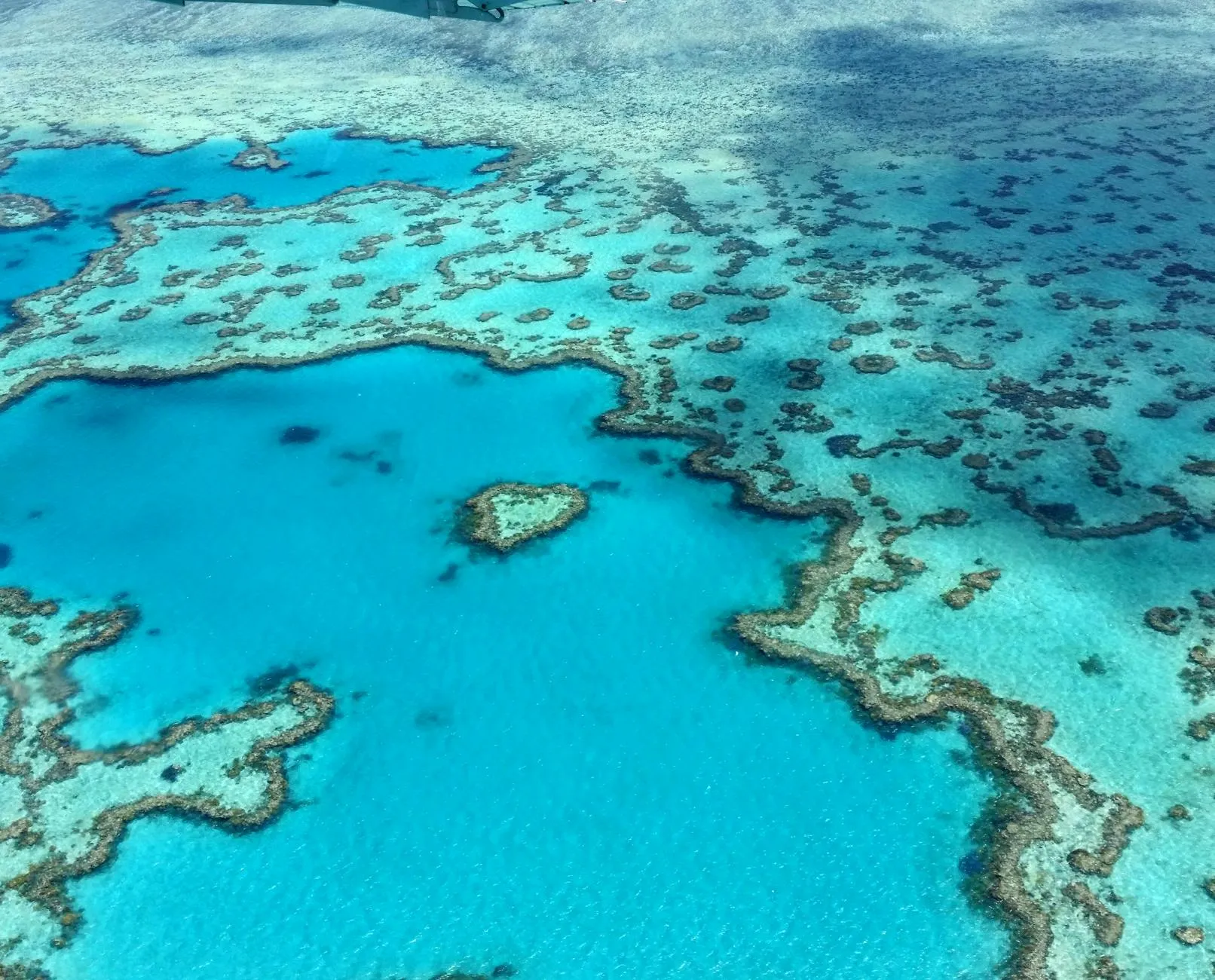
🪸 Great Barrier Reef Day Trip — Minimum 10 Hours
Boats depart from the Reef Fleet Terminal, 1 Spence Street, roughly 7 km from the airport on the CBD waterfront. Operators including Sunlover and Great Adventures open check-in around 8:45–9:30 am and depart 10:15–10:30 am; return to the marina is around 4:30–5:00 pm. Add 30 minutes back to the airport and the pre-flight buffer (2 hours international, 1 hour domestic), and a Reef day trip needs roughly 10–11 hours of layover minimum. In practice, this means an overnight stop. A full day — snorkelling from a pontoon or diving — runs A$220–300.
🌿 Kuranda — Scenic Railway and Skyrail Cableway
The standard loop: the Kuranda Scenic Railway departs Freshwater Station at 8:30 am, climbs 1.5 hours through Barron Gorge with a photo stop at Barron Falls, then 4–5 hours in the rainforest village, followed by the Skyrail Rainforest Cableway back to Cairns in 90 minutes, arriving around 4:30–5:00 pm. Same maths as the Reef: a 10-hour-plus commitment, not a connection activity. Combined rail-plus-cableway tickets run about A$130–150.
🚗 Daintree and Cape Tribulation
The oldest continuously surviving rainforest on earth, two hours north past Port Douglas. The 4WD safaris run 7:30 am to 6:30 pm — a full day, including a Daintree River crocodile cruise and Cape Tribulation beach. Not a layover option.
🏖️ What Actually Fits a Layover
🏊 Cairns Esplanade Lagoon — free, stinger-free, 5 hours door-to-door
A lifeguard-patrolled saltwater pool on the CBD waterfront, filtered and stinger-free year-round. From the airport: A$20–25 each way by rideshare, so roughly A$40–50 round trip including transfer time. With a 5–6 hour gap between flights, you get a swim and a meal on the Esplanade and still make it back. This matters most in stinger season (November–May), when box jellyfish and Irukandji make the open city beaches genuinely dangerous and the Lagoon is the safe alternative.
For a slightly longer window — 6-plus hours — the Cairns Botanic Gardens on Collins Avenue, Edge Hill (roughly 6 km from the airport, free entry) and the adjoining rainforest boardwalks give a compressed dose of wet-tropics flora in 1–2 hours.
🔧 Practical Notes
Wi-Fi and SIM. Both terminals have free airport Wi-Fi. Telstra has the best regional coverage if you’re heading inland to the Tablelands or Cape York; Optus and Vodafone are adequate in Cairns itself and cheaper. Prepaid eSIMs are the simplest option for a short visit — activate before you fly and the line is live on landing. Airport kiosks lean Optus/Vodafone; Telstra is easier to find in town.
Currency and cards. Australia is effectively cashless — tap-to-pay works at the Reef pontoon bar, the Esplanade coffee cart, and everywhere between. Card surcharges of 1–2% are legal and common; a sign at the till must disclose them. Don’t change money at the airport exchange desk.
Tipping. Not expected. Hospitality staff earn a legislated minimum wage and there is no service charge. Rounding up a restaurant bill or leaving a few dollars for good service is appreciated; nobody will prompt you.
Sun and UV. Cairns sits at 16° south and the UV index is extreme year-round, including on overcast days. Hat, shirt, reef-safe SPF50+.
⚠️ Marine stingers, November–May — avoid open ocean beaches
Box jellyfish and Irukandji make ocean swimming off Cairns beaches genuinely dangerous from November to May. Patrolled beaches run stinger nets and keep vinegar stations. On the Reef, operators provide full-body stinger suits in season, and outer-reef pontoons carry lower risk than inshore sites. The Esplanade Lagoon is filtered, netted and safe year-round.
⚠️ Saltwater crocodiles — do not enter or approach rivers or estuaries
Saltwater crocodiles inhabit the rivers, estuaries and mangroves throughout the wet tropics. Do not swim in, or stand at the water’s edge of, any river, creek or estuary. Obey all crocodile warning signs. Cassowaries — large flightless birds — live in the Daintree; keep your distance and do not feed them.
❓ FAQ
📊 At a Glance — CNS 2026
| Feature | Detail (2026) |
|---|---|
| Airport | Cairns International Airport (CNS / YBCS) |
| Terminals | T1 International (10 gates), T2 Domestic (17 gates), ~300 m apart |
| Distance to CBD | 7 km / 10–15 min by road |
| Currency | Australian dollar (AUD); A$1 ≈ US$0.72 ≈ €0.62 |
| Entry — most nationalities | ETA subclass 601, A$20 app service fee |
| Entry — European passports | eVisitor subclass 651, free via ImmiAccount |
| Visa-on-arrival | New Zealand citizens only |
| Rideshare to CBD | Uber/DiDi A$20–30 |
| Taxi to CBD | Metered A$25–35 |
| Shuttle to CBD | Sun Palm A$18 per adult |
| Train / public city bus | None to the airport |
| International lounge | Escape Lounge T1 — A$60/A$70; Priority Pass + DragonPass accepted |
| Domestic lounge | Qantas Club T2 — members/eligible only |
| Plaza Premium / flagship lounge | None |
| Reef departure point | Reef Fleet Terminal, 1 Spence Street (~7 km) |
| Reef day-trip cost | A$220–300 |
| Kuranda rail + Skyrail | A$130–150, full-day loop |
| Layover-viable sight | Esplanade Lagoon (free; ~A$40–50 rideshare round trip) |
| Stinger season | November–May (box jellyfish, Irukandji) |
| Tap water | Safe (Copperlode Falls Dam, Behana Creek) |
| Tipping | Not expected |
| Key 2026 change | Qantas lounge access removed for status/Qantas Club on international Jetstar from 1 July 2026 |
🌍 Planning the trip? Read our Australia travel guide — best time to go, where to stay, and how to get around.