Hobart International Airport (HBA) — Airport Guide 2026
The Qantas Club closes on 8 June 2026 — not for a quick refresh, but as part of a full terminal doubling that runs to early 2028 — and HBA has no other lounge to fall back on. For the roughly 2.8 million passengers a year who pass through, the airport is effectively domestic: Air New Zealand’s Auckland service, two or three times a week, is the sole scheduled international route. > ⚠️ Lounge closure — read this before you plan > The Qantas Club closes on 8 June 2026 for the terminal redevelopment and will not reopen until early 2027. Qantas will provide only light refreshments during the closure. No alternative lounge exists at HBA — it has never hosted competing networks — so this is not a gap you can route around with a different membership.
Quick Reference
Hobart International Airport (formerly Llanherne)
HBA / YMHB
Cambridge, Tasmania — 17 km northeast of Hobart CBD
One combined domestic + international terminal
~2.8 million; Australia’s 8th-busiest airport
Australian ETA (subclass 601), AUD 20, via official app
eVisitor (subclass 651), free
None (New Zealand citizens excepted)
AUD; ~AUD 1 = USD 0.72 / EUR 0.62 (May 2026)
From ~AUD 22.50 one way; ~30 min with city stops
~AUD 31–41 + AUD 3.85 airport fee
~AUD 45–55 metered
~20 min via the Tasman Highway
Auckland only (Air New Zealand, 2–3x weekly)
Qantas, QantasLink, Jetstar, Virgin Australia
Qantas Club — CLOSED 8 Jun 2026 to early 2027
12/30, 2,727 m; upgraded 2025 for A350/787
~12,000 m² → ~23,000 m²; Feb 2024 to early 2028
By sea from Macquarie Wharf — not from HBA
✈️ What You’re Actually Landing At
Hobart Airport carries the word “International” for one route: Air New Zealand’s Auckland service, two to three times a week. Every other scheduled movement is domestic — Qantas, QantasLink, Jetstar, and Virgin Australia connecting Tasmania to Melbourne, Sydney, and Brisbane. For nearly everyone reading this, the practical questions are how to cover the 17 km into town and what to find when you get there.
The airport opened in 1956 on flat Cambridge land beside Pitt Water. It was called Llanherne for years; the name survives in the golf club next door. Privatised in 1998 on a 99-year lease, it is now held by Queensland Investment Corporation (35%), Amsterdam’s Schiphol Group (35%), and CareSuper (30%). The Schiphol stake occasionally shows in the signage aesthetic.
One terminal handles everything. In 2024–25 it processed around 2.8 million passenger movements — Australia’s eighth-busiest, ahead of Canberra and behind Adelaide. The walk from the furthest gate to the taxi rank takes a few minutes. The two-hour arrival buffer airlines print on domestic boarding passes is for their systems, not yours: 60–75 minutes before departure is realistic for a domestic flight outside school holidays.
You will arrive mid-construction. A terminal doubling — from roughly 12,000 m² to 23,000 m² — began in February 2024 and runs to early 2028. A new security screening point opened in late 2025, two additional departure gates are now operational, and a Relay convenience store opened alongside them. A Hungry Jack’s is due inside the terminal during 2026. Expect hoarding and the occasional relocated café; allow a few extra minutes to locate a gate that may have moved since your last visit.
The runway (12/30, 2,727 m) was upgraded in 2025 to handle widebody A350 and 787 aircraft. This is the physical groundwork for long-haul routes Tasmania keeps announcing — Qantas, Singapore Airlines, Emirates, and British Airways have all been floated — but none are operating as of this writing. Treat “international hub” as a post-2028 proposition.
One genuinely unusual function: Hobart is the departure point for Australia’s Antarctic program flights. Skytraders operates an Airbus A319 between HBA and Wilkins Aerodrome, a blue-ice runway near Casey station. These are government logistics flights for Australian Antarctic Division scientists and support staff. There are no tourist seats.
🛂 Border, Visas & Biosecurity
Australia does not issue visas on arrival. Everyone except New Zealand citizens needs an approved electronic authorisation before boarding, and there is no fix-it counter at HBA. Sort this before you leave home.
Which authorisation applies
Australian ETA — subclass 601. For passport holders from the US, Canada, Japan, Singapore, South Korea, Malaysia, Hong Kong, and roughly two dozen others. Apply through the official Australian ETA app: scan your passport’s NFC chip, take a selfie, pay, and approval is typically fast. The fee is AUD 20 (around USD 14 / EUR 12 as of May 2026). Valid 12 months, multiple entries, up to three months per visit.
eVisitor — subclass 651. For EU and UK passport holders, plus Norway, Iceland, Liechtenstein, Switzerland, and Monaco — around 36 European countries. It is free: no application charge, no service fee. Apply via the Department of Home Affairs ImmiAccount. Same 12-month, multiple-entry, three-months-per-stay terms as the ETA.
Visitor visa — subclass 600. If neither of the above applies, this is the paid, slower fallback.
⚠️ Avoid third-party visa sites
Third-party “visa service” websites charge AUD 50–100 to submit the same form you can complete yourself. The ETA’s AUD 20 is the entire cost. Apply via the official Australian ETA app or the Home Affairs ImmiAccount directly — anything materially above AUD 20 is someone’s commission.
Biosecurity — the real border check
Australia’s quarantine rules carry on-the-spot fines and are enforced. Declare all food, plant material, wooden items, and anything that has touched soil or fresh water — hiking boots included. Arriving from mainland Australia does not clear you: Tasmania runs its own biosecurity screen. Fresh fruit, vegetables, plants, and honey cannot enter the state. Amnesty bins sit in the baggage hall. Eat the apple before you land.
Currency
Australia uses the Australian dollar (AUD). Notes are polymer plastic: $5, $10, $20, $50, $100. Coins run to $2; there are no 1c or 2c pieces, so cash totals round to the nearest 5c. As of late May 2026, AUD 1 buys roughly USD 0.72 and EUR 0.62. The country is close to cashless — tap-to-pay works on the SkyBus, at market stalls, and almost everywhere in between. ATMs are in the arrivals area if you want cash; the airport currency exchange offers the rates you would expect from a captive location. Change money in town or use a card.
🚌 Getting Into the City
The airport is 17 km from central Hobart, and the Tasman Highway run takes around 20 minutes in normal traffic. There is no rail — Tasmania has no passenger rail at all — and no public city bus serves the terminal directly. The options are the SkyBus, rideshare, and taxi.
🚌 SkyBus Hobart City Express — from ~AUD 22.50
The dedicated airport coach is the cheapest option for one or two people. Turn up and tap a card; no advance booking needed. Departures track flight schedules at roughly 15–20-minute intervals. The city end isn’t a single stop: the coach loops through central Hobart with about six drop-offs including Elizabeth Street, Campbell Street opposite the Hotel Grand Chancellor, and the Old Woolstore on Macquarie Street — most CBD and waterfront hotels are a short walk from one of them. The run takes around 30 minutes. Coaches carry luggage and offer free WiFi.
🚗 Uber — roughly AUD 31–41 + AUD 3.85 airport fee
Upfront pricing; pickup is signed in the forecourt. For three or four people splitting the fare, the per-head cost undercuts the SkyBus and delivers you door-to-door without the loop. Ola and DiDi have patchy Hobart coverage; Uber is the reliable choice.
Taxi. A metered fare from the rank outside arrivals runs roughly AUD 45–55 to the CBD, more on late-night tariffs. Useful for early or late flights, or if you have more luggage than a rideshare hatchback handles comfortably. No flat airport-to-city rate.
Car hire. Avis, Budget, Hertz, Europcar, and Thrifty all have desks in the arrivals hall. If Tasmania itself is the trip — the east coast, Bruny Island, Cradle Mountain — collect a car here and skip the transfer calculation entirely. Book ahead in summer (December–February), when island-wide fleet availability tightens and walk-up rates climb sharply.
The short version: solo or as a couple on a budget, take the SkyBus. Three or four people, or a late arrival, take an Uber or taxi. If you plan to leave Hobart, hire a car at the airport.
🛋️ Lounges
For most of 2026 and into 2027, the honest answer is that there is no lounge at HBA.
The Qantas Club closes on 8 June 2026 for the terminal redevelopment. The replacement is promised as a larger space — more seating, more power points, runway views, a design that references the Tasmanian landscape — but it will not open until early 2027. Qantas provides only light refreshments during the closure.
HBA has never operated any lounge other than the Qantas Club. Priority Pass memberships have nothing to access here, and competing airline networks have never set up at this airport. If lounge access matters to your travel pattern, this airport does not accommodate it, and there is no workaround.
The practical fallback is the IronHouse Airport Bar, airside, an extension of IronHouse Brewery (founded 2007 on Tasmania’s east coast). It serves Tasmanian beer and is a reasonable place to wait. There is also a Cascade-branded coffee outlet. Landside, the Flight Café & Restaurant inside the airport Travelodge does a proper sit-down breakfast, lunch, and dinner for those with a long wait or an early start from an airport hotel.
🍽️ Food Before You Fly
Airport pricing at HBA is standard captive-audience: expect around AUD 6–7 for a coffee and pastry, AUD 18–25 for a hot meal at the IronHouse bar — against roughly AUD 5 and AUD 12–16 for the same things in town. The terminal’s food offer is functional: the IronHouse bar, cafés in both departures and arrivals, the Relay convenience store, and the incoming Hungry Jack’s. Duty-free is minimal, which makes sense for an airport where nearly every passenger is on a domestic ticket.
If the schedule allows, eat in Hobart.
🥧 Scallop pie — the one thing worth tracking down in town
A Tasmanian institution: local scallops in curried or white cream sauce inside shortcrust pastry. The season runs roughly late April to July. Bakeries and Salamanca Market stalls sell them for around AUD 8–10. Not reliably available at the airport — find one before heading out.
The food worth caring about is entirely off-airport. Bruny Island oysters are shucked fresh and are cheaper and better on Bruny or at the Hobart waterfront than anywhere else in Australia. Leatherwood honey — from western Tasmania’s rainforest, floral and faintly spiced — is sold at Salamanca Market stalls and travels well. Tasmanian whisky and gin have been winning international awards; distillery cellar doors and Hobart bottle shops stock the range, and airport prices are not better than in-town prices. Cascade beer has been produced at its Hobart brewery since 1824, making it Australia’s oldest continuously operating brewery; the island’s cool-climate pinot noir and sparkling wine are taken seriously by people who know the category.
💡 What Tasmania Actually Offers
Hobart is a small city with one attraction that warrants a dedicated trip from anywhere in the world. Everything else is either a half-day outing or a reason to rent a car and stay longer than you planned.
🎨 MONA
David Walsh’s Museum of Old and New Art at Berriedale is privately funded, subterranean in places, and genuinely difficult to describe without resorting to tourism vocabulary. Standard adult entry is around AUD 39; Tasmanian residents get in free but must still book a time slot. The established approach is the MONA ferry from Brooke Street Pier on the waterfront — roughly 25 minutes up the Derwent, about AUD 30 return. Book the museum at least a day ahead, two days on weekends. Budget a half-day minimum; most people end up spending longer.
🏪 Salamanca Market
Every Saturday, 8:30am to 3pm, along Salamanca Place — over 300 stalls of produce, crafts, food, and buskers, a five-minute walk from the CBD. The Georgian sandstone warehouses behind it hold galleries, pubs, and restaurants the other six days of the week. If your Hobart visit includes a Saturday morning, this is the fixed point to build around.
⛰️ kunanyi / Mount Wellington
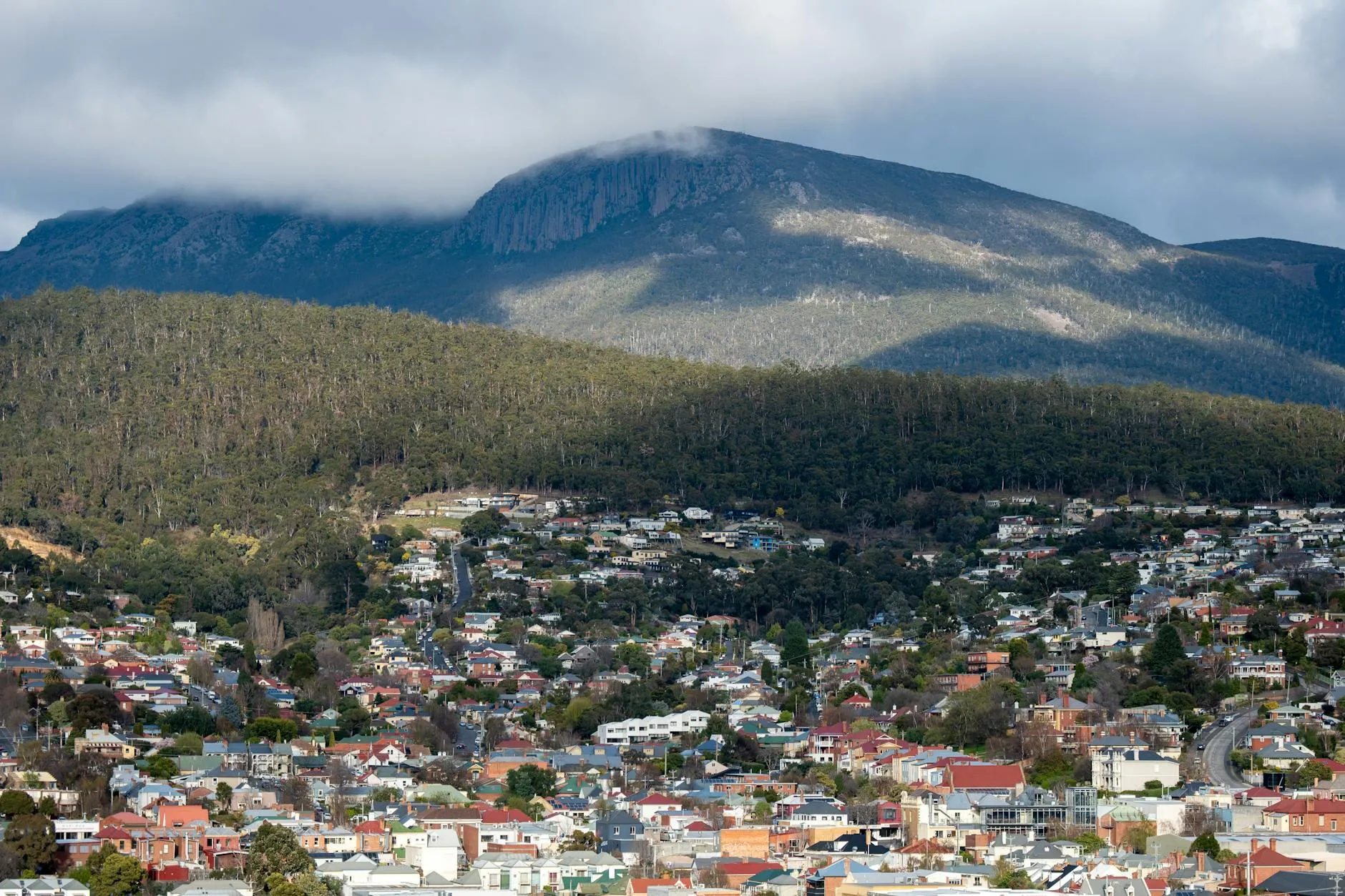
The 1,271 m mountain directly behind the city has a sealed road to a summit lookout over Hobart and the Derwent estuary. The round trip by car is under two hours from the city centre. For non-drivers, the kunanyi/Mt Wellington Explorer Bus is the alternative. The summit is reliably colder and windier than town and can be in cloud when the city is clear — bring a layer regardless of what the forecast says when you leave.
🏛️ Port Arthur
The UNESCO-listed convict settlement on the Tasman Peninsula, about an hour from Hobart by car. The most significant historic site in Tasmania and a half-to-full-day trip. The drive down passes the Tasman Arch and Devil’s Kitchen coastal formations on the peninsula’s edge.
🦭 Bruny Island
About 35 minutes south by car to Kettering, then a 20-minute vehicle ferry across the D’Entrecasteaux Channel. Oysters, cheese, whisky, fur seals, and the narrow-neck isthmus. A full day is the right unit. It does not work as a short outing, and you need your own car.
🕐 Layover Reality
Because HBA is functionally domestic, almost nobody has a true international layover here. For the occasional person transiting through the Air New Zealand Auckland service, here is the arithmetic.
MONA is not viable. The 17 km drive into town, a 25-minute ferry each way at around AUD 30 return, several hours in the museum at AUD 39, the return drive, and a domestic security buffer will exceed any sensible connection window. Salamanca Market is the one thing that might work, and only on a Saturday with at least four to five hours free — round-trip transfer is roughly 40 minutes by Uber, which leaves time at the stalls before you need to head back. kunanyi, Port Arthur, and Bruny Island are all out; they are reasons to stay a night, not things to fit between planes.
💡 The Antarctic wharf — worth 30 minutes if you’re near the waterfront
The icebreaker RSV Nuyina is home-ported at Macquarie No. 2 Wharf on the Hobart waterfront, alongside the Australian Antarctic and Southern Ocean terminal. The Australian Antarctic Division headquarters is at Kingston, 12 km south of the city. The wharf and the ship are visible from the waterfront for free. The program’s flights to Wilkins Aerodrome near Casey station — operated by Skytraders on an A319 — carry Division staff only.
🔧 Practical Notes
📶 WiFi and mobile data
Free WiFi covers the terminal. For mobile data beyond Hobart, Telstra has the widest Tasmanian coverage — particularly in the highlands and the west coast, where Optus and Vodafone thin out quickly and Telstra is sometimes the only signal available. Prepaid SIMs and eSIMs are sold at mainland airports and supermarkets. If you plan to travel beyond the city, the Telstra network is the one to buy. No carrier maintains reliable coverage on remote hiking trails.
☀️ Safety and environment
Hobart is a low-crime city. The genuine risks are environmental. Tasmanian weather changes fast — the summit of kunanyi can be in cloud and 10°C when the city is 22°C and clear. Summer UV is severe: the ozone layer is measurably thinner at this latitude, and you will burn on a cool overcast day. On Tasmanian roads at dawn and dusk, watch for wildlife; a wombat or wallaby will cause serious damage to a hire car.
💧 Tap water
Tasmanian mains water is safe to drink from the cold tap and is consistently rated among Australia’s best. TasWater treats and monitors the supply. Use the cold tap — not the hot. Carry a refillable bottle.
💰 Tipping
Australia does not have a tipping culture. Staff receive a minimum wage that includes service. Rounding up at a sit-down restaurant after good service is neither expected nor unusual; there is no obligation in cafés, bars, or taxis.
🏥 Healthcare
Australia has a high standard of healthcare with pharmacies widely available in Hobart. Some nationalities qualify for emergency treatment under Australia’s Reciprocal Health Care Agreements; travel insurance is still the practical cover to carry.
❓ Frequently Asked Questions
📊 At a Glance — HBA 2026
| Item | Detail |
|---|---|
| Airport | Hobart International Airport (formerly Llanherne) |
| IATA / ICAO | HBA / YMHB |
| Location | Cambridge, 17 km northeast of Hobart CBD |
| Terminals | One combined domestic + international |
| Passengers 2024–25 | ~2.8 million; Australia’s 8th-busiest |
| Owner / lease | QIC 35%, Schiphol Group 35%, CareSuper 30%; 99-year lease from 1998 |
| Opened | 1956; privatised 1998 |
| Runway | 12/30, 2,727 m; upgraded 2025 for A350/787 |
| Terminal build | ~12,000 m² → ~23,000 m²; Feb 2024 to early 2028 |
| Entry — most non-EU | Australian ETA (601), AUD 20 via official app |
| Entry — EU / UK | eVisitor (651), free |
| Visa on arrival | None (New Zealand citizens excepted) |
| Currency | AUD; ~USD 0.72 / EUR 0.62 per AUD (May 2026) |
| SkyBus to city | From ~AUD 22.50 one way; ~30 min with city stops |
| Uber to city | ~AUD 31–41 + AUD 3.85 airport fee |
| Taxi to city | ~AUD 45–55 metered |
| Drive time to CBD | ~20 min via Tasman Highway |
| International routes | Auckland only (Air New Zealand, 2–3x weekly) |
| Domestic airlines | Qantas, QantasLink, Jetstar, Virgin Australia |
| Lounge | Qantas Club — closed 8 Jun 2026 to early 2027 |
| Other lounges | None — no competing networks have ever operated here |
| Tap water | Safe (TasWater mains supply; cold tap only) |
| Tipping | Not expected |
| MONA | ~AUD 39 entry; MONA ferry ~AUD 30 return, 25 min from Brooke Street Pier, Berriedale |
| Salamanca Market | Saturdays 8:30am–3pm, 300+ stalls, Salamanca Place |
| Antarctic gateway | By sea (RSV Nuyina, Macquarie No. 2 Wharf) — not from HBA |