Samarkand International Airport (SKD) — Airport Guide 2026
As of 1 January 2026, US citizens no longer need a visa for Uzbekistan — joining the EU, UK, Canada, and Australia in a 30-day stamp-on-arrival regime that makes SKD straightforwardly easy to fly into, and the Registan 15 minutes from the arrivals door.
Quick Reference
SKD / UTSS
6 km / ~15 min by taxi
Single terminal, opened 18 March 2022, open-book design
~1,000 passengers/hour; 1.38 million passengers in 2024 (+37% on 2023)
Uzbekistani som (UZS)
~12,000 UZS = US$1 · ~13,000 UZS = €1 (late May 2026)
30 days visa-free
30 days visa-free since 1 Jan 2026
30 days visa-free since 1 Jun 2025
e-visa, US$20, 30-day validity, apply ≥3 days ahead via gov.uz
M1 / 256 to railway station: 3,000 UZS cash · 2,000 UZS card
~20,000–25,000 UZS (~US$2); verify in-app
~50,000–80,000 UZS; agree fare first
One CIP Lounge, upper level; Priority Pass accepted
None
~2h 15m; ~245,000 UZS economy
~1h 30m
Hertz, Sixt, Europcar
Within 3 days; hotel handles automatically; keep slips
Not safe — bottled only
Type C / F, 220V
Viable only with 4+ hours’ connection
88 km / 1.5–2h each way; full-day trip, not layover-viable
Uzbekistan Airways, Air Samarkand, Centrum Air, Turkish Airlines, flydubai
🏛️ Terminal — the Open Book and the 2022 Move
Samarkand ran on a Soviet-era terminal — capacity roughly 300 passengers an hour — until 18 March 2022, when the current building opened as the centrepiece of the “Silk Road Samarkand” tourist development on the city’s eastern edge. The replacement is 41,216 m², handles about 1,000 passengers an hour, and was built to scale toward 2 million annual passengers: 29 check-in desks, 8 gates, 10 passport counters, and 6 e-gates.
The architectural gesture is worth knowing before you land. The roof profile is shaped like an open book — a reference to Ulugh Beg’s astronomical tables, the Zij-i-Sultani, compiled in Samarkand in the 1430s. The ceiling carries a star map lit to read as a constellation chart on take-off and approach. It is a rare airport design feature that means something specific to the place rather than being generic glass-and-steel.
SKD is the second-busiest airport in Uzbekistan after Tashkent, and for 2024 it was the fastest-growing in the Europe and Central Asia region: 1,010,938 passengers in 2023, 1,381,320 in 2024 — a 37% jump. The standout resident carrier is Air Samarkand, which based itself here and flies to Istanbul and Jeddah, among other points.
✈️ Who Flies Here
Around 18 airlines serve roughly 23 destinations as of May 2026. The confirmed roster includes Uzbekistan Airways, Air Samarkand, Centrum Air, Turkish Airlines (year-round to Istanbul), flydubai, Aeroflot, S7 Airlines, Pobeda, Ural Airlines, UTair, China Southern, SunExpress, FlyArystan, Azimuth, and AZAL. Moscow, Istanbul, and Saint Petersburg are the busiest routes. flydubai’s Dubai service was listed as starting June 2026 — confirm it is operating before building a connection around it.
⚠️ No major transfer hub
SKD is overwhelmingly origin-and-destination traffic. International-to-international connections require clearing immigration and re-checking bags; allow 90 minutes minimum if your bag is not through-checked. Outside peak Istanbul- and Moscow-bank departures, queues are short. Do not choose SKD for a tight connection.
🏨 The Silk Road Samarkand Resort — a Separate Thing
The airport sits on the city’s eastern edge alongside the “Silk Road Samarkand” zone — a purpose-built tourist development with hotels, a congress centre, and an “Eternal City” themed complex, also opened in 2022. If your hotel is in that resort, your taxi does not pass the Registan. If your hotel is near the monuments, you are heading the other way into the old city. They are 10–15 minutes apart by car.
🛂 Border & Visa
📋 Who Enters Visa-Free
The 30-day visa-free regime covers all EU member states, the United Kingdom, Canada, Australia, New Zealand, Japan, South Korea, Switzerland, Norway, Brazil, and Mexico, among others. China moved to 30-day visa-free on 1 June 2025. The most recent addition: US citizens, who entered visa-free for the first time on 1 January 2026 — previously they needed an e-visa. American passport holders are now in the same stamp-on-arrival category as the EU. You arrive, get a stamp, and go. There is no advance online authorisation and no arrival levy for these nationalities.
If your passport is not on the visa-free list, Uzbekistan’s e-visa costs US$20 for 30-day validity, single or multiple entry. Apply through the official government portal (gov.uz) at least three days before travel. Third-party reseller sites add a markup on a flat US$20 fee — skip them.
💡 The Registration Slip — Keep Every One
Uzbekistan requires foreign visitors to register their place of stay within three days of arrival, covering every night of the trip. Your hotel handles this automatically at check-in and returns a small slip. Border officers can ask for them on exit. Gaps — an unregistered guesthouse, a couch-surfed night — can complicate departure. There is no airport desk for this; handle it where you sleep.
💱 The Som in Practice
The som trades at roughly 12,000 to the US dollar and 13,000 to the euro as of late May 2026. The practical consequence is large-denomination arithmetic: banknotes run to 200,000 and 100,000 som, but you still hand over thick stacks for ordinary purchases. Cards work in hotels, larger restaurants, and the airport. Buses, bazaars, and small plov houses are cash-only. Bring clean, unmarked dollars or euros to change at a bank or hotel — not from a man at the bazaar. ATMs in Samarkand dispense som and, at some bank branches, dollars, but they run dry and impose low per-withdrawal caps. Withdraw when you find a working one.
🩺 Entry Health & Customs
No yellow-fever certificate is required for arrivals from Europe or North America. Large sums of cash are declarable on arrival — declare anything substantial, as the threshold has shifted over the years. Drones and certain medications attract scrutiny; carry prescriptions in their original packaging.
🚆 Getting Into the City
The airport is 6 km from the centre. The Registan is about 15 minutes by taxi; the following options put you there for anywhere between 17 US cents and a couple of dollars.
🚌 Bus M1 / 256 — 3,000 UZS Cash, 2,000 UZS Card
Both lines run from the terminal forecourt to Samarkand’s central railway station, daily 06:00–21:00, roughly every 15 minutes. From the station, city buses 1, 23, 54, 77, 92, and 122 pass near the Registan for another ~1,500–2,000 UZS. It’s slow and involves a change, but it costs under a quarter of a dollar end to end. The stop is directly outside arrivals.
📱 Yandex Go — ~20,000–25,000 UZS (~US$2)
The dominant ride app in Samarkand, and the practical default for most visitors. Order it in the app, watch the price shown, pay that price. The local operator Taxi OK works the airport around the clock in Standard, Comfort, and Business classes — Comfort is the sensible pick if you have luggage.
⚠️ Arrivals-Hall Taxi Drivers — Avoid the Fixed-Price Quote
The drivers who approach you in arrivals quote more than the app. “Fixed price” in this context means fixed in their favour. If you have a local SIM or airport wifi, order Yandex Go and walk to the pickup point. Without it, agree the fare in som before getting in — expect 50,000–80,000 UZS for the same ride the app prices at 20,000–25,000. Say a number first; don’t ask what they want.
🚄 The Afrosiyob — Better Than a Connecting Flight
Samarkand’s real long-distance asset is the railway station, which is where the M1/256 bus terminates. The Afrosiyob high-speed service, running at up to 210 km/h, is how you move between cities in Uzbekistan: Samarkand to Tashkent in about 2 hours 15 minutes, Samarkand to Bukhara in about 1 hour 30 minutes. Tashkent fares are around 245,000 UZS economy, 360,000 business, and 495,000 VIP (roughly US$20/US$30/US$41); Tashkent–Bukhara around 403,000/601,000/795,000 UZS. Seats sell out in high season — book a month ahead through the railway site or a local agent.
If you are flying into SKD and continuing to Bukhara or Tashkent, the train beats a connecting flight on time, cost, and comfort once you account for airport overhead on both ends.
🚗 Car Rental
Hertz, Sixt, and Europcar have desks at the terminal. For Samarkand itself, a car is more liability than asset — parking near the monuments is tight, and a Yandex Go is cheaper than fuel. Rent only if you are driving the wider region independently. Drop-off at the terminal is free for 15 minutes, then 50,000 UZS/hour in the landside area.
🛋️ Lounges
SKD has one lounge: the CIP Lounge, on the upper level of the terminal with a view over the apron. It is open-plan — soft seating, a TV, a buffet, a bar serving local alcoholic drinks, and porter service. CIP guests can also skip the general boarding queue.
🛋️ CIP Lounge Access — Priority Pass Accepted
Priority Pass is the standard route in for cardholders. Business-class passengers (with the noted exception of Turkish Airlines, whose premium passengers are handled separately) and various airline loyalty-programme members also qualify. The airport’s “ON·PASS” digital service offers paid access: download the app, register, and present a QR code at the entrance.
There is no airline flagship lounge at SKD — no Turkish Airlines space, no carrier-operated premium room. The CIP Lounge is the only option, shared across all airlines and access types. On a peak Istanbul-bank departure it will be full, because there is nowhere else to go. For a one-million-passenger airport this is normal; set expectations accordingly.
Outside the lounge, the 2022 terminal has ample gate seating and power outlets throughout. Uzbekistan uses Type C and Type F plugs at 220V — the same two-pin sockets as continental Europe, so EU travellers need no adapter; UK and US travellers do.
🍽️ Food Before You Fly
Samarkand is a serious eating city, and the airport is not where you should do it. What follows covers the Uzbek canon briefly, the honest airport markup, and three specific addresses in the old city worth knowing before you go.
The Uzbek Canon, Briefly
Plov (also called osh) is the national dish: rice cooked in a kazan with lamb or beef, carrots, onions, and often chickpeas, quince, or raisins, eaten at its heaviest at midday. Shashlik is grilled skewered meat. Non is the round bread, and Samarkand’s version — a dense, stamped, golden loaf — is a regional marker that locals carry home as a gift. Lagman is hand-pulled noodle soup; somsa the baked meat-filled pastry; manti the steamed dumplings.
A full plov-and-bread lunch at a working osh house in the old city runs roughly 40,000–70,000 UZS (US$3.50–6). The airport markup on the same plate climbs well past that. Eat in town; at the airport, eat only because you have to.
🍚 Three Addresses Worth Knowing
Samarqand Osh Markazi N1 is the plov address — go at midday, because they cook a finite batch and run out. Platan is the long-running garden restaurant for a sit-down Uzbek-and-European meal, atmospheric if occasionally slow. Bibikhanum Teahouse, beside the Bibi-Khanym Mosque and the Siab bazaar, does shaded outdoor seating and reliable Uzbek plates within a short walk of the main monuments. All three were operating and reviewed into 2025–2026.
Duty-Free and Take-Homes
The terminal has a duty-free shop. The airport souvenirs worth buying are the consumable kind: dried apricots and raisins, halva, and Uzbek cotton or silk goods. The Siab bazaar in town sells the same dried fruit at a fraction of the airport price, so buy there and pack it yourself. Local cognac and vodka are cheap at duty-free; standard limits apply on the way out.
💡 Insider — The Registan, Shah-i-Zinda, and Day-Trips That Fit
The Monuments and Their Distances
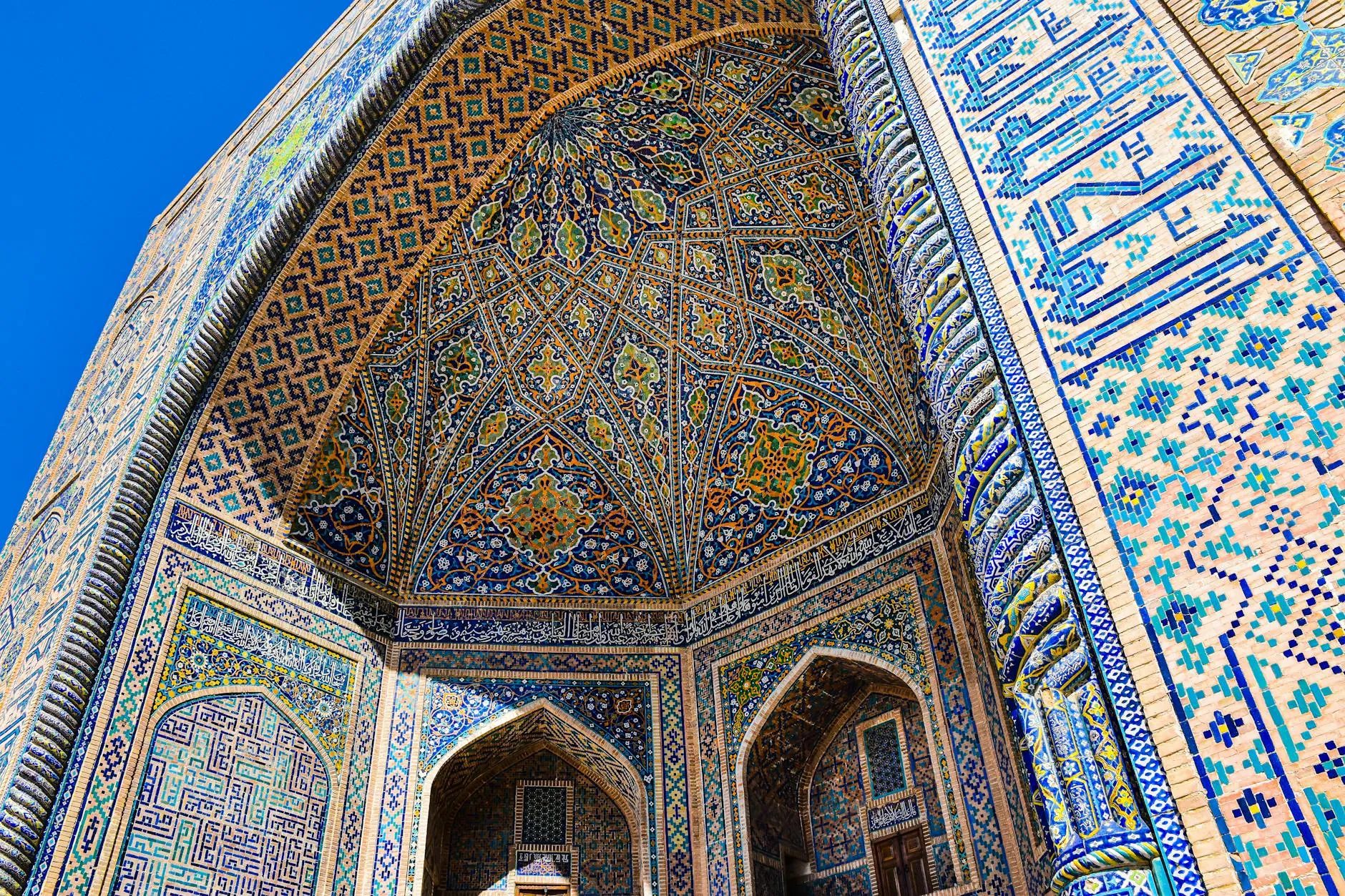
The Registan — three madrasas around a public square (Ulugh Beg, 15th century; Sher-Dor and Tilya-Kori, 17th) — is a 15-minute taxi from SKD. It rewards two visits: once in daytime for the tilework, once after dark when it is lit. Tickets are sold at the gate.
Shah-i-Zinda, the avenue of blue-tiled mausoleums, and Bibi-Khanym Mosque are within a few minutes of each other near the Siab bazaar — a short hop from the Registan. Gur-e-Amir, Timur’s tomb, is a 10-minute walk south of the Registan. The Ulugh Beg Observatory — the surviving remains of the 1420s sextant, with a small museum of his star charts — sits just outside the centre, a short taxi north. The core monuments fit a full day on foot plus one or two short rides.
⏱️ Layover Math — Read This Before Planning a Stopover
SKD to the Registan is 6 km, roughly 15–20 minutes each way by taxi. For an international departure you need 2 hours airside. Minimum realistic transit window before you can reach the Registan and return without sweating the gate: 4 hours. Under 4 hours between flights, stay in the terminal. A genuine 5–6 hour gap is enough for the Registan and Gur-e-Amir plus a plate of plov.
Day-Trips — Which Ones Actually Fit
Shahrisabz, Timur’s birthplace with the ruins of the Ak-Saray palace, is about 88 km south over a mountain pass — 1.5 to 2 hours each way by car, best done as a guided full-day trip from a hotel base; the sights take 3–4 hours on foot. It is not layover-viable under any normal connection.
Bukhara is 1.5 hours by Afrosiyob and is a destination in its own right, not a day-trip. Stay a night. Tashkent is 2 hours 15 minutes on the same train.
🔧 Practical Notes
SIM and connectivity. Buy a local SIM — Beeline, Ucell/Mobiuz, or Uzmobile — for cheap data. You need your passport to register it. The airport has wifi; city coverage is good.
Tipping. Not obligatory and not deeply ingrained, but rounding up or leaving 5–10% in a sit-down restaurant is appreciated in tourist-facing places. Taxis and the bus: no tip.
Safety. Uzbekistan is a low-crime destination; Samarkand is calm, and violent crime against tourists is rare. The realistic risks are overpriced airport taxis and petty overcharging at the bazaar. Solo and female travellers generally report the city as comfortable. Standard evening sense applies; the monuments district is well-trafficked into the night.
⚠️ Tap Water — Not Safe Anywhere in Uzbekistan
Buy bottled water in Samarkand and use it for brushing teeth if you have a sensitive stomach. It is cheap and widely available. This applies to the entire country, not just the capital.
Seasons. Summer heat is serious. Spring and autumn are the comfortable seasons to visit.
🌍 Planning the trip? Read our Uzbekistan travel guide — best time to go, where to stay, and how to get around.
❓ Frequently Asked Questions
📊 At a Glance — SKD 2026
| Feature | Current Data 2026 |
|---|---|
| IATA / ICAO | SKD / UTSS |
| Terminal | Single, opened 18 March 2022, open-book design |
| Capacity | ~1,000 passengers/hour; 1.38M passengers in 2024 |
| Distance to centre | 6 km / ~15 min |
| Currency | Uzbekistani som (UZS) |
| Exchange rate | ~12,000 UZS = US$1 · ~13,000 UZS = €1 (late May 2026) |
| Visa — EU / UK / CA / AU / JP / KR | 30 days visa-free |
| Visa — US | 30 days visa-free since 1 Jan 2026 |
| Visa — China | 30 days visa-free since 1 Jun 2025 |
| Visa — others | e-visa US$20, 30-day validity |
| Airport bus | M1 / 256 to railway station: 3,000 UZS cash · 2,000 UZS card |
| Yandex Go to centre | ~20,000–25,000 UZS (~US$2) |
| Airport-rank taxi | ~50,000–80,000 UZS; agree fare first |
| Lounge | One CIP Lounge; Priority Pass accepted; ON·PASS app entry |
| Airline flagship lounge | None |
| Afrosiyob — to Tashkent | ~2h 15m; ~245,000 UZS economy |
| Afrosiyob — to Bukhara | ~1h 30m |
| Car rental | Hertz, Sixt, Europcar |
| Registration | Within 3 days; hotel handles automatically; keep slips |
| Tap water | Not safe — bottled only |
| Plug type | Type C / F, 220V |
| Registan layover minimum | 4+ hours’ connection |
| Shahrisabz | 88 km / 1.5–2h each way; full-day trip only |
| Top carriers | Uzbekistan Airways, Air Samarkand, Centrum Air, Turkish Airlines, flydubai |