David the Builder Kutaisi International Airport (KUT) — Airport Guide 2026
KUT is Wizz Air’s largest base in the Caucasus — 1.72 million passengers passed through in 2024, the majority of them in transit to Tbilisi or Batumi, having paid less for their flight than a tank of petrol.
Quick Reference
David the Builder Kutaisi International Airport
King David IV “the Builder” (David Aghmashenebeli), reigned 1089–1125
KUT / UGKO
Kopitnari Airport (still in common local use)
~14 km west of Kutaisi, Imereti region, western Georgia
Kutaisi — Georgia’s third-largest city, former medieval capital
One passenger terminal (UNStudio design, reopened 27 Sep 2012)
07/25, 2,500 m, asphalt
1,722,809 (~3% up on 2023) — Georgia’s second-busiest after Tbilisi
Wizz Air — largest Caucasus base, 23+ routes
Belavia, FlyArystan, Pegasus, Red Wings, seasonal charters
Georgian lari (GEL), 100 tetri; notes 5–200
~2.66 GEL/USD · ~3.11 GEL/EUR (verify before travel)
Visa-free up to 365 days for ~95 nationalities
Health/accident insurance mandatory from 1 Jan 2026
~5 GEL, card-only, 24/7 every ~2h, ~40 min
~30 GEL, ~3.5h (Georgian Bus / Omnibus / Metro Georgia)
~25–30 GEL, ~2h (Georgian Bus / Metro Georgia)
Kopitnari station, ~2.5 km from terminal; free shuttle; opened May 2022
Visa Business Lounge (~USD 32 walk-up)
ATU Duty Free
Mimino
~2 hours (more at the late-evening Wizz peak)
✈️ The Terminal — What You Walk Into
There has been an airfield at Kopitnari since the post-Second World War period — a Soviet military strip that picked up civilian domestic services in the 1970s, moving people around the Georgian SSR. When the USSR dissolved, the field went quiet: military use wound down, scheduled flights dried up, and for roughly two decades it did very little. The Georgian government closed it for full reconstruction in November 2011 and reopened it as an international airport on 27 September 2012.
The new terminal is by the Dutch firm UNStudio, and it is genuinely better architecture than a low-cost airport this size has any business having. A sweeping overhanging canopy frames the Caucasus ridgeline to the north; a 55-metre control tower doubles as the visual marker you spot on approach. The airport carries the name of David IV of Georgia — reigned 1089–1125, broke the Seljuk grip on the country, the closest thing Georgia has to a national founding hero. His Georgian epithet is Aghmashenebeli, which translates as “the Builder.” He is buried at the gate of Gelati Monastery about 11 km from this airport, by his own instruction, so that everyone entering would walk over him. The name is, then, geographically apt.
Layout is simple by design: one terminal, three departure gates, a single 2,500-metre runway. Landside: check-in counters, a café, car-rental desks. Airside: duty-free, food outlets, the lounge. The walk from the entrance to the gate takes a few minutes. The airport hits roughly 1.72 million passengers a year — enough to feel busy during the late-evening Wizz Air departure waves and near-empty at two in the morning between them. A capacity expansion from ~2 million toward ~5 million passengers has been discussed, with longer runway works also floated, but none of that is operational in 2026.
🗺️ The Route Network
The route map at KUT is almost entirely Wizz Air’s doing. Polish links are dense: Warsaw, Katowice, Poznań and Wrocław. Italian coverage is the other growth area — Milan Malpensa and Rome Fiumicino operate year-round; Venice Marco Polo runs broadly May to October. Add Bratislava, Athens and a spread of Central and Eastern European cities and the pattern holds: this is the cheap eastern terminus of a Central-European budget network, which is exactly why a Georgian heading west or a Western European heading into the South Caucasus ends up here.
The non-Wizz carriers fill in the edges. FlyArystan, the Kazakh low-cost arm, is the one operator linking Kutaisi directly to Central Asia — seasonal flights to Almaty, Aktau and Atyrau, a connection that is hard to replicate from anywhere else in Georgia. Pegasus runs a seasonal Istanbul Sabiha Gökçen service, opening up onward connections across Pegasus’s own network. Belavia flies a seasonal Minsk route. Smartwings and assorted other charter operators have run in past summers.
This is a point-to-point leisure and migrant-labour network. Nobody here is checking your bag through to a third city — book each leg separately.
🛂 Border & Visa — Georgia’s Rules for 2026
Citizens of roughly 95 countries — EU, UK, US, Canada, Australia, Gulf states and most of the world beyond — enter Georgia visa-free and may stay up to 365 days. That is not a Schengen-style 90-in-180 limit: a full year, no registration, no exit paperwork. The clock resets on re-entry after leaving the country. It is the legal basis for the large remote-worker population Georgia has accumulated, and it means the arrival process for most of KUT’s traffic is a passport stamp and a wave-through with no forms to fill in.
⚠️ 2026 Insurance Rule — Do Not Arrive Without It
Since 1 January 2026, all visitors to Georgia must hold valid health and accident insurance covering their entire stay. Any provider is accepted as long as the policy is in English or Georgian. This is a genuine caution: enforcement at the border is uneven, but officers do ask, and it is a legal requirement. Georgia is not in the EU or Schengen and operates its own border independently — no equivalent rule exists in any European entry system. Buy a cheap travel policy before you fly.
For nationalities that do require a visa, Georgia runs a straightforward online e-visa system applied for before travel. For the EU/UK/US/Canada/Australia/Gulf markets that dominate KUT’s traffic, none of that applies. No arrival tax, no proof of onward travel demanded in ordinary practice.
Health-wise: no vaccinations are required for entry. Tap water in Kutaisi is generally considered safe to drink. Pharmacies — in Georgian, აფთიაქი, pronounced roughly “aptiaki” — are well-stocked and cheap in town.
💱 Currency at the Border
The lari (GEL, symbol ₾) divides into 100 tetri. Notes run 5, 10, 20, 50, 100 and 200 lari. In May 2026 the rate was roughly 2.66 GEL to the US dollar and 3.11 GEL to the euro — verify the live rate before travel. The airport has ATMs and exchange counters. ATM rates consistently beat the desks; use those. Georgian ATMs typically offer to charge you in your home currency rather than lari — always decline that and choose lari, because the “dynamic currency conversion” option is how the machine takes a cut. Cards are widely accepted in cities; carry some cash for marshrutkas, rural taxis and smaller cafés.
🚌 Getting Out of the Airport
The 14 km between KUT and Kutaisi city centre is the most consequential calculation this airport asks of you. For most passengers the real question is not how to reach Kutaisi at all — it’s how to reach Tbilisi or Batumi, which are three and a half and two hours further on. The bus operators time their departures to flight arrivals, so the system is explicitly designed for exactly this transit. Prices below were verified in 2026; check schedules before travel, as fares and timings flex with season.
🚌 Coach to Tbilisi — ~30 GEL, ~3.5 Hours
Georgian Bus, Omnibus and Metro Georgia all run this route. Coaches leave from outside arrivals roughly 30–45 minutes after flights land and run straight to the capital. Omnibus offers allocated seating — book online in advance to guarantee a place. This is the standard onward move for the majority of passengers at KUT.
🚌 Coach to Batumi — ~25–30 GEL, ~2 Hours
Georgian Bus and Metro Georgia run flight-timed services west to the Black Sea coast, terminating around central Batumi. Two hours and a fraction of the cost of a private transfer.
💳 Airport Shuttle to Kutaisi City — ~5 GEL, Card Only
The official shuttle runs 24/7, roughly every two hours, takes about 40 minutes to the centre, and costs 5 GEL. It accepts cards only — no cash on board. If your plan is to stop in Kutaisi rather than transfer onward, have a Visa or Mastercard ready before boarding. There is no fallback payment method at the stop.
🚕 Bolt vs Airport-Rank Taxis
The Bolt ride-hail app operates at KUT and prices a trip into Kutaisi at roughly 25–30 GEL — metered, no negotiation. Airport-rank drivers will quote optimistically in euros to fresh arrivals; avoid them unless you’ve agreed a fare first. Download and set up Bolt before landing while you still have home data.
🚂 The Train — Kopitnari Station
Since May 2022, a railway station ~2.5 km from the terminal has been served by a free shuttle from outside arrivals, timed to the train schedule. Every east–west Georgian Railways service now calls there — Tbilisi, Batumi, Poti, Ozurgeti, Zugdidi. Fares: roughly 33 GEL second class to Tbilisi, 31 GEL to Batumi. The catch is frequency: only a handful of trains stop each day (broadly 4–7 to Tbilisi, 2–5 to Batumi, season-dependent). When a service lines up with your landing the train is comfortable and the route is scenic; when it doesn’t, take the coach.
🚐 Marshrutka — Daytime Only
Shared minibuses to Kutaisi run for roughly 2–3 GEL but operate in daylight hours and leave from the main road rather than on a fixed airport schedule. It’s the cheapest way into the city if you land in the afternoon with light luggage. It is not a plan for a midnight Wizz arrival.
🚗 Private Transfer
Meet-and-greet car services run 24/7 — roughly 50 GEL into Kutaisi, and a couple of hundred lari for the long hauls to Tbilisi or Batumi. The right call for a group splitting the cost, a very late arrival, or anyone travelling with significant luggage. Overkill for a solo traveller when a 30 GEL coach goes to the same place.
| Destination | Cheapest option | Typical fare (GEL) | Journey time |
|---|---|---|---|
| Kutaisi city | Marshrutka, day only, 2–3 | 5 (shuttle) / 25–30 (Bolt) | ~40 min |
| Tbilisi | Coach ~30 | ~30 | ~3.5h |
| Batumi | Coach ~25–30 | ~25–31 | ~2h |
🛋️ Lounges — The Honest Picture
There is one lounge: the Visa Business Lounge. Access is structured around Visa premium cardholders, who get a set number of free visits per year. Walk-up entry has been priced at around USD 32 per person (roughly 85 GEL at May 2026 rates). The lounge has been through a renovation period recently — confirm it is open and check the current entry price before you count on it.
🛋️ No Priority Pass Access at KUT
There is no confirmed Priority Pass, LoungeKey, DragonPass or Plaza Premium partnership at Kutaisi. If your lounge access relies on one of those memberships, check your card’s current lounge directory for this specific airport before you fly — not the general network page, the airport-specific listing. With low-cost carriers dominant here, lounge culture is thin by design. For a short European turnaround most passengers end up at the airside café tables, which is a reasonable outcome.
🍽️ Food Before You Fly
The airside café is Mimino. It serves freshly baked khachapuri imeruli — the round, sealed cheese bread that defines Imeretian cuisine — and lobiani, a bean-stuffed bread that is filling and cheap in town. Both are worth eating at least once; apply the standard airport mark-up rule and don’t expect the prices you’d pay at a working bakery in Kutaisi.
A note on the geography of Georgian bread: khachapuri imeruli is the Imeretian form, round and sealed. The boat-shaped, egg-topped version that gets photographed everywhere — that’s adjaruli, from the Adjara region around Batumi. Different dish, different part of the country. You’re in Imereti.
If time before the airport allows it, eat in town first. Kutaisi’s khinkali (the pleated soup dumplings — twist the top off, sip the broth from the pocket, don’t eat the knot) and pkhali (vegetable-and-walnut pâtés) are far cheaper and better from a working café than from an airport counter.
🍷 Duty-Free: The Georgian Wine Is Worth a Look
ATU Duty Free operates the departures zone with the standard perfume, tobacco and confectionery range. The Georgian wine and brandy selection is the section genuinely worth browsing — the Imeretian whites and better Saperavi reds are cheaper here than in Western Europe, and the airport stocks regional varieties that are hard to find abroad. If you have a choice, ask for the Imeretian whites — Tsitska (a clean, dry white from Imereti broadly) or Krakhuna (from the Kvirila valley, higher-regarded, still inexpensive for the quality) — rather than the standard Saperavi or Rkatsiteli poured by default.
Georgia is among the oldest winemaking cultures on earth. The qvevri — a buried clay fermentation vessel used for traditional amber-wine production — was added to UNESCO’s intangible cultural heritage list in 2013. Shelf prices change constantly and are not worth quoting; check on the day.
💡 If You Actually Stop in Kutaisi
Kutaisi rewards a day or two more than its transit-hub reputation suggests. Everything below is measured from Kutaisi city, not the airport; factor in the ~14 km / 30–40 minutes into town first.
🏛️ Gelati Monastery — ~11 km from Kutaisi
This is the one to prioritise. Founded in 1106 by King David IV — the same David the Builder the airport is named for — Gelati was the most important centre of learning in medieval Georgia, and its main church holds some of the finest surviving Byzantine-style mosaics and frescoes in the entire Caucasus. David IV is buried at the monastery gate, by his own instruction, so that everyone entering would step over him. A Bolt or taxi from Kutaisi runs roughly 8–15 GEL one way and takes about 15 minutes. Gelati is a UNESCO World Heritage Site.
The site pairs naturally with Motsameta Monastery, ~6 km from Kutaisi — smaller, on a dramatic cliff above a river bend, a short hop from Gelati on the same trip.
🪨 Prometheus Cave — ~20–23 km northwest of Kutaisi
Georgia’s largest show cave, with a long illuminated walk through stalactite halls and an optional underground boat ride at the end. A genuine half-day including travel — roughly 30–45 minutes by car from Kutaisi. Combined cave-and-monastery day-trips are the standard Kutaisi excursion and straightforward to arrange from the city.
🦕 Sataplia Nature Reserve — ~7 km from Kutaisi
A karst reserve established in 1935 around a set of preserved dinosaur footprints, discovered by the Georgian naturalist Petre Chabukiani. There is a show cave, a glass-floored viewing platform cantilevered over a forested gorge, and a short walking circuit with views back toward the city. Closer and lower-key than Prometheus — a good two-hour stop rather than a half-day, and the easier of the two cave options if time is limited.
🏚️ Bagrati Cathedral — In Kutaisi, ~1 km from the Centre
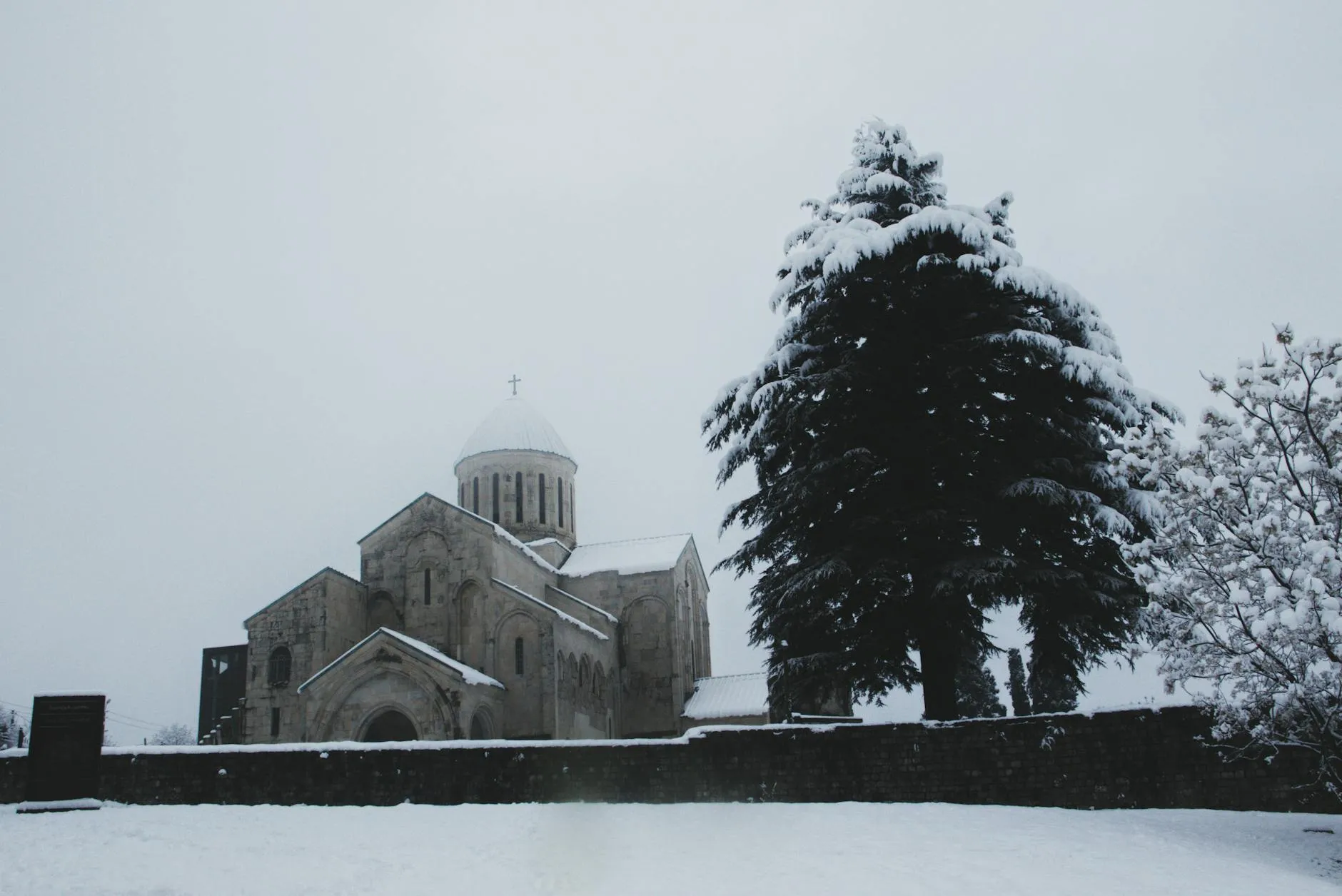
An 11th-century cathedral on the hill above the Rioni river, walkable from the centre in under 20 minutes. It was a UNESCO World Heritage Site until 2017, when it was delisted after a reconstruction that the committee judged had compromised the building’s authenticity — a contested decision that is its own interesting story and worth knowing before you go expecting a pristine medieval structure. The view over Kutaisi from the hill is the reason to climb up; the cathedral itself is now a debate.
🌇 Kutaisi City Centre
The Colchis Fountain on the central square — unveiled in May 2012, designed by David Gogichaishvili — is ringed with 30 oversized golden replicas of jewellery excavated from ancient Colchian sites, including nearby Vani. Colchis is the Bronze Age kingdom of the Golden Fleece legend; this is the part of Georgia where Jason was sent for it. The fountain is lit at night. The White Bridge, a pedestrian span over the Rioni, is the standard evening walk. The centre is compact enough to cover on foot in a relaxed half-day.
🗺️ Onward from Kutaisi
Kutaisi sits roughly in the geographic middle of Georgia, which is why a cheap KUT flight is an efficient entry point for a wider trip in either direction.
- Tbilisi — ~3.5 hours east by coach. The old town, the sulphur baths at Abanotubani, Narikala fortress, the wine bars of the Sololaki district.
- Batumi — ~2 hours west on the Black Sea. Subtropical, summer beach scene, the home region of adjaruli khachapuri.
- Svaneti (Mestia) — the high Caucasus, with the medieval defensive tower-houses of Ushguli, among the highest continuously inhabited settlements in Europe. The better part of a day from Kutaisi by road, longer in winter. The most spectacular thing in this part of the country if the time is available.
🔧 Practical Notes
SIM and data. Georgia’s networks — Magti, Silknet, Cellfie — are reliable and cheap. Tourist SIMs are on sale in the arrivals hall. Set up data before leaving the terminal so that Bolt and bus booking apps work on the way out. The airport has free WiFi if you prefer to wait.
Currency. Use ATMs over exchange desks. Always choose to be charged in lari. Carry small cash for marshrutkas and rural taxis — the airport shuttle is card-only, but most informal transport runs on cash. Notes above 50 GEL can be awkward to break at smaller shops.
Safety. Georgia is, by regional standards, a notably safe country for travellers, and Kutaisi is calm. The practical risks are the ordinary ones: use the Bolt meter or agree a price before getting in any taxi, keep an eye on bags at bus-boarding scrums, and don’t plan to arrive after midnight and rely on a marshrutka that will not be running. Demonstrations occur in Georgia but are mainly in central Tbilisi and rarely affect Kutaisi or the airport. Check current travel advisories before departure.
Departure timing. Two hours before a European Wizz flight is comfortable. The terminal is small — one departures hall, three gates, security that clears quickly outside peak. The late-evening wave, when the Europe-bound Wizz departures stack up, is the exception; allow a little more time then.
❓ FAQ
📊 At a Glance — KUT 2026
| Category | Detail |
|---|---|
| Full name | David the Builder Kutaisi International Airport |
| Named after | King David IV “the Builder” (David Aghmashenebeli), reigned 1089–1125 |
| IATA / ICAO | KUT / UGKO |
| Former/local name | Kopitnari (still in common use) |
| Distance to Kutaisi | ~14 km west (~30–40 min by road) |
| Terminal opened | 27 September 2012 (UNStudio design; airfield dates to post-WWII Soviet era) |
| Terminals | 1 passenger terminal |
| Runway | 07/25, 2,500 m, asphalt |
| 2024 passengers | 1,722,809 (~3% YoY growth) — Georgia’s 2nd busiest |
| Primary carrier | Wizz Air — largest Caucasus base, 23+ routes |
| Other airlines | Belavia, FlyArystan, Pegasus, Red Wings, seasonal charters |
| Visa regime | Visa-free up to 365 days for ~95 nationalities |
| New 2026 rule | Mandatory health/accident insurance from 1 Jan 2026 |
| Currency | Georgian lari (GEL), 100 tetri; notes 5–200 |
| FX (May 2026) | ~2.66 GEL/USD · ~3.11 GEL/EUR (verify before travel) |
| Shuttle to Kutaisi | ~5 GEL, card-only, 24/7 every ~2h, ~40 min |
| Bolt to Kutaisi | ~25–30 GEL, ~30–40 min |
| Coach to Tbilisi | ~30 GEL, ~3.5h, flight-timed (Georgian Bus / Omnibus / Metro Georgia) |
| Coach to Batumi | ~25–30 GEL, ~2h, flight-timed |
| Train (Kopitnari station) | ~2.5 km, free shuttle; ~33 GEL to Tbilisi / ~31 GEL to Batumi |
| Lounge | Visa Business Lounge (~USD 32 walk-up); no confirmed Priority Pass / LoungeKey |
| Duty-free operator | ATU Duty Free |
| Airside café | Mimino (Imeretian khachapuri, lobiani) |
| Top day-trips | Gelati Monastery (~11 km, UNESCO), Prometheus Cave (~20–23 km), Sataplia Reserve (~7 km), Bagrati Cathedral (in city) |
| Departure buffer | ~2 hours (allow more at the late-evening Wizz peak) |
🌍 Planning the trip? Read our Georgia travel guide — best time to go, where to stay, and how to get around.