Lanzarote Airport (ACE) — Airport Guide 2026
Quick Reference
César Manrique-Lanzarote Airport
ACE / GCRR
Arrecife, Lanzarote, Canary Islands, Spain
~5 km from Arrecife; ~10 km from Puerto del Carmen
Two — T1 (international + mainland Spain), T2 (inter-island Canaries)
8,920,901 passengers — a record, and busy year-round
Spain — Schengen, euro; EES live since April 2026, ETIAS expected, date not announced; but a special tax zone (IGIC, not EU VAT)
Euro (€)
Bus €1.40 to Arrecife / Puerto del Carmen, €3.30 to Playa Blanca; taxi ~€17–22
Sala VIP Guacimeta (T1; Priority Pass; ~€44 walk-in)
UK & Germany (>60% of international); Ryanair, Jet2, easyJet, TUI
🛫 1. What Lanzarote Airport is
Lanzarote is a big, properly busy airport — 8,920,901 passengers in 2025, a record — and, crucially, a year-round one. Unlike the Greek and Mediterranean islands that empty out in winter, the Canaries are a cold-season sun destination, so this airport runs hard from January to December, with the British and Germans alone accounting for more than 60% of its foreign traffic. It’s also a place with two quirks worth understanding before you arrive: a split-terminal layout, and a tax status that makes it unlike almost anywhere else in the EU.
Here’s the one that sets Lanzarote apart. It’s Spain, in the EU and in Schengen, on the euro — but the Canaries sit outside the EU’s VAT area, taxed instead under the local IGIC at a standard 7% rather than the mainland’s 21%. So shopping is genuinely cheaper here, and — unlike a normal flight within the EU — you get a real duty-free allowance flying home, cigarettes and spirits included. The airport’s duty-free isn’t a gimmick; you’re crossing a genuine fiscal border.
There’s no dramatic recent change beyond steady record growth and the capacity upgrades that come with it. The work for you is in the terminals, the border, and a cheap bus most arrivals don’t know about.
🛬 2. The terminals and the lounge
Lanzarote runs two terminals, and which one you use is decided for you. Terminal 1 handles all international and mainland-Spain flights — which is to say, almost everyone reading this. Terminal 2 is dedicated to inter-island hops within the Canaries, the small Binter and Canaryfly turboprops to Gran Canaria, Tenerife and the neighbours; if you’re not island-hopping, you’ll never see it. T1 is a large, modern terminal that fills in the changeover peaks, so allow two to three hours for a busy departure.
T1 was built for the volume, but the security and bag-drop halls still bunch up on a Saturday changeover, when a dozen charter flights turn around at once. If your departure is a weekend morning in peak season, that two-to-three-hour buffer is real advice rather than padding — and the lounge upstairs is one civilised way to wait it out.
There is a proper lounge, for once on this kind of island. The Sala VIP Guacimeta, on the second floor of Terminal 1 by gates 1 and 2, takes Priority Pass and comparable cards, or a walk-in pass around €44, and runs roughly 06:00 to 22:00 with food, drinks and an outdoor terrace. It’s T1 only; the inter-island T2 has nothing of the sort.
✈️ 3. Carriers, and the year-round reality
This is a low-cost and charter airport at scale, fed from two main markets. Ryanair, Jet2 and easyJet carry the bulk of the British traffic from a long list of UK cities; Condor, Eurowings and others bring the Germans; TUI runs the package end; and Norwegian, Transavia, Aer Lingus and more fill out the northern-European map. Domestic flying connects Lanzarote to mainland Spain — Madrid, Barcelona and beyond on Iberia, Air Europa and Vueling — and to the other Canaries from Terminal 2.
The difference from a Greek island is the calendar. Because Lanzarote sells winter sun as hard as summer beaches, the schedule doesn’t collapse out of season — the airport is genuinely busy in January and February, when northern Europe is grey. For a deal-hunter that flips the usual logic: the expensive weeks here are the winter school holidays and the height of summer, and the value sits in the shoulder months of late spring and autumn.
The split terminal opens one option worth knowing. From T2, Binter and Canaryfly run cheap, frequent turboprop hops to the rest of the archipelago, most of them under an hour, so a Lanzarote trip can fold in a day or two on Gran Canaria, Tenerife or La Palma without booking a whole new holiday. Island-hopping here is a genuine, low-cost add-on rather than the expensive afterthought it is on the Greek islands.
🛂 4. The border and the tax frontier
Two systems apply at Lanzarote, and it pays to keep them separate. The first is the ordinary one: the Canaries are part of Spain and the Schengen Area, so EU/EEA and Swiss nationals walk through, and UK, US and many other visitors enter visa-free for up to 90 days in any 180.
Spain’s EES biometric registration has been live since April 2026, and it applies to arrivals from outside Schengen — chiefly the UK here, the airport’s single biggest foreign market. You clear no passport control arriving from elsewhere in Schengen, but a UK arrival now means the new biometric check, and a possible queue on a busy changeover day. German, Spanish-domestic and other Schengen arrivals skip it.
The second system is the tax one, and it’s the genuinely unusual part. Because the Canaries are outside the EU VAT and customs area, a flight between Lanzarote and the mainland EU or the UK crosses a fiscal frontier, and duty-free allowances apply on the way home. Flying back to the UK you can carry the full third-country allowance — 200 cigarettes, 4 litres of spirits, 18 litres of wine and £390 of other goods; to mainland Spain or the EU the limits differ but the principle is the same. Combined with the lower IGIC, it’s why electronics, perfume, spirits and tobacco are worth a look here rather than at home. Everything is priced in euros, cards work everywhere, and ATMs are in both terminals.
🚌 5. Getting to the resorts — a cheap, frequent bus
The airport sits about 5 km from Arrecife, the capital, and 10 km from Puerto del Carmen, the main resort strip, with Playa Blanca around 35 km down at the southern tip. The good news, and it’s better than most islands manage, is the public bus.
Skip the pricey transfer and take the green guagua. Line 161 runs from both terminals to Puerto del Carmen for €1.40 and on to Playa Blanca for €3.30, about every half hour through the day; line 23 reaches Arrecife for €1.40. A taxi to Puerto del Carmen is roughly €17–22 — worth it late at night or split among a group — but for the price of a coffee the bus does the job for most arrivals.
The 161 calls at the resort complexes along Puerto del Carmen and continues through Puerto Calero and Yaiza to Playa Blanca’s bus station and ferry port, so it covers most of where visitors stay; tickets are bought on board. For Costa Teguise and the quieter north, or simply to roam a small island at your own pace, a hire car is the move — the desks are in T1, and Lanzarote’s roads are quiet and easy. Nobody connects through Lanzarote in the international sense, so the only planning that matters is the transfer at each end, and leaving margin to get back across the island from the far south.
That ride to Playa Blanca buys one more thing: from its harbour, ferries cross to Corralejo on Fuerteventura in roughly 25 to 35 minutes, several times a day. It’s the easy way to bolt the neighbouring island — bigger dunes, longer beaches — onto a Lanzarote week without a flight, and short enough to do as a day-trip if you don’t want to move hotels.
🌋 6. The reason this airport is named after an artist: Manrique’s Lanzarote
Most airports are named for a city or a saint; this one is named for an artist, and that tells you the island’s whole story. César Manrique was a Lanzarote-born painter and architect who, returning home in the 1960s, fought to keep the island from being concreted over like the mainland costas — no high-rise hotels, no roadside billboards, buildings kept low and white against the black volcanic ground. His campaign shaped the planning rules and his own works became the island’s set-pieces, and it’s the reason Lanzarote is a UNESCO Biosphere Reserve that looks unlike anywhere else in the Canaries.
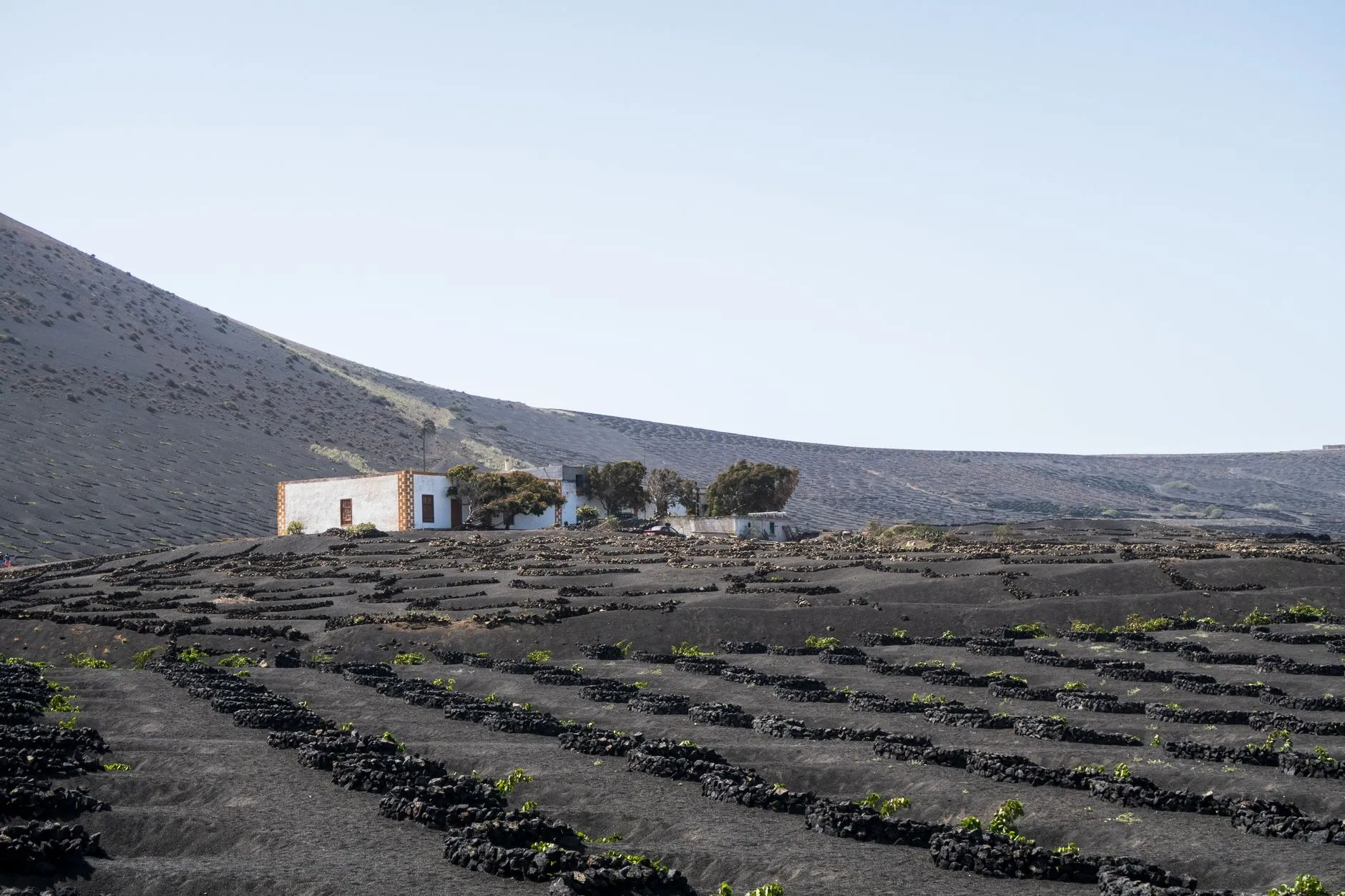
The landscape does the rest. Timanfaya National Park is a field of fire mountains where the ground is still hot enough to singe brushwood a few feet down; the La Geria wine region grows vines in pits dug into the volcanic ash, each shielded by a low stone semicircle; and the beaches run from the resort sands of Puerto del Carmen to the wilder coves at Papagayo. There’s a full aifly island guide linked below, so take this as the why-it’s-different rather than a tour — and a frank word: the Puerto del Carmen strip is mass tourism at full volume, fine if that’s the holiday, while the island Manrique actually fought for is the quiet, low-built one a short drive away.
If you want to carry the place home, a bottle of La Geria’s volcanic Malvasía wine travels better than anything else, and thanks to the island’s tax status it costs less than the same bottle would on the mainland.
❓ 7. FAQ
📋 8. At a glance
| Item | Detail |
|---|---|
| Airport | César Manrique-Lanzarote (ACE / GCRR), Arrecife |
| Terminals | T1 international + mainland; T2 inter-island Canaries only |
| 2025 traffic | 8,920,901 passengers (record); busy year-round |
| To Puerto del Carmen | Bus 161 €1.40 (~30 min frequency); taxi ~€17–22 |
| To Arrecife / Playa Blanca | Bus 23 €1.40 to Arrecife; bus 161 €3.30 to Playa Blanca |
| Border | Spain; Schengen; euro; EES live since April 2026; ETIAS expected, date not announced |
| Tax status | Outside EU VAT — IGIC 7%, not 21%; duty-free allowances flying home |
| Currency | Euro (€) |
| Lounge | Sala VIP Guacimeta, T1; Priority Pass; ~€44 walk-in; 06:00–22:00 |
| Carriers | Ryanair, Jet2, easyJet, TUI, Condor (UK/Germany 60%+); Binter (inter-island) |
| Carry home | La Geria volcanic Malvasía wine — cheaper here thanks to the tax status |
🔗 9. Explore More
- Lanzarote Island Guide — what to actually do: Timanfaya, the Manrique sites, La Geria and the beaches
- Gran Canaria Airport (LPA) guide — the largest Canary Islands airport, a short inter-island hop away