Melilla Airport (MLN) — Airport Guide 2026
Quick Reference
Melilla Airport (El Atalayón)
MLN / GEML
Melilla, a Spanish autonomous city on the North African coast
About 4 km southwest of the centre
One small terminal — 6 check-in desks, 3 gates, 2 baggage belts
507,957 passengers — a record; 2025 ran ahead of it
One: Iberia Regional / Air Nostrum, ATR 72-600 turboprops only
Spain — Schengen, but with the special Ceuta/Melilla ID-check rule; all flights domestic
Euro (€); IPSI tax, not mainland VAT
No airport bus — taxi (~€7–10) or hire car only
None
🛫 1. What Melilla Airport is
Melilla is a Spanish city on the African continent — a small enclave on the Mediterranean coast, ringed by Morocco, about 150 km east along the shore from Ceuta. Its airport is the air bridge to the rest of Spain, and almost nothing about it works like a mainland field. One carrier flies here, on one type of aircraft, to Spanish cities only, off a runway too short for a jet.
The numbers are healthy for a place this size. Melilla set a traffic record in 2024 with 507,957 passengers, a slight rise on 2023, and 2025 ran ahead again — Air Nostrum, the only operator, carried more than 390,000 passengers in the first nine months and broke 50,000 in a single month for the first time in August. A new Valencia route is due in summer 2026, taking the destination list to twelve mainland and island cities.
The thing to understand before you book: every commercial flight from Melilla goes to mainland Spain or the Balearic and Canary Islands, all operated by Iberia Regional / Air Nostrum on ATR 72-600 turboprops. There is no international service and no second airline. The land route to the rest of the world runs through Morocco; the air route runs through Spain.
So set expectations to the place. This is a regional connector for a city of around 85,000 people, not a holiday airport and not a hub you would ever transit. You come here because you are going to Melilla, or because you live here and need to reach Málaga or Madrid.
A single-carrier market also means a single price. With no competing airline, fares to Madrid and Barcelona can run high at short notice, while Air Nostrum’s seat sales — the airline has promoted Melilla routes from around €15 one way in quieter periods — reward booking early and flying midweek. Málaga is the cheapest and most frequent run by some way, and it is the one to aim for if you are connecting onward from the mainland.
🛬 2. The terminal, the single carrier, and the weather
The terminal is genuinely small — six check-in counters, three boarding gates, two baggage carousels — and quick to cross. The departure lounge was being expanded under an Aena tender from late 2023, so the building may feel newer than its size suggests, but the flow is simple and an hour before a domestic flight is plenty. There is no airline to connect to and nothing to walk to.
The constraint that shapes everything is the runway. At roughly 1,433 metres it is too short for jets; only turboprops operate, and even a full ATR 72 has to manage its weight against the length on a hot day. The airport sits on Cape Tres Forcas, where low cloud gathers between the headland’s hills, so fog and crosswinds cancel or divert flights more often than at a mainland airport.
A real warning, not a flourish: with a single carrier, a single aircraft type and a fog-prone runway, Melilla flights are cancelled and diverted more than most. There is no rival airline to rebook you onto and no jet that can punch through worse weather. Build slack into any onward connection on the mainland, never book a tight same-day transfer through Málaga or Madrid, and know the fallback before you need it — the ferry. (Verify your flight status the morning of travel.)
The flight itself is part of the appeal once you accept the trade-off. The ATR turboprop crosses the Alboran Sea low and slow, the cabin is small, and the approach swings in over the headland with the African coast filling the window — a more interesting half-hour than the jet you would take to most Spanish cities. It is also the reason a windy day is felt more sharply here than at a big airport; a light turboprop and a short, exposed runway leave less margin, and the crew will hold or divert rather than push it.
That fallback matters enough to plan around. Naviera Armas and Baleària run conventional ferries between Melilla’s port and the Andalusian ports of Málaga, Almería and Motril, several times a week, taking roughly six to seven hours. It is slow, but when the airport fogs in it is how people actually get home, and it is worth knowing the schedule exists before a cancellation forces you to learn it.
🛂 3. The border: Schengen, but you still show ID
Melilla is part of Spain and the Schengen Area, yet it carries a quirk that catches first-timers. Because Ceuta and Melilla sit outside the EU customs union and against a non-EU land border, the Schengen Borders Code applies a special rule: identity and document checks are carried out on travellers leaving the two cities for mainland Spain or elsewhere in Schengen.
In plain terms, you will have your ID or passport checked when you fly out of Melilla even though the flight is domestic. It is the one place in Spain where a flight to Málaga involves a document check. Carry your passport or national ID card — not just a boarding pass — and allow for it, though at an airport this small the check is quick.
The EU’s EES biometric system, live since April 2026, does not come into this at the airport, because every flight here is domestic and EES applies to non-EU nationals crossing an external border. Melilla’s external border is the land crossing with Morocco at Beni Ensar, not the terminal. For an ordinary traveller flying in and out of Spain, the airport border is the ID check and nothing more; ETIAS, the EU’s pre-travel authorisation, has no announced launch date and likewise concerns the external frontiers, not a domestic hop.
The Morocco land border is its own subject and not a tourist transit route. The Beni Ensar crossing is the EU’s external frontier here; passenger traffic moves through it, but the commercial crossing has been heavily restricted under rules tightened in January 2025, and it is not a sensible plan for reaching Morocco on a short trip. If Morocco is the goal, fly there directly from the mainland.
💶 4. The tax frontier: cheaper goods, real allowances
Melilla has its own tax system. Mainland VAT does not apply; instead the city levies IPSI, the Tax on Production, Services and Importation, with rates from 0.5% to about 10% and a typical level near 7% — passenger transport is taxed at just 0.5%. Day to day, that makes a range of goods cheaper here than on the peninsula.
Because Melilla is outside the EU customs union, carrying goods back to mainland Spain works like arriving from outside the EU, with the same kind of allowance limits on tobacco and alcohol. So the duty-free at the airport is the genuine article rather than the EU-internal version — but the allowances are capped (verify the current tobacco and spirits limits before you load up). Everything is priced in euros, with cards taken across the city.
This is a useful thing to know and an easy one to overstate. The savings are real on electronics, tobacco and spirits, but you are flying to the mainland on a domestic ticket with a customs allowance, not running a shopping operation — bring a sensible amount home and there is no issue.
🚖 5. Getting into the city — no bus, a short taxi
The airport is about 4 km southwest of the centre, and the honest answer on transport is short: there is no public bus line to the airport. A taxi from the rank or a hire car from the terminal desks are the realistic ways in.
The taxi is a short run into a small city — figure on roughly €7–10 to the centre, a little more at night or on holidays (confirm the fare before you set off). There is no airport bus and no rail anywhere in Melilla, so don’t wait for either. For most arrivals the taxi is simplest; a hire car only earns its keep if you plan to drive the coast or up to the border area.
Because the city is compact, the transfer is a non-event compared with the flight itself — the variable that actually affects your day is whether the weather lets the plane in, not how you get from the terminal to your hotel. Walking from the airport is possible but unrewarding along the access road; take the taxi.
🏛️ 6. The reason to come: a Spanish Art Nouveau city in Africa
Melilla earns a visit on something most people never associate with North Africa: architecture. After Barcelona, it holds the largest concentration of Modernista — Catalan Art Nouveau — buildings in Spain, the legacy of Enrique Nieto, an architect who had worked on Gaudí’s Casa Milà before arriving here in 1909 and staying for the rest of his career. The central district nicknamed the Golden Triangle carries the bulk of the roughly 148 listed modernist buildings, façades of curling stone and ironwork dropped into a city on the edge of the Sahara.
What makes Nieto’s Melilla unusual is who he built for. The same architect designed the Yamín Benarroch Synagogue (1924), the Central Mosque (1945) and Catholic churches in the same Modernista hand — a record in stone of a city that has long held Christian, Muslim, Jewish and Hindu communities together in a small space. Walk the Golden Triangle for the façades, then read them for that.
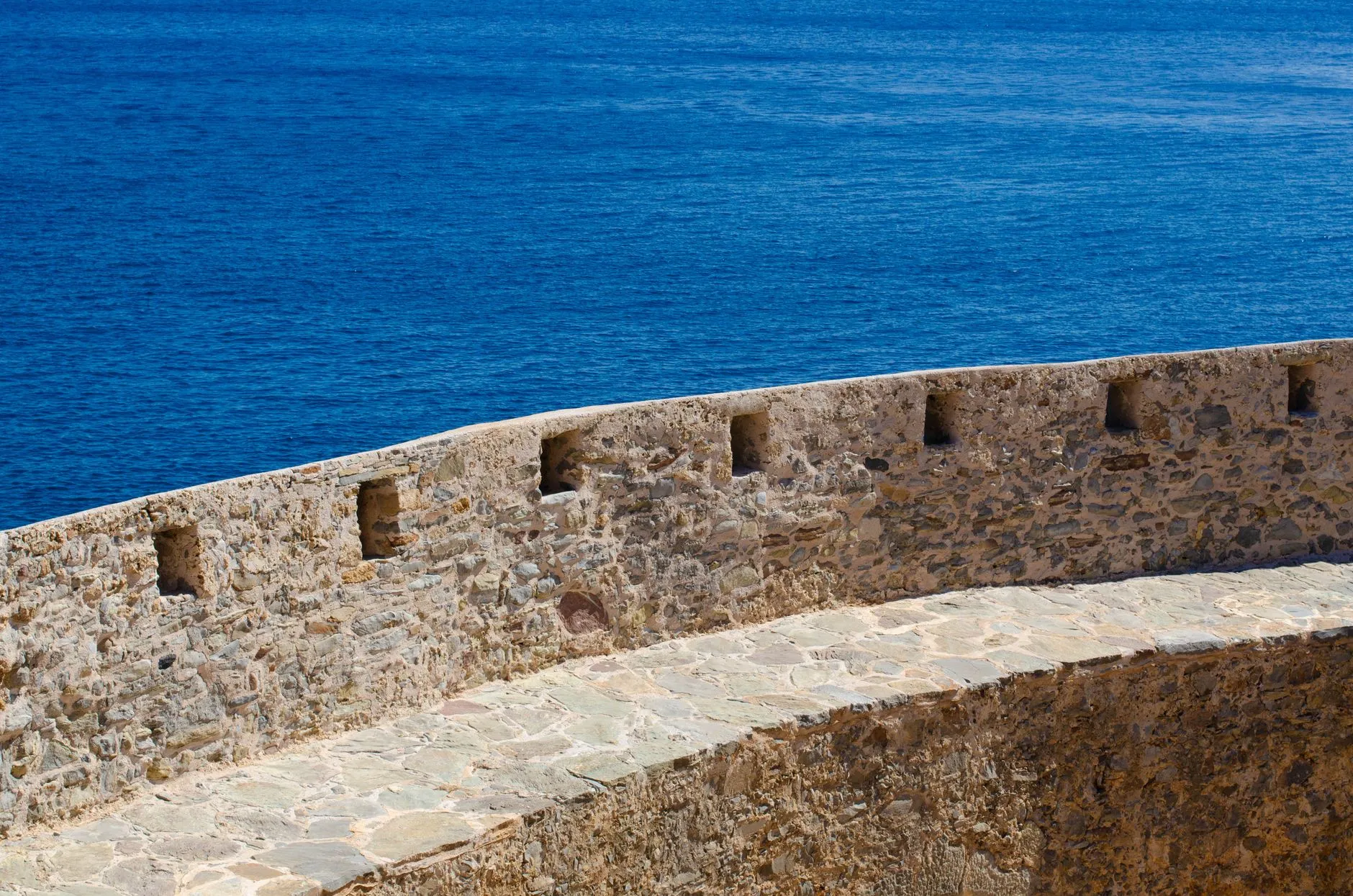
The other half of the city is the fortress. Melilla la Vieja, the old walled town above the harbour, is the original 15th–16th-century Spanish presidio, with cisterns, ramparts and small museums, and it gives the best sense of why Spain has held this rock for five hundred years. It is a genuine half-day and the part of Melilla that feels least like anywhere else in the country.
Practically, the city does itself on foot. The Golden Triangle and Melilla la Vieja are a short walk apart, so you do not need a car for a visit — the hire car only earns its place if you mean to drive the coast. Spring and autumn are the kindest months; high summer is hot and the August flights are the fullest of the year. A single full day and a night covers both sights at a relaxed pace before the morning flight back.
The harder context belongs in any honest guide: Melilla is also defined by its border fence with Morocco, a fortified frontier of the EU that has been the scene of migration crises, and the city’s economy and politics are bound up in that frontier far more than in tourism. None of that should stop a visit, but it is the truth of the place, and a guide that sold it purely as a charming day out would be lying. There is no aifly city guide to Melilla yet, so take this as orientation rather than a tour: the Golden Triangle and Melilla la Vieja are the two things to see, the local food leans Andalusian with a Moroccan edge — pinchos morunos, fresh fish, mint tea alongside the tapas — and a day and a night is about right before you fly back to the mainland.
❓ 7. FAQ
📋 8. At a glance
| Item | Detail |
|---|---|
| Airport | Melilla (MLN / GEML), ~4 km southwest of the centre |
| Terminal | One small terminal; arrive ~1h for a domestic flight |
| Carrier / aircraft | Iberia Regional / Air Nostrum only; ATR 72-600 turboprops |
| Destinations | Mainland Spain + Balearics/Canaries; no international; Valencia new summer 2026 |
| Runway | ~1,433 m — turboprop-only; fog-prone (Cape Tres Forcas) |
| To the city | No bus, no rail; taxi ~€7–10 or hire car |
| Border | Spain/Schengen, but ID/document check on departure to the mainland |
| EES/ETIAS | Do not apply at the airport — all flights domestic |
| Tax | IPSI (avg ~7%), not VAT; outside EU customs union — real duty-free, capped allowances |
| Lounge | None |
| Fallback | Ferry to Málaga / Almería / Motril (~6–7h) when flights cancel |
| Worth your time | The Golden Triangle Modernista quarter and Melilla la Vieja fortress |
🔗 9. Explore More
- Málaga–Costa del Sol Airport (AGP) guide — the busiest mainland link to Melilla and the usual connecting point
- Madrid–Barajas Airport (MAD) guide — the hub to connect through for anywhere beyond Spain