Davao Airport (DVO) — Airport Guide 2026
Quick Reference
Francisco Bangoy International Airport (Davao International Airport)
DVO / RPMD
Davao City, Davao del Sur, Mindanao, Philippines
Barangay Sasa, about 10–11 km north-east of downtown via the Carlos P. Garcia Highway
One terminal, domestic + international under one roof; ~4.39M passengers in 2025 against a ~4M design — running over capacity
Cebu Pacific, Philippine Airlines/PAL Express, Cebgo, plus Philippines AirAsia on a much smaller scale; international on Qatar Airways (Doha) and Scoot (Singapore)
Philippines
Philippine peso (₱ / PHP)
Grab or metered taxi ~₱250–500, 20–30 min; no airport bus; ferry pier for Samal Island by taxi
PAGSS Premium Lounge (Priority Pass, domestic + international); PAL Mabuhay Lounge (domestic, Gate 4)
🛫 1. What Davao Airport is
Francisco Bangoy is the busiest airport in Mindanao and the third busiest in the Philippines, and the single fact that shapes a 2026 visit is that it is full. The terminal opened in December 2003 and was built for about four million passengers a year; it handled roughly 4.39 million in 2025. You arrive at an airport doing more than it was designed for, which at the morning and evening domestic peaks shows up as crowded check-in halls and queues at security.
The recent change worth knowing is that something is finally being done about it. A public-private partnership to rehabilitate and operate the airport is in procurement. Separately, a ₱650-million government expansion is meant to enlarge the passenger building and lift seating capacity, targeted for completion around December 2026. None of this is finished as you travel, so plan for the airport as it is now — busy and tight at the peaks — not as the renderings promise.
For booking, the realistic pattern is that long-haul visitors fly into Manila or Cebu and pick up a frequent domestic hop down to Davao on Cebu Pacific or Philippine Airlines, with Philippines AirAsia a much smaller third option. The direct international options are narrow: Singapore (Scoot) and Doha (Qatar Airways) are the mainstays, with seasonal Hong Kong on Cebu Pacific. Domestic Philippine fares reward booking ahead, so lock the southbound leg early rather than buying it last-minute beside the international ticket.
Davao itself is the largest city in Mindanao and the regional capital of the Philippine south, so most people landing here are either coming home, doing business, or using the city as a base for the wider region rather than treating it as a beach-resort drop-off. That matters for how you plan the ground side, which is a city transfer, not a resort-strip shuttle.
🛂 2. The border: the Philippines, visa-free but register first
The Philippines runs its own entry system, so here, and the currency is the Philippine peso. For most visitors the entry itself is simple, but there is a mandatory online step that trips people up.
More than 150 nationalities — including the UK, US, Canada, Australia, the EU, Japan, South Korea and others — enter visa-free for up to 30 days, extendable once inside the country. What everyone must do, visa-free or not, is complete an eTravel registration at etravel.gov.ph within 72 hours before arrival. It is free, browser-based and instant: you fill the form and get a QR code on the spot, which you show at the airport. Carry a passport valid at least six months beyond your stay and proof of an onward or return flight, which immigration can ask to see.
There is no on-arrival visa fee for the visa-free nationalities, and the eTravel QR is the one thing genuinely worth sorting before you fly rather than scrambling for airport wifi to do it on landing. Cards and contactless work in Davao’s malls, chains and Grab, but the Philippines still runs on cash for jeepneys, market stalls, smaller eateries and tips, so keep pesos on you.
🚆 3. Getting into Davao — taxi, Grab, and no train
The airport sits about 10–11 km north-east of the city centre, and there is no rail and no dedicated airport bus, so the honest answer is that you take a car.
Grab (the local ride-hailing app, and the default choice) runs 24 hours and costs roughly ₱250–500 to most central districts, with the price shown before you book — fix your mobile data or grab airport wifi to order one. Metered airport taxis from the official rank outside arrivals cover the same run in 20–30 minutes; agree it is on the meter, or expect to pay a similar ₱300–500 to downtown. There is no through bus from the terminal to Ecoland, the city’s main bus station, so for onward provincial buses you take a taxi or Grab to Ecoland first.
If Samal Island is your real destination, you do not transit through anything clever here — you take a taxi or Grab from the airport to one of the city ferry piers (the Sasa or Sta. Ana wharves for the barge crossing), then the short ferry over. Build that into your timing as two legs, not one.
The layover math is straightforward and mostly a non-issue, because few people connect internationally through Davao — it is an arrival point, not a hub you change planes at. If you are stitching a domestic-to-international self-transfer here, treat it as a full re-check: collect bags, clear out, check in again at the international counters, and clear immigration, so give yourself a comfortable buffer rather than a tight one given how busy the terminal gets at peak.
🛬 4. The terminal and the lounges
It is a single two-level terminal with domestic and international operations under one roof, four jet bridges, and the ordinary mix of cafés, convenience shops and a food court. At the domestic morning and evening banks, when the Manila and Cebu flights cluster, it feels its overcapacity; outside those windows it moves quickly. For a domestic flight the usual hour or two is fine; for an international departure on Qatar or Scoot, give yourself longer and expect a busier check-in.
On lounges, Davao is better served than its size suggests. The PAGSS Premium Lounge is accessible on Priority Pass and has both a domestic-side and an international-side location, so the membership is genuinely usable here either way. Philippine Airlines runs its own Mabuhay Lounge on the domestic side near Gate 4 for its business and elite passengers. If you hold Priority Pass or a lounge-bearing card, confirm which PAGSS location matches your departure before you count on it.
The food is best approached the local way rather than at the international chains. The thing to actually try is the durian — Davao is the durian capital of the Philippines, and the airport leans into it, with a café at the pre-departure gates selling durian-flavoured coffee alongside the usual brews. It is a fair introduction if the fresh fruit’s reputation has put you off committing to a whole one in the city.
🌅 5. The reason to come: Davao and the Mindanao south
Davao is the main jumping-off point for the southern third of the Philippines, and it rewards treating the city as a base rather than a transit point — but it comes with a security caveat that has to be stated plainly rather than glossed.
Davao City itself is known as one of the most orderly cities in the country, with a visible police and security presence, a strict public smoking ban, a liquor curfew and well-lit central streets around Roxas Avenue, City Hall and San Pedro Cathedral. That said, government travel advice treats it seriously: the US State Department holds Davao City at Level 2 (“exercise increased caution”) and advises reconsidering travel to areas of the city beyond the central business district, the airport and the main highway corridor along the Davao Gulf. The wider Mindanao region carries stronger advisories in places. Check your own government’s current advisory before you go, keep to the central and well-travelled areas, and treat the outlying districts and the broader region with the caution the official guidance asks for.
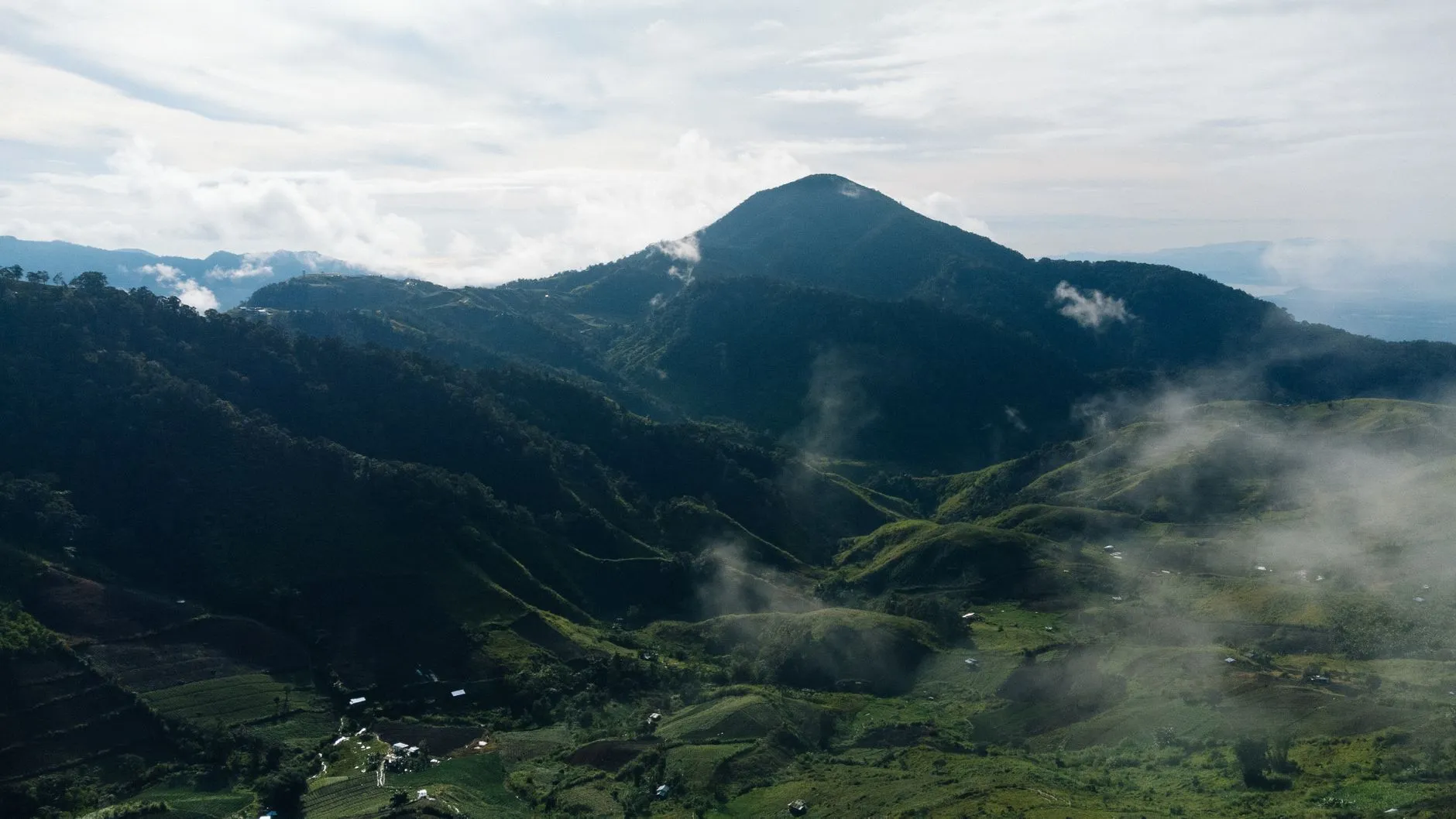
Within that frame, the city’s draws are real. The durian is the signature — Davao grows the best of it, and the city wears the fruit as an emblem, statue and all. Malagos chocolate, made from local cacao and a genuine award-winner, is the other thing the region does properly. The serious natural attraction is Mount Apo, the highest peak in the Philippines at about 2,954 metres, rising south-west of the city; it is a multi-day guided trek with permits, not a day-trip, so plan it as the centrepiece of a longer stay rather than a layover excursion.
Closer in, Samal Island — officially the Island Garden City of Samal — is the easy escape, reached by the short barge from the city wharves, with beach resorts and the Hijo coastline. The Philippine Eagle Center at Malagos, on the city’s edge, is where you can actually see the critically endangered national bird, and Eden Nature Park in the cool uplands is the standard half-day out of town. None of these needs inflating: this is a working regional city with a strong food culture and a handful of genuine excursions, not a polished resort circuit.
What is worth carrying home is local and edible. Durian candy and durian chips travel where the fresh fruit cannot — fresh durian is banned on the aircraft and in most hotels and malls, so the dried and candied forms are the practical souvenir. Add a bar or two of Malagos chocolate and a box of the sweet Davao pomelo, bought in the city markets rather than at airport prices.
❓ 6. FAQ
📋 7. At a glance
| Item | Detail |
|---|---|
| Airport | Francisco Bangoy International (DVO / RPMD), ~10–11 km north-east of central Davao |
| Terminal | One terminal, domestic + international; ~4.39M passengers in 2025 against a ~4M design — over capacity |
| Recent change | PPP to rehabilitate and operate the airport in procurement + ₱650M terminal expansion targeted Dec 2026 |
| Carriers | Cebu Pacific, PAL/PAL Express, Cebgo, AirAsia (much smaller); international Scoot (Singapore), Qatar Airways (Doha) |
| To the city | Grab or metered taxi ~₱250–500, 20–30 min; no rail, no airport bus; taxi to ferry pier for Samal |
| Border | Philippines |
| Currency | Philippine peso (₱ / PHP); cards in malls/Grab, cash for jeepneys, markets, tips |
| Lounges | PAGSS Premium Lounge (Priority Pass, domestic + international); PAL Mabuhay Lounge (domestic, Gate 4) |
| Safety | Central city orderly but US advisory Level 2; reconsider travel beyond the CBD/airport/Gulf corridor — check current advice |
| Worth your time | Durian and Malagos chocolate, Samal Island, the Philippine Eagle Center, and Mount Apo for a longer trip |
🔗 8. Explore More
- Manila Ninoy Aquino Airport (MNL) guide — the main hub most international journeys to Davao connect through
- Puerto Princesa Airport (PPS) guide — the way into Palawan, for pairing a Mindanao trip with the islands