Daegu International Airport (TAE) — Airport Guide 2026
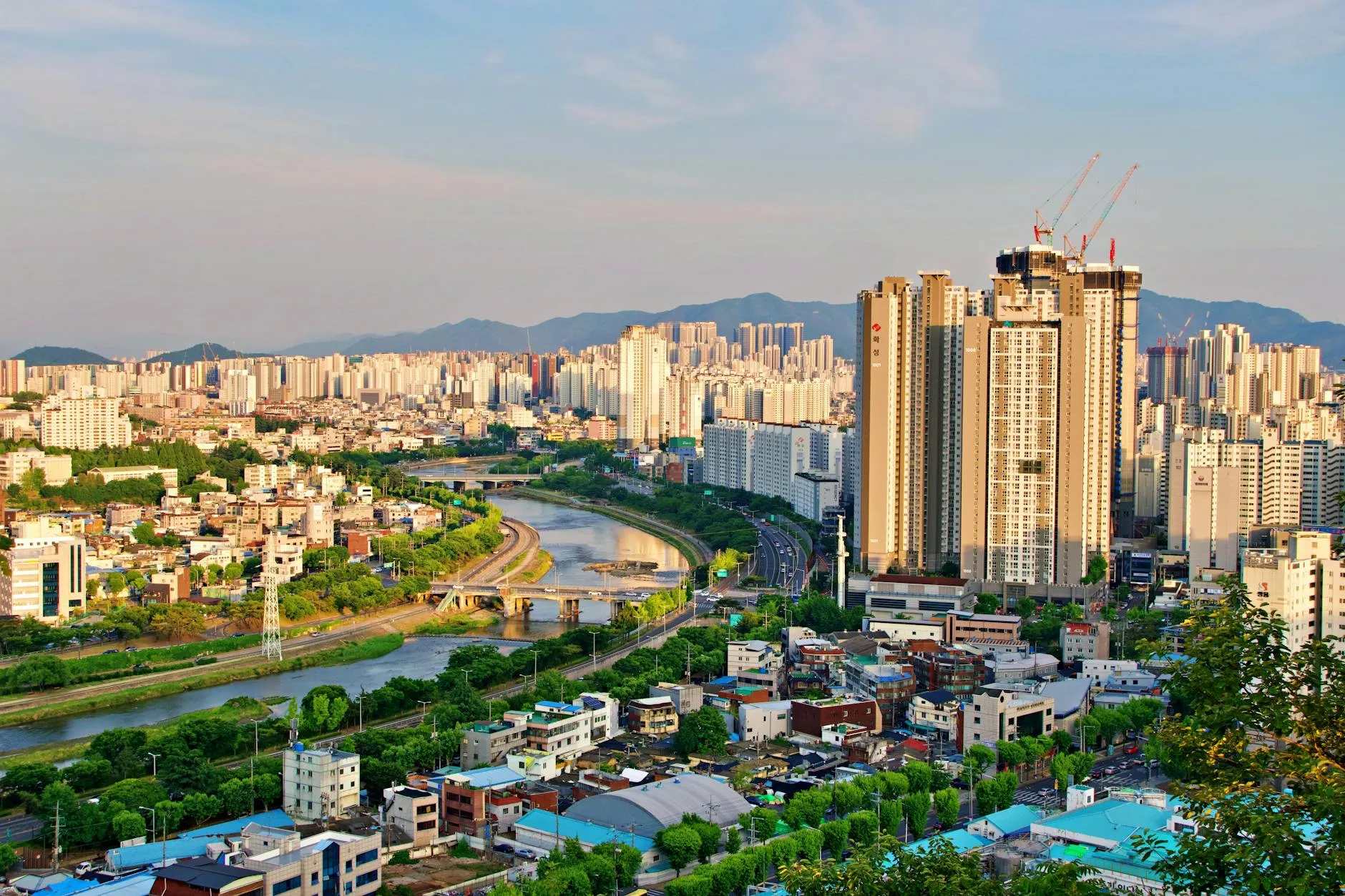
Daegu International Airport sits 3–8 km from the city centre, sharing a runway with a Republic of Korea Air Force base and a US Forces Korea presence — one of the stranger civilian airports in the region, and by a wide margin the closest major South Korean airport to its own downtown.
Quick Reference
TAE / RKTN
~3–8 km from central Daegu, North Gyeongsang region, southeast South Korea
Single passenger terminal (domestic + international), shared civil-military airfield
South Korean won (KRW, ₩) — ≈ ₩1,505/US$1, ≈ ₩1,742/€1 (May 2026)
Connecting bus or taxi ~1.8 km to Ayanggyo Station (walk is ~28 min) → Line 1 → Jungangno; ₩1,300–1,500; ~11 min
Routes 401, 101-1 ₩1,500 card / ₩1,700 cash; Express 1 ₩1,950 / ₩2,200; 30–40 min; all board at Gate 3
Metered rank; ~₩7,000–9,000; ~10 min to centre
K-ETA (waived for 22 nationalities to 31 Dec 2026) · visa-free up to 90 days (most Western passports) · e-Arrival Card mandatory from 1 Jan 2026 for anyone without a K-ETA
KAL Lounge (intl dep, Gate 2 area); domestic lounge (Gate 3 area)
Not accepted at any lounge here
Eleven: Korean Air, Asiana, Trinity Airways (ex-T’way), Jeju Air, Jin Air, Eastar Jet + China Eastern, Loong Air, Sichuan, Qingdao, HK Express
New airport in Gunwi/Uiseong counties; construction began 2025, target opening 2030
✈️ Terminal, Carriers — and the 2030 Move
Everything at TAE passes through one building. Domestic departures cluster near one gate group, international near another, and the whole terminal is small enough that a wrong turn costs you two minutes, not twenty. The airfield is jointly operated with the ROK Air Force — the F-15K fighters on the military side of the perimeter are hard to miss — and US Forces Korea also has a presence here.
Domestically, the Daegu–Jeju (CJU) route accounts for roughly half of all departures. That single link is TAE’s busiest by a wide margin, and it runs under Korean Air, Asiana, and the low-cost carriers. The international side is short-haul and leisure-led: Japan (Osaka, Fukuoka, Tokyo), a handful of Chinese cities, Hong Kong, and several Southeast Asian beach and city destinations. The airport’s current operating list runs to eleven airlines. Korean Air and Asiana fly both domestic and international; the Korean low-cost carriers are Trinity Airways — the airline formerly branded T’way Air — plus Jeju Air, Jin Air and Eastar Jet, and between them they carry much of the international growth. Five foreign carriers work the China and Hong Kong routes: China Eastern, Loong Air, Sichuan Airlines, Qingdao Airlines and HK Express.
⚠️ The airport is moving — but not in 2026
Under an ₩11.4-trillion project, TAE is being relocated to a new site in Gunwi and Uiseong counties north of the city. Construction began in 2025; the new airport is targeted to open in 2030. Until then, nothing changes for travellers. The catch: the replacement will be considerably farther from downtown than the current near-in site, so the short airport-to-city run described throughout this guide has a shelf life.
🛂 Border & Visa
Korea’s entry system is national and applies identically at every port of entry, including Daegu. In 2026 there are three paths, and the most common confusion is assuming they’re mutually exclusive.
K-ETA — and the waiver list
The Korea Electronic Travel Authorization costs ₩10,000, is valid for three years across multiple entries, and is applied for online before you fly. For most readers, the relevant fact is that it has been temporarily waived for nationals of 22 countries and territories through 31 December 2026 as part of a “Visit Korea Year” measure. The waiver covers: the United States (including Guam), Canada, the United Kingdom, Australia, New Zealand, Japan, Taiwan, Hong Kong, Macao, Singapore, and the EU/EEA bloc of Austria, Belgium, Denmark, Finland, France, Germany, Italy, the Netherlands, Norway, Poland, Spain, and Sweden.
If your passport is on that list, you do not need the K-ETA — but you are not off the hook entirely.
The e-Arrival Card — the 2026 catch
⚠️ e-Arrival Card is mandatory from 1 January 2026
Anyone arriving in Korea without a valid K-ETA must complete the free e-Arrival Card online before landing. It generates a QR code you present at immigration. Waived nationalities skip the ₩10,000 K-ETA fee but must still fill in the e-Arrival Card. There is no “neither” option in 2026: you arrive with one or the other.
Holding a valid K-ETA does exempt you from the e-Arrival Card — that is the one practical reason some people from waived nationalities choose to apply for the K-ETA anyway.
Visa-free entry
Separately from the K-ETA, most Western passport holders enter Korea visa-free for tourism. The allowance ranges from 30 to 180 days depending on the bilateral agreement your country has with Korea; 90 days is the common figure but not universal, so confirm your own entitlement rather than assuming. Visa-free entry covers tourism and short visits, not work.
When you need a visa
If your nationality falls outside both the visa-waiver and K-ETA-eligible groups, or your trip is longer than your visa-free allowance or for a purpose other than tourism, you apply in advance at a consulate or through the Korean online visa portal. There is no tourist visa-on-arrival at Daegu.
🚇 Getting Into the City
TAE’s proximity to downtown is its main practical advantage. Every option below is short; none of them punish you the way a 40 km airport transfer normally does.
⭐ Subway — the right call
🚇 Line 1 via Ayanggyo — ₩1,300–1,500, ~11 min
The nearest stop is Ayanggyo Station, about 1.8 km from the terminal — and the airport publishes that as an average 28-minute walk, so it tells people not to walk it. Use the connecting bus (Express 1, Palgong 2, 401, 101-1, Donggu 8) or a taxi from the stop at the station’s exit 2; the walking route, if you insist, is out of exit 4 across the Ayang Bridge. From Ayanggyo, Line 1 runs to Jungangno in central Daegu in about 11 minutes. Trains run every ~10 minutes. Buy a T-money or Cashbee card from a terminal convenience store to get the card fare and tap straight through — both cards work on buses too.
The link to Ayanggyo is the only friction, and it is a bigger one than it looks: 28 minutes on foot by the airport’s own average, which is why the airport itself points people at the connecting bus or a taxi rather than the pavement. A large bag in summer heat settles it. Once you’re on Line 1, you’re traffic-proof and in the centre in under fifteen minutes door-to-door from the station.
🚌 City Buses
Routes 401 and 101-1 serve the airport directly at the standard Daegu bus fare, ₩1,500 by card or ₩1,700 cash — no walk to a station, but 30–40 minutes to the centre depending on traffic and route. Express 1 is not on that fare: it costs ₩1,950 by card, ₩2,200 cash, about 30% more, so do not bundle it in with the cheap options. Everything on wheels boards at Gate 3 — all eight city bus routes, the Gumi limousine (₩8,000, 08:00–21:30) and the Gimcheon limousine (₩10,000, 08:00–20:05), and the intercity coaches to Sangju/Jeomchon (₩7,700) and Geochang (₩9,000). First and last departures: 401 05:30–21:50, 101-1 05:37–22:16, 719 05:30–22:20, Express 1 05:35–21:45, 101 06:10–21:00. If a route passes near your destination, the bus saves you the Ayanggyo connection. In normal traffic the subway is faster.
🚕 Taxi
💡 Cheap taxi — use it for luggage
Because the airport is so close in, a standard metered taxi into the centre runs roughly ₩7,000–9,000 (about US$5–6) and takes around 10 minutes. For door-to-door with heavy bags, that’s a reasonable spend. Use the official rank, across the crosswalk in front of international Gate 3; the reservation rank is between international Gates 1 and 2. Ignore anyone inside offering an unmetered ride.
🛋️ Lounges
⚠️ No Priority Pass, LoungeKey, or DragonPass coverage at TAE
If your lounge access depends on any of those cards, it will not work here. Plan to use a gate café or landside food before security instead.
Lounge access at Daegu is purely ticket- and status-based. The KAL Lounge sits airside in international departures, near Gate 2, opening roughly two hours before the first international departure and closing after the last. Access covers Korean Air first and business class, SKYPASS Morning Calm Premium and Million Miler Club members, and SkyTeam Elite Plus passengers flying Korean Air or a SkyTeam partner.
A separate domestic-side lounge near Gate 3 serves Asiana business class, Asiana Club Diamond Plus and Platinum members, and Star Alliance Gold members travelling on Asiana or a Star Alliance partner flight.
Walk-up paid access has been reported at the desk, but no current published price is reliable — treat it as something to ask about on the day rather than something to count on.
🍜 Food Before You Fly
Airside dining at TAE is limited and priced like an airport. If you have cleared immigration with an hour or more to spare, eating in the city and returning is the better option — and the closeness of the airport makes that realistic.
Daegu has a specific food culture, distinct from Seoul’s:
🍖 Makchang — Daegu’s signature grill
Grilled pork or beef intestine, cooked over coals and eaten with a soybean-and-chilli dipping sauce. This is a Daegu speciality more than a Seoul one; what you get here is the regional version done properly, not a tourist adaptation.
Napjak-mandu are flat, thin, pan-fried dumplings — lightly filled and served with soy-vinegar and chilli sauce. They’re a Daegu street-food invention that doesn’t translate the same way elsewhere. Mungtigi is locally cut raw beef, served fresh. Jjimgalbi — braised short ribs in a dark, garlicky, chilli-heavy sauce — is associated with the Dongin-dong neighbourhood.
Seomun Market is the sensible stop for most of this: a large traditional market close to the city centre, easily reached off Line 1, where the food stalls sell the local specialities at market prices rather than tourist prices. Eat here before flying out rather than at the gate.
Duty-Free & Local Souvenirs
International departures carry the standard duty-free run — liquor, tobacco, perfume — but a small regional airport’s selection is narrower than Incheon’s. Don’t count on finding a specific bottle here. The more interesting Daegu buys are city-specific: textiles and traditional-medicine goods. Daegu is a long-standing centre of both. The Yangnyeongsi herbal-medicine market in the city sells dried herbs and teas at prices and selection that leave the airport counters behind.
💡 Layover Reality
Two facts pull in opposite directions at TAE.
The airport is genuinely close to the city — 3–8 km, with a 10-minute taxi or an 11-minute train ride once you’ve reached Ayanggyo. That’s about as easy a city dip as any airport offers. On a gap of roughly four hours or more, a quick run to Jungangno and the Seomun Market food lanes is realistic: take Line 1 in, eat, and return with a clear hour for the round trip and re-entry through security. Budget the Ayanggyo connection properly at each end and take the bus or a taxi for it: the walk is 28 minutes, not 15, and doing it twice costs you the better part of an extra half-hour. The maths are tight but workable if you move promptly and do not walk that leg.
The honest counterpoint: TAE is not a connecting airport. The international schedule is short-haul point-to-point — Japan, China, Southeast Asia — and most foreigners here are starting or ending a trip, not passing through mid-journey. Long international layovers are uncommon by design.
⏱️ Layover time guide
Under ~3 hours: Stay airside. The transit time and security buffer leaves too little margin for the city. ~4 hours+: Downtown is viable — Jungangno and Seomun Market, straight off Line 1. Keep a full hour for return travel and security. ~6 hours+: You have options for more of the central city, including the Yangnyeongsi market quarter.
Palgong-san and the Donghwasa temple on its slopes are Daegu’s headline scenery. They also sit well north of the city, a 40-minutes-plus haul each way from the airport before the visit even starts. Direct buses do exist — Palgong 1 and Palgong 2 from Gate 3, and 101/101-1 as far as Pagyesa temple on the mountain — but a round trip still needs the better part of a day. On anything under six hours, skip the mountain entirely and stay in the central city.
🔧 Practical Notes
Payment. Korea is card-friendly in practice — international credit and debit cards work at nearly all shops, restaurants, and ticket machines. You don’t need a local payment app like KakaoPay to function as a tourist (locals lean on it heavily, but it’s optional for visitors). For transit, get a T-money or Cashbee card from a terminal convenience store; it covers the subway and buses and gives you the card fare automatically.
Currency. The won has weakened materially — around ₩1,505 to the US dollar and ₩1,742 to the euro as of May 2026, which is favourable for foreign visitors. Airport exchange counters carry a markup; change only what you need there and use a city ATM or your card for the rest. Cash is still worth carrying for small market stalls.
Connectivity. Korea doesn’t block Western apps or sites, so your usual services work normally. Airport and city Wi-Fi is widespread. A travel eSIM or roaming plan works on arrival, and SIM/eSIM pickup is available at the major Korean airports if you arrive without one.
Border summary. Sort out your entry path before you fly — not at immigration. The single most common 2026 mistake is treating the K-ETA waiver as “nothing to do.” Waived nationalities still must complete the free e-Arrival Card since 1 January 2026. Match your passport to the right path: K-ETA, visa-free plus e-Arrival Card, or a full visa.
❓ FAQ
📊 At a Glance — TAE 2026
| Item | Detail |
|---|---|
| IATA / ICAO | TAE / RKTN |
| Distance to centre | ~3–8 km |
| Terminal | Single terminal (domestic + international), shared civil-military airfield |
| Subway | Ayanggyo Station (~1.8 km from terminal; ~28 min walk, or connecting bus/taxi from station exit 2) → Line 1 → Jungangno; ₩1,300–1,500; ~11 min; every ~10 min |
| City buses | Routes 401, 101-1 (₩1,500 card / ₩1,700 cash), Express 1 (₩1,950 / ₩2,200); 30–40 min; board at Gate 3; last departures ~21:45–22:16 |
| Taxi | Metered rank; ~₩7,000–9,000; ~10 min |
| Currency | KRW (₩); ≈ ₩1,505/US$1, ≈ ₩1,742/€1 (May 2026) |
| Payment | International cards accepted nearly everywhere; T-money/Cashbee for transit |
| Border — waived nationalities | K-ETA waived for 22 nationalities to 31 Dec 2026; free e-Arrival Card mandatory in its place from 1 Jan 2026 |
| Border — others | K-ETA required (₩10,000, 3-year validity) + apply before flying; or full visa if outside waiver/visa-free group |
| Visa-free stay | Up to 90 days tourist entry for most Western passports (30–180 days depending on nationality) |
| Priority Pass / LoungeKey / DragonPass | None — not accepted at any TAE lounge |
| KAL Lounge | Airside, international departures, Gate 2 area — Korean Air first/business, SKYPASS Morning Calm Premium, Million Miler, SkyTeam Elite Plus |
| Domestic lounge | Gate 3 area — Asiana business, Asiana Club Diamond Plus/Platinum, Star Alliance Gold |
| Main carriers | Eleven: Korean Air, Asiana, Trinity Airways (ex-T’way), Jeju Air, Jin Air, Eastar Jet + China Eastern, Loong Air, Sichuan, Qingdao, HK Express |
| International destinations | Japan (Osaka, Fukuoka, Tokyo), Chinese cities, Hong Kong, Southeast Asia |
| Busiest route | Daegu–Jeju (CJU) domestic |
| Layover guide | ~4 hrs+: downtown viable (Jungangno/Seomun Market off Line 1); under ~3 hrs: stay airside; ~6 hrs+: more of central city; Palgong-san needs most of a day — skip on any short stop |
| 2030 relocation | New airport in Gunwi/Uiseong counties; construction began 2025; current site unchanged for 2026 |