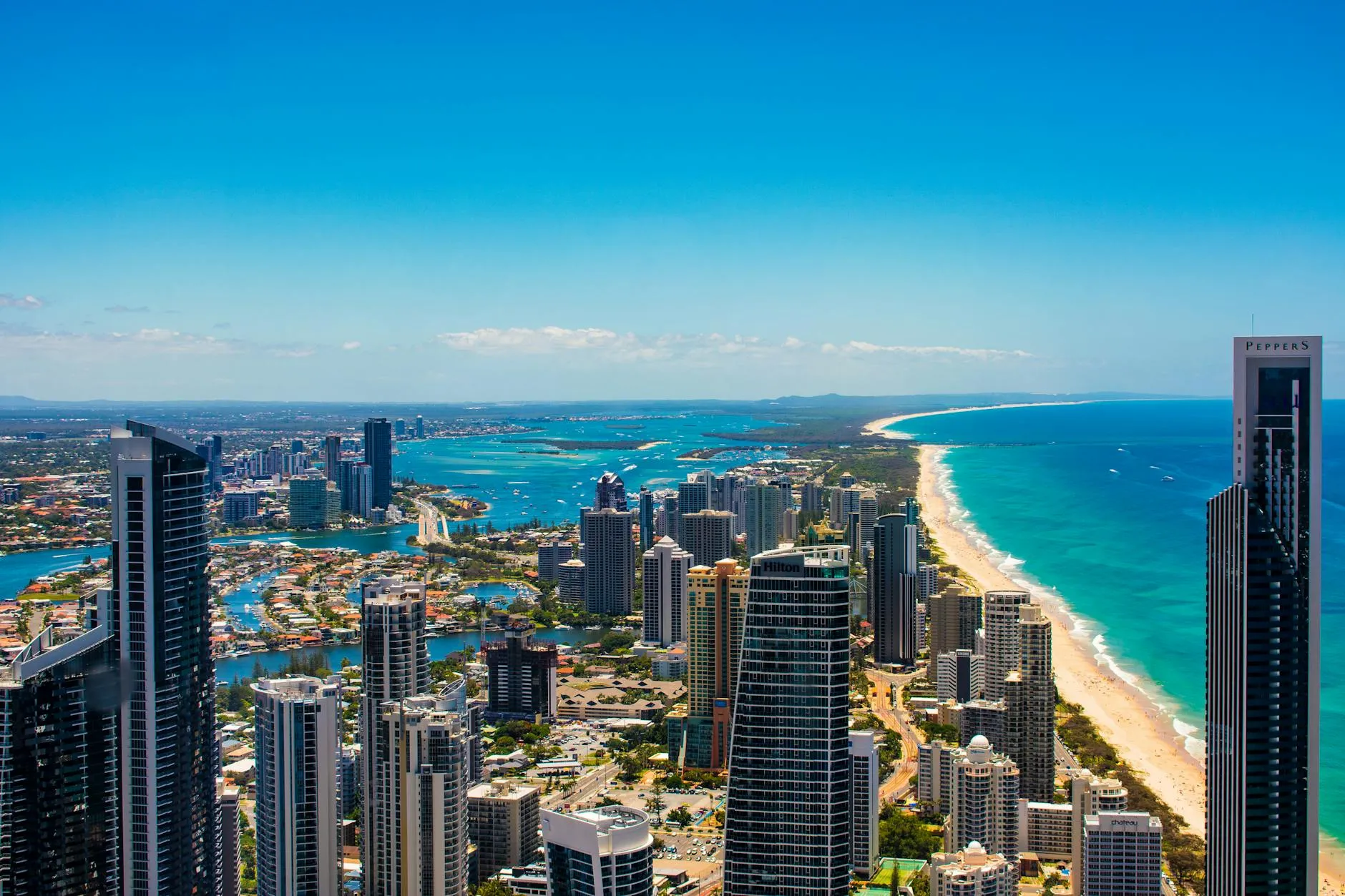
Gold Coast (OOL) — The Complete 2026 Airport Guide
Gold Coast Airport has a party trick no other Australian airport can match: its main runway runs along the Queensland–New South Wales state line, so the field is literally split across two states — and, in summer, two clocks. It is also a small, single-terminal, walk-off-the-plane-and-you’re-almost-at-the-beach airport, 25 km from Surfers Paradise. Here’s how to get through it, into the coast, and past Australia’s famously ruthless biosecurity, without a stumble.
Last verified: July 2026. Transport fares, entry rules and airline schedules change often — confirm the specifics on your ticket, at official signage and on the government sites linked below before you travel.
Quick reference
| Detail | What you need to know |
|---|---|
| Airport | Gold Coast Airport, IATA OOL / ICAO YBCG — at Bilinga/Coolangatta, the southern tip of the Gold Coast; ~6.2 million passengers a year, one modern terminal |
| The quirk | The main runway sits on the Queensland–NSW border. The airport runs on Queensland time (AEST, UTC+10) year-round — Queensland does not observe daylight saving, but NSW does |
| Into the coast | Route 777 bus to the G:link tram at Broadbeach South, then tram to Surfers — 50 cents each way with a go card / contactless card. Taxi/rideshare ~A$38–90. ~25 km to Surfers Paradise |
| Entry | You need an ETA (A$20, via the Australian ETA app) or a free eVisitor (EU/UK) before you fly — neither is issued at the airport. SmartGate e-passport lanes on arrival |
| Watch out for | Australia’s strict biosecurity — declare all food, plant and animal items · the 777 bus only runs ~7am–7pm · a phone clock that has grabbed an NSW signal near the border |
One airport, two states, two clocks
Gold Coast Airport’s headline curiosity is real: the terminal sits in Bilinga, Queensland, but the main runway runs right along the Queensland–New South Wales border. Aircraft take off and land straddling a state line — the only commercial airport in Australia where that’s true.
For 99% of travellers this is trivia, not a trap, because the airport and every schedule it publishes run on Queensland time (AEST, UTC+10) all year. Your boarding pass, the departure boards and the gate agents are all on Queensland time. But here’s the one way it can genuinely bite you: Queensland does not observe daylight saving and New South Wales does. From early October to early April, the NSW side of the border — including Tweed Heads, a five-minute drive south, and Byron Bay beyond it — is one hour ahead of the airport.
One terminal — and it’s an easy one
After decades as a cramped regional shed, OOL got a proper terminal. The southern terminal expansion opened in 2022, roughly doubling the floor space into a three-level building with glass aerobridges (no more walking across the tarmac in the rain) and, crucially, swing gates that can flip between domestic and international use.
Everything happens under one roof. Domestic and international check-in share the same hall at the northern end, security is a single screening point, and the walk to the farthest gate is short. Domestic flights dominate — Jetstar, Qantas and Virgin Australia run the Sydney/Melbourne/Brisbane shuttle traffic — and the international side is modest: trans-Tasman flights to New Zealand (Auckland and Christchurch) plus Bali (Denpasar). That means the arrivals experience is a real border: immigration, baggage reclaim and biosecurity, all covered below.
Getting into Surfers Paradise and the coast
OOL is close in. Surfers Paradise is about 25 km north, roughly a 30-minute drive; Coolangatta’s own beaches are within walking distance of the terminal. The genuinely good news is Queensland’s flat fare, which makes public transport almost free. Here’s the honest comparison:
| Option | Price | To Surfers Paradise | Verdict |
|---|---|---|---|
| 777 bus + G:link tram | 50c each way (go card / contactless) | ~75–90 min | Absurdly cheap; best if you’re not in a hurry and travel light |
| Con-x-ion shuttle | Book ahead, per person | Door-to-door | Hotel-to-terminal coach; good for luggage and groups — confirm the current fare when booking |
| Rideshare (Uber etc.) | ~A$38–70 (~€23–43 / $25–46) | ~30 min | Marked pick-up zone outside the terminal; easiest for most |
| Taxi | ~A$65–90 (~€40–55 / $43–60) | ~30 min | Rank right outside; metered, no need to pre-book |
The 777 bus and the tram — cheap, if you have time
There’s no train to the airport. Instead, route 777 is a frequent TransLink bus that loops from outside the terminal to the Broadbeach South tram-and-bus interchange, where you change onto the G:link light rail (the tram) that runs the length of the coast strip through Broadbeach and Surfers Paradise up to Helensvale. Thanks to Queensland’s permanent 50-cent flat fare — it covers buses and the tram across the whole network — the entire airport-to-Surfers trip costs about 50 cents each way. The catch: the 777 runs only about 7am to 7pm, so late arrivals will need a taxi or rideshare, and the bus-plus-tram trip takes the better part of 90 minutes to Surfers versus 30 in a car.
Byron Bay and northern NSW
OOL is the natural gateway to Byron Bay, about 67 km south across the state line. Public transport is thin down there; the standard options are a booked shuttle such as the Byron Bay Express (from roughly A$40 one way, ~50–75 min) or a private transfer. Remember the daylight-saving gap: in summer Byron is an hour ahead of the airport.
Entry: your visa must be sorted before you fly
Australia has no visa-on-arrival for tourists — everyone who isn’t Australian or a New Zealand citizen needs an authority to travel granted before boarding. There is no EES or ETIAS here; that’s a European scheme and irrelevant to Australia. Which document you need depends on your passport:
- ETA — Electronic Travel Authority (subclass 601). For a set of eligible passports (including the US, Canada, Japan, Singapore, Malaysia and others). It’s applied for only through the official Australian ETA app: you scan your passport’s chip with your phone, take a selfie and pay a A$20 service charge. It’s valid 12 months for multiple stays of up to 3 months each.
- eVisitor (subclass 651). For citizens of the EU, the UK and other European states (Switzerland, Norway, Iceland, and the micro-states). It’s free, applied for online through the government’s ImmiAccount, and gives the same 12-month, multiple-entry, up-to-3-months-per-visit terms. If you’re a European passport holder, the eVisitor is the no-cost choice — you don’t need the A$20 app version.
- Apply only on the official channels — the ETA app and immi.homeaffairs.gov.au. Third-party sites charge a markup for the same thing, and some are outright scams. Neither document is available at OOL, so sort it days ahead.
SmartGate on arrival
Most visitors from ETA/eVisitor countries with a modern e-passport can use the SmartGate automated lanes at immigration — scan the passport, take a photo, walk through, no officer interview. It’s quick when the machines are behaving. You’ll still fill in an Incoming Passenger Card and pass through baggage and biosecurity, which is where the real attention is.
Biosecurity: declare it, or pay for it
This is the part of arriving in Australia that trips up first-timers, and it’s worth taking seriously. Australia runs some of the strictest biosecurity controls on earth to keep out pests and diseases, and the enforcement is real, not theatrical.
On your Incoming Passenger Card you must declare all food, plant material and animal products — that includes the apple or sandwich left in your bag from the flight, honey, fresh or dried fruit, nuts, seeds, meat, dairy, wooden items and anything that grew or lived. Declaring something doesn’t mean losing it; an officer simply assesses it, and much is fine. Not declaring something that’s then found is the expensive mistake: an on-the-spot fine that starts around A$444 and rises to roughly A$2,664 for serious or repeat cases, with visa cancellation and prosecution possible for the worst offences.
Lounges
For a regional airport OOL has a reasonable spread, split between the domestic and international ends of the one terminal:
- Qantas Club — the domestic lounge just past security, for Qantas Club members and eligible Qantas/oneworld premium passengers.
- Virgin Australia Lounge — domestic, near Gate 18. Virgin also sells casual paid access from about A$65 to eligible Virgin passengers, space permitting.
- Wollumbin Lounge — the international lounge, between Gates 38 and 39, for international departures only. It takes Priority Pass, which is applied as a credit of about A$36 off your bill rather than fully complimentary — bring a card to top up if you order more.
There’s no sprawling premium offering here, and no need for one at an airport where you’re rarely more than a few minutes from your gate.
Connections and how long to allow
OOL’s saving grace for connections is that it’s a single terminal — no inter-terminal shuttles, no 15 km hops. A domestic-to-domestic change is about as simple as airports get: same building, short walk.
The one thing to plan for is an international arrival connecting to a domestic flight (say, Auckland to the Gold Coast, then on to Sydney). On any itinerary that lands internationally, you must clear immigration, collect your checked bags, pass biosecurity, then re-check the bags and go back through domestic security — even if it’s all under one roof. That process eats time, and OOL doesn’t publish a generous connection buffer, so if you’ve built your own connection on separate tickets, give yourself a comfortable margin — an hour and a half at the very least, more in holiday peaks. On a single through-ticket the airline sets the minimum, but the biosecurity queue is the variable to respect.
Food, money and practicalities
Food: the 2022 terminal added cafés, bars and casual eateries on both the landside concourse and airside past security — think coffee, burgers, pub-style meals and grab-and-go. It’s a beach airport, not a food destination; prices are the usual airport premium, so if you’re arriving hungry, the Coolangatta and Kirra cafés a short walk or ride away are better value.
Money & SIM: Australia is effectively cashless — tap-to-pay is accepted almost everywhere, including on the buses and trams, so you may never need an ATM. If you want local data, buy an Australian eSIM before you land or a prepaid SIM in the arrivals area; Telstra has the best regional coverage.
Practicalities: free airport Wi-Fi; car-hire desks and the rideshare/taxi pick-up are immediately outside the terminal; the beach is genuinely a few minutes away, which makes OOL a rare airport where an early arrival or a delayed departure needn’t be wasted time.
Frequently asked questions
Is Gold Coast Airport really in two states?+
The terminal is in Bilinga, Queensland, but the main runway runs along the Queensland–New South Wales border, so aircraft take off and land straddling the state line — the only commercial airport in Australia where that happens. In practice the whole airport operates on Queensland time year-round, so it doesn’t complicate your flight; it’s mainly a geographic curiosity.
What time zone does Gold Coast Airport use?+
Queensland time — Australian Eastern Standard Time (AEST, UTC+10) — all year, because Queensland does not observe daylight saving. New South Wales, just across the runway, does observe it, so from October to April the NSW side (Tweed Heads, Byron Bay) is one hour ahead of the airport. If you’re driving up from NSW in summer, set your watch to Queensland time and trust the airport clocks, not a phone that may have picked up an NSW signal.
How do I get from Gold Coast Airport to Surfers Paradise?+
The cheapest way is the route 777 bus from outside the terminal to Broadbeach South, then the G:link tram north to Surfers — about 50 cents each way with a go card or contactless card under Queensland’s flat fare, though it takes around 90 minutes and the bus runs only roughly 7am–7pm. A taxi or rideshare covers the ~25 km in about 30 minutes for roughly A$38–90.
Is public transport from the airport really only 50 cents?+
Yes. Queensland made a 50-cent flat fare permanent, and it covers buses and the G:link tram across the network, so the 777 bus plus tram to the coast costs about 50 cents per tap. Pay with a go card or, easiest for visitors, a contactless bank card — both get the same fare. Note the go card is being replaced by a new Translink card during 2026, so tapping your own card is the reliable option.
Do I need a visa to fly into the Gold Coast?+
Yes, and you must arrange it before you fly — Australia has no visa-on-arrival for tourists. US, Canadian, Japanese and other eligible passport holders apply for an ETA (subclass 601) through the official Australian ETA app for a A$20 charge; EU, UK and other European citizens get the free eVisitor (subclass 651) online via ImmiAccount. Both allow multiple visits of up to three months over 12 months. Apply only on the official government channels.
What can’t I bring into Australia — and what happens if I don’t declare it?+
Declare all food, plant material and animal products on your Incoming Passenger Card — fresh fruit, meat, dairy, honey, nuts, seeds, wooden items and even a leftover in-flight snack. Declaring costs nothing and most items are cleared. Failing to declare something that’s then found brings an on-the-spot fine from about A$444, rising to around A$2,664 for serious cases, with visa cancellation possible. If in doubt, declare it or use the amnesty bins before the line.
Are there airport lounges at OOL?+
Yes. The Qantas Club and the Virgin Australia Lounge (near Gate 18, with paid casual access from about A$65) serve domestic departures. For international flights, the Wollumbin Lounge between Gates 38 and 39 accepts Priority Pass, applied as roughly A$36 off your bill rather than as a fully free visit.
Which international destinations does Gold Coast Airport serve?+
OOL is primarily a domestic airport (Sydney, Melbourne, Brisbane and other Australian cities on Jetstar, Qantas and Virgin Australia). Its international network is modest: trans-Tasman flights to New Zealand — Auckland and Christchurch — plus Bali (Denpasar). Anyone arriving on those flights clears full immigration and biosecurity in the terminal.
At a glance
| Codes | OOL / YBCG — Gold Coast Airport (formerly Coolangatta) |
| Location | Bilinga/Coolangatta, southern Gold Coast, Queensland; runway on the QLD/NSW border |
| Time zone | Queensland time (AEST, UTC+10) year-round — no daylight saving |
| Terminal | One terminal, expanded 2022 — aerobridges and swing domestic/international gates |
| To Surfers Paradise | ~25 km; 777 bus + G:link tram (~50c each way) or taxi/rideshare (~A$38–90, ~30 min) |
| Entry | ETA (A$20, app) or free eVisitor (EU/UK) — arranged before flying; SmartGate on arrival |
| Biosecurity | Declare all food/plant/animal items; undeclared fines from ~A$444 |
| International routes | New Zealand (Auckland, Christchurch), Bali (Denpasar) |
Before you fly
- 📊 Check what a good fare to the Gold Coast looks like — our price-check tool shows the typical deal range so you know a bargain when you see one.
- 🧳 Baggage checker — confirm your airline’s carry-on and checked allowance before you pack.
- 🌏 Australia travel guide — when to go, how to plan the distances, and what a trip actually costs.
🌏 Planning the trip? Read our Australia travel guide — best time to go, where to stay, and how to get around.
More deals you might like
 Niš Constantine the Great Airport (INI) Airport Guide 2026 — Free Buses, Cheap Taxis, Real Dinars
 Norwich Airport (NWI) Airport Guide 2026 — The Airport Where Helicopters Outnumber Planes
 Stornoway Airport (SYY) Airport Guide 2026 — Four Miles, Four International Passengers
 Kerry Airport (KIR) Airport Guide 2026 — One Runway, Two Peninsulas