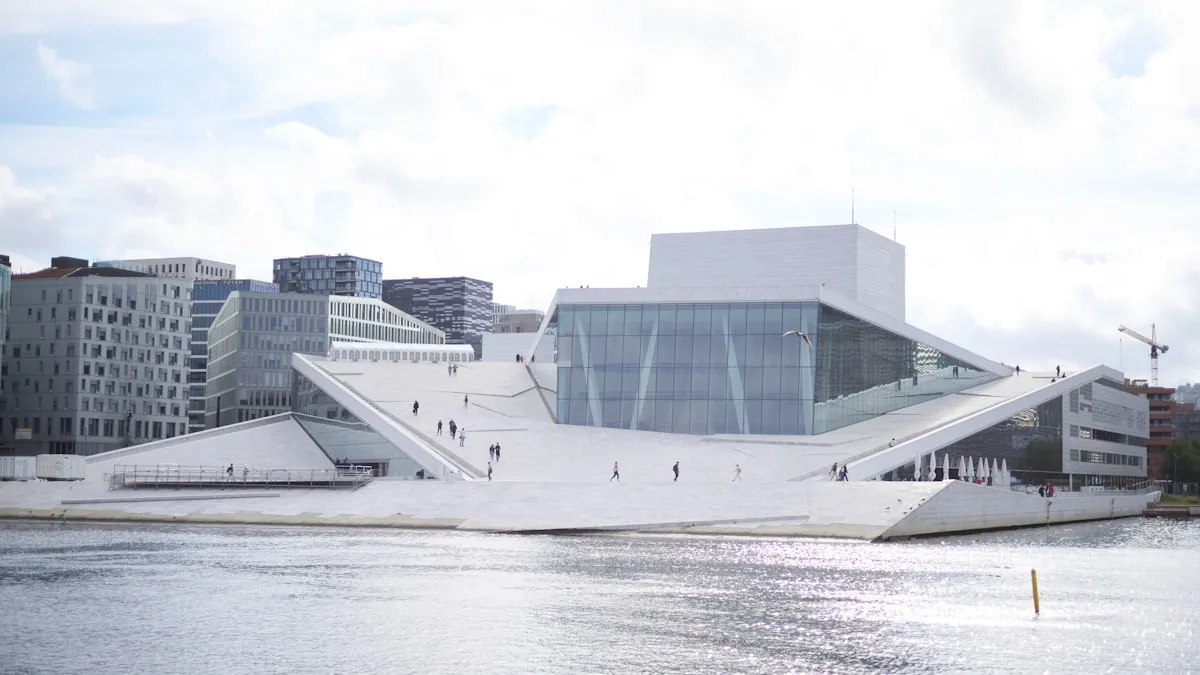
Oslo, Norway — City Guide 2026
The Complete City Guide 2026
Oslo — The Complete City Guide 2026
Oslo is a city that does not shout. It sits at the head of a 100-kilometre fjord, backed by forested hills, and it lets the landscape do the talking. In summer, the light barely fades — the sun dips below the horizon for a few hours and the sky stays pale blue all night. In winter, the city glows with candlelight, wool, and the determined Nordic art of making darkness beautiful. Between the two extremes lies one of Europe’s most quietly extraordinary capitals: a city where world-class museums sit next to wild swimming spots, where the coffee is among the best on Earth, where you can ski in the morning and eat at a Michelin restaurant at night, and where the forest begins at the last metro stop.
Last verified: April 2026. Every price, opening hour, and booking link in this guide has been checked against official sources. All prices are in Norwegian kroner (NOK); €1 ≈ NOK 11.5 at time of writing. Oslo charges no separate tourist tax — but Norway’s 25% VAT is included in all prices. The Oslo Pass (from NOK 580/24h) covers 30+ museums and all public transport. Verify at the listed URLs before travelling.
Why Oslo? An Editor’s Note
I have been visiting Oslo since 2009, first as a layover on the way to Bergen, and then — after the city got under my skin — as a destination in its own right. Oslo used to be the Scandinavian capital people skipped. Stockholm had the beauty, Copenhagen had the food, Bergen had the fjords. Oslo was the one you flew through.
That has changed completely. In the last decade, Oslo has undergone the most ambitious urban transformation of any European capital. The waterfront — once industrial docklands — is now a continuous public promenade stretching from the Astrup Fearnley Museum at Tjuvholmen to the towering Munch Museum in Bjørvika, passing the marble-white Oslo Opera House (whose sloping roof you walk up for free) along the way. The National Museum opened in 2022 — the largest art museum in the Nordic countries — giving Munch’s The Scream a permanent home in a building worthy of it. Grünerløkka has become one of Europe’s best coffee neighbourhoods. And the forest — Nordmarka, 80 square kilometres of it — is still there at the end of the T-bane line, wild and silent.
Oslo is expensive. There is no getting around that. But it is expensive the way Tokyo is expensive: the quality is extraordinary, much of the best stuff is free, and if you know where to look, you eat and drink better for your money than in cities half the price. This guide will show you where to look.
For other Nordic capitals, see our Stockholm guide and Copenhagen guide. For similar harbour cities reinventing themselves, try Helsinki or Hamburg.
Table of Contents
- Top Attractions in Oslo
- Oslo’s Coffee Scene — World Capital of Specialty Coffee
- Norwegian Food & New Nordic Cuisine
- Oslofjord — Islands, Beaches & Boat Trips
- Oslo’s Neighbourhoods
- Where to Stay — By Budget & Style
- Getting Around Oslo
- Best Time to Visit & Seasonal Guide
- Hiking & Outdoor Oslo
- Winter in Oslo — Skiing, Skating & Darkness
- Day Trips from Oslo
- Oslo with Kids
- Budget Tips — How to Afford Oslo
- Safety & Practical Information
- Free Things to Do in Oslo
- Hidden Gems & Insider Tips
- 2026 Travel Notes & Changes
- Frequently Asked Questions
Top Attractions in Oslo
1. Oslo Opera House — Walk on the Roof
The Oslo Opera House, designed by Snøhetta and opened in 2008, is the building that started Oslo’s waterfront transformation. It rises from the harbour in Bjørvika like an iceberg: white Carrara marble and granite sloping from the water’s edge to a rooftop that anyone can walk up, any time, for free. The experience of walking up the angled surface — the city spreading out behind you, the fjord opening ahead — is one of the great free architectural experiences in Europe.
Inside, the main auditorium is clad in Baltic oak and seats 1,364. The Norwegian National Opera and Ballet performs here from September to June. Even if you don’t see a performance, the public foyers are open and the views through the floor-to-ceiling glass walls are spectacular.
Price: Roof walk: FREE, open 24/7. Guided tours: NOK 130 (about €11). Opera/ballet tickets: from NOK 200. Hours (foyers): Mon–Fri 10:00–20:00, Sat 11:00–20:00, Sun 12:00–18:00. Address: Kirsten Flagstads plass 1. Website: operaen.no
2. MUNCH Museum — Edvard Munch’s World
The MUNCH museum, which opened in its dramatic new waterfront building in October 2021, is the world’s largest museum dedicated to a single artist. The 13-storey tower — designed by estudio Herreros, with a distinctive leaning profile and perforated aluminium façade — houses 26,700 works that Munch bequeathed to the city: paintings, prints, drawings, photographs, and personal objects. The Scream (the tempera-on-cardboard version from 1910) is here, displayed in a dedicated room, but the museum goes far beyond that single iconic image. You see Munch’s entire creative life: the early realism, the Paris-influenced Impressionism, the raw Expressionism that made him famous, and the late sun-drenched landscapes painted at his estate in Ekely.
The building itself is worth the visit. The top floor (free to enter) has a bar and panoramic views over the fjord. The rooftop terrace on the 12th floor faces the Opera House across the water.
Price: NOK 220 adults (about €19) / NOK 100 under 25 / Free under 18. Free admission Wednesdays 18:00–21:00 (except July–August). Advance booking recommended in summer. Hours: Sun–Tue 10:00–18:00 / Wed–Sat 10:00–21:00. Open daily except 1 May. Address: Edvard Munchs plass 1. Website: munchmuseet.no
3. Vigeland Sculpture Park (Frognerparken) — The World’s Largest Sculpture Park by a Single Artist
Vigeland Sculpture Park is Gustav Vigeland’s life work: 212 bronze, granite, and wrought-iron sculptures depicting the human condition — from birth to death, love to rage, play to despair — arranged along an 850-metre axis in Frogner Park. The centrepiece is the Monolith (Monolitten): a 14.12-metre-tall column of 121 intertwined human figures carved from a single block of granite, rising from a plateau surrounded by 36 figure groups. It took three stone carvers 14 years to complete (1924–1943).
The park is always open and always free. It is not a museum — it is a living public park where Oslo families picnic, children climb on the sculptures, joggers loop the paths, and couples sit on the bridge among 58 bronze figures. It is one of the most visited attractions in Norway (over 1.5 million visitors per year) and — remarkably — it is free.
Price: FREE, open 24/7. Vigeland Museum (across the road, Vigeland’s studio): NOK 100. Getting there: Tram 12 or 19 to Vigelandsparken. Address: Nobels gate 32.
4. National Museum (Nasjonalmuseet) — The Largest Art Museum in the Nordics
The National Museum opened in June 2022 in a vast new building behind the Nobel Peace Center, making it the largest art museum in the Nordic countries (54,600 m²). The permanent collection spans from antiquity to the present: Old Masters, Impressionism, Nordic Romanticism, modernism, design, craft, and architecture. The centrepiece is the Light Hall on the top floor — a 2,400 m² gallery lit by translucent onyx-marble walls that glow with natural daylight, housing the best of the collection including Munch’s The Scream (the 1893 painted version, the most famous one).
Yes, there are two Screams in Oslo — the 1893 painting here and the 1910 version at the MUNCH museum. Both are authentic. Visit both.
Price: NOK 200 adults (about €17) / NOK 120 ages 18–24 & students / Free under 18. Free admission first Saturday of every month. Hours: Tue–Wed 10:00–20:00, Thu–Sun 10:00–17:00. Closed Mondays. Address: Brynjulf Bulls plass 3. Website: nasjonalmuseet.no
5. Akershus Fortress — Medieval Stronghold on the Harbour
Akershus Festning is a medieval castle and fortress that has guarded the Oslo harbour since 1299. It has been a royal residence, a military headquarters, a prison, and — during the Nazi occupation — a place of execution for Norwegian resistance fighters. The fortress grounds are free to enter and offer some of the best harbour views in the city, looking out over the Oslofjord from the ramparts. Inside the grounds, the Norwegian Resistance Museum (Hjemmefrontmuseet) tells the story of Norway during World War II with extraordinary artefacts and personal testimonies.
Price: Fortress grounds: FREE. Akershus Castle interior: NOK 130 adults / NOK 50 children. Norwegian Resistance Museum: NOK 80 adults / Free under 18. Hours: Grounds open daily 06:00–21:00. Castle: May–Aug daily 10:00–16:00 / Sep–Apr weekends only 12:00–17:00. Address: Akershus Festning.
6. Holmenkollen Ski Jump & Museum — Oslo’s Skyline Landmark
The Holmenkollen ski jump is Oslo’s most iconic silhouette: a 60-metre steel and concrete curve perched on the hillside above the city, visible from all over Oslo. The current jump was rebuilt for the 2011 Nordic World Ski Championships and is a stunning piece of engineering. The Ski Museum at its base is the world’s oldest (founded 1923), covering 4,000 years of skiing history from Stone Age rock carvings to modern Olympic glory. You can take the lift to the top of the jump tower for panoramic views over Oslo, the fjord, and the forested hills of Nordmarka stretching to the horizon.
Price: Ski Museum + jump tower: NOK 190 adults (about €17) / NOK 95 children. Hours: May–Sep daily 09:00–20:00 / Oct–Apr daily 10:00–17:00. Getting there: T-bane line 1 to Holmenkollen (25 min from Nationaltheatret). Website: holmenkollen.com
7. Bygdøy Peninsula — Oslo’s Museum Island
Bygdøy is a green peninsula across the harbour from central Oslo, home to a cluster of world-class museums that together form one of the best museum districts in Europe. The Fram Museum (the polar exploration ship Fram, which went further north and south than any other wooden vessel), the Kon-Tiki Museum (Thor Heyerdahl’s balsa-wood raft and Ra II papyrus boat), the Norwegian Museum of Cultural History (Norsk Folkemuseum, an open-air museum with 160 historic buildings including a stave church from 1200), and the Norwegian Maritime Museum are all within walking distance of each other.
The Viking Ship Museum (Vikingskipshuset) on Bygdøy closed in 2021 for a major expansion and is scheduled to reopen as the new Museum of the Viking Age in 2027. Until then, the Viking ships are not on display — see the Viking Planet VR experience (Aker Brygge) for a digital alternative.
Prices: Fram Museum: NOK 180 / Kon-Tiki Museum: NOK 180 / Norsk Folkemuseum: NOK 195 (free under 18). Combined Fram + Kon-Tiki ticket: NOK 325. All free with Oslo Pass. Getting there: Ferry 91 from Aker Brygge (Apr–Oct, NOK 75 return, free with Oslo Pass) or bus 30. Tip: Budget a full day for Bygdøy — two museums minimum, three ideally.
8. Nobel Peace Center — Where the Prize Lives
Norway awards the Nobel Peace Prize (the only Nobel Prize not given in Stockholm), and the Nobel Peace Center on the Aker Brygge waterfront tells the story of the prize and its laureates. The permanent exhibition includes interactive displays on every laureate since 1901, a digital “Nobel Field” of 1,000 fibre-optic lights, and rotating exhibitions on peace, conflict, and human rights. The building — a converted 1872 railway station — is handsome and the exhibitions are consistently thought-provoking.
Price: NOK 180 adults (about €16) / NOK 100 students / Free under 18. Hours: Tue–Sun 11:00–17:00, Wed until 20:00 (closed Mondays). Address: Brynjulf Bulls plass 1 (next to City Hall). Website: nobelpeacecenter.org
9. Aker Brygge & Tjuvholmen — The Waterfront Revival
Aker Brygge is Oslo’s most popular waterfront district: a redeveloped shipyard turned into a promenade of restaurants, bars, shops, and apartment buildings facing the harbour. In summer, the wooden quays fill with Oslofolk drinking beer in the evening sun, watching boats come and go. Behind Aker Brygge, Tjuvholmen (Thief Island) is the newer, sleeker extension: a purpose-built neighbourhood of contemporary architecture, sculpture, and the Astrup Fearnley Museet — a striking Renzo Piano-designed museum of contemporary art.
Price: Promenade: Free. Astrup Fearnley Museum: NOK 150 / Free under 18. Tjuvholmen Sculpture Park: Free. Best for: Sunset drinks, people-watching, contemporary art, harbour views.
10. Deichman Bjørvika — The World’s Best Library
Deichman Bjørvika, Oslo’s main public library, opened in 2020 and has been called the most beautiful public library in the world. Designed by Lund Hagem and Atelier Oslo, it’s a six-storey angular building next to the Opera House with open floors cascading around a central atrium. It is a library, yes — but also a community centre, cinema, recording studio, sewing workshop, 3D printing lab, gaming room, and café. It is free to enter, the wifi is free, and on the top floor there’s a reading terrace with views over the harbour.
Price: FREE. Hours: Mon–Fri 08:00–22:00, Sat–Sun 10:00–18:00. Address: Anne-Cath. Vestlys plass 1. Website: defrancebib.no
11. Oslo City Hall (Rådhuset) — Where the Nobel Peace Prize Is Awarded
Oslo’s City Hall is a monumental brick building on the waterfront, inaugurated in 1950 to mark the city’s 900th anniversary. Its twin towers are an Oslo landmark, but the real surprise is inside: the enormous main hall is covered floor-to-ceiling with murals by some of Norway’s greatest artists, depicting Norwegian life, labour, history, and folklore. The Nobel Peace Prize ceremony takes place in this hall every year on 10 December. The building also houses works by Edvard Munch and other Norwegian artists in the smaller galleries.
Price: FREE. Hours: Daily 09:00–16:00 (extended in summer). Guided tours available. Address: Rådhusplassen 1.
12. Karl Johans gate & the Royal Palace — Oslo’s Grand Boulevard
Karl Johans gate is Oslo’s main street, running 1 km from Oslo Central Station uphill to the Royal Palace (Det kongelige slott). It is lined with shops, cafés, the National Theatre, the University, and the Parliament building (Stortinget). The Royal Palace sits at the top of the hill in its park (Slottsparken) — open to the public and one of the best green spaces in the city centre. The Changing of the Guard takes place daily at 13:30. In summer (late June–mid-August), guided tours of the Palace interior are available.
Price: Slottsparken: FREE. Palace guided tours (summer only): NOK 175 adults / NOK 95 children. Changing of the Guard: Free, daily 13:30. Getting there: Any T-bane to Nationaltheatret or Stortinget.
| Attraction | Price (NOK) | Price (€ approx.) | Free Entry | Time Needed |
|---|---|---|---|---|
| Oslo Opera House (roof) | Free | Free | Always | 30–60 min |
| MUNCH Museum | NOK 220 | €19 | Under 18 / Wed eve | 2–3 hours |
| Vigeland Sculpture Park | Free | Free | Always | 1–2 hours |
| National Museum | NOK 200 | €17 | Under 18 / 1st Sat | 2–4 hours |
| Akershus Fortress | Free / Castle NOK 130 | Free / €11 | Grounds always | 1–2 hours |
| Holmenkollen | NOK 190 | €17 | Oslo Pass | 1.5–2 hours |
| Bygdøy museums (each) | NOK 180–195 | €16–17 | Oslo Pass | 1–2 hours each |
| Nobel Peace Center | NOK 180 | €16 | Under 18 | 1–1.5 hours |
| Astrup Fearnley Museum | NOK 150 | €13 | Under 18 / Thu free | 1–1.5 hours |
| Deichman Bjørvika | Free | Free | Always | 1–2 hours |
| City Hall (Rådhuset) | Free | Free | Always | 30–60 min |
| Royal Palace (summer tour) | NOK 175 | €15 | Park always free | 1 hour |
Oslo’s Coffee Scene — World Capital of Specialty Coffee
Oslo is, without exaggeration, one of the two or three most important cities in the world for specialty coffee. Norwegians drink more coffee per capita than almost any other nation (exceeded only by Finland), and Oslo’s roasters have been at the forefront of the light-roast, single-origin movement since the early 2000s. Tim Wendelboe, a former World Barista Champion, runs his eponymous micro-roastery on Grünerløkka and is widely credited with helping to define the modern specialty coffee movement. Fuglen, which started as a vintage furniture shop with a coffee bar, now has outposts in Tokyo. Supreme Roastworks, Kaffa, and a dozen others keep pushing the standard higher.
This is not dark, bitter Scandinavian drip coffee (although you can find that too). Oslo’s specialty coffee is light-roasted, fruit-forward, precisely extracted, and served with a seriousness that borders on reverence. If you care about coffee, Oslo is a pilgrimage.
The Essential Oslo Coffee Trail
- Tim Wendelboe (Grüners gate 1, Grünerløkka) — The godfather of Oslo specialty coffee. Tiny space, extraordinary coffee. Pour-over or espresso of single-origin beans roasted on-site. A filter coffee is about NOK 60 (€5). This is the one place you must visit.
- Fuglen (Universitetsgata 2, centre / Markveien 57, Grünerløkka) — Coffee by day, cocktails by night, surrounded by mid-century Norwegian furniture (which is for sale). The original location near the Palace is an Oslo institution.
- Supreme Roastworks (Thorvald Meyers gate 18A, Grünerløkka) — Larger space, excellent pour-overs, and the best cinnamon buns (kanelboller) in the neighbourhood. Popular with laptop workers.
- Kaffa (Universitetsgata 14, centre) — One of Oslo’s oldest specialty roasters, started by a Norwegian coffee champion. Consistent quality, less tourist-heavy than Tim Wendelboe.
- Talormade (Thorvald Meyers gate 12, Grünerløkka) — Korean-Norwegian fusion bakery and coffee. The cardamom rolls are exceptional.
- Java Espressobar (multiple locations) — The reliable everyday option. Good espresso, fair prices, neighbourhood café atmosphere.
Typical prices: Espresso NOK 40–50 (€3.50–4.35) / Filter/pour-over NOK 55–70 (€4.80–6) / Flat white NOK 55–65 (€4.80–5.65) / Kanelbolle (cinnamon bun) NOK 45–65 (€4–5.65).
Norwegian Food & New Nordic Cuisine
Norwegian food has two layers. The traditional layer is hearty, preserved, and shaped by a climate that made survival the first priority: smoked salmon (røkt laks), cured lamb (fennalår), brown cheese (brunost), dried cod (klippfisk), meatballs (kjøttkaker), and the Christmas classic pinnekjøtt (salted and dried lamb ribs steamed over birch sticks). The modern layer — the New Nordic movement that has transformed Scandinavian dining since the mid-2000s — takes these ingredients and techniques and reimagines them with precision, lightness, and seasonal obsession.
Traditional Norwegian Dishes to Try
- Brunost (brown cheese) — Norway’s most distinctive food: a caramelised whey cheese with a sweet, fudge-like flavour. Eat it sliced thin on bread or waffles, as Norwegians do every morning. It is an acquired taste — and once acquired, addictive.
- Rèkt laks (smoked salmon) — Norwegian smoked salmon is among the best in the world. Eat it on open-faced sandwiches (smørbrød) with scrambled eggs, dill, and a squeeze of lemon.
- Kjøttkaker (meatballs) — Norwegian meatballs in brown gravy with boiled potatoes, lingonberry jam, and mashed peas (ertestuing). The ultimate comfort food.
- Fårikål — Norway’s national dish: lamb and cabbage slow-cooked with whole black peppercorns. Simple, rich, perfect in autumn.
- Smørbrød (open sandwiches) — Sliced rye bread topped with shrimp, salmon, egg, roast beef, or cheese. The Norwegian lunch staple.
- Rakfisk — Fermented trout, eaten raw on flatbread with sour cream and red onion. A winter delicacy and an acquired taste (the fermentation smell is… assertive).
- Lefse — Soft potato flatbread, often eaten with butter and sugar or cinnamon. Norway’s answer to the crepe.
- Waffles (vafler) — Norwegian heart-shaped waffles with brunost, sour cream, and jam. Found at every café and every Norwegian home.
Where to Eat in Oslo
- Maaemo (3 Michelin stars) — Norway’s only three-star restaurant, serving a 20+ course tasting menu of hyper-seasonal Norwegian ingredients. From NOK 5,500/person (about €480). Book months ahead. Schweigaards gate 15B.
- Kontrast (2 Michelin stars + Green Star) — Nordic cuisine with a sustainability focus. Promoted to 2 stars in 2024. Organic, biodynamic, and wild ingredients. More approachable than Maaemo. Maridalsveien 15A.
- Mathallen (food hall, Vulkan) — Oslo’s answer to Borough Market: 30+ stalls selling cheese, cured meats, seafood, bread, coffee, and ready-to-eat dishes. The best place to sample Norwegian food under one roof. Maridalsveien 17. Open Tue–Sun.
- Vippa (food hall, waterfront) — A street-food hall in a converted warehouse on the harbour, with stalls from immigrant communities: Eritrean, Vietnamese, Syrian, Mexican, Thai. Cheaper than Mathallen (mains NOK 130–180). Akershusstranda 25.
- Illegal Burger (Møllergata 23) — The best burgers in Oslo. Small, loud, no reservations. From NOK 175.
- Fiskeriet (Youngstorget 2) — Fresh seafood counter and restaurant. Fish and chips from NOK 195, fresh shrimp sandwiches from NOK 145. Excellent quality, central location.
- Fyret — New Nordic bistro on Aker Brygge with harbour views. Three-course lunch from NOK 495. A more affordable way to experience Oslo’s fine dining scene.
- Syverkiosken (Sognsveien) — Oslo’s most famous hot dog kiosk, near Ullevaal. Classic Norwegian pølse (sausage) in lompe (potato wrap) from NOK 65.
Typical Oslo Food Prices (2026)
| Item | Price (NOK) | Price (€ approx.) |
|---|---|---|
| Lunch at a café | NOK 180–250 | €16–22 |
| Dinner main course | NOK 250–400 | €22–35 |
| Burger + drink | NOK 250–350 | €22–30 |
| Beer (0.5L, bar) | NOK 95–130 | €8–11 |
| Beer (0.5L, shop) | NOK 35–55 | €3–5 |
| Glass of wine (bar) | NOK 120–170 | €10–15 |
| Coffee (specialty) | NOK 50–70 | €4–6 |
| Grocery store meal | NOK 80–130 | €7–11 |
| Fine dining tasting menu | NOK 1,500–5,500 | €130–480 |
Oslofjord — Islands, Beaches & Boat Trips
The Oslofjord stretches 100 km from the city centre to the open sea, and the inner fjord is dotted with islands that are reachable by public ferry. This is one of Oslo’s greatest (and most underrated) assets: within 20 minutes of the city centre, you can be swimming off rocks on a forested island, picnicking on a medieval monastery ruin, or kayaking in water so clean you can see the bottom.
Island-Hopping in the Oslofjord
- Hovedøya — The closest island (5 min by ferry from Aker Brygge). Medieval Cistercian monastery ruins (founded 1147), rocky swimming spots on the south side, and a sheltered beach on the north. Café in summer. The most popular island — arrive before 11:00 on summer weekends.
- Gressholmen — Wild and undeveloped. A small café serves waffles and coffee, but bring your own picnic. The best rocky swimming spot is on the southern shore. Connected by the same ferry as Hovedøya.
- Langøyene — The only island with a sandy beach. Popular with families and sunbathers in summer. Camping is allowed (free, first-come-first-served). Barbecues permitted in designated areas. Ferry from Aker Brygge (seasonal, May–Sep).
- Nakholmen — A residential island with brightly painted wooden cottages, a tiny marina, and a summer restaurant. The quietest of the inner islands — no cars, no shops, just paths through gardens and rocky shoreline.
- Bleikøya — Another residential island, even quieter than Nakholmen. Walk the perimeter path (30 min) for views over the fjord to the city skyline.
Ferries: Ruter route B1/B2/B3/B4 from Aker Brygge (Vippetangen pier). Price: Free with any valid Ruter ticket or Oslo Pass. Regular single ticket (zone 1): NOK 40. Frequency: Every 20–40 min in summer, reduced in winter. Season: Hovedøya and Gressholmen year-round; Langøyene May–Sep only.
Fjord Boat Trips & Activities
- Oslo Fjord cruise — Brim Explorer runs silent electric cruises from Rådhusbrygge (City Hall pier) daily at 10:00 and 13:30, 2–2.5 hours (NOK 690/adult, NOK 345/child). Views of the Opera House, Akershus Fortress, lighthouses, and the inner fjord islands. Nearly silent electric boats — one of Oslo’s best experiences.
- Kayaking — Oslo Kayak (from NOK 490/3h guided tour) runs guided paddles from Bjørvika through the harbour and around the islands. No experience necessary. Summer only (May–Sep).
- Sauna boats — Oslo has embraced floating saunas. KOK Oslo (from NOK 550/person) offers sauna boats that cruise the fjord — jump into the fjord from the sauna between rounds. Book ahead.
- Swimming — Sørenga (a public swimming zone built into the harbour, free) and Tjuvholmen City Beach are the city-centre options. The fjord islands have better water and more space.
Oslo’s Neighbourhoods
Grünerløkka — Oslo’s Creative Heart
Grünerløkka (or just “Løkka”) is the neighbourhood every visitor falls in love with. A former working-class area along the Akerselva river, it is now Oslo’s most vibrant district: tree-lined streets, independent boutiques, vintage shops, the best coffee in the city, and more restaurants per block than anywhere in Norway. Thorvald Meyers gate is the main drag. Birkelunden park — a small square with a Sunday flea market — is the social hub. The Akerselva river runs through its western edge, with a walking/cycling path that connects to the Vulkan food hall and the Mathallen market.
Best for: Coffee crawls, vintage shopping, Sunday brunch, nightlife.
Bjørvika — The New Waterfront
Bjørvika is Oslo’s 21st-century showpiece: the former container port transformed into a cultural district anchored by the Opera House, the MUNCH museum, and Deichman Bjørvika library. The “Barcode” — a row of narrow, strikingly different high-rises — defines the skyline. Sørenga, a residential peninsula with a public swimming area and harbour promenade, extends into the fjord. This is not a historic neighbourhood — it is an entirely new piece of city, and it is impressive.
Best for: Architecture, museum visits, harbour walks, swimming at Sørenga.
Vulkan — The Food & Culture Pocket
Vulkan is a small, dense development along the Akerselva river between Grünerløkka and St. Hanshaugen. It’s home to Mathallen (the food hall), the Dansens Hus (dance house), a cluster of restaurants, and a beehive-like apartment building that generates its own energy. It’s not a destination in itself — more a place you pass through between Grünerløkka and the river walk — but Mathallen alone makes it essential.
Best for: Mathallen food hall, Akerselva river walk, lunch.
Majorstuen & Frogner — Oslo’s West End
The prosperous western neighbourhoods of Majorstuen and Frogner are Oslo’s quieter, more elegant side: wide avenues, late 19th-century apartment buildings, independent boutiques on Bogstadveien (Oslo’s best shopping street), and Frogner Park (home to the Vigeland sculptures). The area feels residential and leafy — less edgy than Grünerløkka, but with excellent restaurants and a sense of established Oslo life.
Best for: Vigeland Park, boutique shopping on Bogstadveien, quiet cafés.
Tøyen — The Emerging Quarter
Tøyen, east of the centre, has been transformed in recent years from one of Oslo’s most neglected areas to one of its most interesting. The Munch Museum’s old home was here (before the move to Bjørvika), and the Botanical Garden and Natural History Museum anchor the neighbourhood. New restaurants, cafés, and a public swimming pool (Tøyenbadet) have arrived. It’s more diverse and more affordable than Grünerløkka — and locals predict it’s the next neighbourhood to fully gentrify.
Best for: Botanical Garden (free), affordable eating, less-touristy atmosphere.
Aker Brygge & Tjuvholmen — Harbour Glamour
Covered in the attractions section above. The waterfront promenade, contemporary art at Astrup Fearnley, sunset drinks, and harbour-view restaurants. Oslo’s most expensive area — but the promenade and Tjuvholmen sculpture park are free.
Best for: Waterfront dining, contemporary art, sunset.
Where to Stay — By Budget & Style
| Area | Style | Budget (per night) | Best For |
|---|---|---|---|
| Grünerløkka | Boutique / Airbnb | NOK 1,200–2,500 | Coffee, nightlife, indie shopping |
| Bjørvika | Modern business hotels | NOK 1,500–3,000 | Opera House, MUNCH, waterfront |
| Sentrum (centre) | Full range | NOK 900–2,500 | Walking distance to everything |
| Majorstuen / Frogner | Quiet residential | NOK 1,100–2,200 | Vigeland Park, boutique shopping |
| Aker Brygge | Upscale waterfront | NOK 2,000–4,000+ | Harbour views, fine dining |
| Tøyen | Budget / Airbnb | NOK 700–1,400 | Budget travellers, local vibe |
Getting Around Oslo
Oslo is compact and walkable for a capital city. Most of the central attractions are within 30 minutes’ walk of each other. For longer distances, the public transport system (Ruter) is excellent: a network of T-bane (metro), trams, buses, and ferries all covered by a single ticket.
Public Transport (Ruter)
- Single ticket (Zone 1): NOK 40 (€3.50) — valid 60 minutes on all transport including island ferries.
- 24-hour pass: NOK 120 (€10.50) — unlimited travel. The best deal if you’re using transport 3+ times.
- 7-day pass: NOK 350 (€30). Monthly pass from May 2026: NOK 655 (reduced from NOK 805 — major price cut).
- T-bane (metro): 5 lines covering the city. Line 1 to Holmenkollen and Frognerseteren (forest). Runs 05:00–01:00.
- Trams: Lines 11–19 cover the inner city. Tram 12 and 19 to Vigeland Park. Tram 11 and 12 along Grünerløkka.
- Ferries: B1–B4 to Oslofjord islands from Aker Brygge. Route 91 to Bygdøy. All included in Ruter tickets.
Buy tickets via the Ruter app (best option), at station machines, or at Narvesen/7-Eleven kiosks. Never board without a valid ticket — inspections are frequent and the fine is NOK 1,200.
Airport Transport
- Flytoget (Airport Express): NOK 268 (€23) one-way to Oslo S. 19 min, every 10 min. Children under 16 free with adult. Sleek, fast, expensive.
- Vy regional train: NOK 124 (€11) to Oslo S. 23 min, every 10–20 min. Half the price, 4 min slower. This is the smart choice. Included in Oslo Pass.
- Flybussen (airport bus): NOK 230 to city centre. 40–50 min. Only useful if your hotel is on the bus route.
Best Time to Visit & Seasonal Guide
Oslo is a genuinely different city in each season. Summer offers near-endless daylight and outdoor living. Winter brings darkness, snow, and a cosy atmosphere that Norwegians call koselig (the Norwegian equivalent of Danish hygge). Both are worth experiencing.
| Season | Months | Daylight | Temperature | Best For |
|---|---|---|---|---|
| Summer | Jun–Aug | 18–19 hours (barely gets dark) | 15–25°C | Fjord swimming, outdoor dining, islands, hiking |
| Autumn | Sep–Oct | 12–9 hours | 5–15°C | Foliage in Nordmarka, quieter museums, cosy cafés |
| Winter | Nov–Feb | 6–7 hours | -5 to +2°C | Skiing, Christmas markets, Northern Lights (rare from Oslo), koselig season |
| Spring | Mar–May | 10–18 hours | 2–15°C | Holmenkollen Ski Festival (March), cherry blossoms, shoulder season prices |
Hiking & Outdoor Oslo
Oslo is one of the few European capitals where you can step off public transport and straight into genuine wilderness. The city is bordered to the north by Nordmarka — 80 km² of forested hills with 500 km of marked trails — and to the southeast by islands and coastal paths. This is not curated park land: this is real Scandinavian boreal forest with lakes, streams, elk, and foxes.
Best Hikes from Oslo
- Vettakollen — The classic Oslo viewpoint. T-bane line 1 to Vettakollen station, then 20 min uphill through forest to a ledge with panoramic views over the entire city and fjord. Easy. Best at sunset.
- Sognsvann Lake Loop — A flat, 3.3 km loop around a beautiful lake in the forest. T-bane line 5 to Sognsvann (end of the line). Popular with families, joggers, and wild swimmers. Free.
- Kolsåstoppen — A steeper hike (45–60 min) to a 380-metre summit with views over the western fjord. T-bane to Kolsås. The best panoramic hike accessible by public transport.
- Nordmarka to Ullevålseter — A longer forest walk (3–4 hours one way) from Frognerseteren (end of T-bane line 1) to the Ullevålseter cabin, which serves traditional Norwegian waffles with brunost and sour cream. Return by the same route or loop via Sognsvann.
- Akerselva River Walk — An 8 km urban walk along the Akerselva river from Maridalsvannet (lake) to the harbour, passing waterfalls, old mills, street art, Mathallen, and Grünerløkka. Flat, paved, and one of the best urban walks in Scandinavia.
Winter in Oslo — Skiing, Skating & Darkness
Winter in Oslo (November–March) is dark, cold, and — if you embrace it — magical. Daylight shrinks to 6 hours in December. Temperatures hover around -5 to +2°C. Snow covers the city from December to March most years. And Norwegians don’t just endure it — they celebrate it.
- Cross-country skiing in Nordmarka — 500 km of groomed trails start at Frognerseteren (T-bane line 1). Ski rental at Skiservice Tomm Murstad (near Holmenkollen, from NOK 300/day). Lit trails (floodlit for evening skiing) in central Nordmarka.
- Korketrekkeren toboggan run — A 2 km toboggan track from Frognerseteren to Midtstuen (T-bane line 1). Free to use, sled rental NOK 180/adult, NOK 140/child (including helmet) at Skimore near the top. Take the T-bane back up and repeat. Families love this.
- Spikersuppa ice rink — Free outdoor ice rink on Karl Johans gate (November–March). Skate rental NOK 100. Surrounded by lights and the National Theatre — the most atmospheric free rink in Scandinavia.
- Christmas markets — Spikersuppa Christmas Market (late Nov–Dec) on Karl Johans gate: traditional crafts, gløgg (mulled wine), and roasted almonds. Smaller markets at the Norwegian Museum of Cultural History (Folkemuseum) on Bygdøy.
- Sauna culture — Floating saunas on the Oslofjord (KOK, SALT, Oslo Badstuforening) are at their best in winter: steam, cold plunge into the fjord, repeat. Book ahead on weekends.
Day Trips from Oslo
1. Bergen & Norway in a Nutshell®
The Norway in a Nutshell® route from Oslo to Bergen (or return) is one of the great scenic train journeys in the world: the Bergen Railway climbs from Oslo to the Hardangervidda plateau (1,222 m), then the Flåm Railway descends in spectacular zigzags to the Aurlandsfjord. You continue by fjord boat through the Nærøyfjord (UNESCO World Heritage) and bus back to the main line. It can be done as a very long day trip (12–14 hours) or — better — with an overnight in Bergen or Flåm.
Price: Norway in a Nutshell package from NOK 2,100 (€183) one way. Bergen Railway alone: from NOK 349 if booked early on vy.no. Duration: Bergen Railway Oslo–Bergen: 6h45. Tip: Book the train well ahead for the cheapest “minipris” tickets.
2. Drøbak — The Christmas Town on the Fjord
Drøbak is a picturesque coastal town 35 km south of Oslo on the Oslofjord, known for its year-round Christmas shop (Julehuset, the largest in Norway), its wooden houses, and its role in WWII history (the fortress here sank the German cruiser Blücher in 1940). In summer, it’s a charming day trip with seafood restaurants, art galleries, and fjord swimming.
Getting there: Bus 500/541 from Oslo (1h) or summer ferry from Aker Brygge. Duration: Half-day or full day.
3. Eidsvoll — The Birthplace of Norway’s Constitution
Eidsvoll Verk, 80 km north of Oslo, is where Norway’s constitution was signed on 17 May 1814. The Eidsvoll 1814 museum in the original building is one of Norway’s most important historical sites. Every Norwegian child visits on school trips. The 17th of May (Norwegian Constitution Day) celebrations begin here.
Getting there: Vy train from Oslo S (1h, from NOK 149). Price: NOK 130 adults.
4. Hadeland Glassverk — Norway’s Oldest Glassworks
A 200-year-old glassworks in Jevnaker (1h from Oslo) where you can watch master glassblowers at work, try glass-blowing yourself, and browse the factory outlet for Hadeland crystal at discounted prices. Combined with the Kistefos Museum (a major sculpture park and gallery on a former pulp mill) nearby, it makes an excellent day trip.
Getting there: Car recommended (1h), or bus 300 from Oslo Bussterminal.
5. Ski Resorts Near Oslo
Several ski resorts are within 1–2 hours of Oslo: Oslo Vinterpark (T-bane to Tryvann, Oslo’s own resort), Norefjell (1.5h, medium-sized), and Hemsedal (3h, Norway’s best all-round resort). For cross-country, Nordmarka is right at the city’s edge.
Oslo with Kids
- Vigeland Sculpture Park — Free, open, and kids love climbing on the sculptures. The Angry Boy statue is the unofficial mascot of Oslo childhood.
- Norsk Folkemuseum (Bygdøy) — The open-air museum with 160 historic buildings is a playground for kids. In summer, costumed staff demonstrate traditional crafts and games. Farm animals in the summer season.
- TusenFryd — Norway’s largest amusement park (30 min south of Oslo). Rollercoasters, water park (summer), and family rides. From NOK 529 online. Open May–October.
- Teknisk Museum (Norwegian Museum of Science & Technology) — Interactive exhibits on energy, transport, and space. Kids zone for under-8s. NOK 180 adults / Free under 6. Kjelsåsveien 143.
- Korketrekkeren toboggan (winter) — The 2 km sled run from Frognerseteren. Safe, exciting, and every Norwegian kid’s favourite winter outing.
- Island ferries — Take the ferry to Hovedøya or Langøyene for beach time and exploring ruins. Free with Ruter ticket.
- Reptile Park (Reptilparken) — Small but popular with younger kids. St. Olavs gate 2. NOK 170 adults / NOK 130 children.
Budget Tips — How to Afford Oslo
Oslo is one of Europe’s most expensive cities. A beer in a bar costs NOK 95–130 (€8–11). A restaurant dinner main can be NOK 250–400 (€22–35). But the secret is that much of the best Oslo has to offer is free or cheap:
- Oslo Pass: NOK 580 (24h) / NOK 845 (48h) / NOK 995 (72h). Includes 30+ museums + all Ruter transport + Vy airport train. Children NOK 465/675/795. Pays for itself in 2–3 museum visits.
- Free attractions: Opera House roof, Vigeland Park, Akershus Fortress grounds, City Hall, Deichman library, Botanical Garden, Akerselva river walk, all island beaches.
- Grocery stores: Rema 1000, Kiwi, and Coop are your friends. Pre-made sandwiches NOK 40–60. Sushi boxes NOK 80–120. A grocery lunch costs 1/3 of a restaurant lunch.
- Tap water: Oslo’s tap water comes from lakes in Nordmarka and is among the cleanest in the world. Never buy bottled water.
- Vy train to airport: NOK 124 vs NOK 268 for Flytoget. Same journey, half the price. Included in Oslo Pass.
- Vinmonopolet: If you drink alcohol, buy it here (state liquor store) and have it at your accommodation. Bars charge 3–4x markup.
- Happy hours: Many bars in Grünerløkka and the centre run happy hours 15:00–18:00 with beers around NOK 70–80.
- Free museum days: National Museum free first Saturday of the month. MUNCH free Wednesday evenings. Many museums free under 18.
Safety & Practical Information
- Safety: Oslo is one of the safest capitals in Europe. Violent crime is extremely rare. Petty theft (pickpocketing on trams and at tourist spots) is the main concern — normal precautions apply.
- Currency: Norwegian kroner (NOK). €1 ≈ NOK 11.5. $1 ≈ NOK 10.5 (April 2026).
- Cashless: Norway is essentially cashless. Contactless card payment is accepted everywhere — including street vendors, public toilets, and some buskers. You may not need cash at all.
- Language: Norwegian. Everyone speaks English fluently. You will never have a language problem.
- Tipping: Not expected but appreciated. Round up or leave 5–10% at restaurants for good service. Cafés and bars: no tip expected. Taxi: round up.
- Electricity: 230V, Type C/F plugs (standard European two-pin).
- VAT: 25% (included in all prices). Non-EU visitors can claim VAT refund on purchases over NOK 315 at shops displaying “Tax Free” signs.
- Emergency: 112 (police), 113 (ambulance), 110 (fire).
- Pharmacy: Apotek 1, Vitusapotek — open until 21:00–23:00 at Jernbanetorget (central station).
- Shoes off indoors: Norwegians remove shoes when entering homes. If invited into someone’s home, take your shoes off at the door without being asked.
Visa & ETIAS (Entry Requirements)
Norway is Schengen but NOT EU. This is the detail most travellers miss. Norway is part of the Schengen Area (no passport control between Norway and most of Europe) and the EEA (European Economic Area), but it is not an EU member. That means:
- Schengen rule: The standard 90/180-day rule applies. Most non-EU visitors (UK, US, Canada, Australia, NZ, most of Asia and Latin America) can enter visa-free for up to 90 days in any rolling 180-day period.
- ETIAS: The European Travel Information and Authorisation System is targeted for has no confirmed launch date with a grace period. Once active, visa-exempt visitors will need a pre-travel authorisation (around €20, valid 3 years). Until ETIAS is officially live, no pre-travel form is needed for tourist stays. EU/EEA/Swiss citizens (including UK citizens for freedom of movement purposes pre-Brexit — now under the Schengen 90/180 rule) retain unrestricted movement.
- Customs and VAT: Norway is NOT in the EU customs union and has its own 25% VAT (merverdiavgift, or MVA). If you’re travelling on from Norway into the EU by land, you’ll pass an actual customs border even though there’s no passport check — factor this in if carrying alcohol, tobacco, or large quantities of goods.
- Not to be confused with: the UK’s ETA (Electronic Travel Authorisation), which applies to entry into the United Kingdom and is unrelated to Norway or the Schengen zone.
Free Things to Do in Oslo
- Walk on the Opera House roof — the defining Oslo experience, 24/7.
- Vigeland Sculpture Park — 212 sculptures, always open.
- Akershus Fortress grounds — medieval ramparts, harbour views.
- Oslo City Hall — the Nobel ceremony hall and spectacular murals.
- Deichman Bjørvika library — the world’s best public library.
- Akerselva river walk — 8 km from lake to harbour, waterfalls and street art.
- Botanical Garden (Tøyen) — 1,800 plant species, free entry.
- Oslofjord island beaches — free with a Ruter ticket you’d buy anyway.
- Sørenga swimming area — urban harbour bathing, free.
- Slottsparken (Palace Park) — green oasis around the Royal Palace.
- Changing of the Guard — daily at 13:30 at the Royal Palace.
- Aker Brygge / Tjuvholmen waterfront walk — people-watching, harbour views, sculpture park.
- Grünerløkka street life — window shopping, people-watching, park lounging.
- Vettakollen viewpoint — 20-minute hike from T-bane for panoramic city views.
- Sognsvann lake — swim, walk, picnic in the forest, free.
Hidden Gems & Insider Tips
- Ekeberg Sculpture Park — A free outdoor sculpture park on a hillside above the harbour, with works by Dalí, Rodin, Renoir, and Louise Bourgeois among the trees. The view over the city from Ekebergrestauranten is the classic “Munch view” — the same panorama that inspired The Scream. T-bane or tram to Ekebergparken. Free.
- Mathallen on a quiet morning — Go at 10:00 on a Tuesday. The cheese stalls, the bread, the coffee — this is where Oslo’s food professionals shop. Get a table at Smelteverket (the bar/restaurant inside) and watch the neighbourhood wake up.
- Grünerløkka flea market (Birkelunden) — Every Sunday in summer. Vintage clothes, vinyl records, Norwegian ceramics, and local food stalls. The most Oslo thing you can do on a Sunday morning.
- Ingierstrand beach — A 1930s functionalist bathing complex on the Oslofjord, 20 km south of the centre. Diving tower, shallow swimming area, and a summer café in the original Art Deco building. Bus 81 from Oslo. Locals only — tourists never go here.
- Oslo’s street art in Tøyen — Large-scale murals around Tøyen — a self-guided walk takes 30 minutes. Look for works on Tøyengata and surrounding streets.
- Frognerseteren restaurant — A 1920s log cabin at the top of T-bane line 1, with panoramic views over the city and forest. Famous for apple cake with cream and hot chocolate. The terrace at sunset is spectacular.
- Damstredet & Telthusbakken — Two tiny streets of 18th-century wooden houses near Grünerløkka, surviving from before Oslo’s great fires. The most photogenic hidden corner in the city centre.
- The Barcode rooftop bars — Several of the Barcode buildings in Bjørvika have rooftop bars with views over the fjord. Disco Svalbar (on top of Radisson Blu) is the most accessible.
- SALT (Langkaia pier) — A sprawling nomadic art village on the waterfront opposite the Opera House. 12 saunas, 21 cold pools, concerts, art installations, restaurants, and bars inside whimsical wooden structures. The sauna-to-fjord plunge is an Oslo rite of passage. Operating through 2027. From NOK 350 for a sauna session.
2026 Travel Notes & Changes
- Viking Ship Museum (Vikingskipshuset) remains closed. The museum closed in 2021 for a major expansion into the new Museum of the Viking Age, now scheduled to open in 2027. The Viking ships (Oseberg, Gokstad, Tune) are not currently on public display. The Viking Planet VR experience at Aker Brygge offers a digital alternative.
- National Museum fully operational. Opened June 2022, now past its initial crowds. The building and collection have matured — this is now one of Europe’s essential art museums.
- MUNCH museum settled in. After a controversial opening in 2021, the museum has found its rhythm. Evening hours (until 21:00) are excellent.
- Deichman Bjørvika continues to win architecture and library awards. The 2020 opening was delayed by COVID but the building is now central to Oslo’s cultural life.
- Fjord City development ongoing. The waterfront transformation from Frognerstranda to Bjørvika continues with new housing, parks, and public spaces. Some construction near Filipstad.
- Ruter prices: Single ticket NOK 40, 24h pass NOK 120, 7-day NOK 350. Monthly pass reduced from May 2026: NOK 655 (down from 805). The Ruter app is the easiest way to buy.
- Oslo Pass 2026 prices: NOK 580 (24h) / NOK 845 (48h) / NOK 995 (72h). Now includes Vy airport train. Available at the Visit Oslo office (Jernbanetorget) or online.
- Key 2026 events: Holmenkollen Ski Festival (6–8 Mar), Norwegian Constitution Day (17 May — the biggest celebration of the year, with children’s parades and bunads), Musikkfest Oslo (6 Jun), Øya Festival (12–15 Aug — The Cure, Nick Cave headlining), Bislett Games Diamond League (10 Jun).
- Cashless acceleration: Even more venues have dropped cash acceptance since 2024. A contactless card or phone payment is truly all you need.
- SALT art village still operating on Langkaia pier (opposite Opera House), with permit through 2027. Saunas, concerts, and installations — one of Oslo’s most unique cultural experiences.
- Electric scooter regulation: Stricter rules since 2023 — reduced speed limits (20 km/h), night-time ban (23:00–05:00), no riding on footpaths. Voi and Tier operate in Oslo.
Frequently Asked Questions
Answers based on verified 2026 information.
How many days do I need in Oslo?
Three days is the sweet spot: Day 1 for the city centre (Opera House, National Museum, Aker Brygge, City Hall). Day 2 for Bygdøy museums and a fjord island. Day 3 for Grünerløkka, MUNCH, and Holmenkollen. Four to five days lets you add Nordmarka hiking and a day trip.
Is Oslo really that expensive?
Yes, but manageable. Many of the best experiences are free (Opera roof, Vigeland Park, island beaches, hiking). Buy an Oslo Pass, eat from grocery stores for some meals, and take the Vy train (not Flytoget) to the airport. Budget €80–100/day is realistic for a backpacker; €150–250 for mid-range comfort.
What is the Oslo Pass and is it worth it?
The Oslo Pass (NOK 580/24h, NOK 845/48h, NOK 995/72h) includes free entry to 30+ museums and unlimited Ruter transport. It pays for itself if you visit 2–3 paid museums per day. Not worth it if you mainly want free attractions and hiking.
Can I see the Northern Lights from Oslo?
Rarely. Oslo is too far south (59.9°N) and too light-polluted for reliable aurora viewing. On nights with very strong solar activity (G3+ storms), faint displays are sometimes visible from dark spots outside the city. For reliable Northern Lights, head to Tromsø or Lofoten.
Is the Viking Ship Museum open?
No. The original Vikingskipshuset closed in 2021 for expansion into the Museum of the Viking Age, now expected to open in 2027. The Viking ships are not on display. Try the Viking Planet VR experience at Aker Brygge as an alternative.
Do I need cash in Oslo?
Almost certainly not. Norway is essentially cashless. Contactless card payment works everywhere — including market stalls, public transport, and even some buskers. A few older vendors at flea markets may prefer cash, but you can comfortably do an entire Oslo trip without touching a krone.
What’s the best way from the airport?
The Vy regional train: NOK 124 (€11), 23 minutes, every 10–20 minutes to Oslo S. It’s half the price of Flytoget (NOK 268) and only 4 minutes slower. Included in the Oslo Pass. Both leave from the same station under the terminal. Buy on the Vy app.
Is Oslo good for families?
Excellent. Under-18s enter most museums free. The island ferries, Korketrekkeren toboggan, Vigeland Park, and TusenFryd amusement park are all family favourites. Norwegian culture is very child-friendly.
Guide written by AiFly’s travel editors. Last verified April 2026. Prices and hours change — always check official websites before visiting.
Explore more: Paris · Stockholm · Copenhagen · Helsinki · Munich · Marseille · Rome · Amsterdam · London · Seville · Naples
Cheapest Flights to Oslo
We track flight deals to Oslo from 6 cities worldwide. Here are the best recent fares:
Flight Deals from Oslo
Looking for cheap flights departing Oslo? Here are deals to 9 destinations:
- Oslo to Funchal, Portugal from €171
- Oslo to Tbilisi, Georgia from €199
- Oslo to Boston, USA from €274
- Oslo to Bangkok, Thailand from €383
- Oslo to Chicago, USA from €425
- Oslo to Shanghai, China from €533
- Oslo to Nairobi, Kenya from €541
- Oslo to Cape Town, South Africa from €564
- Oslo to Busan, South Korea from €593
Prices are based on recent deals and may no longer be available. Browse all flight deals