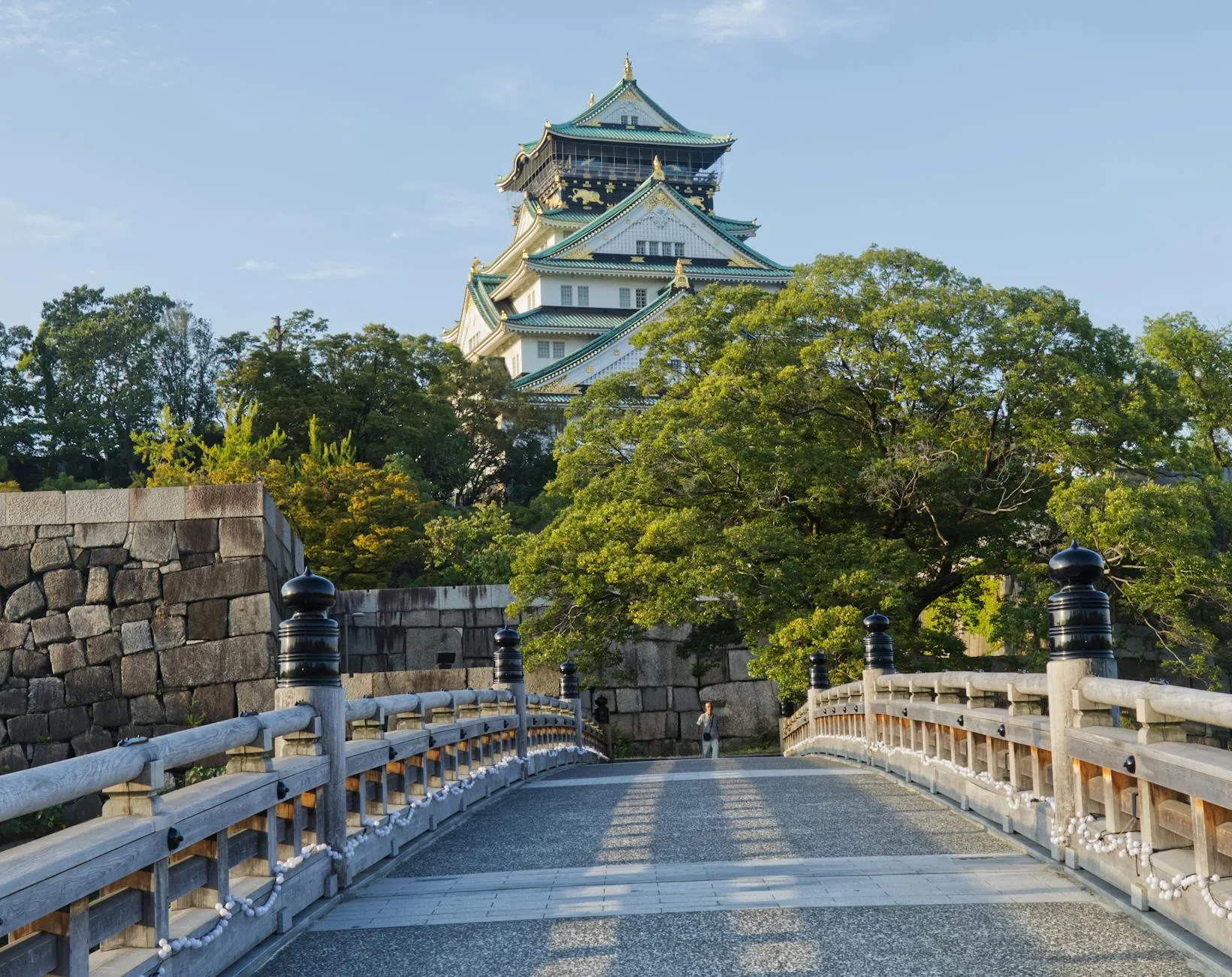
Osaka Guide 2026
Osaka is where Japan lets its guard down. The city invented the word kuidaore — “eat until you drop” — and takes the concept seriously. Takoyaki vendors shout over each other in Dotonbori, kushikatsu shops in Shinsekai have served the same recipe since the 1920s, and the locals are louder, funnier, and more generous than anywhere else in the country.
¥8,000–30,000+/day (Budget to Luxury)
USD 1 ≈ ¥154–158
Michelin 469 restaurants (Kansai)
Visa-free 90 days
Editor’s Note — Tourist Osaka vs Real Osaka
Most first-time visitors to Kansai pick Kyoto and “add Osaka if we have time.” That’s backwards. Osaka is cheaper, louder, more generous with food, and better positioned for day trips to everywhere else. Stay in Osaka, day-trip to Kyoto — not the other way around. The locals won’t pretend you don’t exist. The takoyaki is literally inventing itself in front of you. And kuidaore — “eat until you drop” — isn’t a slogan here, it’s a survival instruction.
Top 12 Attractions
| Attraction | Price | Why Visit |
|---|---|---|
| Osaka Castle | ¥1,200 | Toyotomi Hideyoshi’s 1583 fortress, rebuilt in concrete in 1931. The tower is an 8-floor museum with panoramic city views from the top. Castle park free, cherry blossom hotspot in late March. Student ¥600, under 15 free |
| Dotonbori | Free | Osaka’s neon-lit food street along the canal. The Glico Running Man sign (since 1935, sixth version), giant mechanical crab (Kani Dōraku), and wall-to-wall takoyaki, okonomiyaki, and kushikatsu stalls. Best at night. Tombori River Cruise ¥2,000 for a 20-minute canal tour |
| Universal Studios Japan | ¥8,600–¥11,900 | Dynamic pricing. Super Nintendo World (opened 2023), Harry Potter, Donkey Kong Country (opened December 11, 2024 — expanded Nintendo World by 70%), and Mine Cart Madness signature ride. 25th anniversary celebrations from March 4, 2026. Express Pass 4 from ~¥9,800 extra. Book in advance — sells out on weekends |
| Shinsekai & Tsutenkaku | ¥1,200 tower | 1912 district modelled after New York and Paris, now gloriously retro. Tsutenkaku Tower (103m) has the lucky Billiken statue. Rub his feet for good luck. Outdoor deck +¥500. Tower Slider extra. The real draw is kushikatsu on every corner |
| Osaka Aquarium Kaiyukan | ¥2,700 | One of the world’s largest aquariums. The centrepiece is a giant whale shark in a 5,400-ton Pacific Ocean tank you spiral around over 8 floors. Dynamic pricing ¥2,300–¥2,700. Child ¥1,200–¥1,400 |
| Abeno Harukas 300 | ¥2,000 | Japan’s tallest skyscraper (300m). The observation deck on floors 58–60 offers 360° views stretching to Awaji Island and Kobe. Sunset and night visits are spectacular. Ages 12–17 ¥1,200, 6–11 ¥700 |
| Sumiyoshi Taisha | Free | One of Japan’s oldest Shinto shrines (211 AD). The distinctive sumiyoshi-zukuri architecture predates Chinese Buddhist influence — you’re looking at pure Japanese building style. The arched Taikobashi bridge is iconic. No tourists |
| Kuromon Market | Free entry | Osaka’s kitchen for 190+ years. Over 150 stalls selling fresh tuna sashimi (¥800–1,200), grilled scallops (¥500–600), wagyu skewers (¥1,000), uni (¥1,200), and tamagoyaki (¥200–500). Budget ¥2,000–5,000 for a solid food crawl. Best before 14:00 |
| Cup Noodles Museum | Free | In Ikeda (30 min from Umeda). Momofuku Ando invented instant ramen here in 1958. Make your own Cup Noodles (¥500) — choose from 4 broths and 12 toppings. Chicken Ramen Factory ¥1,200 (from-scratch). Reservation recommended |
| Shitennoji Temple | ¥300 | Japan’s first Buddhist temple, founded 593 AD by Prince Shōtoku. The five-story pagoda and inner precinct cost ¥300. Gokuraku-jodo Garden ¥300 extra. Treasure House ¥500. Monthly flea market on 21st and 22nd. Grounds free |
| Namba Yasaka Shrine | Free | A giant lion head (“eno-den” stage) with an open mouth that’s 12m tall — it“swallows evil spirits and brings good luck.” One of Osaka’s most photogenic spots. The rest of the shrine is peaceful and tourist-free. Charms ¥200–800 |
| teamLab Botanical Garden | ¥1,800 | Nagai Park’s botanical garden transformed into an immersive digital art experience at night. Trees, flowers, and ponds become interactive light installations. Evening only. Under 15 ¥500, preschool free |
Osaka Castle In-Depth
Osaka Castle (大阪城) is the city’s most visited landmark. Toyotomi Hideyoshi built the original in 1583 to unify Japan, but it was destroyed and rebuilt multiple times. The current tower dates to 1931 and houses a museum covering Hideyoshi’s life and the Siege of Osaka (1614–1615).
What’s Inside
The 8-floor museum traces Osaka’s history through dioramas, armour, and artefacts. Floor 5 has a miniature recreation of the summer siege. Floor 8 is the observation deck with city panoramas. The Toyotomi Stone Wall Museum (included in admission) displays original 400-year-old stone walls discovered during excavation.
Castle Park
The surrounding park is free and massive — perfect for running, picnicking, or cherry blossom viewing. Nishinomaru Garden (¥350) has the best castle views with weeping cherry trees. The park has 600+ cherry trees peaking in late March to early April, with evening illumination.
Street Food & Signature Dishes
Osaka calls itself tenka no daidokoro — “the nation’s kitchen.” This isn’t marketing. Osaka invented or perfected takoyaki, okonomiyaki, kushikatsu, and kitsune udon. The city has more restaurants per capita than Tokyo, and the food is cheaper and more casual. You eat standing at counters, on the street, and at tiny 8-seat joints where the chef remembers your order.
| Dish | Price | What It Is |
|---|---|---|
| Takoyaki | ¥500–810 | Battered octopus balls, crispy outside, molten inside. Topped with sauce, mayo, bonito flakes, and seaweed. Osaka’s defining street food. 6–12 pieces per serving |
| Okonomiyaki | ¥800–1,500 | Savoury cabbage pancake with your choice of pork, seafood, cheese, or mochi. Osaka-style mixes everything into the batter (Hiroshima-style layers). Cooked on a teppan in front of you |
| Kushikatsu | ¥100–200/stick | Deep-fried skewers: pork, shrimp, lotus root, quail egg, asparagus, anything. Dipped once in communal Worcestershire sauce. No double-dipping — this is sacred law in Osaka |
| Kitsune Udon | ¥500–800 | Thick wheat noodles in dashi broth topped with sweet fried tofu (aburaage). Invented in Osaka. The broth is lighter than Tokyo’s soy-heavy version. Usami-tei Matsubaya claims to be the originator (since 1893) |
| Butaman (551 Hōrai) | ¥200/bun | Juicy pork buns that are an Osaka institution. 551 Hōrai shops are everywhere — the one at Namba Station always has a queue. Buy a box of 4 (¥760). The smell on the train is a known social dilemma in Kansai |
| Negiyaki | ¥700–1,000 | Green onion pancake — lighter than okonomiyaki with masses of chopped scallion. Specialty of Fukutaro in Namba. Eaten with soy sauce, not okonomiyaki sauce |
| Ikayaki | ¥150–300 | Pressed grilled squid in a thin batter wrapper. Eaten as a snack while walking. The Hanshin Department Store basement stall sells 70,000+ per day. Under ¥200 for the basic version |
| Fugu (blowfish) | ¥1,000–8,400 | Osaka consumes 60% of Japan’s fugu. Shinsekai has the cheapest: fugu sashimi from ¥1,000, full course from ¥5,000–8,400. Zuboraya was the icon but closed in 2020 — try Fuguhiro or Tsuki no Odori |
| Horumon | ¥500–1,500 | Grilled offal — intestines, tripe, heart. A working-class Osaka specialty especially around Tsuruhashi Korean Town. Cheap, fatty, and best washed down with beer or highball |
| Yakiniku | ¥2,000–5,000 | Korean-style BBQ concentrated in Tsuruhashi, Japan’s largest Korea Town. Excellent quality at half the price of Tokyo. The neighbourhood smells like grilling meat from the station exit |
Takoyaki: Where to Eat
Every Osaka resident has a takoyaki opinion. The city has an estimated 5,000+ takoyaki stalls, and the debate over the best one is eternal. Here are the shops that consistently earn the most respect:
- Wanaka — Sennichimae location near Namba. Crispy shell, creamy interior, generous octopus. 8 pieces from ¥650. Multiple branches including Kuromon Market (¥500/8pc)
- Aizuya — Claimed birthplace of takoyaki (1933). In Tamazukuri, east of Osaka Castle. The original rajioyaki (predecessor of takoyaki) used beef tendon, not octopus. 15 pieces ¥700
- Takoyaki Doraku Wanaka — Kuromon Market branch serves 8 pieces for ¥650 with a crispy-to-soft ratio that satisfies both camps
- Kukuru — Dotonbori’s most visible takoyaki shop with a giant octopus on the facade. 6 pieces from ¥600. Tourist-heavy but genuinely good, with visible whole-octopus chunks
- Creo-Ru — American Village (Amerikamura) stalwart. 10 pieces for ¥500. No frills, no English menu, just perfect takoyaki with a loyal local following
Kappo & Counter Dining
Kappo (割烹) is Osaka’s contribution to Japanese fine dining — counter-style service where the chef builds your meal one course at a time, in front of you, using whatever the morning’s market delivered. It predates kaiseki’s ritual formality and feels more alive because of it. Expect ¥15,000–30,000 for a full course. Ajikitcho Bunbu is the classic introduction.
The Udon Original — Imai
Imai (今井) in Dotonbori has been serving kitsune udon since 1893 and is widely credited with inventing the dish. The broth is a clean first-strike of kombu and bonito — lighter than Tokyo’s soy-heavy versions — topped with a sweet-simmered sheet of aburaage. ¥900. The shop is wood-framed, calm, and ignored by most tourists who have already committed to takoyaki.
Fugu — Osaka’s Signature Risk
Osaka consumes 60% of Japan’s fugu (blowfish). Zuboraya’s giant lantern puffer was the icon of Shinsekai until it closed in 2020. Fugu-no-Torajiro and Fuguhiro now carry the torch — full multi-course dinners from ¥5,000 in Shinsekai, ¥10,000–20,000 at higher-end places. Licensed chefs only. You will be fine.
Pro Tip: Tachinomi Standing Bars
Osaka’s tachinomiya (立ち飲み屋) standing bars are the local budget hack. Draft beer ¥200–300, skewers ¥100–200, no seating so nothing lingers. Cluster around Tenma, Tennoji, and the tracks beneath Umeda Station. Perfect for eating well on ¥1,500 and meeting salarymen who will absolutely try to practise their English on you.
Okonomiyaki: The Essential Shops
Osaka-style okonomiyaki mixes all ingredients into the batter before cooking on the teppan. You sit at a hot plate and it’s cooked in front of you (or you cook it yourself at some places). The classic order is buta-tama (pork and egg).
- Mizuno — Dotonbori, since 1945. Michelin Bib Gourmand. The yamaimoyaki (grated yam version) is the signature — lighter and fluffier than standard. ¥1,500–2,500 per person. Always a queue
- Kiji — Inside Umeda Sky Building basement. Another Bib Gourmand. The suji-yaki (beef tendon) is outstanding. ¥800–1,200. Tiny, counter-only, worth the wait
- Chibō — Dotonbori. The luxury end of okonomiyaki. Multi-floor, English menu, good for groups. ¥1,500–3,000. Their “DX Mix” has everything
- Fukutaro — Namba. Famous for negiyaki (green onion pancake) and their crispy-edged okonomiyaki. ¥700–1,200. Cash only at some branches
Kushikatsu: The Rules
Kushikatsu (deep-fried skewers) is Shinsekai’s contribution to Osaka food culture, dating to the 1920s. The rules are simple and non-negotiable:
- No double-dipping. The sauce pot is communal. Dip your skewer once. Use the cabbage leaves to scoop extra sauce if needed
- Order what catches your eye — most sticks are ¥100–200. A full meal with beer is ¥1,500–2,500
- Sit at the counter. Watch the oil. Point at what you want on the menu board
- Yaekatsu — Open kitchen, crispy texture, budget ~¥2,000. Local favourite
- Daruma — The most famous chain in Shinsekai (angry chef mascot). Multiple locations, always crowded. From ¥110/stick
- Kushikatsu Tanaka — National chain that started in Osaka. Good quality, English menu, ¥100–200/stick. Happy hour half-price
Michelin Guide Kyoto & Osaka 2026
The Michelin Guide Kyoto & Osaka 2025 listed 469 restaurants — a record. The 2026 edition was announced at the official ceremony on April 23, 2026. Osaka consistently rivals Kyoto and Tokyo for starred restaurants, with kaiseki, sushi, and tempura dominating the top tiers.
Three-Star Restaurants (★★★)
| Restaurant | Cuisine | Notes |
|---|---|---|
| Hajime | French innovative | Chef Hajime Yoneda earned 3 stars in record time. Molecular gastronomy meets Japanese sensibility. Tasting menu ¥91,270 (+15% service) from April 2026. Reservations months ahead |
| Kashiwaya | Kaiseki | Senriyama, north Osaka. 3 stars for 14 consecutive years since 2011. Traditional multi-course kaiseki that respects centuries of technique. From ~¥25,000 |
| Taian | Japanese kaiseki | Nagahoribashi. Refined kaiseki with seasonal ingredients. Intimate setting with counter seating. From ~¥20,000 |
Notable Two-Star & One-Star
- Kōryū (2★) — Kitashinchi. Tempura kaiseki in a tiny counter setting. ¥15,000–20,000
- Fujiya 1935 (2★) — Spanish-Japanese fusion. One of Osaka’s most creative fine-dining experiences. ¥20,000–25,000
- La Cime (2★) — French-Japanese. #44 on World’s 50 Best Restaurants 2025. Chef Yusuke Takada creates theatrical tasting menus. ¥18,000–22,000
Bib Gourmand Highlights
Osaka’s Bib Gourmand list is where the city truly shines — quality eating under ¥5,000:
- Mizuno — Dotonbori okonomiyaki since 1945 (¥1,500–2,500)
- Kiji — Umeda Sky Building okonomiyaki (¥800–1,200)
- Usami-tei Matsubaya — Kitsune udon originator (since 1893, ¥800)
- Multiple ramen, sushi, and izakaya spots across the city
Drinks & Nightlife
Craft Beer
Osaka’s craft beer scene is growing fast. Marca in Namba has 30+ taps of Japanese and international craft beer. Beer Belly in Tenma is a local legend for IPA lovers. Craft Beer Holiday festival (usually autumn, day admission ¥4,600 with 6 drink tickets + glass) showcases the scene.
Whisky
Osaka is the gateway to Japan’s whisky country. Suntory’s Yamazaki Distillery is 15 minutes from Osaka Station by JR (tours from ¥1,000, book weeks ahead). In the city, Bar Nayuta in Kitashinchi and Bar Augusta in Umeda serve rare Japanese whisky. Expect ¥1,500–5,000 per dram for premium pours.
Sake
Nada in nearby Kobe is one of Japan’s premier sake regions, producing 25% of the country’s output. In Osaka, Torikizoku (chain izakaya) serves all drinks at ¥350, including sake. For serious tasting, Sake Bar H in Namba has 50+ varieties with English descriptions.
Clubs & Late-Night
- Joule — Osaka’s flagship club in Shinsaibashi. Three floors, international DJs, tech-house to hip-hop. ¥2,000–3,500 cover. joule-osaka.com
- Ghost — Underground techno with a serious sound system and rotating residents. Amerikamura. ¥2,000–2,500.
- Noon+Noon — Legendary after-hours club that opens at 4am on Sunday mornings. Techno/house. Where Osaka proves it takes all-night dedication seriously.
- Onzieme — Hip-hop focused, younger crowd. Shinsaibashi. ¥2,000 with drink.
Nightlife Districts — Where to Drink What
- Dotonbori / Namba: Tourist central but genuinely electric — neon, izakaya, arcades, the canal after dark. Best for the first night’s food-and-drink crawl.
- Shinsaibashi (ura-namba): Upscale cocktail bars, jazz clubs, and hidden wine bars in the back streets north of Dotonbori. Look for unmarked elevators.
- Umeda / Kitashinchi: Business-district nightlife — salaryman izakaya at 6pm, whisky bars later. The alleys under the JR tracks (Umeda Alley) are the atmospheric choice.
- Shinsekai: Retro, gritty, kushikatsu joints that double as drinking spots. Less touristy than Dotonbori at night.
- Amerikamura: Youth culture — second-hand shops by day, clubs and live houses by night. Osaka’s Harajuku.
Last Train vs All-Nighter
Osaka trains stop around midnight (varies by line — check). If you miss the last train: taxi (expensive), capsule hotel (¥3,000–4,000), or keep drinking until the first train at 5am. Many Osakans choose the last option. Network cafés (internet cafés with reclining seats, showers, and manga) offer overnight packages from ¥1,500.
Neighbourhoods
Namba & Minami (Dotonbori, Shinsaibashi, Amerikamura)
The heart of Osaka nightlife and food. Dotonbori is the neon-lit food canal. Shinsaibashi-suji is a 600m covered shopping arcade. Amerikamura (American Village) is Osaka’s youth culture hub — vintage clothing, street art, and Triangle Park. Hozenji Yokocho is a hidden lantern-lit alley with a moss-covered Buddhist statue and traditional bars. Stay here for maximum street food access.
Umeda & Kita
The business and transport hub around Osaka/Umeda Station. Umeda Sky Building (¥1,500) has the Floating Garden Observatory — an open-air rooftop connected by an escalator through a glass tube. Grand Front Osaka for upscale shopping. HEP Five has a Ferris wheel on the roof (closed until April 22, 2026 for renovation). Tenjinbashisuji is Japan’s longest shopping street (2.6 km). Grand Green Osaka (Umekita Park) north of the station is a massive urban park opened 2024–2025, with Waldorf Astoria Osaka (Japan’s first) and Time Out Market Osaka. LUCUA SOUTH opened April 2026 with Nintendo Osaka and Pokémon Center. The basement food floors (depachika) at Hankyu and Daimaru are world-class.
Shinsekai
Built in 1912 as Osaka’s “new world,” now a gloriously retro neighbourhood with neon signs, pachinko parlours, and kushikatsu shops on every block. Tsutenkaku Tower dominates the skyline. Jan Jan Yokocho alley has shōgi (Japanese chess) clubs and cheap bars. The area around the base of the tower is touristy; walk two blocks east for local prices. Safe but rough around the edges — that’s the charm.
Tennoji & Abeno
Abeno Harukas (300m, ¥2,000 observation deck) towers over this area. Shitennoji Temple (593 AD) is a 10-minute walk south. Tennoji Zoo (¥500 adults) and the surrounding Tennoji Park (free) are family-friendly. Shinsekai is immediately north. The area is less polished than Namba but more authentic.
Osaka Castle & Morinomiya
The castle dominates this eastern area. Osaka Museum of History (¥600) has excellent views of the castle from its upper floors. Osaka Business Park (OBP) has modern high-rises. The castle park is where locals jog, do tai chi, and hanami. Take the JR Loop Line to Osakajokoen Station.
Nakanoshima
A river island between the Dojima and Tosabori rivers. Nakanoshima Museum of Art (opened 2022, admission varies by exhibition) has a striking black exterior. National Museum of Art, Osaka (NMAO) is underground with a distinctive metal entrance sculpture. Nakanoshima Park has rose gardens (free, peak in May and October). Increasingly hip with waterfront restaurants and cafes.
Tsuruhashi (Korea Town)
Japan’s largest Korean community. Exit Tsuruhashi Station and the smell of grilling meat hits you immediately. Hundreds of yakiniku restaurants, kimchi shops, and Korean grocery stores in a covered market labyrinth. Lunch sets from ¥1,000. The market is chaotic, authentic, and a world away from tourist Osaka. Best for lunch — many shops close early evening.
Tenma & Nakazakicho
Tenma has one of Osaka’s best drinking strips — Tenjinbashi area is packed with standing bars, izakayas, and tiny ramen shops. Nakazakicho is Osaka’s hippest neighbourhood: renovated pre-war townhouses turned into coffee shops, galleries, and vintage stores. Think Shimokitazawa energy but smaller. Walking distance from Umeda.
Kuromon Market
Kuromon Ichiba (黒門市場) has been Osaka’s main food market for over 190 years. It’s tourist-heavy now (locals shop at supermarkets), but the quality of the seafood and the ability to eat standing at counters makes it worth visiting. Over 150 stalls in a covered arcade.
What to Eat
- Fresh tuna sashimi on rice — ¥800–1,200. Sliced to order from whole bluefin
- Grilled scallops — ¥500–600 each, cooked on the spot with butter and soy sauce
- Uni (sea urchin) — ¥1,200 per serving. Hokkaido uni is the premium option
- Wagyu beef skewer — ¥1,000. Brief sear, served rare
- Tamagoyaki — ¥200–500 for rolled sweet omelette
- Fresh fruit — strawberries (¥500–800), mango slices (¥300–500), seasonal
- Kobe beef skewer — ¥4,000 for the real deal (A5 grade)
Museums & Cultural Spots
Osaka Museum of Housing and Living
Walk through a full-size recreation of 1830s Edo-period Osaka (¥600 adults, high school/university ¥300, under 15 free). Rent a kimono (¥500–800 extra) for photos. The recreation includes shops, canals, and seasonal lighting changes. Small but atmospheric — allow 1–2 hours. Included in Osaka Amazing Pass.
Osaka Museum of History
¥600 adults. Adjacent to Osaka Castle with panoramic views. Four floors covering 1,400 years from Naniwa Palace to modern times. The 10th-floor recreation of the ancient palace is impressive. Free on certain days — check the schedule.
Umeda Sky Building
The Kuchu Teien Observatory (¥1,500 adults, ¥700 ages 4–12) on the 39th and 40th floors offers an open-air rooftop experience. The building itself — two towers connected by a floating garden — is an architectural landmark. Included in Osaka Amazing Pass. Best at sunset.
National Museum of Art, Osaka (NMAO)
An underground museum with a distinctive stainless-steel entrance. Collection ranges from postwar Japanese art to international contemporary. Admission varies by exhibition (¥430 permanent, special exhibitions ¥1,000–2,000). Located on Nakanoshima island.
Traditional Performing Arts
National Bunraku Theatre: Osaka is the birthplace of bunraku — 300-year-old puppet theatre performed with life-sized puppets, solo chanters, and shamisen musicians. It sounds niche; it’s devastating. Performances at the National Bunraku Theatre. ¥2,400–6,500. English audio guides. ntj.jac.go.jp
Yoshimoto Comedy (Namba Grand Kagetsu): Japanese stand-up comedy (manzai) was codified in Osaka and is still serious business here — the Yoshimoto Kogyo agency runs the industry. Shows are in Japanese but the physical comedy transcends language. ¥3,000–5,000. yoshimoto.co.jp
Takarazuka Revue: The all-female musical theatre company (founded 1913) famous for lavish productions, samurai dramas, and a fandom that makes K-pop look casual. The Grand Theatre is 30 minutes from Osaka by Hankyu. ¥3,500–12,000. kageki.hankyu.co.jp
Osaka Tenmangu Shrine: 1,000-year-old shrine dedicated to the god of learning. The monthly flea market (25th of each month) is one of Osaka’s best. Free.
Parks & Nature
Minoo Park
A forested ravine 30 minutes from central Osaka. The 2.8 km walk from Minoo Station to Minoo Falls (33m waterfall) follows a riverside path through maple forest. Free entry. The autumn colours (November) are spectacular. Try the momiji tempura (deep-fried maple leaves) from the stalls along the path — ¥300–500. Access: Hankyu Minoo Line from Umeda via transfer at Ishibashi-handai-mae (¥280, 25 minutes).
Osaka Castle Park
105 hectares of green space around the castle. Free. Cherry blossom viewing (late March), plum groves (February), autumn foliage (November). Runners’ loop, baseball diamonds, and the Osaka-jo Hall concert venue. Nishinomaru Garden (¥350) for the best cherry blossom + castle photo combination.
Nagai Park
Southern Osaka’s largest park. Home to teamLab Botanical Garden (evening, ¥1,800), Nagai Stadium, and the Botanical Garden during daytime. Good for families. Nagai Station on Midosuji Line.
Nakanoshima Park
A river island park with 3,700+ rose bushes in 310 varieties. Free. Peak bloom in May and October. Walking paths, cafes, and views of the Nakanoshima skyline. Central location between Yodoyabashi and Kitahama stations.
Day Trips from Osaka
| Destination | Transport | Highlights |
|---|---|---|
| Kyoto | JR Special Rapid 30 min, ¥580 | Fushimi Inari (free, sunrise), Kinkaku-ji ¥500, Arashiyama bamboo grove (free), Nishiki Market, Gion geisha district. Japan’s cultural capital is a half-hour train ride. See our full Kyoto guide. kyoto.travel |
| Nara | Kintetsu Nara Line 35 min, ¥680 | 1,200+ wild deer in the park (free). Todaiji Temple ¥800 (world’s largest wooden building, 15m bronze Buddha). Kasuga Taisha ¥500. Buy shika senbei (deer crackers, ¥200) and the deer will bow before eating — genuinely. Watch your belongings. visitnara.jp |
| Kobe | JR 20 min, ¥420 | Kobe beef lunch from ¥3,000 casual; splurge at Mouriya or Ishida (¥10,000–30,000). Chinatown (Nankinmachi) free. Nunobiki Herb Garden ropeway. Sake breweries in Nada district (free tastings). Kitano European-era houses. Earthquake Memorial Museum ¥600. feel-kobe.jp |
| Himeji Castle | JR Special Rapid 1 hr, ¥1,520 | Japan’s most spectacular original castle. UNESCO World Heritage. ¥2,500 non-residents (increased March 2026 from ¥1,000). Under 18 free. The only major castle that survived WWII bombing, earthquakes, and feudal wars intact. 20-min walk from station |
| Mount Koya | Nankai from Namba 90 min + cable car, ~¥2,000 | Sacred Buddhist mountain with 117 temples. Okunoin cemetery walk (free, 200,000 tombstones). Temple stay (shukubo) from ¥10,000–15,000/night with meals. New GRAN Tenku luxury train launched April 24, 2026. koyasan.or.jp |
| Hiroshima + Miyajima | Shinkansen 80 min, ¥10,440 | Peace Memorial Park + A-Bomb Dome (free). Museum ¥200. Ferry to Miyajima (¥180). Itsukushima Shrine ¥500. Best as an early start. JR Pass makes this economical |
Getting Around
From Kansai Airport (KIX)
| Option | Time | Price |
|---|---|---|
| JR Haruka Express | 50 min to Shin-Osaka, 45 min to Osaka Stn | ¥1,800 tourist ticket (Osaka/Shin-Osaka), ¥1,300 (Tennoji). Regular: ¥2,380–2,540 unreserved |
| Nankai Rapi:t | 35–40 min to Namba | ¥1,520 e-ticket / ¥1,670 paper. Seat reservation mandatory. Retro-futuristic exterior |
| Nankai Airport Express | 45 min to Namba | ¥930. Same route as Rapi:t but local train, no reserved seats |
| Airport Limousine Bus | 50–60 min to Namba (OCAT) | ¥1,100–1,600. No reservation needed. Luggage storage. Runs until ~01:15 |
Osaka Metro
Nine lines covering the city. Single ride ¥230–380 depending on distance. The Midosuji Line (red, north–south through Shin-Osaka, Umeda, Namba, Tennoji) is the most useful. The Chūō Line now extends to Yumeshima Station (Expo 2025 legacy). Use ICOCA or any IC card for seamless tap-on/tap-off.
Day Passes
- Enjoy Eco Card: ¥820 weekday / ¥620 weekend+holiday. Unlimited Osaka Metro + City Bus. Pays for itself in 3–4 rides. Includes discounts at museums and attractions
- Osaka Amazing Pass: 1-day ¥3,800 / 2-day ¥5,400. Metro + 40+ free attractions. Best value if you plan 3+ attractions per day
- ICOCA card: ¥2,000 (¥500 deposit + ¥1,500 balance). Rechargeable IC card for trains, metro, buses, convenience stores. Works nationwide
JR Lines
The JR Osaka Loop Line circles the city and is useful for Osaka Castle (Osakajokoen), Tennoji, Universal City (USJ transfer), and Nishikujo. Not covered by Osaka Metro passes — use ICOCA or JR passes.
Expo 2025 Legacy & Yumeshima
The World Expo 2025 ran from April 13 to October 13, 2025 on Yumeshima, a man-made island in Osaka Bay. 184 days, 159 countries, and 29 million visitors. In 2026, the site is being dismantled, but several legacies remain:
- Grand Ring — The “world’s largest wooden architectural structure” (designed by Sou Fujimoto) is being partially preserved as a public space and memorial
- Chūō Line extension — Osaka Metro’s Chūō Line now reaches Yumeshima Station, built for the Expo and now serving the developing island
- MGM Osaka IR — Construction of Japan’s first integrated resort and casino on Yumeshima, operated by MGM Resorts and Orix. ¥1.27 trillion ($8.9 billion) project. Groundbreaking 2024, opening expected 2030
- Infrastructure upgrades — The Expo accelerated road, rail, and harbour improvements across the bay area that benefit the city long-term
Osaka Culture & Osaka-ben
Osaka people are stereotypically (and accurately) louder, funnier, and more direct than Tokyo residents. Comedy is serious business here — Osaka is Japan’s comedy capital, home to manzai (double-act comedy) and yoshimoto entertainment. People greet each other with “moukarimakka?” (“are you making money?”) instead of formal greetings.
Essential Osaka-ben Phrases
- Nandeyanen! — “What the heck!” The most Osaka phrase. Used constantly in comedy and daily life
- Meccha — “Super/very.” Standard Japanese uses totemo; Osaka uses meccha
- Ookini — “Thank you.” The Osaka version of arigato. You’ll hear it from market vendors and taxi drivers
- Akan — “No good / don’t do that.” Standard Japanese uses dame
- Moukarimakka? — “Are you making money?” A casual greeting between acquaintances
- Bochi-bochi denna — “So-so” — the standard reply to moukarimakka
Budget Guide
| Category | Budget | Mid-Range | Luxury |
|---|---|---|---|
| Accommodation | ¥3,000–5,000 hostel | ¥12,000–20,000 hotel | ¥30,000–100,000+ ryokan/luxury |
| Food | ¥2,000–4,000/day | ¥5,000–10,000/day | ¥15,000–50,000+/day |
| Transport | ¥620–820 (day pass) | ¥1,000–2,000 | ¥5,000–10,000 (taxi/private) |
| Activities | ¥1,000–2,000 | ¥3,000–8,000 | ¥10,000–25,000+ |
| Total/day | ¥8,000–12,000 ($52–$78) |
¥15,000–25,000 ($97–$162) |
¥30,000+ ($195+) |
When to Visit
Best Seasons
- Spring (March–May): Cherry blossoms peak late March to early April. Ø 15–20°C. The Osaka Mint Bureau opens its famous cherry avenue in mid-April (one week only, 350 trees of rare double-petaled varieties). Perfect weather
- Autumn (October–November): Comfortable 15–22°C. Minoo Park’s maple colours peak in November. Fewer tourists than spring. Danjiri festival in October
- Winter (December–February): Cold but manageable (3–10°C). Fugu season. Illuminations at Midosuji and Nakanoshima. Least crowded
- Summer (June–September): Hot and humid (28–35°C). Tenjin Matsuri (July). Rainy season (tsuyu) June–mid-July. Not ideal but food is year-round
What’s New in 2026
- Expo 2025 aftermath — The World Expo ended October 13, 2025. Yumeshima island site is being dismantled through 2026. Grand Ring wooden structure partially preserved. Metro Chūō Line extension to Yumeshima permanent
- Universal Studios Japan 25th Anniversary — Celebrations from March 4, 2026. Limited-time events including Universal Cool Japan 2026 (Detective Conan, Jujutsu Kaisen, Frieren collaborations)
- GRAN Tenku luxury train — Nankai’s new sightseeing train connecting Osaka Namba to Koyasan launches April 24, 2026. Base fare from ¥790
- HEP Five Ferris Wheel — Closed for renovation since October 2025, reopening April 22, 2026
- MGM Osaka IR construction — Japan’s first casino resort under construction on Yumeshima. ¥1.27 trillion project. Opening ~2030
- Michelin Guide 2026 — Kyoto & Osaka 2026 edition announced at ceremony on April 23, 2026
- Departure tax tripling — Japan’s international departure tax increases from ¥1,000 to ¥3,000 per person from July 1, 2026 (embedded in ticket prices)
- Grand Green Osaka — Massive urban park + mixed-use development north of JR Osaka Station. Waldorf Astoria Osaka, Time Out Market (first in Asia), UMEKITA ONSEN REN hot spring
- Exchange rate — USD 1 ≈ ¥154–158 (yen weakened significantly since 2022, making Japan excellent value for foreign visitors)
Major Events 2026
- Cherry blossoms: Late March–early April. Osaka Castle Park, Kema Sakuranomiya Park, Osaka Mint Bureau (April 9–15, advance registration required)
- Tenjin Matsuri: July 24–25. One of Japan’s top 3 festivals. Land procession of 3,000 in traditional costume, then 100+ illuminated boats on the Okawa River with fireworks. Centred on Tenmangu Shrine. Free to watch. Arrive early for riverside spots
- Kishiwada Danjiri Matsuri: September 13–14 (seaside districts), October 11–12 (mountain districts). Giant wooden floats (danjiri) weighing 4 tons are dragged through narrow streets at speed, with riders on top performing acrobatics. Genuinely dangerous and thrilling. Free
- Osaka Marathon: Late February. ~33,000 runners through the city. Registration by lottery (closed for 2026)
- Ebessan (Tōka Ebisu): January 9–11. Business luck festival at Imamiya Ebisu Shrine. Over 1 million visitors in 3 days
- Sumiyoshi Taisha New Year: January 1–3. Over 2 million visitors. Shinto rituals, food stalls, festive atmosphere
Practical Info
Visa
68 countries have visa-free access to Japan for 90 days (including EU, UK, US, Canada, Australia). No visa waiver registration needed — just a valid passport. Visit Japan Web pre-registration recommended for faster customs.
Safety
Osaka is extremely safe. Violent crime against tourists is virtually non-existent. Standard city precautions apply: watch belongings in crowded areas (Dotonbori, trains), avoid touts in entertainment districts (especially Tobita Shinchi). Women can walk alone at night safely in mainstream areas.
Cash vs Cards
Japan is still more cash-dependent than most developed countries, though it’s improving. Convenience stores, chains, and department stores take cards. Many small restaurants, izakayas, market stalls, and shrines are cash only. 7-Eleven ATMs accept foreign cards (Visa/Mastercard) with no issues.
Taxes & Fees
- Accommodation tax: ¥200–500/night depending on room rate (¥5,000–14,999 = ¥200, ¥15,000–19,999 = ¥400, ¥20,000+ = ¥500). Under ¥5,000 exempt
- Departure tax: Currently ¥1,000 per person, tripling to ¥3,000 from July 1, 2026 (embedded in air/sea ticket prices)
Solo Travel in Osaka
Osaka is one of Japan’s best cities for solo travellers. Counter-dining culture means eating alone at ramen bars, okonomiyaki teppans, and sushi counters is the default, not an awkward exception. Tachinomi (standing bars) are ideal for solo drinking and low-effort conversation — the physical setup encourages it. Capsule hotels (9 Hours, capsule inns around Shinsekai, ¥2,500–5,000) are safe and private. Locals are famously chatty and will absolutely try their English on you at the bar.
Tax-Free Shopping
Spend ¥5,000+ (tax-excluded) at a single tax-free shop and foreigners can get the 10% consumption tax refunded. Works at department stores, electronics shops, drugstores, and many retail chains. Bring your passport.
More City Guides
Planning a longer trip? Explore more of our definitive 2026 city guides:
Asia
- Ho Chi Minh City Guide 2026 — Phở, bánh mì, cơm tấm & the new Metro Line 1
- Toronto City Guide 2026 — CN Tower, Michelin, Kensington Market & the new Crosstown LRT
- Kyoto City Guide 2026 — Temples, gardens, geisha districts & kaiseki
- Tokyo City Guide 2026 — Ramen, sushi, Shibuya & teamLab
- Seoul City Guide 2026 — Korean BBQ, palaces & K-culture
- Taipei City Guide 2026 — Night markets, xiao long bao & hot springs
The Americas
- Medellín Guide 2026 — Comuna 13, bandeja paisa, Metrocable & the City of Eternal Spring
- Vancouver City Guide 2026 — Stanley Park, Granville Island & Pacific coast
- San Francisco City Guide 2026 — Golden Gate, sourdough & the Bay
- Montreal City Guide 2026 — Bagels, smoked meat & festivals
- Mexico City Guide 2026 — Al pastor, Teotihuacán & Roma Norte
- Santiago City Guide 2026 — Cordillera views & Chilean winelands
- Lima City Guide 2026 — World’s 50 Best, ceviche & pisco
- Buenos Aires Guide 2026 — Don Julio, tango & Palermo
Africa
- Cape Town City Guide 2026 — Table Mountain, Robben Island & Cape Winelands
Shopping in Osaka
Osaka’s shopping is excellent — from underground malls to covered arcades to electronics districts. Prices are slightly lower than Tokyo for many items.
Shopping Districts
Shinsaibashi-suji: Osaka’s main shopping arcade — 600m covered street from Shinsaibashi to Dotonbori. International brands, Japanese chains, drug stores. The side streets (ura-namba) hide boutiques.
Umeda: Department store heaven — Hankyu, Hanshin, Daimaru clustered around Umeda Station. Underground Whity Umeda and HEP Five (with Ferris wheel) add layers.
Amerikamura: Youth fashion district. Second-hand clothing, streetwear, sneakers. The Osaka equivalent of Harajuku, slightly grittier.
Den Den Town: Electronics and otaku district — anime shops, gaming stores, trading cards, vintage audio. Osaka’s Akihabara but more compact. Nipponbashi area.
What to Buy
Kitchen goods: Japanese knives, ceramics, chopsticks. Doguyasuji (kitchen street) near Namba has 150+ shops. Prices beat tourist areas.
Snacks & food souvenirs: Osaka specialties include 551 Horai nikuman (meat buns), Rikuro Ojisan cheesecake, takoyaki snacks. Department store basements (depachika) have premium options.
Electronics: Yodobashi Camera (Umeda) and BIC Camera (Namba) are tax-free megastores. Show passport for 10% tax exemption on purchases over ¥5,000.
Vintage/thrift: Amerikamura has Osaka’s best second-hand shops. Chicago and Wego are reliable chains. True vintage hunting requires patience.
Osaka Photography Guide
Seven shots that will define your Osaka feed — and exactly when to take each one.
- Dotonbori Neon (after 8pm): The canal with full neon reflections. Stand on Ebisubashi Bridge facing west — the Glico Running Man is the anchor shot. Wide angle captures the chaos. Tripod is overkill; handheld ISO 3200 works and you can dodge the crowds.
- Osaka Castle with Cherry Blossoms (late March): Enter Nishinomaru Garden (¥350) and shoot up at the castle through weeping cherry trees. Arrive before 9am opening. Peak is late March to early April — check the bloom forecast the week before.
- Takoyaki Being Made (any time): The spinning-pick technique is hypnotic and makes for documentary-grade reportage. Ask permission before photographing vendors. Wanaka and Kukuru have the most visible cooking stations and tourist-friendly staff.
- Shinsekai Retro Neon (blue hour): Tsutenkaku Tower with the neighbourhood’s vintage signs below. Blue hour — roughly 20 minutes after sunset — gives you warm neon against a cool residual sky. The best 15 minutes of the day.
- Fushimi Inari from Osaka (dawn day trip): 30 minutes by train. The torii gates at 6am with zero crowds. Technically Kyoto, but the best photo accessible from an Osaka base.
- Kuromon Market Morning (before 10am): Fish stalls, knife work, the colours of uni and bluefin. Shoot documentary-style; ask before photographing vendors’ faces. After 10am the crowds make it impossible.
- Nakanoshima at Night: NMAO’s latticed entrance sculpture reflected against the museum buildings and the river. Tripod useful. The modern-Osaka counterpoint to Dotonbori’s neon.
Month-by-Month Weather & Events
| Month | High / Low | Rain Days | Notes |
|---|---|---|---|
| January | 9 / 3°C | 5 | Cold. Ebessan festival (Jan 9–11). New Year shrine visits. Low prices. |
| February | 10 / 3°C | 6 | Cold. Plum blossoms at Osaka Castle. Osaka Marathon (late Feb). |
| March | 14 / 6°C | 9 | 🌸 Cherry blossom watch begins late month. Warming up. |
| April | 20 / 11°C | 10 | 🌸 CHERRY BLOSSOM PEAK. Osaka Mint Bureau (one week only, advance booking). Beautiful but crowded. |
| May | 25 / 16°C | 10 | Pleasant. Golden Week (late Apr–early May) = mobbed and expensive. Post-GW is ideal. |
| June | 28 / 20°C | 12 | Rainy season (tsuyu). Humid. Indoor focus. |
| July | 32 / 25°C | 9 | 🏮 TENJIN MATSURI (Jul 24–25). Hot, humid. Osaka’s biggest festival. |
| August | 33 / 25°C | 7 | Sweltering. Obon (mid-Aug). Sumiyoshi Taisha summer festival. |
| September | 29 / 22°C | 10 | 🌟 Still warm. Danjiri Matsuri (Kishiwada, mid-Sep). Typhoon risk. |
| October | 23 / 16°C | 8 | 🌟 BEST MONTH. Comfortable. Danjiri (mountain districts). |
| November | 17 / 10°C | 6 | 🍁 AUTUMN FOLIAGE. Minoo Park peak. Pleasant, manageable crowds. |
| December | 12 / 5°C | 5 | Cold. Illuminations at Midosuji and Nakanoshima. Holiday atmosphere. |
Sample Itineraries
3-Day Essential Osaka
Day 1 — Minami Food Crawl
- 10:00 AM: Kuromon Market breakfast — tuna sashimi, tamagoyaki, grilled scallop (¥2,000).
- 12:00 PM: Walk to Dotonbori. Takoyaki at Wanaka (¥650).
- 1:00 PM: Okonomiyaki lunch at Mizuno — queue is worth it (¥1,500).
- 3:00 PM: Hozenji Yokocho hidden alley — moss Buddha, traditional bars.
- 4:00 PM: Shinsaibashi-suji shopping arcade.
- 5:00 PM: Amerikamura for vintage shops and Creo-Ru takoyaki.
- 7:00 PM: Kushikatsu dinner in Shinsekai — Daruma or Yaekatsu (¥2,000).
- 9:00 PM: Dotonbori at night — neon, canal, Glico Man photo.
Day 2 — Castle, Culture & Kita
- 9:00 AM: Osaka Castle (¥1,200, arrive at opening).
- 11:00 AM: Walk to Nakanoshima — NMAO or Museum of Art.
- 1:00 PM: Lunch in Nakanoshima or walk to Tenma.
- 2:30 PM: Umeda Sky Building — Floating Garden Observatory (¥1,500).
- 4:00 PM: Grand Green Osaka / Umekita Park.
- 6:00 PM: Depachika browsing at Hankyu or Daimaru basement.
- 7:30 PM: Dinner at Kiji okonomiyaki (Umeda Sky Building basement).
- 9:00 PM: Craft beer at Beer Belly (Tenma) or whisky at Bar Nayuta (Kitashinchi).
Day 3 — Day Trip: Nara or Kyoto
- Option A — Nara: Train to Nara (45 min). Deer park, Todai-ji, Kasuga Taisha. Lunch in Naramachi. Return by 5pm. Evening: farewell kushikatsu and highballs in Osaka.
- Option B — Kyoto: JR to Kyoto (30 min). Fushimi Inari at arrival, Kiyomizu-dera, Nishiki Market lunch, Gion stroll. Return for dinner in Osaka.
5-Day Deep Dive
Days 1–3 as above (do BOTH Nara and Kyoto), plus:
Day 4 — USJ or Kobe
- Option A — Universal Studios: Full day. Super Nintendo World + Donkey Kong Country. Buy Express Pass 4 if you value your knees. Arrive at opening.
- Option B — Kobe: JR to Kobe (20 min). Kobe beef lunch at Mouriya or Ishida (splurge), Chinatown, Nada sake district brewery tours, harbour area. Return for Osaka evening.
Day 5 — Deep Osaka
- 8:00 AM: 551 Hōrai pork buns for breakfast (any station branch).
- 9:00 AM: Sumiyoshi Taisha — one of Japan’s oldest shrines, no tourists.
- 11:00 AM: Tsuruhashi Korea Town — yakiniku lunch.
- 1:00 PM: Nakazakicho — hip coffee shops in renovated townhouses.
- 3:00 PM: Cup Noodles Museum in Ikeda (30 min from Umeda, make your own — ¥500).
- 6:00 PM: Return to Shinsekai for farewell fugu dinner (from ¥5,000).
- 9:00 PM: Final tachinomi crawl in Tenma.
Romantic Osaka
Osaka’s romance is unconventional — it’s sharing takoyaki on the Dotonbori canal at midnight, watching sunset from the Umeda Sky Building’s floating garden, or a kappo dinner where the chef builds your meal one course at a time across a cypress counter. It’s not Paris. It’s better — because nobody’s performing.
Dotonbori canal cruise: 20-minute evening cruise under the neon. ¥1,000. Kitschy but fun. ipponmatsu.co.jp
Umeda Sky Building sunset: The Floating Garden Observatory has spectacular sunset views. ¥1,500. Less crowded than Tokyo equivalents.
Kappo dining: Intimate counter dining with a chef preparing your meal. More romantic than it sounds. Try Ajikitcho Bunbu for kaiseki.
Nara deer: Day trip together to feed the deer is Instagram gold.
Pricing, festival dates, and transport costs reflect data verified in April 2026 via the official sources linked throughout this guide. Travel costs are subject to annual adjustments — attractions and transport authorities typically refresh prices each spring. We recommend confirming real-time prices and booking windows via the authority links in each section before your trip. Where this guide references Michelin stars, the data reflects the most recent edition of the relevant Michelin Guide at time of publication.
Data Provenance & Verification
- Attraction pricing: Verified via official websites (Osaka Castle, USJ, Kaiyukan, Abeno Harukas, Umeda Sky) — April 2026.
- Restaurant pricing: Per Michelin Guide Kyoto & Osaka 2026 and direct menu checks — April 2026.
- Transit fares: Verified via Osaka Metro, JR West, and Nankai Railway 2026 schedules.
- Expo 2025: Legacy status per the Expo 2025 Official Report and Osaka Metro Chūō Line announcements.
- Weather: Based on Japan Meteorological Agency (JMA) climate normals for Osaka.
- Exchange rate: USD 1 ≈ ¥154–158 per XE.com — April 2026.
- Himeji Castle pricing: ¥2,500 non-resident tariff confirmed March 2026 per Himeji City announcement.
- GRAN Tenku train: Launch date April 24, 2026 confirmed per Nankai Railway.
- Departure tax: Tripling to ¥3,000 effective July 1, 2026 per Ministry of Finance.
- Last updated: April 2026.
Frequently Asked Questions
Is Osaka worth visiting if I’m already going to Tokyo?
Absolutely. Osaka is a completely different experience. The food is cheaper and more street-oriented (takoyaki, kushikatsu, okonomiyaki vs Tokyo’s sushi and ramen focus). The culture is more casual and outgoing. And Osaka is the base for Kyoto, Nara, Kobe, and Himeji — some of Japan’s greatest day trips. Budget 3–4 days minimum.
How many days do I need?
Three to five days. Day 1: Dotonbori food crawl + Namba area. Day 2: Osaka Castle + Shinsekai kushikatsu + Tennoji. Day 3: Kuromon Market morning + USJ afternoon (or full day). Day 4: Kyoto or Nara day trip. Day 5: Kobe or deeper food exploration.
Osaka or Kyoto — where should I stay?
Osaka. It’s cheaper (especially food and accommodation), has better nightlife, and Kyoto is only 30 minutes by train. Staying in Kyoto means you miss Osaka’s evening food and nightlife scene. The exception: if you’re visiting temples at dawn, one night in Kyoto makes sense.
What should I eat first?
Walk to Dotonbori and get takoyaki from any stall (¥500–700). Then okonomiyaki at Mizuno or Kiji (¥1,000–1,500). Then kushikatsu in Shinsekai (¥1,500–2,000 with beer). Total: under ¥4,000 for three iconic Osaka meals.
Is Osaka safe?
Extremely safe. One of the safest major cities in the world. Main concerns: bicycle theft (lock your rental), and crowded trains during rush hour. Avoid touts near Tobita Shinchi. Otherwise, walk anywhere, any time, with no worries.
Do I need the Osaka Amazing Pass?
If you plan 3+ paid attractions in a day, yes. The 1-day pass (¥3,800) includes Osaka Castle (¥1,200), Tombori River Cruise (¥2,000), Umeda Sky Building (¥1,500), Housing Museum (¥600), and unlimited metro — that’s ¥5,300 worth from 4 attractions alone. The 2-day (¥5,400) is even better value.
How do I get from KIX to the city?
Nankai Rapi:t to Namba (¥1,520, 35 min) for the Minami area. Haruka Express tourist ticket (¥1,800, 45 min) for Shin-Osaka or Osaka Station. Airport bus (¥1,100–1,600, 50–60 min) if you have heavy luggage. All departures from the same airport terminal.
When is the best time to visit?
Late March to mid-April for cherry blossoms, or October–November for autumn colours and comfortable weather. Avoid Golden Week (late April–early May) and Obon (mid-August) — everything is crowded and expensive. Summer is hot and humid but Tenjin Matsuri (July 24–25) is worth the sweat.
What is the best day in Osaka for under ¥5,000?
Takoyaki breakfast at Creo-Ru in Amerikamura (¥500). Walk to Osaka Castle park — cherry blossoms or autumn foliage in season (free). Castle exterior photos (free — skip the ¥1,200 interior unless you’re a history buff). Walk to Shinsekai for kushikatsu lunch (¥1,500 with beer). Rub Billiken’s feet at Tsutenkaku base (free). Metro to Namba (¥280). Dotonbori canal walk and Glico Man photo (free). Kuromon Market for tamagoyaki and one grilled scallop (¥700). Evening stroll through Shinsaibashi-suji arcade (free). Standing bar (tachinomi) for two beers and a skewer (¥800). Total: ¥3,780. You’ve eaten Osaka’s three signature foods, seen the castle, walked the neon canal, and drunk like a local — for $25.
What is the “no double-dipping” rule for kushikatsu?
The sauce pot at every kushikatsu restaurant is communal. Dip your skewer once, before the first bite. After that, use the free cabbage leaves to scoop extra sauce onto your skewer if you want more. This is sacred law in Osaka — violating it will earn genuine disapproval from your neighbours and, in traditional joints, a polite but firm correction from the chef. The rule exists for hygiene; the enforcement exists because Osaka takes its food culture personally.
🌍 See the bigger picture: our Japan travel guide covers regions, when to go, and getting around.