Kansai International Airport (KIX) — Airport Guide 2026
Terminal 1 at KIX reopened in March 2025 after a multi-year renovation — the largest upgrade in the airport’s history — with a final retail phase (24 new stores in international departures) scheduled for 2 June 2026. The airport handles roughly 40 million international passengers a year, a 36% jump on its pre-renovation capacity.
Quick Reference
KIX / RJBB
Artificial island, Osaka Bay — ~50 km SW of central Osaka
T1 (full-service/international, renovated Mar 2025) · T2 (LCC: Peach, Jetstar)
Airport Express ¥970 / 45–50 min (IC cards accepted) · Rapi:t ¥1,520 / 34 min (separate ticket, no IC)
Tennoji ¥2,000 · Osaka Station ¥2,500 · Shin-Osaka ¥2,700 · Kyoto ¥3,000 (~75 min)
Osaka Station ¥1,800 (~60 min) · Namba ¥1,300 (~45 min)
Japanese yen (JPY, ¥) · ¥1,000 ≈ $6.30 / €5.40 · 1 USD ≈ ¥159 · 1 EUR ≈ ¥185
Visa-free 90 days — US, UK, EU, Canada, Australia, NZ + ~74 countries
Fingerprints + facial photo (all foreign visitors age 16+)
Expected ~2029 — **not required in 2026
Peach Aviation (HQ, T2) · ANA & JAL international (T1)
NODOKA (landside, 24 h, showers) · Rokko / Annex Rokko / Kongo (airside T1) · Priority Pass accepted · BOTEJYU ¥3,400 PP dining credit
Free throughout the terminal
Osaka Dotonbori: 5–6 hr layover minimum · Kyoto: 8+ hr
🏝️ The Island Airport — Two Terminals, One Bridge
KIX opened in 1994 on a purpose-built artificial island in Osaka Bay — a Renzo Piano design, commissioned because central Osaka had run out of room for a 24-hour runway. That island geography is not incidental; it’s the central operational fact about this airport. There is no walking off. Every departure route — train, bus, taxi — crosses the same Sky Gate Bridge. The bridge is not a bottleneck in normal conditions, but account for it: there is no shortcut when you’re running late.
There are two terminals, and they are not connected airside.
Terminal 1 is the main building: full-service carriers, most international routes, the renovated departures hall, and all the lounges. It reopened properly in March 2025 and will complete its renovation on 2 June 2026 with the addition of 24 stores to the international zone — sake, matcha, and the usual Japanese duty-free gauntlet. This is also where ANA and JAL run their international operations.
Terminal 2 is a separate, basic low-cost terminal — Peach Aviation (headquartered at KIX) and Jetstar fly from here. Getting between T1 and T2 requires a shuttle bus. If you’re on Peach and assume you’ll duck into a T1 lounge before departure, you cannot; the terminals are separate buildings.
⚠️ Check your terminal before you arrive
T1 and T2 share a ground transport station but are not connected airside. Peach and Jetstar depart from T2 — it’s basic and has no Priority Pass lounges. Finding this out at the boarding gate costs you a bus ride and potentially your flight.
🛂 Border & Visa — What’s Changed and What Hasn’t
Citizens of the US, UK, EU, Canada, Australia, New Zealand, and around 74 other countries enter Japan visa-free for up to 90 days for tourism — no pre-registration, no fee, no advance paperwork. On arrival, all foreign visitors aged 16 and over are fingerprinted and photographed; the process is fast but the queues at peak international banks can be slow. Factor 30–45 minutes for immigration if you’re arriving on a busy afternoon flight.
⚠️ JESTA is not live — don’t pay for one
There is a persistent myth that Japan requires an ESTA-style pre-authorisation. It does not, in 2026. Japan’s own system — JESTA — is expected to launch around 2029. Any website selling a “Japan ESTA” for a 2026 trip is a scam.
Japan does police the spirit of the 90-day tourist visa. Consecutive long stays invite questions at the border. Carry proof of a return or onward ticket and accommodation for at least the first few nights — not because it’s legally required, but because it closes the conversation faster.
🗓️ Who needs what — Japan entry 2026
| Nationality | Entry requirement |
|---|---|
| US, UK, EU member states, Canada, Australia, New Zealand | Visa-free, 90 days |
| ~74 other countries (bilateral agreements) | Visa-free, 90 days |
| All others | Visa required — apply at Japanese consulate before travel |
| All foreign nationals 16+ | Biometrics (fingerprints + photo) on arrival |
| Pre-authorisation (JESTA) | Not required in 2026 — expected ~2029 |
🚆 Getting Into the City
KIX has two competing rail operators sharing the station directly beneath Terminal 1. This is one of the better airport rail situations in Japan — fast, cheap, and the trains run late.
🟠 Nankai — to Namba and south Osaka
The Nankai Airport Express (¥970, 45–50 min) is the default for most travellers: ICOCA and all IC cards work, it runs frequently, and it deposits you at Namba — the heart of Dotonbori and Shinsaibashi. The Rapi:t limited express (¥1,520 e-ticket, ¥1,670 paper) makes it in 34 minutes with reserved-style seating and fewer stops. The catch: IC cards cannot be used on the Rapi:t. You need a separate ticket, bought at the platform or online.
🚆 Nankai Rapi:t — 34 min to Namba, ¥1,520
The fastest option to south Osaka, but it needs a dedicated ticket — your ICOCA won’t work. Buy at the Nankai ticket machines near the station entrance, or use an e-ticket. The airport express at ¥970 saves ¥550 if 15 minutes doesn’t matter to you.
🟢 JR Haruka — to Kyoto and central Osaka
The JR Haruka limited express covers the main JR destinations: Tennoji (~¥2,000), Osaka Station (~¥2,500), Shin-Osaka (~¥2,700), and Kyoto (~¥3,000, ~75 min). If you’re heading to the Umeda/Osaka Station area, this is more convenient than the Nankai. There’s also a slower, cheaper JR local option for Tennoji — worth it if budget matters and you’re not in a hurry.
🚆 JR Haruka to Kyoto — ¥3,000, ~75 min
The only reasonable way to reach Kyoto on arrival. It’s a long ride but direct, with comfortable reserved seating. Factor ¥6,000 and 2.5 hours in transit for the round trip before you plan a Kyoto layover excursion.
🚌 Limousine Bus — for heavy luggage or hotel proximity
Airport buses run to Osaka Station (¥1,800, ~60 min) and Namba (¥1,300, ~45 min), plus Kyoto, Kobe, and Universal Studios. The bus is slower than the Rapi:t and rarely faster than the Airport Express, but it delivers you to street level near hotel districts without a subway transfer — genuinely useful if you’re lugging oversized bags.
💡 Get an ICOCA on arrival
Pick one up from the Nankai or JR ticket machines in the station concourse. ICOCA (or load a digital Suica on your phone) covers trains, subways, buses, and convenience-store purchases across the entire Kansai region. You’ll use it dozens of times before you leave.
⚠️ Skip the taxi
A taxi from KIX to central Osaka runs ¥15,000–20,000+. There is no traffic scenario where this is competitive with the train, and there is no comfort premium worth that gap. The only justification is a medical reason or genuinely extreme baggage. Everyone else takes the rail.
🛋️ Lounges
KIX has better lounge coverage than its low-cost reputation suggests, and Priority Pass holders have real options — not just a dusty room with warm cola.
NODOKA is the standout. It sits in the Aeroplaza on the landside (before security), is open 24 hours, and has seven private shower rooms — a genuine amenity if you’re on a red-eye connection or an early start. Complimentary soft drinks and Wi-Fi. The landside location means you can use it before clearing security, which matters on an overnight arrival when you want a shower before heading into the city.
Airside in Terminal 1, Card Members Lounge Rokko (international departures, North Wing, opposite Gate 12) and its quieter Annex Rokko (North Wing, approximately 08:00–22:00) are the main options. Lounge Kongo covers the South Wing, opposite Gate 29. Standard lounge fare; Rokko is the bigger room.
🍽️ BOTEJYU — ¥3,400 Priority Pass dining credit
If you’d rather eat okonomiyaki than sit in a lounge, Priority Pass holders can apply their ¥3,400 credit at the BOTEJYU restaurant instead of a card-member lounge. For a proper Osaka pancake meal before a flight, this is the better call.
All lounges require a same-day boarding pass for entry. The card-member lounges also admit pay-in guests.
🍢 Osaka Food — What’s Worth Eating
Osaka’s self-assigned identity is tenka no daidokoro — “the nation’s kitchen” — and the local ethos is kuidaore: eating yourself into ruin. Neither is unearned. This is where takoyaki was invented: molten octopus dumplings, first sold by Aizuya in 1935, cooked on a dimpled iron plate and eaten from a skewer while they’re still dangerously hot. Okonomiyaki — the savoury cabbage-and-batter pancake griddled at the table, often by the diner — is the other major genre, and better when you sit down and cook it yourself.
Kushikatsu is Shinsekai’s contribution: panko-crumbed skewers, deep-fried to order. Every kushikatsu shop enforces a single rule with the zeal of a constitutional right: no double-dipping the communal sauce. Dip once; the shop will have a cabbage leaf for extra applications if needed.
Kitsune udon — thick wheat noodles in a sweet soy broth topped with a piece of sweet fried tofu — is said to have its origins in Osaka, and it’s cheap, warming, and found everywhere.
🥟 551 Horai butaman — eat them hot
The steamed pork buns from 551 Horai are an Osaka institution, sold at outlets around Namba and the main stations. They travel as a pre-flight snack if you’re catching a late departure; they do not travel well cold. The queue at Namba moves quickly.
The terminal food at KIX’s renovated T1 is decent — regional sake, matcha sweets, and prefecture-exclusive Kit-Kats in the duty-free. It is also markedly worse than eating in the city. Dotonbori is 34 minutes from the station and the food quality difference is not close.
💡 Layover Playbook
The Kansai region is one of the best airport-layover payoffs in Asia. The island geography enforces a fixed overhead: 34 minutes on the Rapi:t or 45–50 on the Airport Express, each way, plus immigration queues in both directions.
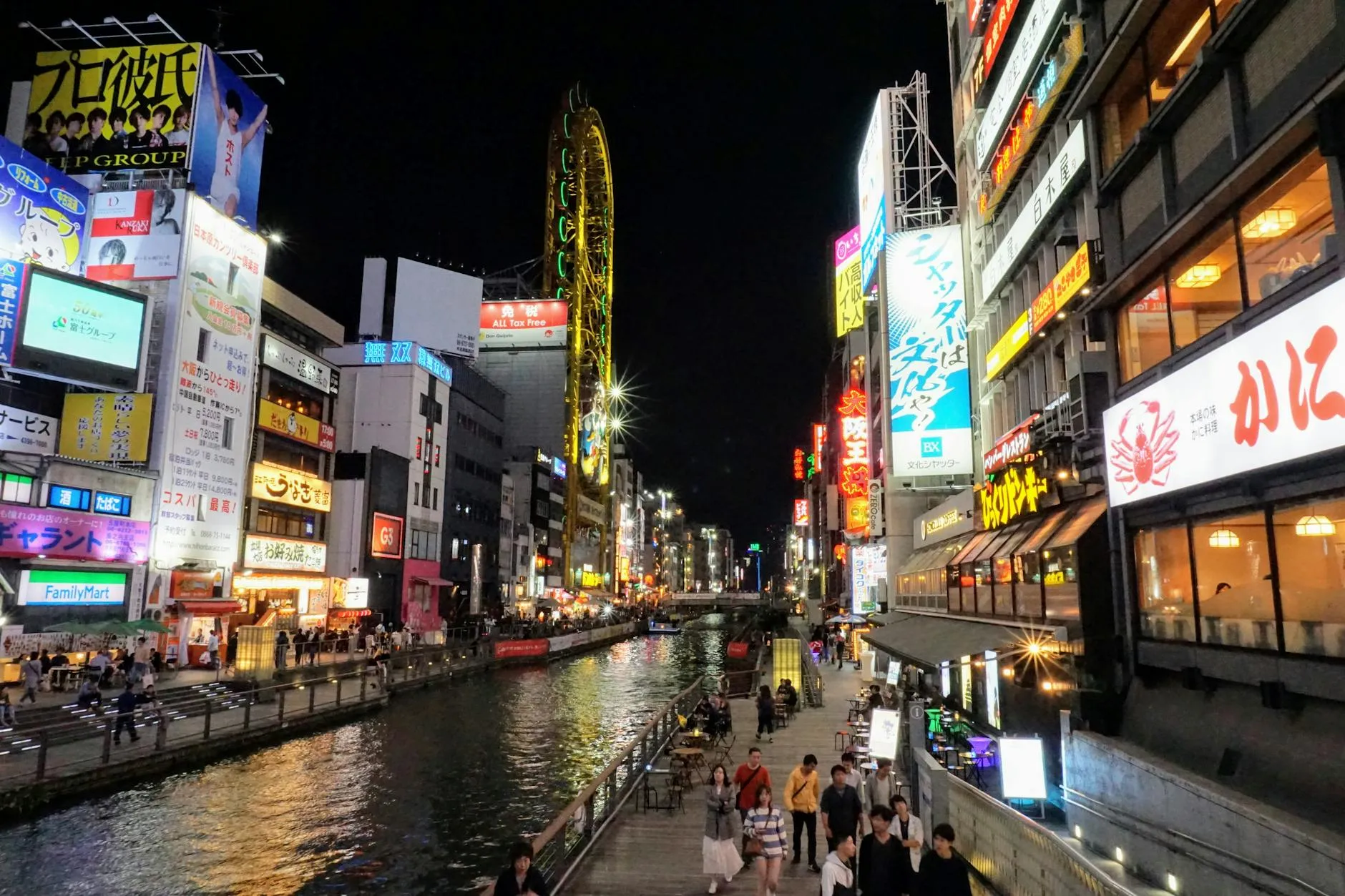
Osaka (5–6 hr minimum). The Rapi:t puts you in Namba in 34 minutes. From Namba, Dotonbori is a five-minute walk — the canal-side strip with the illuminated Glico running man sign, the Ebisubashi bridge, the food stalls. For a compressed “what is Osaka” hour, this is the right answer. Osaka Castle is a 30-minute subway ride from Namba, set in a large moated park around the rebuilt keep of Toyotomi Hideyoshi’s 16th-century stronghold. Kuromon Ichiba market, near Nipponbashi, is a covered food market for sashimi, wagyu skewers, and fresh fruit. Shinsekai and the Tsutenkaku tower are the retro-gritty southern district — home of kushikatsu shops and a notably unreconstructed atmosphere.
Practical maths: round-trip rail is 68–100 minutes. Add 30–45 minutes for the immigration/fingerprint queue on the way back in. That leaves about 3–4 hours in the city on a 5–6 hour layover — enough for Dotonbori and one other stop, not a full programme.
Kyoto (8+ hr minimum). The JR Haruka is ~75 minutes each way; the round trip in transit is 2.5 hours. Fushimi Inari’s vermilion torii gates and Kiyomizu-dera temple are the headline sights, but Kyoto rewards time. On anything under eight hours, the maths don’t work comfortably and the risk of missing a flight by underestimating the queue on re-entry is real.
Under five hours: stay airside. KIX’s renovated T1 has enough food and the NODOKA shower lounge to make the wait painless. The city will be there on the next trip.
💡 Re-entry buffer — don’t skip it
The fingerprint-and-photo line at KIX on a peak international arrival can run 30–45 minutes. When calculating your layover excursion, this is not optional time — it’s fixed overhead. The Rapi:t to Namba and back is 68 minutes of transit; add that queue plus re-check-in and you need 90 minutes of buffer before your gate closes.
⚠️ Airport currency exchange — skip it
The exchange counters at KIX offer poor rates. Use the Japan Post or 7-Eleven ATMs instead — both accept foreign cards reliably. If you have an IC card for transit, you won’t need yen for your first few hours anyway.
🌍 Planning the trip? Read our Japan travel guide — best time to go, where to stay, and how to get around.
❓ Frequently Asked Questions
At a glance — KIX 2026
| Feature | 2026 data |
|---|---|
| IATA / ICAO | KIX / RJBB |
| Official name | Kansai International Airport |
| City | Osaka, Japan — artificial island, Osaka Bay |
| Distance to centre | ~50 km SW of central Osaka; bridge access only |
| Terminals | T1 (full-service/international, renovated Mar 2025) · T2 (LCC: Peach, Jetstar) |
| T1 renovation | Phase 4 retail opens 2 June 2026 (24 new international stores) |
| Nankai to Namba | Airport Express ¥970 / 45–50 min (IC cards OK) · Rapi:t ¥1,520 / 34 min (separate ticket) |
| JR Haruka | Tennoji ¥2,000 · Osaka Station ¥2,500 · Shin-Osaka ¥2,700 · Kyoto ¥3,000 (~75 min) |
| Limousine bus | Osaka Station ¥1,800 (~60 min) · Namba ¥1,300 (~45 min) |
| IC card | ICOCA (or Suica/Pasmo) — trains, subway, buses, convenience stores across Kansai |
| Currency | Japanese yen (JPY, ¥) · ¥1,000 ≈ $6.30 / €5.40 · 1 USD ≈ ¥159 · 1 EUR ≈ ¥185 |
| Visa | Visa-free 90 days — US, UK, EU, Canada, Australia, NZ + ~74 countries |
| Border on arrival | Fingerprints + facial photo (all foreign nationals 16+) |
| JESTA | Expected ~2029 — not required in 2026 |
| Lounges | NODOKA (landside, 24 h, showers) · Rokko / Annex Rokko / Kongo (airside T1) · Priority Pass · BOTEJYU ¥3,400 PP dining credit |
| Hub carriers | Peach Aviation (HQ, T2) · ANA & JAL international (T1) |
| Wi-Fi | Free throughout the terminal |
| Layover: Osaka | Dotonbori viable on 5–6 hr layover; budget 90 min buffer for return transit + re-entry |
| Layover: Kyoto | 8+ hr required; JR Haruka ~75 min each way |
| Osaka landmarks | Dotonbori · Osaka Castle · Kuromon Ichiba market · Shinsekai / Tsutenkaku |
| Kyoto landmarks | Fushimi Inari · Kiyomizu-dera |