Los Cabos International Airport (SJD) — Airport Guide 2026
SJD sits 11 km north of San José del Cabo at the southern tip of Baja California — three separate terminal buildings, no rail link to either Los Cabos town, and an arrivals hall with a timeshare problem you need to know about before you land.
Quick Reference
SJD / MMSD
Los Cabos International Airport
San José del Cabo, Baja California Sur, Mexico
~11 km · ~30 min
~30 km · ~45 min via toll road (“Libramiento”)
T1 domestic · T2 international · T3 seasonal
~$13–40 USD/person
$65–85 USD
$90–115 USD
~$84–100 USD/vehicle
Mexican peso (MXN, $) · 1 USD ≈ $17.3 MXN
Visa-free up to 180 days — US, Canada, UK, EU/Schengen, Japan
Non-EU · digital FMM (passport stamp)
VIP in T1 & T2 · Priority Pass accepted
Free throughout terminals
~15 Dec – 15 Apr (humpback & gray, Sea of Cortez)
🏢 Three Terminals — Know Before You Fly
SJD runs three separate buildings with no airside connection between them. Terminal 1 handles Mexican domestic routes — Volaris, VivaAerobus, Aeroméxico, and Magnicharters — to Mexico City, Guadalajara, Monterrey, and other domestic points. Terminal 2 is the main international building, roughly 45,000 m² with 19 gates, serving American, Delta, United, Southwest, Alaska, JetBlue, and WestJet from the US and Canada. Terminal 3 opens seasonally in winter to absorb the high-season crush.
The disconnection matters most for international-to-domestic connections: arriving at T2 from the US and continuing on to Mexico City from T1 means reclaiming bags, clearing immigration and customs, exiting the building, and re-checking at T1. That process takes the better part of an hour on a fast day — plan accordingly.
🛂 Border & Visa
Citizens of the US, Canada, the UK, EU/Schengen countries, and Japan enter Mexico visa-free for tourism or business stays of up to 180 days. The old paper FMM tourist card (Forma Migratoria Múltiple) is being phased out at major airports including Los Cabos — an immigration officer scans your passport, assigns your permitted length of stay, and stamps it. That stamp is your entry record. Keep your passport; you may be asked for it on departure.
⚠️ Check the number on your stamp
The 180-day maximum is not automatic — the officer assigns the actual figure. It’s usually 180 days, but not always. Check the handwritten or stamped number before you walk away from the desk.
Mexico entry at a glance — 2026
| Nationality | Visa required? | Max stay |
|---|---|---|
| US, Canada | No | Up to 180 days |
| UK | No | Up to 180 days |
| EU / Schengen | No | Up to 180 days |
| Japan | No | Up to 180 days |
One useful edge case: travellers holding a valid US visa or US/Canadian/UK/Japanese residence permit can sometimes enter Mexico visa-free even when their own passport nationality would otherwise require a visa — check the current rule for your specific document.
🚐 Getting to Town
There is no train from SJD. A local inter-town bus (Ruta del Desierto) runs the corridor highway between the two towns, but it doesn’t serve the terminal directly — not a realistic option for arriving passengers with luggage. Three actual choices:
🚐 Shared shuttle — cheapest, $13–40/person
Pre-book before you land. The van waits 15–60 minutes to fill and makes several stops, so you’ll arrive later than the fare suggests. Fine for solo travellers or couples on a tight budget heading to San José del Cabo; less ideal after a long flight into Cabo San Lucas.
🚕 Official taxi — $65–85 to San José del Cabo, $90–115 to Cabo San Lucas
Use the clearly marked official taxi desk inside the terminal and confirm the flat fare before getting in. The toll road (“Libramiento”) bypasses town traffic; the toll is typically included in pre-booked rates.
🚗 Private transfer/SUV — ~$84–100/vehicle
The obvious call for a group of three or more — direct, no stops, no waiting. Pre-book rather than negotiating curbside.
⚠️ The timeshare trap in the arrivals hall — walk past everyone
SJD’s customs exit is one of the more aggressive in Mexico for this: touts dressed to look semi-official offer “free” or heavily discounted rides in exchange for a timeshare presentation. The presentation takes hours. Ignore anyone who approaches you, and use only a pre-booked shuttle or the official taxi desk. A suspiciously cheap ride will cost you half a vacation day.
🛋️ Lounges
🛋️ Priority Pass accepted in both terminals
VIP Lounge in Terminal 2 (airside, food-court area past security, open roughly 08:00–17:00) and a VIP Lounge in Terminal 1. Bring a same-day departing boarding pass; pay-in access is also available.
Both lounges offer a limited spread — complimentary beer, wine, and basic spirits with table service, plus light bites (empanadas, small sandwiches, snacks). Not a full buffet; don’t plan a proper meal around it, but it’s a decent place to sit with a drink before a long flight rather than paying resort-bar prices in the terminal. Beyond the lounges, both buildings have the standard mix of cafés, bars, and duty-free.
🌮 Baja Food: Sea of Cortez on the Plate
Baja California Sur cooks from two bodies of water — the Pacific on one side, the Sea of Cortez on the other — and the food shows it. It runs lighter and more seafood-forward than mainland Mexican cooking.
🌮 The Baja fish taco — the one dish that’s genuinely from here
Fresh fish in a light batter, corn tortilla, cabbage, crema, lime. This is the real thing at its source, not a tourist export. Eat it in town, not at the airport.
The list worth working through: almeja chocolata — the “chocolate clam,” a large Sea of Cortez clam eaten raw with lime or grilled; aguachile, shrimp cured in a fierce chilli-lime marinade that hits harder and brighter than ceviche; straightforward ceviche; and machaca, dried shredded beef that’s a Sonoran-Baja breakfast staple. San José del Cabo has developed a genuine farm-to-table scene drawing on the agricultural valley just inland.
🍹 Damiana — worth trying once
A Baja herb distilled into a sweet liqueur and the traditional base for a Baja margarita. The bottle is shaped like an Indigenous fertility goddess. Find it in town where the food is good; the airport bar charges resort prices for ordinary versions of everything.
💡 Two Towns, One Coast — The Honest Picture
Los Cabos is two municipalities with opposite personalities, joined by a hotel corridor, and the airport sits between them — closer to the quieter one.
San José del Cabo (~30 min from the terminal) is the older, calmer town, built around a colonial centre and a genuine Gallery District that hosts an Art Walk on Thursday evenings, roughly November through June, with galleries open late and actual foot traffic in the historic streets. The nearby estuary is good for birdlife. It’s the better choice for dinner, a walk, and not being aggressively sold things.
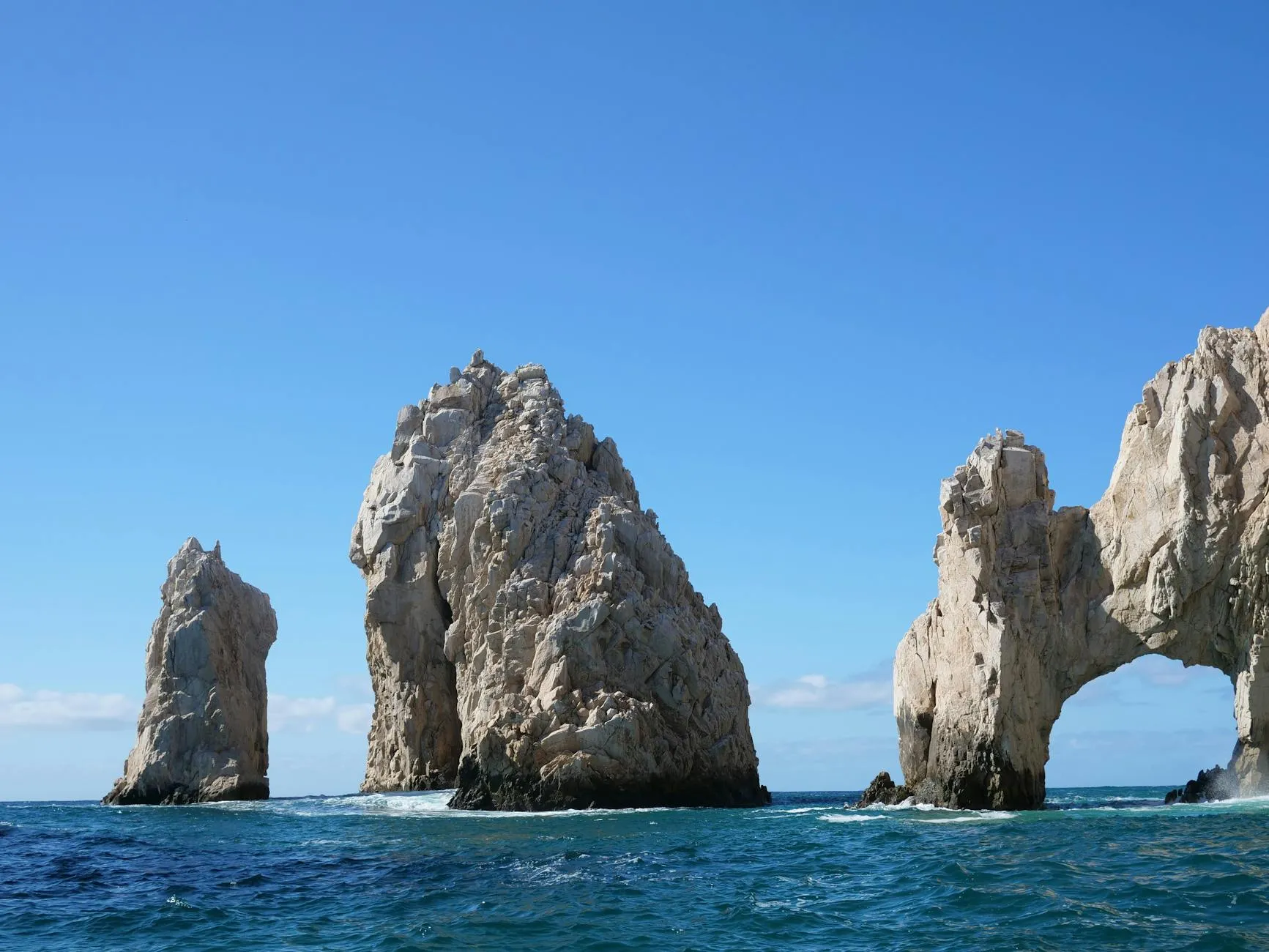
Cabo San Lucas (~45 min via the toll road) is the marina-and-nightlife end. The reason to go is El Arco — the granite sea-arch at Land’s End where the Sea of Cortez meets the Pacific, reached by a short panga boat from the marina. The same trip passes Lover’s Beach and a sea-lion colony. Médano Beach is the main swimmable stretch in Cabo San Lucas. Many Los Cabos beaches have strong currents and are not safe for swimming — check the flag system before entering the water anywhere.
🐋 Whale season: ~15 December – 15 April
Humpback and gray whales migrate through the Sea of Cortez during this window. Boat tours run from the Cabo San Lucas marina and from San José del Cabo. It’s the single strongest reason to time a visit to this specific period rather than another.
Layover realism
San José del Cabo’s town centre and Gallery District are genuinely reachable on a 4–5 hour layover — ~30 minutes each way, assuming you’ve pre-arranged transport in both directions and cleared immigration without delays. Cabo San Lucas needs 6+ hours — 45 minutes each way leaves limited time on the ground. El Arco specifically requires a panga from the marina on top of the drive; it’s a half-day outing, not a layover dash. On anything under 4 hours, staying near the airport is the honest call.
💱 Skip the airport currency exchange
The rate is poor. Pay by card or bring pesos. The resort zone accepts USD freely, but paying in pesos gets better value — and US dollar tips cost local workers the conversion margin, so tip in pesos.
🌍 Planning the trip? Read our Mexico travel guide — best time to go, where to stay, and how to get around.
❓ Frequently Asked Questions
📊 At a glance — SJD 2026
| Feature | 2026 data |
|---|---|
| IATA / ICAO | SJD / MMSD |
| Official name | Los Cabos International Airport |
| City | San José del Cabo, Baja California Sur, Mexico |
| Distance to San José del Cabo | ~11 km · ~30 min |
| Distance to Cabo San Lucas | ~30 km · ~45 min via toll road |
| Terminals | T1 domestic · T2 international · T3 seasonal |
| Public transport | No direct terminal service (inter-town bus runs highway only) |
| Shared shuttle | ~$13–40 USD/person · waits 15–60 min to fill |
| Taxi to San José del Cabo | $65–85 USD |
| Taxi to Cabo San Lucas | $90–115 USD |
| Private transfer | ~$84–100 USD/vehicle |
| Currency | Mexican peso (MXN, $) · 1 USD ≈ $17.3 MXN · USD accepted |
| Border system | Non-EU |
| Visa | Visa-free up to 180 days — US, Canada, UK, EU/Schengen, Japan · digital FMM stamp |
| Lounges | VIP in T1 & T2 · Priority Pass accepted |
| International carriers (T2) | American, Delta, United, Southwest, Alaska, JetBlue, WestJet |
| Domestic carriers (T1) | Volaris, VivaAerobus, Aeroméxico, Magnicharters |
| Wi-Fi | Free throughout terminals |
| Layover viability | 4–5 hr: San José del Cabo town · 6+ hr: Cabo San Lucas · Half-day: El Arco |
| Seasonal highlight | Whale watching ~15 Dec – 15 Apr (Sea of Cortez) |
| Landmarks | Gallery District & Art Walk (Thu evenings, ~Nov–Jun), El Arco/Land’s End, Médano Beach |
| Transfer trap | Timeshare/”free ride” touts in arrivals hall — pre-booked or official taxi desk only |