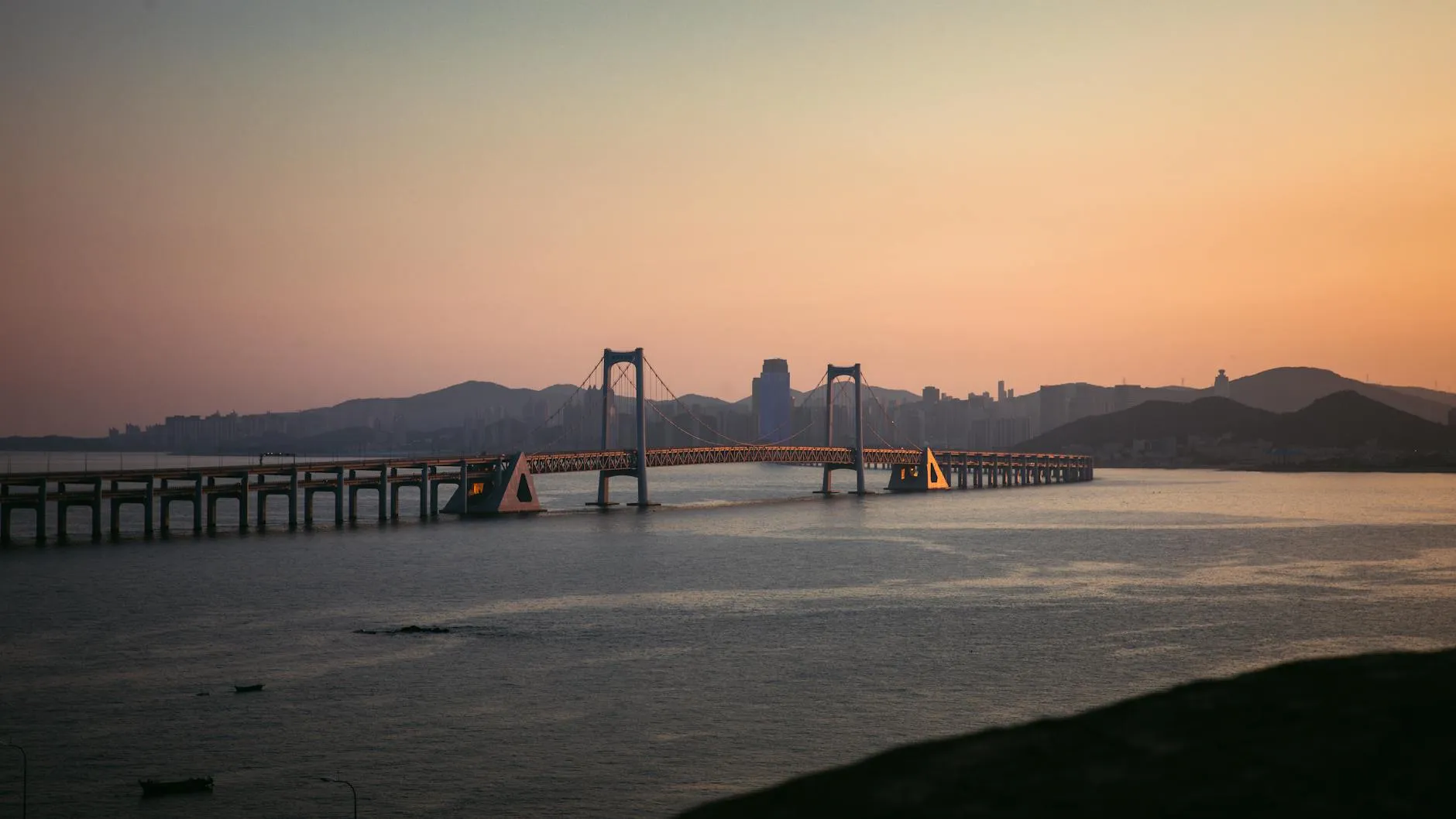
Dalian Zhoushuizi International Airport (DLC) — Airport Guide 2026
Dalian Zhoushuizi sits just 9 km from the city centre — a fact that changes the layover calculus entirely compared with the mega-hubs further south, and makes Dalian one of the more useful Chinese transit points for travellers who qualify for the 240-hour visa-free scheme.
Quick Reference
DLC / ZYTL
~9 km northwest of Dalian city centre, Liaoning Province
Two (T2 opened September 2011); domestic + international
CNY (¥) — ≈ ¥6.8/US$1, ≈ ¥7.9/€1 (May 2026)
Line 2, ~40 min, ~¥4, to People’s Square / Zhongshan Square
First ~06:15, last ~22:30
Dalian Airlines (hub); China Southern, Hainan Airlines (focus cities)
240-hour transit · 30-day unilateral visa-free · standard visa
UK & Canada added to 30-day visa-free list, 17 Feb 2026
Online only (nationwide since 20 Nov 2025)
Five listed: three China Southern lounges, Business Lounge A, VIP Lounge 1
Alipay / WeChat Pay dominant; link a foreign card before you land
~19.8 million (27th nationally)
✈️ Two Terminals & the Northeast Network
Zhoushuizi is compact by Chinese-hub standards — two adjacent terminals, the second of which opened in September 2011, with domestic and international traffic split across both. If your inbound and outbound flights land in different buildings, budget the walking time; immigration for international arrivals is on its own side of the hall. The corridor distances are nothing like Beijing Capital or Pudong, but they are real.
The home carrier is Dalian Airlines, a China Southern subsidiary. Both China Southern and Hainan Airlines run DLC as a focus city, which explains the dense domestic board: Beijing, Shanghai, Guangzhou and the rest of the trunk network appear frequently, along with the Northeast cities. International departures are built almost entirely around Japan and South Korea — a legacy of the city’s long trading relationship with both — with some seasonal and scheduled service to other regional points. This is not an intercontinental gateway; most foreign travellers arrive on a one-stop itinerary via a larger Chinese or Asian hub.
⚠️ Forget the island airport
Dalian Jinzhouwan International Airport — the massive replacement being built on reclaimed land offshore — had its artificial island largely complete by 2024, but the terminal-and-runway opening has slipped well past every published target. Zhoushuizi is the operating airport for the foreseeable future. Plan around DLC.
🛂 Border & Visa — Three Systems, One Right Answer
Three separate entry routes exist for foreign travellers at Dalian. Which one applies is entirely about your nationality and itinerary; China’s national entry regime applies uniformly regardless of which agent sold you the ticket.
🕐 240-Hour Visa-Free Transit
China’s transit window was extended to 240 hours (ten days) in December 2024, and the list of eligible nationalities and designated ports was widened again in November 2025. Citizens of 57 eligible countries can now transit visa-free through any designated port — and Dalian Zhoushuizi is one, alongside Shenyang Taoxian airport and Dalian’s passenger port in Liaoning Province.
The rule that trips people up is the third-country condition. You must arrive from Country A and depart to a genuinely different Country B. A return to where you came from does not qualify — so if you are flying home, this scheme is not available. You need a confirmed onward ticket to the third country, departing within 240 hours of arrival, and you will be asked to show it at check-in and at immigration.
The December 2024 expansion removed the old per-port area cluster restriction. Entering at Dalian now permits movement across all 24 designated provinces and municipalities for the full ten days — Dalian, Beijing, Shanghai and Shandong are all in scope on a single transit entry. The exclusions are regional: Tibet, Xinjiang, Qinghai, Gansu, Ningxia and Inner Mongolia are outside the permitted zone. Treat those as hard boundaries; straying into an excluded region on transit status risks removal and a future entry ban.
⚠️ The transit trap
A return trip — Country A → China → Country A — does not qualify for 240-hour transit regardless of the gap between flights. You must be travelling onward to a different country. Check your itinerary before you book, not at the immigration desk.
📅 30-Day Unilateral Visa-Free Entry
Separately from transit, China runs a unilateral visa-free scheme covering ordinary-passport holders from around 50 countries for stays of up to 30 days. There is no onward-ticket requirement and no third-country condition — it is a clean single-entry allowance. The list grew substantially through 2024 and 2025. The meaningful 2026 addition: the United Kingdom and Canada were added on 17 February 2026, after years off the list. Most of Europe, Japan, South Korea, Australia, New Zealand, Brazil and several Gulf states are also on it. Because the list and its terms change, verify your passport’s current eligibility against the National Immigration Administration’s official source before you book — not from a third-party travel site.
📝 Visa (Standard Route)
If your itinerary is a return trip and your nationality is not on the unilateral visa-free list, you need a Chinese tourist visa (L) arranged at a Chinese embassy or visa centre before travel. There is no general visa-on-arrival at Dalian for tourism.
📱 The Digital Arrival Card
Paper arrival cards are gone. China launched a fully online arrival card nationwide on 20 November 2025. Complete it before landing through the National Immigration Administration website, the NIA 12367 app, or the WeChat or Alipay mini-programs, and show the resulting confirmation code at immigration. Airlines now display the QR code at check-in and boarding; it takes a few minutes. Paper kiosks in the arrival hall remain as a fallback if you skip the online form. Airside-transit passengers on 24-hour transits are exempt from filling it in at all.
🚇 Getting Into the City
The 9 km gap between terminal and centre is Dalian’s biggest practical advantage over other Chinese hub airports. Every option is a short trip rather than a half-day commitment.
🚇 Metro Line 2 — ~¥4, ~40 min
The station is inside the terminal on the lower level. Line 2 runs directly to People’s Square (人民广场) and Zhongshan Square (中山广场) in around 40 minutes for roughly ¥4 (about US$0.60 / €0.50). First departure from the airport is around 06:15; the last is around 22:30 — confirm the exact last-train time on the day if you are arriving late.
The metro is the default. It bypasses surface traffic entirely, and at a busy hour it reaches downtown faster than anything on the road. Buy a single-journey token at the platform machine (cash, WeChat or Alipay) or tap in with a transport card.
Airport buses run from the terminal to fixed points in the city for around ¥10, taking roughly 30 minutes in light traffic. Routes and stop lists change; check the current board at the ground-transport desk on arrival rather than relying on a number you found online.
DiDi is the practical door-to-door option. The app works in English and accepts a foreign card or a linked Alipay / WeChat wallet. For a late arrival after the metro has stopped, DiDi or a taxi is the only realistic choice.
Taxis queue at the official airport rank around the clock. Use the rank; insist on the meter. Anyone approaching you inside the terminal offering a private ride is offering an overcharge — the unsolicited-driver pitch is standard at every large Chinese airport, Dalian included.
🛋️ Lounges
Dalian has a workable range of lounges, but the Priority Pass / DragonPass split matters more here than in many places — many Chinese airport lounges sit on the local DragonPass network and do not honour Priority Pass. Matching your card to the specific lounge before you walk in is worth the 30 seconds.
🛋️ Priority Pass — five listed lounges at DLC
Priority Pass lists five lounges at DLC: the China Southern First/Business Class Gold/Silver/Elite Plus Lounge, the China Southern Gold/Silver/Elite Plus Lounge, the China Southern First/Business Class Lounge, Business Lounge A (06:00–20:00) and VIP Lounge 1 (06:00–21:00). Priority Pass publishes no terminal or domestic/international side for any of them, so confirm where your lounge actually sits before you commit to a security channel.
Walk-in pay-per-use access is sold at the door at several lounges; the price varies and is best confirmed at the desk. If you are flying business or first on China Southern, Hainan or another carrier, your boarding pass gets you into the matching carrier lounge regardless of which card you hold.
🍜 Food Before You Fly
Dalian’s identity is a port city on the Bohai and Yellow seas, and the city food reflects that clearly. The local specialities are clams, sea cucumber, prawns and grilled scallops, cooked simply enough that freshness does the work. Dalian-style braised seafood and cold seafood platters appear on most local menus, alongside the Dongbei (Northeastern) staples that anchor the regional diet: hearty stews, dumplings, and dishes built for cold winters rather than warm ones.
🍞 Dà liěba — the local bread worth knowing
Dalian and Harbin are the two cities in China where Russian-style heavy round bread (大列巴) is a genuine local product rather than a novelty import. It arrived with the Russian and Soviet presence in the region and stayed. Worth finding in the city; do not expect it airside.
The terminal food is the usual airport mix — local chains and noodle counters, priced above what the street charges for the same thing. Airside prices run above the city; if you have time before security, the landside options are cheaper and generally better. For anything resembling actual Dalian seafood, you want a restaurant in the city, not a terminal counter.
Duty-free and souvenirs: the international departures duty-free run covers liquor, tobacco and perfume in the standard configuration. The regional souvenir is dried and packaged seafood — sea cucumber, dried scallops, kelp — though customs rules at your destination make that a check-first purchase. Prices airside are higher than in the city.
💡 Layover Reality — the Honest Arithmetic
Dalian is one of the few Chinese airports where a layover-city-trip equation actually works in the traveller’s favour, and the reason is purely geometric: 9 km out, Metro Line 2 inside the terminal, roughly 40 minutes each way for about ¥4.
⏱️ Layover math at DLC
Budget 40 min metro each way, plus time in the centre, plus a firm return buffer of at least an hour at the international terminal for check-in and security. A four-hour layover (cleared of immigration) is roughly the minimum to make a centre trip rational. Six hours or more opens up the seafront.
Four hours or more: Zhongshan Square (中山广场) is the most rewarding short target — a short walk from the metro, ringed by the early-20th-century buildings from the city’s Russian and Japanese administrations, photogenic and compact. The surrounding older commercial streets are walkable. This is a realistic destination on a four-hour layover with a cushion.
Six hours or more: you can add the seafront. Xinghai Square (星海广场), one of the largest city squares in China, sits on the bay and is reachable on Line 2 plus a short connection. Binhai Road runs along the cliffs to the south. These are warm-season targets — Dalian winters are cold, and in January the seafront is bleak rather than scenic. A square and a few streets in the centre make more sense than a coastal walk in winter.
Under three to four hours: stay in the terminal. Even with the short distance, immigration on arrival plus international check-in and security on departure eats the time faster than the numbers suggest. The metro round trip is not worth the boarding risk.
None of these trips are restricted by the 240-hour transit scheme — Dalian and Liaoning Province are fully inside the permitted zone. The constraint is the clock, not the border.
🔧 Practical Notes
Payment. The city runs on Alipay and WeChat Pay. Both now allow foreign visitors to link an overseas card, and setting one up before you land is the single most useful piece of preparation — many taxis, ticket machines and small eateries are effectively cashless for anything except the two dominant apps. Carry some CNY as a backup; foreign credit cards work at large hotels and department stores but not reliably elsewhere.
Connectivity. China’s firewall blocks the search, maps, messaging and social apps most travellers depend on — including Google Maps, WhatsApp, Instagram, and most Western news sites. Sort out an international roaming plan or a travel eSIM that routes around the firewall before you arrive; you cannot easily download or configure a fix once you are inside without a working connection. If you arrive without one, there is a foreign-traveller service centre in the international arrivals hall where you can get a local SIM.
Currency. The yuan trades at approximately ¥6.8 to the US dollar and ¥7.9 to the euro as of late May 2026. Airport exchange counters charge a poor rate — change only what you need there and use Alipay / WeChat or a city ATM for the rest.
🌐 Sort your VPN or roaming before landing
China’s firewall is not a minor inconvenience — it blocks Google Maps, WhatsApp, most Western apps and news sites. If you arrive with no working solution, getting one requires a connection you do not yet have. Solve it before the flight, not in the arrivals hall.
❓ FAQ
📊 At a glance — DLC 2026
| Item | Detail |
|---|---|
| IATA / ICAO | DLC / ZYTL |
| Distance to centre | ~9 km northwest |
| Terminals | Two (T2 opened September 2011); domestic + international |
| Metro | Line 2, airport station → People’s Square / Zhongshan Square, ~¥4, ~40 min |
| Metro hours | First ~06:15, last ~22:30 (confirm last train on the day) |
| Taxi / DiDi | Metered rank or DiDi app; short ride given the 9 km distance |
| Airport bus | ~¥10, ~30 min, fixed city points (confirm route on arrival) |
| Currency | CNY (¥); ≈ ¥6.8/US$1, ≈ ¥7.9/€1 (May 2026) |
| Payment | Alipay / WeChat Pay dominant; link an overseas card before arrival |
| Border options | 240-hour transit · 30-day unilateral visa-free · standard visa |
| Key 2026 entry change | UK & Canada added to 30-day unilateral visa-free list, 17 Feb 2026 |
| Arrival card | Online, pre-arrival (nationwide since 20 Nov 2025); QR at immigration |
| Priority Pass lounges | Five listed: three China Southern lounges, Business Lounge A, VIP Lounge 1 |
| Hub / focus carriers | Dalian Airlines (hub); China Southern, Hainan Airlines (focus cities) |
| 2025 passengers | ~19.8 million (27th nationally) |
| Short-layover verdict | Stay airside under ~4 hrs · centre viable at 4 hrs+ · seafront at 6 hrs+ |