Luang Prabang International Airport (LPQ) — Airport Guide 2026
Luang Prabang airport sits 4 km north-east of a UNESCO-listed peninsula — a fact that matters because it keeps the taxi fare under USD 5, the terminal small enough that nobody gets lost, and the layover calculation genuinely interesting in a way that does not apply to any large regional hub.
Quick Reference
Luang Prabang International Airport
LPQ / VLLB
~4 km north-east of Luang Prabang old town, northern Laos
Single terminal (domestic + international), expanded 2012–13
2,500 m (05/23), A320/A321-capable
Lao Airlines
Lao kip (LAK) — ~21,950/USD, ~25,650/EUR (late May 2026)
VoA or e-Visa; ASEAN nationals visa-free
Flat fare from ~100,000 LAK (~USD 4.60), 20–30 min
~100,000 LAK per person
~50,000 LAK — no airport pickup; walk to public road
One airside, ~6 AM–6 PM, walk-in from ~USD 28; card acceptance uncertain
6 h+ for town; under ~5 h, stay airside
Vietnam Airlines LPQ–Siem Reap nonstop launched May 2026
✈️ Carriers & Routes
LPQ runs on a single terminal that handles both domestic and international traffic. The 2012–13 expansion brought the runway to 2,500 metres — enough for A320 and A321 aircraft, which is the ceiling of what operates here.
Lao Airlines is the hub carrier: domestic routes to Vientiane, Pakse, and the seasonal Xieng Khouang service for the Plain of Jars, plus the regional hop to Chiang Mai. On the international side, the confirmed May 2026 operating set is Bangkok Airways (Bangkok Suvarnabhumi), Thai AirAsia (Bangkok Don Mueang), Vietnam Airlines (Hanoi, plus a new Siem Reap nonstop from May 2026), and China Eastern (seasonal Kunming, running roughly May through October).
Scoot, Hainan Airlines, Lucky Air, and Qingdao Airlines appear on some aggregator airport pages for LPQ. They were not in the confirmed operating set when this guide was written. If you are booking through any of them, verify the route is live for your specific dates — aggregators are slow to remove suspended services.
✈️ No long-haul service
LPQ connects to Bangkok, Hanoi, Chiang Mai, Siem Reap, and seasonal Kunming. Travellers from Europe, North America, or Australia are connecting — most often through Bangkok Suvarnabhumi on Bangkok Airways, Bangkok Don Mueang on Thai AirAsia, or Hanoi on Vietnam Airlines.
🛂 Border & Visa
Laos runs its own entry system. No European or American pre-authorisation applies. You deal with Lao immigration on Lao terms, via one of three routes.
Visa on Arrival
Arrivals from most Western countries can collect a 30-day tourist visa at the LPQ counter. The fee runs roughly USD 30–50 by nationality: US, UK, and most EU passports sit around USD 35; Canadians pay closer to USD 42; Australians around USD 30. The visa is extendable twice at a local immigration office, giving up to 90 days total.
Bring one passport photo and pay in clean US dollars — the counter accepts other currencies but the exchange rate it applies is not in your favour. Processing is quick when the hall is empty; when two international arrivals land within the same window, it is not.
💵 VoA essentials: cash and photo
The visa-on-arrival counter prefers small-denomination US dollars and one passport photo. If you skip the photo, the counter may charge a supplement to source one in the terminal. Carry both to avoid the friction.
Laos e-Visa
The official portal is laoevisa.gov.la, open to citizens of around 162 countries, and it issues an electronic visa before you travel — eliminating the counter queue and the cash-and-photo routine. Expect roughly USD 45–65 once processing fees are added, which is more expensive than the VoA but the convenience gap is real when arrivals stack.
⚠️ Use only the official .gov.la portal
Third-party sites advertising “Laos visa” charge a markup for the same document, and some mimic the look of the government portal. Apply directly at laoevisa.gov.la. Also note: the e-Visa is designed for air arrivals and select land borders — if your plan involves entering Laos overland, confirm your specific crossing accepts it before relying on it.
ASEAN & Bilateral Visa-Free
Citizens of ASEAN member states generally enter visa-free, with the permitted stay varying by country and commonly up to 30 days. A handful of other countries hold bilateral waiver agreements with Laos. Verify your specific nationality and stay length against the current Lao immigration position before travelling.
Whatever route applies: bring a passport valid at least six months from entry. Proof of onward travel can be asked for at the LPQ counter.
🚖 Getting Into Town
The old town is 4 km from the terminal, 20–30 minutes by road. There is no rail link and no useful public bus for an arriving traveller with luggage. Three realistic options, one with a catch.
🚕 Fixed taxi — ~100,000 LAK (~USD 4.60)
The flat-fare taxis at the arrivals exit work off a posted, fixed rate — not a meter. Pay at the counter or agree the fare before you get in. The fixed structure protects you from being overcharged. The one thing to watch is anyone approaching inside the terminal before you reach the official counter.
Shared minivan. Around 100,000 LAK per person. For a solo traveller the price ends up comparable to the flat taxi, so the minivan mainly makes sense if you are happy to wait for it to fill and want a predictable per-person fare.
Tuk-tuk — the catch. Tuk-tuks (the shared “jumbo” type) into town cost around 50,000 LAK per vehicle, which looks like the cheapest option. The problem: tuk-tuks are not permitted to pick up inside the airport. To use one you have to walk out past the airport gate to the public road and flag one there. Doable with light luggage and a willingness to haggle, but the friction erodes the savings. Any driver approaching you inside the terminal with a tuk-tuk offer is working around the rules — agree the fare explicitly before you move.
Going the other way, hotels and guesthouses in town arrange transport easily at similar rates. The terminal is small and check-in for regional flights opens on a fixed schedule; give yourself buffer time rather than cutting it close.
🛋️ Lounges
LPQ has one airside lounge, after security near the gates, operating roughly 6:00 AM to 6:00 PM on the flight schedule. Walk-in access starts from around USD 28 per person. The lounge is also reachable through prepaid lounge passes, premium-cabin and elite passengers, and certain credit-card programmes — with a significant caveat.
⚠️ Priority Pass, LoungeKey, DragonPass — verify before you rely on them
This lounge has historically operated as the Bangkok Airways lounge and appeared in the Priority Pass directory in past years. Reports from 2023 onwards describe the Priority Pass affiliation as suspended or inactive, and Priority Pass’s own current Laos listing was not retrievable when this guide was written. Acceptance of card-network lounge programmes at LPQ is inconsistently reported. Confirm the current status with your card issuer before your trip and keep the USD 28 walk-in fee as a fallback.
In practice: modest space, air-conditioning, a seat away from the gate crowd, basic refreshments. On a three-hour morning wait it earns the walk-in fee. On a 45-minute connection it does not.
🍜 Food — At the Airport and Worth Waiting For in Town
The airport food offer is thin: a café and limited seating landside, sparse options airside. Eat before you arrive or hold out until you reach the old town.
The dish that justifies holding out is khao soi Luang Prabang — worth naming specifically because it is not the coconut-curry khao soi served in Chiang Mai. The Luang Prabang version is a rice-noodle soup with a fermented-soybean and pork-tomato sauce, sold at morning markets and noodle shops through the old town. The other local anchor is kaipen: Mekong riverweed dried into sheets, fried, and eaten with jaew bong — a sweet-spicy chilli-and-buffalo-skin paste. The night market on Sisavangvong Road runs a buffet alley where you fill a bowl from communal trays for a set price, cheap, vegetarian-friendly, and a fixed cost rather than a per-item calculation.
None of this is at the airport.
💡 Layover Maths
Because the old town is 4 km away, LPQ is one of the few regional airports where a layover can genuinely include the destination. The arithmetic needs to be explicit.
Round-trip transit is roughly 25 minutes each way by taxi. Add a return-security buffer: with regional international departures and a single security lane, be back airside at least 60 minutes before departure — more if an international departure and an arrival are stacked and the lane backs up. That is a baseline overhead of around 2 hours and 20 minutes before you have spent a single minute looking at anything.
Under 5 hours: stay airside. The overhead leaves under two hours of usable time that will evaporate in transfer logistics before you have reached anything worth the trip.
5 hours: marginal. You could reach the eastern edge of the old town, walk past Wat Mai near the former Royal Palace, and turn straight back. No margin for a slow road or a delayed taxi.
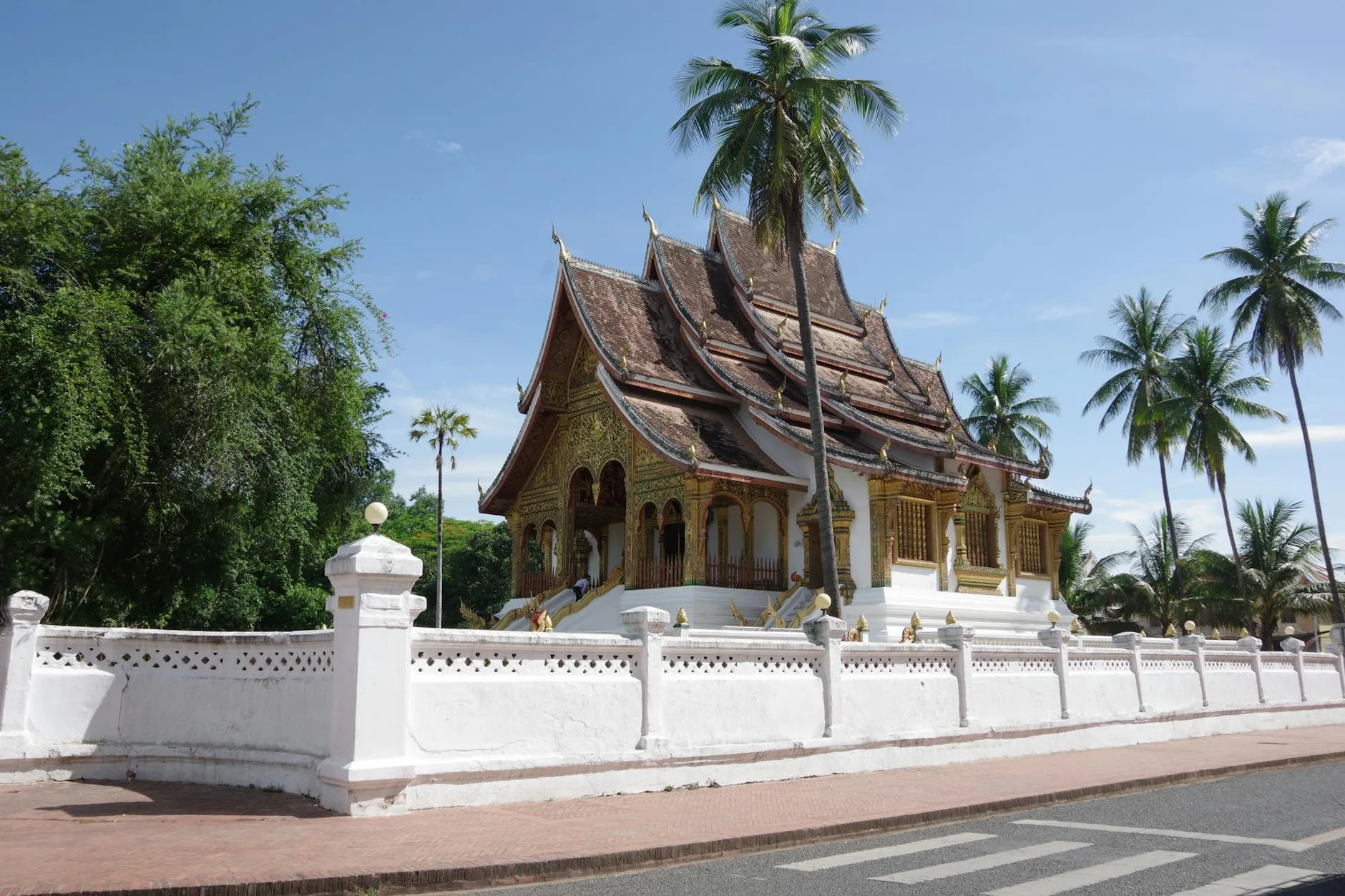
6 hours and over: this is the threshold. Enough time to reach Wat Xieng Thong at the tip of the peninsula — the 16th-century temple that anchors the old town — walk the Mekong waterfront, eat a proper bowl of khao soi, and return with buffer intact.
⚠️ Kuang Si Falls is not a layover sight
Kuang Si Falls — the turquoise waterfall in most Luang Prabang photographs — is roughly 30 km south of town, about an hour each way by road from the centre. It requires a half-day minimum and belongs on an overnight itinerary, not a connection.
🌅 The alms-giving procession (tak bat)
The early-morning procession of monks collecting food along the main streets happens around sunrise and is finished before most connecting passengers could reach town. It is an overnight-stay sight.
🔧 Practical Notes
💱 Currency & Cash
The kip has weakened against major currencies over the past several years and remains soft — roughly 21,950 to the US dollar and 25,650 to the euro in late May 2026, down about 1.65% against the dollar over the preceding twelve months. Two practical effects: prices in kip carry a lot of zeros (100,000 LAK is under USD 5), and US dollars and Thai baht are widely accepted for tourist transactions in Luang Prabang. The VoA fee is charged in dollars, so carrying clean small-denomination US cash is genuinely useful here in a way it is not in most countries. ATMs in town dispense kip but apply per-withdrawal fees; the airport’s exchange and ATM options are limited, so do not count on the terminal for more than a small top-up.
📶 Connectivity
Terminal Wi-Fi is available but unremarkable in coverage and speed. A local SIM or eSIM from a Lao operator gives more reliable data; tourist SIMs are sold cheaply in town, and the airport may have a vendor, though stock and hours are not guaranteed. Download offline maps and your boarding pass before you arrive rather than depending on terminal Wi-Fi.
🏗️ Airport Development
Laos opened a public-private partnership qualification process in 2025 for a future renovation and expansion of LPQ, with international and local firms bidding. That is a forthcoming project, not a present-day change. As of this writing, the terminal you fly through is the existing one. Nothing about the development affects a 2026 trip.
❓ FAQ
📊 At a Glance — LPQ 2026
| Item | Detail |
|---|---|
| Airport name | Luang Prabang International Airport |
| IATA / ICAO | LPQ / VLLB |
| Distance to old town | ~4 km, 20–30 min by road |
| Terminal | Single terminal (international + domestic), expanded 2012–13 |
| Runway | 2,500 m (05/23), A320/A321-capable |
| Hub carrier | Lao Airlines |
| International carriers | Bangkok Airways, Thai AirAsia, Vietnam Airlines, China Eastern (seasonal) |
| Key routes | Bangkok (both airports), Hanoi, Siem Reap, Chiang Mai, Kunming (seasonal) |
| Currency | Lao kip (LAK); ~21,950/USD, ~25,650/EUR (late May 2026) |
| Entry — VoA | ~USD 30–50 depending on nationality, 30 days, extendable; passport photo + USD cash |
| Entry — e-Visa | laoevisa.gov.la, ~USD 45–65, ~162 countries |
| Entry — visa-free | ASEAN + select bilateral (verify stay length) |
| Taxi to town | Fixed fare from ~100,000 LAK (~USD 4.60) |
| Shared minivan | ~100,000 LAK per person |
| Tuk-tuk | ~50,000 LAK — no airport pickup; walk to public road |
| Lounge | One airside, ~6 AM–6 PM, walk-in from ~USD 28; card-network acceptance uncertain |
| Layover viability | 6 h+ to see the town; under ~5 h, stay airside |
| 2026 change | Vietnam Airlines LPQ–Siem Reap nonstop launched May 2026 |
🌍 Planning the trip? Read our Laos travel guide — best time to go, where to stay, and how to get around.