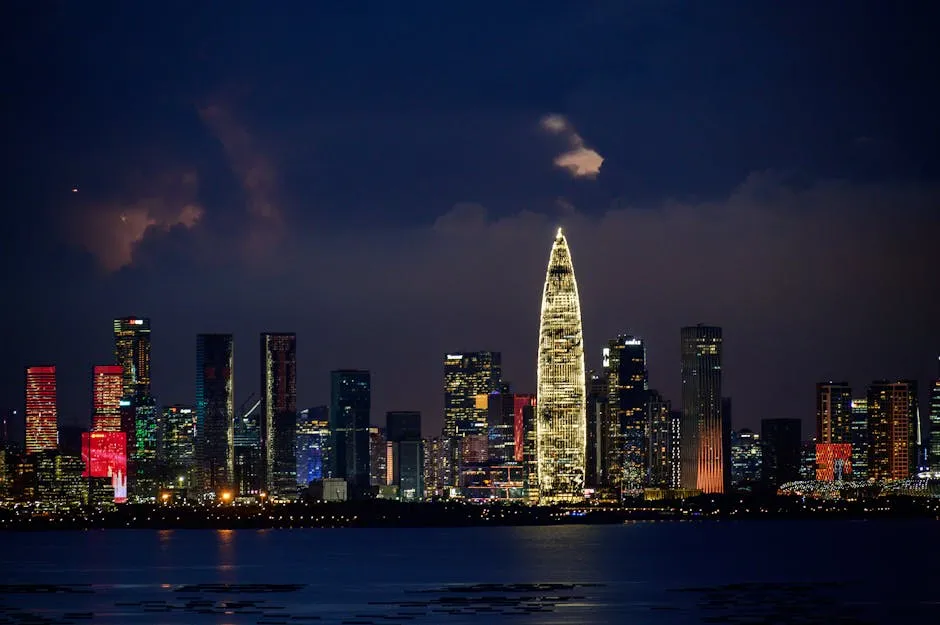
Shenzhen — The Complete City Guide 2026
The city China built from a fishing-village county-seat in 45 years. Tencent, Huawei, DJI, Ping An, BYD all headquartered here; 17 million residents; 14 minutes by high-speed rail to Hong Kong. Four Shenzhens (Original SEZ, Tech-Capital, New-District, Pre-Shenzhen), the engineered-megalopolis question, and the honest version of what’s worth a Western visit.
¥250–¥2,500/day budget
Humid subtropical: 13–32 °C; typhoon Jul–Sep
Chinese yuan (¥) — €1 ≈ ¥7.90
Visa-free 30 days (EU+UK+CA); 240h transit (US)
2026 Michelin Guide Guangzhou & Shenzhen debut
Why Shenzhen? An Editor’s Note
On the central terrace of Lianhuashan Park, on the hillside immediately north of Futian’s Civic Centre, stands a six-metre bronze statue of Deng Xiaoping in mid-stride, his trousers slightly bagged at the ankle, his eyes fixed south. The statue was finished in November 2000, and it is one of the few statues of Deng in any large Chinese city — most of the Communist Party’s twentieth-century leadership is commemorated in Beijing and on banknotes rather than in urban-monument form. The Lianhuashan Deng was placed here, in the city centre of the city Deng founded, because the decision he is most remembered for in Shenzhen is the decision to make Shenzhen exist. On 26 August 1980, the Standing Committee of the National People’s Congress, on Deng’s recommendation, formally established the Shenzhen Special Economic Zone — the first of China’s reform-and-opening-up zones — across the territory of what had been Bao’an County, a coastal stretch of Guangdong fronting Hong Kong with a county-seat population in the region of thirty thousand people. Forty-six years later, the city’s population is somewhere around seventeen and a half million. The street grid you are walking on did not exist when Deng made the decision. The hillside the statue stands on was reservoir and farmland.
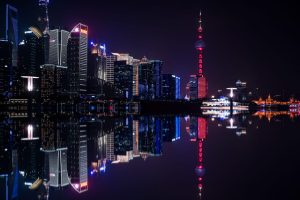
This is the first thing about Shenzhen that the visitor needs to understand. Almost no other major city in the world is this young, and almost no major city in the world was built this fast on this much engineered scale. The skyline you see from the Lianhuashan terrace — the Ping An Finance Centre (599 metres, finished 2017, the fourth-tallest building in the world by some measures, the second-tallest in China), the KK100 (442 metres, finished 2011), the Shun Hing Square (384 metres, finished 1996), the Hanking Center (358 metres, finished 2018), and the dozen or so towers above 200 metres — was almost entirely empty land in 1980. The fishing village of Shenzhen Old Town, the Han-dynasty Bao’an County administrative seat, the Ming-period Nantou walled town, the Qing-period coastal salt and pearl-fishery hamlets — all of these still exist in fragment form, and a careful visitor can still see them, but the visible 99% of the city is one engineered 45-year project. This is not a value judgement; it is a fact. How you respond to it is the question that defines a Shenzhen visit.
The honest way to read modern Shenzhen is as four cities sharing a Special Economic Zone. The first is Original-SEZ Shenzhen — the 1980s downtown of Luohu (where the border with Hong Kong is, where the first foreign-investment factories opened, where the Dongmen pedestrian-shopping district still operates roughly to its 1990s form) and the older parts of Futian. This is where most short-stay visitors arrive — Luohu Port is the standard land border from Hong Kong, and the metro Line 1 runs east-west under the original SEZ corridor.
The second is Tech-Capital Shenzhen — the Futian CBD (the political-and-financial-services centre) and Nanshan (the technology-corporate centre, where Tencent’s Binhai Mansion in OCT, Huawei’s Shenzhen R&D campus, Ping An Group HQ, DJI’s Skyline Tower, OnePlus, Tencent’s Universal Industrial Park, and a long roster of the Chinese tech industry’s working leadership all sit on a single corridor of land between the Shenzhen Bay coastline and the Bao’an district line). This is where the city’s working economic identity actually lives, and is the layer that a first-time visitor most often misses entirely.
The third is New-District Shenzhen — the post-2000 engineered districts that absorbed most of the city’s population growth. Bao’an (the airport district and the working manufacturing-corridor), Longgang and Longhua (the further-north residential-and-industrial belt, with Foxconn’s Longhua “iPhone City” complex — at peak roughly 230,000 workers in a single facility, the largest single-site industrial workforce in human history per the conventional account). The visitor experience here is light unless you have specific industrial-tourism reasons; the gravitational pull of these districts is real and they together hold maybe sixty per cent of Shenzhen’s population.
The fourth is Pre-Shenzhen Shenzhen — the surviving pre-1980 fragments. Nantou Old Town in Nanshan (the Xin’an County administrative seat from the Ming dynasty onwards, formally established 1573, with surviving Ming-period wall sections and Qing-period courtyard architecture amid the urban-village context of the modern city). Dapeng Fortress on the south-east coast (1394, the surviving Ming-period coastal-defence fortress that gives Dapeng Bay its name and is now a small museum-and-restaurant cluster). The fishing villages of Dapeng Peninsula — Jiaochangwei, Yangmeikeng, Shaitou — where the country’s pre-industrial Cantonese coastal life is still semi-visible. These are the parts of the country that did exist before 1980; they are the working counterpoint to the city’s overwhelming engineered-modernity.
The Hong Kong relationship is the political-and-cultural backdrop that doesn’t quite fit any of the four layers but is the working subtext of everything in Shenzhen. The two cities share the same Pearl River Delta estuary, the same Cantonese cultural-linguistic substrate (the local language is Cantonese, though Mandarin has become the working business language since the SEZ designation), and the same physical geography. They have been administratively separate since the 1842 Treaty of Nanking. The 1997 handover, the 2003 Closer Economic Partnership Arrangement, the 2017 Greater Bay Area integration framework, and most recently the 2019–2020 Hong Kong political crisis and the 2020 National Security Law have all reshaped the practical relationship between the two cities. For a visitor in 2026, what this means is: the border crossings work efficiently in both directions, both cities are easy to combine in a single trip, and the cross-border high-speed rail (Futian Station to West Kowloon, 14 minutes) is the working transport. Hong Kong has changed significantly since 2019; Shenzhen has changed less but is the larger, faster-growing, less politically-fraught half of the conurbation.
A working 2026 visa note: as of November 2025, most EU citizens, the UK, Canada, Australia, New Zealand, Japan and 30-plus other jurisdictions hold a free 30-day visa-on-arrival for mainland China; US citizens are not on this list but qualify for the 240-hour (10-day) visa-free transit at Shenzhen Bao’an, provided they are transiting to a third country. The policy was extended through 31 December 2026; verify the current eligible-passport list at the Chinese Foreign Ministry consular page before booking.
Three days is the minimum for Shenzhen, five days is comfortable, and seven days lets you add a serious day-trip to Guangzhou or Hong Kong. Plan around the cashless-China reality (set up Alipay or WeChat Pay before you leave the airport), bring a working VPN, and accept that the city’s defining experience is the scale and pace of its build — there is no other place in the world quite like this, and that is the visit.
Getting There — SZX, the Trains and the Hong Kong Border
Shenzhen has one international airport — Shenzhen Bao’an International (SZX) — 32 kilometres north-west of Futian CBD. The airport operates a single large Terminal 3 (opened 26 November 2013, capacity expanded across 2018–2024) with Terminal 4 and a third runway under construction as part of the city’s long-running airport-master-plan; no firm 2026 opening date for the new terminal has been announced. The airport handles roughly 60 million passengers a year and is the country’s fifth-busiest by traffic.
The direct route picture for European, North American and Australasian visitors:
- Major Chinese carriers (Air China, China Southern, China Eastern, Hainan, Shenzhen Airlines, Xiamen Air) operate extensive Asia and a growing long-haul network from SZX.
- Direct long-haul services include Frankfurt, London, Los Angeles, San Francisco, Vancouver, Toronto, Sydney; verify schedules close to booking as several long-haul routes have been added or dropped through 2024-2025.
- Hub connections through Hong Kong (HKG, 30 km south), Guangzhou (CAN, 100 km north-west), or via the SE Asia hubs (Singapore, Bangkok, Kuala Lumpur, Seoul) are often cheaper than direct.
From SZX into the city
The airport is well-connected to the Shenzhen Metro network.
- Metro Line 11 (Airport Express) is the fastest and cheapest option to central Shenzhen. Trains run from Airport Station beneath Terminal 3 to Futian Station (the CBD) in approximately 30 minutes for ¥7–10 (€0.90–1.30). Continuing to Luohu via Line 1 takes a further 15 minutes. Operates 06:30 to 23:30 approximately.
- Inner-airport shuttles between terminal and metro/train station are signposted in arrivals; service patterns occasionally change with construction phases.
- Didi (China’s Uber) is the working app-based ride-hail. Expect ¥80–150 (€10–19) to Futian, ¥130–200 (€16–25) to Luohu, ¥200–280 (€25–35) to Nanshan/OCT. Travel time 40–80 minutes depending on traffic.
- Bao’an Airport Bus Line 330 and the long-distance coach network — cheaper than Didi (¥20–40), slower, useful if your hotel happens to be on the direct route.
Trains — the Chinese high-speed network
Shenzhen has two main railway stations:
- Shenzhen North Railway Station (Shenzhenbei) in Longhua — the country’s busiest single high-speed-rail station, serving the Beijing-Guangzhou-Shenzhen corridor and the new Xiamen-Shenzhen, Guangzhou-Shenzhen-Hong Kong, and Shanghai-Shenzhen lines.
- Futian Railway Station in the CBD — the dedicated high-speed station for the Guangzhou-Shenzhen–Hong Kong Express Rail Link (XRL), which opened in September 2018 and runs Shenzhen ↔ West Kowloon in 14 minutes.
Major high-speed-rail times:
- Shenzhen ↔ Hong Kong West Kowloon: 14 minutes (Futian Station), ¥86 (€10.90).
- Shenzhen ↔ Guangzhou: 30 minutes, ¥75 (€9.50).
- Shenzhen ↔ Beijing: 8 hours, ¥980 (€124) second-class.
- Shenzhen ↔ Shanghai: 9 hours 30 minutes, ¥870 (€110) second-class.
Hong Kong border crossings — the working list
Shenzhen and Hong Kong share the most-used land border in mainland China. Six main crossings, plus the high-speed rail:
- Luohu (Lo Wu) — the original 1950s crossing, connected to Shenzhen Metro Line 1 (Luohu Station) and Hong Kong MTR East Rail Line (Lo Wu Station). Operating hours 06:30–22:30. The busiest crossing for tourists and commuters.
- Futian (Lok Ma Chau) — the second-major crossing, Shenzhen Metro Lines 4 and 10 (Futian Port Station) and Hong Kong MTR East Rail Line (Lok Ma Chau Station). Operating hours 06:30–23:59. The fastest for Futian-based hotels.
- Shenzhen Bay / Huanggang — Shenzhen Metro Line 11 + bus to Hong Kong New Territories; useful for the western Hong Kong destinations.
- High-Speed Rail at Futian Station ↔ West Kowloon — 14 minutes, mainland and Hong Kong immigration both processed at West Kowloon (the unusual “co-located immigration” arrangement under the 2017 Sino-Hong Kong agreement).
- Hong Kong-Zhuhai-Macau Bridge (HZMB) — connects Hong Kong to the west bank of the Pearl River via Zhuhai; not directly to Shenzhen, but useful for Macao day-trips.
Crossing requirements: Valid passport, mainland China visa or visa-free eligibility for both directions, completed arrival cards on both sides. For Hong Kong → Shenzhen, no additional documents required for most visa-exempt nationalities; for Shenzhen → Hong Kong, no additional documents for HK visa-exempt nationalities. Expect 15–45 minutes per crossing during peak hours; bring water, dress warm in winter (the immigration halls run colder than the platforms).
Editor’s tip: If you are landing in Hong Kong first, the West Kowloon high-speed rail is the fastest way into Shenzhen — 14 minutes from HK city centre to Futian CBD, with both immigrations processed at West Kowloon. If you are landing at SZX, Metro Line 11 (Airport Express) is the right move; the train is air-conditioned, has a luggage rack, and connects you to the entire Shenzhen Metro network in 30 minutes.
Pro Tip: Set up Alipay’s Tour Pass or WeChat’s international wallet at the airport on arrival. Link a Western Visa/Mastercard, top up in yuan, and the country’s QR-payment system becomes accessible. Without one of these, you will spend hours of your trip waving cash at confused QR-only vendors. Both services support foreign-card linking as of 2024+ — this is a substantial change from pre-pandemic and the single biggest practical-experience improvement for Western visitors to China.
Top 12 Attractions in Shenzhen
The Shenzhen attractions list is unusual: it is a roughly even split between the engineered-megaproject sights (the supertall towers, the planned theme parks, the corporate campuses) and the working-Shenzhen experiences (Huaqiangbei electronics market, the Nantou Old Town fragments, the south-coast Dapeng fishing villages, the OCT-Loft creative district). A first-time visitor should mix both.
1. Ping An Finance Centre — Free Sky Observation Deck
The 599-metre Ping An Finance Centre is the city’s signature skyline anchor, completed in 2017 and currently the fourth- or fifth-tallest building in the world (depending on which list you read). The Free Sky observation deck on the 116th floor at 547.6 metres has 360-degree views of the Shenzhen-Hong Kong conurbation; on a clear winter day you can see central Hong Kong, the entire Pearl River Delta, and the line of Greater Bay Area cities curving north-west to Guangzhou.
- Hours: 10:00–22:00 daily; last entry 21:15.
- Entry: ¥200 (€25.30) adults, ¥100 child 1.2–1.5 m, free under 1.2 m, ¥120 student with ISIC.
- Access: Metro Line 1 / Line 11 (Futian Station, 5-minute walk).
Editor’s tip: Go at sunset — the experience peaks at twilight when the city’s office towers light up below you. The deck has a mirror-maze section and a working VR experience that are touristic but legitimately fun. Skip the weekend afternoons (peak local-tourist traffic, 60+ minute elevator queues); a 19:00 Monday-Thursday arrival is quiet.
2. Huaqiangbei Electronics Market
The world’s largest electronics market — 1.45 square kilometres of pedestrianised street with more than twenty specialised electronics buildings, covering the entire global hardware supply chain from raw passive components through finished consumer devices. SEG Electronics Market is the largest single building (10 storeys, several thousand individual stalls); Huaqiang Electronics World and Long Sheng Electronics City are the working alternatives. This is the working backbone of the global maker movement, the source of the “open hardware” supply chain that produces everything from Raspberry Pi clones to the next iteration of mobile phones, and it operates on a wholesale-to-retail spectrum that rewards a working visitor with time and patience.
- Hours: Most stalls 10:00–20:00 daily; some buildings open 24/7.
- Entry: Free.
- Access: Metro Lines 1 and 2 (Huaqiang Road Station / Huaqiangbei Station).
Pro Tip: A first-time visitor should walk the central pedestrian strip rather than diving straight into a specific building. The strip runs north-south for about 1 kilometre and the architecture-and-people-watching is half the experience. The serious component-shopping (resistors by the reel, prototype PCB assembly, individual ICs) happens in the upper floors of SEG and Huaqiang Electronics World, mostly in Chinese; bring a Mandarin-speaking guide or use Google Translate camera mode through a working VPN.
3. Window of the World (Shenzhen)
The 480,000-square-metre theme park in OCT that holds scaled-down replicas of more than 100 international landmarks — the Eiffel Tower at one-third scale, the Pyramids of Giza, the Taj Mahal, the Sydney Opera House, the Niagara Falls (functional, with real water), the Manhattan skyline, the Roman Colosseum. Opened 1994. The experience is genuinely strange — half theme park, half tourism-as-soft-power-statement, with a working evening light-and-water show. Touristic by intention; surprisingly substantial as a half-day visit if you accept the framing.
- Hours: 09:30–22:30 daily.
- Entry: ¥220 (€27.80) adult, ¥110 child.
- Access: Metro Line 1 / Line 2 (Window of the World Station, directly accessible).
4. Splendid China Folk Village
The country’s largest-scale ethnic-minority cultural-display park — adjacent to Window of the World, opened 1989, the country’s first major theme park. The Folk Village component (the second half of the complex) shows full-scale reconstructions of village architecture from China’s officially-designated ethnic-minority groups; the Splendid China component holds scaled-down models of the country’s major historical-architecture sites. Daily cultural performances. As contested as you would expect a state-sponsored ethnic-cultural park to be — the framing is “China is a multi-ethnic harmonious nation” and the performances reflect that — but the architecture-and-craft-display is substantial and is the best one-stop introduction to China’s ethnic geography that exists in this format.
- Hours: 09:30–21:00 daily; cultural-performance schedule varies.
- Entry: ¥200 (€25.30) adult.
- Access: Metro Line 1 (Hua Qiao Cheng Station), 5-minute walk.
5. OCT-LOFT Creative Culture Park
The post-industrial creative district in the Overseas Chinese Town (OCT) area — a former electronics factory converted into a working contemporary-arts complex with galleries, independent bookstores, design studios, cafés, the city’s working live-music venues (B10 Live, Old Heaven Books), and Hua Qiao Cheng Creative Culture Park as the central anchor. Walkable end-to-end in 90 minutes; the right slow-afternoon Shenzhen experience. Free to enter; individual galleries free or low-cost.
- Hours: 24/7 (street access); most galleries and shops 10:00–22:00.
- Entry: Free (most spaces).
- Access: Metro Line 1 (Qiao Cheng Dong Station), Metro Line 2 (Qiaochengbei Station).
Editor’s tip: OCT-LOFT is the antidote to the “everything in Shenzhen is engineered megaproject” experience. Walk the central courtyard at 18:00, get a coffee at one of the converted-factory cafés, browse Old Heaven Books, and you are in the working contemporary-Chinese creative culture rather than the tourist version of the city.
6. Lianhuashan Park and the Deng Xiaoping Statue
The hillside park immediately north of Futian’s Civic Centre, with the bronze statue of Deng Xiaoping at the central terrace. The statue is six metres tall, was finished November 2000, and is one of the few public Deng statues in any major Chinese city. The view south from the terrace covers most of the modern Shenzhen skyline including the Ping An Finance Centre and the KK100. Free; open 24/7; the right place for the city’s most concrete history lesson.
- Hours: 06:00–22:00 (lighting after dark).
- Entry: Free.
- Access: Metro Line 4 (Children’s Palace Station) or Line 2/8 (Lianhuashan Station).
7. Nantou Old Town
The pre-Shenzhen historical core, in modern Nanshan. Nantou was the Xin’an County administrative seat from 1573 onwards under the Ming dynasty, and traces of its 1,700+ year settlement history (originally as the Tian-de Hou salt-administrator’s seat in the Eastern Jin dynasty, 4th century CE) are still visible in the surviving Ming-period south wall, the Qing-period courtyard architecture, and the recent 2020-2022 renovation that converted the medieval urban-village fabric into a mixed historical-and-restaurant precinct. The renovation is contested locally — some celebrate the preservation, others lament the displacement of the urban-village residents — but the historical layer is genuinely visible.
- Hours: 24/7 (street access); museum 09:00–18:00, closed Mondays.
- Entry: Free.
- Access: Metro Line 1 / Line 12 (Taoyuan Station), 10-minute walk.
8. Dafen Oil Painting Village
The 1989-founded artist commune that became the global centre for oil-painting mass production — at peak in the mid-2000s, Dafen’s roughly 8,000 painters produced an estimated 60% of the world’s reproduction oil paintings, working in workshops on Van Gogh, Monet, Vermeer and the rest of the European canon as Chinese piecework. The industry was started in 1989 by Hong Kong art dealer Huang Jiang. Dafen is now part-tourist-attraction, part-working production zone, with shops selling reproductions for ¥80–500 a canvas, and a small set of working original-art galleries on the upper floors. The volume has substantially declined from the pre-2008 peak as the global reproduction market shifted; what remains is half the original commercial scale, more of the working artist-community character.
- Hours: Most galleries 10:00–22:00.
- Entry: Free.
- Access: Metro Line 3 (Dafen Station), 5-minute walk.
9. Shenzhen Museum of Contemporary Art and Planning Exhibition (MOCAPE)
The dual contemporary-art-and-urban-planning museum in Futian, opened 2016. The architecture (by Coop Himmelb(l)au) is the building you have probably seen in Chinese-modern-architecture portfolios — the cantilevered metal-clad form against the formal civic plaza. The contemporary-art half (MOCA) shows rotating exhibitions of Chinese and international contemporary art; the urban-planning half (PE) is the city’s official explainer of its own engineered-megalopolis story, with the famously vast 1:600 scale model of central Shenzhen that fills a hall the size of a small church. The planning exhibit is non-negotiable for any serious visitor interested in the city’s identity.
- Hours: 10:00–18:00, closed Mondays.
- Entry: Free, with online reservation required (WeChat mini-program).
- Access: Metro Line 4 (Civic Centre Station).
10. Shenzhen Bay Park and the Hong Kong Sightline
The Shenzhen-side waterfront of Shenzhen Bay, with a 13-kilometre coastal walking-and-cycling promenade looking south across the bay to the Hong Kong New Territories. The park covers about 130 hectares and is the city’s working sunset-and-jogging space, with a particular afternoon crowd of family bicycle rentals and the working evening kite-flying scene. The Hong Kong sightline is the genuine attraction — you are looking across at HKSAR territory from a Shenzhen public park, and the political-geographical layered-ness of the view is the point.
- Hours: 06:00–22:00.
- Entry: Free; bicycle rental ¥30–60 per hour.
- Access: Metro Line 2 / Line 9 (Hou Hai Station), 10-minute walk.
11. Dapeng Fortress (Ming-dynasty coastal defence)
The 1394 Ming-period coastal-defence fortress on the south-east coast of the Shenzhen peninsula, in modern Dapeng New District. The fortress (Da Peng Suo Cheng) was part of the Hongwu emperor’s anti-Wokou (anti-Japanese-pirate) coastal-defence chain along the south-east China coast; the surviving walls, gates and inner courtyards are unusual in being substantially-intact among pre-modern Shenzhen-area architecture. Now a working tourist site with a small museum and a restored-village-restaurant cluster.
- Hours: 09:00–18:00 daily.
- Entry: ¥20 (€2.50).
- Access: Subway is far away; Didi from central Shenzhen ¥120–180 (60–80 minutes), or the dedicated tourist coach from Yintian Subway Station.
12. Lianhua / OCT — the city’s old-and-new park sequence
A walkable circuit that combines the Lianhuashan Park (Deng statue) with Zhongxin Park (the central-Futian park behind the Civic Centre), Bijia Mountain Park (the small green hill behind Lianhuashan), and the broader OCT Eco Park (the wetland nature reserve in OCT bay-side). About 4 km of walking, partial-shade routes, the working morning-and-evening exercise scene of Shenzhen. Free; the right way to get the city’s scale across without spending money on theme parks.
Shenzhen’s Districts
A visitor who picks one or two districts as a base can walk and metro across most of the next six and treat the rest as half-day excursions. The list is in rough order of visitor importance.
Futian — the central CBD
The political-and-financial centre of the city. The Ping An Finance Centre, the Convention and Exhibition Centre, the Civic Centre, the Lianhuashan Park Deng statue, the MOCAPE museum, and the Coco Park retail-and-restaurant strip. Most luxury hotels concentrate here. The metro hub at Convention Centre Station is the city’s most central interchange. The right base for a first-time business or mixed-purpose visit.
Luohu — the original 1980s downtown
East of Futian; the older 1980s SEZ heart. Luohu Port (the Hong Kong border crossing), Dongmen Pedestrian Street (the working 1990s-era shopping district), Dongmen Old Town (the pre-1980 village fragment under it), and the King Glory Plaza / KK100 tower. Older, denser, more visibly Chinese-Cantonese in the urban-village fabric. Hotels here are a step down from Futian’s luxury anchors but the food and night-market scene is more interesting.
Nanshan / OCT — the tech-and-creative quarter
West of Futian. OCT-LOFT creative district, Window of the World, Splendid China, Sea World (an older retail-and-restaurant strip around the Minsk World Soviet aircraft carrier museum), Shenzhen Bay Park, Nantou Old Town, and the working corporate campuses of Tencent, Huawei, DJI, Ping An R&D, plus Shenzhen University. The right base for a tech-curious visitor or anyone planning multiple OCT visits.
Yantian — the eastern coastal district
East of Luohu, on the south coast. Yantian Port (one of China’s largest container ports), Dameisha and Xiaomeisha Beach (the city’s working public beaches), and the eastern entry to the Dapeng Peninsula. The beach-and-resort base. Yantian itself is industrial-coastal; the resort-and-walking experience is on the Dapeng side.
Bao’an — the airport district
North-west, around SZX. Working manufacturing-and-residential, light on visitor amenities except for the Bao’an Centre mall complex and the airport-adjacent business hotels. Useful as a one-night-pre-flight base only.
Longgang / Longhua — the northern industrial belt
Far north. Foxconn’s Longhua complex (the iPhone-manufacturing site), the Universiade Sports Centre (built for the 2011 World University Games), and the city’s northern residential-suburban expansion. Not a tourist district; mentioned because it’s the geographic-population centre of the city.
Dapeng Peninsula — the green/coastal escape
South-east coast, an hour’s drive from central. The Dapeng Fortress (Ming dynasty), the fishing villages along the eastern coast (Jiaochangwei, Yangmeikeng), the Xichong and Dongchong beaches (the city’s best-regarded ocean beaches), and the Yangmeikeng Coastal Road drive. The right destination for a Shenzhen day-trip away from the urban core.
Where to Stay — by Budget
Rates below are per person per night, double occupancy, shoulder season (April–May, September–October). Peak (Chinese National Day Golden Week, Chinese New Year, major trade-fair weeks) adds 50–120%. Deep low season (January–February non-holiday, July–August) deducts 25–40%.
Budget — ¥150–400 per person per night (€19–51)
The Chinese hostel scene is well-developed. The Loft Youth Hostel (OCT), Shenzhen Wenwen International Youth Hostel (Futian), and the Atour Hotel chain are the working anchors. Dorm beds from ¥100–150; private doubles from ¥250–400. The mid-tier domestic-chain hotels (Ji Hotel, Atour, Hanting) are reliable at this band for ¥350–600 doubles.
Mid-range — ¥600–1,300 per night (€76–165) for a double
The Chinese mid-luxury (Crowne Plaza, InterContinental Shenzhen, Hilton Garden Inn, Sheraton Shenzhen) plus the working-business-hotel chains. The Atlas Boutique Shenzhen in Futian and similar boutique-business hotels in central Futian and Luohu run reliable doubles at ¥700–1,200 with breakfast.
Upper-mid / Luxury — ¥1,400–3,500 per night (€177–443)
Futian Shangri-La Hotel — the classic Futian luxury anchor, from ¥1,400 a night with breakfast, the working business-and-tourism crossover hotel.
The Ritz-Carlton, Shenzhen — directly above the Convention Centre metro, the most central five-star in the city, from ¥1,400-2,200 depending on room type.
Four Seasons Hotel Shenzhen — the newer Futian luxury anchor with the city’s most-praised service tier.
Grand Hyatt Shenzhen in Luohu — the older Luohu luxury, recently refurbished, the right base for HK-border proximity.
JW Marriott Hotel Shenzhen — Bao’an, more business-traveller oriented.
Langham Shenzhen — Futian, on the higher-end mid-luxury spectrum.
Splurge — ¥3,500+ per night (€443+)
Mandarin Oriental Shenzhen — in Futian, opened 2020, the city’s most recent flagship luxury arrival. From ¥3,500 a night, five indoor and outdoor swimming pools, the city’s most-talked-about hotel-restaurant scene including The Bay by Chef Fei (the Cantonese fine-dining restaurant with a Black Pearl One Diamond rating).
Newer luxury anchors have continued opening across the city in the past three years; the Mandarin Oriental is the most recent to settle as the headline flagship.
InterContinental Shenzhen Dameisha Resort — the resort-style alternative on Dameisha Beach, the right family-and-beach upper-tier choice.
Where not to stay
Avoid the cheaper hotels in Bao’an centre unless you have a specific airport-business reason — the area is impressively-built but visitor-unfriendly. Skip the Longgang and Longhua hotels for the same reason. Also avoid the Dongmen Pedestrian Street budget hotels — the immediate-Luohu zone has better options at the Crowne Plaza tier nearby.
Where to Eat — Cantonese, Shanghainese, Sichuanese and Everything Else
Shenzhen’s food scene reflects its migration history — the local indigenous cuisine is Cantonese (Hong Kong’s parent cuisine, with the dim sum and roast meat and seafood-stir-fry tradition), but the city’s 17 million residents include substantial migrant populations from every Chinese province, and the working restaurant scene reflects this. A visitor can eat genuinely good versions of Sichuanese, Shanghainese, Hunan, Xinjiang, Northeastern, Yunnan and Fujian cuisines in Shenzhen, often at restaurants run by chefs originally from those regions.
Michelin and the Greater Bay Area guide
Shenzhen debuted in a combined 2026 Michelin Guide of Guangzhou & Shenzhen — the first time the city has been formally covered by Michelin, as part of the regional Greater Bay Area expansion. The combined guide aims to showcase both cities together (Guangzhou’s culinary heritage and Shenzhen’s relatively newer, more migration-shaped scene). Verify the current list of starred and Bib Gourmand restaurants at the Michelin Guide site; 17 Shenzhen restaurants are listed on the 2026 Black Pearl Restaurant Guide (the country’s parallel-to-Michelin Chinese-language guide).
Cantonese — the local cuisine
- The Bay by Chef Fei at Mandarin Oriental Shenzhen — the city’s most-discussed Cantonese fine-dining anchor, holding a Black Pearl One Diamond rating in 2026. Chef Fei has previously held Michelin stars elsewhere; here the cuisine is contemporary Cantonese with Chaozhou and Lingnan touches. ¥1,000–2,500 per head with wine.
- Cantonese fine-dining institutions — search for restaurants on the 2026 Michelin Guide Guangzhou & Shenzhen edition or the Black Pearl Guide for the working current list, as the scene turns over.
- Dim sum at the older Cantonese-tradition restaurants in Luohu — the long-running Tang Palace Group restaurants, Yan Restaurant at Futian, and the working morning dim-sum scene at the older hotels (Grand Hyatt, Crowne Plaza).
Sichuanese — the cuisine imported
Shenzhen’s Sichuanese restaurant scene is genuinely strong because of the city’s large Sichuan-migrant population. The hot-pot anchors — Hai Di Lao, Da Long Yi, Xiao Long Kan, Shu Jiu Xiang — all have multiple central Shenzhen branches. Mapo tofu at any working Sichuan-cuisine restaurant is reliable but goes back to its origin in Chengdu (see our Chengdu guide).
Shanghainese, Northeastern, Hunan, Xinjiang
The migration-and-cuisine mapping in Shenzhen means almost every regional Chinese cuisine has a working representative restaurant scene. Lao She Tea House (Beijing-tradition tea-house format), Xiao Nan Guo (Shanghainese), Mao’s Family Restaurant (Hunan), the Xinjiang night-market food scene at Sungang Lu, and the Northeastern dumpling shops of Bao’an Industrial Area are all working anchors. For most foreign visitors, picking the cuisine type they have not tried elsewhere is the right call.
The working everyday-eat — Dongmen, OCT, Coco Park
The working mid-range restaurant clusters: Dongmen Old Town pedestrian street (the late-1990s-style street-food and small-restaurant strip), Coco Park in Futian (the modern mall-and-restaurant complex with the city’s working brunch scene), OCT-LOFT cafe-and-restaurant strip (the creative-district food scene with mid-range Western and pan-Asian options), and the MixC and MixC World mall food courts (high-end mall food halls).
Street food and dim sum
The city’s best-value-for-money food experiences:
- Cantonese morning dim sum at any working teahouse — ¥80–200 per head for a multi-course tea-and-dim-sum sitting.
- Hong Kong-style cha chaan teng (the working diner-format coffee shops) — ¥30–80 per head for milk tea, French toast, beef brisket noodles.
- Night markets at Sungang, Bao’an Lao Jie and Dongmen — ¥30–80 per head for skewers, dumplings, and the working Chinese street-food vocabulary.
What to skip
Avoid the Window of the World food court and the theme-park restaurants — overpriced versions of standard Chinese dishes targeted at captive tour-bus traffic. Avoid the luxury-hotel buffets unless you have a specific reason (e.g., a child to feed) — the city has working restaurants at every quality tier at a fraction of the hotel-buffet price.
Editor’s tip: Eat at least one Cantonese morning dim sum during your visit. The cuisine is local and is the cultural-historical anchor of the Shenzhen-Hong Kong region; the experience of pushing-cart dim sum at a working Luohu teahouse at 09:00 on a weekday morning is one of the more genuinely-Cantonese experiences a visitor can have, and the Shenzhen tea-house versions are typically at HK quality at one-third HK price.
Drinking — Tea, Craft Beer and the Tencent-Engineer Cocktail Scene
Tea
The defining Shenzhen non-alcoholic drink. The city is in the historical heart of the Guangdong tea culture — pu’er (the dark-fermented Yunnan tea, beloved in Cantonese-tea-house culture), tieguanyin (the partially-fermented Fujian oolong), jasmine green, and the local dancong (single-bush) oolongs from Phoenix Mountain in Chaozhou. The working tea-house culture is real and is the right slow afternoon. ¥30–120 per pot at most tea-houses, often with unlimited refills.
Craft beer
The Chinese craft-beer scene matured significantly across 2018–2024 and Shenzhen has one of the country’s better local-craft clusters. Bionic Brew (the Shekou-based working brewery, the city’s first craft brewer, founded 2015), Master Gao (originally Nanjing-based, multiple Shenzhen taprooms), Jing-A (originally Beijing, national distribution including Shenzhen), and the working OCT Beer Garden craft-strip are the anchors. ¥45–80 for a pint.
Cocktails and the bar scene
Shenzhen has a real, recent (post-2017) cocktail-bar scene — the tech-and-finance demographic has supported a working cluster of mid-luxury speakeasy bars in Futian and OCT.
- Hidden bars in Futian — the city’s working speakeasy cluster, accessed through codes-or-shop-fronts at the Convention Centre / Coco Park district. Names change frequently; check current listings.
- Tencent-engineer drinking — the working after-work scene is in OCT (Garden City, Sea World) and Futian (Coco Park), with mid-range cocktails ¥80–140 a pour at the working bars and ¥40–70 at the more casual ones.
Baijiu and Chinese whiskey
The Chinese clear-grain spirit baijiu is widely available and is the working business-dinner drink (see the Chengdu guide for the full ritual). The Chinese whisky industry — particularly Baijiu Distillery and the emerging Kavalan-style Chinese whiskeys — is in early stages but available at the upper-tier hotel bars.
Wine
The Chinese domestic wine industry (Ningxia, Yunnan) is improving; imports are heavily taxed but widely available at hotel restaurants and the higher-end Western restaurants. Mid-range glass of imported wine ¥120–240; bottle ¥600–1,800.
Pro Tip: The right Shenzhen drinking strategy is dim-sum morning + craft-beer evening. The Bionic Brew taproom in Shekou (OCT-adjacent) is the working benchmark for the city’s working craft-beer experience, and an early evening visit at 17:30–19:00 catches the after-work Tencent / Huawei engineer crowd that defines the city’s current drinking scene. Cantonese dim sum at any working tea-house in the morning before that is the bookend.
Getting Around the City
Shenzhen Metro
The country’s fourth-largest metro network (with Beijing, Shanghai, Guangzhou), currently 17 lines in operation with roughly 600 km of track. Fares are distance-based, ¥2–14 (€0.25–1.80) per journey. The Shenzhen Tong card or Alipay’s metro QR mini-program both work for ticketless entry. Trains run roughly 06:30 to 23:30.
The working lines for visitors:
– Line 1 — east-west, Luohu to OCT to Bao’an. The original SEZ corridor.
– Line 2 — north-south, Futian Convention Centre, Window of the World, Shenzhen Bay.
– Line 4 — north-south, Futian Civic Centre, Lianhuashan, Lok Ma Chau border.
– Line 11 — the Airport Express (SZX to Futian, 30 minutes).
– Lines 9, 10, 12 — the newer central-east-west lines that have substantially improved Nanshan-Futian connections.
Didi (the China ride-hail)
The working taxi-and-ride-hail app. Set to roaming on Western Uber or install Didi separately. Most central trips ¥20–60 (€2.50–7.60), airport runs ¥120–200, cross-city ¥80–150.
Public buses
Comprehensive network, ¥2–4 flat fare. Less convenient for non-Chinese readers; use Baidu Maps or the Shenzhen-side Tencent Maps for routing.
Bikes (Mobike, Hello Bike)
Dockless-bike share, ¥1.50–3 per ride within central Shenzhen. Useful for the OCT and Shenzhen Bay coastal walks; less useful elsewhere given the city’s spread-out scale.
Walking
Central Futian and OCT are walkable in patches but the city is structurally not a walking metropolis — distances between metro stations are real, the heat is real most months, and the pedestrian-friendliness varies. Walk Nantou Old Town, Dongmen, OCT-LOFT, Coco Park, and Shenzhen Bay; metro everything else.
Crossing to Hong Kong
See “Getting There” above for the full border-crossing list. For a day-trip to Hong Kong, the Futian-to-West Kowloon high-speed rail (14 minutes, ¥86) is the working answer; for a longer Hong Kong stay, the Luohu crossing (Metro Line 1 + MTR East Rail) is the cheaper alternative.
Editor’s tip: Install Baidu Maps before arrival — Google Maps does not work in China without a VPN and even with one the metro-and-bus data is dated. Baidu has working English-language interface and excellent Chinese-language transport data. The Shenzhen Metro is genuinely well-marked and modern; non-Mandarin visitors can navigate it with no language friction.
When to Visit
Shenzhen has four working seasons but the variable is rain-and-humidity rather than temperature.
- October–November — the best window. Daytime 22–28 °C, low humidity, clear skies, the city’s working autumn weather. Recommended for first-time visitors.
- March–April — the second-best window. Spring temperatures 18–24 °C, occasional rain, generally pleasant.
- May–September (wet season + typhoons) — hot, humid, with typhoon risk peaking July–September. Daytime 28–32 °C, humidity 80%+, frequent thunderstorm activity. The city has working tropical-cyclone preparedness; visitors should expect occasional 24-48 hour disruption during a strong typhoon.
- December–February — mild winter. Daytime 13–22 °C, low humidity, drier. The right second-best window for hot-pot-and-dim-sum-focused visits.
The cyclic calendar:
– Chinese New Year (late January or February) — major travel period, hotel rates 50–100% above shoulder, but Shenzhen empties out of working migrant population (most return to their home provinces) and the city is unusually quiet. A visitor with a working visa and lower-than-usual visit-density tolerance can have a particularly atmospheric Chinese New Year here.
– Chinese National Day Golden Week (1–7 October) — domestic-tourism peak, attractions crowded, hotel rates above peak.
– Shenzhen International Industrial Design Fair / Maker Faire Shenzhen — typically late November / early December; the working hardware-and-design industry events that draw international visitors.
– Typhoon Season (July–September) — three to four typhoons typically affect Shenzhen each year; the strongest reach typhoon Category 4–5 strength.
Month-by-Month Weather
| Month | Day high (°C) | Night low (°C) | Rain days | Typhoon risk | Notes |
|---|---|---|---|---|---|
| Jan | 20 | 13 | 5 | None | Cool, dry; lowest humidity |
| Feb | 21 | 14 | 8 | None | Cool, occasional grey; Chinese New Year usually |
| Mar | 24 | 17 | 10 | None | Spring beginning |
| Apr | 27 | 20 | 12 | None | Pleasant; second-best month |
| May | 30 | 23 | 14 | Building | Warm, humid; typhoon season begins |
| Jun | 31 | 26 | 16 | Real | Hot, wet |
| Jul | 32 | 27 | 16 | Peak | Hottest, wettest, peak typhoon risk |
| Aug | 32 | 26 | 16 | Peak | Continues peak typhoon |
| Sep | 31 | 25 | 13 | Real | Still hot, occasional typhoon |
| Oct | 28 | 21 | 7 | Receding | Excellent — best month overall |
| Nov | 24 | 17 | 5 | None | Best autumn weather, dry |
| Dec | 21 | 14 | 4 | None | Cool, dry; second-best winter |
Daily Budget Breakdown
Per person per day, in yuan and euro equivalent, at €1 = ¥7.90.
| Budget level | Per day | What you get |
|---|---|---|
| Backpacker | ¥250–450 / €32–57 | Hostel dorm (¥150), street/cafe meals (¥150), metro+walking (¥20), one paid attraction (¥80) |
| Mid-range | ¥800–1,500 / €101–190 | Mid-range hotel per-person (¥600), three sit-down meals (¥400), Didi+metro (¥100), two attractions (¥400) |
| Higher | ¥2,000–3,500 / €253–443 | Ritz-Carlton / Futian Shangri-La per-person (¥1,500), a Black Pearl dinner (¥800), Didi everywhere (¥300), full attractions (¥400) |
| Splurge | ¥5,000+ / €633+ | Mandarin Oriental suite, The Bay by Chef Fei tasting, private observation deck experience, premium baijiu tasting |
Shenzhen is materially more expensive than Chengdu by roughly 30–50% across the same quality bands, and roughly comparable to Guangzhou. Compared to Hong Kong, Shenzhen is 30–60% cheaper at the equivalent quality tier — the working reason many Hong Kong residents now do their weekend shopping and dining in Shenzhen rather than the reverse.
Sample Itineraries
3 days — the essential first visit
- Day 1. Futian morning (Lianhuashan Park + Deng statue + MOCAPE planning museum) → afternoon Ping An Finance Centre observation deck → evening dinner at a Coco Park restaurant.
- Day 2. Huaqiangbei electronics market morning → lunch at Dongmen → Luohu Old Town walk → Hong Kong border crossing if doing a HK day-trip (14 minutes by HSR from Futian to West Kowloon and back) → evening dim-sum tea-house dinner.
- Day 3. Nanshan / OCT day — OCT-LOFT creative district morning, Window of the World or Splendid China afternoon, Shenzhen Bay Park sunset → dinner at a Bionic Brew or other OCT craft-beer dinner.
5 days — adds Dapeng coast and Guangzhou
Days 1–3 as above. Day 4: Dapeng Peninsula day-trip — Dapeng Fortress + Xichong Beach + Yangmeikeng coastal road. Day 5: Guangzhou day-trip (30-minute HSR, ¥75) for the dim-sum and the older historical layer; return for a final Shenzhen night.
7 days — adds Hong Kong overnight + Macau
Days 1–5 as above. Day 6: Hong Kong overnight — cross at Futian-Lok Ma Chau or West Kowloon HSR, spend the night at a mid-tier HK hotel, do Central + Tsim Sha Tsui + Victoria Peak. Day 7: Hong Kong morning → afternoon back to Shenzhen via West Kowloon HSR → late dinner at Mandarin Oriental’s The Bay or equivalent → departure.
Best Day Under €25 — Huaqiangbei and the Old SEZ on the Metro
A genuinely cheap day, walked and metro, with the city’s defining experiences.
| Item | Cost | Notes |
|---|---|---|
| Cantonese breakfast: congee + youtiao + tea | ¥25 (€3.20) | A working morning stall |
| Metro day pass | ¥18 (€2.30) | Unlimited central-line travel |
| Huaqiangbei market walking circuit | ¥0 | Free; allow 90 minutes |
| Lunch: Cantonese roast meat over rice | ¥35 (€4.40) | A working char siu / siu mei shop |
| OCT-LOFT afternoon | ¥0 | Free entry to the district |
| Coffee at an OCT-LOFT café | ¥35 (€4.40) | A working third-wave café |
| Sunset at Shenzhen Bay Park | ¥0 | Free |
| Dinner: dim sum at a working Cantonese tea-house | ¥80 (€10.10) | Multi-course tea-and-dim-sum |
Running total: ¥193 / €24.40 — comfortable under target.
If you want to add the Ping An Finance Centre observation deck (¥200) the day total rises to ¥393 / €49.70, which is over the €25 target but is the right one-major-attraction-day budget.
For context, the fleet’s Best Day Under leaderboard reads roughly: Cairo $3.50 · Bogotá $6 · Kuala Lumpur €8.50 · Munich €12 · Bangalore €15 · Tbilisi €25 · Chengdu €25 · Shenzhen €25 · Fiji €29 · Nicosia €32.60 · Sicily/Corsica €35–40 · Maldives $50. Shenzhen sits at the Tbilisi / Chengdu tier — moderately priced compared to a Western city, materially cheaper than Hong Kong, slightly more expensive than Chengdu.
Editor’s tip: The Huaqiangbei walking circuit is the highest information-density cheap-day experience in the city — you can read off the entire global hardware supply chain by walking the four-block strip and looking at the shop signs. Combine with an OCT-LOFT afternoon and a working tea-house dinner and you have a coherent Shenzhen day that costs less than a single cocktail in central Hong Kong.
Hot Day, Typhoon Day & Off-Season Plans
Hot afternoon (June–September, 28–32 °C, humid)
Shenzhen’s summer heat is reliably brutal — high humidity plus the urban-canyon effect of the city’s tower density. Move indoors and underground. MOCAPE (the planning museum) is fully AC’d; the MixC and MixC World malls have working food courts and reliable AC; the metro itself is reliably cool. Save outdoor visits (Shenzhen Bay, Lianhuashan, OCT-LOFT) for early morning and after 18:00.
Typhoon day (July–September)
Shenzhen typhoons are working tropical events — 6 to 36 hours of high winds, intermittent heavy rain, business and school closures, public transport service-reductions or shutdowns under the higher signal categories (Typhoon Signal 8 / 10 in the local warning system). Stay indoors at your hotel; the working public-warning system is reliable and gives 12-24 hour advance notice. Buy a few days of bottled water and snacks if a major typhoon is in the forecast and your hotel does not have a full restaurant. The country’s working post-typhoon-recovery infrastructure is fast — most disruption clears within 24-48 hours.
Off-season (December–February)
Shenzhen winter is the city’s quietest season — hotel rates 25–40% lower, tourist attractions less crowded, weather mild (13–22 °C daytime). The trade-off: the dim-sum and hot-pot seasons peak (a working seasonal-cuisine bonus), the Hong Kong border-crossing crowds are lower (mainland Chinese New Year travel notwithstanding), and the city’s craft-beer scene is at its working winter best. Avoid Chinese New Year week specifically (high prices, many closures), but the surrounding weeks are an under-appreciated visit window.
Day Trips
Hong Kong — half-day or full day
The 14-minute high-speed-rail trip from Futian to West Kowloon is the country’s most-used cross-border journey. Day-trip itinerary: morning HSR over, Victoria Peak / Star Ferry / Tsim Sha Tsui afternoon, evening HSR back. ¥86 each way (HSR) plus ¥30-50 for Hong Kong public transport on the day. Mainland-China visa-free travellers can re-enter mainland on the same visa without issue; verify your visa terms before booking. See our Hong Kong guide for the full picture.
Guangzhou — full day
30-minute HSR (¥75) to Guangzhou South Station. The city is the older Cantonese cultural and economic capital, with substantially deeper historical layers than Shenzhen and the working dim-sum scene at its highest level. Full day: morning dim-sum at Lin Heung Tea House, Shamian Island, the Canton Tower observation deck, Pearl River sunset cruise, return HSR.
Macao — full day
Combined HSR + ferry, or direct HSR via the Hong Kong-Zhuhai-Macao Bridge route. About 2 hours each way. The former Portuguese colony with the Portuguese-Macanese architecture, the casinos, the unique Macanese cuisine. Note: Macao is a separate Special Administrative Region and visa-free travel for most nationalities applies; verify your visa eligibility before going.
Dapeng Peninsula — full day
The south-east coastal escape from the city’s urban density. Dapeng Fortress (Ming-period coastal-defence) + Xichong Beach + Yangmeikeng village + Yangmeikeng-to-Xichong coastal walk. Driver-hire for the day ¥600–900; self-drive rental car ¥250–400 + fuel.
Dongguan — half day
The neighbouring city (a 30-minute drive north) with the Songshan Lake area and the working Huawei Songshan Lake R&D campus (visitor centre by advance booking through Huawei). The country’s electronics-manufacturing heartland; useful for a tech-curious half-day.
Safety & Practical Information
Crime
Shenzhen is one of the safer large Chinese cities by violent-crime metric — the comparative figures generally place it on a par with central European cities. Petty crime exists at the level you would expect of any 17-million-person megalopolis but is materially less than in many other tier-1 Chinese cities. The two things to know:
- Counterfeit currency — increasingly rare, but verify large notes (¥100) by feel and watermark. ATMs from major Chinese banks (Bank of China, ICBC, China Construction Bank) are reliable.
- Border-crossing scams — the unauthorised “shortcut” services at Luohu Port that offer to help visitors through the crossing for a fee are working but unnecessary; the official process is free and straightforward.
Health
Tap water is not drinkable. Use bottled water (¥3 per 500 ml). Most hotels provide kettles.
Air quality is variable: Shenzhen typically has better air than the northern Chinese cities (Beijing, Tianjin, Xi’an) but worse than the cleanest South-East Asian cities. The Pearl River Delta industrial cluster contributes background pollution. Use the AQICN website or Air Visual app to check current levels.
Major hospitals: Shenzhen People’s Hospital, Peking University Shenzhen Hospital, and the University of Hong Kong-Shenzhen Hospital are the working tier hospitals. The HKU-Shenzhen hospital has the best English-speaking medical infrastructure for foreign visitors. For anything serious, the working evacuation pathway is to Hong Kong (45-60 minutes by ambulance and cross-border medical-evacuation arrangement).
Language
Mandarin is the working language. Cantonese is widely spoken by older Shenzhen residents and the substantial Hong Kong-and-Guangzhou-origin migrant population; tourism and hospitality typically operate in Mandarin. English is partial — common at major hotels, international restaurants, the airport, the central metro stations; uncommon in the back streets. Pleco, Google Translate (with VPN) or Baidu Translate are essential.
Money
China is heavily cashless. Almost all Shenzhen vendors operate on Alipay or WeChat Pay QR codes. Set up the Alipay Tour Pass or the WeChat international wallet on arrival (passport + Visa/Mastercard); the system handles taxis, metro, restaurants, markets, even temple-donation boxes. Cash works at most large transactions but is increasingly unusual.
Internet and VPN
Several Western services (Google, Facebook, Instagram, WhatsApp, YouTube, X/Twitter) are blocked in China without a VPN. Install a VPN (the established commercial VPNs — ExpressVPN, NordVPN, Astrill — generally work in China though the situation is dynamic) before arrival. Chinese-side alternatives (Baidu for search, WeChat for messaging) work without VPN.
Hong Kong-Shenzhen day-trip considerations
Visa terms matter. A 30-day mainland-China visa-free entry is for mainland only; Hong Kong is a separate Special Administrative Region with its own visa policy (most Western nationalities also visa-free for HK). The 240-hour transit policy at SZX is for transit-to-third-country travel and includes specific Greater Bay Area movement restrictions; verify your specific visa terms before planning extensive HK-SZ commuting.
Electrical and SIM
Type A/C/I sockets (Chinese variant), 220V/50Hz. Universal adapter required. Local SIMs from China Mobile, China Unicom, China Telecom sell at SZX for ¥80–200 with 20-50 GB data; passport ID required. Most EU/UK roaming plans do not include China at sensible rates.
Visa & Entry Requirements
China’s visa policy has changed substantially in 2024–2025. Read carefully.
30-day visa-free entry (most EU + UK + Canada + Australia)
As of November 2025, citizens of the following hold a free 30-day visa-on-arrival, in force through 31 December 2026:
- EU member states: Austria, Belgium, Bulgaria, Croatia, Cyprus, Denmark, Estonia, Finland, France, Germany, Greece, Hungary, Ireland, Italy, Latvia, Liechtenstein, Luxembourg, Malta, Monaco, Montenegro, Netherlands, North Macedonia, Norway, Poland, Portugal, Romania, Slovakia, Slovenia, Spain, Sweden, Switzerland, Andorra.
- UK (added 17 February 2025), Canada (17 February 2025).
- Other: Russia, Australia, New Zealand, Japan, South Korea, Singapore, Malaysia, UAE.
Valid for tourism, business, family visits and transit.
240-hour (10-day) visa-free transit (US + 55 others)
US citizens are not on the 30-day list but qualify for the 240-hour visa-free transit policy at SZX (and 64 other Chinese ports of entry). Eligibility:
- You must be transiting to a third country (not your country of origin).
- The 240-hour count starts on arrival; you may travel anywhere in 24 of China’s 31 provinces (Guangdong is included).
- No application required in advance; declare at immigration on arrival.
Standard tourist visa (everyone else)
L (tourist) visa applied for in advance at a Chinese consulate. Approximately $140 fee, 2–3 weeks processing.
Passport requirements
Valid 6+ months from arrival; one blank visa page. Arrival card required (now usually filled via WeChat mini-program or paper form on the inbound flight).
Hidden Shenzhen
The under-visited or under-marketed. The second-visit traveller’s list.
- Nantou Old Town (the surviving Ming-period Xin’an County seat in Nanshan) — the actual pre-Shenzhen historical core, with the 2020-2022 renovation that converted urban-village fabric into a working historical-and-restaurant precinct.
- The Dapeng fishing villages (Jiaochangwei, Yangmeikeng, Shaitou) — the working pre-industrial Cantonese coastal villages on the south-east peninsula, where the pre-1980 fishing-economy of Bao’an County is still semi-visible.
- Hua Qiao Cheng (OCT) Bicycle Loop — the dedicated 7-kilometre cycling loop through the OCT district, connecting OCT-LOFT, Window of the World, Splendid China and Shenzhen Bay Park. Bike rental at the Sea World metro station for ¥30/hour.
- The Soviet aircraft carrier Minsk at Minsk World — the decommissioned Soviet aircraft carrier converted into a working naval-aviation museum in Yantian. Older, slightly worn, surprisingly substantial.
- The MOCAPE 1:600 model of central Shenzhen — the scale model in the planning-exhibition half of MOCAPE that takes a hall the size of a small church. Free entry with online reservation; the city’s most concrete urban-planning experience.
- Tencent’s Binhai Mansion lobby in Nanshan (open to outside visitors during working hours, with reception sign-in) — the working headquarters of WeChat’s parent company. Modern Chinese-corporate architecture at its most-discussed.
Romantic Shenzhen
The city’s romance defaults to skyline-and-rooftop rather than rose-and-villa.
- Sunset at Ping An Finance Centre’s Free Sky deck — the city’s most-photogenic-from-above moment. ¥200 each, the right two-hour evening.
- Dinner at The Bay by Chef Fei (Mandarin Oriental) — the city’s flagship Cantonese fine-dining experience, with the river view from the floor-to-ceiling windows. ¥1,000–2,500 per head with wine.
- Shenzhen Bay Park evening walk — the working sunset-and-coastal-walk experience, looking south to the Hong Kong New Territories.
- OCT-LOFT evening — the converted-factory creative district at twilight, with the working bars and the live-music venues (B10 Live, the working jazz-and-indie scene).
- A high-speed rail to West Kowloon and back — 14 minutes each way, dinner in Hong Kong’s Tsim Sha Tsui or Central, return on the late-evening train. The most logistically efficient “two cities in one evening” romantic trip in Asia.
Shenzhen with Kids
Shenzhen is genuinely good for children, particularly the OCT theme-park belt.
- Window of the World + Splendid China — the working two-day theme-park combo for families.
- Shenzhen Safari Park in Nanshan — the country’s largest urban safari park; ¥240 entry; full-day visit.
- Shenzhen Bay Park + bicycle rental — the working family-cycling afternoon.
- OCT Happy Valley — the larger theme park east of Window of the World; ¥230 entry, full-day; the right one-day amusement park for older children.
- Sea World in Shekou — older retail-and-attractions complex with the Minsk aircraft carrier and a working children’s-amusement section.
What does not work for kids: Ping An Finance Centre observation deck (slightly scary for under-7s), the upper floors of Huaqiangbei (industrial-rough environment), the back-street Dongmen night markets (crowded, intense).
What’s New in 2026
- The 30-day visa-free policy continues to expand; Sweden added 10 November 2025, UK and Canada added 17 February 2025, in force through 31 December 2026. The 240-hour transit policy now covers 65 ports.
- The 2026 combined Michelin Guide Guangzhou & Shenzhen is the city’s first formal Michelin coverage. Verify the current starred-and-Bib-Gourmand list at the Michelin Guide site.
- The Greater Bay Area integration continues — the high-speed rail network has expanded across 2024-2025, and the working cross-border infrastructure (HZMB, the West Kowloon HSR, the Yantian-Sha Tau Kok crossing planned developments) is moving toward a more-integrated Pearl River Delta.
- Shenzhen Metro added Lines 11 (extension), 14, 16 and several other lines across 2024-2025; the network now stands at roughly 600 km, the country’s fourth-largest.
- Mandarin Oriental Shenzhen (opened 2020) has consolidated as the city’s most-recommended luxury anchor, with the in-house The Bay by Chef Fei restaurant becoming one of the country’s most-discussed Cantonese fine-dining destinations.
- Alipay Tour Pass / WeChat international wallet continue to mature for foreign visitors — the cashless QR-payment system is now the practical default and the working experience for Western visitors is materially better than it was three years ago.
🌍 See the bigger picture: our China travel guide covers regions, when to go, and getting around.
Frequently Asked Questions
1. How many days do I need in Shenzhen?
Three days is the minimum for the city itself. Five days lets you add the Dapeng coast and a Guangzhou day-trip. Seven days lets you add a Hong Kong overnight and maybe a Macao day. Less than three days is feasible if you are combining with Hong Kong (Shenzhen is a half-day-each-way add-on from HK).
2. Is Shenzhen safe to visit in 2026?
Yes. Violent crime against tourists is rare. Petty crime is minor. The wider political situation has no day-to-day impact on visitors. Typhoons (July–September) are the only real disruption risk; the local warning system is reliable and gives 12-24 hour advance notice.
3. Do I need a visa for Shenzhen in 2026?
Most EU + UK + Canada + Australia + NZ + Japan: NO — free 30-day visa on arrival under the unilateral visa-free policy through 31 December 2026 (Sweden added 10 November 2025). US citizens: YES, generally — but qualify for the 240-hour transit visa-free at SZX if transiting to a third country. Verify the current list before booking.
4. Does Shenzhen have any Michelin-star restaurants?
Yes — the 2026 combined Michelin Guide Guangzhou & Shenzhen is the city’s first formal Michelin coverage, with both starred restaurants and Bib Gourmand entries. The city also has 17 entries in the 2026 Black Pearl Restaurant Guide (the Chinese-language parallel). The Bay by Chef Fei at Mandarin Oriental is the most-discussed Cantonese fine-dining anchor (Black Pearl One Diamond rating). Verify the current Michelin list at the Michelin Guide Guangzhou & Shenzhen site before booking.
5. How much does a Shenzhen trip cost?
A backpacker week runs ¥250-450 per person per day (€32-57). A mid-range week runs ¥800-1,500 per person per day (€101-190). A luxury week runs ¥2,000-3,500 per day (€253-443). Shenzhen is roughly 30-50% more expensive than Chengdu, on a par with Guangzhou, and 30-60% cheaper than Hong Kong at the equivalent quality tier.
6. What is the best time to visit Shenzhen?
October–November (best weather, dry, clear, 22-28°C) and March–April (second-best, mild spring). May–September is hot, humid and includes the peak typhoon season. December–February is mild (13-22°C) and is the off-season-with-bonus dim-sum-and-hot-pot timing.
7. How do I get from SZX airport to the city?
Metro Line 11 (Airport Express) is the fastest cheap option — ¥7-10, 30 minutes to Futian Station. Didi ¥80-280 depending on destination. Local airport buses ¥20-40, slower.
8. Is Shenzhen expensive?
Mid-priced for tier-1 China. Cheaper than Hong Kong by 30-60% at equivalent quality. More expensive than Chengdu, Wuhan, Xi’an by 30-50%. On par with Guangzhou. A €25 day is comfortably achievable without the Ping An observation deck; under €50 if you do one major attraction per day.
9. Should I do Shenzhen as a day-trip from Hong Kong, or stay in Shenzhen?
Both work. Day-trip from Hong Kong via the 14-minute West Kowloon HSR is feasible for a single-attraction visit (Huaqiangbei + lunch + Window of the World, for example). Multi-day stay in Shenzhen is the right choice if you want to see the city’s full scale or if you are using Shenzhen as a working base for the Pearl River Delta. For most travellers, 2-3 nights in Shenzhen + 2-3 nights in Hong Kong is the working balance.
10. What’s the deal with the Hong Kong-Shenzhen border?
Six main land crossings plus the high-speed rail. Luohu (Metro Line 1 + MTR East Rail) is the original and most-used. Futian / Lok Ma Chau (Metro Lines 4, 10) is the second-busiest. West Kowloon HSR (Futian Station) is the fastest at 14 minutes with co-located immigration. Most Western nationalities are visa-free in both directions; verify your specific visa terms (mainland China and Hong Kong are separate immigration jurisdictions).
11. Can I use Google / Facebook / Instagram in Shenzhen?
Not without a VPN. Install ExpressVPN, NordVPN, Astrill or equivalent before arrival. WhatsApp, YouTube, Twitter/X are also blocked. The Chinese-side alternatives (Baidu, WeChat, Weibo) work without VPN. If you cross to Hong Kong, all the Western services work again normally.
12. What’s the deal with Alipay and WeChat Pay for foreign visitors?
China is heavily cashless and almost all Shenzhen vendors accept only QR-code payment. Both Alipay and WeChat Pay support foreign-card linking via their Tour Pass / international wallet features. Set up at the airport on arrival (passport + Visa/Mastercard). This is the single biggest practical-experience change for foreign visitors to China since 2024.
13. What is the Shenzhen-Tencent-Huawei tech story?
Shenzhen is the working headquarters city of much of the Chinese tech industry. Tencent (WeChat, QQ, gaming) is based in OCT/Nanshan. Huawei has its main R&D campus in Bantian (north of Futian). DJI (the consumer drone leader) is headquartered in Nanshan. BYD (the EV manufacturer) has its R&D centre in Pingshan. Ping An Insurance (financial-services giant) anchors Futian. Foxconn’s Longhua “iPhone City” complex is in Longhua. Most of these have working visitor centres or campus museums (book in advance via the corporate WeChat mini-program); the tech-tourism layer is real and is a distinctive Shenzhen experience.
14. Is Shenzhen a good base for visiting Hong Kong or vice versa?
Both directions work. Shenzhen as base for HK day-trips: cheaper hotels, easier visa logistics for some Western travellers, the 14-minute HSR makes Hong Kong functionally a half-day excursion. Hong Kong as base for Shenzhen day-trips: more international flight connections, more historic, more Cantonese-cultural texture; Shenzhen is a half-day add-on. For most trips, splitting the nights 50-50 is the right answer.
Explore More AiFly Guides
City guides: Tbilisi, Georgia · Yerevan, Armenia · Bangalore, India · Ahmedabad, India · Kolkata, India · Chengdu, China · Shenzhen, China · Xi’an, China · Chongqing, China · Ulaanbaatar, Mongolia · Halifax, Canada · Washington, D.C. · San Salvador, El Salvador
Island guides: Seychelles · Cape Verde · Maldives · Fiji · Crete · Cyprus · Corfu · Mykonos · Naxos · Zakynthos · Rhodes · Santorini · Sicily · Sardinia · Corsica · Malta
Cheapest Flights to Shenzhen
We track flight deals to Shenzhen from 2 cities worldwide. Here are the best recent fares:
Prices are based on recent deals and may no longer be available. Browse all flight deals