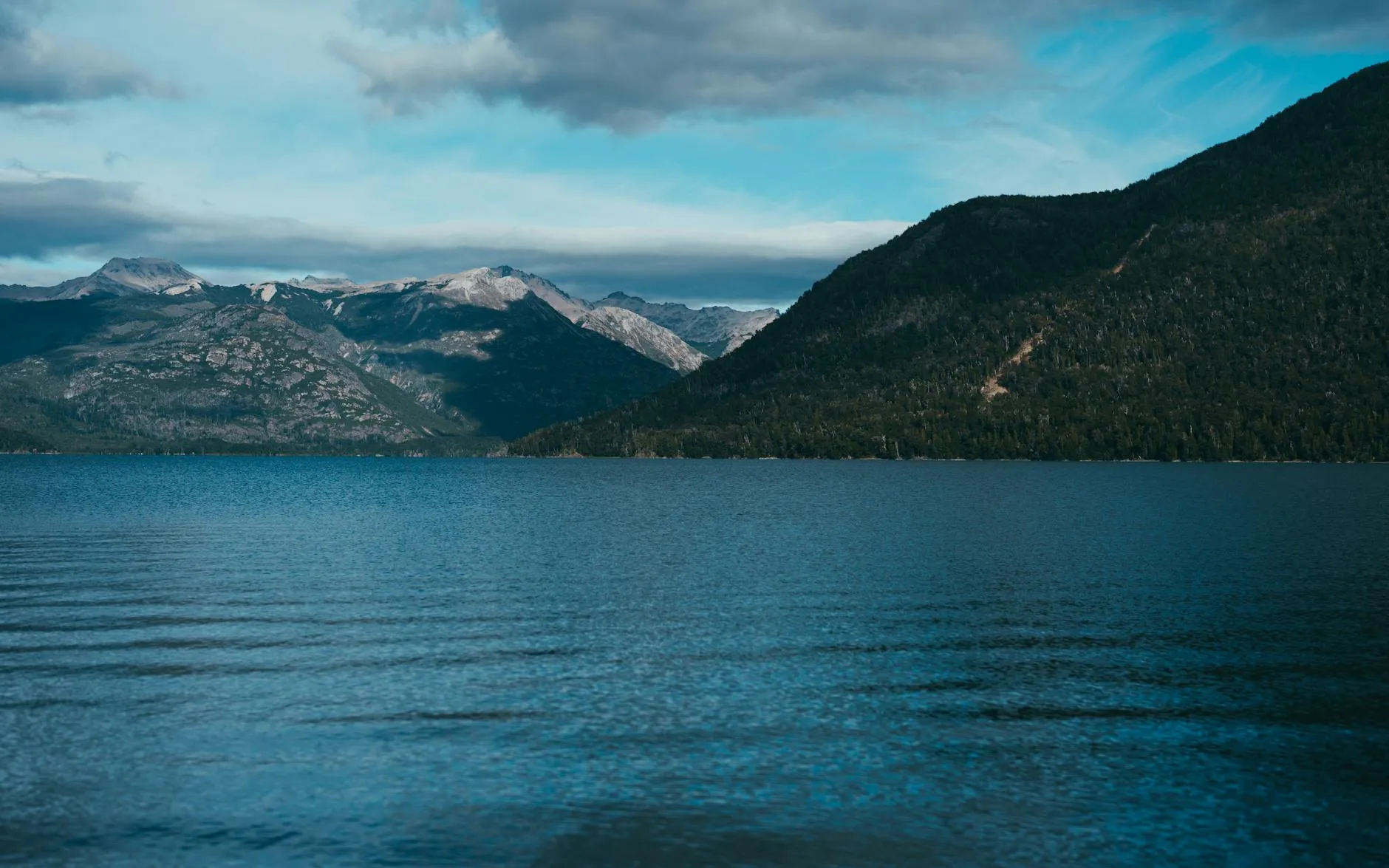
Teniente Luis Candelaria Airport (BRC) — Airport Guide 2026
Argentine Patagonia’s busiest airport does roughly two million passengers a year through one terminal and one runway — more traffic in a July ski week than most provincial capitals see in a month.
Quick Reference
BRC / SAZS
Teniente Luis Candelaria Airport
13 km east of centre; 17–25 min by car
Single terminal, ~12,000 m², domestic + seasonal international
11/29, asphalt, 2,348 m
~1.98 million (2022) — busiest in Argentine Patagonia
~845 m
1954
Aeropuertos Argentina 2000
Argentine peso (ARS); ~1,430–1,460 ARS/USD (May 2026)
Foreign Visa/Mastercard now gives near-market rate — the old cash-arbitrage gap is gone
Visa-free 90 days, 80+ nationalities; no reciprocity fee
Not required
Mi Bus Línea 72, SUBE card only; ~ARS 6,264 to downtown — no SUBE sold at the airport
~ARS 18,000–25,000 (USD 12–17) to town centre
Bariloche by AMAE — Priority Pass, LoungeKey, DragonPass, Diners, Amex; ~USD 50 walk-in
Aerolíneas Argentinas, Flybondi, JetSmart; seasonal Brazil / Chile
Safe to drink
🏢 Terminal & History
BRC is a single-building operation: check-in, security, departures, arrivals, car hire, the one lounge, and the café strip all sit in roughly 12,000 m² on a footprint of about 1,810 hectares east of town along Ruta 40. There is no airside transit system, no rail link, no on-site hotel. Arrivals and departures share the same compact concourse, so the walk from kerb to gate takes minutes — which is fine when the terminal is half-full and a queuing problem when it is not.
The airport carries the name Teniente Luis Candelaria, after Luis Cenobio Candelaria, the Argentine army lieutenant who made the first powered flight across the Andes in 1918. Almost nobody uses the full name out loud; to the town it is “el aeropuerto.”
One asphalt runway, 11/29, 2,348 m. The surrounding mountains make weather cancellations more frequent than the airport’s size suggests. Patagonian crosswinds, winter snow, and low cloud off Lake Nahuel Huapi all divert flights to Neuquén or back to Buenos Aires. In July and August, do not plan a tight same-day connection onwards.
⚠️ Volcanic ash closures are a real risk
In June 2011, the Puyehue–Cordón Caulle complex erupted across the Chilean border and crews cleared around 15,000 tons of ash off the runway in a single early-June day. The airport stayed effectively shut into August, with further closures that October. There has been no comparable event since, but Chilean eruptions periodically ground flights across northern Patagonia with little notice — keep an eye on bulletins if you have a time-critical itinerary.
Traffic is intensely seasonal: the July–August ski peak and December–February summer-lakes peak both overwhelm a terminal sized for the average day. On a Saturday in mid-July, treat published check-in times as a floor. Ground-floor arrivals have car-hire desks (Hertz, Avis, Localiza, Europcar) and short- and long-term parking outside.
The town BRC serves determines what the airport is for. Bariloche was deliberately developed in the 1930s and 40s as an alpine resort, and architect Alejandro Bustillo gave it the look: the stone-and-timber Centro Cívico completed in 1940, and the Llao Llao Hotel opened the same year. The Swiss-and-chocolate identity is not a marketing accident — it is what the place was built to be, and it is why a Patagonian town of this size sustains a two-million-passenger airport.
🛂 Border & Visa
Argentina admits citizens of more than 80 countries visa-free for 90 days as tourists, including the United States, the entire EU, the UK, Canada, Australia, Japan and South Korea. No online pre-registration, no entry app for a standard tourist visit — present your passport at immigration and that is it.
The old reciprocity fee charged to US, Canadian and Australian visitors was scrapped (US permanently in 2016, the others suspended 2017–2018) and is not collected anywhere in 2026.
⚠️ Yellow fever — skip the search result, read this
Most generic “Argentina yellow fever” results flag a requirement. That applies to the subtropical northeast (Misiones, Corrientes). Patagonia has no yellow fever risk zone, no requirement, and no recommendation. You do not need a vaccine for Bariloche.
Anyone needing a tourist visa applies in advance through an Argentine consulate. Check your specific nationality before booking rather than assuming.
💸 Currency — The 2025 Reset
The Argentine peso (ARS) is the currency, and most of what circulates online about paying in Argentina is now wrong. For roughly a decade the country ran parallel exchange rates: a weak official rate and a much stronger informal “dólar blue” that tourists chased via cash USD and Western Union transfers, typically getting 50–80% more pesos for their money. That system ended in April 2025 when Argentina lifted most of its currency controls — the “cepo” — and the rates converged.
As of late May 2026 the official, MEP and informal blue rates all sit within a few percent of each other, at roughly 1,430–1,460 ARS per USD. A foreign Visa or Mastercard now charges you at a near-market rate automatically. Paying by card is the correct default in 2026, and the elaborate cash-arbitrage rituals that dominated travel blogs for years are now mostly wasted effort.
💳 Cards work now — actually use them
Post-2025, your foreign Visa or Mastercard charges at near-street rates with no effort. The old USD cash-hoarding advice is a relic. Keep a modest peso float for buses, kiosks and tips; a small cash-USD reserve for occasional operators who still prefer greenbacks; and use the card everywhere else.
Two caveats remain. The 30% surcharge on Argentine bank cards used abroad is still in place — that is a rule for residents, not for your foreign card, but you will see it referenced and it generates confusion. And inflation, while far lower than the 2023–2024 peaks, is still live: every ARS figure in this guide is “as of May 2026 — verify before you travel.”
Peso notes run 1,000, 2,000, 10,000 and 20,000 pesos; the higher denominations were introduced because inflation rendered the old 100- and 500-peso notes near-worthless. Coins are effectively dead. Keep some small notes for bus-card top-ups and kiosk purchases — nobody wants to break a 20,000-peso note against a 1,500-peso water.
ATMs in Bariloche dispense pesos but cap withdrawals low and charge stiff per-transaction fees. They are a backstop, not a strategy.
🚆 Getting Into Town
BRC is 13 km east of the centre on Ruta 40. The trip is 17–25 minutes by car depending on traffic on Avenida Bustillo. There is no train, no metro, and no shuttle that runs to a fixed schedule independent of flights.
🚌 Mi Bus Línea 72 — cheapest, with a catch
The city bus is run by Mi Bus, costs around ARS 6,264 to downtown (ARS 2,045.71 for the shorter bus-terminal-to-airport segment, under the February 2026 fare table) and is paid exclusively with a SUBE card. Drivers do not sell tickets and do not take cash. Buses run roughly 06:40–21:30 from town and 07:15–22:20 from the airport.
⚠️ No SUBE cards sold at the airport
You cannot buy a SUBE card in the terminal — no kiosk, no machine. You buy and load one in town at authorised kiosks and news-stands. That means Línea 72 is a fine cheap ride back to the airport at the end of your trip, but useless on arrival unless you already have a loaded card from a previous visit.
Bariloche reprices bus fares several times a year; confirm against the current schedule before travel.
🚕 Taxi / Remise — the practical arrival option
Official taxis queue at the stand directly outside the terminal. Remise firm Auto Jet staffs a counter in ground-floor arrivals where you fix the fare before the car moves. Expect roughly ARS 18,000–25,000 (around USD 12–17) for the run to the centre as of May 2026 — confirm at the counter, because peso fares move with fuel and inflation. Seventeen to twenty minutes, door-to-door, no SUBE required.
🚕 Use the remise counter, not the street
Agreeing the price at the arrivals counter before you leave removes any argument on arrival. The remise rank is the correct arrival-day choice for most travellers.
📱 Rideshare — unreliable at the airport
Uber and Cabify operate in Bariloche city, but airport pickups do not work reliably. You cannot summon a standard pickup through the Uber app at BRC, and kerb driver availability swings with demand. Do not land planning on an app pickup as your only option.
🚗 Rental Car
Major agencies have desks in arrivals (Hertz, Avis, Localiza, Europcar among them). A car makes sense if you intend to drive Circuito Chico, the Seven Lakes Route, or out toward El Bolsón — none of which the bus serves well. Drive on the right. Mountain weather and gravel side-roads argue for taking the insurance; book well ahead in high season, when demand outruns the fleet.
🛋️ Lounges
BRC has one lounge: Bariloche by AMAE (also historically listed as Sala VIP Club). It sits on the lower level in the public arrivals area, opens roughly 06:30–22:00, and caps stays at three hours. Domestic flights only — the lounge does not serve international departures, and BRC’s international flying is thin enough that this rarely matters.
Access comes through Priority Pass, LoungeKey, DragonPass, or Diners Club, plus eligible American Express cardholders. Walk-in is around USD 50.
Inside: wifi, snacks, drinks, a few workstations. A comfortable provincial-airport lounge, not a destination.
🛋️ One lounge, one warning about timing
Because the AMAE lounge sits in the public arrivals area rather than past security, getting there on a tight departure means weighing lounge time against the security queue — which in the July ski peak can be long. On a 90-minute turnaround in peak season, clear security first.
There is no flagship carrier lounge, no Aerolíneas Argentinas premium room, no alliance lounge. The bigger lounge options are at Buenos Aires Aeroparque (AEP) or Ezeiza (EZE) — Bariloche is the end of the line.
🍽️ Food Before You Fly
Airside at BRC is functional café fare: empanadas, medialunas, coffee, sandwiches at captive-airport prices. Eat in town and treat the terminal as a coffee stop.
What Bariloche actually does, at a level few South American towns match, is chocolate. The town’s Central European immigrant history turned Calle Mitre into a strip of artisan chocolatiers.
🍫 Buy chocolate in town, not at the airport
The same brands available at the terminal cost more there and arrive with a thinner selection. Three shops worth naming: Mamuschka (Bartolomé Mitre 298, founded 1989, the red shopfront with matryoshka dolls, with a full café), Rapa Nui, and Abuela Goye — the latter named for the founder’s Swiss-immigrant grandmother, with its own sit-down café. All vacuum-pack for travel.
Argentina takes helado seriously, and Bariloche competes with Buenos Aires for the title. Helados Jauja — a family business since 1982 — pioneered native-Patagonian flavours: calafate (the local barberry), sauco (elderberry), cassis. Rapa Nui doubles as a chocolate house and ice-cream parlour; its franui (frozen raspberries in white-then-dark chocolate) is the specific thing to try. None of this is well-represented at the airport.
On the savoury side, cordero al palo (lamb splayed and slow-roasted over open fire) is the regional anchor. Patagonian trout from the lakes features on most serious menus alongside venison and wild boar. The Welsh-Patagonian culinary legacy produces torta galesa — a dense dark fruitcake — in some cafés.
Bariloche is also one of Argentina’s craft-beer capitals. Cervecería Berlina (brewing since the mid-2000s, production at Colonia Suiza) pioneered the local scene. Cervecería Manush has two locations — downtown and around Km 4 — and is known for its burgers as much as its beer. A pint at a brewpub costs a fraction of the airport price and is where the town actually eats at night.
💡 Attractions & Layover Math
Bariloche is the hub of the Argentine Lake District. Almost everything worth doing is a lake, a mountain, or a drive between the two. The reference times below are measured from the airport or the town.
📐 Layover Math First
Work backwards from your departure. BRC is 13 km from town: allow 17–25 minutes each way by taxi (call it 50 minutes of round-trip transit), plus a return-side buffer of 1.5–2 hours to clear check-in and security on a domestic departure — more in the July peak, when the single security line backs up. That overhead alone is roughly two and a half to three hours before you have seen anything. Whatever scenic time you want fits on top of that.
- Under ~4 hours on the ground: stay at or near the airport, or grab a coffee in town at most. Nothing scenic is worth the squeeze.
- ~5–6 hours: Cerro Otto or Cerro Campanario — both about 20 minutes from town, fast cable car, honest views, back with margin. Cerro Catedral (30–35 min each way) is tight but possible if you move.
- Circuito Chico (3–4 hours of driving) needs 6+ comfortable hours before your flight, with a car already arranged. Not feasible on a tight connection.
- Villa La Angostura, the Seven Lakes Route, El Bolsón: day-trip or overnight territory. Do not attempt them between flights.
⛷️ Cerro Catedral
About 20 km from town, roughly 30–35 minutes by car from BRC. Línea 55 serves it from town on SUBE at around ARS 7,057. The largest ski area in the southern hemisphere by some measures — the reason BRC fills in July–August. In summer the lifts run for hikers and ridge walks open up. Above the tree line it is cold and exposed year-round; dress for it.
🌄 Cerro Campanario
At Km 17 on Avenida Bustillo, about 20 minutes from town. A short chairlift gives the postcard panorama over the lakes. Quick to do, and the lift saves the climb.
🚡 Cerro Otto
On the edge of town, roughly 10 minutes out. Cable car, revolving café at the top. The easiest big view if time is short.
🏡 Llao Llao & Circuito Chico
The Circuito Chico is a roughly 60 km scenic loop along Lake Nahuel Huapi past the Llao Llao peninsula, Bahía López and the Punto Panorámico viewpoint. Driven properly with photo stops it takes 3–4 hours. The 1940 Bustillo-designed Llao Llao Hotel sits about 25 km west of town, about 30 minutes from the centre. You do not need to be a guest: the grounds, the short Cerro Llao Llao trail, and the chapel are open, and the hotel anchors the Circuito Chico loop. It is the most photographed spot in the region.
🏔️ Cerro Tronador
The glaciated 3,400 m massif on the Chilean border. Reaching its base at Pampa Linda is roughly 88 km southwest of town on a part-gravel road with timed one-way sections — a committing full-day excursion, not a casual outing. Firmly off the table for any layover.
🌿 Colonia Suiza
The small Swiss-founded hamlet on the Circuito Chico, about 25 minutes from town, with a Sunday and Wednesday craft-and-food market. Curanto — the traditional pit-cooked feast — is the thing to try. Also home to Cervecería Berlina’s production facility.
🛶 Villa La Angostura
Across the lake’s north shore, about 80 km away and roughly an hour’s drive. Access town for Los Arrayanes National Park and its myrtle forest. A comfortable day trip with a car.
🛣️ Ruta de los Siete Lagos
The 100 km drive north toward San Martín de los Andes — one of Patagonia’s signature road trips. This is a full day, not a half-day.
🌸 El Bolsón
About 130 km south, roughly two hours each way. Known for its artisan market and craft brewing. A long day trip or an overnight.
🔧 Practical Notes
📶 Connectivity
The terminal has free wifi, adequate for boarding passes and messages. For data on the ground, Argentine networks (Claro, Movistar, Personal) sell prepaid SIMs, but registration typically requires a local ID — many arriving travellers use an eSIM bought before departure instead. Coverage is solid in town and along the main lake road; patchy in the back valleys.
🌦️ Seasons
Bariloche runs on two peaks that are complete opposites. Winter — July and August — is ski season: July averages around 2–3°C, seasonal Brazilian flights operate, and the runway closes more often than the annual statistics suggest. Summer — December through February — is milder and drier, with January–February highs near 22°C and long daylight for hiking; the trade-off is wind, which blows hardest October to February. Shoulder months (March–April, October–November) are quieter and cheaper; April brings autumn colour in the southern-beech forests.
Whatever the season, pack for a 15°C swing inside a single day. The sun at this latitude is strong even on cool days — this is not an altitude-sickness airport at 845 m, but UV is the real risk. The mountains make their own weather, and clear mornings become sleet by afternoon often enough that it is worth carrying a layer.
🌤️ UV is the underrated hazard
Bariloche sits at this latitude with thin Patagonian air and reflects off snow or water much of the year. Wear sunscreen regardless of the temperature; a cool, overcast day still burns. The cold, the wind, and altitude are the other physical hazards — the mountains are not especially treacherous, but they demand the right kit.
🛡️ Safety
Bariloche is a tourist town and safe by Argentine standards. The realistic risks are petty: opportunistic theft in the crowded Centro Cívico and along Calle Mitre in peak season, and the usual bag care at the bus terminal. Tap water is safe to drink. Tipping runs around 10% in restaurants where service is not included; a few hundred pesos rounds up a taxi, appreciated but not aggressively expected.
🌍 Planning the trip? Read our Argentina travel guide — best time to go, where to stay, and how to get around.
❓ Frequently Asked Questions
📊 At a glance — BRC 2026
| Feature | Detail |
|---|---|
| IATA / ICAO | BRC / SAZS |
| Official name | Teniente Luis Candelaria Airport |
| Opened | 1954 |
| Operator | Aeropuertos Argentina 2000 |
| Distance to town | 13 km east; 17–25 min by car |
| Terminal | Single, ~12,000 m², domestic + seasonal international |
| Runway | 11/29, asphalt, 2,348 m |
| 2022 passengers | ~1.98 million — busiest in Argentine Patagonia |
| Elevation | ~845 m |
| Currency | ARS; ~1,430–1,460 ARS/USD (May 2026) |
| Payment | Foreign card at near-market rate; cash USD optional backstop |
| Visa | Visa-free 90 days, 80+ nationalities; no reciprocity fee |
| Yellow fever | Not required |
| City bus | Mi Bus Línea 72, SUBE only; ~ARS 6,264 downtown — no SUBE at airport |
| Taxi / remise | ~ARS 18,000–25,000 / USD 12–17 to centre |
| Rideshare | Uber/Cabify in city; airport pickups unreliable |
| Lounge | Bariloche by AMAE — Priority Pass / LoungeKey / DragonPass / Diners / Amex; ~USD 50 walk-in; domestic only; 06:30–22:00 |
| Main carriers | Aerolíneas Argentinas, Flybondi, JetSmart, LADE; seasonal Brazil / Chile |
| Cerro Catedral | ~30–35 min from airport; ski + summer hiking |
| Circuito Chico | 60 km loop, 3–4 hr; needs 6+ hr layover minimum |
| Cerro Otto | ~10 min from town; cable car + revolving café |
| Colonia Suiza | ~25 min from town; Sun + Wed market; curanto |
| Tap water | Safe to drink |
| Wifi | Free terminal wifi; eSIM recommended for data on the ground |