Thiruvananthapuram International Airport (TRV) — Airport Guide 2026
TRV has been moving aircraft since 1932 — one of the oldest continuously operating airfields in India — and became the country’s fifth international airport on 1 January 1991, the first outside the four big metros to earn the designation. In 2026 it is mid-construction, handling 4.89 million passengers a year under a 50-year Adani concession and heading toward a projected 12 million once the “Project Anantha” expansion completes around 2027.
Quick Reference
TRV / VOTV
T1 (domestic), T2 (international) — ~1 km apart, no airside link
1932; among India’s oldest continuously operating airfields
Adani Airport Holdings (50-year concession, signed 2020)
~3.7 km (10–15 min by road)
~4.89 million (FY2024–25)
Indian rupee (INR / ₹)
~₹95 = US$1; ~₹111 = €1 (late May 2026 — verify before travel)
India e-Visa via indianvisaonline.gov.in; 30-day tourist e-Visa US$10 (Apr–Jun) / US$25 (Jul–Mar)
Prepaid taxi ~₹350–500; app cab ~₹250–400
Prepaid taxi ~₹700–900 (16 km)
KSRTC Air-Rail EV bus to Trivandrum Central, ~₹15–30
“The Lounge” in each terminal — Priority Pass / DragonPass / pay-in ~US$22
Air Suvidha scrapped; nothing to complete before travel
FTI-TTP fast-track immigration live at TRV since September 2025
🏢 Terminals, Layout & Construction
The fact that catches first-timers: Terminal 1 handles domestic, Terminal 2 handles international. The numbering is historical, not logical — T1 is the older building (current form dates to 1992), while T2, the dedicated international block, opened on 1 March 2011. They sit roughly 1 km apart on the same campus, connected by road only.
🚨 Terminal split — T2 is international
If you are connecting from an international arrival to a domestic onward flight, you clear immigration and customs at T2, exit landside, and transfer to T1 by shuttle or taxi. Budget 30–40 minutes for that move, including bag re-check. Get this wrong and you are taking a taxi between terminals with your luggage and a departing flight.
T2’s layout is straightforward once inside: check-in and immigration on the departures level, a single security hold area, and the international Lounge near gates 6 and 7. T1 is smaller and runs at higher density per square metre — the IndiGo and Air India Express morning and evening banks fill it fast, and airside seating is limited.
The airport runs under Adani’s “Project Anantha” — a ₹1,300-crore programme targeting completion around 2027 that will push the footprint from roughly 45,000 m² to 165,000 m² and lift capacity toward 12 million passengers a year. The design references Kerala temple architecture: terraced, cascading levels. During construction, expect hoarding, diversions and relocated check-in rows. Signage changes month to month; follow the live boards.
The MRO facility on campus gained EASA Part-145 certification in 2025. That is an industry matter rather than a passenger one, but it indicates the airport is positioning for wide-body maintenance work alongside the passenger expansion.
✈️ Traffic profile
TRV is a Gulf-labour and Kerala-diaspora airport. The international schedule out of T2 is dominated by Air India Express, Emirates, Qatar Airways, Etihad, Air Arabia, Gulf Air and SpiceJet flying to Dubai, Sharjah, Abu Dhabi, Doha, Muscat, Bahrain, Dammam and Riyadh, with seasonal long-haul links and occasional Maldives, Colombo and Singapore services. Those Gulf departures cluster between roughly 02:00 and 05:00 — a 3 a.m. T2 is a materially different, more crowded building than a noon T2. Arrive earlier than you would at a quieter airport.
What TRV is not: a hub with hours of airside retail. T2 has duty-free, a handful of food counters and the lounge. T1 has less. There is no sprawling shopping area to kill time in.
🛂 Border & Visa
India does not operate visa-on-arrival for most nationalities. The only foreign nationals who enter visa-free are citizens of Nepal and Bhutan. Everyone else needs a visa arranged before departure.
For tourism, the practical route is the India e-Visa, applied for at the official portal indianvisaonline.gov.in. Apply at least four days before travel — the system will not process last-minute applications, and the fee is non-refundable whether or not the authorisation is granted.
📋 e-Visa tiers and pricing
The 30-day tourist e-Visa has a seasonal rate: US$25 for July through March, dropping to US$10 for April through June (double-entry, valid 30 days from first entry). The 1-year multiple-entry e-Tourist Visa is US$40; the 5-year multiple-entry is US$80. A bank transaction charge of approximately 3% is added on top. Fees are reciprocal and vary by nationality — confirm your country’s exact figure on the portal before assuming the headline number applies to you.
Trivandrum is on the list of designated e-Visa entry airports, so your ETA (Electronic Travel Authorisation) is valid for arrival here directly. You do not need to route through Delhi or Mumbai to use it.
💡 Print the e-Visa approval
The ETA is electronic, but a paper copy resolves the occasional scanner or connectivity hiccup at the immigration desk. At T2 you present at the e-Visa counters, give fingerprints and a photograph, and are stamped in. Print it.
🚨 FTI-TTP fast-track immigration live since September 2025
The Fast Track Immigration – Trusted Traveller Programme went live at TRV in September 2025. Enrolled travellers skip the manual desk via dedicated e-gates. Worth doing if you fly this route regularly. Less relevant for a one-off tourist visit — the standard desk is unremarkable outside the early-morning Gulf bank.
One genuine change in your favour: the Air Suvidha online health self-declaration form, mandatory during the pandemic years, has been scrapped. There is no health form to complete before arriving in Trivandrum in 2026.
💱 Currency
The currency is the Indian rupee (INR, ₹), divided into 100 paise (paise coins are effectively extinct in daily use). Notes in circulation run ₹10, ₹20, ₹50, ₹100, ₹200 and ₹500. The ₹2,000 note was withdrawn from circulation in 2023 — if a tout offers to change one, walk away.
💱 Do not buy rupees before you arrive
The rupee is a partially restricted currency. The rate abroad is poor and importing large amounts of physical rupees is technically capped. Withdraw from an ATM on arrival or use the forex counter in the terminal. The official rate is the rate — there is no parallel spread worth chasing.
As of late May 2026: roughly ₹95 = US$1, ₹111 = €1. Verify the live rate before travel.
A yellow-fever certificate is required if you are arriving from or have recently transited a yellow-fever-endemic country in Africa or South America. No other vaccinations are required for entry from most countries.
🚆 Getting Into the City
The airport is 3.7 km from the centre of Trivandrum, which keeps fares low and options genuinely varied.
🚕 Prepaid taxi
Both T1 and T2 have a prepaid taxi counter — at T2 it is in the arrivals and baggage area. You pay a fixed fare at the desk and hand the slip to the driver, removing the haggling. Fares: roughly ₹350–500 to the city centre (Statue Junction, the Secretariat, the railway station), ₹700–900 to Kovalam (16 km). The prepaid slip is your protection — keep it and do not pay extra “luggage” or “night” surcharges that are not printed on it unless it is genuinely after midnight, when a modest night fee can be legitimate. Rates are revised periodically; verify the fare board at the counter.
📱 App-based cabs (Uber, Ola)
Both operate in Trivandrum and pick up from a designated zone — follow the “app-based cab” signage out of arrivals rather than expecting kerbside pickup. App fares to the city centre often undercut the prepaid taxi, typically around ₹250–400 depending on surge. You see the price before you confirm. The catch: surge pricing bites during the early-morning international arrival bank. If your flight lands at 03:00, the prepaid counter is the more reliable choice.
🚆 Air-Rail EV bus — ₹15–30
Kerala’s state transport corporation (KSRTC) runs electric buses branded Air-Rail from the airport to Trivandrum Central railway station and the city centre. The fare is the genuine budget option. The honest caveat: frequency thins badly late at night and the timetable is built around rail connections, not your flight. For a daytime arrival with light luggage and no schedule pressure, it is by far the cheapest way into town. For a 03:00 arrival, do not count on it.
🛺 Auto-rickshaw
Three-wheelers wait outside both terminals. A city-centre run costs around ₹150–300 — cheaper than a taxi and faster through Trivandrum’s tighter streets. The trap is universal across India and present here: the meter is frequently “not working.” Agree the fare before you get in, or insist on the meter. Autos are fine for one or two people with a backpack; for a family with checked luggage, take the taxi.
There is no metro or suburban rail link into the terminal. Trivandrum Central station, the rail node, is what the Air-Rail bus connects you to, about 6 km from the airport.
🛋️ Lounges
Trivandrum has two lounges, both called “The Lounge” — one in T1 (domestic), one in T2 (international). Both are operated as contract lounges.
T2 — international
Airside, inside the security hold area, near gates 6 and 7. Maximum stay is three hours. Access: Priority Pass, DragonPass, LoungeKey, select Indian premium credit cards (Axis Magnus, HDFC Infinia, ICICI Sapphiro, SBI Elite tiers among them), a business- or first-class boarding pass, or walk-in payment from around US$22 per person at the rupee equivalent. Hot food, a bar, high-speed Wi-Fi and the standard seating.
🛋️ The Lounge, T2 — worth it for early-morning Gulf departures
The dominant T2 traffic is Gulf-bound and departs between 02:00 and 05:00. During that bank, T2’s airside fills quickly and a proper meal and a quiet seat have real value. Priority Pass holders get the better deal than walk-in payers; the per-person walk-in rate of approximately US$22 is on the high end for what is a competent contract lounge, not a showpiece.
T1 — domestic
Same operator model, same access networks (Priority Pass and equivalents), inside the domestic security area. Smaller, and at peak domestic hours — early morning and late evening — the lounge is a more meaningful refuge than its size alone suggests.
What is absent: the premium-brand tier you find at Delhi, Mumbai or Bengaluru. No Plaza Premium, no Encalm, no airline flagship lounge. Emirates, Qatar Airways and Etihad do not operate their own lounges at TRV — their premium passengers use “The Lounge” alongside everyone else with access. If your benchmark is a Dubai or Doha flagship, the gap is significant.
🍽️ Food Before You Fly
The smart move is to eat properly in Trivandrum before heading to the airport. The terminal narrows your options and inflates the price.
🥥 What Kerala cooking actually is
Appam is the starting point: a lacy, bowl-shaped fermented rice-and-coconut pancake, soft in the centre, crisp at the edge, eaten with a coconut-milk vegetable or chicken stew. Kerala parotta — a flaky, layered flatbread, distinct from the North Indian paratha — is the street-food staple, typically served with beef fry or a fish curry sharp with kokum and red chilli. Puttu (steamed rice flour and coconut with kadala curry, black chickpeas) is the breakfast. Malabar biryani is lighter and shorter-grained than its Hyderabadi counterpart. On the seafood side: karimeen (pearl spot fish), prawns and mussels in curry or fried.
🍽️ The price gap is steep
An appam-and-stew breakfast or a parotta-and-beef-fry plate at a working restaurant in Trivandrum runs roughly ₹80–150. The same food, where it exists in the terminal at all, costs ₹250–400 for canteen quality. Filter coffee — strong South Indian coffee cut with hot milk, served frothed between two metal tumblers — is ₹20–40 at a town café and ₹150–250 airside. Eat in town.
Two confirmed-operating Trivandrum addresses: Villa Maya, a heritage-mansion restaurant in an 18th-century Dutch manor on Airport Road, does refined Kerala and pan-Indian cooking in a garden setting — it is a genuine destination dinner, not a casual pit stop. Ariya Nivaas, near the railway station, is a long-running vegetarian South Indian spot with excellent, inexpensive thali and tiffin. Neither is at the airport. At the airport itself, the food outlets rotate under the Adani concession — naming a specific counter risks being wrong by the time you read this.
🛍️ Duty-free and take-home
T2’s duty-free covers essentials. The worthwhile Kerala buys are in the city, not the terminal: banana chips (salted, coconut-oil-fried — buy them fresh from a town shop at ₹100–200, not at the airport markup); Kerala filter coffee powder; cardamom and black pepper from the Idukki hills; coir and coconut-shell craft. Do your spice and snack shopping at Trivandrum’s Connemara or Chalai markets before the airport run. Reserve the duty-free for liquor and perfume.
💡 Day-Trips, Beaches & the Layover Reality
Trivandrum is a launching point, not a multi-day destination in itself. Here is what surrounds it, with honest travel times and a straight assessment of what fits a layover and what does not.
🏖️ Kovalam — 16 km, ~30–40 min, prepaid taxi ~₹700–900
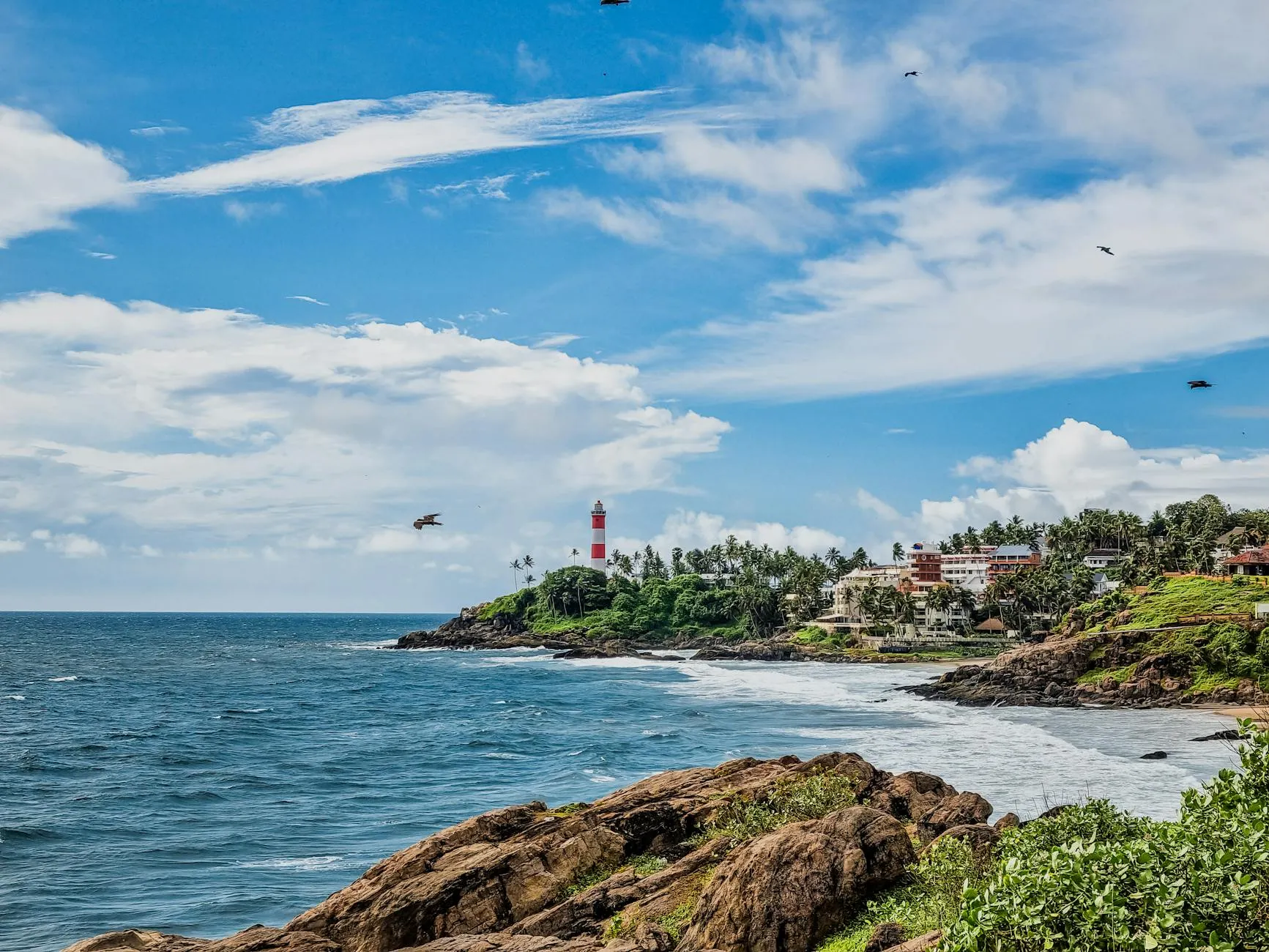
The closest swimmable coast to the airport: three crescents — Lighthouse, Hawa, Samudra — and a well-developed strip of hotels, restaurants and tourist infrastructure. It is genuinely good and genuinely crowded December through February, when the Lighthouse Beach promenade is wall-to-wall with European visitors. The undertow at the southern end is real; the red-flag lifeguard warnings are not decorative. For a short stop, Lighthouse Beach plus a fish lunch is a workable half-day. The smaller coves north of Samudra are quieter.
🌊 Varkala — 45–50 km, ~1 to 1.5 hours
Red laterite cliff above the beach, cliff-top cafés along the ridge, a more backpacker-leaning scene than Kovalam. Papanasam Beach below the cliff is also a Hindu pilgrimage site — ceremony alongside sunbathing. The rip currents here have a serious reputation; drownings occur most years. Swim where the locals swim. Too far for a tight layover; right for an overnight or a full day.
🚣 Poovar and the backwaters — 30–35 km, ~1 hour
Where the Neyyar River meets the sea: an estuary, a golden sandbar, and the southern edge of Kerala’s backwater network. Boat trips through mangroves and out to the sandbar are the activity. It is quieter and less developed than the Alleppey backwaters to the north, and significantly closer to the airport. A morning boat trip and lunch at a backwater resort works as a half-to-full day.
🌅 Kanyakumari — ~90 km, ~2.5 hours by road
India’s southern tip, in Tamil Nadu, where three seas notionally converge, with the Vivekananda Rock Memorial offshore and well-known sunrise and sunset views. Long enough drive that it is a full-day excursion or an overnight, not a casual side-trip.
🏛️ Trivandrum city — 3–4 km, 10–15 min
The Sree Padmanabhaswamy Temple — whose subterranean vaults, inventoried from 2011 onward, established it as one of the wealthiest temples in the world — sits roughly 4 km from the airport. The dress code is strictly enforced: men in a mundu or dhoti with no upper-body shirt in prescribed areas; women in a sari or salwar kameez. Non-Hindus are not admitted to the inner sanctum. The Napier Museum (a 19th-century Indo-Saracenic building in a public park) and the adjacent Kuthira Malika palace — named for the 122 carved horses along its eaves — are the other two city anchors, both about 10 minutes apart. A half-day covers the realistic ceiling.
⏱️ Layover arithmetic
⚠️ Under 6 hours on the ground: stay in the terminal
None of the above works on a 2–4-hour international layover. Clearing immigration on an India e-Visa, getting landside, reaching Kovalam — the closest option at 16 km — and returning through security with a standard arrival buffer eats a minimum of four to five hours before you have spent a minute at the beach. Six to eight hours on the ground: a fast taxi to Kovalam for a beach lunch is just about doable if you are disciplined about the return. Varkala, Poovar and Kanyakumari each need a full day or an overnight.
🔧 Practical Notes
📶 Wi-Fi and SIM
The airport offers free Wi-Fi, but Indian airport Wi-Fi requires an OTP sent to an Indian mobile number — which an arrival without a local SIM does not have. Buy a prepaid SIM: Airtel and Jio both have counters, and registration requires your passport, visa and a photo for KYC. Expect to pay a few hundred rupees for a tourist data plan. Transit passengers are better served by an international eSIM bought before travel. Connectivity in Trivandrum and along the coast is generally solid 4G; remote backwater stretches thin out.
💰 Cash and payments
Cards are accepted at hotels, restaurants and most shops, but India runs heavily on UPI — the QR-code mobile payment system that foreigners can in principle access through certain international wallets but will typically not have configured. Carry cash for autos, smaller eateries and market stalls, which are cash-first.
🛡️ Safety and scams
Violent crime against tourists in Trivandrum is rare. The realistic risks are transactional: the auto-rickshaw “broken meter,” the “your hotel is closed, let me take you to my cousin’s place” redirection from the terminal, and overpriced offers from freelance taxi touts who approach you inside arrivals. Use the prepaid counter or a ride app and ignore the freelancers.
⚠️ Beach safety — the flags are real
The undertow at Kovalam’s southern end and the rip currents at Varkala have both killed swimmers. Heed the lifeguard flags. The physical hazard here is the water, not crime.
🌡️ Weather timing
The southwest monsoon arrives in Kerala around the first week of June — typically the earliest arrival in India. Pre-monsoon heat and humidity from March into June are heavy. Factor this into any outdoor plan.
💧 Water and health
Do not drink tap water. Bottled or filtered only, including for brushing teeth if you are sensitive. Sealed bottled water is cheap and widely available. No special vaccinations are required for entry from most countries; a yellow-fever certificate is mandatory if arriving from or recently transiting an endemic country in Africa or South America. Hepatitis A, typhoid and routine boosters are a conversation for your doctor.
❓ FAQ
📊 At a glance — TRV 2026
| Feature | Current Data (2026) |
|---|---|
| IATA / ICAO code | TRV / VOTV |
| Terminals | T1 (domestic), T2 (international); ~1 km apart, no airside link |
| International terminal | Terminal 2 (opened 1 March 2011) |
| Domestic terminal | Terminal 1 |
| Established | 1932; among India’s oldest operating airfields |
| Operator | Adani Airport Holdings (50-year concession, 2020) |
| Expansion | “Project Anantha”, ₹1,300 crore, completion ~2027, capacity to ~12M/yr |
| Distance to city centre | ~3.7 km (10–15 min) |
| Annual passengers | ~4.89 million (FY2024–25) |
| Currency | Indian rupee (INR / ₹) |
| Exchange rate | ~₹95 = US$1; ~₹111 = €1 (late May 2026) |
| Entry system | India e-Visa (indianvisaonline.gov.in) |
| 30-day tourist e-Visa | US$25 (Jul–Mar) / US$10 (Apr–Jun) + ~3% bank charge |
| Visa-free nationals | Nepal and Bhutan only |
| Prepaid taxi to city | ~₹350–500 |
| Prepaid taxi to Kovalam | ~₹700–900 (16 km) |
| App cab to city | ~₹250–400 (Uber / Ola) |
| Air-Rail EV bus | ~₹15–30 to Trivandrum Central |
| Auto-rickshaw to city | ~₹150–300 (agree fare before boarding) |
| Lounges | “The Lounge” in each terminal — Priority Pass / DragonPass / walk-in ~US$22 |
| Premium lounges | None — no Plaza Premium, no Encalm, no airline flagship |
| Gulf carriers | Air India Express, Emirates, Qatar Airways, Etihad, Air Arabia, Gulf Air, SpiceJet |
| Nearest beach | Kovalam, 16 km (~30–40 min) |
| Day-trip distances | Varkala 45–50 km; Poovar 30–35 km; Kanyakumari ~90 km / 2.5 h |
| Fast-track immigration | FTI-TTP e-gates live at TRV since September 2025 |
| Tap water | Not potable — bottled or filtered only |
| Health forms | Air Suvidha scrapped; none required |
🌍 Planning the trip? Read our Kerala travel guide — best time to go, where to stay, and how to get around.