Madrid, Spain — City Guide 2026
The Complete City Guide 2026
Madrid — The Complete City Guide 2026
Madrid is the European capital that nobody seems to visit first and everybody wishes they had visited sooner. It has the best art museum in the world, the best nightlife in Southern Europe, and a tapas culture that has been refined over centuries into something approaching perfection. It also has sunlight — more than any other European capital — and it uses every hour of it.
Last verified: April 2026. Every price, opening hour, and booking link in this guide has been checked against official sources. Verify at the listed URLs before visiting — Madrid reinvents itself constantly, but the things that matter here have not changed in centuries.
Why Madrid? An Editor’s Note
I first visited Madrid in 2008, on a Tuesday night in October. I arrived at 22:00, expecting a quiet city winding down. Instead, the terraces of La Latina were full, the bars of Malasaña were warming up, and a jazz quartet was playing in a plaza I had never heard of to an audience that showed no sign of leaving. I ate my first proper tortilla española at midnight, standing at a bar counter in Lavapiés, and understood immediately that I had been doing European travel wrong.
Madrid does not perform for tourists. It does not have a single iconic landmark — no Eiffel Tower, no Colosseum, no Big Ben. What it has instead is a way of living that is, without exaggeration, the most civilised daily rhythm of any major city in Europe. Madrileños eat dinner at 22:00. They drink a caña (small beer) at 14:00 on a Tuesday because the weather is good. They stroll through the Retiro at sunset because that is what the park is for. They queue for a bocadillo de calamares at a counter that has been there since 1906 and will be there in 2106.
The Prado is not a good museum — it is, painting for painting, the finest art museum in the world. Velázquez’s Las Meninas alone justifies the trip. The Reina Sofía holds Picasso’s Guernica — the most important political painting of the 20th century. The Thyssen fills every gap between the two. Together they form the Golden Triangle of Art, and on free-entry evenings you can walk through six centuries of masterpieces for nothing.
This guide is for people who want to live in Madrid for a few days, not just visit it. The difference is everything here.
Extending the trip? See our Barcelona city guide (2h30 by AVE), Seville city guide (2h30 by AVE), Lisbon city guide (1h flight or 10h overnight train), and Porto city guide for the same treatment.
Table of Contents
- Top Attractions in Madrid
- Flamenco — Madrid’s Living Art Form
- Madrid’s Best Neighbourhoods
- Where to Stay in Madrid — By Budget
- Where to Eat in Madrid
- Getting Around Madrid
- Best Time to Visit Madrid
- Madrid for Art Lovers — The Golden Triangle
- Day Trips from Madrid
- Safety & Practical Information
- 2026 Travel Notes
- Free Things to Do in Madrid
- Frequently Asked Questions
Top Attractions in Madrid
1. Museo del Prado — The World’s Greatest Painting Collection
The Prado is not the largest museum in the world, nor the most famous. But painting for painting, room for room, it may be the finest. The collection was assembled by the Spanish Crown over three centuries — the Habsburgs and Bourbons bought obsessively and wisely — and the result is a concentration of masterpieces that makes the Louvre feel scattered and the Met feel encyclopaedic.
Velázquez’s Las Meninas (1656) occupies its own room and its own dimension of art history. It is a painting that contains its own audience, its own mirror, and its own artist — it has been studied for 370 years and it has not been fully understood. Goya’s Black Paintings — fourteen works painted directly onto the walls of his house between 1819 and 1823, transferred to canvas after his death — are the most disturbing and powerful paintings in any museum anywhere. Saturn Devouring His Son is not a painting you look at; it is a painting that looks into you.
The Bosch collection is the world’s largest: The Garden of Earthly Delights, The Haywain, The Table of the Seven Deadly Sins. Titian, Rubens, El Greco, Raphael, Caravaggio — each represented in depth, not tokenism. The museum is large enough to reward three visits but small enough to navigate in a morning.
Price: €15 general admission. Under 18 and students 18–25 free. Audio guide €6. Free entry: Mon–Sat 18:00–20:00, Sun & holidays 17:00–19:00. Also free Nov 19, May 18, Oct 12. Hours: Mon–Sat 10:00–20:00, Sun & holidays 10:00–19:00. Access: Fully wheelchair accessible. Website: museodelprado.es
Editor’s tip: Go at 10:00 on a weekday and walk directly to Room 12 (Velázquez). Stand in front of Las Meninas before the room fills. Then Goya’s Black Paintings (Rooms 67–68). Then Bosch (Room 56A). These three stops — 45 minutes — constitute the single most powerful art experience available in any museum in the world. Everything else is bonus.
2. Museo Reina Sofía — Guernica and the 20th Century
The Reina Sofía exists, in the public mind, for one painting: Picasso’s Guernica (1937). A 3.5-by-7.8-metre monochrome scream against the bombing of a Basque town during the Spanish Civil War. It was painted in Paris, exhibited at the 1937 World’s Fair, and spent decades in New York’s MoMA because Picasso refused to let it return to Spain while Franco ruled. It arrived in Madrid in 1981, six years after Franco’s death. The room is always full and always silent.
But the Reina Sofía is far more than Guernica. The permanent collection traces Spanish and international art from 1900 to the present: Dalí’s The Great Masturbator and The Enigma of Desire, Miró’s monumental canvases, Juan Gris’s Cubist still lifes, and a post-war wing that covers Spanish conceptual art, photography, and film. The building itself — a former hospital expanded by Jean Nouvel in 2005 — is striking.
Price: €12 general. Under 18 and students with international student card free. Free entry: Mon & Wed–Sat 19:00–21:00, Sat 14:30–21:00, Sun 12:30–14:30. Also free Apr 18, May 18, Oct 12, Dec 6. Hours: Mon & Wed–Sat 10:00–21:00, Sun 10:00–14:30. Closed Tuesdays. Access: Wheelchair accessible. Website: museoreinasofia.es
Editor’s tip: See Guernica first. Then Room 206 (Dalí/Miró concentration). Then the Nouvel building’s top floor for temporary exhibitions. The free evening slot (19:00–21:00 weekdays) is the best value in Madrid’s art world — two hours with Picasso, Dalí, and Miró for nothing.
3. Museo Thyssen-Bornemisza — The Missing Link
If the Prado covers the Old Masters and the Reina Sofía covers the 20th century, the Thyssen fills every gap between and beyond them. The collection — assembled by Baron Hans Heinrich Thyssen-Bornemisza and acquired by Spain in 1993 — spans eight centuries of European and American art in a single building. Walk from medieval altar pieces through Renaissance portraiture, Dutch Golden Age, Impressionism, Expressionism, Pop Art, and into contemporary installations. No other single collection in Europe offers this breadth.
Highlights: Caravaggio’s Saint Catherine of Alexandria, Van Eyck’s The Annunciation Diptych, Hopper’s Hotel Room, Lichtenstein’s Woman in Bath. The American 20th-century wing is the best outside the United States.
Price: €13 permanent collection. €18 combined permanent + temporary. Under 12 free. Free entry: Mondays 12:00–16:00 (permanent collection only). Hours: Mon 12:00–16:00, Tue–Sun 10:00–19:00. Extended to 21:00 on Saturdays in summer. Access: Wheelchair accessible. Website: museothyssen.org
Editor’s tip: Start on the top floor and walk down — you move chronologically from 13th-century Italian painting to Pop Art. The Thyssen is the best museum in Madrid for people who don’t know what kind of art they like. By the time you reach the ground floor, you will.
4. Palacio Real — Europe’s Largest Royal Palace
The Palacio Real has 3,418 rooms — more than Versailles, more than Buckingham Palace, more than any other functioning royal palace in Europe. The Spanish royal family has not lived here since Alfonso XIII left in 1931, but it remains the official residence and is used for state ceremonies. The rooms open to the public — roughly 50 — include the Throne Room (velvet, gold, Tiepolo ceiling), the Royal Pharmacy (18th-century ceramic jars still in their original shelving), and the Stradivarius Room (five Stradivarius instruments, played at state concerts, collectively valued in the hundreds of millions).
The building was constructed between 1738 and 1755 on the site of the Alcázar, which burned down on Christmas Eve 1734. Philip V, who ordered the replacement, specified that it be built entirely of stone so that it could never burn again. He succeeded: the palace is limestone and granite, with no structural wood. The result is monumental, imposing, and — on a warm afternoon when the light hits the south facade — genuinely beautiful.
Price: €14 basic tour (€7 reduced for children 5–16, students under 25, seniors 65+). Under 5 free. Audio guide €4. Free entry for EU & Ibero-American citizens: Mon–Thu 16:00–18:00 (Oct–Mar) / 18:00–20:00 (Apr–Sep) — bring ID. Hours: Oct–Mar 10:00–18:00, Apr–Sep 10:00–20:00. Last entry 1 hour before closing. Access: Partially accessible (some areas have steps). Website: patrimonionacional.es
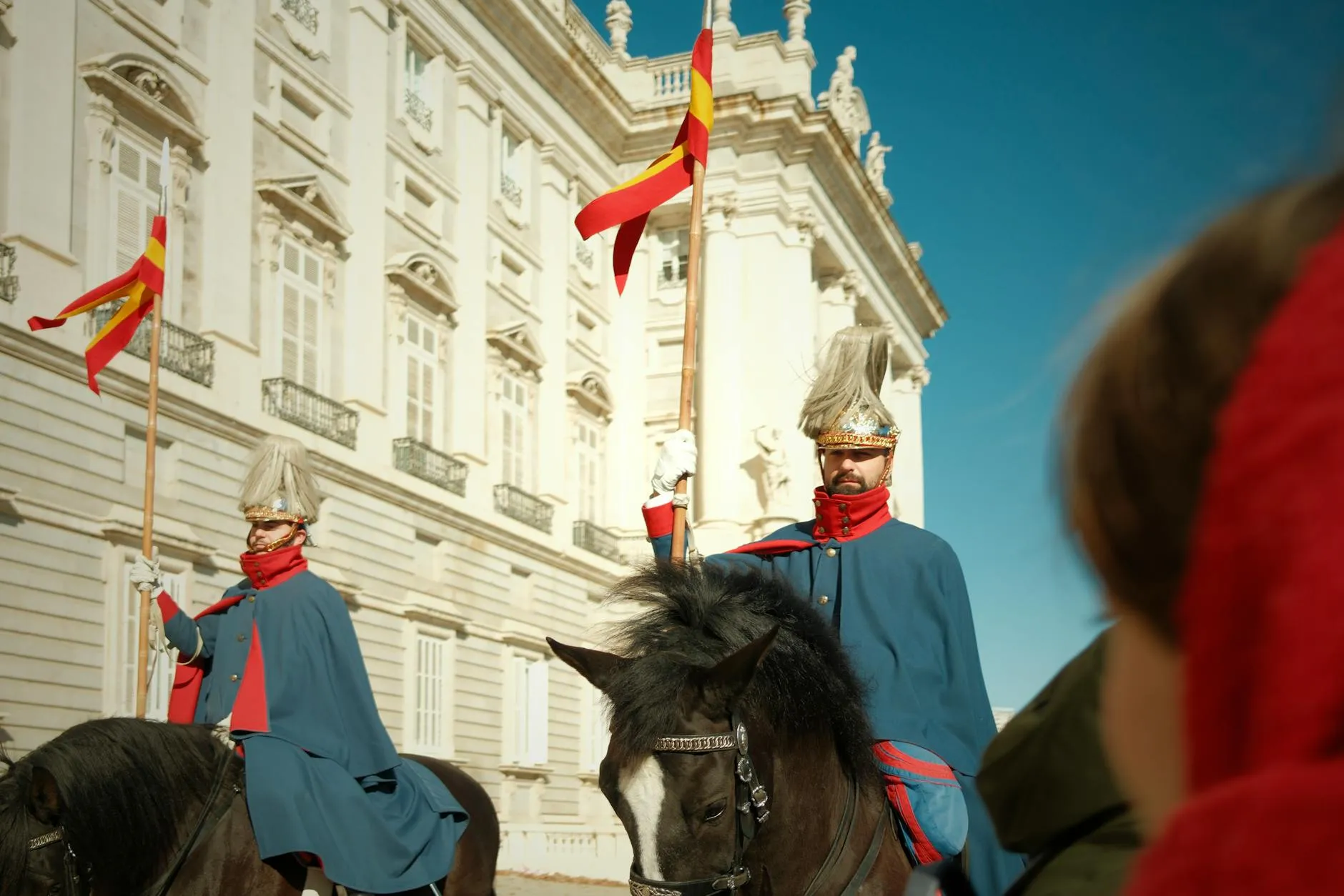
Editor’s tip: EU citizens: the free evening slot is one of the best deals in European tourism. Non-EU: go at opening time to avoid tour groups. The changing of the guard happens every first Wednesday of the month at 12:00 (Sep–Jun) on the Plaza de la Armería — ceremonial, grand, and free to watch.
5. Parque del Buen Retiro — Madrid’s Green Heart
The Retiro was the private pleasure garden of the Spanish monarchy until 1868, when it was opened to the public during the revolution that deposed Isabella II. Today it is 125 hectares of formal gardens, monuments, and walking paths in the centre of the city, and it functions as Madrid’s living room in a way that Central Park or Hyde Park do not quite manage — partly because the weather allows year-round use, partly because Madrileños treat parks as social infrastructure, not exercise venues.
The Palacio de Cristal (Crystal Palace) is the park’s masterpiece: a glass-and-iron pavilion built in 1887 to house an exhibition of Philippine flora, now used by the Reina Sofía for free contemporary art installations. The building alone is worth the walk — a tropical greenhouse reimagined as a cathedral of light. The Estanque Grande (Great Pond) has rowing boats for rent (~€6/45 min) and a monument to Alfonso XII that looks like it was designed to be photographed.
The Rosaleda (Rose Garden) blooms spectacularly in May and June. The Jardín de Vivaces is a quieter, less-visited garden in the park’s south that rewards slow walkers. Street performers, puppet shows, and fortune tellers gather near the Estanque on weekends.
Price: Free. Hours: Oct–Mar 6:00–22:00, Apr–Sep 6:00–00:00. Crystal Palace: free, typically 10:00–18:00 (winter) or 10:00–22:00 (summer) — hours depend on current exhibition. Getting there: Metro Retiro (L2) or Ibiza (L9). Access: Mostly flat; wheelchair-accessible paths throughout.
Editor’s tip: Sunday morning in the Retiro is a Madrid institution. Bring a book, rent a boat, buy a coffee from a terrace near the Estanque, and do nothing for two hours. You will understand Madrid better from that bench than from any museum.
6. Plaza Mayor — Madrid’s Grand Stage
A perfectly enclosed 17th-century square, 129 by 94 metres, with 237 balconies overlooking a central space that has hosted bullfights, executions, coronations, markets, and football matches since its completion in 1619. The arcaded perimeter was rebuilt after three major fires — the current form dates to 1790 — and the equestrian statue of Philip III in the centre has been there since 1848.
The square is one of Madrid’s most photographed locations and, truthfully, one of its worst places to eat. The terrace restaurants charge double for mediocre food with a view. Do not eat here. Walk through, admire the architecture, take photographs, and eat in La Latina (five minutes south) or Sol (three minutes east) where the food is better and cheaper.
Price: Free. Open 24 hours. Getting there: Metro Sol (L1/L2/L3) or Ópera (L2/L5), 3-minute walk. Christmas market: Late November through December 31 — traditional ornaments, nativity figures, joke gifts. Atmospheric, if crowded.
Editor’s tip: Visit at 8:00 in the morning when the square is nearly empty. The light is exceptional and the architecture is best appreciated without 10,000 people in the frame. The arched exits in each corner lead to different neighbourhoods — the southwest exit drops you directly into La Latina’s Sunday rastro (flea market) area.
7. Gran Vía — Madrid’s Broadway
Madrid’s most famous boulevard, built between 1910 and 1929 by demolishing 300 buildings to create a grand east–west thoroughfare through the old city. The architecture is a concentrated timeline of early 20th-century styles: Beaux-Arts, Art Deco, Art Nouveau, and proto-Modernist, each building competing for attention. The Telefónica Building (1929, 89 metres) was Europe’s first skyscraper. The Edificio Metrópolis (1911), with its golden Winged Victory statue, is the most photographed building in Madrid.
Gran Vía is also Madrid’s theatre district. The density of musicals, plays, and concerts rivals London’s West End — and tickets are often half the price. Current productions change seasonally; check grfrancia.com or madrid.es/cultura for listings.
Getting there: Metro Gran Vía (L1/L5), Callao (L3/L5), or Plaza de España (L3/L10). Best photo spots: Edificio Metrópolis from Calle de Alcalá, the Schweppes sign at night from Callao, and the entire avenue from the rooftop terrace of the Círculo de Bellas Artes (€5 entry).
Editor’s tip: The Círculo de Bellas Artes rooftop (€5 with a drink) has the best panoramic view in Madrid — Gran Vía stretching towards the mountains, the Royal Palace to the west, the Retiro to the east. Go at sunset. This is the best €5 you will spend in the city.
8. Santiago Bernabéu Stadium
Home of Real Madrid since 1947, rebuilt between 2019 and 2025 in a €1.7 billion renovation that transformed it into one of the most advanced stadiums in the world. The new retractable roof, 360-degree LED façade, and retractable pitch (which can be stored underground to allow concerts and events) make it a destination even for people with no interest in football.
The stadium tour takes you through the pitch-level tunnel, the home dressing room, the presidential box, and the trophy room — which contains 15 Champions League trophies, 36 La Liga titles, and hundreds of other pieces of silverware that cumulatively make Real Madrid the most decorated club in football history. The interactive museum covers the club’s history from 1902 to the present.
Price: ~€30–35 for standard tour (post-renovation pricing — verify at realmadrid.com). Under 5 free. Hours: Typically 9:30–19:00 on non-match days. Closed or reduced hours on match days. Getting there: Metro Santiago Bernabéu (L10). Book ahead — post-renovation tours sell out regularly. Website: realmadrid.com
Editor’s tip: The stadium façade at night — the 360-degree LED screen wrapping the entire exterior — is worth seeing even if you don’t go inside. Take the Metro to Santiago Bernabéu and walk around the perimeter after dark. It is genuinely spectacular and completely free.
9. Templo de Debod — An Egyptian Temple in Madrid
A 2,200-year-old Egyptian temple, given to Spain by Egypt in 1968 as thanks for Spain’s help in saving the Abu Simbel temples from the rising waters of the Aswan Dam. It was dismantled stone by stone, shipped from Aswan to Madrid, and reassembled in the Parque del Oeste, facing east as it did in its original location on the banks of the Nile.
The temple itself is modest — two rooms and a small hall — but the context is extraordinary. An ancient Egyptian temple, surrounded by shallow reflecting pools, in a park in central Madrid, with a view across the Casa de Campo to the Sierra de Guadarrama mountains. At sunset, when the stone glows amber and the mountains turn purple, it is one of the most beautiful sights in the city.
Price: Free. Hours: Tue–Fri 10:00–19:00, Sat–Sun 9:30–20:00. Closed Mondays. Summer hours may vary. Getting there: Metro Plaza de España (L3/L10) or Ventura Rodríguez (L3), 5-min walk.
Editor’s tip: Arrive 30 minutes before sunset and claim a spot on the wall overlooking the western horizon. This is Madrid’s best sunset location — locals know it, so it gets busy on clear evenings. The temple’s interior is interesting but secondary to the setting.
10. Mercado de San Miguel
A cast-iron market hall from 1916, renovated in 2009 into a gourmet food market. This is not a traditional market — it is a curated collection of high-quality food stalls: oysters and cava, Iberian ham carved to order, patatas bravas, craft gin and tonics, artisan olive oils. The quality is genuine; the prices reflect the Plaza Mayor location (expect €3–8 per tapa, €4–6 for a glass of wine).
The market works best as a grazing stop rather than a full meal destination. Share a plate of jamón ibérico de bellota (€10–15 for a generous plate), order a glass of Verdejo, and move on. The atmosphere is lively, especially on Friday and Saturday evenings.
Hours: Sun–Thu 10:00–00:00, Fri–Sat 10:00–01:00. Getting there: 1 minute from Plaza Mayor, Metro Sol or Ópera. Website: mercadodesanmiguel.es
Editor’s tip: For better value and a more local experience, try Mercado de Antón Martín (Lavapiés), Mercado de San Fernando (Lavapiés), or Mercado de la Paz (Salamanca). These are neighbourhood markets where Madrileños actually shop — the food is comparable, the prices are lower, and the atmosphere is authentic.
11. Puerta del Sol & Kilométre Zero
The geographical centre of Spain. The semicircular plaza is where the country measures all distances from — a small plaque on the pavement outside the Real Casa de Correos (now the regional government headquarters) marks Km 0. It is also where Madrid celebrates New Year’s Eve: at midnight, the clock on the Casa de Correos chimes twelve times, and Madrileños eat twelve grapes — one per chime — for luck. The tradition is nationally televised and wildly chaotic in person.
The Oso y el Madroño (Bear and the Strawberry Tree) statue, Madrid’s coat of arms, stands on the east side of the plaza. It is the most common meeting point in the city and the most photographed statue in Madrid.
Getting there: Metro Sol (L1/L2/L3) — Spain’s busiest metro station. Nearby: The Museo del Jamón on Carrera de San Jerónimo (1 min walk) sells beer from €1 and bocadillos from €2.50 — the cheapest quality snack in central Madrid.
12. Real Jardín Botánico — A Quiet Masterpiece
Founded in 1755 by Fernando VI and relocated to its current site beside the Prado in 1781, this is one of Europe’s finest botanical gardens and one of Madrid’s most overlooked attractions. Eight hectares of formal terraces, greenhouses, and research collections containing over 5,000 plant species. The three-tiered layout — medicinal plants, ornamental gardens, and the systematic collection — follows 18th-century Enlightenment botanical principles.
The garden is immediately adjacent to the Prado and functions as the perfect decompression after two hours of Velázquez. The bonsai collection is exceptional. The cactus greenhouse is otherworldly. The shade and silence, in the middle of Madrid’s busiest cultural district, feel like a secret.
Price: €6 general. Free Mon–Fri in the last two hours before closing. Hours: Nov–Feb 10:00–18:00, Mar & Oct 10:00–19:00, Apr–Sep 10:00–20:00. Getting there: Metro Atocha (L1), adjacent to Prado south entrance. Website: rjb.csic.es
Editor’s tip: Visit immediately after the Prado. The transition from Goya’s Black Paintings to the sunlit formal gardens is one of the great emotional swings in a day of Madrid sightseeing.
Flamenco — Madrid’s Living Art Form
Flamenco originated in Andalucía, but Madrid is where it professionalised and where many of the world’s best performers now work. The city’s tablao (flamenco venue) scene is the most concentrated in Spain, ranging from tourist-oriented dinner shows to intimate spaces where the performers outnumber the audience and the music is raw, intense, and genuinely moving.
A good flamenco performance is not entertainment — it is an art form that combines guitar, voice, dance, and rhythm (the palmas, or hand-clapping) in a way that can be technically analysed but can only be understood by watching it live. The best performances build slowly, and the moment when the dancer, guitarist, and singer lock into a shared intensity — the duende — is one of the most powerful live-performance experiences in any culture.
Corral de la Morería
Founded in 1956 and widely considered the best flamenco tablao in the world. The performers are top-tier professionals; the audience includes tourists and aficionados in roughly equal measure. The room is intimate — 100–120 seats — and the proximity to the dancers is part of the intensity. Show + one drink: ~€49–55. Dinner + show packages: €95–130+. Calle de la Moreria 17. Book at: corraldelamoreria.com — book at least 3–5 days ahead in peak season.
Cardamomo Flamenco Madrid
A polished, high-quality tablao on Calle de Echegaray, near Sol. The shows are consistent, the performers are excellent, and the room seats about 100. Show + drink: ~€42–49. Less expensive than Corral de la Morería with comparable quality. Good for first-time flamenco audiences. Book at: cardamomo.es
Tablao Villa Rosa
On Plaza de Santa Ana, in a tiled 19th-century building that has hosted performances since 1911. Show + drink from ~€39. The setting is beautiful — the Andalusian tilework alone is worth seeing. Less intense than Corral de la Morería but more accessible. Website: tablaovrillarosa.com
Torres Bermejas
A tablao styled as a Moorish palace, on Calle de Mesonero Romanos near Gran Vía. Operating since 1960. Show + drink from ~€35–45. The interior — carved plaster, horseshoe arches — creates an atmospheric setting. Website: torresbermejas.com
Important note: Casa Patas, once Madrid’s most famous flamenco venue, closed permanently in 2020 during COVID. It has not reopened. Do not rely on outdated guides that recommend it.
Editor’s tip: See flamenco at least once. Book the earliest show of the evening (usually 19:00–20:00) for a more focused audience. The late shows (22:00+) attract more dinner-and-drinks crowds. If you want the rawest experience, look for “flamenco jondo” or “tablao íntimo” nights — smaller rooms, no dinner service, just the art.
Madrid’s Best Neighbourhoods
La Latina — The Soul of Old Madrid
The oldest neighbourhood in Madrid, built on the medieval street plan, centred on the Cava Baja — a narrow street that holds more good tapas bars per metre than any other street in Spain. Sunday morning is La Latina’s peak: the Rastro flea market fills the streets around Ribera de Curtidores from 9:00 to 15:00 (the largest open-air market in Madrid, operating since 1740), and afterwards the entire neighbourhood migrates to the terraces of Plaza de la Cebada and Cava Baja for cañas and tapas. This is the most Madrileño experience available.
Malasaña — The Rebel Quarter
Named after Manuela Malasaña, a 15-year-old seamstress killed during the 1808 uprising against Napoleon. Today it is Madrid’s most creative neighbourhood: vintage shops, independent cafés, street art, vinyl record stores, and a nightlife scene that starts at midnight and ends when the metro reopens at 6:00. The Plaza del Dos de Mayo is the social hub. Calle del Pez and Calle de la Palma are the best streets for bars and live music. For a similar creative energy in another city, see our Amsterdam guide.
Chueca — Madrid’s LGBTQ+ Heart
One of Europe’s most vibrant LGBTQ+ neighbourhoods, centred on Plaza de Chueca. The food scene is excellent — upmarket tapas bars, brunch culture, and some of the best cocktail bars in Madrid. Pride in late June transforms the neighbourhood into a week-long festival that draws over a million people. The Mercado de San Antón (three floors: ground-floor market, first-floor restaurant, rooftop terrace) is a highlight year-round.
Lavapiés — The Multicultural Melting Pot
Madrid’s most diverse neighbourhood. Indian, Chinese, Senegalese, Bangladeshi, and Latin American communities coexist with long-standing Madrileño families and a growing artist and student population. The food is Madrid’s most varied and often its cheapest: excellent Indian on Calle de Lavapiés, Chinese in the streets off Tirso de Molina, and Mercado de San Fernando (a community market with cheap tapas, craft beer stalls, and live events). The energy is raw, inclusive, and very far from touristic Madrid.
Salamanca — The Elegant Quarter
Madrid’s wealthiest neighbourhood: broad boulevards, luxury boutiques (Calle de Serrano is Madrid’s Fifth Avenue), Mercado de la Paz (an upscale food market), and some of the best restaurants in the city. Built in the 19th century on a grid plan, it feels like a different city from the medieval chaos of La Latina. Visit for: high-end shopping, Michelin-starred dining, and the beautifully maintained streets that show what Madrid looks like when money is not an issue.
Chamberí — The Local’s Secret
North of Malasaña, residential and unhurried. No landmarks, no tourist infrastructure, just excellent neighbourhood bars, family-owned restaurants, and a pace of life that feels like Madrid before Instagram. The Anden 0 ghost metro station (Calle de Chaméri, free, closed Sun) is a preserved 1919 station that was sealed in 1966 and reopened as a museum — one of Madrid’s most atmospheric hidden gems.
Madrid with Kids
Madrid is an excellent family city. The Spanish attitude towards children is genuinely welcoming — restaurants expect families, nobody rushes you, and children are treated as humans rather than inconveniences.
- Retiro Park: Boat hire, puppet shows (weekends at the Teatro de Títeres, free), playgrounds, and the Crystal Palace exhibitions. Half-day minimum.
- Zoo Aquarium Madrid (Casa de Campo): 500+ species, aquarium, dolphin show. From ~€20. Metro Batán (L10). Allow 4–5 hours.
- Parque de Atracciones (Casa de Campo): Theme park with roller coasters. From ~€25. Same metro area as the zoo — combine for a full day.
- Teleférico cable car: 2.5 km cable car from Parque del Oeste to Casa de Campo. Views of the Royal Palace and city skyline. ~€6 one-way / €10 return. Runs March–October.
- Museo Nacional de Ciencias Naturales: Dinosaur skeletons, interactive exhibits, mineral collections. Metro Gregorio Marañón (L7/L10). ~€7 adults, under 4 free.
- Parque Warner Madrid (30 km south): Full-scale theme park with DC/Looney Tunes zones. From ~€30 online. Bus from Atocha or car.
Practical: Children under 4 ride free on Metro/bus. Children 4–11 get reduced fares. Most museums offer free entry for under-18s or significant discounts. High chairs (tronas) are standard in restaurants — even tapas bars.
Where to Stay in Madrid — By Budget
Budget: €20–50 per night per person
Hostel dorms run €20–45/night in central locations. Best areas: Sol/Centro (walkable to everything), Malasaña (nightlife focus), Lavapiés (cheapest beds, most character). Madrid hostels are well-run — the backpacker infrastructure is mature. The Generator Madrid, The Hat, and Safestay are consistently well-reviewed. Avoid August in non-air-conditioned dorms — Madrid hits 40°C.
Mid-range: €90–180 per night (double room)
Malasaña and Chueca offer the best combination of value and location for mid-range hotels. La Latina is more atmospheric but louder (especially weekends). Chamberí is quieter and increasingly well-served by boutique hotels. Expect air conditioning, private bathroom, and reliable Wi-Fi as standard. Madrid’s 3- and 4-star hotels are competitive with Lisbon and significantly cheaper than Paris or London.
Splurge: €250–600+ per night
The Four Seasons (Canalejas, opened 2020), the Mandarin Oriental Ritz (reopened 2021 after a €99M renovation), the Hotel Urso (boutique, Chamberí), and the Palacio de los Duques (Gran Vía). The Ritz is the most storied; the Four Seasons is the most polished; the Urso is the most personal.
Where Not to Stay
Anything near the airport (T1–T4 area) is 30–45 minutes from the city centre by metro. Hotels on the M-30/M-40 ring roads are for business travellers, not visitors. The area immediately east of Atocha station can feel deserted at night, though it is not unsafe.
Madrid Accommodation — Quick Price Guide
| Category | Price/Night | Best Areas |
|---|---|---|
| Hostels (dorm) | €20–45 | Sol, Malasaña, Lavapiés |
| Budget hotel | €60–100 | Lavapiés, Arganzuela, Tetuan |
| Mid-range hotel | €100–180 | Malasaña, Chueca, Chamberí |
| Upscale | €180–300 | Salamanca, Sol, Retiro |
| Luxury | €300–800+ | Four Seasons, Ritz, Urso |
Summer (Jul–Aug) is actually cheaper — Madrileños flee the heat and hotels drop rates. Christmas/New Year and Easter are peak pricing.
Where to Eat in Madrid
Madrid’s food culture is built on two principles: quality ingredients need minimal preparation, and eating is a social activity, not a nutritional one. The result is a food scene that ranges from Michelin-starred restaurants to tiled standing bars that have not changed their menu since the Civil War — and the standing bars are often better.
Budget Eats (€5–15)
Bocadillo de calamares: Madrid’s signature fast food — a baguette filled with fried squid rings, dressed with lemon. It sounds simple; it is perfect. The best are at Bar La Ideal (Calle de Botoneras 4, off Plaza Mayor) and La Campana (Calle de Botoneras 6). €3–4. Eat standing at the counter.
Museo del Jamón: A chain of ham shops/bars near Sol and Gran Vía. Beer from €1, bocadillos from €2.50, plates of jamón from €4. Not gourmet; genuinely cheap and good for what it is.
Menú del día: Most Madrid restaurants offer a weekday lunch menu — three courses + bread + drink + coffee for €12–18. This is the single best value proposition in Madrid’s food scene and how Madrileños actually eat lunch. Available roughly 13:00–16:00 Monday–Friday. Ask for the “menú” (not the “carta”, which is the full-price menu).
Tapas (€10–30 per person)
Tapas in Madrid is not a cuisine — it is a system. The tradition is to move between bars (“ir de tapas”), having one or two dishes and a drink at each. A caña (small draught beer, ~€2–3) with a tapa (~€3–6) at three or four bars constitutes a full meal and an excellent evening.
Cava Baja (La Latina): The most famous tapas street in Madrid. Every bar is good; the best are Casa Lucas (creative tapas, small plates €5–9), Juanalaloca (tortilla competition winner), and La Chata (traditional, excellent croquetas).
Mercado de San Fernando (Lavapiés): A neighbourhood market with cheap tapas stalls, craft beer, and a multicultural atmosphere that represents Madrid’s evolving food identity.
Cocido Madrileño — Madrid’s Signature Dish
A chickpea stew served in three courses (the “tres vuelcos”): first the broth as soup with thin noodles, then the chickpeas and vegetables, then the meats (chorizo, morcilla, pork belly, chicken). It is a winter dish — heavy, nourishing, and deeply traditional — typically available October through April.
Where to eat it: La Bola (Calle de la Bola 5, Ópera area) has served cocido in individual clay pots since 1870 — €25–30. Malacatin (Calle de Ruda 5, La Latina) is the local favourite — €22–26. Both require booking for lunch (13:30–15:00).
Vermut Culture
The vermut (vermouth) tradition is a weekend ritual: a glass of draught vermouth (€2–3), an olive, and perhaps a plate of conservas (tinned seafood) or croquetas, consumed standing at a bar counter between 12:00 and 14:00 on Saturday or Sunday. This is what Madrileños do before the Sunday Rastro, after church, or instead of brunch.
Best vermuterías: Bodega de la Ardosa (Calle de Colón 13, Malasaña — since 1892), Casa Camacho (Calle de San Andrés 4, Malasaña), La Venencia (Calle de Echegaray 7, Sol — sherry bar since 1922, no photography allowed, cash only).
Special Occasion
Sobrino de Botín (Calle de Cuchilleros 17): The oldest restaurant in the world, according to Guinness, operating continuously since 1725. Hemingway ate here; Goya worked here as a dishwasher. The specialty is cochinillo asado (roast suckling pig, ~€28) cooked in the original 18th-century wood-fired oven. Reserve ahead. The experience is genuine, not a gimmick. Note: Botín is world-famous but is not Michelin-starred — its value is historical, not culinary-competitive.
Michelin Madrid 2026 — Spain’s Culinary Capital
Madrid holds 31 Michelin-starred restaurants in the 2026 guide — more than any other Spanish city except Barcelona, and rising. Spain’s culinary gravity has shifted northeast over the past decade, and Madrid is where the most ambitious young chefs now open. See the full list at the Michelin Guide Spain 2026.
★★★ DiverXO (Chamartín, NH Eurobuilding Hotel): Dabiz Muñoz’s flagship — Madrid’s only three-star restaurant and one of only a handful in Spain. The tasting menu (roughly €365 before pairings) is a multi-hour theatrical assault on the palate: Japanese paella, 45-day-matured nigiri, roasted caviar, pigeon. Reservations open several months in advance and fill within hours. If you care about cutting-edge contemporary cuisine, this is the one Spanish restaurant you should prioritise.
★★ Smoked Room (Paseo de la Castellana 57, Hyatt Regency Madrid): Dani García’s charcoal-and-smoke concept — only two tables and a Japanese-style bar. Two omakase tasting menus: Kōsei no Hi (~€195) and Matsuri (~€250), both focused on wood, smoke, and dry-ageing. Ultra-intimate, virtually impossible to book without weeks of notice.
★★ Deessa (Mandarin Oriental Ritz): Quique Dacosta’s Madrid outpost inside Spain’s most legendary hotel — Mediterranean produce, seafood-forward, a dining room that is a listed monument in itself.
One-star destinations worth the reservation: Coque (Hermanos Sandoval — multi-room gastronomic circuit; the kitchen and cellar tours are part of the experience), Clos Madrid (Marcos Granda, wine-focused fine dining), DSTAgE (Diego Guerrero, creative Spanish in an Arts District loft), A’Barra (classic Spanish luxury, open kitchen bar), Corral de la Morería (flamenco + Michelin-starred tasting — the only starred flamenco venue in the world), Yugo the Bunker (Japanese in a World War II–themed basement), Saddle (refined European classics in a 1970s-inspired dining room), Ramón Freixa Madrid (Hotel Único — Catalan-inflected fine dining), El Invernadero (Rodrigo de la Calle — plant-focused 2-star green pioneer, now one-star).
Bib Gourmand & value fine dining: Madrid also has an unusually deep bench of Bib Gourmand restaurants — Michelin’s affordable-quality category — including Tripea (Asian fusion, Vallehermoso market), Taberna Verdejo, and Aire. Under €40 for a serious three-course lunch.
Reservation reality: DiverXO and Smoked Room book out months ahead — set calendar reminders for their reservation windows. One-stars are usually bookable 2–4 weeks out. For spontaneous fine dining, aim at weekday lunch tasting menus, which often have same-week availability at a fraction of dinner prices.
Getting Around Madrid
✈️ Looking for cheap flights to Madrid?
Compare prices across airlines — find the best deal for your dates.
From Madrid Airport (MAD)
Madrid-Barajas Adolfo Suárez Airport is 12 km northeast of the city centre. Four terminals; most international flights arrive at T1 or T4.
Metro (Line 8): From T1/T2/T3 or T4 to Nuevos Ministerios (connects to L6/L10/Cercanías). ~25–30 minutes. Cost: €1.50–2.00 + €3.00 airport supplement = ~€4.50–5.00. Requires a Multi card (€2.50, reusable). Runs 6:05–01:30.
Exprés Aeropuerto (Airport Express Bus): €5 one-way. Stops at T1, T2, T4, then O’Donnell, Cibeles, and Atocha station. Every 15 min (day) / 35 min (night 23:30–06:00). Journey: ~30–40 minutes. Runs 24 hours. This is the best option for arrivals after 1:30 AM when the metro closes.
Taxi: Flat rate €33 to anywhere within the M-30 ring road (covers the entire centre). No supplements or meters — the flat rate is mandatory. ~20–30 minutes depending on traffic.
Metro & Bus
Madrid’s metro is excellent: 13 lines, 302 stations, clean, safe, and reliable. It runs 6:05–01:30 daily. The bus network (EMT) complements it with 200+ routes.
You need a Multi card (€2.50, one-time purchase at any metro station vending machine). All tickets are loaded onto this card — you cannot buy single paper tickets.
Madrid Transport — Quick Price Guide
| Ticket | Price | Covers |
|---|---|---|
| Single ride (Zone A) | €1.50–2.00 | One metro/bus journey |
| 10-trip Metrobus | €12.20 | 10 rides on metro (Zone A) + EMT bus |
| Abono Turístico 1-day (Zone A) | €8.40 | Unlimited metro/bus/Cercanías within Madrid |
| Abono Turístico 3-day (Zone A) | €18.40 | Same, 3 consecutive days |
| Abono Turístico 5-day (Zone A) | €26.80 | Same, 5 consecutive days |
| Abono Turístico 1-day (Zone T) | €17.00 | All zones including airport |
| Airport supplement | €3.00 | Required on metro Line 8 to/from airport |
| Taxi airport flat rate | €33 | Airport to anywhere within M-30 |
The Abono Turístico is worth it if you take 4+ rides per day. For 2–3 rides, the 10-trip Metrobus is better value.
Cercanías (Commuter Rail)
Renfe Cercanías connects the city centre with suburbs and day-trip destinations. Key for reaching El Escorial (line C3) and the airport (line C1). Covered by the Abono Turístico Zone T. Main hubs: Atocha, Sol, Nuevos Ministerios, Chamartín.
On Foot
Madrid’s centre is compact and mostly flat. Sol to Prado: 10-min walk. Sol to Royal Palace: 10 min. Sol to Retiro: 15 min. La Latina to Malasaña: 20 min. You can walk the entire tourist core in an afternoon without ever needing transport. The only time you need the metro is to reach the stadium, the airport, or day-trip stations.
Best Time to Visit Madrid
April–June is the sweet spot: warm (20–28°C), long daylight hours, outdoor terraces in full swing, manageable tourist numbers. May is the optimum month — the San Isidro festival (Madrid’s patron saint, around May 15) fills the city with concerts, processions, and free events.
July–August: Brutally hot. 35–42°C is normal. Madrileños leave the city in droves. Hotels are cheaper, museums are emptier, but walking the streets at 15:00 is physically unpleasant. If you visit, adopt the local schedule: stay indoors 14:00–18:00, then live outside until midnight.
September–October: Excellent. The heat breaks, the city refills, the terraces are busy without being packed. September is arguably the best month for first-time visitors.
November–February: Cold (0–12°C) but dry and sunny — Madrid gets 250+ hours of sunshine even in winter. Museums are uncrowded. Christmas lights on Gran Vía (late November through January 6) are among the best in Europe. New Year’s Eve at Puerta del Sol is an iconic (and chaotic) experience.
March: Unpredictable. Can be warm or cold. Semana Santa (Holy Week, late March/April) brings religious processions and extra visitors. Book accommodation early for Easter.
Madrid for Art Lovers — The Golden Triangle
Madrid’s “Triangle of Art” — the Prado, Reina Sofía, and Thyssen-Bornemisza — are within a 15-minute walk of each other along the Paseo del Prado, which was itself declared a UNESCO World Heritage Site in 2021. This concentration of world-class art is unmatched: three museums, three centuries of coverage, one boulevard.
Here is the perfect free-entry art day, using the evening free slots:
17:00 — Reina Sofía (free from 19:00 Mon/Wed–Sat, but arrive early). Start with Guernica. Then Room 206 for Dalí and Miró. Allow 2 hours.
19:00 — Walk to the Prado (free 18:00–20:00 Mon–Sat). 10-minute walk north along Paseo del Prado. Go directly to Velázquez (Room 12), then Goya’s Black Paintings. Allow 90 minutes.
Monday bonus: Thyssen (free 12:00–16:00). If you’re visiting on a Monday, start at the Thyssen at noon (free permanent collection), then walk to the Prado at 18:00 (free), then the Reina Sofía at 19:00 (free). Three world-class museums, zero admission fees.
Total cost on a Monday: €0. Velázquez, Goya, Bosch, Picasso, Dalí, Miró, Caravaggio, Hopper — for free. There is no comparable free art day in any city in the world, including London (where the permanent collections are always free but lack the Spanish masters) or Munich (where the €1 Sunday is extraordinary but still costs €4 for four museums).
Beyond the Triangle: The Museo Sorolla (Chamberí, €3, free Sat from 14:00 and all day Sun) is a hidden gem — the painter’s home and studio, preserved as he left it. The Real Academia de Bellas Artes de San Fernando (Sol, €8, free Wed) holds Goya’s self-portrait and works by Rubens, Zurbarán, and Velázquez in a palace that most tourists walk past.
Day Trips from Madrid
1. Toledo — The City of Three Cultures (30 min by train)
Spain’s former capital, a UNESCO World Heritage city where Christian, Muslim, and Jewish cultures coexisted for centuries. The entire old town is a monument: the Cathedral (one of the largest Gothic churches in Europe), the Alcázar (fortress), the Sinagoga del Tránsito (now a Sephardic museum), and El Greco’s masterwork The Burial of the Count of Orgaz in the Iglesia de Santo Tomé.
Getting there: AVANT high-speed train from Madrid Puerta de Atocha, ~30 minutes. Tickets ~€13–15 one-way (Renfe dynamic pricing — book early for lowest fares). Trains every 30–60 minutes. Suggested itinerary: Morning train, Cathedral + Alcázar + Santo Tomé + Sinagoga before lunch. Lunch in the old town (cocido or carcamusas — Toledo’s pork stew). Afternoon walk along the river path for the panoramic view. Return train 18:00–19:00.
Editor’s tip: Walk the Senda Ecológica path along the Tagus River for the iconic panoramic view that El Greco painted. It is a 30-minute loop from the Puente de San Martín. This view alone is worth the day trip.
2. Segovia — The Roman Aqueduct (27 min by train)
The Roman Aqueduct of Segovia — built in the 1st or 2nd century AD, 28 metres high, 167 arches, constructed without mortar — is one of the best-preserved Roman structures in Europe. It stands in the centre of the city, carrying water as it did 2,000 years ago. Behind it, the old town climbs to the Alcázar — a fairy-tale castle that allegedly inspired Disney’s Cinderella Castle.
Segovia is also famous for its cochinillo asado (roast suckling pig). The two legendary restaurants — Cándido and José María — have been competing for decades. Both are excellent; José María is more consistently recommended by locals. Budget ~€25–35 per person.
Getting there: AVANT train from Madrid Chamartín to Segovia-Guiomar, ~27 minutes. ~€13–14 one-way. Note: Segovia-Guiomar station is 7 km from the old town — take Bus 11 (~15 min) or a taxi (~€8). Alternative: La Sepulvedana bus from Moncloa, ~75 minutes, ~€8–10 one-way — drops you in the old town directly.
3. El Escorial — Philip II’s Monument to Power (1 hour)
The Real Monasterio de San Lorenzo de El Escorial is a palace, monastery, library, basilica, and royal pantheon built by Philip II between 1563 and 1584. It is the architectural expression of the Spanish Empire at its zenith: austere, massive, and profoundly impressive. The basilica’s dome rivals St. Peter’s in ambition. The library — a 54-metre frescoed hall with 40,000 volumes — is one of the most beautiful rooms in Spain. The Royal Pantheon contains the remains of almost every Spanish monarch since Charles V.
Price: €12 general. Under 5 free. EU citizens free Wed–Thu afternoon. Hours: Oct–Mar 10:00–18:00, Apr–Sep 10:00–20:00. Closed Mondays. Getting there: Cercanías line C3 from Atocha/Sol to El Escorial station (~55 min), then local bus to the monastery. Or bus 661/664 from Moncloa (~1 hour direct). Website: patrimonionacional.es
4. Aranjuez — The Royal Spring Palace (45 min)
The spring residence of the Bourbon kings, set in spectacular formal gardens on the banks of the Tagus River. The palace interior — particularly the Porcelain Room and the Smoking Room (a recreation of the Alhambra’s Hall of the Two Sisters) — is extraordinary. The gardens are the real star: the Jardín de la Isla, the Jardín del Príncipe, and the Jardín del Parterre together form one of the finest garden complexes in Europe.
Getting there: Cercanías line C3 from Atocha to Aranjuez, ~45 minutes. Price: Palace ~€9. Gardens free. Tip: In May, the Strawberry Train (Tren de la Fresa) runs a vintage train from Madrid with strawberries served aboard. A charming novelty. Book at renfe.com.
Safety & Practical Information
Madrid is a safe city by European standards. Violent crime affecting tourists is extremely rare. Pickpocketing is the main risk, concentrated in metro lines 1 and 3, around Sol, Plaza Mayor, and the Rastro market. Use standard precautions: front pockets, bags closed and in front, awareness in crowds. Madrileños are helpful and will warn you if they see someone targeting you.
The area around Gran Vía/Callao can feel crowded and chaotic but is not unsafe. Lavapiés has a reputation that exceeds reality — it is safe for visitors, if scruffier than Salamanca. The only area to genuinely avoid at night is the park areas of Casa de Campo after dark (drug activity).
Tap water: Safe and drinkable throughout Madrid. The Canal de Isabel II water supply is excellent. Ask for “agua del grifo” in restaurants — they are legally required to provide it, though some will try to sell you bottled water first.
Tipping: Not expected but appreciated. Round up to the nearest euro for small bills. 5–10% for sit-down restaurant meals if service was good. Bar counter service (tapas, cañas): no tip expected. Taxi: round up.
Siesta: Many small shops close 14:00–17:00. Museums, department stores, and restaurants do not. Plan shopping accordingly. Supermarkets (Mercadona, Carrefour Express) stay open continuously.
No tourist tax: Unlike Barcelona (which charges a Catalonia tourist tax, doubled from April 2026), Madrid has no tourist tax as of April 2026. A proposal was floated by Madrid’s PSOE opposition at FITUR 2026 to introduce one that would raise ~€100M/year, but the governing Community of Madrid (Partido Popular) has repeatedly rejected the idea. Zero overnight surcharge as of publication — confirm at check-in.
Electricity: 230V, Type C/F plugs (standard European two-pin). UK and US visitors need adapters.
Visa & Schengen entry: Spain is part of the Schengen Area. Citizens of the EU/EEA and Switzerland enjoy full freedom of movement. Citizens of the US, UK, Canada, Australia, New Zealand, Japan and most other visa-waiver countries can enter Schengen visa-free for up to 90 days in any 180-day period (count days carefully across all Schengen states, not just Spain). Other nationalities need a Schengen short-stay (Type C) visa applied at a Spanish consulate. Do not confuse this with the UK’s separate ETA (which applies only for travel to the UK, not Spain).
ETIAS — not yet mandatory in 2026: The EU’s ETIAS electronic travel authorisation is still being phased in. No official launch date has been announced with a transition period before it becomes mandatory (expected 2027). The related Entry/Exit System (EES) went live in phased mode from October 2025 and is being applied at Madrid-Barajas and other Spanish airports — expect biometric fingerprint and facial scans at passport control for non-EU travellers, and allow extra time on arrival.
2026 Travel Notes — What’s New
- Santiago Bernabéu renovation complete. The €1.7 billion rebuild is finished. The new retractable roof, LED façade, and underground pitch system make it one of the world’s most advanced stadiums. Tour prices have increased post-renovation; verify at realmadrid.com.
- Paseo del Prado & Retiro — UNESCO status. The boulevard and park were jointly declared a UNESCO World Heritage Site in 2021. This has brought increased maintenance, better signage, and more guided tours to the area. The practical impact for visitors: the Paseo is cleaner and more pleasant than ever.
- Metro Line 11 extension. Check metromadrid.es for any new stations or service changes. Madrid continues to expand its metro network.
- Multi card mandatory. Since 2018, you cannot buy single paper metro tickets. All fares require a Multi transport card (€2.50, reusable). Buy it at any metro station vending machine. Contactless bank card payment is being rolled out but not yet universal.
- E-scooter regulation. Similar to Munich, Madrid has tightened rules: designated parking zones, helmet requirement for under-16s, and €200+ fines for pavement riding. Providers: Lime, Tier, Dott.
- Renfe dynamic pricing. Spain’s national rail operator now uses demand-based pricing on AVE and AVANT trains. Day-trip tickets to Toledo and Segovia can range from €10 to €25+ depending on when you book. Buy early for the lowest fares at renfe.com.
Free Things to Do in Madrid
Madrid is one of the most generous cities in Europe for free attractions. The combination of free evening museum slots, free parks, and free architectural spectacles means a visitor can have a world-class day for €0.
| Experience | Details | When Free |
|---|---|---|
| Prado Museum | World’s greatest painting collection. Velázquez, Goya, Bosch. | Mon–Sat 18–20:00, Sun 17–19:00 |
| Reina Sofía | Guernica, Dalí, Miró. | Mon/Wed–Sat 19–21:00, Sat 14:30–21:00, Sun 12:30–14:30 |
| Thyssen-Bornemisza | 800 years of European/American art. | Mondays 12–16:00 |
| Royal Palace (EU citizens) | 3,418 rooms, Stradivarius collection. | Mon–Thu evening (bring ID) |
| Retiro Park | 125 hectares, Crystal Palace, rowing boats. | Always free |
| Templo de Debod | 2,200-year-old Egyptian temple. Best sunset in Madrid. | Free (closed Mon) |
| Palacio de Cristal | Glass pavilion in Retiro — Reina Sofía exhibitions. | Always free |
| Museo Sorolla | Painter’s preserved home and studio. | Sat 14:00+, all day Sun |
| Andén 0 (Ghost Station) | Preserved 1919 metro station, Chamberí. | Always free (closed Sun) |
| Rastro flea market | Madrid’s famous Sunday market, since 1740. | Sun 9–15:00 |
| Plaza Mayor & Sol | 17th-century square, Km Zero, architecture. | Always free |
| Real Jardín Botánico | 5,000+ plant species beside the Prado. | Last 2 hours Mon–Fri |
Frequently Asked Questions
Is Madrid expensive?
Less than you think. Madrid is significantly cheaper than London, Paris, or Amsterdam for comparable quality. A caña costs €2–3. A menú del día (three-course lunch) costs €12–18. A mid-range hotel is €100–160/night. The three major museums are free every evening. A week in Madrid on a €60–80/day budget (excluding accommodation) is comfortable.
How many days do I need?
Three days for essentials: Day 1 for the Golden Triangle museums. Day 2 for the Royal Palace, Retiro, and a flamenco show. Day 3 for La Latina, Malasaña, and a food tour. Four days adds a Toledo day trip. Five days lets you breathe, revisit the Prado, and discover why people move to Madrid.
Do I need to speak Spanish?
Not for basic tourism — museums, hotels, and major restaurants have English-speaking staff. But Madrid is less English-friendly than Barcelona or Amsterdam. Learning “buenos días”, “gracias”, “la cuenta, por favor” (the bill, please), and “una caña, por favor” (a small beer, please) will improve every interaction. Google Translate works well for menus.
Is Madrid safe?
Very safe by European capital standards. Pickpocketing in crowded tourist areas is the main risk. Violent crime affecting tourists is extremely rare. The metro is safe at all hours. Women travelling alone report feeling comfortable in central neighbourhoods day and night.
What should I definitely not miss?
The Prado’s Velázquez room, Guernica at the Reina Sofía, sunset at Templo de Debod, tapas on Cava Baja, and a flamenco show. These five experiences — achievable in two days — represent what makes Madrid unique among European capitals.
Is the Madrid tourist card worth it?
Usually no. The free evening museum slots eliminate the main advantage. The Abono Turístico transport pass (€8.40/day) is better value than any tourism card if you primarily want transport. Evaluate based on your specific plans.
What’s the best way to save money?
Visit museums during free evening slots. Eat the menú del día for lunch instead of dinner. Drink cañas at bar counters (standing is cheaper than sitting at a terrace). Use the 10-trip Metrobus (€12.20) instead of single tickets. Stay in Lavapiés or Malasaña rather than Sol. A €0 museum day + €12 menú lunch + €15 tapas evening = a world-class day for €27.
When is the worst time to visit?
August, if you dislike extreme heat. Temperatures routinely exceed 40°C, many locals leave, and some neighbourhood restaurants close for holidays. However, hotel prices drop significantly and museums are blissfully empty. If you can handle the heat, August is actually excellent for budget-conscious visitors.
This guide was written with the belief that Madrid’s genius is not in what it shows you but in how it makes you live. The art is extraordinary. The food is exceptional. But the thing you will remember longest is the rhythm: the late dinners, the slow afternoons, the terraces full at midnight, the sense that time here works differently and better. Adopt the schedule. Drink the caña. Eat the tortilla. Madrid will do the rest.
All prices verified April 2026. Verify at listed URLs before visiting.
Found this guide useful? Share it.
Explore More City Guides
🌍 See the bigger picture: our Spain travel guide covers regions, when to go, and getting around.
Cheapest Flights to Madrid
We track flight deals to Madrid from 15 cities worldwide. Here are the best recent fares:
- Washington to Madrid from $295
- Boston to Madrid from $304
- New York to Madrid from $331
- Hartford to Madrid from $469
- Charleston to Madrid from $474
- Phoenix to Madrid from $474
- Cincinnati to Madrid from $475
- Denver to Madrid from $480
- Jacksonville to Madrid from $482
- Toronto to Madrid from C$506
- Salt Lake City to Madrid from $509
- Detroit to Madrid from $527
- Houston to Madrid from $532
- Montreal to Madrid from C$544
- San Antonio to Madrid from $550
Flight Deals from Madrid
Looking for cheap flights departing Madrid? Here are deals to 15 destinations:
- Madrid to Tangier, Morocco from €40
- Madrid to Marrakesh, Morocco from €41
- Madrid to New York, USA from €286
- Madrid to Boston, USA from €378
- Madrid to Hong Kong from €395
- Madrid to Buenos Aires, Argentina from €431
- Madrid to Singapore from €435
- Madrid to Nairobi, Kenya from €444
- Madrid to Seoul, South Korea from €484
- Madrid to Santiago de Queretaro, Mexico from €490
- Madrid to Bengaluru, India from €490
- Madrid to Fortaleza, Brazil from €507
- Madrid to Shenzhen, China from €522
- Madrid to Cancun, Mexico from €532
- Madrid to Panama from €539
Prices are based on recent deals and may no longer be available. Browse all flight deals