Bali, Indonesia — City Guide 2026
The Complete City Guide 2026
Bali — The Complete Island Guide 2026
Bali is an island that has been “discovered” a hundred times — by Hindu-Javanese priests, Dutch colonists, Australian surfers, Eat Pray Love readers, Instagram influencers, and digital nomads — and yet somehow retains a spiritual depth that none of them have managed to erode. The daily offerings of flowers and incense on every doorstep are not a performance for tourists. The temple ceremonies that close entire roads happen regardless of whether anyone is watching. The rice terraces that cascade down volcanic hillsides are not art installations — they are a 1,000-year-old irrigation system that UNESCO recognised as a masterpiece of human cooperation. Bali is the rare destination that delivers on both the Instagram fantasy and the spiritual reality, if you know where to look.
Last verified: April 2026. Every price, opening hour, and practical detail in this guide has been checked against current sources. All prices are in Indonesian rupiah (IDR); €1 ≈ IDR 17,800 / $1 ≈ IDR 16,400 / £1 ≈ IDR 21,200 at time of writing. Important: Bali introduced a mandatory IDR 150,000 (≈€8.40) tourist levy for all international visitors from February 2024 — pay it online before arrival at lovebali.baliprov.go.id.
Why Bali? An Editor’s Note
I first came to Bali in 2017, expecting beach clubs and cheap cocktails. What I found was something far more interesting: an island where Hinduism fused with animism creates a living spiritual culture of extraordinary beauty, where a plate of nasi campur at a warung for IDR 25,000 can be the best meal of the week, where the landscape swings from volcanic peaks to terraced rice paddies to limestone cliffs over turquoise water in a single 90-minute drive. Bali is not paradise — the traffic in Seminyak is genuinely terrible, the waste management crisis is real, and the overtourism pressure is visible everywhere — but it is a place of remarkable depth, generosity, and beauty that rewards those who look past the surface.
The key is knowing where to go. The Uluwatu cliffs at sunset, with the Kecak fire dance performing as the sun drops into the Indian Ocean, is one of the great spectacles on earth. Ubud’s morning walk through rice paddies along the Campuhan Ridge is transcendent. The underwater world off Nusa Penida — manta rays, mola mola sunfish, pristine coral — is world-class. And the food, from smoky babi guling (spit-roasted suckling pig) to the thriving modern restaurant scene in Canggu and Seminyak, is exceptional and absurdly affordable.
This guide covers the real Bali: the temples, the food, the beaches, the rice terraces, the island-hopping, and the practical details — from how to avoid the tourist tax scams to where to find the empty beaches. For other Southeast Asian destinations, see our Bangkok guide, Singapore guide, or Hong Kong guide.
Table of Contents
- Top Attractions
- Temples & Spiritual Bali
- Rice Terraces
- Beaches
- The Complete Bali Food Guide
- Best Warungs & Restaurants
- Coffee Culture
- Areas & Where to Stay
- Surfing
- Diving & Snorkelling
- Activities & Wellness
- Nusa Penida & Nusa Lembongan
- Day Trips & Excursions
- Getting Around
- Budget & Money
- Weather & Best Time to Visit
- Etiquette & Culture
- Safety & Health
- 2026 Travel Notes & Changes
- Hidden Gems
- FAQ
- Explore More Guides
Top Attractions in Bali
1. Uluwatu Temple & Kecak Fire Dance — Bali’s Most Dramatic Sunset
Pura Luhur Uluwatu is a 10th-century clifftop temple perched 70 metres above the Indian Ocean on the Bukit Peninsula. The location is staggering — waves crash below, monkeys patrol the walls, and the sunset views are the finest on the island. But the real draw is the Kecak Fire Dance (Kecak & Fire Dance performance), held nightly at 18:00 in an open-air amphitheatre on the cliff edge. Fifty men chanting “cak-cak-cak” in hypnotic polyrhythm while a dancer leaps through fire as the sun sets behind — it is one of the most extraordinary performances you will see anywhere.
Price: Temple: IDR 50,000 adult / IDR 30,000 child. Kecak Dance: IDR 150,000. Hours: Temple 07:00–19:00. Kecak Dance 18:00–19:00 (arrive by 17:30 for good seats). Getting there: 40 min drive from Seminyak, 1.5 hrs from Ubud. Sarong required (provided free at entrance). Warning: The monkeys are aggressive thieves — remove sunglasses, hats, and anything dangling.
2. Tegallalang Rice Terraces — The Iconic Bali Landscape
The most photographed rice terraces in Bali: steep, cascading paddies carved into a valley north of Ubud, with coconut palms framing the view. The subak irrigation system (a cooperative water management system dating back to the 9th century, recognised by UNESCO in 2012) channels water from mountain springs through an intricate network of canals, tunnels, and weirs. Walking the paths through the terraces takes 1–2 hours.
Price: IDR 25,000 donation at each entrance (there are multiple). Cafes charge IDR 50,000–100,000 for a drink with the view. Swings: IDR 100,000–200,000. Hours: Open sunrise to sunset. Getting there: 20 min north of Ubud. Tip: Arrive at 07:00 to avoid crowds and the worst of the “swing” touts. For a quieter, more authentic experience, visit Jatiluwih instead.
3. Ubud Monkey Forest — Sacred Sanctuary
The Sacred Monkey Forest Sanctuary (Mandala Suci Wenara Wana) is a nature reserve and Hindu temple complex in the heart of Ubud: 700+ long-tailed macaques roaming freely through moss-covered stone temples, banyan trees, and a dragon bridge staircase. The atmosphere is magical — ancient carved stone, towering trees, and monkeys everywhere. Three temples inside (Dalem Agung Padangtegal, Beji, and Prajapati) are important for local ceremonies.
Price: IDR 100,000 adult / IDR 80,000 child (weekday); IDR 130,000 / IDR 100,000 (weekend/holiday). Hours: 09:00–18:00 (last entry 17:00). Getting there: Central Ubud, walkable from Ubud Palace. Rules: Don’t carry food, don’t touch the monkeys, secure your belongings (they grab everything).
4. Tanah Lot — The Sea Temple
Tanah Lot is a sea temple built on a rocky outcrop just offshore, silhouetted against the sunset. It is one of Bali’s most iconic images and an important pilgrimage site. At low tide, you can walk across to the base of the rock (non-Hindus cannot enter the temple itself). The temple complex also includes a freshwater spring at the base of the rock where priests offer blessings. The surrounding cliffs have a secondary temple, Batu Bolong, with a natural arch.
Price: IDR 75,000 adult / IDR 50,000 child. Hours: 07:00–19:00. Getting there: 45 min from Seminyak, 1 hr from Ubud. Best time: 17:00–18:30 for sunset. Extremely crowded at sunset — arrive early for the best viewing spots.
5. Tirta Empul — Sacred Spring Purification
Tirta Empul is a Hindu water temple near Ubud, famous for its holy spring water purification ritual. Balinese Hindus and visitors stand under a series of 13 carved stone spouts, moving from left to right, each spout representing a specific purification. The experience is spiritual and moving, regardless of your beliefs. The temple dates to 960 AD and the water is crystal-clear, fed by an underground spring.
Price: IDR 75,000 adult / IDR 40,000 child. Sarong and sash provided (included). Locker: IDR 10,000. Hours: 09:00–17:00. Getting there: 30 min from Ubud (often combined with Tegallalang and Gunung Kawi). Dress code: Sarong provided; bring a change of clothes (you get very wet). Note (2025): A licensed guide is now required for visitors participating in the water purification ritual. Etiquette: Follow the Balinese worshippers’ lead. Skip the 2 spouts reserved for funeral rites (your guide or the staff will tell you which ones).
6. Nusa Penida — Bali’s Wild Island
A rugged limestone island 45 minutes by speedboat from Sanur, Nusa Penida is Bali’s most dramatic landscape: sheer cliffs, turquoise water, pristine coral reefs, and manta ray encounters. The Kelingking Beach viewpoint (the T-Rex-shaped cliff) is one of the most Instagrammed spots in Indonesia. Diamond Beach and Atuh Beach on the east coast are stunning, and Crystal Bay on the west is the best snorkelling. The island is less developed than Bali — roads are rough, infrastructure basic — but that’s the appeal.
Price: Speedboat from Sanur: IDR 200,000–350,000 return. Nusa Penida entrance fee: IDR 25,000. Getting there: Fast boat from Sanur harbour (30–45 min). Book at any tour office in Bali. Tip: Day trips cover the highlights but an overnight stay (2–3 days) lets you see the quieter east coast, dive with mantas, and avoid the rush. See Nusa Islands section.
7. Mount Batur Sunrise Trek — Volcanic Dawn
A pre-dawn hike up an active volcano (1,717m) to watch the sunrise over Lake Batur and Mount Agung. The trek takes about 2 hours up (headlamp provided, moderate difficulty), and the reward — watching the sky turn from black to purple to gold while you sit on the crater rim, with steam venting from the volcano beneath you — is unforgettable. Breakfast (banana sandwiches and eggs cooked on volcanic steam) is included with most tours.
Price: Guided trek: IDR 500,000–800,000 per person (guide mandatory since 2018, HPPGB association). Pickup from Ubud typically included. Schedule: Pickup 02:00–03:00, summit by 05:30–06:00, return by 09:00–10:00. What to bring: Warm layer (it’s cold at 4 AM), comfortable shoes (trail shoes or good sneakers, not sandals), water, snacks. Difficulty: Moderate. No technical climbing but steep in places. Reasonable fitness required.
8. Besakih — The Mother Temple
Pura Besakih is Bali’s largest, holiest, and most important temple complex: 23 separate temples spread across the slopes of Mount Agung at 1,000 metres elevation. It has been the spiritual centre of Balinese Hinduism for over 1,000 years. The scale is impressive — towering meru (pagoda-style shrines), split gates, and hundreds of shrine buildings climbing up the mountainside. Non-Hindus cannot enter the inner sanctums but can explore the outer areas.
Price: IDR 60,000 adult / IDR 30,000 child. Sarong required (provided). Hours: 08:00–17:00. Getting there: 1.5 hrs from Ubud, 2.5 hrs from Seminyak. Warning: Besakih has a reputation for aggressive “guides” who insist you need one (you don’t). Politely decline and walk in yourself. Official guides are available for IDR 100,000–200,000 if you want one.
9. GWK Cultural Park — The Giant Statue
The Garuda Wisnu Kencana statue is 121 metres tall (taller than the Statue of Liberty including pedestal), depicting the Hindu god Vishnu riding the mythical bird Garuda. Completed in 2018 after 28 years of construction, it is an extraordinary feat of engineering. The surrounding cultural park has Balinese dance performances, limestone amphitheatres, and exhibition halls.
Price: IDR 150,000 adult / IDR 100,000 child (international visitors). Hours: 09:00–21:00. Getting there: 20 min from Jimbaran, 30 min from Seminyak. Tip: Visit late afternoon for the best light on the statue and cooler temperatures.
10. Waterbom Bali — Asia’s Best Water Park
Consistently ranked among the top water parks in Asia, Waterbom in Kuta has 22 rides (from gentle lazy rivers to the terrifying Climax, a near-vertical drop in a transparent capsule), a Balinese spa, multiple restaurants, and immaculate gardens. It is exceptionally well-maintained by Southeast Asian standards and a genuine highlight for families.
Price: Adult: IDR 610,000 / Child (2–11): IDR 495,000. Discounts for online advance booking. Hours: 09:00–18:00. Getting there: Central Kuta, 15 min from Ngurah Rai Airport.
| Attraction | Price (Adult) | Euro Equiv. | Time Needed |
|---|---|---|---|
| Uluwatu Temple | IDR 50,000 | €2.80 | 2–3 hours (with Kecak) |
| Kecak Fire Dance | IDR 150,000 | €8.45 | 1 hour |
| Tegallalang Rice Terraces | IDR 25,000 | €1.40 | 1–2 hours |
| Monkey Forest | IDR 100,000–130,000 | €5.60–7.30 | 1–2 hours |
| Tanah Lot | IDR 75,000 | €4.20 | 1–2 hours |
| Tirta Empul | IDR 75,000 | €4.20 | 1.5–2 hours |
| Mount Batur Trek | IDR 500,000–800,000 | €28–45 | Half day (2 AM–10 AM) |
| Besakih | IDR 60,000 | €3.40 | 2–3 hours |
| GWK Cultural Park | IDR 150,000 | €8.45 | 1.5–2 hours |
| Waterbom Bali | IDR 610,000 | €34.30 | Full day |
| Nusa Penida (boat + entry) | IDR 225,000–375,000 | €12.65–21 | Full day or overnight |
Temples & Spiritual Bali
Bali has over 20,000 temples (pura) — every village has at least three, and every home has a family temple. Hindu ceremonies happen daily, marked by the canang sari (small woven baskets of flowers, rice, and incense) placed on every doorstep, shrine, and car dashboard. Bali’s Hinduism is unique: a blend of Hindu, Buddhist, and animist traditions that exists nowhere else on earth.
Beyond the Big Three
- Gunung Kawi (near Ubud) — 11th-century royal tombs carved into a cliff face, reached by descending 300+ steps through a lush river valley. One of the most atmospheric temple sites in Bali. IDR 50,000. Less crowded than Tirta Empul (combine the two).
- Lempuyang Temple (“Gates of Heaven”) — A split gate framing Mount Agung. The Instagram-famous reflection shot uses a mirror or glass held under the camera (not a real lake). Still a beautiful temple, especially if you climb all 1,700+ steps to the upper temple. IDR 70,000–150,000 (varies by photo queue package). Sarong provided. 2.5 hrs from Ubud. Arrive before 07:00 to avoid 2–3 hour queues for the photo spot.
- Tirta Gangga — A water palace built by the last raja of Karangasem in 1946: fountains, pools, koi ponds, and stepping stones in a garden setting with Mount Agung behind. You can swim in the upper pool (IDR 30,000 extra). IDR 90,000 entry. 2 hrs from Ubud.
- Goa Gajah (Elephant Cave) — 9th-century cave temple with a carved demon face entrance, bathing pools, and a small archaeological museum. IDR 50,000. 15 min from Ubud.
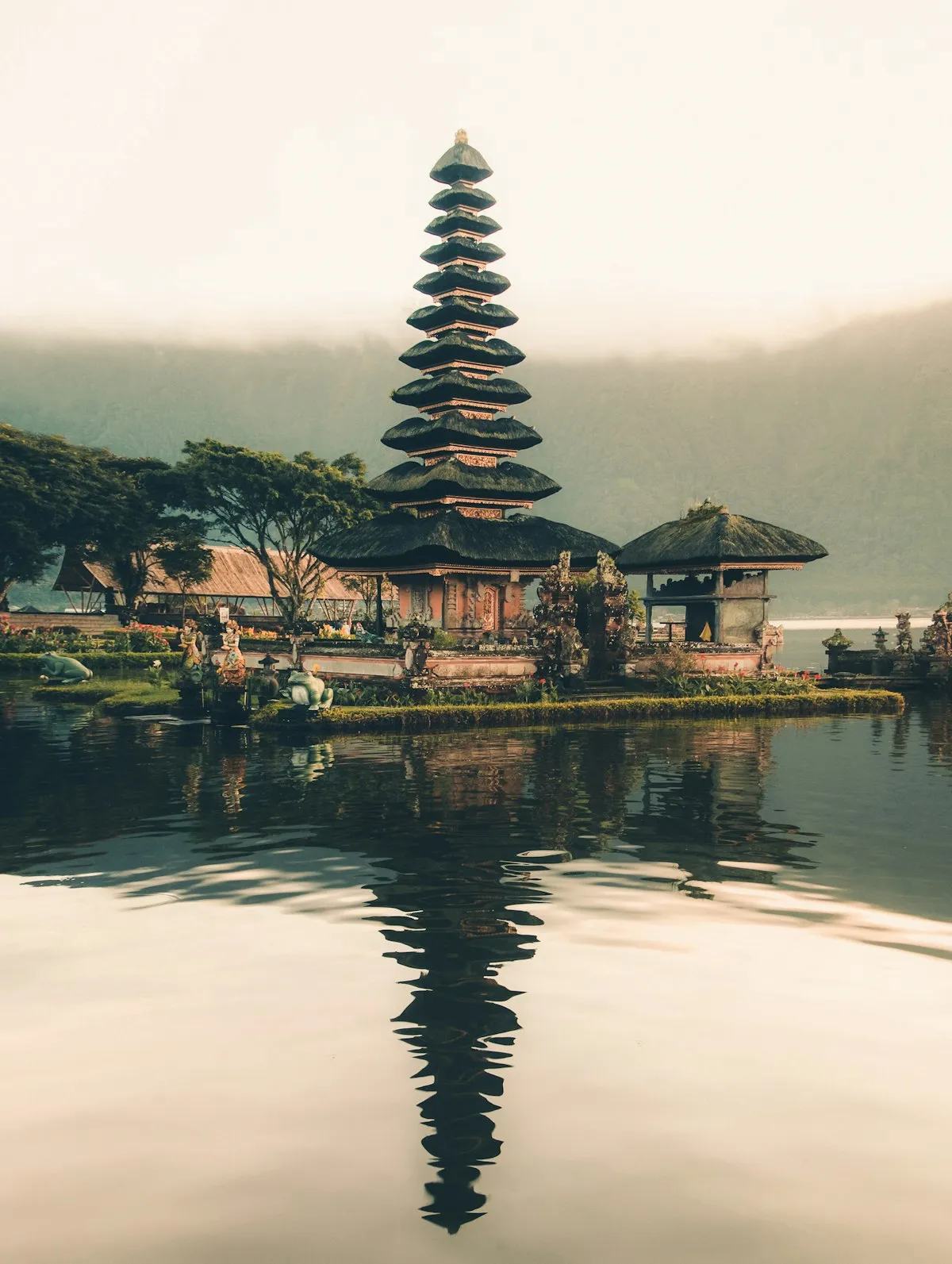
- Ulun Danu Beratan — A lakeside temple on Bedugul’s Lake Bratan, appearing to float on the water when the lake is high. One of Bali’s most photographed temples (it’s on the IDR 50,000 note). IDR 75,000. 1.5 hrs from Ubud.
Rice Terraces
- Tegallalang — The most famous, most accessible, and most crowded. See Top Attractions.
- Jatiluwih (UNESCO World Heritage) — 600 hectares of rice terraces on the slopes of Mount Batukaru. Far more expansive and far less crowded than Tegallalang. Walking trails of 2–4 hours through the paddies. The subak system here is the UNESCO-recognised one. IDR 75,000 entry. 1.5 hrs from Ubud. Recommended over Tegallalang for anyone wanting the authentic experience.
- Sidemen — A quiet valley in East Bali with rice terraces, Mount Agung views, and almost no tourists. Emerging as the “new Ubud” for those seeking peace. See Hidden Gems.
- Campuhan Ridge Walk (Ubud) — Not rice terraces but a beautiful paved path along a narrow ridge between two valleys of swaying grass and coconut palms. Free. Best at sunrise. Starts behind the Ibah hotel in central Ubud.
Beaches
Uluwatu / Bukit Peninsula — The Best Beaches
- Padang Padang — A small cove reached through a narrow gap in the rocks. White sand, turquoise water, good for swimming. Gets crowded by 10 AM. Free (IDR 15,000 parking).
- Suluban (Blue Point) — A surfer’s beach at the bottom of steep stairs through a cave. The tide-pool area between the cliffs at low tide is stunning. Strong currents — swimming only at low tide.
- Thomas Beach — Wider, calmer, and less crowded than Padang Padang. Good swimming. Sun loungers from IDR 50,000.
- Dreamland (New Kuta Beach) — Wide white sand beach with consistent waves. Good for bodyboarding and beginner surfing. Entrance IDR 15,000.
- Melasti Beach — A dramatic cliff-fringed white sand beach opened in 2017 after road access was built. One of Bali’s most beautiful beaches. Entrance IDR 10,000.
Seminyak / Canggu
- Seminyak Beach — Wide sandy beach, famous sunset views, beach clubs (Ku De Ta, Potato Head). Good for walking and sunset drinks, strong currents for swimming.
- Batu Bolong (Canggu) — Canggu’s main beach break and social hub. Surf schools, beanbag cafes, sunset sessions. Beginner-friendly waves at high tide.
- Echo Beach (Canggu) — More powerful waves (intermediate+), dramatic sunsets, beach bars. Black volcanic sand.
- Berawa Beach (Canggu) — Quieter than Batu Bolong, good for beginners, beach clubs (Finn’s).
East & North Bali
- Sanur — Calm, shallow water protected by a reef. Perfect for families and swimming. Sunrise side (Bali’s east coast). Old-school Bali vibe. Promenade walkway along the beach.
- Nusa Dua — Manicured resort beaches. Clean, calm, good for swimming. Luxury hotel access or public sections.
- Jimbaran — A fishing village bay with sunset seafood dinners (tables on the sand, fresh grilled fish, from IDR 150,000–300,000 per person). The classic Bali sunset dinner.
- Amed — Black volcanic sand on the northeast coast. Excellent snorkelling (Japanese shipwreck directly off the beach) and diving. Quiet, laid-back, a 2.5 hr drive from Ubud.
Nusa Penida
- Kelingking Beach — The famous T-Rex cliff viewpoint. The beach itself is reachable by a steep, difficult scramble (30–45 min down, not for everyone). The view from the top is spectacular regardless.
- Diamond Beach — White sand cove at the bottom of carved stone stairs. Crystal-clear water, dramatic cliff backdrop.
- Atuh Beach — Secluded beach with rock formations and an offshore island. Beautiful but requires climbing stairs.
- Crystal Bay — The best snorkelling spot on Nusa Penida. Manta ray and mola mola territory (seasonal). Calm water, sandy bottom.
The Complete Bali Food Guide
Balinese food is distinct from general Indonesian cuisine: pork-heavy (unique in Muslim-majority Indonesia), intensely spiced, and built around complex spice pastes (bumbu) of shallots, garlic, galangal, turmeric, lemongrass, chilli, and shrimp paste. The food at a good warung (family-run restaurant) is extraordinary and costs almost nothing.
Essential Balinese Dishes
- Babi guling — Spit-roasted suckling pig, rubbed inside and out with turmeric, coriander, lemongrass, and chilli, slow-roasted over coconut husks for hours until the skin is shatteringly crispy. The national dish of Bali. Served with lawar, rice, and sambal. IDR 50,000–80,000 at a warung. Best: Ibu Oka (Ubud, made famous by Anthony Bourdain), Babi Guling Chandra (Denpasar, locals’ favourite), Warung Babi Guling Pak Malen (Seminyak).
- Bebek betutu — Whole duck stuffed with spice paste, wrapped in banana leaves and coconut husks, and slow-cooked for 12–24 hours until the meat falls apart. The most labour-intensive Balinese dish. IDR 60,000–120,000. Best: Bebek Bengil (Dirty Duck Diner, Ubud) or Warung Mina (Ubud).
- Lawar — A ceremonial dish of chopped meat or jackfruit mixed with coconut, spices, and sometimes fresh blood (lawar merah). Served at temples and family ceremonies. At warungs, the bloodless version (lawar putih) is standard. Part of every babi guling plate.
- Sate lilit — Balinese satay: minced fish, pork, or chicken mixed with coconut, lime leaves, and lemongrass, moulded onto lemongrass sticks and grilled. Unlike the skewered satay of Malaysia/Java. IDR 25,000–40,000 for a plate.
- Nasi campur — “Mixed rice”: a plate of rice surrounded by small portions of meat, vegetables, sambal, tempeh, tofu, and crackers. Every warung’s daily special. IDR 20,000–40,000. The quality of a nasi campur plate is the true test of a warung.
- Nasi goreng — Indonesian fried rice with kecap manis (sweet soy sauce), garlic, shallots, and a fried egg on top. Ubiquitous. IDR 20,000–45,000.
- Ayam/ikan bakar — Grilled chicken or fish, marinated in bumbu, cooked over coconut husks. Smoky, tender, and served with sambal matah (raw shallot and lemongrass relish). IDR 30,000–60,000.
- Gado-gado — Steamed vegetables and tofu with peanut sauce. IDR 15,000–30,000. Vegetarian-friendly.
- Jamu — Traditional herbal tonics made from turmeric, ginger, tamarind, and other roots. Sold at warungs and juice shops. IDR 10,000–25,000. Good for settling the stomach.
| Dish | Typical Price | Where to Try |
|---|---|---|
| Babi guling (suckling pig) | IDR 50,000–80,000 | Ibu Oka (Ubud), Pak Malen (Seminyak) |
| Nasi campur | IDR 20,000–40,000 | Any good warung |
| Nasi goreng | IDR 20,000–45,000 | Everywhere |
| Sate lilit | IDR 25,000–40,000 | Warung Sate Lilit Bali (Sanur) |
| Bebek betutu | IDR 60,000–120,000 | Bebek Bengil (Ubud) |
| Smoothie bowl | IDR 45,000–75,000 | Canggu/Seminyak cafés |
| Western meal (restaurant) | IDR 80,000–200,000 | Seminyak, Canggu |
| Bintang beer (large) | IDR 18,000–50,000 | Everywhere |
Best Warungs & Restaurants
Ubud
- Ibu Oka — The most famous babi guling in Bali (Anthony Bourdain seal of approval). Busy, no-frills, extraordinary pig. IDR 60,000. Central Ubud near the Palace.
- Warung Biah Biah — Traditional Balinese home cooking in a garden setting. Nasi campur IDR 30,000. Quiet, authentic, away from the tourist strip.
- Locavore NXT (Ubud) — Bali’s most ambitious fine-dining restaurant (rebranded from the original Locavore). Chefs Eelke Plasmeijer and Ray Adriansyah’s hyper-local tasting menus use exclusively Indonesian ingredients. On Asia’s 50 Best Restaurants 2026. IDR 1,800,000–2,500,000 per person. Book weeks ahead. (Note: Michelin does not yet operate in Indonesia as of 2026 — earlier editions of this guide called Locavore “Michelin-keyed,” which was incorrect; the Michelin Keys system applies to hotels, not restaurants, and neither Michelin Stars nor Keys cover Indonesia yet.)
- Hujan Locale — Modern Indonesian cuisine by Will Meyrick. Beautiful setting. Mains IDR 80,000–180,000.
Seminyak & Canggu
- Warung Murah (Seminyak) — Local warung hidden behind the boutiques. Nasi campur IDR 25,000. Authentic and cheap in the middle of expensive Seminyak.
- Naughty Nuri’s (multiple locations) — Famous for pork spare ribs (not Balinese but beloved). BBQ ribs IDR 120,000. Dirty martinis IDR 70,000. An institution.
- Crate Café (Canggu) — Brunch capital of Canggu. Smoothie bowls, avocado toast, good coffee. IDR 60,000–100,000.
- Merah Putih (Seminyak) — Upscale Indonesian in a cathedral-like bamboo structure. Stunning architecture. Mains IDR 120,000–300,000.
Coffee Culture
Bali grows its own coffee (robusta in the lowlands, arabica in the highlands around Kintamani) and has a thriving specialty coffee scene alongside the traditional kopi Bali (grounds stirred into hot water, left to settle, drunk with the sludge at the bottom).
- Kopi luwak — The “civet coffee” (beans eaten and excreted by civets). Avoid the plantation tours — most cage the animals in cruel conditions. Ethical, wild-sourced kopi luwak exists but is rare and expensive. The tourism-industrial complex around it is exploitative.
- Seniman Coffee (Ubud) — The best specialty coffee in Bali. Single-origin Balinese beans, meticulous brewing, beautiful space. Espresso IDR 30,000. The coffee knowledge here rivals any third-wave cafe in Melbourne or Tokyo.
- Revolver Espresso (Seminyak) — Hidden down a narrow alley (look for the door). Excellent espresso, tiny atmospheric space. IDR 35,000–45,000.
- Expat Roasters (Seminyak) — Modern roastery-cafe with Bali-grown beans. Great pour-over. IDR 40,000–60,000.
- Kintamani coffee plantations — Visit a working plantation near Mount Batur (often combined with the sunrise trek or Tegallalang). Tastings IDR 50,000–100,000 for a full flight including kopi luwak. Ask if the civets are caged — if yes, skip it.
Areas & Where to Stay
Ubud — Culture, Rice Terraces & Yoga
The spiritual and cultural heart of Bali. Rice terraces, temples, monkey forest, art galleries, yoga studios, and the island’s best traditional food. The town centre is touristy and traffic-clogged, but stay 10 minutes out (Penestanan, Sayan, Campuhan) and you’re in paradise. Best for: Culture seekers, couples, wellness travellers, first-time visitors. Budget: Guesthouse IDR 200,000–400,000/night. Mid-range IDR 600,000–1,500,000. Luxury: Mandapa, Four Seasons Sayan (IDR 8,000,000+).
Seminyak — Dining, Beach Clubs & Boutiques
Bali’s most polished area: upscale restaurants (Merah Putih, Sarong, Mama San), beach clubs (Potato Head, Ku De Ta, W Hotel), and boutique shopping. The beach is wide with great sunsets. Traffic is terrible. Best for: Foodies, nightlife, luxury travellers. Budget: Villa IDR 500,000–1,000,000/night. Mid-range IDR 1,200,000–3,000,000. Luxury: W Bali, The Legian (IDR 5,000,000+).
Canggu — Surf, Nomads & Brunch
Bali’s digital nomad capital: co-working spaces, surf breaks, smoothie bowls, yoga, and a young, international crowd. Batu Bolong is the social centre; Berawa is quieter; Pererenan is the emerging quieter extension. The vibe is laid-back, creative, and increasingly expensive (the “cheap Bali” myth dies quickly here). Best for: Digital nomads, surfers, solo travellers, young couples. Budget: Hostel IDR 150,000–300,000. Villa IDR 400,000–900,000. Mid-range IDR 1,000,000–2,500,000.
Uluwatu / Bukit — Cliffs, Surfing & Luxury
The southern peninsula: dramatic limestone cliffs, world-class surf breaks, hidden cove beaches, and some of Bali’s best luxury resorts and cliff-top infinity pools. Less convenient for northern sightseeing but the best area for beaches and surfing. Best for: Surfers, beach lovers, honeymooners. Budget: Guesthouse IDR 200,000–500,000. Mid-range IDR 800,000–2,000,000. Luxury: The Edge, Alila Villas Uluwatu (IDR 6,000,000+).
Sanur — Quiet, Local & Family-Friendly
Bali’s most relaxed beach area: calm water, sunrise views, a paved beachfront promenade, local warungs, and a village atmosphere. The departure point for boats to Nusa Penida and Nusa Lembongan. Best for: Families, older travellers, those wanting calm. Budget: Guesthouse IDR 200,000–400,000. Mid-range IDR 500,000–1,200,000.
Amed — Diving, Snorkelling & Silence
A strip of quiet fishing villages on the northeast coast with the best shore diving and snorkelling in Bali (the USS Liberty shipwreck at Tulamben is a 5-min swim from shore). Black volcanic sand beaches, Mount Agung views, and a pace of life that feels like Bali 20 years ago. Best for: Divers, snorkellers, those seeking quiet. 2.5 hrs from the airport.
Sidemen — The Quiet Valley
A lush valley in East Bali with rice terraces, Mount Agung views, almost no tourists, and a handful of excellent small hotels. This is where you go when you want the Bali of the postcards without the crowds of Ubud. See Hidden Gems.
Surfing
Bali is one of the world’s great surf destinations. The best season is the dry season (April–October) for the west coast breaks; the east coast (Sanur, Nusa Dua) works in the wet season (November–March).
- Beginners: Batu Bolong (Canggu), Kuta Beach, Old Man’s (Canggu). Surf schools from IDR 350,000 for a 2-hour lesson including board.
- Intermediate: Echo Beach (Canggu), Dreamland (Bukit), Berawa, Balangan.
- Advanced: Uluwatu (world-class reef break, barrel-heavy), Padang Padang (the Balinese Pipeline), Bingin, Impossibles, Keramas.
- Board rental: IDR 50,000–100,000/day for a longboard or funboard. Bring your own board or buy a used one in Canggu (IDR 1,500,000–3,000,000).
Diving & Snorkelling
- USS Liberty Wreck, Tulamben — A WWII US cargo ship lying 30 metres offshore in 5–30m of water, completely covered in coral and marine life. One of the world’s most accessible wreck dives — you can snorkel over the shallowest sections. 2 fun dives: IDR 1,500,000–2,000,000.
- Manta Point, Nusa Penida — Oceanic manta rays (3–5m wingspan) circle a cleaning station. One of the most reliable manta encounters in the world. Best September–April. Boat + 2 dives: IDR 2,000,000–2,500,000.
- Crystal Bay, Nusa Penida — Mola mola (ocean sunfish) sightings July–October. Strong currents — advanced divers.
- Amed — Excellent macro diving (pygmy seahorses, frogfish, ghost pipefish) and the Japanese shipwreck for beginners. 2 dives: IDR 1,200,000–1,500,000.
- PADI Open Water certification: IDR 6,000,000–8,000,000 (3–4 days). Bali is one of the cheapest places in the world to get certified.
Activities & Wellness
- Mount Batur sunrise trek — See Top Attractions.
- White water rafting, Ayung River (Ubud) — 12 km of class II–III rapids through a stunning river gorge with waterfalls, carved stone temples, and jungle. Family-friendly. IDR 350,000–500,000 per person. Operators: Sobek, Mason Adventures.
- Yoga — Bali is one of the world’s yoga capitals. The Yoga Barn (Ubud) is the most famous studio: 15+ classes daily, from IDR 130,000 per class. Desa Seni (Canggu) for a village-style retreat. Multi-day retreats from IDR 3,000,000–8,000,000.
- Balinese massage / spa — One-hour traditional massage: IDR 80,000–150,000 at a street spa, IDR 250,000–600,000 at a mid-range spa, IDR 1,000,000+ at a luxury resort spa. Flower bath + massage packages: IDR 300,000–500,000.
- Cooking classes — Half-day classes including market visit, traditional Balinese cooking, and eating everything you make. IDR 350,000–600,000 per person. Paon Bali (Ubud) and Bumbu Bali (Nusa Dua) are highly rated.
- Cycling tours — Downhill cycling from Mount Batur through rice terraces and villages. IDR 400,000–600,000 including lunch. A great way to see rural Bali.
Nusa Penida & Nusa Lembongan
Nusa Penida
The largest and wildest of the three Nusa islands. Dramatic cliffs, Instagram-famous viewpoints, manta ray diving, and rugged beauty. Roads are improving but still rough in places — rent a scooter only if you’re confident on bad roads, otherwise hire a driver (IDR 500,000–700,000/day). The west coast (Kelingking, Broken Beach, Angel’s Billabong) can be done in a day trip; the east coast (Diamond Beach, Atuh Beach, Treehouse) deserves a second day.
Fast boat: From Sanur: IDR 200,000–350,000 return (30–45 min). Operators: Maruti Express, Angel’s Billabong Fast Boat. Entry fee: IDR 25,000. Accommodation: Budget guesthouses from IDR 200,000/night. Mid-range with pool from IDR 500,000–1,000,000.
Nusa Lembongan & Nusa Ceningan
Smaller, more relaxed, and better developed than Nusa Penida. Nusa Lembongan has beautiful beaches (Mushroom Bay, Dream Beach), great snorkelling, and a mellow surf break. Nusa Ceningan is connected by a yellow suspension bridge and has the famous Blue Lagoon cliff jump and Mahana Point cliff bar. Both islands are small enough to explore by scooter in a few hours.
Fast boat: From Sanur: IDR 150,000–300,000 return (25–30 min). Scooter rental: IDR 70,000–100,000/day.
Day Trips & Excursions
- Nusa Penida — See above. Best as a 2-day trip but doable as a long day from Sanur.
- Munduk & North Bali — Waterfalls (Sekumpul, Banyumala Twin, Gitgit), coffee and clove plantations, Ulun Danu Beratan temple, Lake Bratan. Cooler mountain climate. 2–2.5 hrs from South Bali. Best as an overnight.
- Sidemen Valley — Rice terraces, Mount Agung views, weaving villages, almost no tourists. 1.5 hrs from Ubud. See Hidden Gems.
- Amed & Tulamben — Snorkelling the USS Liberty wreck, black sand beaches, Mount Agung sunrise. 2.5 hrs from Ubud.
- Gili Islands (Lombok) — Three tiny islands (Gili Trawangan, Gili Air, Gili Meno) with no motorised vehicles, turquoise water, turtle snorkelling, and a party/chill vibe. Fast boat from Padang Bai or Amed: IDR 500,000–800,000 return (1.5–2 hrs). Best as a 2–3 day trip.
- Sekumpul Waterfall — Bali’s most spectacular waterfall: twin cascades plunging 80 metres into a jungle ravine. Requires a 20-min hike down (and back up) through rice terraces. Entry + guide: IDR 50,000–100,000. 2 hrs north of Ubud.
Getting Around
Scooter
The most common transport for tourists. Rental: IDR 70,000–120,000/day for a Honda Vario or similar automatic scooter. Petrol is cheap (IDR 12,000–15,000/litre). Important: You legally need an International Driving Permit (IDP) with a motorcycle endorsement. Police stops of tourists are common, and the fine is IDR 500,000–1,000,000. Insurance rarely covers scooter accidents without a valid IDP. Bali’s traffic is chaotic, roads are narrow, and dogs/chickens wander freely. If you don’t ride at home, don’t start in Bali.
Grab / Gojek
Ride-hailing apps work in most of Bali but are banned or restricted in some areas (Ubud centre, Sanur, parts of Uluwatu) due to taxi driver associations. Where they work, they’re cheap and reliable. Typical prices: Seminyak to Ubud: IDR 100,000–150,000. Seminyak to airport: IDR 50,000–80,000. Tip: If Grab doesn’t work in an area, walk 5 minutes to a main road — it often picks up there.
Private Driver
The best option for day trips and temple tours. A driver with air-con car for a full day (8–10 hours) costs IDR 500,000–700,000 (with fuel). Your hotel/villa can arrange one. Drivers double as informal guides and are generally knowledgeable and friendly. Tip IDR 50,000–100,000 for good service.
| Transport | Price | Best For |
|---|---|---|
| Scooter rental | IDR 70,000–120,000/day | Freedom, short distances, experienced riders |
| Grab/Gojek | IDR 15,000–50,000 (short), IDR 100,000–200,000 (long) | Point-to-point in South Bali |
| Private driver (full day) | IDR 500,000–700,000 | Day trips, temple tours, airport |
| Airport taxi (metered) | IDR 100,000–300,000 | Airport to hotel (use the official counter) |
| Fast boat (Nusa Penida) | IDR 200,000–350,000 return | Island hopping |
Budget & Money
- Backpacker: IDR 300,000–500,000/day (€17–28). Hostel/guesthouse, warung meals, scooter, free beaches and temples.
- Mid-range: IDR 800,000–1,500,000/day (€45–85). Villa with pool, mix of warung and restaurant meals, private driver, activities.
- Luxury: IDR 3,000,000+/day (€170+). 5-star resort, fine dining, spa, guided tours.
ATMs: Widely available. BCA, Mandiri, and BNI ATMs at banks are safest (avoid standalone ATMs on the street — skimming is common). Withdraw IDR 2,500,000–3,000,000 at a time. International card fees apply. Always choose “without conversion” when the ATM offers DCC (dynamic currency conversion) — their rate is always worse.
Cash vs cards: Warungs and local shops are mostly cash-only. Restaurants, hotels, and mid-range shops accept cards. Grab/Gojek can use cards or GoPay digital wallet. Carry IDR 500,000–1,000,000 in cash for daily expenses.
Weather & Best Time to Visit
- Dry season (April–October): The best time. Sunny, low humidity, minimal rain. July–August is peak tourist season (prices rise, Ubud and Uluwatu are busy). May–June and September–October are the sweet spots: dry weather, fewer crowds, lower prices.
- Wet season (November–March): Hot, humid, with short intense afternoon downpours (not all-day rain). Bali is still beautiful — greener, fewer tourists, lower prices. Some unpaved roads become difficult. Diving visibility drops. February is the wettest month.
- Nyepi (Day of Silence) 2027: March 22. Bali shuts down entirely for 24 hours — no lights, no sound, no leaving your hotel, no airport flights. A unique cultural experience if you’re there; plan around it if you’re not. Nyepi 2026 was March 19.
- Galungan & Kuningan 2026: June 17 & June 27. The most important Balinese Hindu festival cycle. Galungan celebrates the victory of dharma over adharma (good over evil); ancestral spirits visit earth. Kuningan marks their return 10 days later. Every road is lined with towering penjor (decorated bamboo poles) — one of the most photogenic times to visit. Temples are fully decorated and ceremonies happen everywhere.
- Temperature: 27–32°C year-round at sea level. Mountain areas (Ubud, Kintamani) are cooler. Water temperature: 27–29°C.
Etiquette & Culture
- Offerings (canang sari): The small woven baskets of flowers and incense placed on every doorstep, sidewalk, and shrine. Do not step on them. Walk around them. They are daily offerings to the gods and spirits.
- Temples: Sarong and sash required. Cover shoulders and knees. Menstruating women traditionally do not enter. Do not sit higher than a priest. No pointing feet at shrines. See Temples section.
- Hands: Use the right hand for giving and receiving. The left hand is considered unclean. Pass food, money, and objects with the right hand or both hands.
- Head: The head is considered sacred. Do not touch anyone’s head, including children.
- Ceremony traffic: If you encounter a ceremony procession blocking the road, stop and wait. Never drive through. These are daily religious events, not tourist performances.
- Dress modestly away from the beach. Swimwear in restaurants or temples is disrespectful.
- Bargaining: Expected at markets, street vendors, and for transport. Not at warungs, shops with fixed prices, or supermarkets. Start at 40–50% of the asking price and meet in the middle. Be friendly, not aggressive.
Safety & Health
- Safety: Bali is generally safe. Petty theft (bag snatching from scooters) occurs in tourist areas — wear bags across your body. Scooter accidents are the #1 risk for tourists. Violent crime against tourists is rare.
- Bali belly: Common in the first few days. Drink only bottled/filtered water. Ice in restaurants is generally safe (factory-made, tubular). Eat at busy warungs (high turnover = fresher food). Carry Imodium and oral rehydration salts.
- Mosquitoes: Dengue fever is present. Use repellent (especially at dawn/dusk). There is no malaria risk in Bali.
- Scooter safety: Wear a helmet (mandatory), carry your IDP, don’t drink and ride, and drive defensively. If injured without an IDP, your travel insurance may not cover you.
- Drugs: Indonesia has extremely harsh drug laws including the death penalty for trafficking. Do not buy, carry, or use drugs.
- Monkeys: The monkeys at Uluwatu and the Monkey Forest can bite if provoked. Do not taunt them, carry food visibly, or make sudden movements. If bitten, clean the wound and see a doctor (rabies risk exists).
- Rip currents: Strong at west coast beaches (Kuta, Canggu, Uluwatu). Swim between the flags. Do not swim at beaches without lifeguards unless you’re experienced in ocean swimming.
2026 Travel Notes & Changes
- Bali Tourist Levy: IDR 150,000 (≈€8.40) per international visitor, payable online before arrival at lovebali.baliprov.go.id. Active since February 2024. You receive a QR code to show at immigration. Covers the length of your stay (one-time payment).
- Visa on Arrival (VOA): IDR 500,000 (30 days, extendable once for 30 more days). Available for 90+ nationalities. e-VOA available online (molina.imigrasi.go.id) — apply before arrival to skip the airport queue. Highly recommended.
- Digital Nomad Visa (B211A): 60-day multiple-entry visa, extendable. Apply at an Indonesian embassy or through an agent. Indonesia’s “Second Home Visa” (5 years, requires proof of savings/income) is also available for longer stays.
- Traffic: Getting worse, especially the Seminyak–Canggu corridor and around Ubud. A new toll road extension and underpass projects are ongoing but not yet complete. Budget extra time for all journeys.
- Overtourism measures: Several temples have introduced timed entry, visitor caps, and higher foreigner prices. Mount Batur now requires registered guides. Some beaches charge entrance fees.
- Waste crisis: Bali’s waste management is a serious and visible problem, especially during rainy season when rivers of plastic wash onto beaches. Bring a reusable water bottle and refill at the many water refill stations. Choose accommodations and restaurants that manage waste responsibly.
- Digital Arrival Card (d-Card): Mandatory since October 2025. Complete online at imigrasi.go.id before arrival — immigration, customs, and health declaration in one form. Print or save the QR code. Separate from the e-VOA and Bali tourist levy.
- Proof of funds: Immigration may ask for evidence of sufficient funds (typically $2,000 or equivalent, plus return/onward ticket). Rarely enforced but becoming more common in 2026 — carry a bank statement or card balance screenshot.
- SIM cards: Telkomsel (best coverage) or XL Axiata. Buy at the airport or any phone shop. Tourist SIM with 15–30 GB data: IDR 100,000–200,000. Register with passport (mandatory).
Hidden Gems & Local Secrets
- Sidemen Valley — East Bali’s best-kept secret: terraced rice paddies, Mount Agung views, traditional weaving villages, almost zero tourists. Stay at a small guesthouse, walk the rice terraces, take a cooking class with a local family. The Bali that Instagram forgot. 1.5 hrs from Ubud.
- Munduk — A cool mountain village in North Bali surrounded by waterfalls (Sekumpul, Banyumala Twin, Red Coral), coffee plantations, and clove forests. Stay in a hillside guesthouse, trek to waterfalls, drink fresh Kintamani coffee. 2 hrs from Ubud.
- Penestanan (near Ubud) — An artists’ village a 15-minute walk from central Ubud, separated by a steep staircase from Campuhan. Rice terrace views, small galleries, quiet guesthouses, and none of Ubud’s traffic. The best place to stay if you want Ubud’s culture without its chaos.
- Banyumala Twin Waterfall — Two parallel waterfalls cascading into a swimming pool. Fewer visitors than Sekumpul or Tegenungan. IDR 20,000 entry. Near Munduk.
- Jatiluwih Rice Terraces — The UNESCO ones. Far more beautiful and peaceful than Tegallalang. See Rice Terraces.
- Tabanan’s black sand beaches — Kelating Beach and Balian Beach are uncrowded surf spots with black volcanic sand, temple ruins, and almost no development. 1 hr west of Seminyak.
- Subak Museum (Tabanan) — A small museum explaining Bali’s 1,000-year-old cooperative irrigation system. Free/donation. Worthwhile before visiting Jatiluwih to understand what you’re seeing.
- Warung hopping on Jalan Teuku Umar (Denpasar) — Bali’s capital has the best local food and nobody goes there. Babi guling Chandra, nasi jinggo carts, sate plecing — all at local prices.
Frequently Asked Questions
How many days do I need in Bali?
Seven days minimum. Day 1–2 Ubud (temples, rice terraces, monkey forest). Day 3 day trip (Mount Batur or Tirta Empul). Day 4–5 Uluwatu/beaches. Day 6 Nusa Penida. Day 7 Seminyak/Canggu. Two weeks lets you add Sidemen, Munduk, Amed, and the Gilis.
Is Bali expensive?
Bali is very affordable. Warung meals IDR 20,000–40,000 (€1–2), scooter IDR 100,000/day (€5.60), temples IDR 50,000–75,000 (€2.80–4.20). Budget travellers can live well on €25–30/day. Mid-range on €50–80/day. Only luxury resorts and Seminyak restaurants push prices up.
Do I need a visa?
Most nationalities get a 30-day Visa on Arrival (VOA) for IDR 500,000, extendable once for 30 more days. Apply for the e-VOA online before arrival to skip the airport queue. You must also complete the Digital Arrival Card (d-Card) at imigrasi.go.id before arrival (mandatory since October 2025). The IDR 150,000 Bali tourist levy is separate and also payable online.
Is Bali safe?
Generally very safe. The main risks are scooter accidents (the #1 cause of tourist injury), Bali belly, and petty theft. Drug penalties are extreme (death penalty for trafficking). Swim between flags at west coast beaches due to rip currents.
What should I eat first?
Babi guling (suckling pig) at Ibu Oka in Ubud. Then nasi campur at any busy warung, sate lilit, bebek betutu, and a Jimbaran sunset seafood dinner.
When is the best time to visit?
May–June and September–October: dry weather, fewer crowds than July–August peak, and lower prices. November–March is rainy but Bali is still beautiful and much cheaper.
Ubud or Seminyak?
Both. Ubud for culture, rice terraces, temples, and yoga. Seminyak/Canggu for beaches, dining, and nightlife. Split your stay. Most visitors do 3–4 nights Ubud + 3–4 nights south coast.
Should I rent a scooter?
Only if you ride at home. Bali traffic is chaotic and scooter accidents are the top tourist risk. You need an International Driving Permit with motorcycle endorsement. Without one, police fine IDR 500,000–1,000,000 and your insurance won’t cover accidents. Use Grab/Gojek or hire a driver instead.
Explore More AiFly City Guides
Planning a multi-destination trip? Check our other guides:
Find Cheap Flights to Bali ✈️
Search Skyscanner for the best deals from your city
Part of the AiFly City Guide series — researched, written, and verified by experienced travel editors.
🌍 See the bigger picture: our Indonesia travel guide covers regions, when to go, and getting around.
Cheapest Flights to Bali
We track flight deals to Bali from 4 cities worldwide. Here are the best recent fares:
Prices are based on recent deals and may no longer be available. Browse all flight deals