Ahmedabad — The Complete City Guide 2026
India’s first UNESCO World Heritage City (since July 2017), home of Sabarmati Ashram and the 12 March 1930 Salt March origin. The Sidi Saiyyed Mosque jali is the working IIM-A logo; 360 pols form the walled city’s traditional housing fabric; the 78-foot Mahavir Stambh column of the Hutheesing Jain Temple anchors a 1848 merchant-Jain heritage; the Narendra Modi Stadium at 132,000 seats hosts the 2026 ICC T20 World Cup final.
₹800–₹25,000/day budget
Tropical semi-arid: 10 to 42°C; “Three Furnaces”
Indian rupee (₹) — €1 ≈ ₹95
e-Visa $25 (Jul–Mar) / $10 (Apr–Jun)
Gujarat dry state — permit needed
Editor’s Note — three Ahmedabads behind one jali
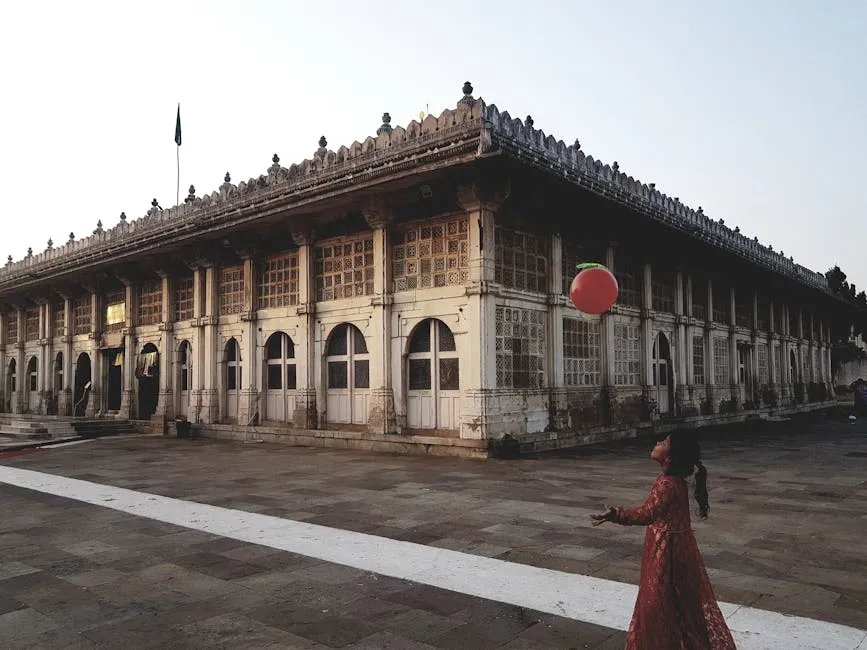
Stand in front of the western lattice window of the Sidi Saiyyed Mosque (سيد سيد) on Lal Darwaja in the Bhadra Fort district. The arched jali — carved from a single block of sandstone in the late sixteenth century — depicts a stylised palm tree with intertwined branches, and it is the most-reproduced architectural detail in the city. The logo of the Indian Institute of Management Ahmedabad uses it. State tourism uses it. The municipal corporation uses it. It is, for a city of approximately eight million people, the working visual shorthand.
The honest opening for Ahmedabad is the same jali. Carved during the late period of the Gujarat Sultanate (the regional Muslim kingdom whose first ruler, Ahmad Shah I, founded the walled city in 1411 and gave it his name), the window survives inside what is now an active Indo-Islamic mosque inside a UNESCO World Heritage City. The architecture is Sultanate. The neighbourhood around it is a Hindu and Jain trading commercial centre. The institutional logo that quotes it is a post-1947 management school. Three Ahmedabads, one piece of carved stone.
The first Ahmedabad is the walled city. Ahmad Shah’s foundation in 1411 — on the eastern bank of the Sabarmati at the site of an older Hindu settlement called Karnavati — became the capital of the Gujarat Sultanate from approximately 1411 to 1573, then the Mughal subah (provincial) capital, then a British-administered commercial centre. The walled city covers approximately 5.78 square kilometres and contains roughly 360 pols — densely-packed traditional housing clusters of 50 to 100 closely-spaced courtyard houses sharing side walls, entered through gated arches, organised around shared communal life. The pols have characteristic chabutaros (bird-feeding towers), public wells, and small religious institutions interleaved with the houses. Many pol houses preserve elaborately carved wooden facades — the regional vernacular domestic woodwork the UNESCO Committee specifically cited. In July 2017 Ahmedabad became the first city in India to be inscribed on the UNESCO World Heritage List as a city (not as a discrete monument complex — the entire walled urban fabric was inscribed). No other Indian city carries this designation as of May 2026.
The second Ahmedabad is Gandhi’s. Mohandas K. Gandhi (1869–1948) founded the Sabarmati Ashram (originally the Satyagraha Ashram) on the west bank of the Sabarmati in 1917, on his return from South Africa, and made it his working home and movement headquarters for thirteen years (1917–1930). He chose Ahmedabad specifically because the textile-mill workers and Gujarati Jain merchant community here gave him both a political base (the 1918 Ahmedabad textile mill strike was his first major Indian satyagraha) and the moral seriousness he needed. On 12 March 1930, from this ashram, he and seventy-eight followers began the 241-mile Salt March to Dandi — the working anchor moment of the Indian independence movement. The ashram remains open today, free of charge, as a museum and active site of pilgrimage (08:30–18:30 daily, including all public holidays).
The third Ahmedabad is the modern industrial-and-political city. Through the late nineteenth and twentieth centuries, Ahmedabad was the cotton-mill capital of British India — variously described as “the Manchester of the East,” a phrase that captures both the industrial scale and the working-class textile labour. The mills declined sharply through the 1970s–1990s. The city pivoted into education (the Indian Institute of Management founded 1961, designed by Louis Kahn; the National Institute of Design founded 1961; CEPT University founded 1962), pharmaceuticals, and gradually finance (Gujarat International Finance Tec-City / GIFT City, developing since 2007). It became the political base of the present-day ruling party of India: Narendra Modi served as Chief Minister of Gujarat from 2001 to 2014 from Gandhinagar (the state capital, a twin city to Ahmedabad approximately 25 km north), and then as Prime Minister of India from May 2014. The Narendra Modi Stadium in Motera (north Ahmedabad) was reconstructed in its present form 2015–2020; with 132,000 seats it is the largest cricket stadium in the world and the largest stadium of any kind by seated capacity. It hosts the final of the 2026 ICC Men’s T20 World Cup.
A note on a darker recent chapter, because honesty matters and the city carries it: on 27 February 2002 at the Godhra railway station, 58 Hindu pilgrims and karsevaks died when their train coach was burnt. Beginning 28 February 2002, three days of organised inter-communal violence erupted across Gujarat. Outbreaks continued in Ahmedabad for approximately three months, with episodic attacks against the Muslim minority population across the state for the following year. Official Indian government figures recorded 1,044 dead (790 Muslim, 254 Hindu) with 223 missing and approximately 2,500 injured. The independent Concerned Citizens Tribunal estimated up to 1,926 killed; some independent investigators have estimated over 2,000. The Naroda Patiya massacre on 28 February 2002, in northeast Ahmedabad, killed approximately 97 Muslim residents in a single afternoon and resulted in 32 convictions by special courts in 2012 (subsequently varied on appeal). Historians, including Gyanendra Pandey and Paul Brass, have characterised the events as organised anti-Muslim violence rather than spontaneous riots; the Indian Supreme Court’s Special Investigation Team in 2012 cleared the then-Chief Minister Narendra Modi of personal complicity in specific allegations, while a number of mid-level officials and political activists were convicted. The events remain politically contested and are not openly addressed within Ahmedabad’s working tourist infrastructure. There is no public memorial at the Naroda Patiya site as of May 2026. Visitors who arrive aware of the context understand parts of the contemporary city — the geography of Muslim residential clusters in Juhapura and the eastern walled-city peripheries; the visible reorganisation of historic mixed neighbourhoods; the official tourist narrative that anchors heavily on the medieval Sultanate, Gandhi, and the UNESCO designation rather than on twentieth-century intercommunal history — that visitors without it do not.
These three Ahmedabads coexist within the walled city’s 5.78 square kilometres and the wider metropolitan area. The Sidi Saiyyed jali is across the road from a 1990s commercial highrise; the Sabarmati Ashram is ten minutes by autorickshaw from a multiplex cinema; the IIM-A campus with its Louis Kahn red-brick geometries sits four kilometres south of the walled-city gates. An honest version of the city takes the layering seriously. The pages that follow take Ahmedabad piece by piece.
Why Ahmedabad now
A 30-day Indian e-Tourist Visa runs $25 (July–March) or $10 (April–June discount tier) for most EU passports, UK, Canada, Australia, New Zealand, and most non-US/UK applicants; US passport holders pay $25 for the 30-day, or $160 for a 5-year multi-entry; UK passport holders pay $484 for the 5-year multi-entry (the disparity is reciprocal — UK levies similar premium pricing on Indian visa applicants). Apply only via the official portal at indianvisaonline.gov.in; submit at least 4 days before travel. Verify current pricing tiers before booking — Indian e-visa pricing changes periodically.
Ahmedabad is one of India’s most-underrated tourist destinations from a Western perspective. The standard Western itinerary routes Delhi → Agra → Jaipur (the Golden Triangle), occasionally Varanasi or Udaipur, and skips Gujarat entirely. From an Indian-domestic perspective, Ahmedabad is the working business-and-heritage anchor of Gujarat. The city is materially cheaper than Delhi or Mumbai (approximately 25–35% cheaper at equivalent tier) and offers the country’s only UNESCO World Heritage urban inscription. The food alone — pure-vegetarian Gujarati thali, fafda-jalebi breakfast, the Manek Chowk night food market — justifies the trip.
The 2026 specifics worth noting: construction of the new integrated terminal at Sardar Vallabhbhai Patel International Airport is scheduled to begin March 2026 (₹3,100+ crore project); Air India and Air India Express shifted operations to Terminal 2 from Terminal 1 on 29 March 2026; the Ahmedabad Metro Phase-2B airport-link extension is in progress with completion targeted for 2026 (verify the operational date — Indian transit infrastructure deliveries frequently slip); the Narendra Modi Stadium hosts the final of the 2026 ICC Men’s T20 World Cup; the Sabarmati Riverfront west-bank promenade extensions and the Coldplay-record-setting concert capacity continue to anchor the city’s revised waterfront identity.
Getting there
Sardar Vallabhbhai Patel International Airport (AMD)
AMD sits approximately 9 km north-east of central Ahmedabad on the Hansol–Naranpura axis. Two operational passenger terminals as of May 2026: Terminal 1 (mostly international flights and certain domestic carriers) and Terminal 2 (Air India and Air India Express domestic and international, post the 29 March 2026 shift). A new integrated terminal building is scheduled to begin construction in March 2026, replacing the current Gujsail terminal facilities at a budget exceeding ₹3,100 crore. The airport is operated by Adani Airports under a 50-year private concession from the Airports Authority of India that began in 2020.
Long-haul connections from Europe: Direct flights from Frankfurt (Lufthansa via Lufthansa-Indigo codeshare and seasonal direct), Doha (Qatar Airways), Dubai (Emirates and flydubai), Abu Dhabi (Etihad), Sharjah (Air Arabia), Muscat (Oman Air), Singapore (Singapore Airlines and Scoot), Bangkok (Thai Lion Air) and London (verify British Airways or Air India direct status). The vast majority of European visitors arrive via Dubai, Doha or Abu Dhabi one-stop.
Long-haul from North America: No direct flights as of May 2026; standard one-stop routings via Dubai, Doha, Frankfurt, London (LHR), or Singapore.
Airport metro: Ahmedabad Metro Phase 2B will directly connect SVPIA to the city when complete; targeted completion 2026 (verify operational status before assuming the airport-direct extension is open). The Phase 1 metro line runs the east-west spine through central Ahmedabad and connects to APMC, Gheekanta, Old High Court, Stadium, Gurukul Road and others; from the airport, a connecting autorickshaw or taxi (~15 minutes, ₹150–300) to the nearest open metro station is the working answer until the direct airport link opens.
Airport bus: Ahmedabad Janmarg BRTS (Bus Rapid Transit System) connects the airport to several major nodes including Sabarmati Ashram, Ranip, Gandhinagar and the central city. Approximately ₹15–40, 30–60 minutes.
Taxi / autorickshaw / Uber-Ola: Metered prepaid taxi from the airport rank to central Ahmedabad (Khanpur, Ellis Bridge, Navrangpura) ₹400–600. Uber and Ola are widely available; airport-to-Khanpur typically ₹300–500. Autorickshaw from the prepaid rank ₹250–450.
Editor’s tip: If you arrive after midnight or before 06:00, use the airport prepaid taxi counter or pre-book an Uber/Ola at the gate — informal taxi drivers around the exit will quote 2–3× the meter rate.
Train
Ahmedabad Junction (ADI) is the city’s primary railway station, with frequent connections across western and northern India. The Vande Bharat Express (modern semi-high-speed) connects Ahmedabad to Mumbai Central in approximately 5h 25m for ₹1,400–2,500 chair-car (verify current schedule and pricing). The Karnavati Express (Mumbai–Ahmedabad) and the Shatabdi Express (Delhi–Ahmedabad, approximately 9 hours) are the working day-train options. Mumbai is also accessible by overnight train (approximately 7–9 hours depending on the service). Delhi by overnight train approximately 14–16 hours; by Vande Bharat the AmrutBharat (verify if it operates Delhi-Ahmedabad directly) under 10 hours.
Bus
The Gujarat State Road Transport Corporation (GSRTC) and various private operators run sleeper coaches from Mumbai (~10–12 hours overnight), Udaipur (~6 hours), Jaipur (~14 hours overnight), Delhi (overnight, ~18 hours — generally fly or train instead).
Road
Ahmedabad is connected by the National Expressway 1 (Ahmedabad-Vadodara, ~100 km in approximately 90 minutes) and NE-3 (Vadodara-Mumbai). Self-drive in India is not recommended for first-time foreign visitors; consider hiring a car with driver (approximately ₹2,500–4,500 per day for an AC sedan, plus driver food).
12 attractions worth your time
The honest version of Ahmedabad is that the headline attractions are concentrated within the walled city (UNESCO 2017) plus Sabarmati Ashram on the west bank, with two-to-three major day-trip anchors (Modhera, Lothal, Statue of Unity). Most foreign tourist itineraries do the Heritage Walk and Sabarmati Ashram and consider Ahmedabad covered in 1.5 days. The list below restores the balance.
1. The Ahmedabad Heritage Walk (Old City)
Departure: Kalupur Swaminarayan Temple, walled city
Hours: 07:45 daily (departs); ends at Jama Masjid approximately 10:30
Cost: ₹200 Indian / ₹300 foreign citizens (~€3.15)
Distance: 2.25 km, approximately 2h 45m
Best time: Daily — but late November to early February for cooler walking temperatures
The 2.25 km official municipal walking tour through the walled city, organised by the Ahmedabad Municipal Corporation in partnership with Akshar Travels Pvt. Ltd. Route: Kalupur Swaminarayan Temple → Calico Dome → Manek Chowk → Harkunvar Shethani ni Haveli → pols including Lambeshwar ni Pol, Doshivada ni Pol, Astodia Chakla → finishes at the Jama Masjid. The walk threads through approximately fifteen pols, three temples, two havelis and the Jama Masjid.
Editor’s tip: The Heritage Walk is the working anchor of an Ahmedabad visit and arguably the single best-organised heritage city tour in India. The morning departure (07:45) catches the pols at their working morning — milk vendors, vegetable carts, prayers, the chabutaros being fed. The evening walk (verify current schedule) covers a different route. Book ahead at heritagewalkahmedabad.com or at the Kalupur Swaminarayan Temple ticket desk. AMC is undertaking a ₹37.34-crore renovation of the route through 2026 — verify temporary route changes before departure.
Pro Tip: The Heritage Walk does not include Sidi Saiyyed Mosque (slightly outside the route) — visit Sidi Saiyyed separately the same morning, either before the walk (07:00 onwards) or directly after.
2. Sabarmati Ashram (Gandhi Ashram)
Address: Ashram Road, west bank of the Sabarmati
Hours: 08:30–18:30 daily, including all public and national holidays
Cost: Free entry
Allow: 2 hours minimum; 3 hours for the museum + grounds + meditation
The 1917-founded residence of Mohandas K. Gandhi for the thirteen years 1917–1930. The complex includes Hriday Kunj (Gandhi’s personal cottage), Magan Niwas (his nephew Maganlal Gandhi’s residence), Vinoba Kutir, Nandini (the guest house where Gurudev Tagore stayed), the Upasana Mandir (open-air prayer ground), and the Gandhi Memorial Museum (an architecturally significant 1963 building designed by Charles Correa, one of India’s defining 20th-century architects). The museum houses Gandhi’s letters, his charkha (spinning wheel), original photographs, manuscripts including drafts of speeches, and the working details of the 1930 Salt March.
Editor’s tip: Start with the Hriday Kunj cottage on the river-facing side — Gandhi’s actual living space, preserved as he left it. The Charles Correa museum building is itself a working anchor for a visit; the inner courtyards and the sense of scale (modest, walled, oriented toward the river) are the architectural register of the ashram movement.
Pro Tip: Allocate 45 minutes to the museum and 30 minutes to walking the grounds. The Sabarmati Riverfront promenade (developed 2005-onwards, expanded continually) starts from immediately east of the ashram — combine with a walk along the river.
3. Sidi Saiyyed Mosque (Sidi Saiyyed Jali)
Address: Lal Darwaja, near Bhadra Fort
Hours: 07:00–18:00 daily (mosque visiting; prayer times may restrict non-Muslim access briefly)
Cost: Free entry
Allow: 30 minutes
The late-sixteenth-century mosque famous for its two western jali windows — semicircular stone lattice screens carved from single sandstone blocks depicting intertwined palm-tree branches. The mosque was built in 1572–1573 by Sidi Saeed (سيد سعد), an Abyssinian retainer in the Sultanate court. The jali is one of the most-cited examples of Indo-Islamic stone-carving and is the working visual symbol of Ahmedabad — adopted as the logo of the Indian Institute of Management Ahmedabad, Gujarat Tourism, and the Ahmedabad Municipal Corporation. The mosque is small (a single hall, not a large congregational mosque) and continues to function as an active prayer space.
Editor’s tip: Visit the western jali side — the eastern face is less elaborately carved. The light at 09:00–11:00 (morning sun behind the jali) produces the working photograph of the intertwined-branch pattern.
4. Hutheesing Jain Temple
Address: Bardolpura, north of the walled city
Hours: 09:00–12:00 and 17:00–19:00 daily (closed 12:00–17:00 for lunch break)
Cost: Free entry
Allow: 45–60 minutes
The 1848-completed Jain temple commissioned by Sheth Hutheesing Kesarisingh, a prominent Ahmedabad merchant. Dedicated to Dharmanatha, the fifteenth Jain Tirthankara. The architectural style is late-period Maru-Gurjara (Solanki-revival), with elaborately carved white marble and sandstone, a central shrine, secondary shrines, and a 52-shrine perimeter (the “fifty-two Jinalaya” form typical of Gujarat Jain architecture). The 78-foot Mahavir Stambh column was added later as a centenary commemoration of the temple’s founding (sources cite various completion dates between the 1980s and 2003; verify the construction year against the temple administration’s own records before citing a specific year).
Editor’s tip: Cameras are not permitted inside the temple. Remove shoes at the outer enclosure; modest dress required (no shorts above knee). The temple is closed during the midday lunch hours (12:00–17:00) — schedule your walled-city circuit to visit Hutheesing in the morning or early evening.
5. Jama Masjid (Friday Mosque)
Address: Manek Chowk area, central walled city
Hours: Approximately 06:00–20:00 daily; closed to non-Muslim visitors during Friday midday prayer (~12:30–14:30) and the five daily prayer times
Cost: Free entry
Allow: 45 minutes
The 1424-completed congregational mosque built by Ahmad Shah I himself, twelve years after he founded the city. One of the most elaborate examples of Sultanate-period mosque architecture: 15 domes (originally 260 pillars, of which the surviving columns reflect Hindu-Jain temple-element repurposing — the mosque’s structural elements visibly incorporate adapted material from earlier Hindu and Jain temples on the site), a large central courtyard, and the Bhadra-area precinct including the tomb of Ahmad Shah I (in the adjacent Badshah no Hajiro) and his three wives (in the Rani no Hajiro). The mosque stands directly within the walled-city commercial centre, opposite Manek Chowk.
Editor’s tip: As an active mosque, Jama Masjid expects respectful behaviour. Shoes off at entry; modest dress (full-length trousers, shoulders covered); women should carry a headscarf or dupatta to cover hair during the visit. The Friday midday is the wrong time for visitors — go on any other day or earlier/later on Friday.
6. Adalaj Stepwell (Adalaj ni Vav)
Address: Adalaj village, approximately 18 km north of central Ahmedabad
Hours: 08:00–18:00 daily
Cost: Free entry
Allow: 1.5 hours including travel time from the city
A five-storey octagonal stepwell built in 1499 by Queen Rudabai, consort of the Vaghela ruler Veer Singh, as a water-source-and-shelter. The stepwell descends approximately 30 metres underground in successive intricately-carved sandstone levels, alternating worship niches with platforms; the central well shaft at the bottom carried groundwater for the wider community. The carvings depict Hindu deities, Jain motifs and Islamic geometric patterns — a syncretic late-medieval Gujarat architectural register.
Editor’s tip: Adalaj is one of India’s most architecturally significant stepwells (alongside Rani-ki-Vav at Patan, which holds UNESCO World Heritage status separately since 2014). Visit either as a half-day from central Ahmedabad (autorickshaw or taxi ₹400–600 round trip; allow 1h there and 1h at the site) or combine with the Akshardham Temple in Gandhinagar (additional 20 minutes north) for a half-day cluster.
Pro Tip: The light at the bottom of the well is dramatic between 11:00 and 14:00 when the sun reaches deep enough into the shaft to illuminate the lower carvings. Earlier or later, the lower levels are too dim for photography without flash.
7. Calico Museum of Textiles
Address: Sarabhai Foundation, Shahibaug, north-central Ahmedabad
Hours: Guided tour only, daily except Wednesdays and public holidays. Tour runs 10:30–13:00 (entry permitted only during 10:15–10:30 window). Maximum 20 visitors per tour.
Cost: Free entry, but pre-registration is mandatory at calicomuseum.org or by phone (the visitor cap of 20 is enforced — turn-up-and-hope visits are routinely turned away).
Allow: 2.5 hours
The Calico Museum is the most important textile museum in India and arguably the most important in Asia. Founded in 1949 by industrialist Gautam Sarabhai and his sister Gira Sarabhai, the collection contains pre-modern Indian textiles from the seventeenth to twentieth centuries: court costumes, regional embroideries, religious textiles, tribal art, Mughal-era brocades, and the working Gujarati domestic textile traditions. The collection is curatorially serious — a single visit takes 2.5–3 hours and is led by a museum staff member who explains the historical and technical context of each major piece.
Editor’s tip: This is the working anchor of Ahmedabad’s heritage offering for the visitor whose interest is textiles, art, or design history. Book the visit at least seven days ahead, preferably ten days. Cameras are not permitted; bags are checked. The museum’s tour is the only way in — there is no self-guided general admission.
8. Bhadra Fort and Teen Darwaza
Address: Bhadra, central walled city
Hours: Bhadra Fort exterior 24/7; clock tower museum approximately 09:00–18:00; Teen Darwaza 24/7
Cost: Bhadra Fort clock tower museum approximately ₹20–50 (verify current fee at the entry desk); Teen Darwaza free
Allow: 1.5–2 hours including walking the connection
The original royal citadel of the Gujarat Sultanate, completed in 1411 alongside the walled city’s foundation. The fort housed the sultans, their administration, and the working royal courts. The clock tower added in 1849 (under British colonial administration) anchors the city’s central public space. Adjacent: Teen Darwaza — the three-arched ceremonial gate built circa 1415 connecting the royal precinct to the main commercial street. The Teen Darwaza streetscape is one of the most photographed working public spaces in the walled city.
Editor’s tip: Bhadra is the working anchor of the walled city’s central public space. The plaza in front (Bhadra Plaza) hosts working morning vendors and is a strong sunset photograph viewpoint with the clock tower silhouetted against the sky.
9. Sabarmati Riverfront
Address: Sabarmati River, west bank promenade, central Ahmedabad
Hours: Open 06:00–22:00; lower promenade approximately 24/7
Cost: Free
Allow: 1–2 hours for a walk
The 11.5-kilometre developed waterfront (originally a 2005 project, expanded continually through the 2010s) running both east and west banks of the Sabarmati through central Ahmedabad. Working sections: Sabarmati Ashram (north-west bank) → Gandhi Bridge → Vivekananda Bridge → Sardar Bridge → Ellis Bridge → Nehru Bridge (south). The Flower Park and Atal Bridge — a 300-metre kite-inspired pedestrian-only undulating bridge between Sardar Bridge and Ellis Bridge, inaugurated by Prime Minister Narendra Modi on 27 August 2022 (named after former Prime Minister Atal Bihari Vajpayee on his birth anniversary 25 December 2021) — are the working attractions; the cycling and walking tracks are heavily used by local residents in the early morning and after sunset.
Editor’s tip: Visit at sunset or just after — temperatures drop, the bridges light up, and the working evening crowds (families, joggers, food vendors) give a real sense of the city’s contemporary middle-class life that the walled-city tour misses.
10. Indian Institute of Management Ahmedabad (IIM-A) campus and Louis Kahn Plaza
Address: Vastrapur, west Ahmedabad (south-west of the walled city)
Hours: Campus accessible to walk-in visitors via the main gate; visitor centre approximately 10:00–17:00 weekdays
Cost: Free entry (working academic campus; respect institutional boundaries)
Allow: 1.5 hours
The Indian Institute of Management Ahmedabad, founded 1961, with the original campus designed by Louis Kahn (1901–1974), the American architect, completed in the late 1960s and early 1970s. The red-brick geometries, circular openings, and the working monumental scale of Kahn’s library, dormitories and main academic block are among the most-cited examples of late-modernist architecture in Asia. The site is on every serious architecture itinerary.
Editor’s tip: Visit weekdays during academic term for the working campus atmosphere. The original Kahn-designed dormitories (Vikram Sarabhai Library and the dormitory blocks) are the priority. Guided architectural tours of the IIM-A campus are occasionally offered by the institution’s heritage cell — check the IIM-A heritage cell website or contact the campus administration for current visitor-tour scheduling.
11. Akshardham Temple Gandhinagar
Address: Gandhinagar, approximately 25 km north of Ahmedabad
Hours: 09:30–18:30 Tuesday–Sunday, closed Mondays
Cost: Free entry to temple proper; exhibitions ₹100–250
Allow: 3–4 hours
The 1992-completed BAPS Swaminarayan Akshardham temple at Gandhinagar — a 23-acre pink sandstone complex with the main shrine, water shows, exhibitions and gardens. The architecture is contemporary-traditional Hindu temple style. The complex is heavily securitised (camera bans, bag checks, no electronic devices) following the 24 September 2002 terrorist attack on the temple in which 33 people were killed — handled at the working memorial register with a permanent on-site memorial.
Editor’s tip: Akshardham Gandhinagar is the working religious-architectural anchor for visitors interested in contemporary Hindu monumental temple-building. Allow time for security (entry processing can take 30+ minutes during festival periods).
12. Narendra Modi Stadium (Motera)
Address: Motera, north Ahmedabad, west bank of the Sabarmati
Hours: Match days only for public access; tours via Gujarat Cricket Association on non-match days (verify current schedule)
Cost: Match tickets ₹500–25,000+; stadium tour approximately ₹400 (verify current rate)
Allow: Full day for a match; 2 hours for a tour
The world’s largest cricket stadium by seating capacity at 132,000, reconstructed in its present form 2015–2020 (replacing the earlier Sardar Patel Stadium that occupied the site). 63-acre campus, parking for 13,000 vehicles, separate food court, dedicated metro station. Named after the current Prime Minister (the renaming was controversial — sports-historian voices argue it should retain the Sardar Patel name; the working civic-administrative position is that the renaming honours the present Prime Minister’s role in the stadium reconstruction). Hosts the final of the 2026 ICC Men’s T20 World Cup. Will host events at the 2030 Commonwealth Games.
Editor’s tip: Even for non-cricket-fans, a match day here is a sensory experience worth the ticket. The atmosphere at a full 132,000-seat stadium is unlike anything in Western sport. Tickets are released through the official cricket boards or via authorised resellers; buy through official channels — the parallel market for India-Pakistan or World Cup final tickets includes significant counterfeit-ticket risk.
Neighbourhoods at a glance
The Walled City (Old Ahmedabad) — east bank, UNESCO 2017
The 5.78-sq-km walled city is the working historical anchor of any visit. Bhadra Fort, Jama Masjid, Sidi Saiyyed, the 360 pols, Manek Chowk, the Hutheesing Jain Temple (just outside the eastern wall) are all here. Approximately 200,000 residents in the walled city itself per the 2021 census (verify against the 2026 update). The working tourist density is highest along the Heritage Walk route — Kalupur to Jama Masjid — but the deeper pols (north, south, away from Manek Chowk) are quiet and walkable. Many pols are organised around caste/religion/profession — different pols historically housed different merchant communities, with the most elaborate carved facades concentrated in the wealthier former merchant neighbourhoods.
Ashram Road and Sabarmati West Bank — modern centre
The west bank of the Sabarmati along Ashram Road carries the working modern city: Sabarmati Ashram (north), the IIM-A campus (south-west), several international-tier hotels (Hyatt Regency, Taj Skyline, ITC Narmada are in or near this axis), the major hospitals, and the working business district of Navrangpura. The west-bank section of the Sabarmati Riverfront is the working evening promenade.
Vastrapur and West Ahmedabad — the modern shopping/residential
South-west of the walled city, Vastrapur, Bopal and Satellite are the modern middle-class residential and commercial neighbourhoods. Shopping malls (Alpha One Mall, R3 Mall, Iscon Mall), modern apartments, the IIM-A campus, restaurant clusters (Vastrapur Lake area, CG Road, SG Highway). The working tourist anchor here is shopping for designer textiles (the boutiques on CG Road and Law Garden have established craft-focused selections) and modern restaurant options. Almost no traditional architecture; the working contrast is with the walled city.
Motera and North Ahmedabad — sports and Sabarmati Riverfront extension
North of the walled city across the Sabarmati. The Narendra Modi Stadium anchors Motera. The metro Phase 1 routes through this district. The Sabarmati Riverfront extends further north here.
Juhapura and the south-western edges
The largest Muslim-majority residential area in Ahmedabad, in the city’s south-west. Working population estimated 400,000+ (verify against the current census figure). The neighbourhood has substantially redeveloped since 2002 and is a working residential-and-commercial centre rather than a tourist anchor; visit with a local guide if you want to understand the contemporary geography of the city.
GIFT City and Gandhinagar — the new financial-and-political twin
Approximately 25 km north of central Ahmedabad is Gandhinagar, the official state capital of Gujarat (founded 1965, master-planned grid). South of Gandhinagar (closer to Ahmedabad) is Gujarat International Finance Tec-City (GIFT City), an under-development special financial zone since 2007 — high-rise commercial-financial blocks intended to compete with Mumbai’s BKC and Singapore for offshore financial services. Not a tourist destination but visible from the highway between Ahmedabad and Gandhinagar.
Where to stay by budget
The honest sorting: stay in Navrangpura or Ashram Road for a first visit — central enough to reach the walled city, the riverfront, and the airport easily, with the working international-tier hotel cluster. Stay inside the walled city only if you specifically want pol-house heritage immersion (House of MG and a small number of restored haveli-stays).
Budget (₹1,200–3,000 per night / €13–32)
- Hotel Cama Rivera — central, mid-tier business hotel; reliable
- Hotel Comfort Inn President — Khanpur, well-located for walled-city access
- Other Ramada/Wyndham properties — verify the current operator branding before booking, as the Ahmedabad chain landscape rotates
- Treebo Trend / OYO chain properties across central Ahmedabad — ₹1,200–2,500; international standards of hygiene variable; book the higher-tier OYO Townhouse rather than budget OYO
Several homestays inside the walled city pols (House of MG operates one of the best-established heritage homestay options; verify current heritage homestay options before assuming a specific name). The pol homestay experience is materially different from a modern hotel — courtyard layout, shared common spaces, working family hosts.
Mid-range (₹3,500–8,000 per night / €37–84)
- Four Points by Sheraton Ahmedabad (Marriott) — modern business hotel, reliable
- Crowne Plaza Ahmedabad City Centre (IHG) — Ashram Road, established business-tier
- Lemon Tree Premier Ahmedabad — modern business chain, multiple central locations
- Welcomhotel by ITC Ahmedabad — Ashram Road, business-luxury mid-tier
- The Grand Bhagwati — Bopal/SG Highway side, contemporary luxury
- House of MG (Mangaldas ni Haveli) — a restored haveli inside the walled city, the working heritage-immersion option; rates from approximately ₹6,000
High-end (₹8,000–18,000 per night / €84–189)
- ITC Narmada, a Luxury Collection Hotel, Ahmedabad — 291 rooms across 5 F&B outlets, Gujarat’s first LEED Platinum hotel, approximately 15 km from AMD airport
- Taj Skyline Ahmedabad — 6.1 km from IIM-A, modern luxury
- Hyatt Regency Ahmedabad — Ashram Road, in the central business district, close to the airport and the Narendra Modi Stadium
- Renaissance Ahmedabad Hotel by Marriott (Bopal/SG Highway side)
- Le Méridien Ahmedabad — central, near the riverfront
Luxury (₹18,000+ per night / €189+)
- ITC Narmada Suites — the top-tier ITC offering
- Taj Skyline Presidential Suites
- The House of MG heritage suites — the highest-priced pol-haveli option
No major new luxury hotel openings have been confirmed in Ahmedabad for calendar-year 2026 (against the IHG, Marriott, Hyatt, Accor opening calendars as of May 2026); the working hotel pipeline is dominated by the ongoing airport development. Verify against operator pages before booking.
Editor’s tip: ITC Narmada and Hyatt Regency are the working two-horse race for the international-business-traveller luxury tier. House of MG inside the walled city is the working heritage-immersion choice — a different category, not a competitor to the modern luxury hotels. The walled-city pol homestays are the working budget-heritage option — verify the specific operator and quality before booking.
Where to eat — Gujarati thali and the working snack city
Ahmedabad food culture is overwhelmingly vegetarian (the working Jain-Hindu merchant community, plus broader Gujarati Hindu vegetarian convention) and complex-sweet-and-sour — Gujarati thali is the signature regional cuisine, distinct from the heavier North Indian tier. The working pattern at a thali restaurant is unlimited refills of dal, kadhi, vegetable subzis, kachumber, chapati and rice, served at one fixed price (typically ₹250–600 depending on tier). Most walled-city restaurants and the Manek Chowk night market are pure vegetarian.
The signature Gujarati thali anchor
- Agashiye (at House of MG) — rooftop thali restaurant, one of the most-cited fine-dining thali experiences in India. Approximately ₹1,200–1,800 per thali. Booking essential. The setting (the open rooftop, the wooden serving tables, the working ritual of progressive course-by-course unlimited refills) is the experience.
- Vishala Restaurant — village-style open-air thali restaurant at Vasna Circle (opposite APMC Market). Daily 11:00–23:00. Pure-vegetarian Gujarati thali plus on-site Vechaar Utensils Museum (Indian culinary heritage; small additional fee). The setting evokes a traditional Gujarati village with mud walls, swings, and folk performances during dinner. Approximately ₹800–1,500 per thali.
- Gordhan Thal — chain Gujarati thali restaurant; multiple locations including SG Highway and Maninagar; ₹300–700 per thali; the working middle-class thali anchor for the price-conscious diner
- Toran Dining Hall — long-established Gujarati thali, central Ahmedabad (verify current operating hours via Zomato or the working concierge before visiting)
Manek Chowk night food market
Address: Manek Chowk, walled city (near Bhadra Fort)
Hours: Approximately 21:30 until ~01:00 daily (the working “night market” opens after the bullion market closes at sunset)
Cost: ₹30–250 per item; a full dinner ₹200–500 per person
The working anchor of the city’s street-food culture. Manek Chowk functions on three shifts: vegetable market in the morning, jewellery/bullion market in the afternoon, and the food market from approximately 21:30. The signature items: paav-bhaji (mashed spiced vegetables with butter-toasted bun), gwalia chocolate-cheese sandwich, kulfi (frozen dessert), dosa, pizza (Gujarati-style with cheese, capsicum, and sweet tomato sauce), sandwiches, pulav, chaat.
Editor’s tip: The working Manek Chowk visit is 21:30–23:00. Pick three or four items and share across a table — the portion sizes are generous and the variety is the point. The Asharfi Kulfi stall (the founding kulfi vendor at the night market) is one of the working anchors. Hygiene varies stall to stall — choose stalls with rapid turnover and visible food prep.
Signature Gujarati street foods to find
- Fafda-jalebi — the working breakfast of Gujarat. Fafda is a savoury chickpea-flour stick; jalebi is the sweet syrup-soaked spiral. Eaten together at breakfast or as an afternoon snack. ₹30–80 a serving.
- Dhokla — steamed fermented chickpea-flour cake; spongy, savoury, sometimes garnished with mustard seeds. ₹20–50.
- Khaman — closely related to dhokla, often sweeter. ₹20–50.
- Theplas — flatbread of methi (fenugreek) and chickpea flour; travels well; pol-house breakfast staple. ₹15–30 per piece.
- Undhiyu — winter mixed-vegetable curry, the signature Gujarati cold-weather dish (December–February). ₹120–250.
- Kachori — fried pastry stuffed with spiced lentil filling. ₹15–40 per piece.
- Khandvi — rolled gram-flour-and-yoghurt sheets, garnished with mustard seeds and coconut.
- Surti Locho — Surat-region steamed snack adapted to Ahmedabad.
Non-vegetarian and Mughlai
Ahmedabad’s walled-city Muslim neighbourhoods carry meat-cooking traditions, but the dining infrastructure for non-vegetarian Mughlai is concentrated in specific neighbourhoods (Khanpur, Mirzapur, and the eastern peripheries). Specific Mughlai-restaurant anchors in these neighbourhoods rotate frequently; cross-check with a current Ahmedabad food blog or hotel concierge before visiting. For most visitors, the Gujarati-vegetarian register is the working register of Ahmedabad food culture.
International and non-Gujarati Indian
- The Project (House of MG) — modernist Indian cuisine
- Tomato’s (multiple locations) — pizzeria
- Cafés on CG Road and Ashram Road — international-tier coffee and Western-style cafes have proliferated since the late 2010s
Drinking — the dry-state question
Gujarat has prohibited alcohol since 1949 — the state has been a “dry state” continuously since shortly after independence, in line with the Mahatma Gandhi-inspired prohibition tradition that several Indian states formally adopted. The prohibition applies to manufacture, sale, and consumption of alcohol within the state.
Tourist Liquor Permit (for non-Gujarat residents and foreign visitors)
Foreign visitors can legally purchase and consume alcohol in Gujarat — but only after obtaining a Tourist Liquor Permit. The permit:
– Fee: ₹70 (approximately €0.75)
– Valid: 7 days from issue, extendable up to three times (maximum four weeks total)
– Apply: online at eps.gujarat.gov.in (the official Gujarat Prohibition and Excise Department portal); allow several days for processing
– Apply within four days of arrival in Gujarat
– Alcohol may then be purchased only at licensed liquor shops — there are typically one or two in each of the major international-tier hotels (ITC Narmada, Hyatt Regency, Taj Skyline) plus a small number of stand-alone shops in central Ahmedabad
– Drink in the privacy of your hotel room or at the hotel’s licensed bar (some hotels operate a bar exclusively for permit-holders)
Without a permit: possession or consumption of alcohol in Gujarat carries penalties up to 5 years imprisonment and ₹50,000 fine under the Gujarat Prohibition Act. Visible drinking in public, even by visitors, carries enforcement risk.
Tea and the working drinking culture
The working Ahmedabad drinking culture is chai (masala tea) and buttermilk (chaas). Tea is everywhere — small stalls (₹10–20 per cup), café-tier (₹30–60), hotel-tier (₹100–250). The working pol-and-walled-city register is the small stalls. The chaas (salted spiced buttermilk) is the working summer-heat drink — ₹30–80 a glass.
Coffee and modern café culture
Ashram Road, CG Road, SG Highway and the riverfront promenade have a developing international-tier coffee culture. Starbucks has multiple locations. Independent Indian-coffee-chains include Blue Tokai, Third Wave Coffee, The Coffee Shop, plus a number of local specialty roasters. Working prices ₹150–350 per coffee at the international-tier; ₹50–100 at standalone Indian coffee.
Getting around
Autorickshaw (the working answer)
The three-wheeled autorickshaw (locally called “rickshaw” or “auto”) is the working transit answer for almost every visitor trip. Meter fare: ₹15 for the first 1.5 km, then approximately ₹13 per km. A typical walled-city-to-Ashram-Road trip costs ₹80–150; airport-to-central ₹250–450; cross-town ₹150–300. Most drivers will run the meter for foreign visitors if you ask politely (a small minority quote flat rates; insist on the meter or call an Ola/Uber).
Ola and Uber
Both operate in Ahmedabad with full coverage and English-language interfaces. Working prices typically 70–90% of metered autorickshaw. The standard accepted payment is Indian credit cards, UPI, or cash; foreign credit cards are accepted but sometimes require manual entry.
Metro
The Ahmedabad Metro Phase 1 runs east-west and north-south through the central city, with stations including APMC, Gheekanta, Old High Court, Stadium, Motera, Apparel Park. Fares ₹5–25 by distance. The metro is air-conditioned, English-signed, and fast. The Phase 2 extensions (including the airport-direct branch) are in progress; verify operational status before assuming a specific extension is open.
Janmarg BRTS (Bus Rapid Transit)
Ahmedabad pioneered India’s first dedicated bus rapid transit system, the Janmarg (“People’s Way”). Dedicated lanes, modern AC buses, frequent service. Working fares ₹6–25 by distance. The BRTS is particularly useful for the longer east-west cross-city routes that the metro doesn’t yet cover.
Walking
The walled city is deeply walkable — most attractions sit within 1.5 km of each other inside the walls. Walking is the working register for the Heritage Walk and the pol exploration. Pace is slow (cobblestones, vendor congestion, working market activity), but the walking is the point.
Bicycle
Limited bike-rental infrastructure as of May 2026; the working alternative is to hire a bike from your hotel for an evening Sabarmati Riverfront ride. Not recommended for the walled city (too narrow, too congested).
What does not work
- Self-drive car — Indian traffic and parking are not friendly to first-time foreign drivers; hire a car with driver instead
- Long-distance bus for tourists — train, plane or hired car are working better
When to visit
Best months: November, December, January, February. Mild temperatures (10–28°C), dry, no monsoon, pleasant for walking. The working tourist season.
Avoid (extreme heat): April, May, June. Daytime highs 38–45°C with May extremes near 42°C. The working summer is genuinely difficult for sustained outdoor walking; consider booking only if you must.
Avoid (peak monsoon): July, August. Heavy rainfall, working flooding episodes, infrastructure stress. July averages 291mm rainfall (the wettest month by a wide margin); September drier.
Shoulder seasons: March (warming, manageable until end-March), September–early October (post-monsoon, humid but warming), November-early December (working best). The Navratri festival period (September–October, exact dates vary by lunar calendar) is the working cultural anchor of the Gujarati year — Ahmedabad hosts substantial garba dance events; book hotels 60+ days ahead.
Festivals worth planning around
- International Kite Festival (Uttarayan / Makar Sankranti): 14 January annually. The kite festival is the working civic anchor of the Ahmedabad year; the city’s rooftops fill with kite-flyers, the sky fills with thousands of kites. Sabarmati Riverfront hosts the official international event with participating kite-makers from approximately 40 countries (the working international participant count varies year to year; verify the 2026 specific count via Gujarat Tourism).
- Navratri (October, lunar dates): nine nights of garba (folk circular dance) celebrating the goddess Durga. Working venues are spread across the city; the Sabarmati Riverfront and the larger event grounds host commercial garba events.
- Diwali (October–November): Hindu festival of lights; working family festival, fewer specific public events but the city is heavily lit
- “Vibrant Gujarat” Global Summit (the official government brand name, biennial, January, even years): government-organised investment summit; not a tourist event but hotels are heavily booked during the dates
- Modhera Dance Festival (January at the Modhera Sun Temple): three days of classical dance performances at the temple; the 2026 specific dates should be verified against Gujarat Tourism’s annual schedule
Month-by-month weather
| Month | Avg low | Avg high | Notes |
|---|---|---|---|
| January | 12°C | 28°C | Best — cool, dry, kite festival |
| February | 14°C | 31°C | Best — pleasant, dry |
| March | 19°C | 36°C | Warming; still good early month |
| April | 24°C | 40°C | Hot; outdoor walking difficult |
| May | 27°C | 42°C | Furnace heat — avoid |
| June | 27.5°C | 38.8°C | Monsoon onset ~21 June |
| July | 26°C | 33°C | Heaviest rain — 291mm |
| August | 25°C | 32°C | Monsoon continues, infrastructure stress |
| September | 24°C | 34°C | Drying, humid |
| October | 21°C | 35°C | Cooling; Navratri |
| November | 16°C | 32°C | Best — clear, dry, manageable |
| December | 12°C | 29°C | Best — cool, dry |
Annual rainfall approximately 800 mm (almost entirely concentrated June–September). The summer dust and the working pollution levels (Ahmedabad’s air quality index frequently exceeds 100 in winter inversions per historical IQAir reporting) are the working day-to-day variables; check the IQAir real-time index for current 2026 conditions before booking.
Daily budget breakdown
Backpacker — ₹800–1,800 per person per day (€8–19)
- Hostel dorm bed ₹400–700
- Three street-tier meals (chai breakfast + thali lunch + Manek Chowk dinner) ₹250–500
- Autorickshaw / Ola short rides ₹100–200
- One paid attraction (Heritage Walk ₹300, or Adalaj Stepwell free + transport ₹250) ₹50–300
Mid-range — ₹3,500–7,500 per person per day (€37–79)
- Mid-tier hotel single room ₹2,000–4,000
- Three meals (restaurant breakfast + thali lunch + Manek Chowk or hotel dinner) ₹700–1,500
- Autorickshaw + one taxi ₹200–500
- Two to three paid attractions / day trips ₹300–1,000
- One luxury thali dinner (Agashiye, Vishala) ₹1,200–1,800 (occasional)
Luxury — ₹12,000–25,000 per person per day (€126–263)
- Top-tier hotel suite ₹10,000–20,000
- Three meals including one luxury thali ₹2,000–4,000
- Private guide / driver ₹3,000–5,000 per day
- Multiple attractions including Calico Museum, Heritage Walk, Modhera day trip with private driver
The defining single-attraction-day-trip outlay: Modhera Sun Temple + Patan Rani-ki-Vav as a paired day trip costs approximately ₹3,000–6,000 (private taxi + entries + lunch) depending on group size. The Statue of Unity (Kevadia) full day-trip with private driver runs ₹4,000–8,000.
Sample itineraries
Two days — the working compressed visit
Day 1: Walled city core
– 07:00 — Sidi Saiyyed Mosque before the heat
– 07:45 — Heritage Walk from Kalupur Swaminarayan Temple (₹300)
– 10:30 — Walk ends at Jama Masjid; explore the immediate Manek Chowk area
– 12:00 — Gujarati thali lunch (Gordhan Thal, or House of MG’s Agashiye for a longer tier)
– 14:00 — Bhadra Fort + Teen Darwaza + Calico Dome
– 16:30 — Hutheesing Jain Temple (open from 17:00)
– 19:00 — Dinner at a chai stall or Manek Chowk night market (21:30 onwards)
Day 2: Sabarmati and modern
– 08:30 — Sabarmati Ashram (free, open 08:30)
– 11:00 — Sabarmati Riverfront walk and Atal Bridge
– 12:30 — Lunch (Vishala for the village-style thali experience, or a Welcomhotel)
– 14:30 — IIM-A Louis Kahn campus walk
– 16:30 — Adalaj Stepwell (autorickshaw 25 min; free)
– 19:30 — Dinner at Agashiye (rooftop thali, booking essential) or at hotel
Three days — the right basic visit
Day 1: Walled city core as Day 1 above
Day 2: Sabarmati Ashram + IIM-A + Adalaj Stepwell as Day 2 above
Day 3: Calico Museum (pre-registered, 10:30–13:00) + Akshardham Gandhinagar (afternoon) + Manek Chowk night market
Four to five days — including a day trip
Add Modhera Sun Temple + Patan Rani-ki-Vav as a full day trip with private driver, plus optional Statue of Unity (Kevadia) as a final day.
Six to seven days — Gujarat circuit
Add Bhuj (Kutch / Rann of Kutch, Western Gujarat — the salt-desert region; access via overnight train) for 3 days, returning to Ahmedabad to depart.
Ten days — full western India circuit
Add Udaipur (Rajasthan, north) for 3 days plus Mumbai (south) for 3 days, with Ahmedabad as the central base.
Best Day Under €12
Total: ₹1,120 (€11.79) — verified against May 2026 exchange rates.
- Chai + theplas breakfast at a pol-house breakfast vendor: ₹50
- Sidi Saiyyed Mosque + Heritage Walk (07:45 departure): ₹300 foreign-citizen fee
- Mid-morning chai + fafda-jalebi snack: ₹60
- Gujarati thali lunch at Gordhan Thal or similar mid-tier restaurant: ₹350
- Autorickshaw to Sabarmati Ashram from walled city: ₹120
- Sabarmati Ashram: Free
- Autorickshaw back across the river to the walled city: ₹100
- Manek Chowk dinner: ₹250 (paav-bhaji + dosa + kulfi)
If you skip the Heritage Walk and substitute self-guided pol walking (free), the day drops to ₹820 (€8.63). If you substitute a thali at Agashiye (₹1,500) for the mid-tier thali, the day rises to ₹2,270 (€23.90) and overshoots — walk the running total backwards or save Agashiye for a separate dinner.
On the budget leaderboard: Cairo $3.50 · Bogotá $6 · Kuala Lumpur €8.50 · Munich €12 · San Salvador €13 · Ahmedabad €11.79 · Bangalore €15 · Tbilisi/Chengdu/Shenzhen/Xi’an €25 · Fiji €29 · Washington €30 · Nicosia €32.60 · Sicily/Corsica €35–40 · Maldives $50.
Ahmedabad is genuinely one of the cheapest Indian metropolitan cities — materially cheaper than Mumbai or Bangalore — and the under-€12 working day is achievable without compromising the cultural anchors.
Hot, rainy, and off-season plans
The 42°C summer day (May–June)
Skip outdoor attractions between 11:00 and 17:00. The working summer day:
– Early morning (06:30–10:30) — Heritage Walk (begin earlier than the official 07:45 if the heat is severe), Sabarmati Ashram, Sidi Saiyyed
– Midday (11:00–17:00) — Calico Museum (air-conditioned, 2.5 hours indoor); ITC Narmada or hotel pool; air-conditioned coffee at CG Road
– Evening (17:30 onwards) — Sabarmati Riverfront walk, Manek Chowk night market, pol night strolls
The peak-monsoon day (July–August)
The pols flood in heavy episodes (the historic stone drainage was designed for a different rainfall pattern). Walking the pols mid-monsoon is genuinely difficult — wear waterproof shoes, carry an umbrella, and accept that some streets will be temporarily impassable. Indoor anchors: Calico Museum, Gandhi Memorial Museum at Sabarmati Ashram (Charles Correa building), hotel pools, the National Institute of Design campus (visit-permission required).
The post-monsoon (October) shoulder
Humid, occasional rain, but warming. Navratri is the working draw; book hotels 45+ days ahead.
Off-season (April–June) hotel rates
Hotel rates in Ahmedabad drop 30–50% from peak (Nov–Feb) to off-season (Apr–Jun). If you can tolerate the heat, this is the working budget-luxury opportunity — top-tier hotels (Hyatt Regency, Taj Skyline) at mid-tier prices.
Day trips
Modhera Sun Temple + Patan Rani-ki-Vav (combined day)
Distance: Modhera 101 km / 1h 45m; Patan additional 43 km / 45m
Cost: Modhera ₹40 Indian / ₹600 foreign; Patan Rani-ki-Vav ₹35 Indian / ₹600 foreign; private taxi ₹3,000–4,500 + tip
Allow: Full day, depart 07:00 return by 19:00
The Modhera Sun Temple is an eleventh-century (1026 CE) Solanki-dynasty Hindu temple dedicated to Surya, the sun god. The complex includes the main temple, the dance pavilion (Sabha Mandapa), and the Surya Kund stepwell (one of the most photographed ancient Indian water structures). The temple is oriented so that the dawn sun on the equinoxes illuminates the central shrine.
Patan Rani-ki-Vav is the eleventh-century stepwell, UNESCO World Heritage Site (inscribed 2014), with seven storeys of subterranean carved architecture descending to the water table.
Editor’s tip: Both sites in one day is feasible (the natural pairing), with Modhera morning and Patan afternoon. Lunch at a Modhera-area Gujarati thali restaurant.
Lothal — Indus Valley archaeological site
Distance: 85 km / approximately 2 hours
Cost: Site entry ₹40 Indian / ₹500 foreign; site museum ₹40
Allow: Half-day from Ahmedabad, 4–5 hours total
A Harappan / Indus Valley civilization site (approximately 2400–1900 BCE) excavated by the Archaeological Survey of India from the 1950s onwards. Lothal is the most-significant Harappan site in Gujarat and one of the most-significant in southern India: a planned ancient city with the world’s earliest known dockyard, a separated lower town, an upper citadel area, and material evidence (beads, weights, seals, pottery) of long-distance trade with Mesopotamia. The National Maritime Heritage Complex at Lothal (under development since 2022) is a planned major museum extension; verify the 2026 operational status before assuming the complex is open to visitors.
Editor’s tip: Lothal is genuinely worth the day for visitors interested in archaeology and early Indian civilization. The site is preserved at the foundation level — there are no standing buildings — so the visit relies on the interpretive panels and the on-site museum.
Statue of Unity (Kevadia, near Vadodara)
Distance: Approximately 200 km / 3.5–4 hours one-way
Cost: Statue viewing gallery ₹120 + viewing-deck-with-lift ₹350; private taxi from Ahmedabad ₹5,000–8,000 round trip
Allow: Full day, depart 06:30, return 22:00
The 182-metre statue of Indian independence figure Sardar Vallabhbhai Patel (1875–1950), the working-anchor political-engineering work of the Modi government. Completed 2018. World’s tallest statue at completion (Tokyo’s Ushiku Buddha was previously the tallest at 120m; the Spring Temple Buddha in China at 128m). Kevadia (the surrounding small town) has developed substantial tourist infrastructure including the Sardar Sarovar Dam observation, the Valley of Flowers botanical garden, and the Jungle Safari zoo. The statue includes an internal viewing gallery at 153 metres.
Editor’s tip: The Statue of Unity is a substantial day trip from Ahmedabad — consider overnighting in Kevadia or Vadodara if combining with the Mahatma Gandhi-anchored sites of Surat or the southern Gujarat coast.
Champaner-Pavagadh Archaeological Park (UNESCO World Heritage 2004)
Distance: Approximately 140 km / 3 hours
Cost: Site entry ₹35 Indian / ₹550 foreign
Allow: Full day
A UNESCO-inscribed archaeological complex of late-medieval Hindu-Islamic monuments — the working pre-Mughal Gujarati capital before Ahmedabad’s foundation. Major mosques, temples, fortifications, water structures across two hilltops.
Safety and practical concerns
Crime
Ahmedabad is generally safe for foreign visitors in terms of violent crime — substantially lower violent-crime rates than Delhi or Mumbai. The working safety concerns are petty theft (in the crowded walled-city tourist areas), pickpocketing at the Manek Chowk night market, and traffic safety (Indian traffic is the working hazard for any visitor).
Traffic
Indian traffic is the working safety risk. The working rules: never assume right-of-way, watch every direction when crossing, walk slowly and predictably across roads (no sudden movements), use designated pedestrian crossings where they exist, and consider hiring an autorickshaw rather than walking long stretches on busy roads.
Heat and dehydration (April–June)
The working summer heat is materially dangerous for un-acclimatised visitors. Drink 3-4 litres of water per day; avoid outdoor activity 11:00–17:00; recognise the warning signs of heat exhaustion (headache, dizziness, dry skin without sweating); seek air-conditioned shelter at the first signs of heat distress.
Air quality
Winter inversions (November–February) can produce PM2.5 readings in the 100–200 AQI range; spring and summer are clearer. Travellers with respiratory sensitivities should consider the November–February shoulder months.
Food safety
Ahmedabad’s vegetarian food culture lowers the risk of working food-poisoning compared to non-vegetarian cuisines, but visitor stomachs adjust to Indian cuisine over the first 2–3 days. Drink only bottled water (₹20–40 per litre) or use a water-purifier. Avoid uncovered street-food (covered stalls with rapid turnover are working safer than tourist-traps with stale food). Ice in drinks can be a risk — request “no ice” or stick to bottled drinks.
Women travellers
Gujarat is generally considered safer for solo women travellers than several other Indian states; the conservative dress culture (modest clothing, full-length trousers or long skirts, shoulders covered) is the working norm. The standard precautions apply: avoid walking alone after 22:00 in the walled-city back-alleys; use pre-booked Ola or Uber rather than informal taxis at night; carry a power-bank and a charged phone.
Religious sensitivities
Mosques (Sidi Saiyyed, Jama Masjid) and Jain temples (Hutheesing) expect respectful behaviour: shoes off at entry, modest dress, head covering for women in mosques, no cameras inside Jain temples. The Sabarmati Ashram expects quiet, no smoking, no photography in the Hriday Kunj cottage. The walled city is mostly relaxed and tourist-accommodating but the deeper pols include private residences — ask permission before photographing inside doorways.
Connectivity
India is fully connected with strong 4G/5G mobile data. Visitors can buy an Indian tourist SIM card at the airport (Jio, Airtel, Vi) — bring a copy of your passport and visa for the registration. Working data plans approximately ₹500–1,500 per month with 1–2 GB per day. WhatsApp, Google Maps, Uber, Ola, ride-share, all major Western apps work normally — India is not behind any firewall like China.
Cashless
India is the most-developed cashless QR-payment ecosystem in the world. UPI (Unified Payments Interface) is the working domestic payment system, accessible via apps like Google Pay India, PhonePe, Paytm. Foreign credit cards work at international-tier hotels and restaurants; UPI/QR codes work at street-food stalls, autorickshaws, museums. Cash is still widely used; ATM withdrawal limits apply (₹10,000 per transaction at many ATMs); carry small denominations.
Language
Gujarati is the regional language; Hindi is the working national language and English is widely understood in hotels, restaurants, and the tourist-facing service economy. The Heritage Walk guides operate in English; the Calico Museum tour is in English. Outside the tourist zone, Hindi and Gujarati dominate.
Visa and entry
Indian e-Tourist Visa (the working answer for most visitors)
The Indian e-Tourist Visa (eTV) is available online to citizens of approximately 170 countries including the EU, UK, US, Canada, Australia, New Zealand, Japan, Singapore, Malaysia, and most major source markets. Three tiers:
- 30-day (single-entry): US $25 (July–March), US $10 (April–June discount tier)
- 1-year (multiple entries): US $40 (verify current 2026 fee)
- 5-year (multiple entries): US $200 for most countries; US $160 for US citizens; US $484 for UK citizens (reciprocal fee structure)
Apply only at: indianvisaonline.gov.in — this is the sole official Indian government portal. Third-party “visa facilitator” sites charge substantial markups; the visa-stamp itself is identical.
Required documents: scanned passport biodata page (PDF), recent front-facing colour photo (JPEG), flight ticket, hotel reservation address, payment by credit or debit card. Submit ≥4 days before travel. The fee is non-refundable regardless of whether the visa is granted.
Visa validity: the 30-day eTV is valid for 30 days from your first arrival in India. The 1-year and 5-year eTVs are valid for 365 days or 5 years from the date of grant, with multiple entries; maximum stay during one calendar year is 180 days (you cannot continuously stay throughout the validity period).
Other entry pathways
- Conventional tourist visa (paper, at an Indian Embassy / Consulate) is available for stays longer than 5 years or for nationalities not covered by the e-Visa programme.
- Tourist Visa on Arrival (TVoA) is available at selected airports for citizens of a small number of countries (Japan, South Korea, UAE) — verify your nationality’s specific eligibility.
Arrival formalities
Immigration at AMD (the international terminal) is generally efficient. Carry the printed e-Visa approval letter (the “ETA”). Customs declarations apply for cash over US $10,000 equivalent or for restricted items. Foreigners staying longer than 180 days must register with the local Foreigners Regional Registration Office (FRRO).
Hidden Ahmedabad
The deeper pols (away from the Heritage Walk route)
The official Heritage Walk covers approximately 15 pols. There are approximately 360 in the walled city. The deeper pols — Doshivada ni Pol, Lambeshwar ni Pol, Mughal Veerji ni Pol — have working pol life undisrupted by the tourist-facing infrastructure. Visit with a local guide or via the AMC Heritage Cell; their working programme schedules are posted on the heritage.ahmedabadcity.gov.in portal.
Sarkhej Roza
Address: Sarkhej, approximately 10 km south-west of central Ahmedabad
Hours: Approximately 06:00–18:00
Cost: Free
A fifteenth-century Sufi shrine complex with the tomb of Sheikh Ahmad Khattu Ganj-i-Baksh (1335–1446), the spiritual mentor of Ahmad Shah I. Architecturally substantial — the complex was a major influence on later Indo-Islamic architecture in Gujarat and beyond (the architect Le Corbusier visited and admired the complex during his Indian travels in the 1950s). The compound includes the saint’s tomb, a mosque, a stepwell, and a series of garden-pavilions surrounding a man-made tank.
Editor’s tip: Sarkhej Roza is materially worth the visit and is consistently under-visited compared to its architectural significance. Combine with an evening at the tank’s edge.
Dada Hari Stepwell
Address: Asarwa, north-east of the walled city
Hours: Approximately 08:00–18:00
Cost: Free
A 1499-completed stepwell built by Dada Hari, contemporary with the Adalaj Stepwell. Less visited than Adalaj because access requires negotiating the working surrounding Asarwa neighbourhood — but architecturally equally significant. The interior carvings, the descending stages, the central well shaft all carry the same regional Solanki-influenced register.
Dholka and the Bhadra of Patan’s neighbours
The towns of Dholka (40 km south-west) and Vadnagar (140 km north, the birthplace of Narendra Modi and an archaeological site) offer working day-trips with materially less tourist infrastructure than the Modhera-Patan or Statue-of-Unity routes.
The National Institute of Design (NID)
Address: Paldi, central west Ahmedabad
Cost: Visit-permission required; generally limited to working students, faculty and design-industry professionals
The 1961-founded National Institute of Design is one of India’s two most-significant design schools (alongside IIT-Bombay’s Industrial Design Centre). The campus carries late-modernist Indian architecture and a continuing working design culture; visit-permission requires advance arrangement, generally through the NID alumni or industry network.
Romantic Ahmedabad
Less obvious as a “romantic destination” than Udaipur or Jaipur — the romantic register here is the working evening on the Sabarmati Riverfront, the pol nights at dinner, the rooftop dining at Agashiye.
- Sabarmati Riverfront sunset walk (the working evening anchor) — west bank from Sabarmati Ashram to Vivekananda Bridge
- Atal Bridge at night (the lit pedestrian bridge, working photograph point)
- Agashiye rooftop dinner at House of MG (the most-cited “romantic dinner” working choice; ₹3,000–4,500 per couple including drinks if you have a liquor permit)
- Hyatt Regency or Taj Skyline rooftop bar for after-dinner drinks (the working international-luxury register)
- The pol-house homestays inside the walled city — for couples specifically interested in the heritage-immersion experience
The romantic Ahmedabad is a riverside-and-rooftop destination, not a forest-and-village destination.
With kids
Ahmedabad is a workable family destination with moderate caveats.
Working family attractions:
– Sabarmati Ashram — the museum’s interactive elements (Gandhi’s spinning wheel, the photographs, the working courtyard layout) engage children at primary-school age and above
– Adalaj Stepwell — the descending architecture is genuinely fascinating for children; the dramatic light at the bottom of the well is the working moment
– Manek Chowk night market — the working sensory experience; pick well-trafficked covered stalls
– Sabarmati Riverfront — open space, working playground equipment, lit at night, weekend family crowds
– Akshardham Gandhinagar — the exhibitions are engaging (multimedia, working interpretive content); allow the security and walking distances
– Lothal day trip — the working archaeology engages older children (8+)
– Statue of Unity day trip — the Valley of Flowers, Jungle Safari and boat rides at the Sardar Sarovar Dam reservoir are the working family-friendly tier; the statue itself is impressive at any age
Less family-friendly:
– Long Heritage Walk at 07:45 — manageable for older children (10+); difficult for under-8
– Summer heat (April–June) is materially difficult for young children
– Long-distance day trips (Modhera, Lothal, Statue of Unity) require careful break planning
What’s new in 2026
-
New integrated terminal at SVPIA — construction begins March 2026 at ₹3,100+ crore. The current Gujsail terminal facilities will be progressively replaced.
-
Terminal allocation shift — beginning 29 March 2026, Air India and Air India Express operations moved from Terminal 1 to Terminal 2 at SVPIA.
-
Metro Phase 2B airport extension — completion targeted for 2026; verify the specific airport-direct line operational status with Gujarat Metro Rail Corporation before assuming the direct airport link is open.
-
2026 ICC Men’s T20 World Cup final at Narendra Modi Stadium — Ahmedabad hosts the world final.
-
Heritage Walk route renovation — Ahmedabad Municipal Corporation has approved a ₹37.34 crore comprehensive renovation of the 2.25-kilometre Heritage Walk route across 2026; verify temporary route changes before departure.
-
Michelin Guide India — Michelin does not publish a guide for India as of May 2026. No restaurant in Ahmedabad, Mumbai, Delhi, Bangalore or any Indian city holds an official Michelin star. Fine-dining anchors like Agashiye and Vishala operate at Michelin-equivalent standards but without official designation.
-
GIFT City development — the Gujarat International Finance Tec-City special economic zone continues construction; working IFSC (International Financial Services Centre) authority and new tower openings. Not a tourist destination but visible from the Ahmedabad-Gandhinagar highway.
-
Sabarmati Riverfront west-bank expansion — continuing through 2026.
FAQ
How many days do I need in Ahmedabad?
Two days is the minimum for the city itself — Day 1: Heritage Walk + walled city core (Sidi Saiyyed, Jama Masjid, Hutheesing, Bhadra Fort, Manek Chowk night market). Day 2: Sabarmati Ashram + Adalaj Stepwell + IIM-A campus + Calico Museum (pre-registration required). Three days lets you add Akshardham Gandhinagar and a full evening at Manek Chowk. Four to five days lets you add Modhera Sun Temple + Patan Rani-ki-Vav as a day trip, plus optionally Lothal or the Statue of Unity. Ahmedabad is one of India’s most-skipped major cities by Western tourists; three to four days is the right anchor for a first visit.
Is Ahmedabad safe to visit in 2026?
Yes. Violent crime against foreign tourists is rare, and Ahmedabad is materially safer than Delhi or Mumbai by working violent-crime rates. The working concerns are: petty theft in crowded tourist zones (Manek Chowk night market, walled-city pol areas), Indian traffic safety (the working hazard for any visitor), the summer heat (May–June 42°C extremes), and winter air quality (PM2.5 inversions November–February). Solo women travellers report Gujarat as among India’s safer states. The conservative dress culture (modest clothing, shoulders covered, full-length trousers/skirts) is the working norm.
Do I need a visa for Ahmedabad in 2026?
Yes, almost all non-Indian visitors require a visa. The Indian e-Tourist Visa is available online at indianvisaonline.gov.in to citizens of approximately 170 countries including the EU, UK, US, Canada, Australia, New Zealand, Japan, Singapore. Tiers: 30-day single-entry US$25 (Jul–Mar) or US$10 (Apr–Jun discount), 1-year US$40, 5-year US$200/US$160 (US citizens)/US$484 (UK citizens). Apply ≥4 days before travel. The fee is non-refundable. The 30-day is sufficient for most tourist visits; the 5-year is worth it only for repeat visitors.
Can I drink alcohol in Ahmedabad in 2026?
Yes, but only with a Tourist Liquor Permit. Gujarat has been a dry state since 1949. Foreign visitors must apply for the permit online at eps.gujarat.gov.in (₹70 fee, valid 7 days, extendable up to 3 times for a maximum of 4 weeks). Alcohol may then be purchased only at licensed liquor shops — typically inside the major international-tier hotels (ITC Narmada, Hyatt Regency, Taj Skyline). Drink in the privacy of your hotel room or at the hotel’s licensed bar. Visible drinking in public, even by visitors with a permit, carries enforcement risk. Without a permit, possession or consumption can result in up to 5 years imprisonment and ₹50,000 fine.
How much does an Ahmedabad trip cost?
A backpacker week runs ₹800–1,800 per person per day (€8–19). A mid-range week runs ₹3,500–7,500 per day (€37–79). A luxury week runs ₹12,000–25,000+ per day (€126–263+). The currency is Indian rupee (₹) — May 2026 rate approximately €1 = ₹95 / $1 = ₹85. Ahmedabad is materially cheaper than Mumbai or Bangalore by 25–35%. The working biggest single attraction outlay is the Statue of Unity day trip (₹4,000–8,000 for private taxi + entries). The Heritage Walk (₹300 foreign) plus thali lunch (₹250–600) plus Manek Chowk dinner (₹200–500) keeps the working day at €15–25 maximum.
What is the best time to visit Ahmedabad?
November to February. Mild temperatures (10–28°C), dry weather, no monsoon, working clear skies. The International Kite Festival (14 January annually) is the cultural-and-visual anchor of the year — the city’s rooftops fill with kite-flyers. Navratri (September–October, lunar dates) is the other working cultural anchor. Avoid April–June (extreme heat, 42°C+) and July–August (peak monsoon, 291mm rainfall in July alone). The October shoulder is humid but workable.
How do I get from AMD airport to the city?
Multiple options. Prepaid taxi from the rank: ₹400–600 to central Ahmedabad, 20–30 minutes. Uber or Ola (Indian ride-share): typically 70–90% of metered taxi, ₹300–500. Autorickshaw from the rank: ₹250–450, 25–35 minutes. The Ahmedabad Metro Phase 2B airport extension is targeted for 2026 completion — verify operational status before assuming the direct airport link is open. Janmarg BRTS (bus rapid transit) ₹15–40 to several major nodes. After midnight or before 06:00, use the prepaid taxi counter or pre-book an Uber rather than informal taxi drivers outside the terminal.
Does Ahmedabad have any Michelin-starred restaurants?
No. The Michelin Guide does not currently publish a guide for India — no restaurant in any Indian city holds an official Michelin star as of May 2026. Several Ahmedabad restaurants operate at Michelin-equivalent standards: Agashiye at House of MG (rooftop Gujarati thali, the most-cited fine-dining thali in India), Vishala at Vasna Circle (village-style Gujarati thali with an on-site utensils museum), the hotel restaurants at ITC Narmada and Hyatt Regency. The fine-dining Ahmedabad register is materially anchored on Gujarati thali rather than international cuisine — Gujarati food culture is overwhelmingly vegetarian.
Is Ahmedabad food really all vegetarian?
Largely yes. Gujarat is overwhelmingly vegetarian — the working influence of Jain non-violence ethics, Hindu Gujarati merchant convention, and a long-established culture of Vegetarianism. Non-vegetarian (Mughlai meat) restaurants exist in the eastern walled-city Muslim neighbourhoods (Khanpur, Mirzapur) and in some international-tier hotels, but the working register of Ahmedabad food culture is the Gujarati thali (unlimited refills of dal, kadhi, vegetable subzis, kachumber, chapati, rice), street snacks (fafda-jalebi, dhokla, khaman, theplas, kachori, khandvi), and Manek Chowk night-market vegetarian street food (paav-bhaji, dosa, sandwiches, kulfi). Non-vegetarian travellers can find international food at hotel restaurants; the working trade-off is that Ahmedabad’s cultural-cuisine register is vegetarian.
What is the UNESCO World Heritage status of Ahmedabad?
The Historic City of Ahmadabad was inscribed on the UNESCO World Heritage List in July 2017, making it the first city in India to be inscribed as a city (rather than as a discrete monument complex like the Taj Mahal). The 5.78 sq km walled city includes the Bhadra citadel, the walls and gates of the fort city, the working pol urban fabric (360 traditional housing clusters), the Sidi Saiyyed Mosque, the Jama Masjid, the Hutheesing Jain Temple area, and approximately 600 listed heritage structures. The Heritage Walk traces a 2.25 km route through the inscribed area; the deeper pols carry working pol life rather than tourist-facing infrastructure. As of May 2026, Ahmedabad remains the only Indian city with the UNESCO World Heritage City designation; Jaipur (inscribed 2019) is a separate “Walled City of Jaipur” listing.
What happened in 2002?
The 2002 Gujarat violence: a three-day major outbreak (28 February to early March 2002) of inter-communal violence in Gujarat following the burning of the Sabarmati Express train at Godhra on 27 February (58 Hindu pilgrims died). Outbreaks continued in Ahmedabad for approximately three months. Official Indian government figures: 1,044 dead (790 Muslim, 254 Hindu), 223 missing, ~2,500 injured. Independent estimates (Concerned Citizens Tribunal): up to 1,926 killed. Historians including Gyanendra Pandey and Paul Brass have characterised the events as organised anti-Muslim violence. The Naroda Patiya massacre on 28 February 2002 killed ~97 Muslim residents in a single day; 32 convictions resulted in 2012. The Indian Supreme Court’s Special Investigation Team (SIT) cleared the then-Chief Minister Narendra Modi of personal complicity in specific allegations in 2012; mid-level officials and political activists were convicted. The events remain politically contested. There is no public memorial as of May 2026. The working tourist infrastructure is largely silent on the 2002 events.
Can I do day trips from Ahmedabad?
Yes. Modhera Sun Temple (101 km, 1h 45m) combined with Patan Rani-ki-Vav (UNESCO 2014, +43 km from Modhera) is a strong full-day pair. Lothal (85 km, ~2 hours) is the Harappan archaeological site (~2400–1900 BCE) with the world’s earliest known dockyard, suitable for visitors interested in early Indian civilization. Statue of Unity Kevadia (200 km, 3.5–4 hours each way) is the major political-engineering landmark (182m statue, world’s tallest at completion 2018). Champaner-Pavagadh Archaeological Park (UNESCO 2004, 140 km) is the working pre-Mughal Gujarati archaeological complex. Each can be done as a full-day private-taxi excursion from Ahmedabad; rates ₹3,000–8,000 per day for the taxi.
How does Ahmedabad combine with other Indian cities?
By plane or train. Mumbai → Ahmedabad: 5h 25m by Vande Bharat Express (₹1,400–2,500); 1h 15m by direct flight. Delhi → Ahmedabad: 9h by Shatabdi Express; 1h 30m by direct flight. Udaipur → Ahmedabad: 4–5h by road / overnight train. Bangalore → Ahmedabad: 1h 45m by direct flight. The natural pairings: Ahmedabad + Udaipur + Jaipur (the Gujarat-Rajasthan circuit), Ahmedabad + Mumbai (the western-India business-and-heritage corridor), or Ahmedabad + Bhuj/Rann of Kutch (the salt-desert and folk-art circuit, 3–5 days western Gujarat).
Is Ahmedabad worth visiting?
Yes, especially for visitors interested in: pre-modern Indian urban architecture (the UNESCO walled city, pols, stepwells), the Gandhi movement (Sabarmati Ashram, the 1930 Salt March origin), late-modernist Indian architecture (Louis Kahn at IIM-A, Charles Correa at the Gandhi Memorial Museum), Gujarati vegetarian cuisine (Manek Chowk, Agashiye, Vishala), and Indian-domestic political-and-cultural history. Less obviously rewarding for visitors who prioritise Mughal architecture (Delhi/Agra has more), princely-state palaces (Rajasthan has more), or specifically Indian beach/forest holidays (Goa/Kerala). The honest comparison: Ahmedabad rewards the visitor with cultural-and-historical interest substantially more than the visitor with postcard-photography or active-tourism interest.
Explore More AiFly Guides
City guides: Tbilisi, Georgia · Yerevan, Armenia · Bangalore, India · Ahmedabad, India · Kolkata, India · Chengdu, China · Shenzhen, China · Xi’an, China · Chongqing, China · Ulaanbaatar, Mongolia · Halifax, Canada · Washington, D.C. · San Salvador, El Salvador
Island guides: Seychelles · Cape Verde · Maldives · Fiji · Crete · Cyprus · Corfu · Mykonos · Naxos · Zakynthos · Rhodes · Santorini · Sicily · Sardinia · Corsica · Malta
🌍 See the bigger picture: our India travel guide covers regions, when to go, and getting around.