Halifax — The Complete City Guide 2026
The Atlantic Canada anchor city — site of the 1917 Halifax Explosion (largest man-made blast before 1945; 1,782+ dead), the working closest mainland port to the 1912 Titanic sinking (150 victims buried at Halifax cemeteries, 121 at Fairview Lawn), Pier 21 (Canada’s 1928–1971 immigration anchor, ~1 million arrivals), the 1749 Citadel, and the 1758 Sambro Island Lighthouse (oldest in the Americas). The donair was invented here in 1973; Peggy’s Cove + Lunenburg UNESCO are 45–100 km day trips.
Editor’s Note — three Halifaxes around one harbour
At 09:04:35 on the morning of 6 December 1917, the French munitions ship SS Mont-Blanc detonated in Halifax Harbour. She had collided at low speed — approximately one knot — with the Norwegian SS Imo at 08:45, caught fire, and drifted toward Pier 6 in the city’s North End for eighteen minutes while crowds gathered on the shore to watch the burning ship, unaware that her hold contained 2,925 metric tons of explosives — 250 tons of TNT, 246 tons of benzol, 62 tons of guncotton, 2,367 tons of picric acid, all bound for the French war effort. The explosion that followed killed at least 1,782 people, injured approximately 9,000 (including blinding 200), destroyed 325 acres of North End Halifax and 1,600 homes, and remained the largest man-made explosion in human history until the atomic bombings of 1945. The Hydrostone — the planned working-class concrete-block neighbourhood that rose from the rubble in 1918, the first public housing project in Canada — still stands as the working post-disaster reconstruction monument.
The honest opening for Halifax is the harbour itself, because the harbour holds three Halifaxes in working layered time.
The first Halifax is military. The city was founded on 21 June 1749 by Edward Cornwallis as a British military counter to French Louisbourg further north on Cape Breton Island. The Halifax Citadel on Citadel Hill (the fourth fort on the site, completed in its present star-shaped form in 1856) has anchored the city’s military identity since. The Sambro Island Lighthouse, 2 nautical miles outside the harbour mouth, was built starting 2 October 1758 under the first act passed by the Nova Scotia House of Assembly; it is the oldest operational lighthouse in the Americas, continuously working for over 265 years. The Old Town Clock on Citadel Hill’s flank dates to 1803, commissioned by Prince Edward (later Duke of Kent), who commanded the Halifax garrison from 1794 to 1800. CFB Halifax — the largest Canadian Forces base — remains the home of the Royal Canadian Navy’s Atlantic Fleet. The 1917 Explosion happened in this harbour precisely because Halifax was a working munitions transit port in wartime. A controversial chapter: as governor of Nova Scotia, Cornwallis issued a scalping proclamation in 1749 offering a cash bounty to anyone who killed a Mi’kmaq man, woman, or child. After decades of public debate, Halifax Regional Council voted 12–4 to remove the Cornwallis statue from downtown in January 2018; Cornwallis Park was renamed Peace and Friendship Park, and the statue and pedestal are in storage. The 1749 proclamation is now the working acknowledged chapter of Halifax’s founding.
The second Halifax is the city of disaster and relief. When RMS Titanic sank on 15 April 1912, Halifax was the closest mainland city; recovery ships docked at the working harbour and brought 209 victims ashore. 150 Titanic victims are buried in three Halifax cemeteries — 121 at Fairview Lawn, 19 at Mount Olivet, 10 at Baron de Hirsch. Fairview Lawn holds more Titanic dead than any cemetery in the world. The Maritime Museum of the Atlantic at 1675 Lower Water Street displays a Titanic deck-chair (given to the minister who performed services on a recovery vessel) plus over fifty further Titanic artefacts including flotsam recovered from the wreck site. Five years later the 1917 Explosion came to the same harbour; among the dead were Halifax residents who had attended the funerals of Titanic victims five years earlier. The Boston Common relief train arrived from Massachusetts within twenty-four hours with surgeons, nurses, and supplies — the working transatlantic gesture that Halifax has commemorated annually since by sending Boston a Christmas tree each December (a working tradition that continues into 2026). The 2020 Nova Scotia attacks on 18–19 April 2020 — Canada’s deadliest modern mass shooting, in which Gabriel Wortman killed 22 people across 16 rural Nova Scotia locations while driving a vehicle disguised as an RCMP cruiser and wearing an old RCMP uniform — happened outside Halifax proper, in Portapique and surrounding communities along the Bay of Fundy. The shooter was killed by RCMP at a gas station south of Enfield on 19 April. A memorial to the 22 victims was erected in The Hydrostone neighbourhood of Halifax on 1 June 2020 — the working post-1917 reconstruction quarter became the post-2020 memorial site. The layering is precise.
The third Halifax is the migration city. From 1928 to 1971 approximately one million immigrants entered Canada through Pier 21 in Halifax Harbour — the working Atlantic equivalent of New York’s Ellis Island. The pier received refugees fleeing wartime Europe, post-war displaced persons, Hungarian refugees after 1956, Vietnamese boat people, and the working ordinary economic migration that built modern Canada. The Canadian Museum of Immigration at Pier 21 at 1055 Marginal Road preserves the pier in its 1928–1971 form and tells the stories. The migration layer extends backward: the Black Loyalists — formerly enslaved African Americans who served the British during the American Revolution — settled in Birchtown and surrounding Nova Scotia communities from 1783 onwards (the Black Loyalist Heritage Centre in Shelburne, 220 km from Halifax, documents this); the Acadian Deportation of 1755–1764 displaced approximately 11,500 French-speaking Acadians from Nova Scotia under the British colonial administration; the Mi’kmaq community has been displaced and partially recognised across the same span (the 2010 Mi’kmaq Treaty Day and the 2018 Cornwallis statue removal are the working contemporary acknowledgments).
These three Halifaxes coexist within a city of approximately 480,000 (metro area), arranged around the working harbour. The Maritime Museum is across the road from where the Mont-Blanc detonated; Pier 21 is a 10-minute walk south along the Halifax Waterfront Boardwalk (4 kilometres, one of the longest continuous urban boardwalks in North America); the Hydrostone is a 15-minute drive north. An honest version of Halifax takes the layered harbour seriously — including the parts that are heavier than the Maritime city tourism brochure tells you.
The pages that follow take Halifax piece by piece. Bring a sweater; the harbour is cold.
Why Halifax now
Canada’s eTA (Electronic Travel Authorization) is required for tourists from most EU passports, the UK, Australia, New Zealand, Japan, Korea, and other visa-exempt countries. Cost CAD $7 (~€4.83), valid 5 years or until passport expiry, apply at the official canada.ca site (not third-party “visa facilitator” sites that charge markups).
Halifax is one of Canada’s most-underrated Atlantic Coast destinations for European visitors. The standard North American itinerary routes Toronto → Niagara → Montreal → Quebec City, occasionally Vancouver, and skips Atlantic Canada entirely. From a Canadian-domestic perspective, Halifax is the working cultural anchor of the Maritimes — the working immigration history, the Titanic-and-1917 layered tragedy, the Bluenose-II schooner heritage, the Lunenburg UNESCO World Heritage Site 100 km south, the Cape Breton / Cabot Trail beyond. The city is materially cheaper than Toronto or Vancouver (approximately 20–30% cheaper at equivalent quality) and offers a different Canada — colonial-Atlantic-maritime rather than continental-prairie or coastal-Pacific.
The 2026 specifics worth noting: Parks Canada’s Canada Strong Pass offers free admission to Halifax Citadel, Pier 21, and other Parks Canada sites from 19 June to 7 September 2026 (the Canadian summer-tourism stimulus programme); youth 17 and under enter free year-round. The TD Halifax Jazz Festival runs 7–12 July 2026. The Halifax International Busker Festival runs 29 July – 3 August 2026. Michelin does not publish a guide for Halifax as of May 2026 — Michelin’s Canadian coverage is currently Toronto, Vancouver, and Quebec only (the Québec 2026 edition was unveiled 6 May 2026); the Atlantic Provinces are not currently covered.
Getting there
Halifax Stanfield International Airport (YHZ)
YHZ sits approximately 35 km north of central Halifax in Enfield. Single terminal. The airport handles roughly 4 million passengers annually (2024 figures; verify current 2026 number).
Long-haul connections from Europe: Direct flights from London Heathrow (Air Canada and British Airways seasonally), Frankfurt (Condor seasonally), Dublin (Aer Lingus seasonally), Reykjavik (Icelandair seasonally with onward European connections), Paris (Air France or codeshare seasonally). The Halifax-Europe direct-flight market is seasonal — May to October is the working schedule peak; November to April is one-stop via Toronto, New York, or Reykjavik (verify current direct routes May 2026).
Long-haul from US: Direct flights from Boston (JetBlue, Porter), New York LaGuardia/Newark (Air Canada, United, Porter), Newark (United), and seasonal routes from Washington-Dulles, Chicago, Atlanta.
Long-haul from Canada: Multiple daily flights from Toronto, Montreal, Ottawa, Calgary, Vancouver via Air Canada, WestJet, Porter, and Flair (the working low-cost-carrier).
Airport bus: MetroX 320 (Halifax Transit) connects YHZ to central Halifax for CAD $4.25 in approximately 60 minutes (with multiple stops). Hourly during the day, less frequent overnight. The working budget option.
Taxi: Flat-rate prepaid taxi from YHZ to downtown Halifax is CAD $63 + tip, approximately 35–40 minutes.
Uber: Operates in Halifax with full coverage. Working YHZ-to-downtown fares CAD $50–80 depending on demand.
Hotel shuttles: Several airport-area hotels offer free shuttle service; the working luxury-hotel tier downtown rarely operates direct YHZ shuttles.
Car rental: Available at the YHZ rental car centre; the working answer for visitors planning day trips to Lunenburg, Peggy’s Cove, or Cape Breton. Approximate rates CAD $60–120 per day; verify against the major operators (Hertz, Avis, Enterprise, National, Discount).
Editor’s tip: The MetroX 320 bus is the working budget answer but the 60-minute journey including stops is long; for two or more travellers, an Uber to downtown is materially cheaper per person and faster. Drivers know YHZ — you don’t need to specify routing.
Cruise ship arrival
Halifax is a major transatlantic cruise port with seasonal traffic from April through November; ships dock at Pier 22 (cruise terminal) on the Halifax Waterfront. Approximately 200+ ship visits per year, primarily on Maine–Halifax–Quebec City–Boston itineraries (verify 2026 schedule). Cruise visitors typically have 6–10 hours in Halifax; the working itinerary covers Citadel + Maritime Museum + Waterfront Boardwalk + Pier 21.
Train
VIA Rail’s Ocean runs between Halifax and Montreal (overnight, approximately 23 hours, three departures per week). Single-fare from approximately CAD $200 second-class economy. The route is scenic but slow; most visitors fly between Halifax and Montreal. Verify the 2026 schedule before booking — VIA Rail’s Maritime services have been reduced in recent years.
Bus
Maritime Bus (operated by Acadian Lines) connects Halifax to other Maritime cities — Saint John, Moncton, Fredericton, Charlottetown — and the rural Nova Scotia network. Working fares CAD $50–120 by distance. Not a typical tourist anchor; useful for the rural-Atlantic-Canada extension.
Road
The TransCanada Highway 102 runs from YHZ airport south to Halifax (35 km, 35 minutes by car). For day trips: Highway 333 south-west to Peggy’s Cove (45 km, 50 minutes); Highway 103 south-west to Lunenburg (100 km, 90 minutes); Highway 105/Trans-Canada north-east to Cape Breton (340 km, 4.5 hours).
12 attractions worth your time
1. Halifax Citadel National Historic Site
Address: 5425 Sackville Street, Halifax (top of Citadel Hill)
Hours: May–October 09:00–18:00 daily; November–April reduced hours (verify against the Parks Canada page for 2026 schedule)
Cost: CAD $13.50 adult; free for youth 17 and under year-round; FREE for all visitors via the Canada Strong Pass 19 June – 7 September 2026
Allow: 2.5–3 hours
The star-shaped masonry fortification on the hilltop overlooking Halifax Harbour. The current Citadel is the fourth fort on the site (the previous three were wooden Vauban-style works), completed in its present granite-and-ironstone star-shape between 1828 and 1856 to designs by Colonel Gustavus Nicolls. The Citadel was the working anchor of British military defence of the harbour through the nineteenth century and into both World Wars; CFB Halifax remains an active naval base today. Living-history reenactors in 78th Highlanders dress fire the noon gun daily (a working tradition since 1857), conduct walking-tour interpretation, and operate the working barracks museum. The Halifax Citadel includes the Old Town Clock (1803) at the base of the hill.
Editor’s tip: Arrive 30 minutes before noon to catch the noon-gun firing; the working sequence — the soldiers in dress kit, the loading drill, the report itself that can be heard across the harbour — is the working ceremonial anchor of a Halifax visit. The Citadel’s working interior tours give the most material detail; the exterior alone is photogenic but short.
Pro Tip: The Canada Strong Pass for free admission to Parks Canada sites runs 19 June through 7 September 2026 — for visitors arriving in that window, the Citadel, Pier 21, Halifax Public Gardens National Historic Site listings, and other Parks Canada sites are all free.
2. Maritime Museum of the Atlantic
Address: 1675 Lower Water Street, on the Halifax Waterfront
Hours: Monday–Saturday 09:30–17:30, Sunday 13:00–17:30 (verify current 2026 schedule; reduced winter hours possible)
Cost: CAD $9.55 adult (verify 2026 rate); free for youth and via the Nova Scotia Museum Pass; admission-included with the Maritime Museum of the Atlantic / Province House combined ticket where applicable
Allow: 2.5–3 hours
The working anchor museum of Halifax. Three substantial permanent exhibits: the Titanic gallery (over fifty artefacts including a Titanic deck chair given to the minister who performed services on one of the recovery vessels, flotsam from the 1912 sinking, recovered items, historic photographs), the Halifax Explosion gallery (1917 detonation history, survivor accounts, photographic record, working impact analysis), and the Convoy WWII gallery (Halifax’s wartime convoy organising role, 1939–1945). The museum also docks the CSS Acadia — Canada’s first hydrographic survey ship, launched 1913, decommissioned 1969, preserved at the Halifax Waterfront — as a floating annex; admission included with museum entry.
Editor’s tip: Allow 90 minutes for the Titanic gallery alone; the working depth is substantial. Combine with a walk south along the boardwalk to Pier 21 for the natural one-day waterfront pair.
Pro Tip: The Theodore Tugboat harbour-tour boat docks adjacent to the museum during summer months; the working children’s-character tugboat (CBC television, 1993–2001) became a Halifax tourist anchor for family-with-children visitors. Verify 2026 operational status before assuming the Theodore tour is running.
3. Halifax Waterfront Boardwalk
Address: From Casino Nova Scotia (north end) to Pier 21 (south end), along the Halifax Harbour
Hours: Open year-round; primary commercial-tier hours approximately 10:00–22:00 with peak summer activity later
Cost: Free (walking access)
Allow: 2–4 hours including stops
The 4-kilometre continuous urban boardwalk along the Halifax Harbour — widely described as one of the longest continuous boardwalks in North America (sources vary on the specific “world’s longest” claim; some cite it as the longest continuous downtown boardwalk in North America). The boardwalk threads past the Maritime Museum, Sackville Landing, the cruise-ship piers, the Halifax Seaport Farmers’ Market, the Discovery Centre, Pier 21, and a dense cluster of restaurants, ice cream shops, harbour-tour boat docks, beer gardens (summer), and souvenir vendors.
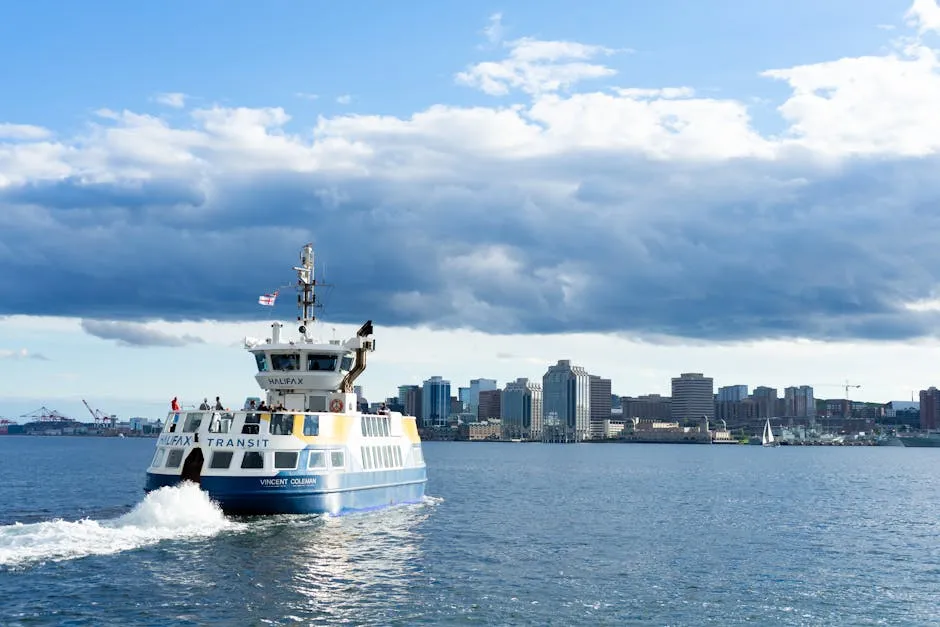
Editor’s tip: The working visit is a slow walk from Casino Nova Scotia south to Pier 21, approximately 90 minutes including stops. Pause at the Wave sculpture (a public-art piece visitors can sit and climb in), the Drunken Lamppost (a deliberately-tilted city lamp), and the harbour-hop ferry terminal (where a passenger ferry to Dartmouth and Woodside departs every 15–30 minutes; CAD $2.75 each way).
Pro Tip: The boardwalk hosts the Halifax International Busker Festival 29 July – 3 August 2026 — the working comedy-and-acrobatic street-performance festival; free; the boardwalk fills with crowds and performance stages.
4. Canadian Museum of Immigration at Pier 21
Address: 1055 Marginal Road, on the Halifax Waterfront south of Casino Nova Scotia
Hours: Open year-round; verify current 2026 daily hours against the museum’s own page
Cost: CAD $19 adult (verify current rate); half-price for 18–24 and free for 17 and under via the Canada Strong Pass 19 June – 7 September 2026
Allow: 2.5–3.5 hours
The working national museum of Canadian immigration, occupying the actual 1928-built Pier 21 building that processed approximately 1 million immigrants between 1928 and 1971. The museum preserves the working pier reception hall, customs counters, and detention quarters, and adds substantial interpretive exhibits: oral-history recordings, family-history archives, recreations of the journey across the Atlantic, the working post-war refugee context, the Hungarian 1956 reception, the Vietnamese boat-people reception, and the post-1971 evolution of Canadian immigration policy (when Pier 21 closed and airport-based immigration replaced the working sea-port). The Scotiabank Family History Centre at the museum allows visitors to search ancestry records for working pre-1971 arrivals.
Editor’s tip: Visitors with Canadian-immigrant family history should reserve a Scotiabank Family History Centre appointment in advance; the working research consultations are the deepest museum experience available. The visit is meaningful even for visitors without specific family connections — the displaced-person and refugee history is universally legible.
5. Halifax Public Gardens
Address: Spring Garden Road at South Park Street, Halifax
Hours: Open 08:00 to sunset, May 1 to mid-November; closed in winter
Cost: Free
Allow: 1.5 hours
The 1867-opened Victorian-era public garden — laid out the year of Canadian Confederation — covering 16 acres in central Halifax. Created from the merging of the Nova Scotia Horticultural Society Garden (laid out 1837) and an adjacent civic garden. Declared a National Historic Site of Canada in 1984. The working Victorian design includes formal flowerbeds (140+ tree species), the central bandstand (built 1887, the working summer concert venue), the working fountain, the dahlia border, and the working duck pond. The gardens are entirely free, walking-tour ready, and a working contrast to the urban grit of central Halifax.
Editor’s tip: Visit during the Sunday afternoon band concerts (summer; verify 2026 schedule) at the working 1887 bandstand. The Lord Nelson Hotel is across the road; combine with a walk along Spring Garden Road for the working downtown high-street experience.
6. Old Town Clock
Address: Base of Citadel Hill, at Brunswick Street and Citadel Hill
Hours: Exterior viewing 24/7; the clock tower interior is not open to the public
Cost: Free (exterior viewing)
Allow: 15–30 minutes
The 1803-installed mechanical clock — commissioned by Prince Edward, Duke of Kent, commander of the Halifax garrison from 1794 to 1800 — on the flank of Citadel Hill at the working base of the slope above downtown. The clock has been working continuously for over 220 years, a working timekeeping anchor of Halifax. The mechanism is a working piece of Georgian-era horology; the housing is a Palladian octagonal structure that the Royal Engineers built to Prince Edward’s specifications. The clock is one of Halifax’s most-photographed working landmarks.
Editor’s tip: The Old Town Clock is the working photograph from the lower side of Citadel Hill, with the clock framed against the working harbour and skyline behind. Combine with a Citadel visit and the working noon-gun ceremony.
7. Fairview Lawn Cemetery (Titanic graves)
Address: 3720 Windsor Street, Halifax (approximately 4 km north-west of downtown)
Hours: Daily approximately 08:00 to sunset
Cost: Free
Allow: 1.5 hours including travel time from downtown
The largest Titanic cemetery in the world — 121 victims of the 1912 sinking are buried in three rows of granite stones, including the working anonymous-victim graves and the named ones. The grave marked “J. Dawson” is the most-photographed (the working name match with the Jack Dawson character in the 1997 James Cameron film draws steady visitor traffic, though the actual J. Dawson buried at Fairview was Joseph Dawson, a 23-year-old Irish coal-trimmer not the working fictional artist of the film). The Fairview Titanic plot was funded by the White Star Line in 1912; the working memorial stones are intact and labelled.
Editor’s tip: Visit with respect — this is an active municipal cemetery, not a tourist attraction. The Titanic plot is at the rear (north side) of the cemetery; signage is modest. Mount Olivet (Catholic, 19 Titanic graves) and Baron de Hirsch (Jewish, 10 Titanic graves) cemeteries hold the remaining Halifax Titanic victims; visit by car if you want to see all three.
Pro Tip: The Maritime Museum of the Atlantic’s Titanic gallery provides the working narrative context for the Fairview visit; do the museum first, the cemetery second.
8. Halifax Central Library
Address: 5440 Spring Garden Road, Halifax
Hours: Monday–Thursday 09:00–21:00, Friday–Saturday 09:00–17:00, Sunday 12:00–17:00 (verify 2026 hours)
Cost: Free
Allow: 1 hour for the architecture; longer if you read or use the working amenities
The 2014-opened modern central library — built on the site of a former parking lot — composed of four glass-and-concrete boxes stacked at angles to designs by Schmidt Hammer Lassen Architects (Copenhagen) in collaboration with Fowler Bauld & Mitchell Architects (Halifax). The architectural composition is among the most-cited contemporary public buildings in Canada and was shortlisted for the 2014 RAIC Innovation in Architecture Award. The interior includes café, auditorium, children’s library, working community rooms, and a panoramic top-floor reading room with views over the harbour.
Editor’s tip: Visit on a working weekday afternoon — the library is alive with users and the working architectural experience is the working live-public-space rather than the empty-architecture-photograph. The top-floor reading room has the working best Halifax skyline view available to the public for free.
9. The Hydrostone Neighbourhood
Address: Young Street area, North End Halifax (approximately 3 km north of downtown)
Hours: Open public neighbourhood — accessible 24/7; commercial-tier shops 10:00–18:00 typical
Cost: Free (walking)
Allow: 1.5–2 hours
The planned working-class concrete-block neighbourhood designed by Thomas Adams and George Ross (the architects of Pier 21’s later development) in 1918, immediately after the 1917 Halifax Explosion levelled the working-class Richmond and surrounding North End areas. Built of fireproof concrete blocks (rather than the wood-frame construction that had burned in the explosion’s secondary fires), the 324-unit Hydrostone development was the first public housing project in Canada and remains a working residential neighbourhood today. The commercial spine — Young Street between Gottingen Street and Brunswick Street — has been preserved as a working pedestrian commercial street with restaurants, cafés, independent shops, and the Hydrostone Market. A memorial to the 22 victims of the 2020 Nova Scotia attacks was erected in the Hydrostone neighbourhood on 1 June 2020 — the working post-1917 reconstruction quarter became the post-2020 memorial site, the layering deliberately marked.
Editor’s tip: The Hydrostone is the working Halifax visit most foreign tourists skip; it is the most architecturally legible single neighbourhood for the post-1917 working reconstruction era. Visit on a Saturday morning for the working café-and-shop street activity; the Hydrostone Market is the working anchor of the commercial spine.
10. Point Pleasant Park
Address: Pointe Pleasant Drive, southern tip of the Halifax peninsula
Hours: Open 06:00 to sunset, year-round
Cost: Free
Allow: 2–3 hours
The 75-hectare working seaside-and-forest park at the southern tip of the Halifax peninsula — leased from the British Crown by the City of Halifax for one shilling per year since 1866 (the working lease remains in force; Halifax pays the working ceremonial annual shilling). Working trails: the Sailor’s Memorial Way (commemorating Halifax-area naval losses), the Northwest Arm shoreline, the Black Rock Beach working tidal-pool foreshore, and the ruins of the early-19th-century Prince of Wales Tower (the working pre-Citadel coastal-defence Martello tower from 1796–1800). The park was devastated by Hurricane Juan in September 2003, which felled approximately 70,000 trees; the working post-hurricane reforestation is visible across the park’s interior.
Editor’s tip: The working pop-up summer Shakespeare-by-the-Sea performances at Point Pleasant (an open-air theatre tradition; verify 2026 schedule) are a working summer-evening anchor. The Prince of Wales Tower interior is occasionally open via Parks Canada interpretation programmes; verify 2026 schedule.
11. Halifax Seaport Farmers’ Market
Address: 1209 Marginal Road, on the Halifax Waterfront (adjacent to Pier 21)
Hours: Saturday 08:00–14:00 year-round; smaller midweek and Sunday operations vary seasonally (verify current 2026 schedule)
Cost: Free entry
Allow: 1.5–2 hours
The oldest continuously operating farmers’ market in North America — operating since 1750 (per the market’s own claim; the working continuous-operation claim is widely cited but historians sometimes qualify it). The current Seaport facility opened in 2010 in a purpose-built building on the waterfront with approximately 250 vendor stalls — Nova Scotia produce, baked goods, smoked seafood, working artisanal cheese, Acadian fare, coffee, donair, Indian-fusion stalls, the working Saturday-morning Halifax gathering. The market is the working anchor of the local-food economy.
Editor’s tip: The market is busiest 09:30–11:30 on Saturdays; arrive at 08:30 for the calmer working-vendor opening and to secure the freshest seafood. The donair stalls open at 09:30; the King of Donair Saturday-morning stall is one of the working anchors (verify 2026 vendor presence).
12. Sambro Island Lighthouse (boat trip)
Address: Sambro Island, 2 nautical miles outside Halifax Harbour mouth
Hours: Visible from shore at Crystal Crescent Beach (33 km south-west of Halifax via Highway 333); guided boat tours operate from various Halifax-area marinas during summer months
Cost: Boat tour packages from approximately CAD $80–150 per person; verify 2026 operator schedules
Allow: Full day if including the boat tour from Halifax
The oldest operational lighthouse in the Americas — construction authorised by the first act passed by the Nova Scotia House of Assembly on 2 October 1758 during the Seven Years’ War, construction completed 1759 with Joseph Rous (brother of Captain John Rous) appointed first keeper. The lighthouse has been continuously working for over 265 years and remains an active aid to navigation under the Canadian Coast Guard. The granite-island setting, the working 19th-century masonry, the harbour entrance position — Sambro is the working maritime-historical anchor of Halifax.
Editor’s tip: A working close-up boat visit requires coordination with the small number of approved operators; verify against tourismn ovascotia.com for current 2026 working schedules. The lighthouse is also visible from Crystal Crescent Beach on the south-western shore of the Halifax peninsula via Highway 333; a working free distant view is available without the boat trip.
Neighbourhoods at a glance
Downtown Halifax — the working centre
The peninsula between Halifax Harbour (east) and the Northwest Arm (south-west) — approximately 8 sq km of working downtown commercial and tourism-anchored Halifax. The Halifax Waterfront Boardwalk runs the eastern shore from Casino Nova Scotia to Pier 21. Spring Garden Road is the working high street (shops, restaurants, Halifax Public Gardens, Halifax Central Library). Argyle Street is the working bar-and-restaurant strip on weekend nights. Barrington Street is the working commercial-historic spine with Province House (1819) and the Old Town Clock. The downtown is deeply walkable — most major attractions are within 1.5 km of each other.
North End Halifax — the post-1917 reconstruction
The North End includes the Hydrostone, the working post-1917 reconstruction neighbourhoods, Gottingen Street (the working historic Black Loyalist neighbourhood), and the Halifax Common (the working 18th-century common-grazing land, now an active park). The North End is materially less tourist-developed than downtown; the working residential anchors and the Hydrostone Market are the visiting reasons.
South End Halifax — universities and Point Pleasant
Dalhousie University (founded 1818), Saint Mary’s University, NSCAD, and the working residential streets between them. Point Pleasant Park at the southern tip. The working student-economy restaurants and bookstores cluster on Coburg Road and adjacent streets. South Park Street is the working luxury-residential anchor with the Lord Nelson Hotel.
West End / Quinpool — the working middle-class residential
The Quinpool Road corridor west of Citadel Hill is the working middle-class residential and small-commercial spine. Not a major tourist destination; useful for visitors staying in West End hotels or homestays.
Dartmouth — across the harbour
The harbour ferry connects downtown Halifax to Dartmouth in 12 minutes (CAD $2.75 each way), the second-largest of the Halifax Regional Municipality urban centres. Dartmouth carries its own working tourism: the Alderney Landing ferry-terminal area, the Dartmouth Common, the Lake Banook (rowing lake), and a working dining scene. Cross for an afternoon and back; not a base for a first Halifax visit.
Bedford and the suburban arc
Bedford (north along the Bedford Basin) and the western Halifax suburbs are the working residential expansion zone. Bedford Basin was the working WWII convoy assembly anchor — Halifax’s largest convoys assembled here before crossing to Britain. Not a tourist destination but visible from the Bedford Highway drive.
Birchtown / Shelburne — the Black Loyalist Heritage Centre
220 km south-west of Halifax, Birchtown was settled by Black Loyalists (formerly enslaved African Americans who served the British during the American Revolution and were relocated to Nova Scotia from 1783 onwards). The Black Loyalist Heritage Centre in Shelburne preserves the working settlement history. Not a Halifax day-trip; a 2-day extension or a stop on a working southern-shore tour.
Where to stay by budget
The honest sorting: stay in downtown Halifax for a first visit — within walking distance of the Citadel, Maritime Museum, Pier 21, Halifax Public Gardens, Spring Garden Road, Argyle Street. Halifax’s downtown is materially compact compared to Toronto or Vancouver.
Budget (CAD $90–180 per night / €62–124)
- HI Halifax Heritage House Hostel (1253 Barrington Street) — the working Halifax hostel; dorm beds from approximately CAD $40, private rooms from CAD $90
- Halifax Backpackers Hostel — North End; verify current operational status
- The Waverley Inn (1266 Barrington Street) — heritage budget-mid-range, 1866-built mansion with original Halifax connections (verify current operator)
- The Carleton Music Bar & Grill rooms — central, verify current status
- Airbnb / Vrbo apartments in central downtown — working from CAD $120 nightly off-peak
Mid-range (CAD $200–450 per night / €138–310)
- Cambridge Suites Hotel Halifax (Brunswick Street) — central, working apartment-style mid-luxury
- Atlantica Hotel Halifax (1980 Robie Street) — mid-tier business-leisure
- The Prince George Hotel (1725 Market Street) — downtown, working modern
- The Halliburton (5184 Morris Street) — 1809-built heritage hotel with the celebrated Stories restaurant on the ground floor
- Halifax Marriott Harbourfront (1919 Upper Water Street) — modern waterfront luxury
High-end (CAD $400–750 per night / €276–517)
- The Lord Nelson Hotel & Suites (1515 South Park Street) — the working heritage anchor, opened 23 October 1928 by the Canadian Pacific Railway-Dominion Atlantic Railway consortium, corner of Spring Garden Road across from the Halifax Public Gardens. The working Halifax luxury heritage tier.
- The Westin Nova Scotian (1181 Hollis Street) — opened 1930 as “The Nova Scotian” by Canadian National Railway as a working chain-luxury anchor; seaport district. The working sister to the Lord Nelson as the city’s grand-historic-hotel pair.
- Muir, Autograph Collection (1709 Lower Water Street, Queen’s Marque district) — newer luxury waterfront, opened 10 December 2021 as Nova Scotia’s first Marriott Autograph Collection hotel. 109 rooms; developed by The Armour Group Limited; designed by Nova Scotian firm MacKay-Lyons Sweetapple Architects with interiors by Alessandro Munge / Studio Munge.
Luxury (CAD $750+ per night / €517+)
- The Lord Nelson presidential suites — the highest tier of the working 1928 heritage hotel
- Muir suites — the working modern-luxury alternative
No major new luxury hotel openings have been confirmed in Halifax for calendar-year 2026 (against the IHG, Marriott, Hyatt, Accor opening calendars as of May 2026); verify against operator pages before booking.
Editor’s tip: The Lord Nelson is the working colonial-heritage anchor for visitors who want a Halifax stay with material history; the Marriott Harbourfront is the working modern-waterfront alternative. The Halliburton is the working boutique-heritage anchor on a smaller scale. Sudder-Street-style backpacker clusters do not really exist in Halifax — the working budget tier is the HI hostel + Airbnb.
Where to eat — donair, lobster, the chowder line
The donair (Halifax’s signature dish)
The donair is Halifax’s working signature dish — invented in 1973 by Greek immigrant Peter Gamoulakos at his Halifax pizza shop after a trip to Greece where he ate working gyros and decided to bring the dish to Canada. He substituted spicy ground beef for lamb (Nova Scotians of the 1970s did not have the working palate for lamb), and replaced yoghurt-based tzatziki with a sweet sauce made from evaporated milk, sugar, vinegar, and garlic powder. The result became the city’s defining street food.
The classic donair consists of seasoned ground beef cooked on a rotating spit, sliced into a pita with diced tomatoes, raw onions, and the working signature sweet sauce. The donair was named the official food of Halifax in 2015; 8 December is National Donair Day.
- King of Donair (multiple locations across Halifax; the working Quinpool, Pizza Corner, and Bayers Lake branches are the named anchors) — the working originator chain since 1973; CAD $10–18 per donair
- Tony’s Donair — competing institutional anchor on Robie Street
- Original Donair Robie — the working dive-bar-and-donair-shop anchor
Editor’s tip: The working donair tier is Pizza Corner at the corner of Blowers Street and Grafton Street, where King of Donair and competing donair shops cluster at the working late-night anchor. Drunk-Halifax tradition: a Pizza Corner donair at 02:00 after Argyle Street bars. Try one at lunch sober first; you will understand why.
Seafood (the working Atlantic cuisine)
- Lobster — Atlantic lobster (Homarus americanus) is the working Halifax seafood anchor. Season: spring catches (May–June) and fall catches (October–December). Live lobster at restaurants approximately CAD $40–80 per pound; lobster rolls CAD $25–45 at Halifax-quality casual restaurants
- Scallops — Digby scallops from the Bay of Fundy are the working Nova Scotia premium scallop; restaurant CAD $30–55 per dish
- Mussels — Atlantic mussels CAD $15–25 per pound at most restaurants
- Haddock — the working Nova Scotia fish-and-chips white-flesh fish; CAD $18–28 per portion
- Chowder — Halifax chowder is typically cream-based with potato + clams + sometimes haddock; CAD $9–18 per bowl
Named seafood restaurants
- The Five Fishermen (1740 Argyle Street) — heritage building (former 1817 school + 1881 funeral home that handled Titanic victims) + working contemporary seafood. CAD $40–90 per dinner
- Salty’s (1869 Upper Water Street) — waterfront seafood, panoramic harbour views; CAD $35–80 per dinner
- The Bicycle Thief (1475 Lower Water Street) — Mediterranean-Atlantic, the working contemporary fine-dining anchor; CAD $50–110 per dinner
- Stories at The Halliburton (5184 Morris Street) — Nova Scotia seasonal fine-dining; CAD $80–150 per dinner
- Edna (2053 Gottingen Street) — North End, the working modern bistro; CAD $40–80 per dinner
- Battery Park (62 Ochterloney Street, Dartmouth) — Halifax Harbour Ferry crossing access; gastropub anchor
Other Halifax restaurant anchors
- Two If By Sea Café — the working Halifax-region coffee anchor (multiple locations, originally founded in Dartmouth)
- Henry House (1222 Barrington Street) — the working historic British-style pub (in an 1834 building)
- Lower Deck Pub (Historic Properties waterfront) — the working maritime-music pub
- Old Triangle Irish Alehouse — the working Halifax Irish-pub anchor
- Smoke’s Poutinerie — the working late-night Canadian poutine anchor
Markets and farmers’ markets
- Halifax Seaport Farmers’ Market (see attraction #11) — Saturday 08:00–14:00 year-round
- Alderney Landing Farmers’ Market (Dartmouth side) — Saturday smaller working market
Drinking — Garrison, Keith’s, the working Halifax pub
Halifax has one of Canada’s deepest brewing traditions and a working pub culture that ties back to the British and Irish settler communities.
Working Halifax breweries
- Alexander Keith’s Brewery (1496 Lower Water Street) — founded 1820, the working oldest commercial brewery in North America still operating under its original name. The IPA-named beer (“Alexander Keith’s India Pale Ale”) is widely sold across Canada. Brewery tours at Keith’s: working interpretive tours with costumed reenactors in working 1820s dress; CAD $25–35 per tour (verify current rates via the brewery’s own page).
- Garrison Brewing Company (1149 Marginal Road, Halifax Seaport area) — the working craft-brewery anchor founded 1997; brewery and taproom open year-round
- Propeller Brewing Company — established 1997, multiple Halifax-area taprooms
- North Brewing Company (2576 Agricola Street, North End) — modern craft anchor
Working Halifax pub anchors
- The Lower Deck (Historic Properties) — the working maritime-music waterfront pub
- Henry House (1222 Barrington Street) — the working historic British-style pub in an 1834 building
- Bitter End — central Halifax cocktail bar
- Stillwell Beer Bar (1672 Barrington Street) — the working craft-beer specialist
- The Old Triangle Irish Alehouse — the working Irish-music pub on the Historic Properties waterfront
- Lion & Bright — boutique wine/cocktail bar
- Bar Kismet — the working cocktail-and-small-plates anchor on Agricola Street
Coffee culture
- Two If By Sea Café — multiple locations including Dartmouth + Halifax — the working regional anchor for Halifax-style cinnamon rolls and serious coffee
- Java Blend Coffee Roasters (1593 Brunswick Street) — the working Halifax independent coffee anchor
- Cabin Coffee — the working downtown daytime working-space coffee anchor
Getting around
Walking
Central Halifax is deeply walkable — Citadel to Maritime Museum to Pier 21 to Public Gardens to Halifax Central Library are all within 2 km of each other. The working summer visit is largely on foot.
Halifax Transit (bus + ferry)
The local public transit system — buses and the Halifax Harbour ferry (Halifax-Dartmouth + Halifax-Woodside) — uses a flat fare of CAD $2.75 per ride (verify 2026 fare). Day passes available. The harbour ferry is the working short cross-water trip — 12 minutes Halifax to Dartmouth, 25 minutes Halifax to Woodside; departures every 15–30 minutes during peak hours.
Uber and taxi
Uber operates with full coverage in Halifax. Working short downtown trips CAD $8–15; YHZ airport from downtown CAD $50–80 (compare to flat-rate prepaid taxi CAD $63). Traditional taxi works on meter; multiple Halifax companies.
Car rental (for day trips)
Required for the working day-trip experience to Peggy’s Cove, Lunenburg, and Cape Breton. Available at YHZ and at downtown locations. Approximate rates CAD $60–120 per day. The Halifax-area road network is good (TransCanada Highway 102, Highway 103 to Lunenburg, Highway 333 to Peggy’s Cove); winter driving requires care (snow, occasional ice).
Bicycle
Halifax has a developing cycling infrastructure with working bike lanes on most major downtown streets. The Halifax Common (the working 18th-century common-grazing land) has dedicated bike paths. Halifax bike-share (verify current operator status May 2026) was introduced in recent years; check current operational status.
What does not work
- Halifax Transit at off-peak hours — service drops sharply after 19:00 and on Sundays; if you’re attending a late-night Argyle Street event, plan an Uber back to your hotel
- Self-drive in winter — January–February winter driving on Highway 333 to Peggy’s Cove is genuinely difficult for unaccustomed drivers; consider organised winter tours instead
When to visit
Best months: June, July, August, September, October. Mild Atlantic-influenced summer weather (16–22°C highs); long daylight hours; the working Halifax Jazz Festival, Halifax International Busker Festival, Halifax Pride, cruise-ship season, and the working farmers’ market peak vendor presence. The late September–early October shoulder is materially excellent for foliage along the South Shore.
Avoid (deep winter): January, February, March. Cold (-6°C average, occasional sub-20 cold snaps), heavy snow, working road-closure risk, museum reduced hours. The working tourism shrinks materially during these months.
Avoid (specific event peak): Late June to early July is the working busiest cruise-ship period (mass-arrival days produce significant downtown crowds); the working hotel rates spike on cruise-port days.
Shoulder months: May (warming but still cool, fewer tourists, lower prices) and November (post-cruise-season but pre-deep-winter; foggy, working low season for hotels). Both are working bargain shoulder windows.
Festivals worth planning around
- TD Halifax Jazz Festival — 7–12 July 2026. The working anchor of summer Halifax music. Mainstage at the Halifax Waterfront. Headline lineup announced spring 2026 — Men I Trust, Broken Social Scene, and Bahamas are among the announced acts (verify final 2026 lineup at halifaxjazzfestival.ca).
- Halifax International Busker Festival — 29 July – 3 August 2026. The working comedy-and-acrobatic street-performance festival; free; the boardwalk fills with crowds and performance stages.
- Halifax Pride — Late July (verify 2026 specific dates), one of Atlantic Canada’s largest Pride events
- Halifax Donair Festival — early autumn; verify 2026 dates
- Royal Nova Scotia International Tattoo — 1–5 July 2026 at the Scotiabank Centre — matinees 1, 4, 5 July at 14:00; evening shows 2 and 3 July at 19:00; each show 2.5 hours with intermission. The working largest annual indoor show in the world according to organisers; military-band-and-acrobatic spectacle. Tickets at nstattoo.ca; kids 18 and under are free with paying adult/senior.
- Halifax Pop Explosion — October; the working music-festival anchor (verify 2026 dates)
- Lobster Carnival in Pictou — mid-July at Pictou (200 km from Halifax); for full Maritime extension visits
- Acadian Days at Grand-Pré (mid-August) at the Grand-Pré National Historic Site for the Acadian deportation commemoration
- December 6 (Halifax Explosion Memorial) — annual commemoration at the Fort Needham Memorial Park in the North End, where the Halifax Explosion Memorial Bell Tower stands (working at the 09:04 detonation anniversary)
Month-by-month weather
| Month | Avg low | Avg high | Notes |
|---|---|---|---|
| January | -10°C | -1°C | Deep winter — heavy snow, cold |
| February | -10°C | -1°C | Deep winter — coldest |
| March | -6°C | 3°C | Late winter; melting begins |
| April | -1°C | 9°C | Spring; cold rain; foggy |
| May | 5°C | 14°C | Working warming — pleasant shoulder |
| June | 10°C | 19°C | Best — long days, warming |
| July | 14°C | 22°C | Peak summer — Jazz Festival |
| August | 15°C | 22°C | Peak summer — Busker Festival |
| September | 11°C | 18°C | Best — clear, fewer tourists |
| October | 6°C | 13°C | Foliage — working autumn anchor |
| November | 1°C | 7°C | Cold, foggy; pre-winter |
| December | -5°C | 1°C | Winter onset; snow |
Annual rainfall ~1,395 mm. 121 foggy days per year (a defining city feature — the working Halifax fog is the working atmospheric anchor that Atlantic-influenced cities produce). Annual snowfall approximately 200 cm.
Daily budget breakdown
Backpacker — CAD $90–180 per person per day (€62–124)
- HI Halifax dorm bed: CAD $40–55
- Three meals: working chowder lunch + Pizza Corner donair dinner + breakfast at hostel = CAD $35–55
- Halifax Transit pass + harbour ferry rides: CAD $7.50
- One paid attraction (Maritime Museum CAD $9.55, or free Citadel during Canada Strong Pass): CAD $0–15
Mid-range — CAD $250–450 per person per day (€172–310)
- Mid-tier hotel: CAD $200–350
- Three meals (restaurant breakfast + chowder lunch + waterfront seafood dinner): CAD $80–150
- Halifax Transit + occasional Uber: CAD $15–30
- Two paid attractions per day (Citadel + Maritime Museum + Pier 21 cluster): CAD $25–45
- One Halifax Jazz Festival or Busker Festival event: free–CAD $40
Luxury — CAD $600–1,200+ per person per day (€414–828+)
- Lord Nelson, Westin Nova Scotian, or Muir suite: CAD $400–900
- Three meals including one Stories at The Halliburton dinner: CAD $150–350
- Private guide / driver day trip to Peggy’s Cove + Lunenburg: CAD $300–600
- Multiple attractions + Sambro Island Lighthouse boat tour: CAD $80–200
The defining single-day-trip outlay: A Peggy’s Cove + Lunenburg combined day trip (car rental + entries + Lunenburg lunch) runs approximately CAD $150–250 for two people sharing a rental, plus the working CAD $35–60 lunch in Lunenburg. The Cape Breton / Cabot Trail extension is a 2–3 day overnight excursion at CAD $400–800 per person.
Sample itineraries
Two days — the working compressed visit
Day 1: Downtown + Waterfront
– 09:00 — Halifax Citadel (free via Canada Strong Pass 19 Jun–7 Sep 2026; otherwise CAD $13.50)
– 11:30 — Noon Gun ceremony at Citadel
– 12:00 — Walk down Citadel Hill to Old Town Clock
– 12:30 — Spring Garden Road lunch (CAD $15–25)
– 14:00 — Halifax Public Gardens
– 15:30 — Halifax Central Library (free)
– 17:00 — Halifax Waterfront Boardwalk south to Pier 21
– 19:30 — Argyle Street dinner (CAD $40–80 + drinks)
Day 2: Museums + North End
– 09:30 — Maritime Museum of the Atlantic
– 12:30 — Salty’s waterfront lunch
– 14:00 — Canadian Museum of Immigration at Pier 21
– 16:30 — Hydrostone neighbourhood + Fort Needham Park (Halifax Explosion memorial bell tower)
– 18:00 — Fairview Lawn Cemetery (Titanic graves)
– 20:00 — Garrison Brewing taproom or Lower Deck Pub
Three days — the right basic visit
Day 1: Downtown + Waterfront as Day 1 above
Day 2: Museums + North End as Day 2 above
Day 3: Peggy’s Cove + Lunenburg day trip (full day; rent car or join organised tour)
Four to five days — including Cape Breton
Add Cape Breton / Cabot Trail overnight (drive 4.5 hours each way; the working Atlantic Canada scenic-coastal anchor; allow 2 days in Cape Breton).
Six to seven days — Maritimes circuit
Add Prince Edward Island (PEI Confederation Bridge access, 3 hours by car from Halifax) plus the Bay of Fundy (tidal range, 2 hours), with Halifax as the central base.
Best Day Under €40
Total: CAD $52 (€35.85) — verified against May 2026 exchange rates. Halifax is materially pricier than Asian-tier destinations; the working budget day registers higher.
- Breakfast: Two If By Sea coffee + cinnamon roll: CAD $9
- Halifax Citadel (FREE via Canada Strong Pass 19 June – 7 September 2026; CAD $13.50 otherwise — using the free period for this calculation)
- Old Town Clock + Public Gardens walk (free)
- Lunch: Halifax Seaport Farmers’ Market — donair stall + working coffee: CAD $15
- Halifax Waterfront Boardwalk south to Pier 21 (free)
- Maritime Museum of the Atlantic: CAD $9.55
- Mid-afternoon coffee at Two If By Sea: CAD $6
- Tram (Harbour Ferry) Halifax-Dartmouth-Halifax round trip: CAD $5.50
- Dinner: Pizza Corner donair + drink: CAD $14
If the Canada Strong Pass window doesn’t apply (early-year or late-year visit), substitute the Citadel for a free walk past the Old Town Clock — adding CAD $13.50 brings the total to CAD $65.50 (€45.17), still under the European-budget-day frame.
On the budget leaderboard: Cairo $3.50 · Bogotá $6 · Kuala Lumpur €8.50 · Munich €12 · Kolkata €11.95 · Ahmedabad €11.79 · San Salvador €13 · Bangalore €15 · Chongqing €20.85 · Tbilisi/Chengdu/Shenzhen/Xi’an €25 · Fiji €29 · Washington €30 · Nicosia €32.60 · Halifax €35.85Sicily/Corsica €35–40 · Maldives $50.
Halifax is materially pricier than the Asian-tier destinations and Cairo-tier cities; the working CAD-currency cost structure puts the destination in the Sicily/Corsica band despite Halifax being a much smaller city than Toronto or Vancouver. The working budget breaker is the CAD $9.55 Maritime Museum entry (high for a Western mid-tier museum) and the CAD $63 prepaid taxi to/from YHZ airport. The under-€40 day is achievable; the under-€20 day is not.
Cold, foggy, and off-season plans
The deep-winter day (January–March)
The working winter day skips outdoor walks and prioritises:
– Maritime Museum of the Atlantic (heated, multi-hour)
– Halifax Central Library (heated, working amenities)
– Canadian Museum of Immigration at Pier 21 (heated, multi-hour)
– Alexander Keith’s Brewery tour (heated)
– Halifax Citadel (some sections heated, but the working tour is materially uncomfortable in -10°C)
– Hotel pool / hotel lobby working escape
The foggy-shoulder day (April–May, November)
Halifax’s 121 foggy days/year peak in spring and late autumn. The working approach: embrace the fog rather than avoid it. The Old Town Clock in fog is the working photograph; Point Pleasant Park in fog is the working atmospheric walk; the Halifax Waterfront in fog has its own working register.
The peak-summer day (July–August)
The working visitor density peaks during cruise-ship arrival days. Working approach: arrive at Citadel and Maritime Museum at 09:00 opening; do Pier 21 at 15:00 when cruise visitors have left; reserve dinner restaurants by 17:00 for the working evening.
Hurricane window (September–October)
Atlantic hurricanes occasionally make Halifax-area landfall in September; the working Hurricane Juan in September 2003 felled 70,000 trees in Point Pleasant Park. Monitor working forecasts; major storms produce flight delays and ferry cancellations but typically resolve in 48–72 hours.
Day trips
Peggy’s Cove + Lunenburg combined (full day)
Distance: Peggy’s Cove 45 km / 50 min; Lunenburg 100 km / 90 min from Halifax; 75 min between them
Cost: Rental car CAD $80 per day + fuel CAD $40 + Lunenburg lunch CAD $35–60; organised tour CAD $80–150 per person
Allow: Full day, depart 09:00, return 19:00
Peggy’s Cove — the working iconic 1914-built Peggy’s Point Lighthouse on a granite-and-fishing-village setting on the Atlantic shore. Free outdoor visit; the lighthouse interior is occasionally open in summer; the working tip is the warning about wave hazard on the granite (waves have killed visitors who underestimated the working surf).
Lunenburg — UNESCO World Heritage Site since 1995 (Old Town Lunenburg); founded 1753 as the first British colonial settlement in Nova Scotia outside Halifax. The working anchor of the Bluenose schooner heritage (the working Bluenose II replica racing schooner is sometimes docked at Lunenburg; verify 2026 season schedule). The town’s working colourful clapboard houses, the Fisheries Museum of the Atlantic, the working Lunenburg Academy on the hilltop, and the working harbour-walking-tour register make it the single best Maritimes UNESCO experience.
Editor’s tip: The drive is the working scenic coastal route along Highway 333 (Peggy’s Cove direction) and Highway 103 (Lunenburg direction). Consider doing the round trip via the coastal route on the way out and the highway on the way back. Lunenburg’s working lunch anchor is The Salt Shaker Deli or Magnolia’s Grill on the working waterfront.
Cabot Trail (Cape Breton) — overnight required
Distance: Halifax to Cape Breton 350 km / 4.5 hours; Cabot Trail circuit additional 300 km
Cost: 2-night car-and-hotel package approximately CAD $400–800 per person; verify 2026 operator rates
Allow: 3 days minimum (Halifax → Cape Breton → Halifax)
The Cabot Trail — the 298-km scenic coastal loop around the northern portion of Cape Breton Island, generally regarded as one of the world’s most-scenic coastal drives. Passes through Cape Breton Highlands National Park, working Acadian fishing villages (Chéticamp), Gaelic cultural anchors (the Gaelic College at St. Ann’s), and the working Margaree Valley salmon-fishing tradition. Best in early October for the autumn-foliage anchor.
Editor’s tip: Cabot Trail is genuinely worth the extension. The working accommodation tier — Keltic Lodge (heritage 1940 property at Ingonish) or the working B&Bs in Chéticamp — should be booked 60+ days ahead for October peak weeks.
Annapolis Royal + Bay of Fundy (overnight)
Distance: Halifax to Annapolis Royal 200 km / 2.5 hours; Bay of Fundy tidal range and the Hopewell Rocks at the highest tides in the world (15+ metre range)
Allow: 2 days for the working visit
The Bay of Fundy holds the world’s highest tidal range (up to 16 metres at the head of Cumberland Basin), which produces working dramatic tidal-flat-and-exposed-rock landscapes. The Hopewell Rocks (200 km east of Halifax in New Brunswick — outside Nova Scotia) are the working iconic photo anchor; the Halifax-side anchor is the Burntcoat Head Park with its own working high-tide spectacle.
Birchtown / Shelburne (Black Loyalist Heritage Centre) — overnight
Distance: Halifax to Shelburne 220 km / 2.5 hours
Allow: 2 days for the working visit
The Black Loyalist Heritage Centre in Shelburne preserves the working settlement history of Black Loyalists who arrived in Nova Scotia from 1783 onwards after siding with the British in the American Revolution. Working interpretive centre with exhibits, archival research access, and the working Birchtown archaeological site nearby.
Safety and practical concerns
Crime
Halifax is generally safe for foreign visitors. The working violent-crime rate is materially lower than larger Canadian cities (Toronto, Vancouver, Montreal) and comparable to other Atlantic Canada cities. Petty crime concentrated at the Argyle Street late-night bar strip and at major-event peaks. Working approach: standard urban precautions.
2020 attacks context
The 2020 Nova Scotia attacks (18–19 April 2020) occurred in rural Nova Scotia, not Halifax proper. The shooting started at Portapique on the Bay of Fundy (130 km north of Halifax) and concluded near Enfield (40 km north of Halifax). Halifax was the RCMP investigation anchor and the working memorial site (at the Hydrostone neighbourhood). Travellers should be aware of the event as Halifax-area history but face no specific contemporary danger from it.
Drugs
Recreational cannabis is legal in Canada for adults 19+ in Nova Scotia. Licensed Nova Scotia Liquor Corporation (NSLC) stores sell cannabis in dedicated cannabis shops. Public consumption follows the same restrictions as alcohol — not permitted on most public property; legal in private residences and licensed working venues. Crossing the US or other international borders with cannabis remains illegal.
Weather hazards
- Heavy snow (Dec–Mar) — flight delays, road closures, working hotel-stay extensions
- Hurricanes (Sep–Oct) — occasional Atlantic landfall; notable working storms have included Juan (September 2003, the working tree-felling event at Point Pleasant) and Fiona (September 2022). Monitor Canadian Hurricane Centre forecasts during these windows.
- Atlantic fog — 121 foggy days/year; flight delays at YHZ
- Black ice — working winter pedestrian hazard
Cell coverage and connectivity
Strong 4G/5G across Halifax and the working Maritimes. WiFi at most cafés, restaurants, hotels. International roaming works; pre-purchase a Canadian SIM at YHZ for longer stays if data costs concern you.
Tipping
Standard Canadian tipping applies: 15–20% at restaurants, CAD $1–2 per drink at bars, 10–15% for taxi/Uber, working CAD $2–5 per bag for hotel porters. The working Canadian tipping standard is materially higher than European norms; budget accordingly.
Sales tax (HST)
Harmonized Sales Tax (HST) in Nova Scotia is 15% — combined federal GST (5%) + provincial portion (10%). Posted prices typically exclude HST; the working final receipt adds 15% to the listed price.
Wildlife
Black bears, moose, and white-tailed deer are present in rural Nova Scotia (including Cape Breton). Working approach: drive carefully at dawn/dusk on rural highways. In urban Halifax: no wildlife concerns beyond the working urban-raccoon and seagull population.
Health and emergencies
Halifax Infirmary (1799 Robie Street) and the QEII Health Sciences Centre are the working downtown emergency hospitals. Walk-in clinics across the city. Foreign visitors should have comprehensive travel insurance — Canadian healthcare is not free for foreign visitors and a working ER visit without insurance can cost CAD $3,000–10,000.
Language
English is the dominant working language. French is recognised as Canada’s other official language; signage at federal sites (Parks Canada, Pier 21, the Citadel) is bilingual; Acadian-French communities exist in rural Nova Scotia but Halifax itself is overwhelmingly English-speaking.
Visa and entry
Canada eTA (Electronic Travel Authorization)
Required for tourists from approximately 60 visa-exempt countries including the EU, UK, Australia, New Zealand, Japan, Korea, Singapore. CAD $7 fee (~€4.83), valid 5 years or until passport expiry. Apply at the official canada.ca portal (avoid third-party “visa facilitator” sites that charge markups of CAD $30–80 for the same service). Apply at least 72 hours before travel; most approvals come within minutes but the working processing can take up to 30 days for some applicants.
US passport holders
Neither a visa nor an eTA is required for US citizens visiting Canada for tourism up to 6 months. Carry your US passport at the border. Land-border crossings (Maine to Nova Scotia via New Brunswick) and air arrivals at YHZ both work without pre-arranged authorization.
Other nationalities
Tourists from approximately 145 countries require a Canadian Temporary Resident Visa (TRV) rather than the eTA. The TRV application is processed by Immigration, Refugees and Citizenship Canada (IRCC) and takes 2–6 weeks depending on country. Fees CAD $100. Verify your specific nationality’s requirement at canada.ca before booking.
Arrival formalities
Immigration at YHZ is generally efficient. Carry the printed eTA approval confirmation if applicable. Customs declarations apply for cash over CAD $10,000 equivalent and for certain agricultural products, plants, and animal products.
Cannabis and alcohol
Recreational cannabis is legal in Canada for adults 19+ in Nova Scotia. Crossing borders (US or other international) with cannabis remains illegal. Alcohol limits at the border are 1.5 litres of wine, 1.14 litres of spirits, or 24×355ml beer/cider for personal duty-free import.
Hidden Halifax
Fort Needham Memorial Park + Halifax Explosion Memorial Bell Tower
Address: Devonshire Avenue, North End Halifax (atop the working ridge that absorbed much of the 1917 blast)
Hours: Open 24/7
Cost: Free
The 14-bell Halifax Explosion Memorial Bell Tower stands on the hilltop that absorbed the working primary blast wave of the 1917 explosion. Annual commemoration at 09:04 on 6 December (the exact detonation moment); the working visit is the memorial-anchor for the 1917 chapter. View from the top of Fort Needham covers the working North End streetscape that the Hydrostone rebuilt.
Africville Museum
Address: 5795 Africville Road, North End Halifax
Hours: Tuesday–Sunday 10:00–17:00 (verify 2026 hours)
Cost: Approximately CAD $5.75 adult (verify current rate via the Africville Museum page)
Allow: 1.5 hours
The working museum at the former Africville Black community — a historically Black neighbourhood on the Halifax Peninsula’s northern shore that the City of Halifax demolished from 1964–1969 in a forced relocation that displaced approximately 400 residents. The community had existed since the early 1800s. The demolition is now widely recognised as a working historical injustice; the City of Halifax formally apologised in 2010 and established the Africville Museum in a 2011 reconstruction of the historic Seaview United Baptist Church that had been the working spiritual centre. A working apology + reparation context that mirrors but is distinct from the Cornwallis statue removal.
Province House
Address: 1726 Hollis Street, downtown Halifax
Hours: Free public tours Monday–Friday 09:00–16:00 (verify 2026 schedule; reduced when the Legislature is sitting)
Cost: Free
The 1819-completed Nova Scotia Legislature — Canada’s oldest provincial-legislature building. The working interior includes the original 1819 cabinet room, the working library where Joseph Howe (the working Nova Scotia journalist-politician who established Canadian press freedom in his 1835 libel-trial victory) had his political base. The architecture is working late-Georgian. Tours are conducted by working Legislative pages on weekdays.
Bedford Basin and the WWII convoy story
The Bedford Basin north of downtown was the working assembly anchor for Allied transatlantic convoys during World War II. The largest convoy ever assembled — HX 300 in July 1944 — gathered 167 ships in Bedford Basin before crossing to Britain. The basin’s working role in WWII is documented at the Maritime Museum of the Atlantic and at the working Africville Museum.
Halifax Hidden Bookshops
The working independent bookshops in Halifax form a small but anchored network. Bookmark II (5686 Spring Garden Road) is the working downtown anchor; The Spread Eagle (verify current operational status) operates a working antiquarian/used books tier; King’s College (across from Dalhousie campus) has a working academic books anchor.
Bay of Fundy Tidal Bore
Distance: Approximately 90 km north-east of Halifax at Truro
Cost: Free to view from the working observation deck; tidal-bore-rafting tours CAD $80–150
Allow: Half-day excursion
The Bay of Fundy tidal bore is a working tidal phenomenon — a wave that travels up the Shubenacadie River as the rising Atlantic tide pushes against the river’s downstream flow. Tides reach 15+ metres at the head of the bay. The working bore arrives twice daily; check the Cobequid Marine working tide table for the daily working time. Tidal-bore rafting operates from the working operators along the Shubenacadie; the experience is materially different from any other Canadian-tourist activity.
Romantic Halifax
Less obvious as a “romantic destination” than Quebec City or Banff — the romantic register here is the working waterfront walk at twilight, the working harbour-side dinner, the working pub atmosphere, and the rural-Atlantic-Canada day-trip extension that Halifax enables.
- Halifax Waterfront Boardwalk at sunset (the working evening anchor with the harbour-and-sailing-boat backdrop)
- The Bicycle Thief at dinner (the working contemporary fine-dining anchor)
- Stories at The Halliburton (the working heritage-romantic dinner; book 14+ days ahead for the working window-seat tables)
- Lord Nelson Hotel afternoon tea (the working colonial-luxury afternoon-tea tradition; verify 2026 schedule)
- Halifax Public Gardens evening band concert (working summer Sunday afternoons)
- The Henry House (1834 building) for working post-dinner pints
- Day trip to Peggy’s Cove sunset (working coastal-photograph anchor)
- Cape Breton Cabot Trail in October foliage (working scenic-coastal romantic anchor)
With kids
Halifax is a workable family destination with the working seasonal caveat (winter limits outdoor activity).
Working family attractions:
– Halifax Citadel — children love the working noon-gun ceremony and the working 78th Highlanders reenactors
– Maritime Museum of the Atlantic — the working Titanic gallery genuinely fascinates children 6+
– Halifax Waterfront Boardwalk — open, working playground (Salter’s Yards), the Wave sculpture, ice cream, harbour boats
– Discovery Centre (1215 Lower Water Street) — the working hands-on science museum, ideal for children 4–12; CAD $14 adult / CAD $11 child
– Halifax Public Gardens — open space, working duck pond
– Theodore Tugboat harbour tours (verify 2026 operational status)
– Peggy’s Cove day trip — the working lighthouse-and-granite-shore experience for children 6+ (working tip: the working surf-on-granite is a real hazard — stay back from the working wave-line)
– Cape Breton extension — the working wildlife-and-coastal experience for children 8+
Less family-friendly:
– Fairview Lawn Cemetery — appropriate for children 10+ with context; the working Titanic graves are a working real-history moment
– Argyle Street late-night — adults-only working bar strip
– Deep-winter day trips — January-March is genuinely cold for young children outdoors
What’s new in 2026
-
Parks Canada Canada Strong Pass — free admission to all Parks Canada sites (Halifax Citadel, Pier 21, Halifax Public Gardens National Historic Site listings) from 19 June to 7 September 2026. The federal-government summer-tourism stimulus. Substantial savings for visitors arriving in this window.
-
TD Halifax Jazz Festival — 7–12 July 2026. The working anchor of Halifax summer music. Announced headline acts include Men I Trust, Broken Social Scene, Bahamas (verify final 2026 lineup at halifaxjazzfestival.ca).
-
Halifax International Busker Festival — 29 July – 3 August 2026. The working comedy-and-acrobatic street-performance festival on the waterfront boardwalk.
-
December 6 Halifax Explosion centennial+8 — annual commemoration at Fort Needham Memorial Park at 09:04 on 6 December 2026, the 109th anniversary. The working memorial bell tower ceremony.
-
Michelin Guide Canada — does not currently publish a Halifax edition. The Canadian Michelin coverage as of May 2026 is Toronto, Vancouver, and Quebec only (the Québec 2026 edition unveiled 6 May 2026). The Atlantic Provinces are not covered. The Halifax fine-dining anchors (Stories, The Bicycle Thief, Edna) operate at Michelin-equivalent standards without official designation.
-
VIA Rail’s Ocean — Halifax-Montreal overnight rail service operates at reduced frequency in 2026 (3 departures per week, verify current 2026 schedule before booking). The route remains scenic but slow.
-
mandatory for Canadians — since February 2025 (£20 from 9 April 2026, valid 2 years). Halifax visitors heading to UK as part of a transatlantic itinerary should apply ahead.
FAQ
How many days do I need in Halifax?
Two days is the minimum: Day 1 covering downtown Halifax (Halifax Citadel + Old Town Clock + Halifax Public Gardens + Halifax Central Library + Argyle Street dinner) and Day 2 covering the waterfront museums (Maritime Museum of the Atlantic + Canadian Museum of Immigration at Pier 21 + Halifax Waterfront Boardwalk + Hydrostone evening). Three days lets you add a Peggy’s Cove + Lunenburg day trip (the working Maritimes scenic-coastal extension; Lunenburg is UNESCO World Heritage 1995). Four to five days lets you add a Cape Breton / Cabot Trail overnight (the working Atlantic Canada scenic-coastal anchor; 4.5 hours each way from Halifax). Most American and European visitors to Atlantic Canada under-allocate Halifax; three to four days is the right anchor for a first visit.
Do I need a visa for Halifax in 2026?
Most EU citizens, UK, Australia, NZ, Japan, Korea, Singapore: NO visa, but YES eTA (Electronic Travel Authorization) required. CAD $7 fee, valid 5 years or until passport expiry, apply at canada.ca (the official portal — not third-party sites). Apply at least 72 hours before travel; most approvals come within minutes. US passport holders: neither a visa nor an eTA is required for tourist visits up to 6 months — just carry your US passport. Tourists from approximately 145 other countries require a Canadian Temporary Resident Visa (TRV); fees CAD $100, processing 2–6 weeks.
Is Halifax safe to visit in 2026?
Yes. Violent crime is materially lower than larger Canadian cities. Petty crime concentrated at the Argyle Street late-night bar strip and at major-event peaks. The 2020 Nova Scotia attacks (18-19 April 2020, 22 victims killed by Gabriel Wortman across rural Nova Scotia) happened outside Halifax proper (Portapique, 130 km north of Halifax); the memorial is at the Hydrostone neighbourhood. No specific contemporary danger from the 2020 event. Working weather hazards: heavy snow December-March, Atlantic hurricane risk September-October (Cyclone Juan 2003, Fiona 2022), 121 foggy days per year. Recreational cannabis is legal for adults 19+; do not attempt to cross international borders with cannabis. Working Canadian medical care is excellent but expensive without insurance (CAD $3,000-10,000 for an uninsured ER visit) — carry comprehensive travel insurance.
How much does a Halifax trip cost?
A backpacker week runs CAD $90–180 per person per day (€62–124). A mid-range week runs CAD $250–450 per day (€172–310). A luxury week runs CAD $600–1,200+ per day (€414–828+). The currency is the Canadian dollar (CAD); May 2026 rate approximately €1 = CAD $1.45 / $1 USD = CAD $1.35. Halifax is approximately 20-30% cheaper than Toronto or Vancouver at equivalent quality. The working biggest single-day-trip outlay is Cape Breton / Cabot Trail overnight (CAD $400-800 per person). HST (Harmonized Sales Tax) is 15% in Nova Scotia — posted restaurant and shop prices typically exclude HST. Canadian tipping standard 15-20% at restaurants is materially higher than European norms. The €40 working day is achievable, especially during the Canada Strong Pass window (19 June – 7 September 2026, free Parks Canada admission).
What is the best time to visit Halifax?
June, July, August, September, October. Mild Atlantic-influenced summer (16-22°C highs); long daylight hours; TD Halifax Jazz Festival (7-12 July), Halifax International Busker Festival (29 July – 3 August), Halifax Pride (late July), cruise-ship season. Late September – early October is materially excellent for South Shore foliage. Avoid January-March (deep winter, -10°C cold snaps, 200 cm annual snow, road-closure risk). May and November are shoulder months with lower prices and fewer tourists but cold-and-foggy weather. The 121 foggy days per year peak in spring and late autumn.
How do I get from YHZ airport to the city?
Multiple working options. MetroX 320 bus (Halifax Transit): CAD $4.25, ~60 minutes to central Halifax — the working budget option. Flat-rate prepaid taxi: CAD $63 + tip, 35-40 minutes. Uber: CAD $50-80 depending on demand. Car rental at YHZ rental centre: CAD $60-120 per day, the working answer for visitors planning day trips to Peggy’s Cove or Lunenburg. Hotel shuttles: limited service. YHZ sits 35 km north of central Halifax in Enfield. The working approach for two or more travellers is Uber to downtown; for solo budget travellers, MetroX 320 with a book.
Does Halifax have any Michelin-starred restaurants?
No. The Michelin Guide does not publish a guide for Halifax as of May 2026 — Canadian Michelin coverage is currently Toronto, Vancouver, and Quebec only (the Québec 2026 edition was unveiled 6 May 2026, the second edition since the Québec 2025 debut). The Atlantic Provinces are not currently covered. The working Halifax fine-dining anchors operate at high standards without official designation: The Bicycle Thief (Mediterranean-Atlantic, Lower Water Street), Stories at The Halliburton (Nova Scotia seasonal fine-dining at the 1809 heritage hotel), Edna (modern bistro in the North End at 2053 Gottingen Street), The Five Fishermen (in the 1817 heritage building at 1740 Argyle Street that handled Titanic victims in 1912). For a working Michelin-rated Canadian-side experience, the Quebec 2026 edition’s 4-new-1-star + Tanière³ 2-star anchors are 23 hours by overnight rail from Halifax.
What is the Halifax donair?
Halifax’s signature dish, invented in 1973 by Greek immigrant Peter Gamoulakos at his Halifax pizza shop after a trip to Greece where he ate gyros and decided to bring them to Canada. He substituted spicy ground beef for lamb (Nova Scotians of the 1970s didn’t have the palate for lamb), and replaced yoghurt-based tzatziki with a sweet sauce made from evaporated milk, sugar, vinegar, and garlic powder. The classic donair: seasoned ground beef cooked on a rotating spit, sliced into a pita with diced tomatoes, raw onions, and the sweet sauce. Named the official food of Halifax in 2015; 8 December is National Donair Day. Working anchors: King of Donair (the originator chain, multiple locations including Quinpool and Pizza Corner), Tony’s Donair, Original Donair Robie. Pizza Corner at Blowers Street and Grafton Street is the working late-night donair anchor. CAD $10-18 per donair.
What happened in the Halifax Explosion of 1917?
On the morning of 6 December 1917 at 08:45, the French munitions ship SS Mont-Blanc collided at low speed (approximately one knot) with the Norwegian SS Imo in Halifax Harbour. The Mont-Blanc caught fire and drifted toward Pier 6 for 18 minutes while crowds gathered on shore to watch — unaware her cargo was 2,925 metric tons of explosives including 250 tons of TNT, 246 tons of benzol, 62 tons of guncotton, and 2,367 tons of picric acid. At 09:04:35 she detonated, killing at least 1,782 people, injuring approximately 9,000 (including blinding 200), destroying 325 acres of North End Halifax and 1,600 homes. It remained the largest man-made explosion in human history until the 1945 atomic bombings. The Hydrostone — the 324-unit concrete-block working-class neighbourhood that rose from the rubble in 1918 — was the first public housing project in Canada and is still a working residential neighbourhood today. Annual commemoration at the Halifax Explosion Memorial Bell Tower at Fort Needham Memorial Park, 09:04 on 6 December.
Can I visit Peggy’s Cove and Lunenburg as day trips from Halifax?
Yes. Peggy’s Cove (45 km / 50 min from Halifax) has the iconic 1914 Peggy’s Point Lighthouse on a granite-and-fishing-village setting; free outdoor visit; the working hazard is the surf-on-granite (waves have killed visitors who underestimated the working surf — stay back from the wave-line). Lunenburg (100 km / 90 min from Halifax) is UNESCO World Heritage since 1995 (Old Town Lunenburg), founded 1753 as the first British colonial settlement in Nova Scotia outside Halifax. The two are 75 minutes apart and are typically combined as a single full day trip. Rental car CAD $80 + fuel CAD $40 + Lunenburg lunch CAD $35-60; or organised tour CAD $80-150 per person. The scenic Highway 333 (Peggy’s Cove) and Highway 103 (Lunenburg) make for a working coastal-loop day. The Bluenose II replica schooner is sometimes docked at Lunenburg (verify 2026 schedule).
Where are the Titanic graves in Halifax?
150 victims of the 1912 Titanic sinking are buried in three Halifax cemeteries. Fairview Lawn Cemetery (3720 Windsor Street, approximately 4 km north-west of downtown) holds 121 graves — more Titanic dead than any cemetery in the world. The grave marked “J. Dawson” is the most-photographed (it draws Titanic-film fans, but the actual J. Dawson buried at Fairview was Joseph Dawson, a 23-year-old Irish coal-trimmer, not the fictional Jack Dawson of the 1997 James Cameron film). Mount Olivet Cemetery (Catholic) holds 19 graves; Baron de Hirsch (Jewish) holds 10 graves. The Fairview Titanic plot was funded by the White Star Line in 1912. The Maritime Museum of the Atlantic’s Titanic gallery provides the narrative context — do the museum first, the cemetery second.
What is the Cornwallis statue controversy?
Edward Cornwallis founded Halifax on 21 June 1749 and served as the first governor of Nova Scotia. As governor he issued a scalping proclamation in 1749 offering a cash bounty to anyone who killed a Mi’kmaq man, woman, or child. After decades of public debate, Halifax Regional Council voted 12-4 in January 2018 to remove his statue from downtown Halifax; the statue and pedestal are in storage; the park that bore his name was renamed Peace and Friendship Park. The removal was supported by Mi’kmaq community members and Indigenous advocates. It remains a contested historical and political issue. The Mi’kmaq history of Nova Scotia (which predates the 1749 founding by approximately 13,000 years) is increasingly central to Halifax’s working historical interpretation; Treaty Day on 1 October each year is the working acknowledgment.
How does Halifax combine with other Canadian and Maritime destinations?
By car or plane. Cape Breton / Cabot Trail: 4.5 hours each way by car; the working 2-3 day extension. Prince Edward Island via the Confederation Bridge: 3 hours by car. Bay of Fundy and Hopewell Rocks (New Brunswick): 2-3 hours by car. Montreal: 2-3 hours by direct flight or 17-23 hours via VIA Rail Ocean (verify reduced 2026 schedule). Toronto: 2 hours direct flight. Boston: 1.5 hours direct flight (JetBlue + Porter operate). New York: 2 hours direct flight (Air Canada + United). The natural pairings: Halifax + Cape Breton (the Maritime cultural circuit, 6-7 days); Halifax + PEI + Fundy (the Atlantic Provinces tour, 8-10 days); Halifax + Montreal + Quebec City (the working Eastern Canada circuit, 10-14 days). Halifax is the natural anchor for any Atlantic Canada itinerary.
Explore More AiFly Guides
City guides: Tbilisi, GeorgiaYerevan, ArmeniaBangalore, IndiaAhmedabad, IndiaKolkata, IndiaChengdu, ChinaShenzhen, ChinaXi’an, ChinaChongqing, ChinaUlaanbaatar, MongoliaHalifax, CanadaWashington, D.C.San Salvador, El Salvador
Island guides: SeychellesCape VerdeMaldivesFijiCreteCyprusCorfuMykonosNaxosZakynthosRhodesSantoriniSicilySardiniaCorsicaMalta
Flight Deals from Halifax
Looking for cheap flights departing Halifax? Here are deals to 2 destinations:
Prices are based on recent deals and may no longer be available. Browse all flight deals